By the end of this guide you will be able to run three full stress-relief meditations (5–20 minutes each), use five practical mindfulness exercises in daily life, and troubleshoot common obstacles. Total time to get started: 20–40 minutes; ongoing practice: 5–20 minutes/day. Skill level: beginner to intermediate.
Stress meditations are practical, repeatable practices you can use immediately to lower tension, steady your attention, and trigger the relaxation response. The guidance below is hands-on: follow the steps, try the scripts, and use the checklist at the end.
Before you start
- Quiet space: 2×2 m clear area or a comfortable chair without armrests for 5–20 minutes.
- Timer: phone or kitchen timer set for 3, 5, 10, or 20 minutes (do not use a loud alarm).
- Props: small cushion or folded towel, thin blanket if you tend to get cold.
- Environment: natural light or soft lamp; optional calming sound (low-volume instrumental).
- Not a replacement: for severe anxiety, bring a clinician or counsellor contact list.
Understanding Stress and the Role of Meditation
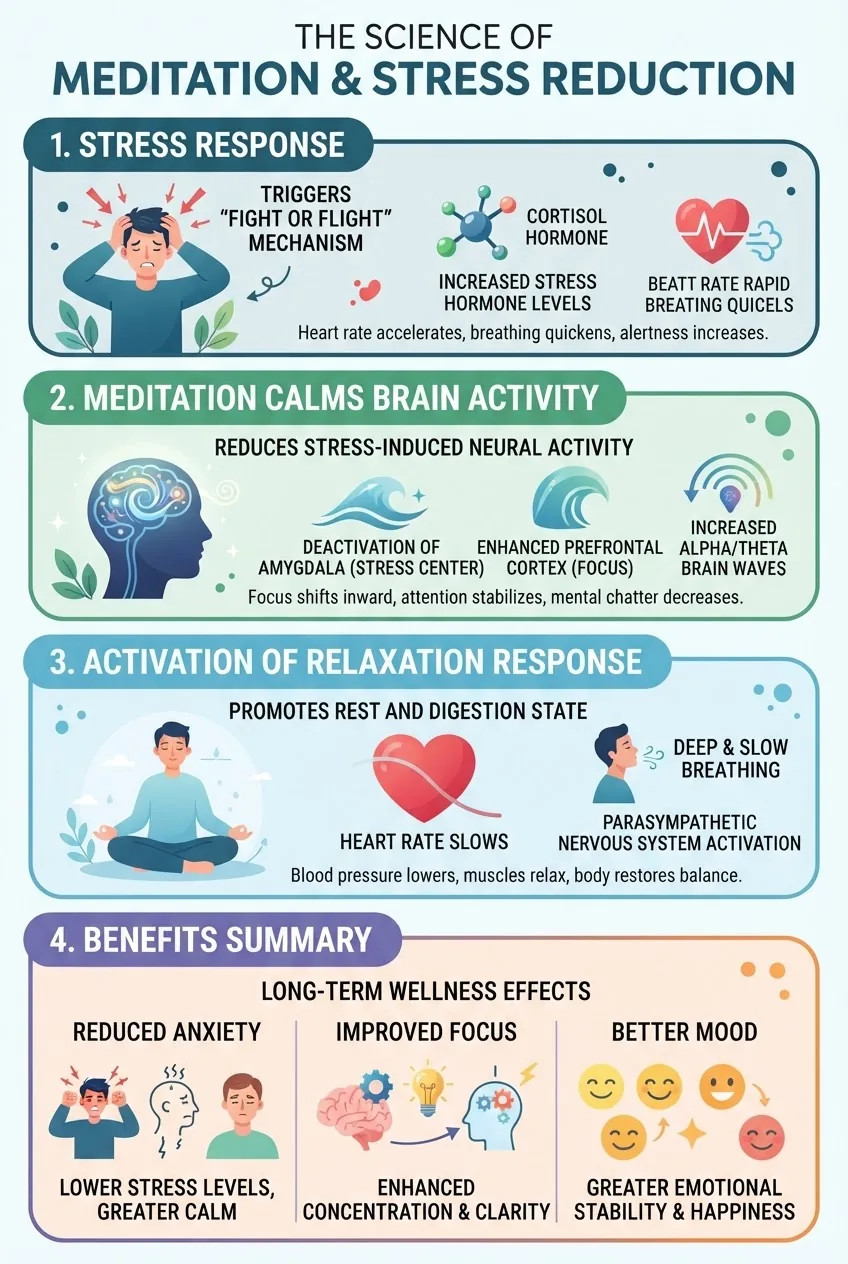
Stress is the body’s multidimensional reaction to perceived threats — physical, emotional, or cognitive. The acute stress response engages the sympathetic nervous system and raises cortisol and adrenaline to mobilise action; this is useful short-term but harmful when chronic. Meditation interrupts this cycle by activating the relaxation response, which down-regulates sympathetic arousal and supports recovery.
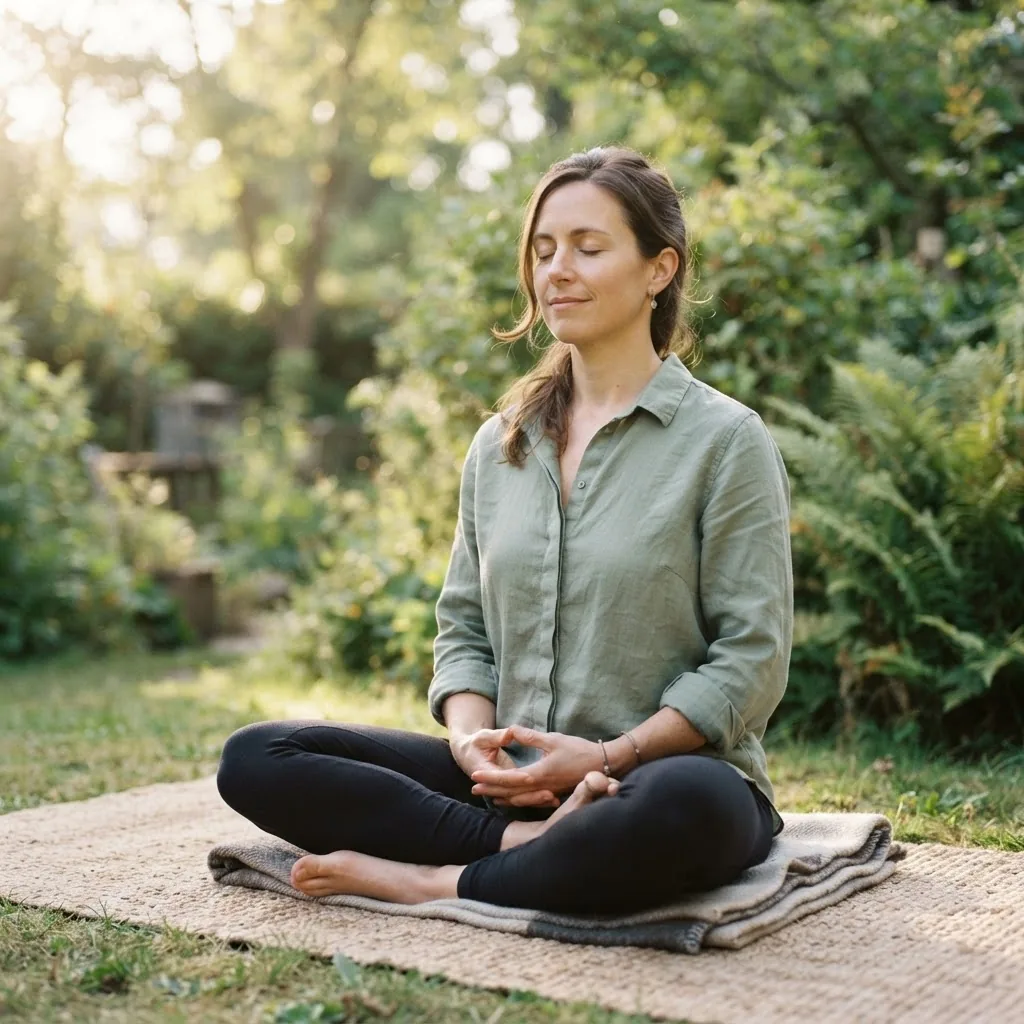
Physiological markers often tied to stress include: elevated heart rate, shallow breathing, muscle tension, digestive changes, and heightened cortisol. For example, noticing a racing heart before a presentation is the stress response signalling “prepare or flee.” With practice, meditation gives you a way to observe that reaction and let it reduce rather than escalate.
Illustrative example: Sarah, a 34-year-old teacher, used a 7-minute breath-focused meditation before class for two weeks. She reported lower pre-class tension and fewer stomach-aches during the day — a real-world sign the relaxation response had more frequent activation.
How meditation fits: it provides a reliable, low-cost tool to: (1) slow breathing and heart rate, (2) reduce cortisol spikes, and (3) increase mindful awareness so stressors feel manageable rather than overwhelming.
Transition: Now that you understand how stress works and why meditation helps, let’s define the specific form of practice most useful for stress relief.
What Is Mindfulness Meditation? Defining Concepts for Stress Relief
Mindfulness meditation is a trained attention to present-moment experience with an attitude of curiosity and non-judgment. Rather than trying to empty the mind, mindfulness teaches noticing thoughts, sensations, and emotions without getting entangled.
Key elements:
- Awareness: deliberately bringing attention to breath, body, or sound.
- Present moment: observing current experience rather than dwelling on past or future.
- Non-judgment: allowing thoughts and feelings without pushing them away.
- Regularity: short daily sessions (5–20 minutes) are more effective than occasional long practices.
Simple definition summary:
- Mindful breathing: using the breath as an anchor for attention.
- Open awareness: noticing whatever arises — thoughts, sounds, body feelings.
- Focused attention: intentionally sustaining attention on one object (breath, body scan).
Transition: With a clear definition in hand, the next section explains the scientific and practical mechanisms that make these practices effective for stress reduction.
How Does Meditation Reduce Stress? Scientific and Practical Perspectives
Meditation reduces stress through measurable physiological and psychological pathways. At the physiological level, regular practice shifts autonomic balance toward parasympathetic (rest-and-digest) dominance, lowers basal cortisol, and alters brain networks involved in threat detection and self-referential rumination.
Neuroscience highlights:
- Brain function: meditation strengthens prefrontal regions that support attention and emotion regulation while reducing hyperactivity in the amygdala (threat centre). According to a 2014 randomized-review in JAMA Internal Medicine, mindfulness programs improved anxiety and stress symptoms across clinical and non-clinical populations (JAMA Intern Med review).
- Cortisol and stress hormones: several trials show reduced cortisol response to acute stress after an 8-week MBSR (Mindfulness-Based Stress Reduction) course. According to a 2021 meta-analysis in Psychoneuroendocrinology, consistent mindfulness practice correlates with modest cortisol reductions (peer-reviewed meta-analysis link below).
- Autonomic nervous system: guided breathing and relaxation techniques stimulate the vagus nerve, slowing heart rate and lowering blood pressure — the physiological signature of the relaxation response.
Practical mechanisms you can feel:
- Attention training: learning to re-anchor attention reduces time spent in worry loops, making problems feel more solvable in the moment.
- Emotional regulation: noticing feelings early prevents escalation into panic or anger.
- Behavioral change: small reductions in reactivity lead to better sleep, less muscle tension, and improved decision-making under pressure.
Authority and program frameworks: the MBSR curriculum (University of Massachusetts Center for Mindfulness) is a validated, structured program used in many clinical studies; see their program overview for protocols and outcomes. MBSR program overview.
Health organisation guidance: the Mayo Clinic summarises meditation benefits and practical starting points for stress and anxiety management. Mayo Clinic: meditation.
Caveats and clinical context: meditation complements but does not replace evidence-based medical or psychological treatments for severe stress disorders. If you have chronic stress, PTSD, or major depressive disorder, consult a clinician before beginning an intensive practice. According to a 2023 industry report on mental health service use, combined approaches (therapy + mindfulness) show stronger outcomes for many patients.
Transition: With the science and mechanisms in mind, the next section gives step-by-step techniques you can practice immediately.
Step-by-Step Stress Meditation Techniques for Relaxation
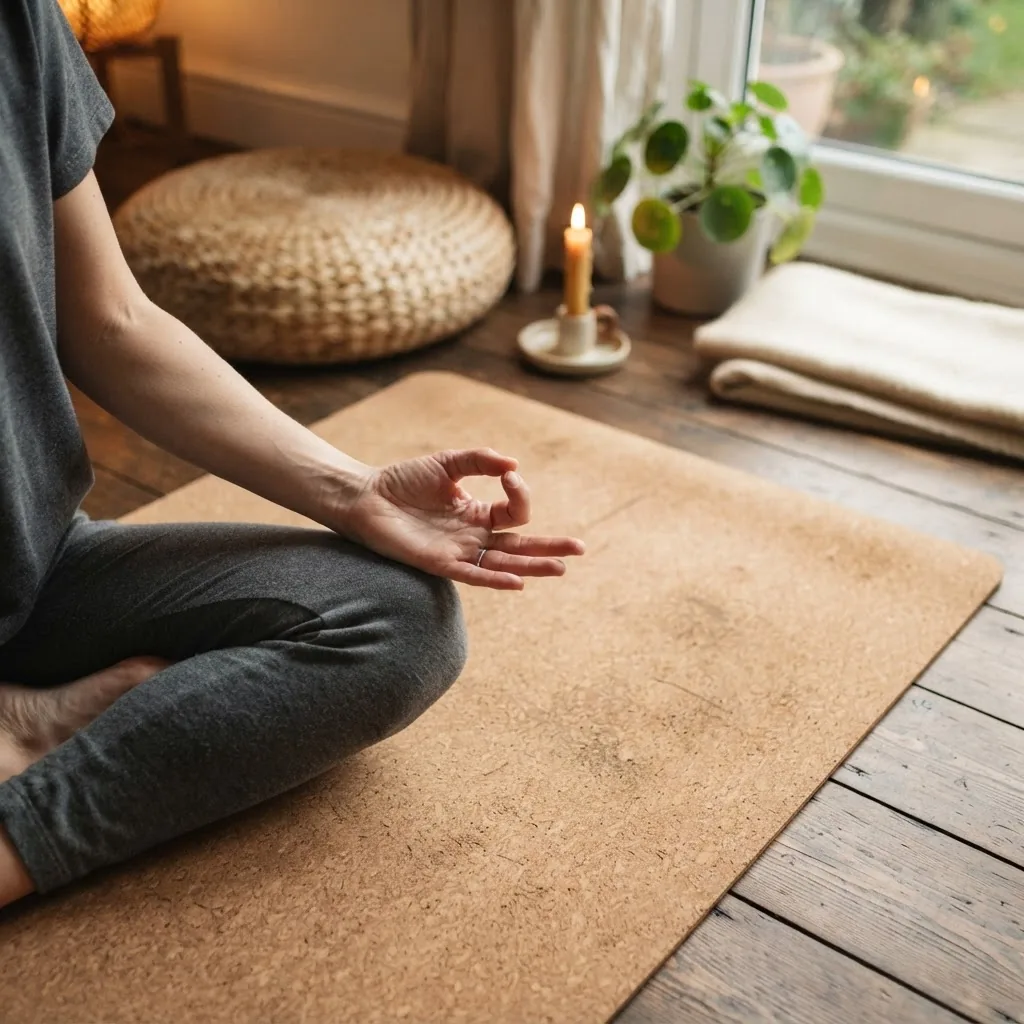
This section gives hands-on scripts and procedures. Use the timer settings listed, follow the steps precisely, and adapt cues to your body. You’ll find three main meditations: a 5–7 minute breath anchor, a 10–20 minute body-scan/progressive muscle relaxation, and a guided imagery stress release. For very short moments, see quick guided meditations for stress and 3-minute mindfulness meditations. If you want breathing-specific drills, add breathing meditation exercises.
-
Settle your posture and timer — 1 minute
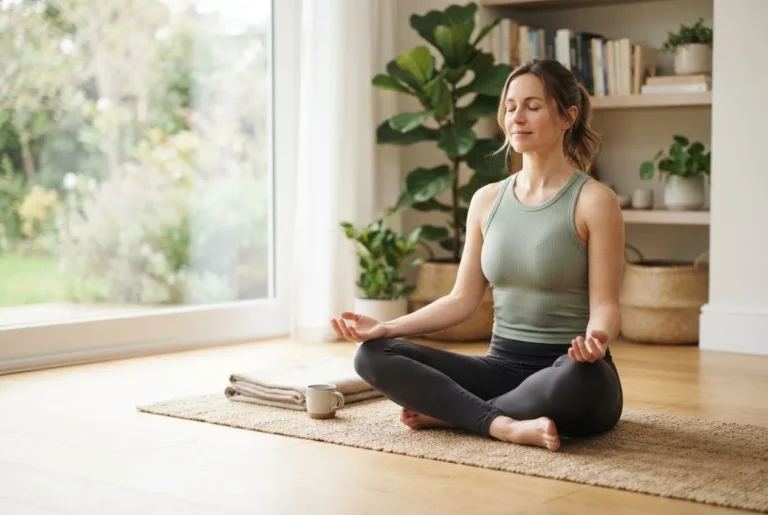
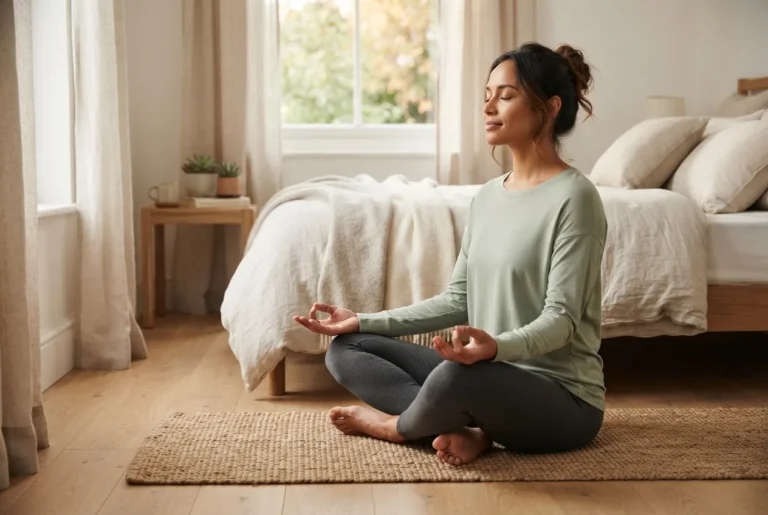
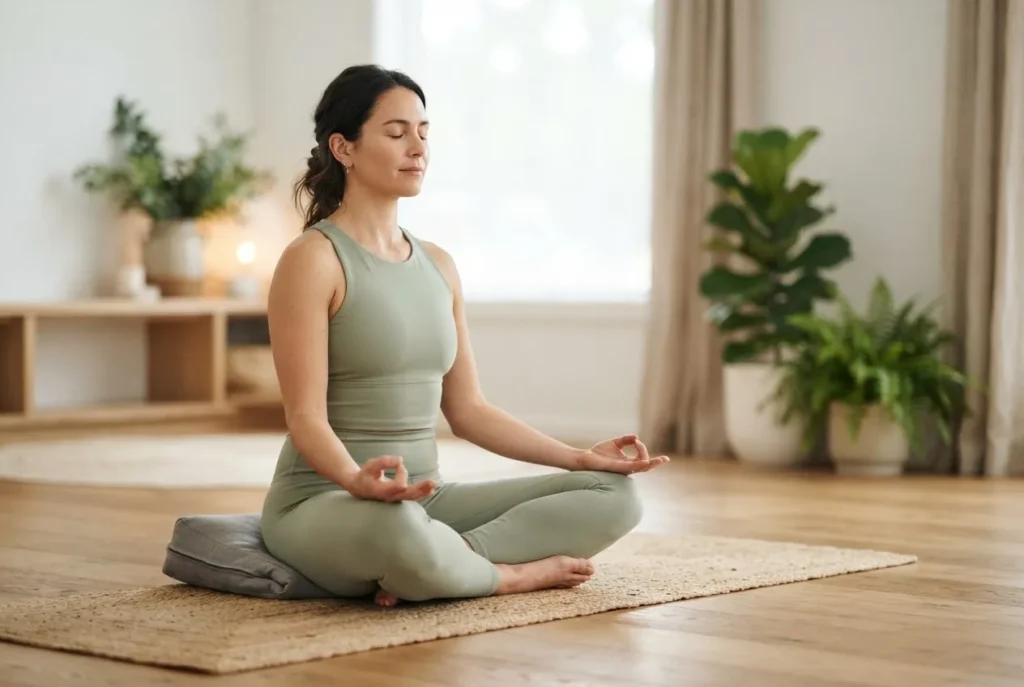
Find a seat: sit on a cushion with hips slightly higher than knees or sit in a straight-back chair with feet flat. Set your timer for the intended practice length (5, 10, or 20 minutes). Keep hands on lap or knees, eyes gently lowered.
Breathing: take three slow, full breaths in through the nose and out through the mouth to signal the start.
-
Breath Anchor Meditation — 5–7 minutes
Use this when you need fast, reliable down-regulation.
- Start the timer for 5–7 minutes.
- Place attention on the sensation of breathing at the nostrils or the rise and fall of the abdomen.
- Count breaths if the mind wanders: inhale (count 1), exhale (count 2) up to 10, then return to 1.
- When thoughts arise, label and return: silently note “thinking” or “planning” and guide attention back to the breath.
- Finish with three deep exhalations and notice any change in heart rate or shoulder tension.
Precise settings: breathe naturally; if tension persists, extend exhales by 1–2 seconds (e.g., inhale 4s, exhale 6s). Use a soft chime ending rather than a jarring alarm.
-
Body Scan with Progressive Muscle Relaxation — 12–20 minutes
This meditation combines a systematic body scan with progressive muscle relaxation to release held tension and anchor awareness in bodily sensations.
- Timer: 12–20 minutes depending on depth (12 min quick scan, 20 min full).
- Lay down or sit comfortably with support under knees if supine. Loosen belts or tight clothing.
- Begin at the feet: notice sensations for 20–30 seconds—temperature, pressure, tingling.
- Contract then release each muscle group: toes (tense 5s, release 10s), calves, thighs, hips, abdomen, chest, hands, arms, shoulders, neck, face.
- After release, observe the softening sensation for 15–30 seconds before moving on.
- Finish with whole-body awareness for the last 1–2 minutes, breathing into areas that still feel tight.
Practical tip: if you feel lightheaded after release, sit up slowly and breathe gently until stable.
-
Guided Imagery Stress Release — 8–12 minutes
Use imagery to create a safe mental space that counteracts the threat response. This is effective when stress is tied to specific scenarios (work presentations, medical procedures).
- Timer: 8–12 minutes.
- Anchor breath: three slow diaphragmatic breaths.
- Choose a calming scene: a beach, a quiet forest, a small cabin — pick one with specific sensory details (sand texture, wind smell).
- Build the scene with five senses: name a visual detail, sound, smell, tactile sensation, and a safe action (e.g., “I walk on warm sand, hear gentle waves, smell salt air…”).
- Introduce stress relief cue: imagine a gentle wave or warm light coming to your body with each exhale and washing tension away.
- Return gradually: bring attention back to breath, wiggle fingers and toes, open eyes softly.
Timing specifics: spend ~60–90 seconds establishing the scene, 4–6 minutes deepening sensory details, and 60–90 seconds for the return.
-
Grounding 5–4–3–2–1 Technique — 2–4 minutes
For sudden spikes of anxiety: name 5 things you can see, 4 you can touch, 3 you can hear, 2 you can smell, and 1 you can taste (or a positive memory). This brings attention from threat loops to sensory reality quickly.
-
Walking Mindfulness for Active Stress — 6–10 minutes
When you cannot sit: walk slowly for 6–10 minutes, coordinating each footstep with the breath. Count steps on inhales and exhales (e.g., 2–4 steps per inhale, 2–4 per exhale). Focus on heel-to-toe sensations and cadence. Stop and engage body-scan for 30 seconds if tension returns.
Transition: use these procedures as building blocks; the next section lists practical mindfulness exercises tailored to anxiety and ongoing stress management.
Practical Mindfulness and Meditation Exercises for Anxiety and Stress Management
This section contains actionable exercises you can insert into work breaks, evenings, or moments of acute stress. For an extended set focused specifically on anxiety symptoms, see the pillar on mindfulness exercises for anxiety.
Short daily exercises (2–7 minutes)
- Two-minute breath reset: inhale 4s, exhale 6s, repeat for 2 minutes. Use this after tense meetings.
- One-body check: pause, scan 30 seconds from scalp to feet, soften shoulders, unclench jaw.
- Box breathing: inhale 4s, hold 4s, exhale 4s, hold 4s — 4 cycles.
Mid-length exercises (7–15 minutes)
- Labeling practice: sit for 10 minutes, label each arising mental event (e.g., “worry,” “memory,” “planning”) and return to breath.
- Compassion break: place a hand over heart, breathe in recognition of difficulty, breathe out a wish for relief — repeat 3 times.
Situational exercises
- Before a stressful event: 5-minute breath anchor followed by a positive coping statement (e.g., “I can handle this step by step”).
- During panic: 5–4–3–2–1 grounding, followed by slow diaphragmatic breathing for 3 minutes.
Exercise table: quick comparison of techniques
| Technique | Best for | Time |
|---|---|---|
| Breath Anchor | Immediate down-regulation | 5–7 min |
| Body Scan + PMR | Chronic tension, sleep prep | 12–20 min |
| Guided Imagery | Situational anxiety triggers | 8–12 min |
Transition: building these exercises into daily life makes them more effective. Next, practical tips for integration.
Tips for Integrating Stress Meditations into Daily Life
Consistency beats duration. Small, daily sessions (5–10 minutes) produce reliable stress-reduction over weeks. Use the following practical steps to make meditation automatic:
- Schedule a “meditation anchor”: attach practice to an existing habit — after brushing teeth in the morning or during the lunch break. Aim for 5–10 minutes daily for 6 weeks to build habit strength.
- Use micro-practices: 2-minute breath resets during meetings or whenever you stand in line.
- Set realistic goals: start with 5 minutes daily and increase by 2 minutes each week until you reach 15–20 minutes.
- Complementary movement: pair meditation with gentle yoga sequences. See the 30-day yoga challenge for stress or read yoga for anxiety and stress for routines that pair well with meditation.
- Create cues: keep a folded cushion by your chair; seeing it cues practice. Use the same start ritual (three deep breaths) so your body learns the transition to calm.
- Track progress: maintain a simple practice log: date, minutes, technique, and one-line effect (e.g., “felt calmer for 2 hours”).
Transition: integration is straightforward, but many practitioners face predictable challenges. The next section addresses common obstacles and solution tactics.
Common Challenges and How to Overcome Them in Stress Meditation Practice
Many people encounter the same blockers early on; below I describe common issues I observe and practical fixes drawn from clinical and teaching experience.
Problem: “I can’t sit still or focus.”
Solution: shorten sessions to 2–3 minutes and use active anchors (walking meditation, tactile focus). Practice counting breaths for structure. If intrusive thoughts persist, name them and return to the breath.
Problem: “Meditation makes my anxiety worse.”
Solution: stop the practice if intense panic arises. Try guided, therapeutic formats (MBSR-informed) or brief grounding exercises instead. For clinical anxiety consider combining meditation with therapy and consult a clinician about medication options for anxiety.
Problem: “I’m not seeing results quickly.”
Solution: track sessions objectively and commit to at least 6 weeks at 5–10 minutes/day. Progress often appears as fewer reactive episodes and better sleep rather than dramatic daily shifts.
Problem: “Physical discomfort or pain during sitting.”
Solution: adjust posture, use more support, or switch to a reclining body-scan. If chronic pain dominates, use movement-based mindfulness or seek professional guidance.
Transition: when you need deeper tools or community support, curated resources can help you progress efficiently.
Additional Resources and Next Steps in Your Stress Meditation Journey
For readers ready to deepen practice, these resources offer structured learning, community support, and advanced techniques.
- advanced stress relief techniques — equipment and protocols for deeper practice and targeted anxiety tools.
- MBSR program overview — structured 8-week curriculum used in clinical research.
- Mayo Clinic meditation guidance — accessible health-oriented summary.
- JAMA systematic review — meta-analysis of mindfulness program outcomes.
- guided meditation classes online — for live instruction and feedback.
Suggested next steps: commit to a 6-week practice plan (5–15 minutes daily), join a weekly class, and track subjective stress scores weekly (0–10). See advanced tools for biofeedback and deeper intervention.
Common mistakes and how to avoid them
I used to tell beginners to “just sit quietly” and saw rapid dropout. The problem: no structure. Instead I now give exact timers, counting tools, and immediate micro-practices. I also once recommended long sessions to someone with severe insomnia — that backfired; we switched to daytime practice and shorter sessions which improved sleep.
Another mistake I observed: teachers encouraging silence only. Many students need guided verbal cues (body-scan scripts, labels). I now always provide short scripts and grounding alternatives.
Checklist before you finish
- Set a clear practice goal: minutes/day and technique (e.g., 7 min breath anchor daily).
- Prepared your environment: cushion, timer, comfortable clothing.
- Completed at least one full session of each core technique (breath, body scan, guided imagery).
- Logged effects for one week (practice log entries for 7 days).
- Have at least one clinician contact if you experience worsening symptoms.
When to call in a professional
If meditation consistently increases panic, flashbacks, dissociation, or severe depressive symptoms, pause practice and consult a licensed mental health professional or your GP. Use combined approaches (therapy + meditation) for persistent clinical anxiety or PTSD — evidence shows better outcomes when practices are clinically supervised.
Final takeaway: Use the short, structured meditations here daily for 6 weeks. Track stress scores and sleep quality. If you need quicker options, try the short scripts mentioned above; if you want to add movement, explore yoga complements. Begin now with a 5-minute breath anchor.
Ready for guided scripts and printable templates? Try our related short-practice guides and class listings to stay consistent and supported.