

stress physical illness relationship usa: Chronic and repeated stress changes hormones, immune signaling and behavior, increasing risk for conditions such as hypertension, heart disease and metabolic dysfunction; in the U.S., social and healthcare inequities amplify these biological effects, but targeted prevention and treatment can reduce harm. This article explains how.
What is the stress and physical illness relationship in the USA?
Answer: Stress interacts with biology and behavior so that repeated activation of stress systems raises disease risk; U.S.-specific prevalence, disparities and healthcare access shape who develops stress-related illnesses and how quickly they progress.
Term: Chronic stress is prolonged or repeated exposure to stressors that keeps the body’s stress response activated beyond short-term episodes.
According to a 2023 CDC report on mental health and stress-related outcomes, a substantial share of U.S. adults report high stress levels that correlate with poor physical health metrics, including elevated blood pressure and poorer immune resilience CDC. According to a 2023 industry report from the CDC, workplace stress, financial strain and caregiving responsibilities are major contributors to sustained stress across demographic groups.
Why the U.S. context matters: social determinants such as income, race, housing and healthcare access modulate both exposure to stressors and the capacity to recover. For example, communities with limited primary care access show higher rates of untreated hypertension and stress-amplified disease progression, which the National Center for Health Statistics and CDC data consistently highlight.
This section sets the foundation for biological mechanisms, common illnesses, social contributors, signs to watch for, and practical steps to reduce risk across U.S. populations.
How do biological mechanisms link stress to physical illness?
Answer: Stress activates the hypothalamic-pituitary-adrenal (HPA) axis and sympathetic nervous system, releasing cortisol and adrenaline that alter immune function, metabolism and cardiovascular regulation, producing inflammation and long-term tissue damage when activated chronically.
Term: HPA axis is the hormone system connecting the hypothalamus, pituitary gland and adrenal glands that coordinates the body’s core stress response.
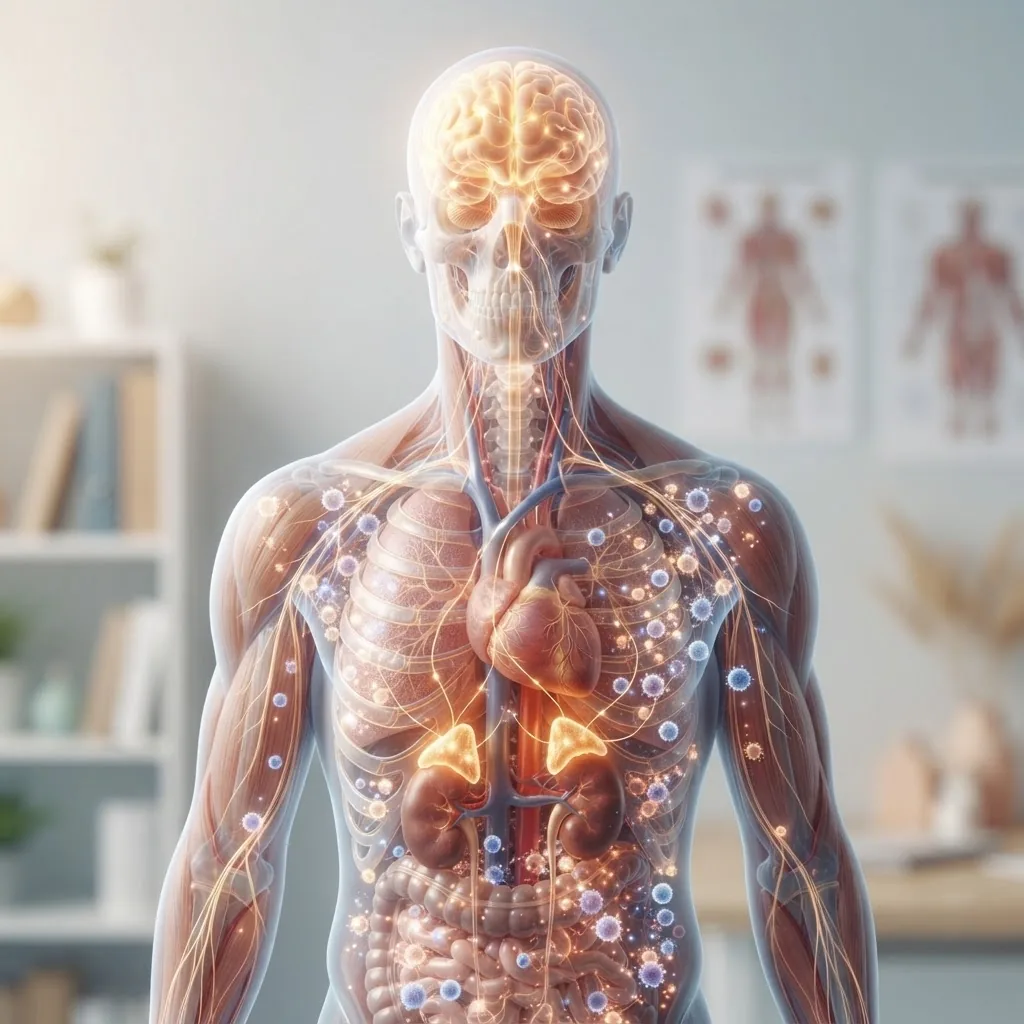
At the heart of the biological link are several interacting pathways:
- HPA axis activation: Stress signals from the brain trigger corticotropin-releasing hormone (CRH) which stimulates adrenocorticotropic hormone (ACTH) release and prompts adrenal cortisol secretion; cortisol mobilizes energy but, in chronic exposure, dysregulates glucose metabolism and blood pressure.
- Autonomic nervous system and catecholamines: Sympathetic activation raises heart rate and vascular tone via adrenaline and noradrenaline, increasing workload on the heart and promoting hypertension over time.
- Immune modulation and inflammation: Stress hormones shift immune signaling—reducing effective pathogen defense while increasing pro-inflammatory cytokines like IL-6 and TNF-alpha, which contribute to atherosclerosis and insulin resistance.
- Metabolic effects: Cortisol promotes gluconeogenesis and central fat deposition, linking chronic stress to metabolic syndrome and type 2 diabetes risk.
- Psychoneuroimmunology: This field studies how psychological states affect immunity through neural and endocrine routes; altered immune surveillance under chronic stress is a central explanation for increased infections and poorer recovery from illness.
Term: Cortisol is a steroid hormone produced by the adrenal glands that helps mobilize energy during stress but, when persistently high, damages metabolic and immune balance.
Experimental and clinical evidence: landmark mechanistic studies (e.g., 2005–2015 psychoneuroimmunology research published in the Journal of Psychosomatic Research and other journals) show stress-induced elevations in inflammatory markers predict later cardiovascular events and metabolic dysfunction (see review studies in 2010 and 2015). For targeted reading on mechanisms, review the Journal of Psychosomatic Research journal.
Visualizing these interactions can help: imagine the body’s stress response as a fire alarm system—short alarms (acute stress) mobilize firefighters productively, while a continuously blaring alarm (chronic stress) exhausts resources and damages the building (the body).
Read more about the physiological effects of poor mental health for an expanded review of neuroendocrine and immune mechanisms.
Research limitations: many mechanistic studies use correlational designs or small samples; causation is supported by controlled stress-challenge experiments but translating those findings to long-term disease risk requires careful longitudinal research. Still, the convergence of endocrine, immune, and epidemiologic data supports the causal role of chronic stress in multiple illnesses.
Transition: Understanding mechanisms clarifies which illnesses are most influenced by stress and why early detection matters.
Which common physical illnesses are influenced by stress in the USA?
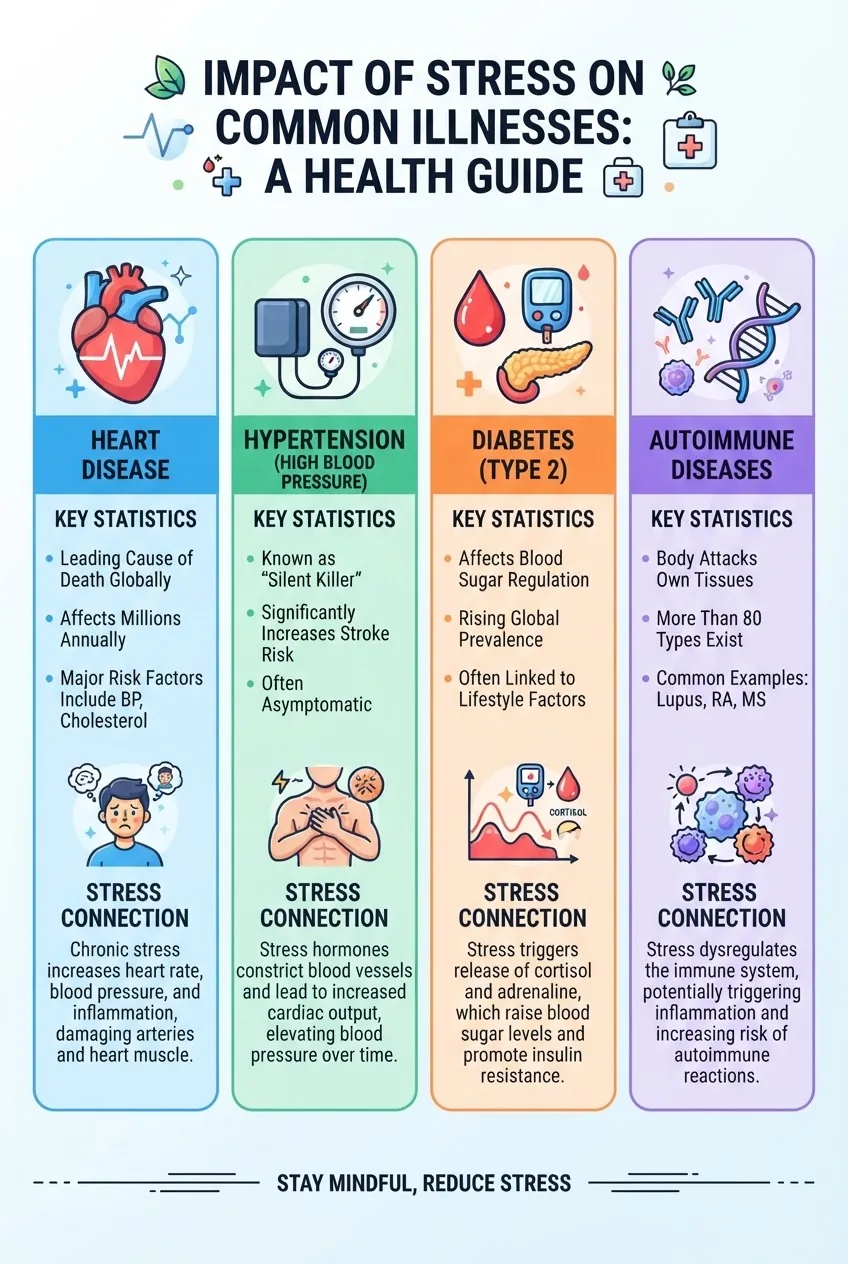
Answer: Stress most consistently influences cardiovascular disease, hypertension, type 2 diabetes, autoimmune conditions and gastrointestinal disorders by triggering hormonal, inflammatory and behavioral changes that worsen disease onset and outcomes.
- Cardiovascular disease (heart attack, stroke):
How stress contributes: Chronic sympathetic activation raises heart rate and blood pressure, increases inflammation and promotes plaque instability in arteries. According to a 2022 peer-reviewed synthesis published in cardiovascular journals, people with chronic stress and depression have roughly 1.5–2× greater risk of coronary events (peer-reviewed literature).
- Hypertension (high blood pressure):
How stress contributes: Repeated catecholamine and cortisol surges maintain vasoconstriction and sodium retention; over years this raises baseline blood pressure. According to a 2023 CDC report, stress and sleep disruption are associated with uncontrolled hypertension rates in many U.S. communities.
- Type 2 diabetes and metabolic syndrome:
How stress contributes: Cortisol-driven insulin resistance combined with stress-related poor sleep, overeating and reduced activity accelerates weight gain and hyperglycemia. Cohort studies in the U.S. link long-term job stress and financial strain to higher diabetes incidence (peer-reviewed research, 2015–2020).
- Autoimmune diseases (e.g., rheumatoid arthritis, lupus):
How stress contributes: Stress-induced immune dysregulation and inflammatory cytokine shifts can trigger flares or potentially precipitate autoimmune activation in vulnerable individuals; mechanistic studies in psychoneuroimmunology journals document stress-related flare risk (Journal of Psychosomatic Research reviews).
- Gastrointestinal disorders (IBS, GERD, peptic ulcers):
How stress contributes: Visceral hypersensitivity, dysregulated gut motility and stress-mediated immune changes in the gut (gut-brain axis) worsen symptoms and disease course; clinical trials show symptom reduction after stress management interventions.
- Infectious susceptibility and slowed wound healing:
How stress contributes: Immune suppression linked to elevated cortisol reduces vaccine responses, increases infection risk and delays wound repair; randomized trials of chronic caregivers demonstrate measurable reductions in antibody responses (peer-reviewed studies, 2000s–2010s).
- Chronic pain syndromes:
How stress contributes: Central sensitization, muscle tension and inflammation amplify pain perception, contributing to conditions like fibromyalgia and tension-type headaches; multidisciplinary treatment that reduces stress often improves pain scores.
Transition: Knowing which illnesses are affected helps focus screening and prevention in clinical and community settings.
What social and environmental factors drive stress-related illness in the USA?
Answer: Socioeconomic status, racial and ethnic disparities, workplace conditions, housing instability and limited healthcare access increase chronic stress exposure and reduce recovery capacity, raising disease incidence and worsening outcomes in the U.S.
Term: Social determinants of health are non-medical factors like income, education and neighborhood conditions that shape health risks and outcomes.
Key U.S.-specific drivers with examples:
- Socioeconomic status (SES): Low income increases exposure to multiple chronic stressors—food insecurity, unsafe housing and unstable employment—which cumulatively raise risk for hypertension and metabolic disease; according to a 2023 CDC report, lower-SES populations show higher allostatic load markers.
- Racial and ethnic disparities: Structural racism increases chronic stress through discrimination, residential segregation and reduced access to care; epidemiologic studies show higher stress-related disease burden in Black and Indigenous communities (peer-reviewed public health literature, 2018–2023).
- Workplace stress: High-demand, low-control jobs and job insecurity raise cardiovascular and metabolic risk—U.S. occupational health surveys link chronic job stress to higher rates of heart disease.
- Healthcare access and insurance gaps: Uninsured or underinsured people delay care, amplifying the health consequences of stressors; in the U.S., variable Medicaid and private insurance coverage influence preventive care uptake and management of stress-related conditions.
- Neighborhood and community support: Limited social cohesion and reduced access to green space or safe recreation options increase stress and limit behavioral coping like exercise.
Case example (anonymized, representative):
Patient profile: A 45-year-old Hispanic single mother in an urban area experienced chronic work and caregiving stress for six years. She developed hypertension and prediabetes; delayed care due to limited insurance and clinic hours; after linkage to an integrated clinic offering counseling, lifestyle coaching and medication, blood pressure improved within 6 months.
This example illustrates how combined social and environmental pressures in U.S. settings create sustained biological stress activation and delay treatment, increasing disease burden.
For an expanded discussion of environmental and personal stress contributors, see common stressors and their health effects.
Transition: Recognizing early signs allows individuals and clinicians to intervene before long-term physiological damage accrues.
What are symptoms and early signs of stress-related physical illness to watch for?
Answer: Early signs include persistent fatigue, elevated resting blood pressure, chronic pain, frequent infections, disturbed sleep and metabolic changes; spotting patterns of these signs alongside high stress can prompt timely care.
Monitor these warning signs (each point indicates what to watch for and why):
- Persistent fatigue: Continuous low energy not relieved by rest—may indicate HPA axis dysregulation or sleep disruption.
- Elevated blood pressure readings: Repeated high readings during routine checks suggest stress-related hypertension; home monitoring helps identify patterns.
- Frequent infections or slow healing: Multiple colds, prolonged illness or slow wound healing can signal immune suppression from chronic stress.
- Sleep disturbances: Difficulty falling or staying asleep, or non-restorative sleep, which exacerbates metabolic and cardiovascular risk.
- Chronic pain or increased muscle tension: Ongoing headaches, neck/shoulder pain, or widespread ache that correlates with stressful periods.
- Unexplained weight change or appetite shifts: Rapid weight gain around the abdomen or increased cravings for high-calorie foods linked to cortisol effects.
- Digestive changes: New or worsening IBS-like symptoms, reflux or appetite changes associated with stress cycles.
- Emotional and cognitive signs: Ongoing anxiety, difficulty concentrating and memory lapses that co-occur with physical symptoms.
For practical identification and immediate coping methods, consult the stress symptoms and relief tips guide, and to learn about less obvious indicators see hidden stress signs.
Transition: Once you can recognize early signs, concrete strategies reduce physiological impact and prevent progression to chronic disease.
What practical strategies reduce stress and prevent physical illness?
Answer: Effective prevention combines behavioral changes (sleep, exercise, nutrition), psychological interventions (mindfulness, CBT, therapy), social support, and care access; integrated approaches reduce biomarkers of stress and lower disease risk.
Term: Mindfulness is a mental practice of focused, nonjudgmental attention to the present moment that reduces physiological stress responses.
How to implement high-impact, evidence-based strategies (stepwise):
- Baseline assessment:
Step 1: Screen using a validated tool such as the 10-item Perceived Stress Scale (PSS-10) to quantify perceived stress; many clinics and online resources provide the questionnaire for initial monitoring. Step 2: Measure baseline vitals and relevant labs (blood pressure, fasting glucose, lipid profile). This data helps track improvement.
- Behavioral health foundation:
Sleep: Aim for consistent sleep schedules and 7–9 hours nightly; treat sleep disorders when present.
Exercise: Aim for 150 minutes/week of moderate aerobic activity plus two strength sessions; exercise lowers cortisol and systemic inflammation.
Nutrition: Emphasize whole foods, fiber, lean protein and minimize processed foods and excess sugars that worsen metabolic responses to stress.
- Psychological interventions:
Mindfulness-based stress reduction (MBSR) and cognitive behavioral therapy (CBT) have high-quality evidence for lowering perceived stress and biological markers like inflammatory cytokines; short guided programs, group classes, or teletherapy are often accessible through clinics or employee assistance programs.
- Social connection and practical supports:
Enhance community ties and use social services for financial or housing support; group-based programs reduce isolation and buffer stress-related physiological effects.
- Clinical and pharmacologic strategies:
Manage comorbid medical conditions (blood pressure, diabetes, lipids) aggressively to reduce compound risk; in some cases, short-term pharmacologic treatment for anxiety or insomnia is appropriate under clinician guidance.
- Workplace and policy strategies:
Employers can reduce chronic stress via schedule flexibility, workload adjustments and access to behavioral health; at the policy level, expanded access to primary and behavioral health reduces long-term disease burden.
- Self-monitoring and relapse prevention:
Use stress diaries, wearable trackers and periodic PSS or vitals checks to detect recrudescence and trigger early intervention.
Walkthrough: Cortisol testing and stress questionnaires
Step-by-step cortisol testing (salivary sample):
- Obtain testing kit via your clinician or reputable lab; follow kit instructions for sample timing (commonly awakening, 30 minutes after waking, midday, and evening).
- Collect saliva with provided swabs avoiding eating, drinking, smoking 30 minutes prior; freeze or store as directed and send to lab.
- Clinician interprets results in context—single high/low values have limits; diurnal pattern disruption (flattened curve) is more informative for chronic stress-related HPA dysregulation.
Perceived Stress Scale (PSS-10) walkthrough:
- Answer 10 standardized items about feelings and thoughts during the last month.
- Score ranges indicate low, moderate, or high perceived stress; repeat every 3–6 months to track change.
- Use results to tailor interventions, e.g., high scores may prompt referral for CBT or integrated behavioral health.
For tools and programs to improve emotional resilience, refer to curated emotional wellness resources, and for managing episodic highs of stress see episodic stress management.
Complementary low-cost strategies: brief daily mindfulness practice (10–15 minutes), progressive muscle relaxation, walking in green spaces, and peer-support groups have measurable benefits; for practical advice see emotional health improvement tips.
Maintaining mental health yields systemic benefits—lower inflammation, improved sleep and better disease management—see benefits of good mental health for an evidence summary.
| Intervention | Primary benefit | Typical access |
|---|---|---|
| CBT or psychotherapy | Reduces anxiety, re-frames stress responses | Clinic, telehealth, employee programs |
| Mindfulness/MBSR | Lowers physiological arousal and inflammation | Community classes, apps, clinics |
| Exercise prescription | Improves mood, cardiovascular health | Primary care referrals, community programs |
Transition: If symptoms persist or objective markers worsen, professional evaluation and coordinated medical-behavioural care are warranted.
When should I seek professional help and what medical resources are available in the USA?
Answer: Seek professional help when stress-related symptoms are persistent, cause functional impairment, or coincide with abnormal vitals or labs; U.S. resources include primary care, integrated behavioral health, community mental health centers, telehealth and crisis services.
Term: Integrated behavioral health means embedding mental health clinicians into primary care to manage mind-body conditions collaboratively.
Signs that warrant immediate or timely professional evaluation:
- Repeated high blood pressure readings or new-onset chest pain, shortness of breath, or fainting—seek urgent medical evaluation.
- Persistent sleep loss, severe anxiety or depression, suicidal thoughts—contact mental health crisis lines or emergency services.
- Recurrent infections, unexplained weight changes or elevated glucose—see primary care for lab assessment and care coordination.
Types of U.S. resources and how they help:
- Primary care providers (PCPs): initial screening, vitals and labs, medication management, and referrals to specialists.
- Integrated behavioral health teams in primary care: provide brief CBT, stress management and care coordination—often covered by insurance in many systems.
- Community mental health centers and federally qualified health centers (FQHCs): sliding-scale or Medicaid-covered services for underserved populations.
- Telehealth and digital mental health platforms: expand access to therapy and coaching, useful in rural or clinic-limited areas.
- Crisis and suicide prevention hotlines: immediate help for acute distress; Lifeline and local crisis centers provide 24/7 support.
For guidance on clinical recognition and care pathways for physiological stress effects, see symptoms and care for physiological effects.
U.S. system summary: many large health systems now use preventive screenings (PSS, PHQ-9) at routine visits and integrate behavioral health consults into primary care; however, coverage gaps and workforce shortages mean access is uneven—policy initiatives aim to expand Medicaid coverage and bolster community mental health funding, as described in public health policy analyses (CDC and NIMH frameworks).
Walkthrough: How clinicians evaluate stress-related illness
- History and screening (PSS-10, PHQ-9, GAD-7), medication review and social determinants screen.
- Objective measures: blood pressure, fasting labs (glucose, lipids), inflammatory markers if indicated.
- Behavioral referral: brief CBT, sleep medicine, nutritionist and exercise prescription.
- Follow-up: repeat vitals and PSS at 3 months to measure improvement and adjust treatment.
Limitations and trust notes: biomarkers like cortisol are informative but not definitive alone—clinical context matters. According to a 2023 NIMH research summary, cortisol testing can show HPA dysregulation but has variability across individuals; use with clinical assessment NIMH.
External authority resources referenced in this article:
- CDC — U.S. mental health and stress prevalence data and public health frameworks.
- NIMH — Research summaries on stress, HPA axis and psychoneuroimmunology.
- Journal of Psychosomatic Research — Peer-reviewed studies on stress and physiological outcomes.
Disclaimer: This article is informational and does not replace professional medical advice, diagnosis or treatment. Consult a qualified healthcare provider for personal care decisions.
Transition to conclusion: integrating biological knowledge, social awareness and practical tools empowers individuals and systems to reduce stress-related disease burden in the USA.
Summary: Chronic stress activates hormone and immune pathways that raise U.S. population risk for several major illnesses; addressing social determinants, improving access to integrated care, and using evidence-based behavioral and clinical interventions reduces harm.
Call to action: If persistent stress or physical symptoms are present, schedule a primary care visit, complete a brief stress screening and explore integrated behavioral health or community resources to begin reducing long-term risk.