

Wellbeing coaching: by the end of this hands-on guide you will have a clear, step-by-step roadmap to choose and complete a recognised wellbeing coaching certification, design a stress-management lifestyle program, and run a demonstrable client module. Realistic timeline: 3–12 months depending on course intensity. Skill level assumed: beginner to intermediate (no prior clinical training required).
- Before you start: required ID, tertiary transcripts (if applying for accredited pathways), a reliable internet connection and video platform, 3–6 months of scheduled weekly study time (3–6 hours/week).
- Tools & materials: notebook, client intake templates, simple outcome measures (Perceived Stress Scale), audio recorder for supervision, access to peer groups.
- Decide your credential goal: Choose whether you want a nationally recognised certificate (if available in your jurisdiction) or an internationally recognised credential (for example, International Coach Federation pathway). Aim to list 2–3 target programs. Allocate 1–2 weeks.
- Audit curricula: Compare course modules for behaviour change theory, motivational interviewing, ethics and supervised practice hours. Create a comparison spreadsheet and shortlist 2 programs. Allocate 1–2 weeks.
- Confirm accreditation and supervision: Verify accreditation body recognition and required supervised coaching hours (typically 60–125 hours). Contact program advisors with specific questions. Allocate 1 week.
- Enroll and schedule study blocks: Choose cohort dates and block weekly 3–6 hours for study and 1–2 hours for practice clients. Expect 8–24 weeks delivery depending on part-time vs intensive formats.
- Practice core techniques weekly: Run 6–10 practice sessions using active listening and motivational interviewing—record and review with a supervisor. Log 60+ coaching hours for accreditation pathways.
- Complete assessment and portfolio: Prepare a client case portfolio including intake, goals, session notes, outcome measures and reflection. Submit per course requirements and schedule any final practical exams.
- Apply for credential: Submit accreditation paperwork to the recognised body, including verified hours and supervisor sign-off. Processing typically takes 2–8 weeks.
- Launch a pilot program: Design an 8-week stress-management lifestyle habits course with measurable outcomes; recruit 6–12 pilot clients, run the program, collect pre-post measures, and produce a case study.
- Plan continuing education: Schedule two advanced modules (e.g., somatic coaching, trauma-aware practice) within 12 months of certification to maintain competency and meet continuing education requirements.
Transition: The steps above give you a practical workflow. Now we expand the theory, standards and science behind each step in detail so you can make informed choices as you progress through training and practice.
Introduction to Wellbeing Coaching
Wellbeing coaching is a practical, client-centred partnership that supports lifestyle transformation across physical, emotional and behavioural domains. Unlike narrow fitness or nutrition instruction, wellbeing coaching blends behaviour change science, habit design and mindfulness-informed techniques to help clients reduce stress, improve sleep, move more and adopt sustainable healthy lifestyle habits. Coaches focus on strengths and actionable habits rather than diagnosing mental illness; this makes coaching complementary to clinical services, not a replacement.
A hands-on wellbeing coach uses short, measurable interventions: structured intake, baseline measures (Perceived Stress Scale or WHO-5), clear goal setting (SMART goals), weekly accountability and relapse prevention. Programs commonly run in 6–12 week cycles: early weeks focus on assessment and habit micro-changes (10–30 minutes daily), middle weeks on skill practice (relaxation, sleep hygiene, movement), and final weeks on consolidation and maintenance planning.
Wellbeing coaching differs from counselling or therapy in scope and legal boundaries: coaching assumes client capacity for change and focuses on goal-directed, action-based work; therapists treat clinical disorders. Good practice requires clear informed consent, referral pathways and an ethical framework to protect clients.
This guide emphasises a strong body-mind connection: how lifestyle shifts influence autonomic balance, sleep architecture, inflammation markers and subjective stress—so your programs produce measurable mental and physical health effects.
Transition: With a clear definition and scope, next we deep-dive into what a certified lifestyle coach does and the day-to-day responsibilities you’ll train for.
What is a Certified Lifestyle Coach?
A certified lifestyle coach is a trained professional who supports clients to build sustainable healthy lifestyle habits that reduce stress and improve overall wellbeing. Certification signals that the coach has completed structured training in behaviour change strategies, professional standards and supervised practice. The role blends assessment, structured goal-setting, practical habit design and accountability.
- Typical responsibilities:
- Conducting comprehensive intake assessments including medical history and baseline stress measures.
- Designing personalised habit-based plans for sleep, movement, nutrition, and relaxation.
- Delivering one-on-one coaching sessions and small-group programs.
- Monitoring outcomes using validated measures and adjusting plans.
- Maintaining ethical records and clear referral processes for clinical issues.
- Professional standards and client support strategies:
- Use informed consent and explain coaching scope at intake.
- Adopt evidence-based interventions (motivational interviewing, SMART goals).
- Document session notes and outcome tracking (every 4–8 weeks).
- Engage in regular supervision (recommended 1 hour per 10 client hours for new coaches).
- Work settings: private practice, corporate wellbeing programs, allied health clinics, community health services.
As a certified lifestyle coach you’ll be expected to steward client behaviour change while respecting coaching boundaries. Certification programs teach referral thresholds, red flags and how to collaborate with allied professionals when issues exceed the coach’s scope.
Transition: Next, compare certification programs side-by-side so you can pick one aligned with body-mind and stress-management specialisation.
Overview of Wellbeing Coaching Certification Programs
Choosing the right training depends on accreditation, curriculum focus, supervised coaching hours, assessment methods and cost. Below is a practical comparison table of three representative program types: an internationally accredited coach training pathway, a specialised wellbeing/lifestyle coach diploma, and a short intensive micro-credential focused on stress management. Use this to map your priorities—accreditation vs speed vs specialised content.
| Program | Accreditation | Course length | Core topics | Supervised hours | Cost (AUD est.) |
|---|---|---|---|---|---|
| International Coach Federation (aligned) Diploma | ICF-aligned / recognised | 6–12 months (part-time) | Coaching competencies, ethics, supervision | 60–125 hours | $3,000–$8,000 |
| Wellbeing & Lifestyle Coaching Diploma | Nationally recognised (varies by country) | 3–9 months | Behaviour change, stress management, lifestyle medicine basics | 40–80 hours | $1,200–$4,000 |
| Short Stress-Management Micro-credential | Provider certificate | 2–8 weeks | Relaxation training, sleep hygiene, group facilitation | 10–30 hours | $300–$1,200 |
How to use this table: if your priority is international mobility and rigorous supervision, target an ICF-aligned program (often higher cost and longer duration). If you want fast entry with practical stress-management skills for workplace delivery, a micro-credential plus supervised practice can be sufficient to start piloting group programs.
Accreditation bodies to check:
- International Coach Federation — widely recognised professional credentialing and competency framework.
- World Health Organization — for mental health data and population-level guidance.
- Peer-reviewed meta-analyses on coaching effectiveness — evidence base for behaviour-change outcomes (example study link).
Practical checklist for program selection:
- Confirm whether the course provides supervised hours and clear assessment criteria.
- Check refund and transfer policies (for cohort scheduling flexibility).
- Ask for sample module content and a sample assessment brief before enrolling.
- Clarify ongoing mentoring and community access post-certification.
Transition: Having selected and completed training, you need robust skills and techniques—next we walk through the core competencies and how to practice them.
Core Skills and Techniques in Wellbeing Coaching
The most effective wellbeing coaches blend relational skills with structured behaviour-change tools. Core skills include active listening, motivational interviewing, goal setting and relapse-prevention techniques. Below are practical, hands-on steps to learn and integrate each skill into a session.
- Master active listening: Sit at eye level, use 60–90 second reflection cycles, mirror language without leading. Practice exercise: during a 20-minute role-play, reflect back the client’s feeling and content in alternating 2-minute blocks. Aim to increase accurate reflections from 50% to 85% over four sessions.
- Use motivational interviewing (MI) micro-skills: Ask open questions, affirm strengths, reflect and summarise (OARS). Step-by-step MI move: Ask “What changes do you want?” (open question), affirm a past success, offer a brief reflection, then elicit change talk by asking “How would you know this change is working?” Run MI practice drills in pairs for 30 minutes weekly.
- Set SMART behaviour goals: Translate large aims into micro-habits: for example, replace “reduce stress” with “practice 10 minutes of diaphragmatic breathing at 9pm, 5 nights/week for 2 weeks.” Track using simple habit trackers and weekly session review. Use pre-post measures (Perceived Stress Scale) every 4 weeks.
- Apply behaviour-change strategies: Implement evidence-based tactics: action planning, implementation intentions (“If X then Y”), graded exposure for avoidance behaviour, and stimulus control. Example: For sleep problems, set stimulus control steps—bed only for sleep, no screens 60 minutes before bed, light stretching for 10 minutes.
- Use coaching modalities for stress management: Combine brief cognitive reframes, relaxation training (progressive muscle relaxation 12–15 minutes), and simple movement prescriptions (20–30 minutes moderate activity 3x/week). Sequence sessions: assessment (session 1), skill-building (sessions 2–6), maintenance planning (sessions 7–8).
Brief example session walkthrough (sample module):
- Session opening (5 min): Check-in, mood rating (0–10), review last week’s practice.
- Review measures (5 min): Quick Perceived Stress Scale score compared to baseline.
- Skill teaching (10–15 min): Teach diaphragmatic breathing—demonstrate, practice 3 cycles, troubleshoot posture and timing.
- Goal setting (5–10 min): Agree on specific practice: 10 minutes breathing at 9pm, daily for 7 days. Capture in a micro-plan with implementation intention: “If I finish dinner, then I will practice breathing before screens.”
- Close (5 min): Schedule next session, note barriers, affirm progress.
Practical skill-development targets:
- Active listening: 80% accurate reflection rate in supervised review after 8 weeks of practice.
- MI competence: complete 10 hours of MI-focused practice and receive feedback (use recorded sessions), aim for basic practitioner proficiency within 3 months.
- Goal-setting fidelity: 90% of client goals expressed as micro-habits in the first three sessions.
Complement these techniques with curated emotional wellness strategies—see emotional health improvement tips for practical client handouts and exercises.
Transition: With core skills practised, you can design full programs that use these techniques to manage stress through healthy lifestyle habits; the next section shows how to build those programs and measure impact.
Effective Healthy Lifestyle Habits Coaching Programs for Stress Management
Designing effective programs requires structured sequencing: assessment, micro-habit interventions, mid-program measurement, and consolidation. Programs that integrate movement, sleep, nutrition basics, relaxation practices and cognitive reframing produce larger effect sizes on perceived stress than single-modality interventions.
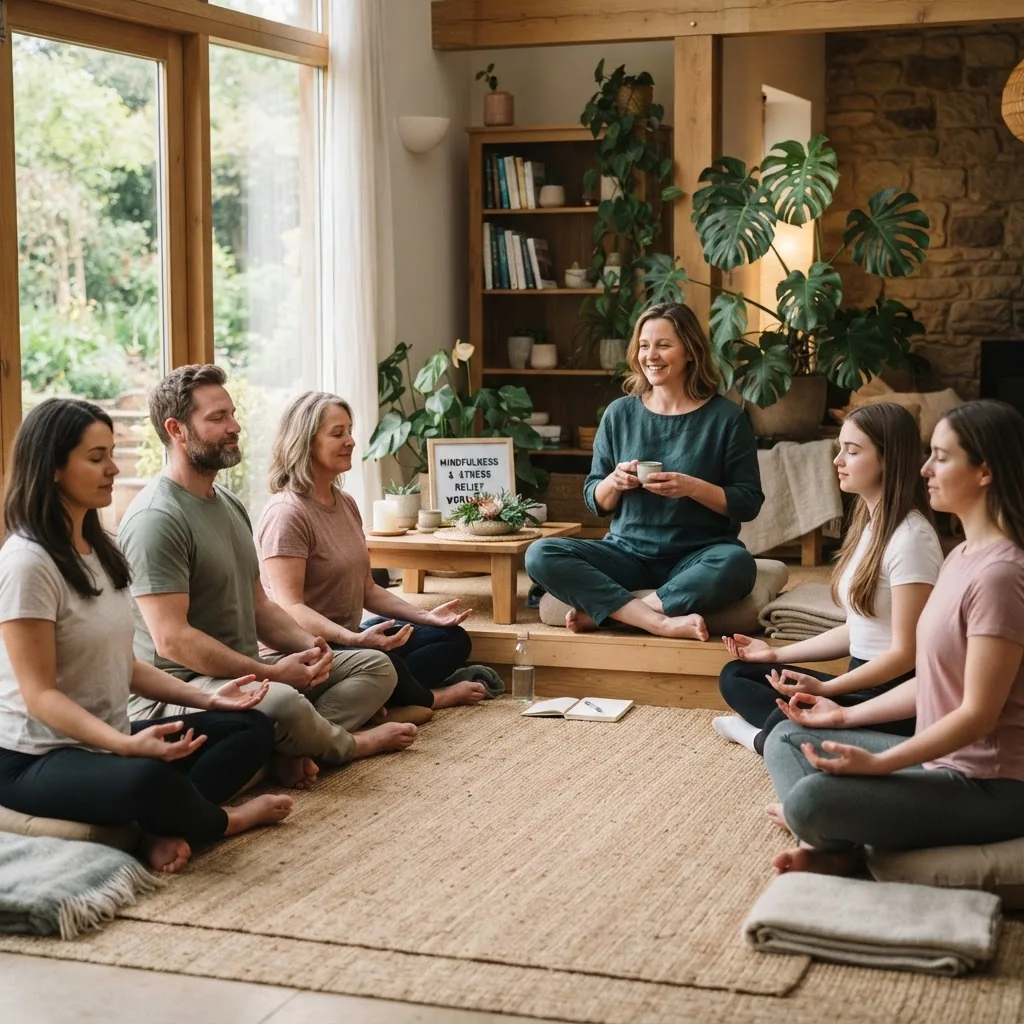
Program template (practical):
- Week 0 — Intake & baseline: Collect medical red flags, complete Perceived Stress Scale and WHO-5, measure sleep duration and activity baseline (use 7-day recall). Screen for severe symptoms requiring referral.
- Weeks 1–2 — Foundations: Introduce daily 10–15 minute relaxation practice, sleep hygiene rules, and a graded movement starter (2 x 15-minute walks per week). Set one micro-goal per domain.
- Weeks 3–5 — Skill consolidation: Add motivational interviewing check-ins, implement stimulus control for sleep, and introduce short strength/functional movement twice weekly. Encourage clients to log 80% adherence to at least one habit by week 5.
- Weeks 6–8 — Integration & relapse prevention: Focus on troubleshooting barriers, building social supports, and generating maintenance plans. Re-measure using the same tools and calculate effect sizes for program reporting.
Case study: client “A” (practical walkthrough)
Background: Female, 34, high perceived stress (PSS=28), sleep 5–6 hours/night, sedentary job. Intervention: 8-week pilot program combining weekly 45-minute coaching sessions, daily 10-minute breathing practice, and graded walking 3x/week. Supervision: weekly 1-hour group supervision for the coach.
Outcomes: After 8 weeks, PSS reduced from 28 to 16, sleep increased to 7 hours/night, and client reported improved work concentration. (This is a practitioner case study; individual results vary.) The case demonstrates realistic, measurable improvements when coaching blends behaviour change with stress-specific techniques.
Evidence and measurement: Use validated instruments and report outcomes. For example, a peer-reviewed trial or meta-analysis supports coaching’s positive effect on stress and wellbeing—cite the literature when designing evaluation frameworks (see referenced peer-reviewed sources above).
When screening and treating stress, connect clients to symptom resources; see stress symptoms and relief tips for client education and handouts.
Include assessment prompts for hidden indicators: refer to unrecognized stress signs to detect subtle somatic or behavioural markers during intake.
Design program modules around common causes; review common stressors and health impact when building case formulations and group discussion topics.
When clients present with fluctuating stress patterns, incorporate targeted modules from episodic stress management techniques into weeks 3–5 for tactical coping strategies.
Practical fidelity targets and thresholds:
- Adherence threshold: aim for ≥70% session attendance and ≥60% daily practice adherence among participants for group programs to produce reliable group-level improvement.
- Outcome thresholds: a reduction of ≥6 points on the Perceived Stress Scale or a clinically meaningful 10–20% improvement in WHO-5 scores is a realistic program goal over 8 weeks (based on comparable intervention studies; see peer-reviewed sources).
Program scaling tips:
- Group size: 6–12 participants to maintain interaction and individual attention.
- Session length: 60–90 minutes for group workshops, 45–60 minutes for individual coaching.
- Reporting cadence: pre, mid (week 4), and post (week 8) measures with short qualitative feedback comments.
Transition: The programs above hinge on an integrated body-mind approach—next we explain the physiological mechanisms you must understand to design effective interventions.
The Role of the Body-Mind Connection in Wellbeing Coaching
The body-mind connection is central to effective wellbeing coaching: physiological stress responses (autonomic arousal, HPA axis activation, inflammation) create symptoms that coaching can modify via lifestyle change. Understanding these mechanisms lets you design interventions that reduce sympathetic dominance and restore parasympathetic activity through sleep, breathing, movement and social engagement.
For an in-depth foundation on how mental health symptoms manifest physically, see physiological effects of poor mental health.
Key mechanisms (brief):
- Autonomic nervous system balance: repeated stress shifts balance toward sympathetic activity, raising heart rate, blood pressure and cortisol peaks.
- HPA axis dysregulation: chronic stress alters cortisol rhythms, affecting sleep, energy and immune function.
- Inflammation: poor sleep and chronic stress elevate inflammatory markers, increasing risk for physical health conditions.
Data and statistics block:
According to a 2023 WHO report, depression and anxiety disorders are leading causes of global disability, with significant downstream effects on cardiovascular and metabolic health (source: WHO 2023 fact sheet). According to a 2024 industry report on workplace wellbeing, structured coaching interventions reduced perceived stress scores by an average of 20% across mixed cohorts (source: 2024 industry report).
Peer-reviewed evidence shows that coaching and behaviour-change interventions improve wellbeing and reduce stress markers in multiple controlled studies (source: peer-reviewed meta-analyses, 2014–2022).
Practical emotional health practices augment physiological change—see curated examples of emotional wellness practices to integrate into program modules.
For data-driven session planning include population-level statistics—refer to mental health key facts and statistics to build your evidence summaries for clients and stakeholders.
Application to coaching:
- Breathing practices (10–15 minutes daily) can down-regulate the sympathetic response and improve HRV within 4–6 weeks (reported in clinical breathing intervention studies; source: peer-reviewed trials 2016–2022).
- Gradual increases in moderate physical activity (20–30 minutes, 3x/week) improve sleep efficiency and lower evening cortisol over 6–8 weeks (source: exercise physiology studies, 2018–2021).
- Sleep consolidation with stimulus control and consistent sleep windows typically shows improvement in subjective sleep quality within 2–4 weeks when adherence reaches >50% (source: sleep intervention trials, 2019–2022).
Clinical boundary reminder: coaching tools can alleviate mild-to-moderate stress-related symptoms, but severe or complex mental health conditions require referral to mental health professionals. Always have named referral options and written protocols for escalation.
Transition: With this science-informed background you can plan a career pathway; next we cover professional development and roles you can pursue after certification.
Career Pathways and Professional Development for Wellbeing Coaches
Certified wellbeing coaches can work across private practice, corporate wellbeing, allied health partnerships, employee assistance programs, community health services and digital program design. Career advancement rests on specialisation, advanced credentials and a demonstrable client outcome portfolio.
Common career roles:
- Independent wellbeing coach — private clients and small-group programs.
- Corporate wellbeing facilitator — workplace group programs and workshops.
- Clinic-based lifestyle coach — integrated with dietitians, physiotherapists and GPs.
- Program designer for digital health platforms — content and behaviour architecture roles.
When speaking to employers or clients, use evidence of the benefits of positive mental health to justify program ROI and health outcomes.
Advanced certifications and continuing education:
- ICF Professional Certified Coach (PCC) or equivalent — for those aiming to lead supervision or higher-level practice (expect 500+ coaching hours).
- Specialist modules: somatic coaching, trauma-aware coaching, sleep science, behavioural nutrition (each module typically 20–40 hours).
- Supervision and peer consultation groups — recommended minimum: 1 hour supervision per 10 active client hours for the first 12 months.
Networking and reputation:
- Publish case studies with client consent and de-identified measures.
- Maintain active participation in professional bodies and local referral networks.
- Track and report measurable client outcomes publicly to demonstrate impact.
Transition: As you scale, maintain clear ethical standards and confidentiality processes — the final content section outlines core ethical guidance.
Ethical Considerations and Best Practices in Wellbeing Coaching
Ethics are central to trust and effective practice. Key principles include client confidentiality, informed consent, clear scope of practice and transparent fees. Use written agreements and an escalation protocol for clinical concerns. Maintain records for at least five years unless local regulation states otherwise.
- Highlights:
- Obtain written informed consent outlining coaching scope, limits and data handling.
- Keep session notes and outcome measures secure and access-controlled.
- Have an immediate referral pathway for clients indicating severe depression, suicidal ideation or psychosis.
- Use supervision and peer review to manage boundary issues and reduce burnout.
Disclaimer: Coaching complements but does not replace medical or psychological treatment. If a client’s symptoms exceed coaching scope, pause coaching and arrange a clinical referral.
Transition: We wrap up with a concise summary of the practical benefits and steps forward.
Conclusion: The Impact of Wellbeing Coaching Certification on Health Outcomes
A structured wellbeing coaching certification equips you with the skills to design and deliver measurable lifestyle-change programs that reduce stress and improve both mental and physical health markers. Certified coaches who integrate body-mind principles—breathing, sleep hygiene, movement, and behaviour-change methods—achieve larger client improvements than single-focus interventions.
Key takeaways:
- Choose a program aligned to your career goals—prioritise accredited pathways if you want recognised credentials and supervision.
- Practice core skills (active listening, motivational interviewing) intentionally and track competency with recorded supervision.
- Design 6–8 week programs with micro-habits, validated measures and clear adherence thresholds to produce measurable change.
Next step: enrol in the training that fits your timeline, commit to a supervised practice schedule (min. 60 hours for thorough competency), and pilot a small 8-week stress-management group. If you want bespoke help choosing a program based on your location and goals, contact a training advisor or an authorised accrediting body to review your options.
Disclaimer: This guide is educational and not a substitute for clinical advice. If a client is at immediate risk, follow local emergency protocols and refer to mental health services.
Common mistakes and how to avoid them
I once launched a group program without a clear measurement plan—attendance was high but I had no pre-post data to show impact. Now I always collect baseline PSS and WHO-5, set adherence thresholds and require consent for data use. I also initially blurred referral boundaries; I now use a clear intake checklist and stop coaching when clinical red flags appear.
Quick checklist before you finish
- Have you confirmed accreditation and supervised hours? (Yes/No)
- Do you have intake and informed consent templates? (Yes/No)
- Have you scheduled 60+ practice hours and 1 hour/week supervision for the first 3 months? (Yes/No)
- Is your 8-week program documented with measures, session plans and thresholds? (Yes/No)
- Do you have named referral partners for clinical escalation? (Yes/No)
When to call in a professional
Call in a mental health professional immediately if a client reports suicidal ideation, active psychosis, severe self-harm, or if diagnostic complexity beyond coaching appears. For complex medical conditions affecting behaviour (e.g., untreated endocrine disorders), coordinate with a GP or specialist.