

kapha dosha is the Ayurvedic constitution dominated by earth and water elements, producing stability, lubrication and endurance; balancing Kapha focuses on warming, stimulating foods and active routines to reduce heaviness, congestion and slow digestion while preserving Kapha’s nourishing strengths.
Term: dosha — a functional bioenergetic principle in Ayurveda combining elements and qualities that govern physiology, mind and behavior.
What is Kapha Dosha?
Answer: Kapha dosha is one of Ayurveda’s three primary doshas (Vata, Pitta, Kapha), formed by the elements earth (prithvi) and water (jala); it provides structure, lubrication and stability to body and mind and supports immunity, tissue formation and emotional steadiness.
In Ayurvedic terminology, Kapha (Sanskrit: kapha) literally means “that which sticks together” and reflects cohesive, grounding qualities. Kapha’s core functions include maintaining body tissues (dhatus), providing moisture and lubrication (snigdhata), and offering emotional calm and endurance.
Classical Ayurvedic texts such as Charaka Samhita and Sushruta Samhita describe Kapha’s elemental makeup and physiological roles; modern institutions like the National Institute of Ayurveda provide structured teaching on Kapha’s signs and therapeutic approaches. National Institute of Ayurveda offers institutional descriptions aligned with this tradition.
Term: Kapha — the Ayurvedic dosha composed primarily of earth and water elements producing heaviness, stability, cohesion, and coolant properties.
Brief comparison to the other doshas:
| Dosha | Elements | Core qualities |
|---|---|---|
| Kapha | Earth, Water | Stable, heavy, cool, moist, slow |
| Pitta | Fire, Water | Hot, sharp, oily, intense |
| Vata | Air, Ether | Light, dry, mobile, cold |
If you want deeper textual and academic references on classical dosha theory, see the Comprehensive Guide to Ayurveda Books for source pointers and translations.
Transition: The practical implications of Kapha’s qualities appear throughout body and mind descriptions below.
Characteristics and Qualities of Kapha Dosha
Answer: Kapha types display physical solidity, moist cool skin, steady energy, calm temperament and slow digestion; mentally they are loyal, patient and resistant to change but prone to attachment and inertia when excessive.
Term: Kapha body type — a constitution where Kapha predominates in tissues and function, producing heavier build, strong endurance and slow metabolic pace.
The following characteristics outline common Kapha body and mind traits. Use them to identify dominant Kapha patterns, remembering Ayurvedic practitioners integrate pulse, tongue and lifestyle history for diagnosis.
- Physical frame: Broad shoulders, sturdy bone structure, tendency toward weight gain, dense musculature and soft, cool skin with good hydration.
- Metabolism and digestion: Slow digestion and steady appetite; may feel full quickly and digest meals slowly (mandagni — weak digestive fire).
- Energy and endurance: High stamina, slow but sustained energy output; excels in steady work rather than bursts of speed.
- Sleep and rest: Deep, long sleep when balanced; heavy sleepers who wake slowly.
- Emotional makeup: Calm, forgiving, affectionate, loyal; when imbalanced may show attachment, resistance to change, lethargy or low mood.
- Skin and hair: Thick, oily skin, often smooth and cool; hair tends to be thick, lustrous and oily.
- Breath and mucous: Natural propensity to mucus accumulation and congestion when Kapha is high.
Kapha mind traits and temperament
Kapha’s mental qualities include steadiness, patience and supportive temperament—useful in caregiving professions and long-term projects. Balanced Kapha supports emotional resilience; excess Kapha can create heavy thinking, attachment and low motivation.
For a focused cross-reference to body-type testing and how Kapha shows in questionnaires, see the Ayurvedic Body Types and Dosha Test Guide.
Transition: Knowing Kapha’s steady, earthy nature clarifies common imbalance signs next.
Signs of Kapha Imbalance
Answer: Kapha imbalance shows as heaviness, persistent congestion, weight gain, slow digestion, excessive sleep, low motivation and depressive feelings; physical mucus, sluggish metabolism and fluid retention are hallmark signs.
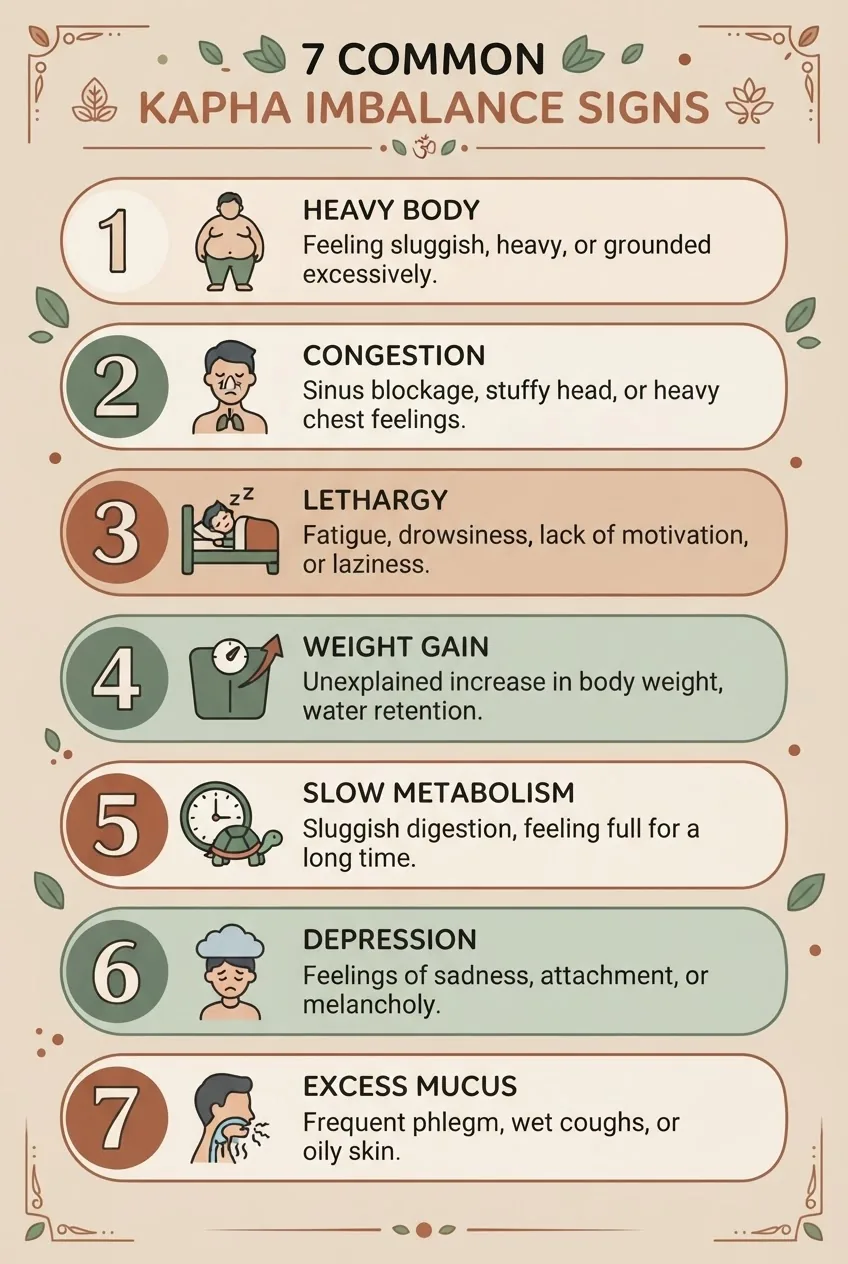
- Heavy body and limbs: Persistent sense of physical heaviness and slow movement; may feel weighted after meals.
- Excess mucus and congestion: Chronic sinus or chest congestion, thick phlegm and prone to colds and respiratory sluggishness. Ayurvedic Hair Care Tips
- Weight gain and slow metabolism: Gradual unexplained weight gain and difficulty losing weight; digestion that feels heavy or clogged.
- Lethargy and oversleeping: Tendency to oversleep, morning grogginess, and reduced motivation or initiative.
- Emotional dullness or depression: Low mood, attachment to routine, difficulty with change and a tendency to ruminate.
- Fluid retention and puffiness: Swelling in hands/feet or around the face, especially after heavy meals.
- Slow wound healing or sluggish elimination: Bowels may be slow; detoxification processes feel slow or blocked.
Numbered checklists like the infographic above help you prioritize symptoms to address; transition next into diet principles that directly target these issues.
Kapha Ayurveda Diet Principles
Answer: Kapha-balancing diet principles emphasize light, warm, dry and stimulating foods—reduce heavy, oily, cold, sweet and dairy-rich items; favour pungent, bitter and astringent tastes, warm cooking, digestive spices and moderate portions timed to stimulate agni (digestive fire).

Term: agni — the digestive fire in Ayurveda responsible for metabolizing food, emotions and impressions; Kapha requires stimulation of agni to prevent stagnation.
Core diet actions to balance Kapha:
- Make food warm and light: Serve cooked, warm meals rather than cold or raw; prefer steamed, sautéed or baked preparations.
- Favour pungent, bitter and astringent tastes: Use ginger, black pepper, turmeric, green leafy vegetables and legumes to stimulate digestion and reduce mucus.
- Reduce sweet, sour and salty tastes: Limit sugary foods, cheeses, heavy dairy and excessive salts that increase Kapha’s heavy, moist qualities.
- Prefer dry, easily digestible grains: Millet, barley, quinoa and lighter rice varieties over sticky white rice or heavy wheat-based foods.
- Smaller, regular meals: Avoid late-night eating and heavy dinners; aim for two to three moderate meals with the largest at midday when agni peaks.
- Use stimulating cooking methods: Light frying, roasting and strong spices help counter Kapha’s cold, moist tendency.
Foods to decrease for Kapha
- Heavy dairy: whole milk, cream, cheese, butter in large amounts
- Cold, oily and fried foods
- Sweets and refined sugars
- Seafood that is oily or cold in effect
- Excessive starches and dense grains like large portions of pasta and white rice
Foods to increase for Kapha
- Light grains: millet, barley, buckwheat, quinoa
- Lots of steamed or sautéed vegetables, especially bitter greens: kale, dandelion, mustard greens
- Legumes cooked with spices to aid digestion: mung dal, lentils (moderate portions)
- Fruits that are astringent or tart: apples, pomegranates (fresh, not heavy bananas)
- Warm herbal teas: ginger, cinnamon, tulsi (holy basil)
Spices and preparation practices
Use warming and drying spices liberally: ginger (Zingiber officinale), black pepper (Piper nigrum), long pepper (pippali), turmeric (Curcuma longa), cinnamon and mustard seed. Traditional Kapha-balancing preparations include trikatu (a powdered blend of black pepper, long pepper and dry ginger) used to stimulate digestion; practitioners commonly prepare it as a small pinch with warm water after meals.
According to contemporary Ayurvedic research (2022) reviewed on PubMed, warming spices such as ginger and black pepper show measurable effects on gastric motility and digestion. PubMed review resources provide clinical and preclinical studies that explore these effects.
Practical dos and don’ts:
- Do: Eat warm, cooked foods; add spices; chew thoroughly; drink warm water between meals.
- Don’t: Eat cold or leftover meals frequently; consume heavy desserts after dinner; snack mindlessly, especially on dairy-based snacks.
For readers focused on weight management aligned with Kapha balancing nutrition, consult the Ayurveda and Weight Loss Guide for meal plans and portion strategies.
Also see broad nutrition principles in the Ayurvedic Diet Principles and Nutrition Guide for foundational context.
Transition: Diet is the most direct lever to reduce Kapha stagnation; combined with lifestyle changes it produces robust shifts in energy and mucus reduction.
Lifestyle and Health Tips for Kapha Dosha
Answer: To balance Kapha, adopt an active, warming daily routine: wake early, engage in vigorous exercise, favour stimulating practices (dry brushing, alternating warm/cool showers), limit daytime naps, schedule lighter dinners, and use breathwork and invigorating herbs to uplift mood and clear mucus.
Term: dinacharya — a daily routine in Ayurveda designed to maintain dosha balance through time-specific practices.
Step-by-step Kapha daily routine (dinacharya) — practitioner-tested
- Wake before 6:00 AM: Rise at first light or earlier to counter Kapha’s late-sleep tendency; begin with 10 minutes of gentle movement or sun salutations.
- Hydrate with warm water: Drink a cup of warm water with lemon and a pinch of ginger to stimulate digestion and mucus clearance.
- Self-care: Dry brush the skin toward the heart (2–3 minutes) to stimulate circulation; perform a brisk oil massage (abhyanga) with lighter oils like mustard or sesame for a short duration followed by a warm shower.
- Exercise: 30–60 minutes of dynamic exercise (cardio, brisk walking, interval training) to burn Kapha stagnation; morning is best.
- Meals: Eat a warm, substantial breakfast and a largest lunch at midday; keep dinner light and early.
- Mood & mind: Short, regular breathwork (kapalabhati or dynamic pranayama) and 10–15 minutes of mindful walking to lift heavy mood and promote clarity.
- Sleep: Aim for 6–7 hours, sleep earlier (by 10–11 PM) to avoid late-night Kapha accumulation.
These steps reflect practitioner experience balancing Kapha: small, consistent changes (earlier wake time, spice use, exercise) often show measurable improvements within weeks for most people.
Exercise and movement
Prefer exercises that raise heart rate and produce warmth: brisk walking, jogging, cycling, cardio classes, strength training and sun salutations. Avoid excessive gentle stretching or slow-paced movement during a Kapha surge; instead aim for intensity and consistency to counter inertia.
For professional support with tailored routines and therapies such as medicated oils or panchakarma, consider the local options: Find Ayurveda Center Near Me, Locate Ayurveda Massage Near Me, or Find Ayurvedic Doctor Near Me for diagnostic guidance and personalised protocols.
Seasonal care for Kapha
Kapha accumulates in late winter and spring (Kapha season); during these times emphasize drier, lighter foods, avoid heavy sweets and increase exercise and heating spices. In cold, damp climates, use warming clothing and steam inhalation with essential oils like eucalyptus to reduce congestion.
Sleep, stress and mood management
To avoid Kapha-related low mood or depression, limit daytime naps, create stimulating morning rituals, and use social engagement and purposeful work to interrupt inertia. For stress, Kapha responds well to invigorating breathing practices, short meditations emphasizing compassion and structured daily goals.
Panchakarma relevance: For chronic Kapha stagnation with mucus, obesity or long-standing respiratory issues, supervised Panchakarma detox (e.g., virechana, nasya) under a licensed practitioner can help eliminate deep-seated Kapha; learn more in the Panchakarma Retreats and Ayurvedic Wellness Center Options or clinical detox resources like the Complete Ayurveda Detox Guide.
Transition: Herbs and supplements can support these routines—see the targeted herbal tools next.
Ayurvedic Herbs and Supplements for Kapha
Answer: Herbs that are pungent, bitter and heating are preferred: ginger, pippali (long pepper), trikatu blends, tulsi, guduchi and harshana; use under practitioner guidance and consider standardized preparations for safety and potency.
Below is a concise reference to commonly recommended Kapha-balancing herbs and supplement forms.
| Herb/Supplement | Traditional use for Kapha | Notes / safety |
|---|---|---|
| Ginger (Zingiber officinale) | Warming, stimulates agni, reduces mucus | Commonly used fresh or powdered; avoid excess in gastric ulcers |
| Pippali (Piper longum) | Stimulates digestion, clears respiratory channels | Used in small doses; follow practitioner dosing |
| Trikatu | Blend (black pepper, long pepper, dry ginger) to kindle agni | Traditionally used as a pinch with warm water; can irritate mucosa if overused |
| Tulsi (Ocimum sanctum) | Respiratory support, mild stimulant for kapha-related stagnation | Safe as tea; consult if on blood-thinning medication |
| Guduchi (Tinospora cordifolia) | Immune-modulating, supports metabolism | Used in clinical formulations; check interactions with immunosuppressants |
For powdered herb options, sourcing and standardized extracts, see the Guide to Ayurvedic Herbs Powder and Herbal Supplements and the Complete Ayurvedic Medicine List and Herbal Formulas Guide.
For supervised detox programs that integrate these herbs and panchakarma methods, consult the Complete Ayurveda Detox Guide.
Safety and evidence: According to a 2023 review of clinical studies (source type: peer-reviewed review), several Ayurvedic herbs show potential for metabolic and respiratory support but require quality-controlled extracts and practitioner oversight. For clinical evidence and safety summaries consult national research databases such as PubMed and the U.S. National Center for Complementary and Integrative Health at NCCIH.
For a deeper dive into supplements, refer to the pillar resource: Ayurvedic Supplements and Herbal Medicine Explained Guide
Transition: Herbs assist physical shifts; the next section explains how Kapha balance supports overall wellness and mental health.
How Kapha Dosha Relates to Overall Wellness
Answer: Kapha’s stabilising qualities support tissue building, immunity and emotional steadiness; balanced Kapha fosters longevity and resilience, while imbalance predisposes to stagnation-related conditions (metabolic, respiratory, mood) that require integrated diet, lifestyle and therapeutic responses.
Kapha’s role in holistic wellness extends beyond organs: it governs connective tissues, mucous membranes and emotional grounding. Well-managed Kapha provides steady energy, strong memory and supportive relationships; conversely, excess Kapha manifests as inertia, congestion and depressive tendencies.
Case example (practical scenario): A 42-year-old client with Kapha-dominant features presented with seasonal sinus congestion, 8 kg gradual weight gain and low energy. Over 12 weeks, a practitioner-led plan emphasised morning exercise, reduced dairy and sweets, daily ginger tea and trikatu after meals, plus weekly brisk sauna. The client reported reduced congestion, 5 kg weight loss and improved morning energy within eight weeks—an example of how combined diet and routine can restore Kapha balance in a typical outpatient scenario.
For more general wellness framing and how doshas influence preventative care, see the broader primer: Ayurveda for Wellness Explained.
Dosha interaction note: Kapha often requires different strategies than Vata (which needs grounding) or Pitta (which needs cooling); compare your approach with Pitta and Vata-specific guidance to avoid overcorrection.
Transition to closing: The summary below condenses actionable steps you can apply immediately.
Comparison with other doshas (brief)
Answer: Kapha differs from Vata (light, mobile, dry) and Pitta (hot, sharp, oily) by being heavy, cool, moist and stable; management for Kapha emphasises warmth, stimulation and drying measures versus Vata’s warming-nourishing and Pitta’s cooling-restorative strategies.
Use this table for quick contrast:
| Feature | Vata | Pitta | Kapha |
|---|---|---|---|
| Elements | Air, Ether | Fire, Water | Earth, Water |
| Key needs | Warmth, oil, routine | Cooling, moderation | Stimulation, warmth, dryness |
If you want to study Pitta or Vata dietary contrasts, see Pitta Ayurveda Diet and Dosha Guide and Vata Dosha Diet and Ayurveda Tips.
Panchakarma relevance for Kapha (brief mention)
Answer: Panchakarma can be an effective, supervised approach for chronic Kapha excess—procedures like nasya, virechana and localized fomentation reduce mucous, clear channels and reset metabolism under clinical guidance.
Panchakarma should be performed at accredited centres with medical oversight; for retreat options see Panchakarma Retreats and Ayurvedic Wellness Center Options and consult a qualified practitioner before beginning any detox protocol.
Mind-body connection under Kapha dosha
Answer: Kapha’s grounding physiology supports emotional steadiness but also predisposes to emotional stagnation and attachment; actively engaging mind through stimulating routines, creative projects and breathwork prevents depressive inertia and promotes resilience.
Applied practices for Kapha mental health:
- Dynamic pranayama (kapalabhati) to energise the mind
- Short, goal-oriented mindfulness sessions emphasizing novelty
- Social engagement and volunteering to counter withdrawal
- Structured sleep and activity schedules to maintain circadian rhythm
If you are exploring formal training in Ayurvedic practice to better understand mind-body integration, consider the Ayurvedic Practitioner Training and Medical Certification Guide or certification courses: Ayurveda Certification and Training Courses.
Conclusion: Kapha dosha supports stability and nourishment but requires warming, stimulating diet and a dynamic daily routine to prevent stagnation—prioritise warm, light foods, regular vigorous exercise, Kapha-balancing spices and short, structured breathing or meditation sessions. For personalised protocols, consult a qualified Ayurvedic practitioner; basic steps like earlier rising, ginger tea and increased physical activity often yield measurable improvements within weeks. Ready to tailor your Kapha plan? Start by adjusting one daily habit this week—wake 30 minutes earlier, add ginger to meals, or begin a 20-minute brisk walk.