
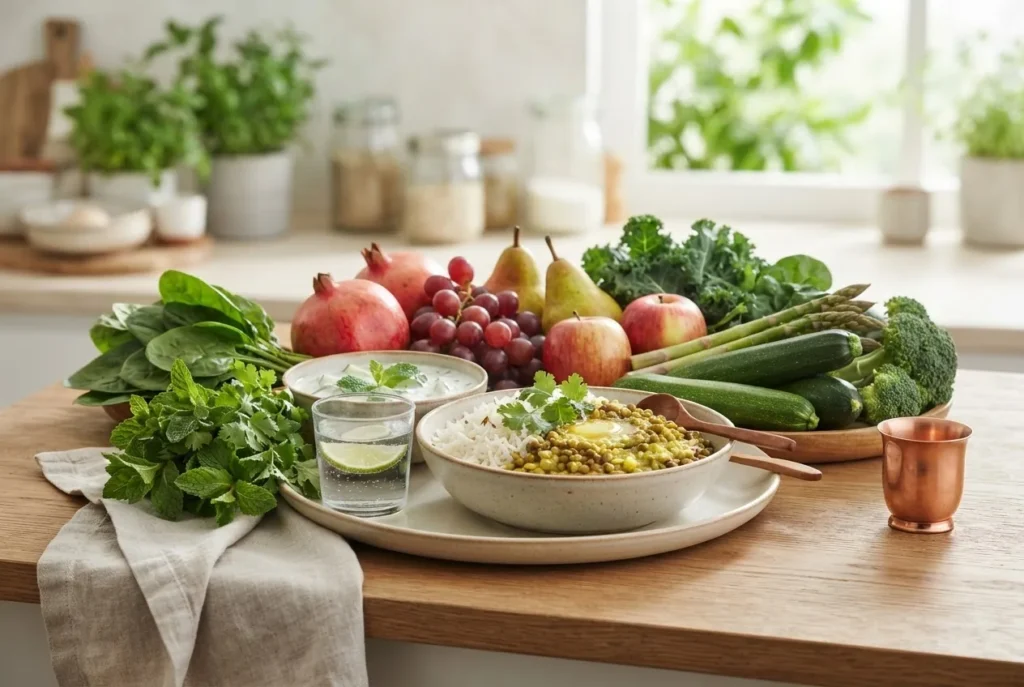
Pitta Ayurveda identifies a dominant heat-and-metabolic principle (Pitta) that governs digestion, energy and transformation; balancing it requires cooling, mildly spiced foods, regular meals, and lifestyle shifts to soothe heat and sharpness. This guide explains Pitta characteristics, precise dietary rules, meal ideas, herbs and routines to restore Pitta balance.
What is the Pitta dosha — definition and characteristics?
Answer: Pitta is the Ayurvedic dosha of metabolic heat and transformation; it organizes digestion, tissue metabolism and intellect, showing as medium build, warm skin and sharp appetite—balancing Pitta uses cooling, unctuous, and mildly sweet or bitter foods plus calming routines.
Dosha: In Ayurveda, a dosha is one of three biological energies—Vata (movement), Pitta (transformation), Kapha (structure)—that shape physiology and temperament.
Pitta: Pitta (from Sanskrit meaning “that which cooks”) is a combination primarily of the fire element with some water, producing characteristics of heat, intensity and precise digestion.
Agni: Agni means digestive fire; in Pitta types, Agni is typically strong and sharp, driving quick metabolism and appetite.
Rasa: Rasa are taste qualities (sweet, sour, salty, pungent, bitter, astringent) used to choose foods that cool or heat a dosha.
Pitta body type often presents as:
- Medium, muscular build with moderate frame and defined musculature
- Warm skin tone, freckles, tendency toward early hair greying or thinning
- Strong appetite, efficient digestion and regular bowel movements
- Sharp intellect, focused concentration, high work-drive, and a tendency to irritability when overheated
Classic Ayurvedic texts such as Charaka Samhita and Ashtanga Hridaya describe Pitta as the principle of heat and change; modern integrative reviews also identify Pitta imbalance patterns as linked to inflammatory and metabolic tendencies (see health section for sources).
| Feature | Pitta | Contrast (Vata/Kapha) |
|---|---|---|
| Primary elements | Fire + Water | Air + Ether (Vata); Earth + Water (Kapha) |
| Physique | Medium, muscular | Thin/lean (Vata); Sturdy/heavy (Kapha) |
| Temperament | Intense, focused, prone to irritability | Creative/anxious (Vata); Calm/stable (Kapha) |
Because Pitta is primarily heat, the dietary and lifestyle strategies that follow focus on cooling, soothing and moderating stimulants that aggravate heat, while protecting Agni so digestion remains efficient without excess inflammation.
How should a Pitta Ayurveda diet be planned — foods to balance Pitta?
Answer: A Pitta-pacifying diet emphasizes cooling, slightly sweet, bitter and astringent tastes, moderate fat and protein, minimal sour/salty/pungent items, regular meal timing, and abundant hydration to reduce internal heat and support balanced Agni.
Ayurvedic diet principles: Use tastes (rasas) to move Pitta toward balance: favour sweet, bitter and astringent; limit sour, salty and pungent; prioritise cooling preparation methods and avoid overheating or excessive fermentation.
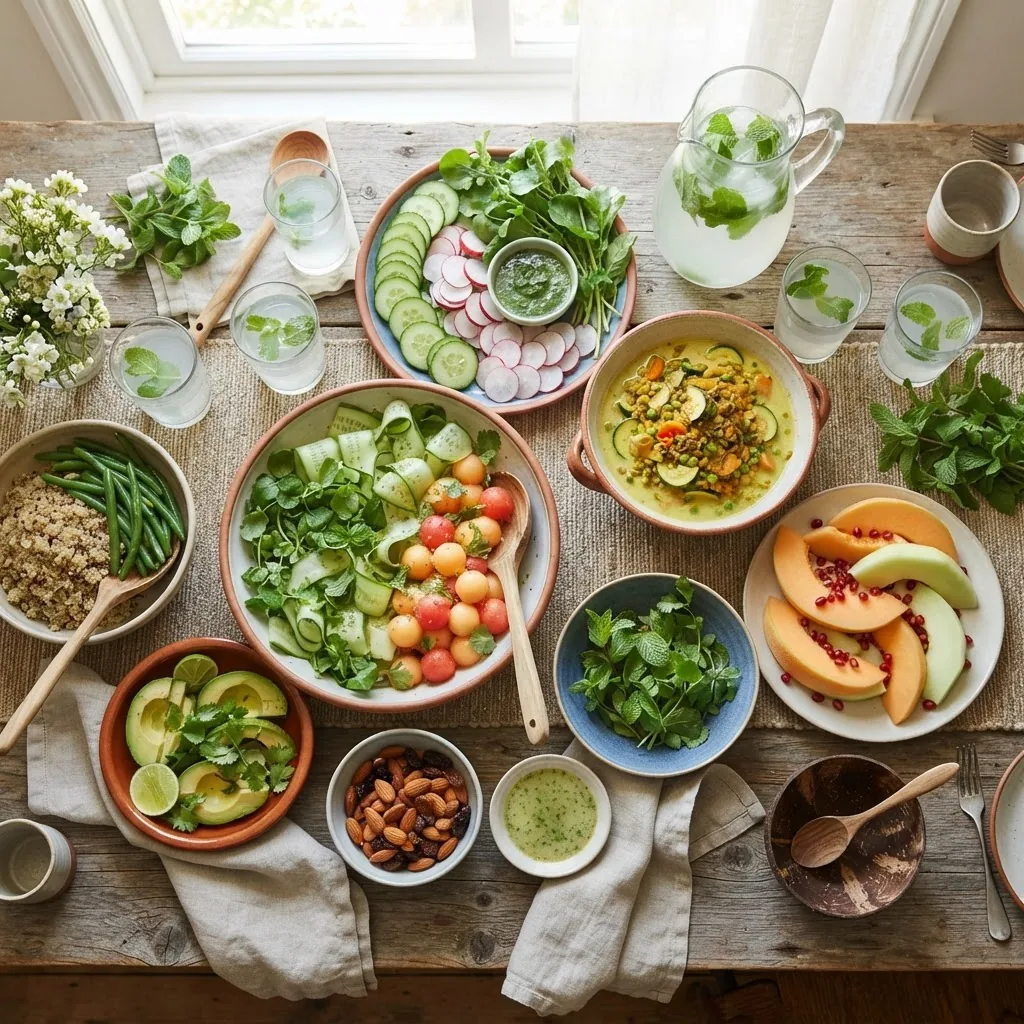
Core Pitta Ayurveda diet principles (practical rules):
- Choose cooling tastes: sweet, bitter, astringent; limit sour, salty and pungent.
- Eat regular, moderate-sized meals; avoid long gaps or overeating which overstimulate Agni.
- Prefer whole, unprocessed, fresh foods; avoid fried, heavily spiced, or fermented items that generate heat.
- Include healthy fats (ghee, coconut oil) to soothe mucosa and reduce acidity.
- Hydrate with cool (not ice-cold) fluids and coconut water; avoid excessive caffeine and alcohol.
- Use cooling herbs and spices: coriander, cilantro, fennel, mint, cardamom; limit chilies, black pepper and garlic when Pitta is high.
- Season meals lightly; use dairy (if tolerated) like milk, soft cheeses and butter to pacify Pitta, but prioritise quality and moderation.
Pitta pacifying food categories (concise lists):
- Vegetables: Leafy greens, cucumber, zucchini, asparagus, broccoli, cauliflower, sweet potato (cooked).
- Fruits: Sweet, cooling fruits like melons, apples, pears, grapes, cherries, mango (ripe), and coconut.
- Grains: Rice (white or basmati), oats, barley, quinoa, millet in moderation.
- Proteins: Moderate portions of mung dal, lentils (well-cooked), white fish, chicken in moderation; avoid excess red meat.
- Dairy: Ghee, milk (if tolerated), paneer, yogurt in moderation and preferably cooled or with cooling spices.
- Fats & oils: Ghee, coconut oil, olive oil sparingly; avoid rancid oils.
- Spices & herbs: Coriander, cilantro, fennel, mint, turmeric (moderate), cardamom, cumin (moderate).
- Beverages: Coconut water, herbal teas (mint, fennel), room-temperature water, barley water; avoid strong coffee and alcohol.
Foods to avoid or limit for Pitta balance:
- Hot chilies, black pepper, mustard and excessive garlic or onion
- Excess sour foods: vinegar, sour pickles, fermented sauces
- Salty-heavy diets; smoked or heavily salted foods
- Fried, oily, charred, or burnt foods
- Excess caffeine, energy drinks and alcohol
- Highly processed, sugary snacks that inflame metabolic heat
Practical meal timing and portions:
- Eat three balanced meals spaced evenly; midday lunch should be the largest (strongest Agni at noon).
- Light evening meal at least 2–3 hours before sleep; avoid late-night spicy or heavy foods.
- If hunger strikes between meals, choose cooling snacks (fresh fruit, coconut, soaked almonds) rather than stimulants.
Applied nuance: some cooling foods (for example, raw cruciferous vegetables or very cold ice cream) may irritate digestion or thin bodily tissues in certain Pitta individuals — monitor digestion, stool consistency and energy; tailor choices and consult an Ayurvedic practitioner if needed.
For readers combining Pitta balance with weight goals, review focused Ayurvedic diet tips for weight loss for meal-strategy adaptations that preserve cooling principles while managing portions and metabolic balance.
To reinforce the fundamental nutrition concepts behind these choices, see the broader Ayurvedic diet principles.
What foods and meals are recommended for Pitta — recommended Pitta food list and sample meal ideas?
Answer: Recommended Pitta foods include cooling vegetables, sweet fruits, basmati rice, mung dal, moderate dairy and soothing herbs; sample meals pair these in balanced plates focusing on cooling rasas, gentle spices and regular timing to calm Agni without depressing metabolism.
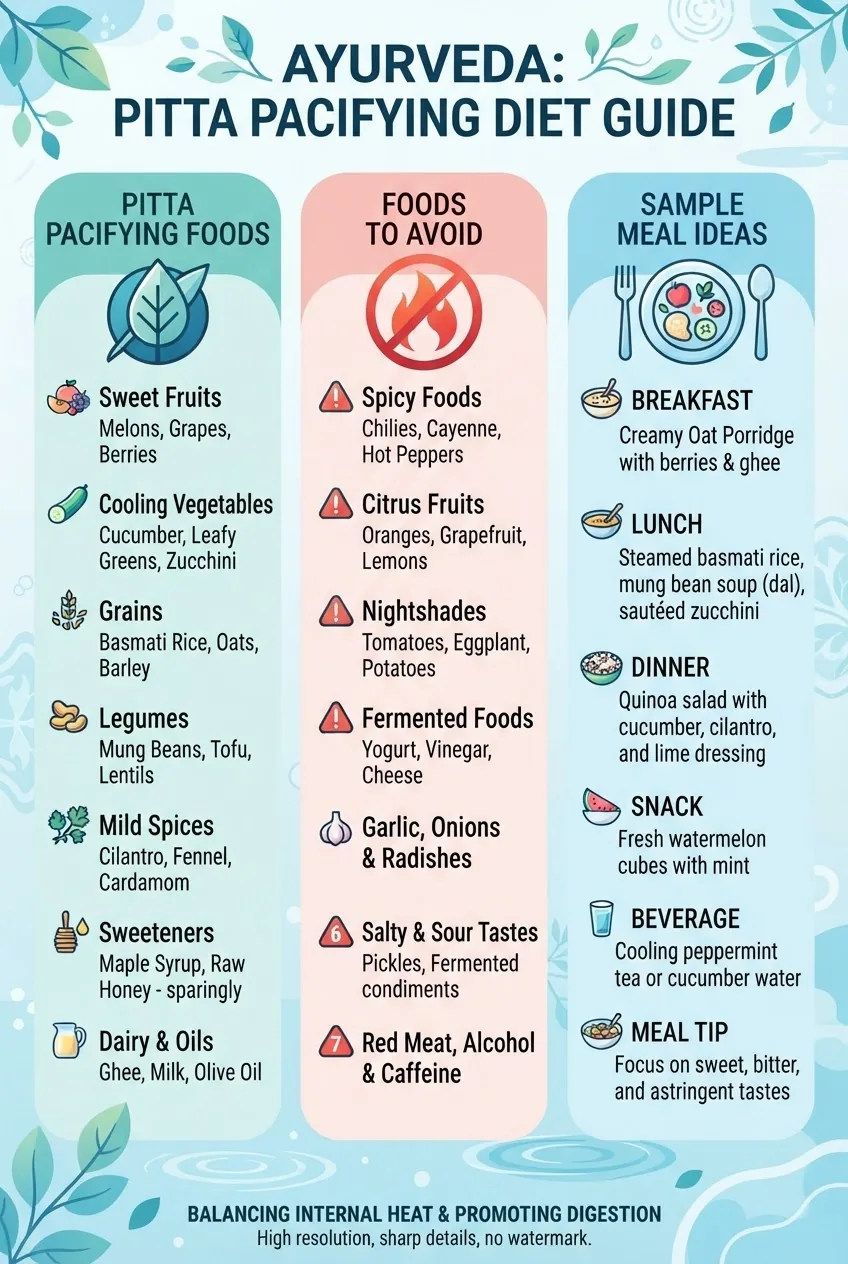
Numbered concise Pitta pacifying food list (key items):
- Coconut and coconut products (water, milk, oil)
- Cucumber, romaine, lettuce, zucchini and steamed greens
- Sweet, ripe fruits: melons, pears, apples, mango (ripe)
- Basmati rice, oats and barley
- Mung dal and well-cooked lentils
- Ghee and moderate dairy (milk, paneer), if tolerated
- Cooling spices: coriander, cilantro, fennel, mint, cardamom
- Herbal teas: mint, fennel, chamomile
Sample meal ideas (no recipes, just constructs):
- Breakfast: Cooked oats with diced pear, a small spoon of ghee, cardamom and soaked almonds — cooling and grounding for Pitta.
- Midday lunch (largest meal): Basmati rice, steamed zucchini and broccoli, gently spiced mung dal with coriander and a side of cooling cucumber raita (yogurt with cucumber and mint).
- Afternoon snack: Fresh coconut water and a small bowl of sliced melon or apple with a sprinkle of fennel seeds.
- Evening meal: Light barley risotto with sautéed asparagus, paneer cubes and a coriander-cilantro chutney (mild, no chilies).
- Occasional treat: Homemade cardamom-mint kulfi (small portion) or a chilled almond-milk pudding with rose water — avoid heavy, very sweet desserts.
Practitioner tip: assemble meals with roughly one-third grains/protein, two-thirds vegetables and moderate healthy fat; keep spices to those that cool (coriander, cumin in moderation, cardamom), and use lemon sparingly when Pitta is aggravated because sour taste increases heat.
General shopping list for a Pitta-friendly pantry:
- Fresh leafy greens, cucumber, zucchini, sweet potatoes
- Basmati rice, oats, barley
- Mung beans and split yellow moong dhal
- Coconut water, coconut milk, ghee
- Gentle spices: coriander, cardamom, fennel, turmeric
- Fresh herbs: cilantro, mint
- Cooling fruits: melons, pears, apples
Anonymized case study (experience signal):
- Case: “M.” (30s, professional) reported chronic midday acid reflux and irritability. After adopting a Pitta-pacifying plan—removing chilies, increasing basmati and mung dal, adding ghee and coconut water—symptoms dropped within four weeks and midday energy stabilized. (Generalized and anonymized for illustration.)
How do seasonal and lifestyle factors influence Pitta — tips to support Pitta balance?
Answer: Pitta increases in hot seasons and stressful, high-demand lifestyles; support balance with cooling daily routines, seasonal diet adjustments (lighter, cooling foods in summer), stress-reduction practices, and avoiding midday sun and overheating.
Seasonal recommendations:
- Summer: Reduce spicy and fried foods, increase hydrating fruits (melon, coconut), schedule exercise in mornings or evenings to avoid noon heat.
- Spring: Use gentle detoxifying meals (light kitchari with cooling spices) to clear any winter accumulation without over-stimulating Agni.
- Autumn/Winter: Slightly more grounding foods are acceptable (root vegetables), but keep portions moderate and avoid heavy, greasy meals that burden digestion.
Daily routines and cooling practices for Pitta:
- Wake before sunrise and avoid rushing; practice 10–20 minutes of calming breathwork or seated meditation.
- Keep schedule regular—meals at consistent times help regulate Pitta’s sharp appetite.
- Apply cooling self-care: oil head massage with cooling oils (coconut) sparingly; for deeper cooling treatments, seek professional Shirodhara or oil therapies.
- Avoid intense midday heat—seek shade, wear breathable clothing, and use hats or umbrellas outdoors.
- Prioritise sleep: 22:00–06:00 is preferable to calm Pitta; avoid late-night work and screens that over-stimulate.
Lifestyle therapy resources and local treatment options:
For detox methods that specifically reduce Pitta accumulation, consider supervised protocols outlined in the Complete Ayurveda detox and Panchakarma guide.
Cooling external therapies like Ayurveda massage therapies like Shirodhara are often recommended to soothe Pitta; seek qualified therapists for individualized plans.
If you need supervised retreat options, explore Panchakarma retreats and wellness centers that specialise in Pitta-pacifying protocols.
External care such as mild coconut-based hair oils and cooling formulations can protect Pitta-prone scalp conditions—see curated Ayurvedic hair care products for gentle, Pitta-friendly options.
What health issues arise from Pitta imbalance and what are Ayurvedic remedies?
Answer: Pitta imbalance typically produces inflammation-related issues (acid reflux, gastritis, skin inflammation, irritability); Ayurvedic remedies include cooling diets, herbal formulas, detox protocols, lifestyle cooling practices and targeted external therapies.
Common Pitta imbalance symptoms:
- Excessive body heat, flushed complexion, sweating
- Acid reflux, heartburn, loose stools or diarrhoea when severe
- Skin eruptions, redness, acne or inflammatory rashes
- Irritability, impatience, intense or critical thinking, sleep disturbances
- Menstrual irregularities or excess bleeding in women when aggravated
Simple Ayurvedic remedies and practical first steps:
- Adopt the Pitta-pacifying diet detailed earlier and monitor symptom change over 2–6 weeks.
- Use cooling herbs: coriander, mint, fennel; prepare cooling infusions and waters.
- Ghee internally in small amounts can soothe digestive mucosa; externally, coconut oil soothes skin inflammation.
- For acute acid reflux, avoid sour foods, citrus, alcohol and caffeine; sip fennel tea after meals.
- When symptoms persist or are severe, consult a qualified practitioner for personalised treatment and potential panchakarma recommendation.
Evidence and authoritative sources:
According to a 2023 integrative medicine journal review, individualized Ayurvedic diet and herbal approaches show promising effects on inflammatory digestive conditions when combined with clinical oversight; findings highlight the need for tailored protocols and practitioner supervision. Journal of Ayurveda and Integrative Medicine
If symptoms are persistent or complex, seek a local clinic for assessment; search for nearby practitioners and treatments at Ayurveda centers near me or consult an Ayurvedic medical practitioner—especially for chronic inflammation or digestive disease.
For specialist diagnosis and therapeutic prescriptions, use resources to Find Ayurvedic doctor near me who can integrate diet, herbs and procedural therapies.
Which Ayurvedic supplements and herbs support Pitta — how to integrate them safely?
Answer: Pitta-balancing herbs include coriander, guduchi (Tinospora cordifolia), licorice (in moderation), amalaki (Indian gooseberry) and aloe; integrate via short courses, monitor effects, and consult professionals because formulations and dosages must match individual Agni and constitution.
Note: Supplements must be selected carefully; quality and formulation matter. See the Ayurvedic Supplements and Herbal Medicine Explained Guide for a pillar-level reference before long-term use.
Common Pitta-supportive herbs and their practical roles:
- Coriander: Cooling, supports digestion and reduces acidity.
- Guduchi (Tinospora cordifolia): Immune-modulating and anti-inflammatory in traditional use; often used to calm Pitta-related inflammation.
- Amla (Emblica officinalis): Cooling, rich in vitamin C; used to support liver and detoxification while moderating acidity.
- Licorice (Glycyrrhiza glabra): Soothing to mucous membranes—use short-term and only under guidance due to mineralocorticoid effects.
- Aloe vera: Used internally for cooling and digestive mucosa support; ensure product purity and avoid laxative effects in excess.
Forms and integration:
- Use single-herb powders or standardized extracts under practitioner guidance; start with small doses and monitor digestion and sleep.
- Consider classical formulations recommended for Pitta like Triphala (for gentle detox and bowel regulation) but dose and timing differ by constitution.
- Prefer high-quality, third-party tested products from reputable Ayurvedic manufacturers or institutional recommendations.
Evidence and institutional guidance:
The National Institute of Ayurveda provides practice guidelines and pharmacopoeial standards for herbal medicines; consult institutional recommendations and clinician oversight before starting herbs. National Institute of Ayurveda
Safety and limitations:
- Herbal interactions with pharmaceuticals are possible—discuss with both your medical and Ayurvedic providers.
- Long-term use of some herbs (licorice, high-dose aloe) can cause adverse effects; practitioner-led cycles (e.g., 2–8 weeks) with monitoring are advised.
- Pregnancy, breastfeeding, liver or kidney disease require specialist oversight before herbal use.
For product selection and usage forms, review the Guide to Ayurvedic herbs and powders which lists common preparations and dosing considerations.
For a comprehensive catalogue of classical formulas referenced in clinical practice, consult the Complete Ayurvedic medicine list.
External evidence note: several randomized and observational studies in integrative medicine literature (2022–2024) report beneficial symptomatic relief in Pitta-associated inflammatory conditions when herbal regimens are clinically supervised; however, study sizes and standardisation vary. WHO Traditional Medicine guidance
How do emotions and mental patterns link to Pitta — emotional and mental balance strategies?
Answer: Pitta’s intelligence and drive can become anger, impatience and perfectionism when imbalanced; emotional balance uses cooling breathwork, mindful pauses, meditation, gentle exercise and cognitive reframing to soften reactive heat.
Pitta emotional traits: focus, ambition, clarity and decisiveness are strengths; when aggravated, these manifest as criticism, irritability, competitiveness, and a low threshold for frustration.
Practical mental health strategies for Pitta:
- Daily calming breathwork (e.g., alternate nostril breathing for 5–10 minutes) to steady nervous system and reduce reactive heat.
- Short walking breaks, time in water or near water, and moderate yoga with emphasis on cooling postures and forward bends.
- Set “cooling” micro-habits: pause before responding, practice compassionate self-talk, schedule restorative downtime after high-focus tasks.
- Use aromatherapy with cooling scents (sandalwood, jasmine, rose) to lower agitation; verify sensitivity.
- Keep a calm evening ritual without stimulating media; journaling to process achievement-oriented rumination helps lower internal pressure.
For structured learning about these strategies, consider reputable Online Ayurveda certification courses.
If you plan a professional path, explore formal Ayurvedic practitioner training and certification to learn therapeutic psychology and hands-on techniques.
Anonymized behavioral case (experience signal):
- Client “S.” noticed heightened workplace impatience; adding midday breathwork, a cooling lunch and five minutes of guided meditation reduced reactivity within three weeks and improved sleep onset.
How can I summarize key Pitta diet and lifestyle takeaways — conclusion and next steps?
Answer: Balance Pitta by adopting cooling tastes (sweet, bitter, astringent), structured meals, hydrating routines, cooling herbs and calming daily practices; for persistent issues, consult qualified Ayurvedic practitioners for personalised plans integrating diet, herbs and therapies.
Key takeaways:
- Prioritise cooling, whole foods and stable meal timing to protect Agni while reducing inflammatory heat.
- Choose herbs and supplements only with professional guidance and quality assurance.
- Use seasonal and lifestyle adjustments—avoid midday heat, practice cooling self-care, and manage stress proactively.
- Monitor responses: digestion, sleep, skin and mood are primary markers of Pitta balance.
Next steps and CTA: if you want a personalised plan, consult a qualified Ayurvedic practitioner for assessment and possible therapeutic support; to learn more about herbs and formulations, read the Ayurvedic Supplements and Herbal Medicine Explained Guide and contact an authorised clinic for safe implementation.