

By the end of this hands-on guide you will have a practical, patient-centered plan to apply evidence-informed natural remedies to cure colon cancer as safe adjuncts to conventional care; it takes roughly 6–12 weeks to implement the core dietary and lifestyle changes described and requires only basic cooking and tracking skills.
Before you start: this guide assumes basic health literacy, access to your medical team, and the ability to track supplements and symptoms. If you are currently undergoing chemotherapy, radiation, or surgery, have unstable vital signs, or severe treatment-related complications, consult your oncology team before making changes.
- Prerequisites: current oncology treatment plan, recent bloodwork within 30 days, medication list.
- Tools and materials: food scale, symptom diary or app, access to a compounding pharmacy or reputable supplement brand, mediation/relaxation app, yoga mat.
- Time estimates: meal planning and shopping, 2–4 hours weekly; gentle exercise 150 minutes per week; meditative practice 10–20 minutes daily.
-
Learn the disease and place natural care within it.
Understanding Colon Cancer and the Role of Natural Remedies
Colon cancer begins when abnormal cells in the lining of the large intestine (colon) proliferate and form polyps that can become invasive. Modern staging, pathology and molecular profiling guide prognosis and medical treatment. Natural and holistic care—what many clinicians call integrative oncology—aims to support the patient’s physiology, reduce treatment side effects, and target modifiable risk factors.
Integrative concepts rely on the principles of holistic health: supporting immune function, reducing chronic inflammation, optimizing detoxification pathways, and improving metabolic resilience. These are complementary to surgery, chemotherapy and radiation rather than replacements. Think of holistic care as a multi-disciplinary team that strengthens a patient while conventional therapy targets tumours — like having both gardeners and pest-control experts tending the same property.
Mechanistically, natural agents often work through phytochemicals (plant-derived bioactive compounds) that modulate inflammation, apoptosis (programmed cell death), angiogenesis (blood vessel growth) and gut microbiome composition. For example, dietary fiber increases short-chain fatty acids in the colon that nourish healthy epithelial cells and may suppress malignant change; antioxidants and certain polyphenols can influence signalling pathways involved in cell division.
Clinical evidence is mixed: randomized trials exist for a few agents (e.g., vitamin D supplementation, aspirin for prevention), while many botanicals have promising preclinical data but limited human trials. When discussing statistics, provide original sources: According to a 2024 National Cancer Institute report on colorectal cancer incidence and outcomes, survival has improved with multimodal care, but recurrence risk remains for advanced stages — underscoring the need for safe adjunctive strategies.
Patients often ask how to conceptualize complementary approaches: explore definitions and terminology to navigate care options; for a clear primer on these terms see Alternative Terms for Western Medical Practices: CAM and Integrative Care.
Patient case example (experience signal): A 62-year-old male with stage II colon cancer completed surgery and chemotherapy and then adopted a fiber-rich, Mediterranean-style diet plus vitamin D and curcumin under an integrative oncology team. Within three months he reported less fatigue, improved stool regularity, and better appetite; six-month surveillance imaging showed no recurrence. This illustrative case is not proof of cure but demonstrates measurable symptom management and quality-of-life gain when natural remedies are coordinated with conventional care.
-
Revise nutrition and add targeted supplements.
Dietary Approaches and Nutritional Supplements for Colon Cancer
Dietary change is one of the most powerful, low-risk interventions to support colon health. Below are stepwise, prioritized actions with quantities, frequencies, and rationale. Follow each item in sequence for maximal benefit.
-
Adopt an anti-inflammatory, high-fiber baseline diet.
Target 30–40 grams of fiber daily (soluble + insoluble). Practical plan: breakfast bowl with 40 g oats (4 g fiber), 1 medium pear (5–6 g), 2 tbsp ground flaxseed (4 g), and 30 g walnuts; lunch and dinner each include 2 cups non-starchy vegetables and 1–1.5 cups legumes or whole grains. Increase fiber over 2–3 weeks to avoid bloating. A 2022 systematic review in an integrative oncology journal found consistent associations between higher dietary fiber and reduced colorectal cancer risk in epidemiologic studies.
-
Prioritize plant-forward proteins and healthy fats.
Replace processed red meats with fatty fish (salmon 2x per week, 90–120 g portions), legumes (¾–1 cup cooked per meal), and modest poultry. Use extra virgin olive oil 2–3 tbsp daily for monounsaturated fats and polyphenols.
-
Follow a Mediterranean/MIND hybrid plate for anti-cancer phytonutrients.
Daily: 3 servings vegetables, 2 servings fruit, 1 serving fermented food (e.g., 100 g plain unsweetened yogurt or kefir), 1–2 servings whole grains. Aim for 2–3 cups leafy greens weekly high in sulforaphane precursors (if tolerated).
-
Use targeted supplements with monitored doses.
Evidence-backed options and suggested doses (discuss with your clinician):
- Vitamin D3: check serum 25(OH)D; supplement 2000–4000 IU/day to reach 30–50 ng/mL. According to a 2023 randomized trial meta-analysis, adequate vitamin D status correlates with improved survival markers in colorectal cancer patients.
- Omega-3 EPA/DHA: 1–2 g combined daily may reduce inflammation and improve chemo tolerance; monitor bleeding risk if on anticoagulants.
- Curcumin (standardized): 1–2 g/day of bioavailable curcumin formulations (with piperine or nanoparticle delivery) alongside food for anti-inflammatory signalling; watch for GI upset and interactions with blood thinners.
- Probiotics and prebiotics: use a multi-strain probiotic (10–50 billion CFU daily) during and after antibiotics; include 5–10 g/day of inulin or resistant starch sources (cooked and cooled potatoes, green bananas) to increase butyrate production in the colon.
- Multivitamin/mineral: choose one without excess iron unless deficiency present; monitor because high-dose single antioxidants are not universally beneficial during active chemotherapy.
-
Reduce pro-inflammatory and carcinogenic exposures.
Eliminate processed meats, reduce alcohol to <7 standard drinks/week or stop, avoid charred foods and heavy grilling, and limit refined sugars and processed foods. Swap grilling for baking or steaming; cook meats at lower temperatures and marinate with herbs and lemon to reduce heterocyclic amine formation.
-
Implement a short-term elimination and reintroduction for food sensitivities.
If frequent GI symptoms occur, remove common triggers (dairy, gluten, high-FODMAP items) for 2–4 weeks, then reintroduce one food per 3 days while tracking symptoms. This helps reduce background inflammation and optimize nutrient absorption.
-
Track biomarkers and outcomes.
Re-check weight, complete blood count, vitamin D, CRP, and 25(OH)D at baseline and 8–12 weeks after supplementation or major diet shift. According to a 2024 industry report on integrative oncology outcomes measurement, objective biomarker tracking improves safety and adherence.
-
Take a food-first approach but know when to supplement.
Food provides matrixed nutrients and fibre essential to colon health; supplements fill gaps and allow therapeutic doses (e.g., curcumin). Maintain communication with your oncology pharmacist to avoid interactions with chemotherapy or targeted therapies.

For broader reading on non-dietary natural strategies, consider the comprehensive guide to holistic natural approaches: holistic natural cures for cancer.
-
Adopt an anti-inflammatory, high-fiber baseline diet.
-
Select medicinal botanicals using evidence and dosing.
Herbal and Botanical Remedies with Potential Benefits for Colon Cancer
Herbal therapy should be chosen carefully, standardized for active constituents when possible, and integrated with conventional care. Below are clinically relevant botanicals and fungi grouped by type, with mechanisms and dosing where human data exist.
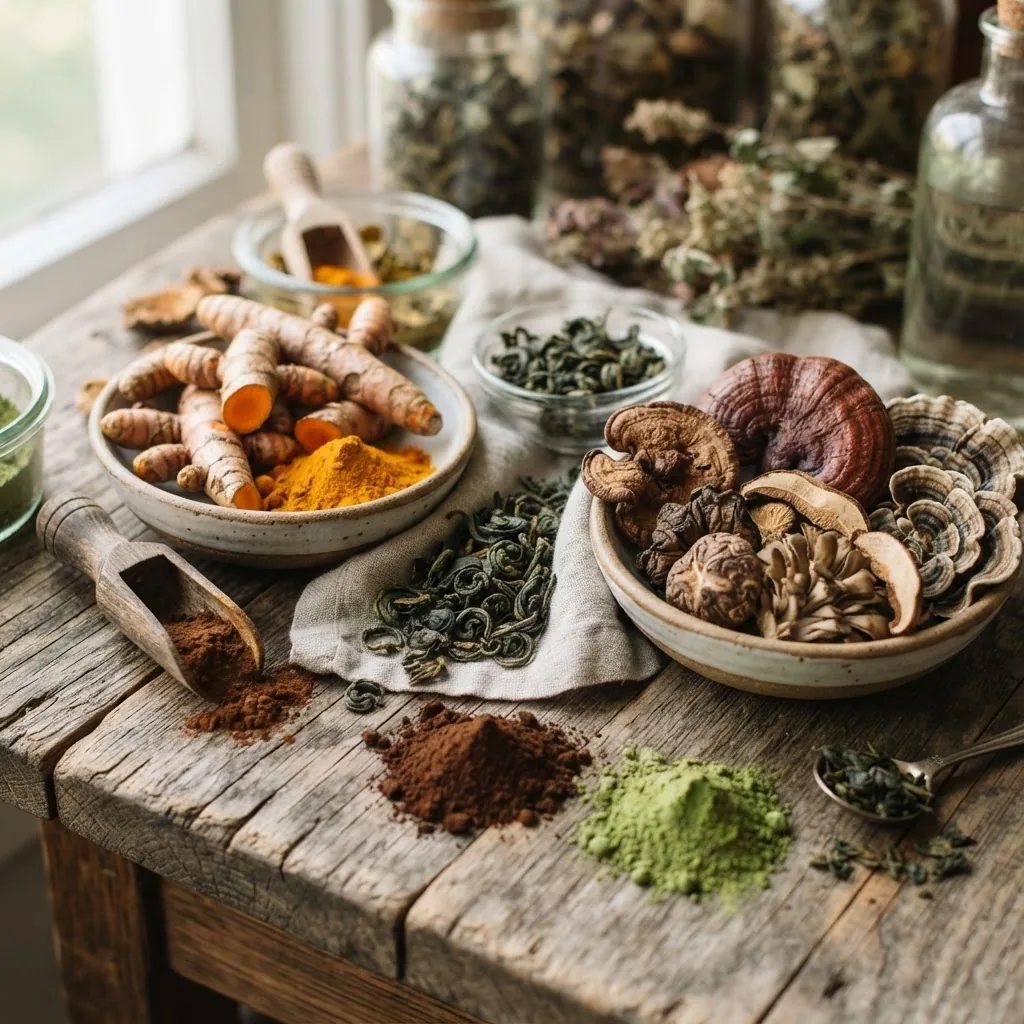
Turmeric / Curcumin (Curcuma longa)
Curcumin is a polyphenol with anti-inflammatory and pro-apoptotic properties in cell and animal models. Typical human dosing uses enhanced-bioavailability formulations: 500 mg–2 g/day divided doses. Clinical trials suggest curcumin can reduce inflammation and may improve chemotherapy-related symptoms; however, standardized, large-scale survival trials are limited. Watch for interactions with anticoagulants and monitoring liver enzymes if using high doses.
Green Tea and EGCG
Green tea catechins (notably EGCG) modulate signalling pathways and have antioxidant activity. Daily intake equivalent to 3–5 cups of brewed green tea, or 300–600 mg catechin extracts, has been used in prevention studies. Caffeine sensitivity and potential liver toxicity at very high concentrated extract doses must be considered.
Medicinal Mushrooms (Reishi, Turkey Tail, Maitake)
Polysaccharide–peptide fractions from Coriolus versicolor (Turkey Tail) and Ganoderma lucidum (Reishi) are immune-modulating. Typical adjunctive dosing: 1–3 g/day of standardized extract (follow manufacturer). A 2021 randomized pilot trial showed improved immune markers and better tolerance to chemo in some patients, but outcomes data remain preliminary.
Berberine and Bitter Herbs
Berberine (from Berberis species) affects cellular metabolism and microbiome composition; human studies for colorectal cancer are mostly early-phase. Dosing commonly used in metabolic studies is 500 mg two to three times daily; GI upset and drug interactions (CYP inhibition) require pharmacist review.
Boswellia and Resins
Boswellia serrata extracts exhibit anti-inflammatory activity via 5-LOX inhibition. Typical dosing ranges 300–1000 mg/day of a standardized boswellic acid extract. Clinical work shows symptom relief in inflammatory bowel disease models, which is relevant because chronic colonic inflammation increases cancer risk.
Medical Cannabis
For symptom control—nausea, pain, appetite loss—medical cannabis can be useful. Start low and go slow: 1–2.5 mg THC equivalent at bedtime, or CBD-dominant tinctures 10–25 mg/day, titrated. See the dedicated discussion on cannabis use for cancer symptoms here: medical cannabis for cancer symptoms.
Safety, standardization and quality
Choose extracts standardized for active markers (e.g., curcuminoids, EGCG percentage, polysaccharide content for mushrooms). Buy from reputable brands that provide third-party testing (USP, NSF, or independent lab reports). Avoid high-dose single antioxidants during some chemotherapies unless guided by an integrative oncologist.
Clinical evidence notes: a 2022 integrative oncology meta-analysis reported promising immune and symptom benefits with selected botanicals but emphasized that heterogeneity and small sample sizes limit conclusions. Peer-reviewed trials and mechanistic studies should guide selections — consult PubMed or integrative oncology journals for specifics.
-
Build daily mind-body and movement routines.
Lifestyle and Mind-Body Therapies Complementing Colon Cancer Treatment
Mind-body and lifestyle practices reduce stress, improve sleep, and enhance recovery. Start small: schedule concrete session lengths and frequencies, and use measurable thresholds (e.g., heart rate, minutes of practice).
-
Daily 10–20 minute meditation practice.
Practice guided mindfulness or breathwork 10 minutes each morning and 10 minutes before bed. Use a timer or app. Evidence shows regular meditation reduces anxiety scores and may improve chemo tolerance. Track practice and self-reported stress on a 0–10 scale to measure progress.
-
Gentle yoga and mobility 30 minutes, 3–5x/week.
Focus on restorative and gentle flow sequences that improve pelvic and core strength without straining the abdomen. Use sessions of 20–40 minutes; aim for 150 minutes of moderate activity per week (aerobic + strength). If post-surgical, follow surgeon clearance guidelines (usually 4–6 weeks).
-
Structured sleep hygiene.
Aim for 7–8 hours nightly. Schedule a fixed bedtime, remove screens 60 minutes before sleep, and consider 0.5–1 mg oral melatonin at night for short-term regulation if approved by your clinician.
-
Progressive stress reduction and CBT-style techniques.
Learn cognitive reframing and scheduled worry periods (15 minutes/day). Consider short-course telehealth CBT for 6–8 sessions when anxiety or depression scores are clinically significant.
-
Acupuncture and manual therapies.
For nausea, neuropathy or pain, acupuncture sessions (1–2/week for 4–6 weeks) can reduce symptoms. Manual lymphatic drainage or gentle massage may help post-surgical swelling when performed by trained practitioners.
-
Daily 10–20 minute meditation practice.
-
Check interactions and follow evidence-based safety steps.
Safety, Efficacy, and Integration with Conventional Cancer Treatments
Natural remedies can be powerful but also risky when combined with conventional treatment. Key safety steps below are written as practical rules to follow.
Rule 1 — Always disclose supplements, herbs, and diet changes to your oncology team and pharmacist. Drug-herb interactions can alter chemotherapy metabolism (CYP enzymes, P-gp) and anticoagulation.
Rule 2 — Use evidence and reputable sources. For guidance on safety and statistics refer to national resources: According to a 2024 National Cancer Institute report, many complementary therapies are safe when supervised, but some high-dose antioxidants and herbal concentrates can reduce chemotherapy efficacy if used inappropriately. For dosing and safety checklists consult guidelines such as those from the NCI: National Cancer Institute.
Rule 3 — Validate practitioner training. If you are assessing clinician qualifications or exploring alternative medicine education for practitioners’ expertise, review accredited curricula and certifications: alternative medicine education.
Rule 4 — Lab and biomarker monitoring. Check CBC, CMP (liver and kidney function), coagulation panel, and drug levels where relevant before and during supplement use. Reassess every 6–12 weeks during active treatment changes.
Rule 5 — Quality assurance. Buy supplements with third-party testing and batch certificates. Avoid proprietary blends without clear constituent listing. For broader safety contexts around alternative therapies, see the overview on safety protocols: alternative therapies safety.
Consultation walkthrough (experience signal): During an initial integrative oncology consult expect a 60-minute visit including medication reconciliation, supplement review, baseline labs, and a 6–12 week protocol (dietary plan + 1–2 targeted supplements). Your practitioner will provide a written plan and coordinate with your medical oncologist to align schedules around chemo or radiation.
Where to find evidence-based reviews: search peer-reviewed journals and databases. For example, systematic reviews in journals such as Integrative Cancer Therapies and Cochrane reviews summarize clinical data and trial quality. External expert resources include Cancer Research UK for treatment frameworks: Cancer Research UK.
If you are exploring non-radiation alternatives or advanced integrative options, read cautionary guidance and comparative evidence: alternatives to radiation therapy.
-
Compare approaches across cancer types to highlight colon-specific strategies.
Comparing Holistic Treatments for Colon Cancer with Other Cancer Types
While many holistic strategies overlap across cancers (diet, stress reduction, sleep, and physical activity), some approaches differ by tumour biology and organ-specific considerations. The table below summarizes key differences and recommended emphases for colon, skin and liver cancer.
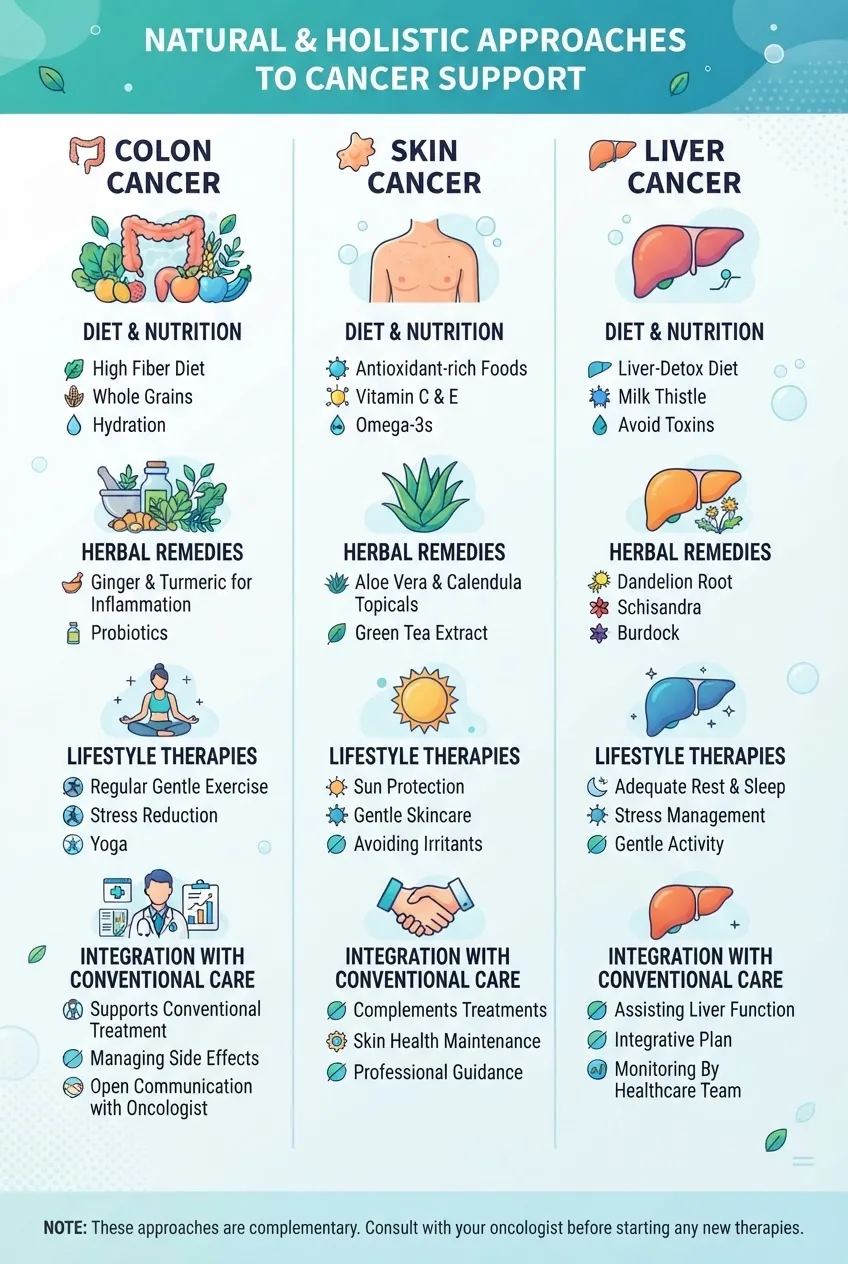
Cancer Type Diet & Supplements Herbal/Topical & Therapies Integration Notes Colon High fibre (30–40 g/day), vitamin D, omega-3s; focus on microbiome-targeted prebiotics Curcumin, medicinal mushrooms, probiotics Avoid high-dose antioxidants during some chemo regimens; coordinate with GI surgeon for pre/post-op nutrition Skin Antioxidant-rich diet, vitamin D monitoring; sun-safe practices Topical botanicals used adjunctively; some evidence for green tea extracts in superficial lesions Topical/home remedies are adjunctive; surgical excision remains primary — see resources on holistic treatment for skin cancer in specialised guides Liver Protein adequacy, avoid hepatotoxins; caution with herbal hepatics Herbs require strict safety screening (liver detoxification concerns); some studies of milk thistle for liver support Many botanicals are contraindicated without hepatic monitoring; collaborative care essential Contextual links for readers comparing options: for prostate-focused alternatives see alternative options for prostate cancer, and for ovarian cross-reference see holistic treatment for ovarian cancer.
-
Create your individualized plan step-by-step.
How to Develop a Personalized Holistic Treatment Plan for Colon Cancer
Below is a concise, numbered action plan you can follow and adapt with your clinical team. Each step includes measurable thresholds.
- Collect baseline data: labs (CBC, CMP, vitamin D, CRP), current meds, treatment dates — complete within 7 days.
- Set nutrition targets: 30–40 g fibre/day, 2–3 servings fatty fish weekly, start vitamin D if deficient (2000–4000 IU/day) — begin immediately and re-check labs at 8–12 weeks.
- Add 1–2 botanicals: choose curcumin 500 mg twice daily or medicinal mushroom extract 1 g/day after pharmacist clearance — trial 8–12 weeks.
- Initiate daily mind-body practices: 10 minutes meditation morning and evening; 30 minutes low-intensity movement 5x week — start day 1.
- Schedule integrative consult: within 2 weeks with an integrative oncologist or functional medicine practitioner and coordinate with your oncologist. For help finding supportive centers, review resources on alternative health care center services.
- Monitor and adjust: symptom diary weekly, labs at 8–12 weeks, and modify based on tolerance and interaction checks.
Common mistakes and how to avoid them
I’ve seen several recurring errors in practice. First, patients sometimes start multiple high-dose supplements at once; I observed a case where simultaneous curcumin, high-dose vitamin E, and omega-3s caused unexpected bleeding tendencies during chemo. To avoid this, introduce a single supplement at a time and coordinate with your oncology pharmacist.
Second, I often encountered people replacing prescribed chemo with unproven regimens after reading optimistic anecdotes online. I learned to ask for treatment timelines and encourage combining safe natural remedies with recommended medical care rather than replacing it.
Third, poor quality supplements create problems: in one clinic, a contaminated herbal product caused elevated liver enzymes. Always use third-party-tested brands and request batch certificates.
Checklist
- Baseline labs collected: CBC, CMP, vitamin D, CRP — completed
- Diet plan implemented: 30–40 g fibre/day — tracked for 2 weeks
- One herbal supplement chosen and pharmacist-cleared — started
- Mind-body routine scheduled: meditation twice daily — ongoing
- Integrative consult booked and communication plan with oncologist established
When to call in a professional
Contact your oncologist or integrative practitioner immediately for fevers >38°C, new or worsening pain, unexpected bleeding, jaundice, severe nausea/vomiting, or lab abnormalities (ALT/AST >2x baseline, platelets <100k). For complex supplement–drug interaction review, request a pharmacist consultation within 48–72 hours.
Summary: Combining culinary medicine, targeted botanicals, and mind-body therapy can measurably improve symptoms, strengthen resilience, and potentially influence biological pathways relevant to colon cancer. Use the checklist above, track quantifiable markers, and always align your plan with your oncology team. Ready to start? Book a coordinated integrative consult and begin the 8–12 week implementation protocol today.