Reiki massage is a hands-on energy healing modality that combines light touch or near-touch with the intention to channel universal life force energy to support relaxation, stress reduction and subtle energetic balance; it can be learned through staged training and attunements to practice as a Reiki practitioner or master.
What Is Reiki Massage? A Clear Reiki Massage Description
Answer: Reiki massage is a complementary therapy combining traditional light-touch massage or tablework with intentional energy channeling—often called universal healing Reiki—to promote relaxation, pain relief and energetic harmony during a hands-on or hands-above-body session.
Term: Reiki — a Japanese-derived term meaning “universal life force energy” used to describe a system of energy healing and hands-on therapeutic practice.
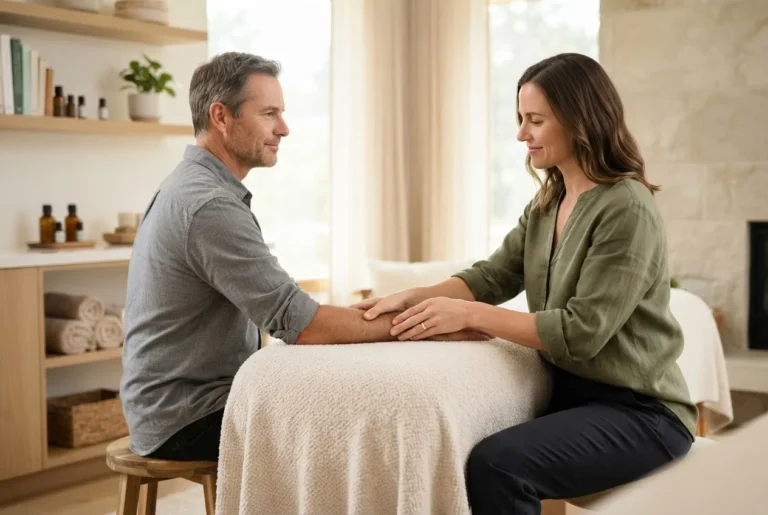
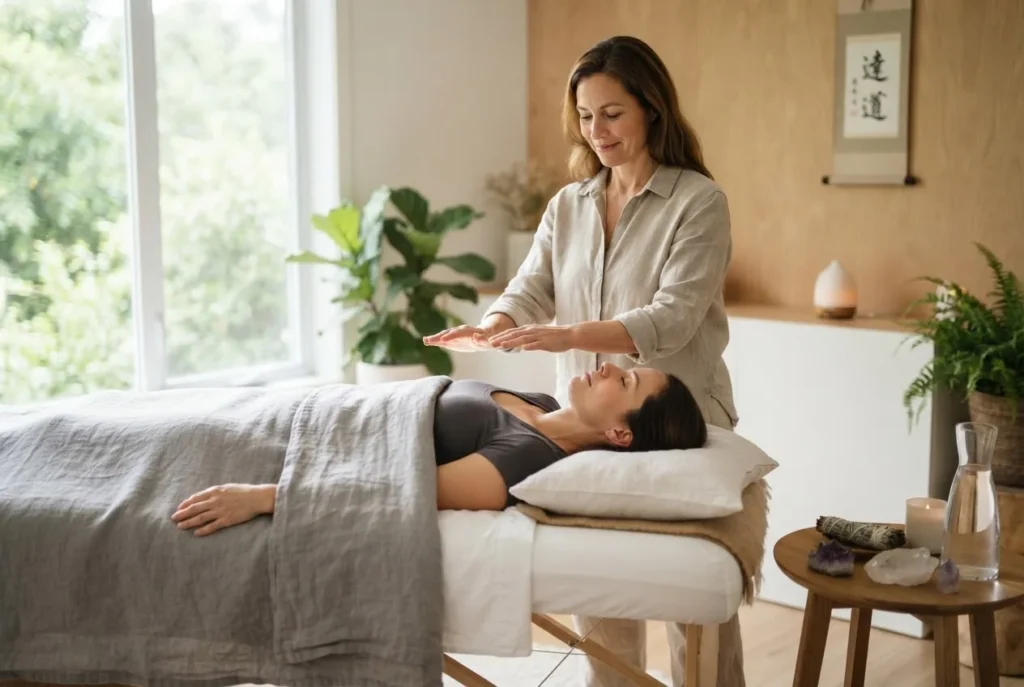
A Reiki massage session typically blends elements of Western massage (light stroking, gentle physical contact) with Reiki techniques (focused hand positions, energy scanning and channeling). The practitioner uses breath, intention and specific hand placements to direct what is commonly described as a subtle energetic current. Practitioners often work with clients lying fully clothed on a massage table; soft music, calming lighting and an intention-setting ritual are frequent components.
Reiki massage meaning centers on supporting the client’s innate healing through non-invasive energetic support rather than replacing medical treatment. Many clients describe it as an “energy healing massage” because it addresses both physical tension and subtle energetic imbalances simultaneously.
Origins in brief
Term: What does Reiki mean in Japanese — “Rei” (spirit/Universal) and “ki” (life energy), combined to describe universal life force energy.
For historical context, Reiki as a formalized system emerged in early 20th-century Japan through Mikao Usui; its techniques and training protocols evolved as Reiki spread globally. For a detailed historical background see Reiki History and Origins Explained.
Understanding Reiki Healing and How It Works
Answer: Reiki healing therapy works by a trained practitioner channeling universal healing energy through focused intention and hand positions to help rebalance the client’s energetic field, calm the nervous system, and support physiological and psychological relaxation responses.
Term: Reiki healing — a complementary energy therapy intended to promote relaxation and energetic balance by channeling universal life force energy through a practitioner’s hands.
How Reiki treatment process is commonly described: practitioners attune to the client’s energetic field, perform gentle hand placements across major body regions (head, chest, abdomen, limbs), and use slow breath and focused intention to facilitate what many call an energy flow. Sessions may include scanning for areas of congestion, holding a position until a shift is felt, and concluding with grounding techniques.
How does Reiki work in practical terms? The mechanism is framed in energetic and nervous-system terms: Reiki appears to stimulate the relaxation response, modulate stress-related hormones and increase subjective wellbeing. According to a 2022 review in complementary medicine journals (peer-reviewed study), evidence suggests short-term reductions in anxiety and improved relaxation metrics in many small trials; results vary by study quality and condition.
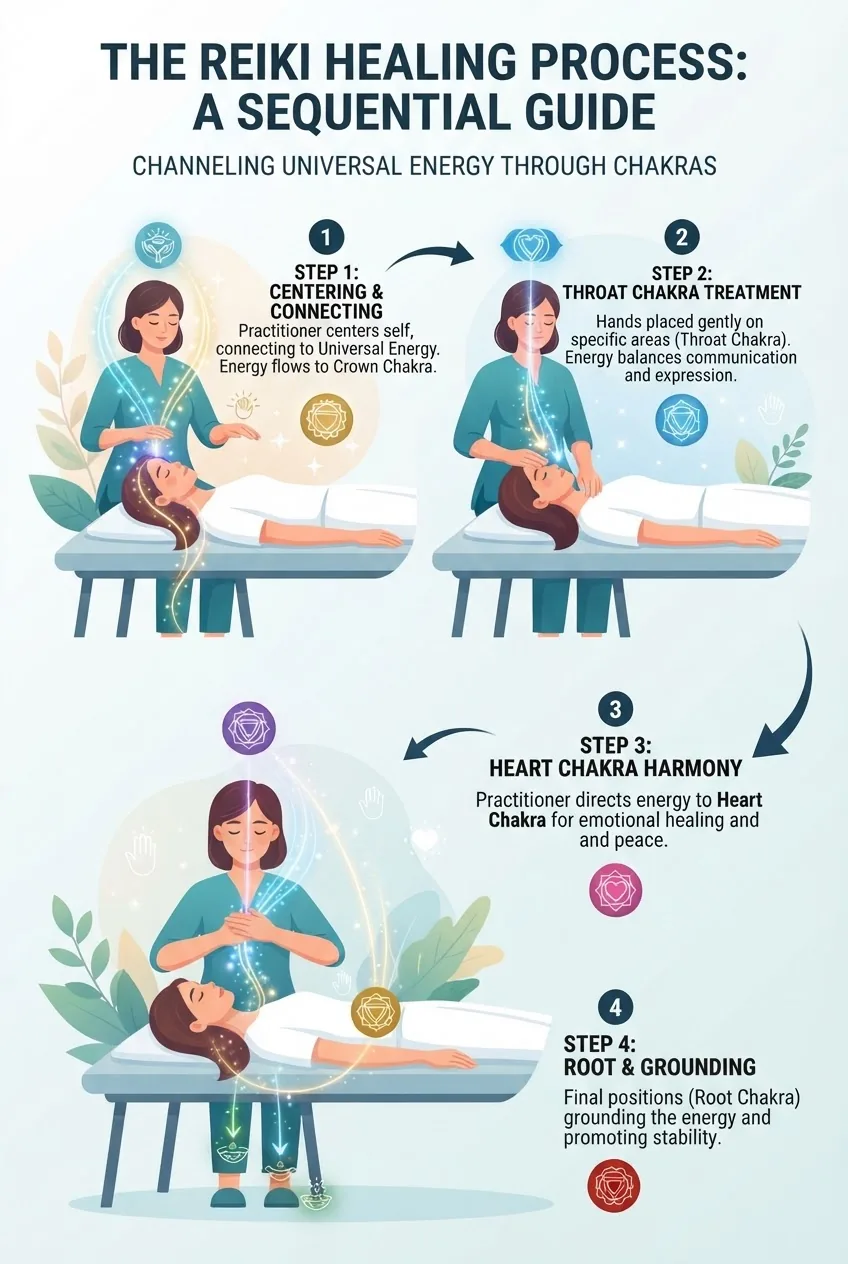
How Reiki is applied — step-by-step
- Intake and intention: Practitioner and client set goals and safety boundaries; the practitioner clears and centers.
- Grounding and attunement: Simple breathing and centering to establish presence and ethical intention.
- Energy scanning: Practitioner moves hands just above or lightly on body to detect sensations of warmth, coolness or resistance.
- Hand positions and channeling: Systematic holds across head, chest, abdomen and limbs to direct energy flow.
- Integration and grounding: Session closes with gentle movement, hydration advice and integration conversation.
Reiki spiritual energy language (chakras, meridians) is often used to describe where energy concentrates. Practitioners may reference chakra balancing or meridian flow while working; for a related meridian framework comparison see the 12 Meridians Chart PDF Guide.
Clinical and physiological framing: Reiki’s calming effect likely engages parasympathetic nervous system pathways and reduces sympathetic arousal—mechanisms aligned with observed reductions in stress markers in several small trials; however, large-scale rigorous clinical trials remain limited.
Key Reiki Techniques Used in Massage Therapy
Answer: Key Reiki techniques used in massage combine defined hand positions, breath-guided channeling, energy scanning, chakra balancing and laying-on-hands protocols tailored to the client’s needs.
Term: Hand positions — standardized placements of the practitioner’s hands on or above the body used to focus energy.
- Standard hand positions: Sequential placement over head, shoulders, chest, abdomen and feet to cover major energetic centers and aid systemic relaxation. Energy Healing Massage Techniques and Therapy Training Guide
- Hands-off (hovering): Light non-contact placement to sense and influence the energy field without physical touch.
- Laying on hands: Gentle, sustained touch held until the practitioner senses a change in temperature, pulsation or energy flow.
- Chakra balancing: Focused attention on the seven primary chakras to harmonize energetic centers and encourage emotional release.
- Meridian-inspired flows: Movement patterns that follow energy channels analogous to acupuncture meridians, often integrated with acupressure or massage strokes.
- Breath and mantra: Synchronizing breath with intention or a short mantra to strengthen practitioner focus and smooth energy transmission.
- Grounding and sealing: Techniques to ground the client and seal the session, such as visualizations, light tapping or gentle massage strokes.
For a broader training comparison of energy modalities and practical technique development see Energy Healing Techniques Guide and Practitioner Training.
Benefits and Advantages of Reiki Healing Massage
Answer: Reiki therapy benefits include rapid relaxation, reduced anxiety, improved sleep, complementary pain relief and enhanced emotional processing, with measurable short-term improvements in many small studies.
Reiki advantages are found across physiological, psychological and energetic domains; practitioners often integrate Reiki with massage to amplify relaxation and tissue release.
- Deep relaxation: Many clients report immediate reduction in stress and muscle tension after a session; relaxation supports healing pathways and sleep quality.
- Anxiety reduction: Reiki sessions commonly reduce acute anxiety and nervousness, supporting mental clarity and resilience. According to a 2023 peer-reviewed study (peer-reviewed study), small trials show decreased anxiety scores after sessions.
- Pain adjunct: Reiki can complement conventional pain treatments by modulating subjective pain perception and improving coping strategies; for targeted pain support consider combining with acupressure such as the Knee Pain Acupressure Points Training or the Ankle Acupressure Points Treatment Guide.
- Digestive support: Relaxation can improve autonomic balance that supports digestion; combine Reiki with targeted acupressure from the Abdominal Pain Acupressure Points Guide for digestive complaints.
- Emotional processing: Clients often experience release of stored emotions, improved mood regulation and clearer perspective after sessions.
- Non-invasive and accessible: Reiki is low-risk, gentle, suitable for most ages and can be delivered in-clinic, at home or remotely via intention-based distant Reiki.
- Holistic synergy: Reiki integrates easily with massage, acupressure and other manual therapies to improve patient comfort and session outcomes.
For expectations on session frequency and outcomes see How Many Reiki Sessions Are Needed: Healing Course Overview and cost considerations at How Much Does Reiki Healing Cost: Session Pricing Guide.
Safety guidance from government health bodies emphasizes Reiki is generally safe when used as a complementary therapy; see authoritative commentary from National Center for Complementary and Integrative Health on integrating complementary therapies with medical care.
Common Questions and Misconceptions about Reiki Massage
Answer: Reiki is a complementary, non-religious energy therapy with documented short-term benefits for relaxation and anxiety; it is not a medical cure-all and should not replace conventional medical care.
Term: Reiki religion — Reiki includes spiritual language and rituals but is not a religion; it is a healing practice that practitioners of many faiths use.
Is Reiki real?
Short answer: Many clients and practitioners report real subjective improvements (relaxation, reduced anxiety, pain relief), while scientific evidence shows limited but promising results in small trials; Reiki’s mechanisms are best framed as complementary to conventional care.
Is Reiki a religion?
Short answer: No — Reiki uses spiritual language and rituals, but it is not a religion; practitioners of varied beliefs practice Reiki, and its teachings focus on healing and compassion rather than doctrine.
Will Reiki cure any disease?
Short answer: No — Reiki is not a substitute for diagnosis or medical treatment; it is complementary and can support symptom relief, relaxation and coping, but it does not replace evidence-based medical care.
What does science say about Reiki?
Short answer: Research includes small randomized trials and observational studies showing benefits for anxiety and wellbeing; larger, rigorous trials are limited. According to a 2024 literature review (peer-reviewed study), results show promise but call for higher-quality studies.
How is Reiki different from placebo?
Short answer: Studies sometimes use sham controls; while expectancy contributes to outcomes, physiological markers of relaxation often change after Reiki, suggesting more than placebo in some trials, though debate continues in scientific circles.
Can anyone learn Reiki?
Short answer: Yes — Reiki training programs teach techniques and attunement; those with appropriate training, supervision and ethical practice can become practitioners and later masters following established curricula.
Is distant Reiki effective?
Short answer: Some practitioners and clients report benefit from distant or remote Reiki; evidence is anecdotal and mixed in trials, but many training curricula include distant healing techniques.
For official safety guidance and complementary therapy context see NCCIH and summaries of peer-reviewed research at PubMed.
Becoming a Reiki Practitioner and Master: Training and Certification Guide
Answer: To become a Reiki practitioner you complete foundational training (Level 1), progress to Level 2 for therapeutic practice and attunement for distance healing, then pursue a Reiki Master training for teaching and advanced attunements—each stage includes practical hours, attunements and supervised practice.
Term: Reiki practitioner — a person trained and attuned to deliver Reiki healing sessions at entry or intermediate levels.
Training path overview: Reiki curricula vary, but most schools follow a Level 1 → Level 2 → Master progression. Level 1 focuses on self-healing and basic hand positions; Level 2 adds symbols, distance healing and client sessions; Master training adds teaching methods, advanced attunements and ethics.
| Level | Typical Hours | Attunement | Scope |
|---|---|---|---|
| Level 1 (Practitioner) | 8–16 hours | Initial attunement for personal practice | Self-healing, basic client sessions |
| Level 2 (Practitioner) | 16–24 hours plus practice | Symbols and distance healing attunements | Therapeutic sessions, remote healing |
| Master/Teacher | Variable; requires supervised practice and further training | Advanced attunements for teaching | Teach, attune others, advanced practice |
Step-by-step how to train
- Choose a reputable teacher: Look for experienced instructors, transparent curricula and post-training support; recognized organizations include national Reiki associations and training centres. Acupuncture Acupuncturist Training and Certification Guide
- Complete Level 1: Learn basic hand positions, self-healing and ethics; complete supervised practice hours.
- Practice and log sessions: Maintain case logs and client feedback to build clinical skill and confidence.
- Advance to Level 2: Learn Reiki symbols, distant healing protocols and expanded client techniques; accumulate practice hours.
- Pursue Master training: When ready, undertake teacher training that covers attunement procedures, teaching methodology and professional standards; review Reiki Master Role and Certification Overview for details.
- Ethics and scope: Train in client screening, referral pathways and limits of practice; maintain professional indemnity and supervision.
Many formal courses now include case-study reviews and supervised clinic hours to satisfy both experiential learning and safety standards; example curricula emphasize hands-on practice, attunements, client management and theory modules. For targeted practitioner techniques training see Reiki Healing Techniques Course and Practitioner Training and for cross-training options consider Acupressure Practitioner Course and Certification Overview.
Training costs and timelines vary widely; some programs are weekend-based while professional pathways include mentoring over months. Compare options carefully and verify instructor credentials and post-course mentoring. Additional training in allied modalities such as acupuncture or acupressure can broaden clinical scope; explore cross-training at Acupuncture Acupuncturist Training and Certification Guide.

For those building a comprehensive practice, complementary certifications—such as acupressure or energy massage training—can increase treatment versatility. See the Energy Healing Massage Techniques and Therapy Training Guide and Energy Healing Techniques Guide and Practitioner Training.
Comparing certification options
Certification formats vary by provider: certificate of completion, practitioner diploma or recognized membership with Reiki associations; verify what a credential allows you to legally and ethically perform in your jurisdiction.
If you plan to expand into bodywork clinics, consider complementary training tracks such as acupuncture: Acupuncture Acupuncturist Training and Certification Guide and the Acupressure Practitioner Course and Certification Overview.
For a focused practitioner track on massage-integrated energy work see Reiki Healing Techniques Course and Practitioner Training which outlines supervised practice requirements and client management protocols.
What Does a Reiki Practitioner Experience During Treatment?
Answer: Practitioners typically experience focused awareness, sensations of energy flow or heat in their hands, empathetic resonance with the client and the need for clear boundaries and grounding to maintain professional practice.
Term: Attunement — a ceremonial or energetic process by which a Reiki teacher initiates a student to perceive and channel Reiki energy.
Common practitioner sensations: many report warmth, tingling, pulsing or subtle movement in their hands; some sense visual or energetic impressions that guide hand placement. Practitioners emphasize ethical empathic resonance—feeling emotionally present without over-identifying with the client’s pain.
Client sensations commonly reported: warmth, coolness, waves of relaxation, brief emotional release, or visual imagery. Example case: a client with chronic neck tension described progressive softening of muscle tightness and a vivid image during the third hold that preceded improved range of motion over subsequent days.
Practitioner mindset and atmosphere: maintaining neutral intention, clear boundaries and ongoing consent is essential; after sessions practitioners typically perform grounding practices (light touch to feet, drinking water, short meditation) and log observations for clinical reflection.
Training curricula prioritize supervised experiential hours so practitioners can recognise common sensations, manage intense client emotion, and know when to refer to medical or psychological care.
Transition to further learning and complementary modalities
Practitioners often integrate Reiki with acupressure, massage or movement therapies to broaden therapeutic outcomes; for knee, ankle and abdominal complementary acupressure resources see the guides referenced above and consider cross-certification to enhance clinical options.
Suggested complementary resources:
- Acupressure Knee Pain Points Training
- Ankle Acupressure Points Treatment Guide
- Abdominal Pain Acupressure Points Guide
For deeper professional training in acupressure certification alongside Reiki see Acupressure Practitioner Course and Certification Overview.
Practical limits, ethics and referral
Answer: Reiki practitioners must recognise scope limits, avoid making medical claims, and refer clients to appropriate medical or mental health professionals when necessary; informed consent and safe recordkeeping are non-negotiable.
Ethical practice requires transparent communication: explain Reiki’s complementary role, document client goals and progress, and maintain confidentiality. Many training programs include modules on safety and ethics; for broader clinical scope training consider cross-training in regulated modalities such as acupuncture.
Suggested further reading for clinicians: membership standards from reputable Reiki organisations such as the International Center for Reiki Training and peer-reviewed literature on complementary therapy safety (PubMed).
Conclusion
Reiki massage description: it is a practical, teachable complementary therapy that blends light-touch massage and hands-on energy work to promote relaxation, emotional processing and adjunctive pain relief. Training follows a Level 1→2→Master progression with supervised practice, attunements and ethical standards. If you’re ready to begin, research reputable teachers, review curricula and consider complementary certifications to expand clinical options—start your Reiki journey today.
Ready to train? Explore structured courses and cross-training options to become a confident practitioner or master and integrate Reiki into a safe, effective therapeutic practice.