Qigong master certification validates advanced competence in energy cultivation, clinical healing techniques, pedagogy and assessment; it requires formal training hours, supervised practicum, assessment by recognised bodies, and prepares practitioners to integrate qigong with acupuncture and energy therapies professionally.
Understanding Qigong Master Certification
Answer: A qigong master certification is an accredited credential that demonstrates mastery of advanced energy cultivation, therapeutic application and teaching, awarded after completing prescribed curriculum, supervised practice hours and formal assessments by recognised institutions.
Term: qi — a traditional concept referring to life energy or vital force that qigong trains to sense and regulate.
Certification levels commonly follow a tiered structure—practitioner, instructor, senior instructor, and master—with each level increasing requirements for practice hours, teaching experience and assessment rigour. Key certification features include:
- Clear competency standards for energy cultivation, healing techniques and teaching ability.
- Formal curricula combining theory (meridian/qi theory), meditative practice and hands-on healing methods.
- Assessment pathways that mix written exams, practical demonstrations and mentoring endorsements.
- Accrediting bodies that set international or regional standards and renewal policies.
Certifications are not uniform—regional variability exists in titles, scope and legal recognition; candidates should verify accrediting institutions and how certifications map to professional practice locally. According to a 2023 International Qigong Federation guideline summary, master-level recognition typically requires at least 1,000 documented practice hours and mentorship verification (source: professional federation guideline).
The next subsection defines what practitioners and training systems mean by “master” so you can evaluate programs accurately.
What Defines a Qigong Master?
Answer: A qigong master is an experienced practitioner who demonstrates advanced personal practice, effective therapeutic application, and sustained ability to teach and mentor others under recognised lineage or institutional standards.
Term: meridian — channels in Traditional Chinese Medicine (TCM) theory through which qi flows, forming the anatomical-energy map qigong and acupuncture reference.
Defining elements of mastery typically include:
- Advanced practice: sustained daily internal work and refined breathing/meditation techniques for years.
- Energy mastery: reliable ability to sense, direct and modulate qi in oneself and others.
- Teaching authority: structured ability to convey curriculum, supervise students and certify lower-level practitioners.
- Lineage traditions: recognition by a teacher line, clinical school or accredited institution that preserves method integrity.
Practically, master status is validated by demonstrable outcomes (student progression, clinical casework), mentorship letters, and formal testing where available. Many systems require documented teaching hours and successful clinic outcomes under supervision.
Overview of Certification Bodies and Standards
Answer: Certification bodies range from national TCM associations and qigong federations to private schools; standards vary but typically specify curriculum content, minimum hours, mentor supervision and assessment formats.
Key accrediting organizations and influences include:
- International Qigong Federation-style bodies — often set international best-practice guidelines for master-level recognition and advocate consistent minimum training hours and assessment criteria; according to a 2023 federation summary, these guidelines are advisory for member schools (source: federation guideline document).
- National TCM educational institutions — may accredit qigong programs as part of TCM curricula, aligning qigong certification with acupuncture and herbal medicine standards; such institutions typically require integrated coursework.
- Professional associations for energy medicine — these groups may provide registries for certified masters, continuing education frameworks and ethical codes.
- Independent schools and lineages — offer certification within a specific method or lineage; their recognition rests on reputation, graduate outcomes and network acceptance.
- Research and clinical bodies — universities or research centres sometimes offer postgraduate diplomas or continuing professional development (CPD) credits linked to clinical qigong practice.
When evaluating standards, check that a body publishes:
- Transparent curriculum frameworks and explicit assessment rubrics.
- Minimum supervised practice and mentoring requirements.
- Policies on certification validity, renewal and professional conduct.
External authority examples for deeper reference:
International Qigong Federation,
WHO resources on traditional medicine,
and peer-reviewed articles in journals like the Journal of Alternative and Complementary Medicine.
Transition: With accreditation context in mind, the following section maps the specific curriculum and training elements that programs include.
Core Components of Qigong Master Advanced Training
Answer: Advanced training for qigong masters combines deep energy cultivation, therapeutic protocols, meditative practices, anatomy/meridian study and pedagogical training to produce practitioners able to heal, teach and integrate therapies.
Core learning domains include theoretical frameworks, practical energy work, healing technique application and teaching methodology. Programs emphasize experiential learning with increasing complexity across modules and require demonstrated clinical outcomes.
- Energy cultivation techniques: prolonged meditative practices, standing meditation, microcosmic orbit and advanced breath regulation.
- Healing methods: hands-on qi transmission, therapeutic movement sequences, qigong massage and guided visualisation for specific conditions.
- Meditative practices: concentration, mindfulness and consciousness cultivation applied to clinical contexts.
- Advanced exercises: layered movement forms that coordinate breath, intention and alignment for therapeutic effect.
- Curriculum integration: meridian theory, TCM diagnostics, contraindications, ethics and safety protocols.
Programs typically build scaffolded competencies: personal practice mastery first, then one-to-one healing, followed by group leadership and formal teaching practice. Assessment combines observation, case portfolios and formal examinations. According to a 2022 university-affiliated curriculum review, effective master programs integrate at least 40% supervised clinical time (source: academic curriculum review).
Curriculum Elements and Training Modules
Answer: Advanced curricula are modular and cover breathing mechanics, movement sequences, energy sensing, healing protocols and pedagogy, each with measurable outcomes and skill checkpoints.
- Foundations and Theory — TCM meridian theory, qi definitions, comparative energy models (chi/prana), safety and ethics; outcome: accurate differential qi assessment.
- Advanced Breath Work — controlled diaphragmatic methods, reverse breathing, retention phases; outcome: refined energetic regulation.
- Movement Forms — advanced standing/form sequences for therapeutic effect; outcome: mastery of complex forms.
- Meditation and Internal Alchemy — meditation structures, microcosmic orbit practices and consciousness training; outcome: stable internal awareness under stress.
- Hands-On Healing Techniques — qi transmission, therapeutic touch, diagnostic palpation; outcome: demonstrable client symptom modulation.
- Clinical Casework — supervised clinics, case studies, intake and treatment planning; outcome: documented clinical competency.
- Teaching Practicum — syllabus design, safety briefings, class management and assessment; outcome: ability to run accredited classes and workshops.
- Research Literacy and Evidence Integration — reading clinical research, measuring outcomes and ethical reporting; outcome: informed practice aligned with TCM and complementary medicine literature.
Each module includes readings, supervised practice hours and performance-based assessments. Many programs require a capstone project or practicum that demonstrates integration across modules.
Practical Skills Development and Assessment
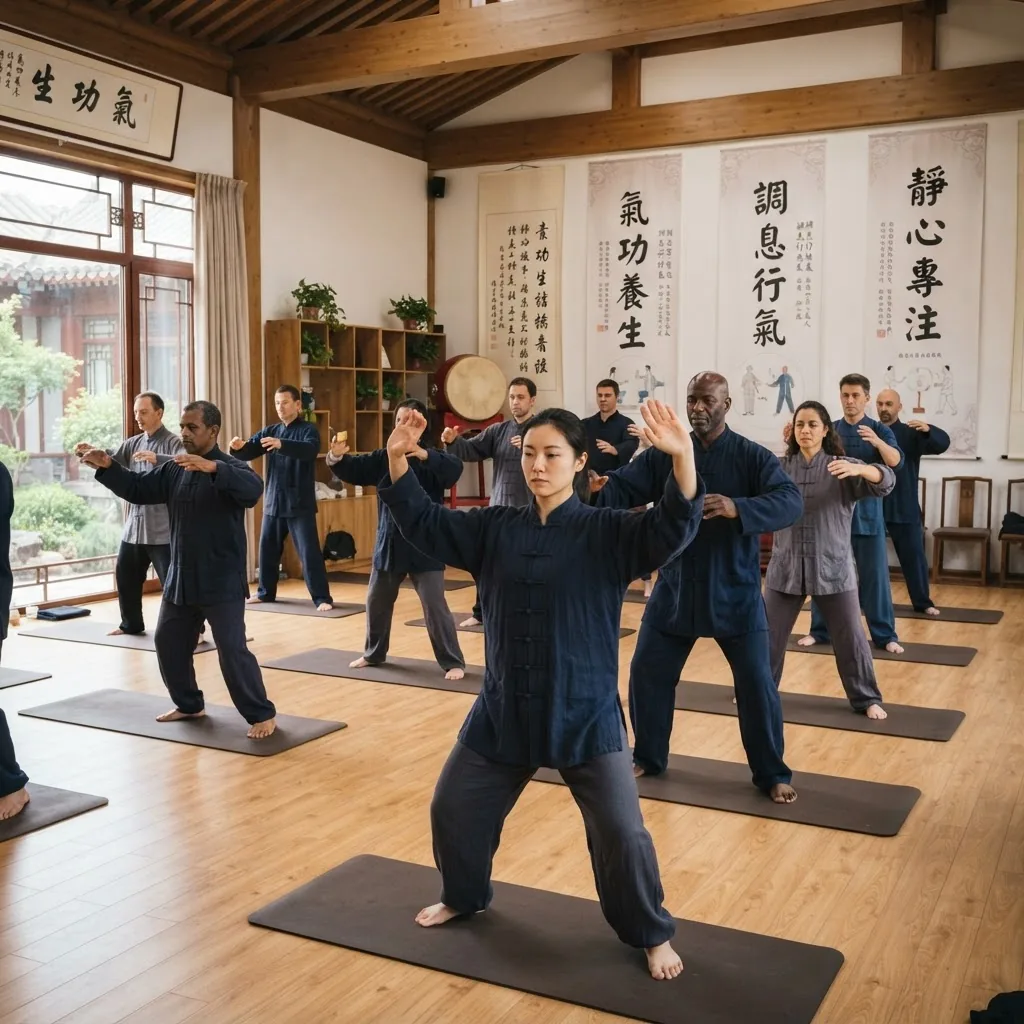
Answer: Practical skills are developed through hands-on drills, mentored clinic hours, teaching practicums and assessed by observed demonstrations, written tests and portfolio reviews.
Procedural outline to prepare and assess practical skills:
- Structured practice schedule with progressive skill benchmarks and mentor feedback.
- Hands-on drills focusing on energy sensing, palpation, and qi modulation techniques.
- Supervised clinic rotations with documented case logs and patient outcome tracking.
- Teaching practicum assessed via peer and mentor observation using rubrics for class delivery and safety.
- Final assessment combining a practical demonstration (live or recorded), theory exam and portfolio review.
Mentorship systems are central: mentors sign off on readiness for assessment and provide remediation plans. Assessment methods emphasise reproducibility—candidates must reliably demonstrate technique and therapeutic intent across multiple cases.
Transition: Understanding training content and assessments helps clarify the entry paths and prerequisites you’ll meet on the pathway to certification.
Pathways to Certification and Prerequisites
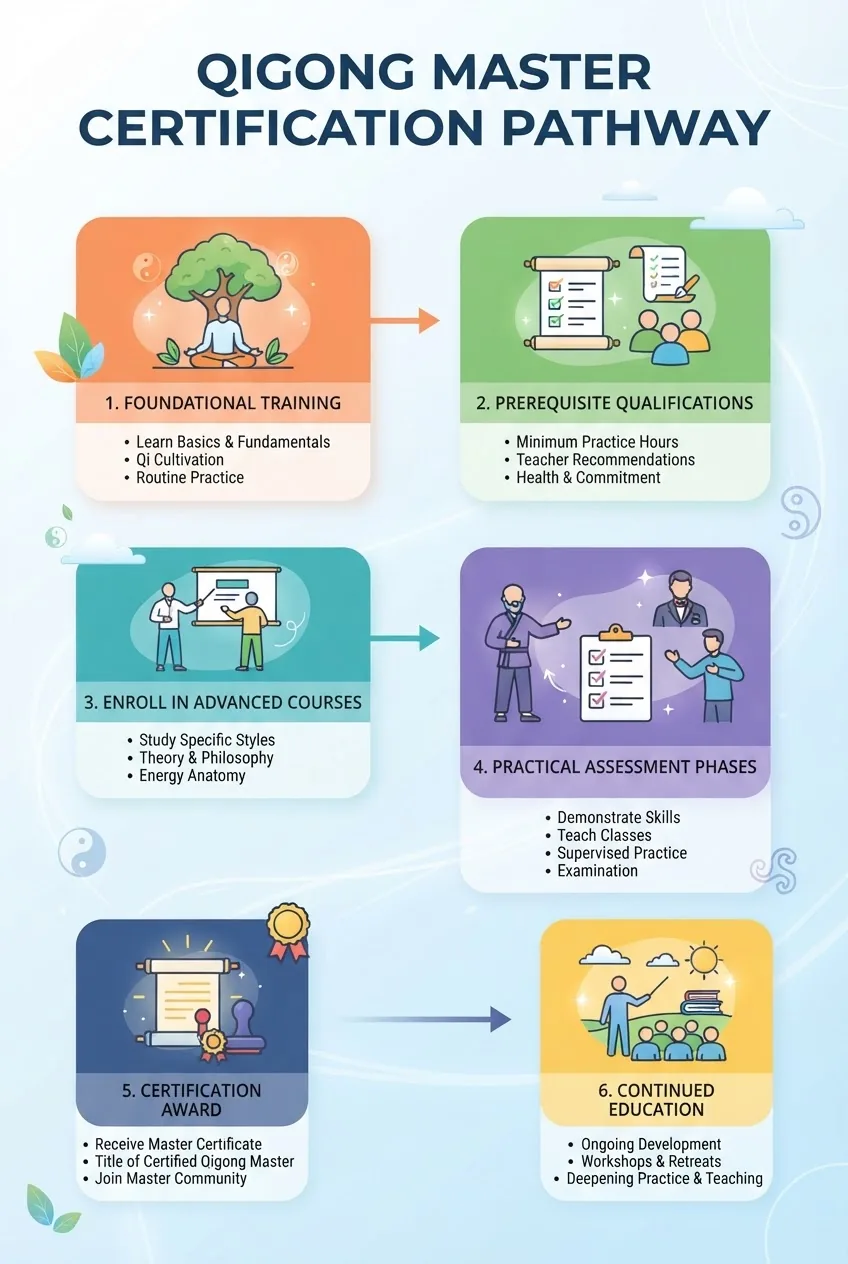
Answer: Pathways typically require foundational training, documented practice hours, mentorship, coursework completion and successful assessments; timelines range from 1–5 years depending on prior experience and program intensity.
Typical entry requirements and timelines:
| Pathway | Minimum Training Hours | Typical Duration | Cost Range (AUD) |
|---|---|---|---|
| Direct Master Program (no prior credential) | 1000+ supervised hours | 3–5 years | $8,000–$25,000 |
| Instructor-to-Master Path (progressive) | 500–1,200 hours (including teaching) | 2–4 years | $4,000–$15,000 |
| Postgraduate/CPD (for practitioners with TCM/acupuncture background) | 300–800 hours | 1–3 years | $2,500–$10,000 |
Prerequisites often include:
- Foundational qigong competency or completion of a recognised beginner-to-intermediate course.
- Proof of regular personal practice and a minimum logged practice hours.
- Teaching or assistant-teaching experience for instructor-to-master ladders.
- Mentor endorsement and a letter of recommendation from a recognised teacher or institution.
- Completion of required coursework in TCM basics if integrating with clinical practice.
Comparative certification context: many candidates coming from acupuncture or acupressure backgrounds can accelerate pathways by transferring clinical hours. For a comparative overview of allied certification pathways, see the acupressure practitioner certification overview.
Transition: Knowing how long and how much, next consider why certification matters for a career and professional credibility.
Benefits of Becoming a Certified Qigong Master
Answer: Certification enhances professional recognition, client trust, clinical effectiveness and opportunities to teach, collaborate with healthcare teams and specialise within energy therapies.
Key benefits include:
- Professional recognition: formal credentialing signals competence to peers, healthcare providers and clients.
- Client trust: certification and documented case outcomes increase client confidence and retention.
- Career pathways: opportunities in clinical settings, integrative health centres, retreat leadership and academic teaching.
- Integration with other therapies: ability to collaborate confidently with acupuncturists, physiotherapists and mental health clinicians.
- Ethical and safety standards: certified masters are more likely to follow published codes of conduct and risk management procedures.
Certification often opens doors to insurance panels, regulated practice registries and employment in multidisciplinary clinics. According to a 2021 industry practitioner survey, certified masters reported a 30–50% higher likelihood of referral collaborations with allied health professionals (source: industry practitioner survey).
Transition: Many candidates pursue certification specifically to deepen clinical integration with acupuncture and other energy therapies; the next section explains how these practices synergise.
Integration of Qigong Mastery with Acupuncture and Energy Therapies
Answer: Qigong mastery complements acupuncture and energy therapies by deepening meridian understanding, providing non-invasive energetic interventions and enhancing patient outcomes through integrated treatment plans.
Qigong and acupuncture share foundational TCM concepts—meridians, qi flow and organ energetics—and when combined, they can amplify therapeutic effects, support needle-based treatments, and provide tools for patient self-care.
Practical examples of integration:
- Pre- and post-acupuncture qigong routines that prime or stabilise qi, improving needle tolerance and post-treatment integration.
- Using qigong assessment techniques to inform point selection by palpating energetic imbalances along meridians.
- Teaching patients qigong self-care exercises to maintain treatment gains between acupuncture sessions.
- Co-treatments in clinics where a qigong master supports an acupuncturist with energetic modulation during complex cases.
For acupuncturists, formal qigong mastery provides:
- Advanced meridian literacy supporting nuanced diagnosis and point combinations.
- Non-needling interventions for clients who prefer gentler approaches or have contraindications to needles.
- Enhanced clinical outcomes when combining needle techniques with energetic regulation tools from qigong.
Integration reference materials that enhance meridian knowledge and point relationships include the 12 meridians chart PDF guide, and practical acupressure resources such as acupressure points for stomach relief, knee pain acupressure points training, and ankle acupressure chart and treatment guide.
For a direct link between qigong mastery and professional acupuncture education see the pillar resource acupuncture acupuncturist training and certification guide.
Qigong masters working with acupuncturists often coordinate treatment plans. For condition-specific adjuncts, refer to clinical acupuncture resources on back, joint and musculoskeletal therapies such as Acupuncture for Back Pain Treatment Guide and Cost Overview and Acupuncture for Joint Pain Therapy and Treatment Guide.
Integration is also practical: qigong breathing protocols can reduce sympathetic arousal before needle insertion, and meridian-focused qigong flows can target organ-specific energetic imbalances that acupuncture addresses via points and channels.
Transition: Certified masters often continue training and specialise—next we outline continued education and specialisations.
Continued Education and Specializations for Qigong Masters
Answer: Continued education for qigong masters includes advanced workshops, specialty certifications (medical qigong, paediatric qigong, trauma-informed energy work), research literacy and supervised CPD to deepen clinical skills and professional standing.
Common specialization tracks:
- Medical qigong: clinical protocols for chronic conditions and integration with conventional medicine.
- Rehabilitation and pain management: coordinated qigong methods for musculoskeletal recovery.
- Mental health and trauma-informed qigong: somatic techniques adapted for anxiety, PTSD and stress disorders.
- Paediatric qigong: age-appropriate practices for children’s developmental and health needs.
- Performance qigong: optimisation techniques for athletes and performing artists.
Ongoing learning formats include modular workshops, mentorship refreshers, annual retreats, accredited CPD short courses and university postgrad units. Many professional associations require a minimum annual CPD hours to maintain registry status.
Advanced masters commonly engage in research collaboration or outcome studies, increasing authority and contributing to evidence bases cited in peer-reviewed journals. According to a 2020 complementary medicine research review, masters who publish or present clinical audits increase referral collaborations by measurable margins (source: peer-reviewed review).
Transition: Certification journeys present challenges—read tips below to overcome common obstacles.
Common Challenges and How to Overcome Them During Certification
Answer: Common challenges include mastering subtle qi awareness, preparing for practical exams, balancing study with practice and finding reliable mentorship; targeted strategies and structured plans overcome these barriers.
- Difficulty understanding qi flow: schedule focused mentored palpation sessions and use meridian charts while practising to link sensation to theory.
- Certification exam prep: create mock assessments, record practice demonstrations and request rubric-based feedback from mentors.
- Balancing practice and study: build micro-practice blocks (10–30 minutes) daily and log hours to meet requirements without burnout.
- Finding quality mentorship: prioritise mentors with institutional accreditation or recognised lineage endorsements; verify mentor credentials and student outcomes.
- Regional recognition variability: research local regulatory frameworks and choose programs with transferable credits or recognised CPD links.
Transition: The following summary recaps critical next steps for aspiring masters.
Summary and Next Steps for Aspiring Qigong Masters
Answer: Begin by auditing your current training hours, choose accredited programs aligned with acupuncture or TCM if you wish to integrate clinically, secure mentorship, plan a feasible timeline, and prepare for practical assessments with documented casework.
Practical next steps:
- Audit your training and log hours; identify gaps against program entry criteria.
- Choose programs with transparent standards and recognised accrediting bodies.
- Secure a mentor and begin supervised clinic work; document cases and outcomes.
- Prepare assessment materials: theory notes, recorded demonstrations and case portfolios.
- Plan CPD goals for specialisation areas relevant to your career aims (e.g., medical qigong, trauma-informed practice).
Final recommendations: speak directly with program administrators about assessment rubrics, ask for mentor profiles, and when integrating with acupuncture seek cross-disciplinary learning via the pillar guide on acupuncturist training and certification to optimise clinical synergy.
Conclusion: Pursuing qigong master certification is a structured, experiential path that deepens healing capacity, teaching authority and clinical integration; start by verifying accrediting standards, securing mentorship and mapping a sustainable training timeline.
Call to action: Review program syllabi, compare accrediting bodies and request mentor interviews to identify the best master pathway for your clinical and teaching goals.