
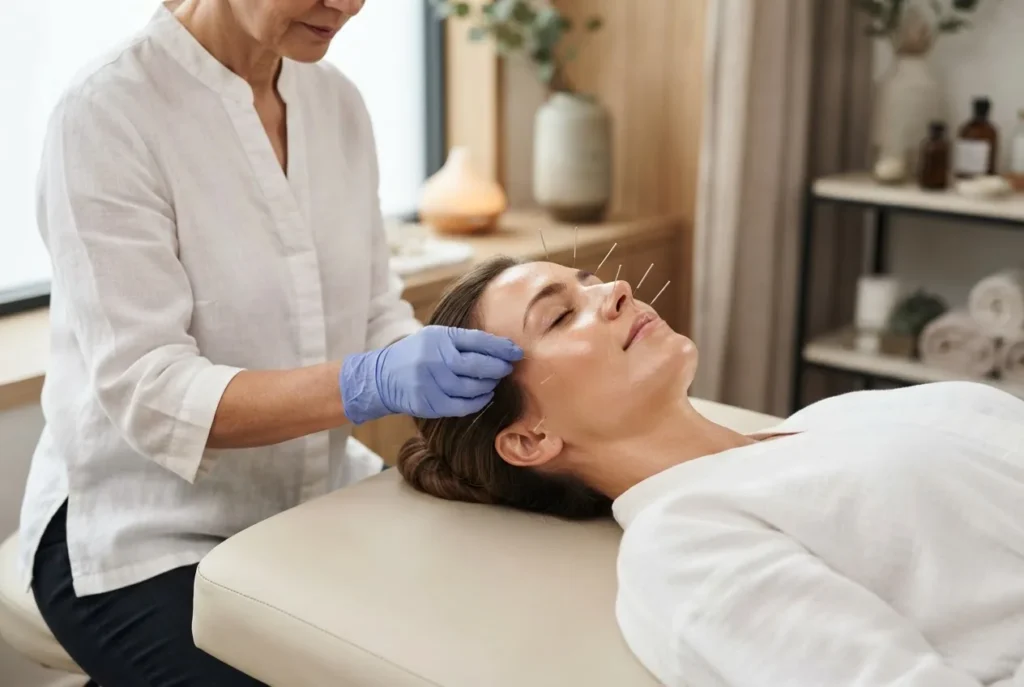
Answer: Facial pressure points are specific acupoints on the face used in acupuncture and acupressure to modify local circulation, influence cranial nerves, and rebalance Qi for pain relief, skin rejuvenation and emotional regulation; this guide maps key facial points, explains TCM theory, gives stepwise therapy protocols and safety precautions.
Introduction to Facial Pressure Points in Acupuncture?
Answer: Facial pressure points are localized acupoints on the face that practitioners stimulate either with needles (acupuncture) or manual pressure (acupressure) to produce therapeutic effects locally and systemically by affecting meridians, Qi flow and neurovascular reflexes.
Term: Facial pressure points — defined as acupoints located on facial anatomy used to influence health via mechanical, neurological and energetic mechanisms in acupuncture/TCM.
Facial acupoints form part of the broader acupuncture system but have unique clinical uses tied to cranial nerve branches, local fascia and aesthetic applications. Traditional Chinese Medicine (TCM) locates many of these points on meridians that traverse the face (example: Stomach, Large Intestine, Gallbladder meridians) and as extra points used specifically for facial disorders. Term: Acupoint — an anatomically described site where needling or pressure is applied to alter physiological function.
The remainder of this article provides an extensive facial pressure points chart in annotated text form, clinical links to TCM theory, a step-by-step facial acupuncture therapy protocol, self-treatment acupressure tools, integration notes for whole-body practice, and safety guidance with professional resources. For authoritative background on TCM point standards, consult the World Federation of Chinese Medicine Societies and peer-reviewed clinical literature cited below.
According to a 2023 clinical review in cosmetic and pain management literature, facial acupuncture shows measurable benefits for facial pain and some measures of skin tone and elasticity when delivered by trained practitioners (source type: peer-reviewed clinical review).
Transition: Now we map the anatomy and precise locations so you can identify each key facial point and its functional relationships.
Anatomy and Location of Key Facial Pressure Points?
Answer: Key facial pressure points are located using anatomical landmarks—bony prominences, muscle borders, nasolabial folds, orbital rim and jawline—and align with meridian pathways; below is a detailed annotated chart description with clinical notes and nerve considerations.
Term: Meridian — a TCM concept describing energetic pathways (channels) that connect acupoints and organs; on the face these include segments of the Stomach, Large Intestine, Gallbladder and Bladder meridians.
How the chart below is organised
Each entry lists: point name (common English), TCM name and point code (where applicable), anatomical landmark, clinical indications, needling/depth guidance (for practitioners), and acupressure technique for self-care. Notes include nearby cranial nerve branches when relevant (e.g., facial nerve VII motor branches, trigeminal nerve V sensory branches).
Annotated facial pressure points chart (text format)
-
Yintang (Extra point) — midline between the brows, just above the glabella.
- Anatomical landmark: soft tissue midline above nasal root.
- Clinical: calms the mind, relieves frontal headache, sinus congestion, reduces stress.
- Stimulation: gentle 10–30 second circular pressure; needle perpendicular 0.2–0.5 cun for trained practitioners.
- Nerve considerations: adjacent to branches of trigeminal nerve (V1).
-
Taiyang (Extra point / “Temples”) — in the temporal region, 1 cun posterior to the midpoint between the lateral canthus and the eyebrow tail.
- Anatomical landmark: over temporal artery territory.
- Clinical: treats temporal headaches, jaw tension, eye strain.
- Stimulation: press with thumb pad 30–60 seconds; avoid deep needling near temporal artery—needle 0.3–0.5 cun oblique if indicated.
- Nerve considerations: superficial temporal nerve branches.
-
ST2 (Sibai) — infraorbital region, in the depression at the infraorbital foramen line.
- Anatomical landmark: below the pupil on the maxilla; careful with bone and infraorbital nerve.
- Clinical: eye pain, facial neuralgia, sinus issues, swelling.
- Stimulation: light pressure; needling requires knowledge of infraorbital foramen to avoid nerve trauma.
-
LI20 (Yingxiang) — nasolabial groove at the level of the midpoint of the lateral border of the nostril.
- Anatomical landmark: lateral nostril base; used for nasal congestion and sinus drainage.
- Clinical: sinusitis, nasal obstruction, facial swelling.
- Stimulation: press with the index finger along the groove; gentle lateral-pulling acupressure for 20–45 seconds per side.
-
ST4 / ST6 (Cheek and jawline) — ST4 at mouth corner; ST6 in the masseter prominence when clenching.
- Anatomical landmark: oral commissure and masseter belly.
- Clinical: TMJ dysfunction, facial paralysis, bruxism.
- Stimulation: apply firm circular pressure to ST6; needle perpendicular to masseter if indicated (deep needling only by trained practitioner).
- Nerve considerations: facial nerve (VII) motor branches lie nearby—avoid intramuscular penetration without expertise.
-
GB1 / GB14 (Around orbital and forehead) — GB1 at lateral orbital margin; GB14 on the forehead 1 cun above midpoint of eyebrow.
- Anatomical landmark: lateral brow and supraorbital area.
- Clinical: headaches, eye disorders, facial pain.
- Stimulation: light tapping or pressure; avoid direct orbital penetration—needling is shallow and oblique.
-
Jiachengjiang (Adjacent to REN24) — approximately 1 cun lateral to the mentolabial groove.
- Anatomical landmark: lower chin/mandible border.
- Clinical: lower facial paralysis, drooling, jaw mobility issues.
- Stimulation: gentle compressive strokes; professional needling is shallow and carefully angled along the mandible.
-
Extra point: Qianzheng — ~0.5–1 cun anterior to the tragus on the cheek; used for facial paralysis and nerve palsies.
- Anatomical landmark: along parotid region; risk area for parotid gland and facial nerve.
- Clinical: Bell’s palsy and peripheral facial nerve rehabilitation.
- Stimulation: small rotations of a sterile needle by an experienced practitioner; acupressure alternatives for self-care.
-
Extra facial tendon areas (e.g., suborbital, zygomatic borders) — used in cosmetic facial acupuncture protocols to lift soft tissue, improve microcirculation, and stimulate collagen deposition.
- Clinical: facial rejuvenation, skin laxity, fine lines.
- Stimulation: series-based treatments targeting superficial subcutaneous layer; session protocols vary by practitioner.
For a full meridian context and how these facial points connect to systemic channels, review the 12 meridians chart to see pathway continuity and organ relationships.
Anatomical cautions: many facial points overlie superficial arteries (e.g., angular, facial artery) and sensory nerves; practitioners must use palpation, avoid deep perpendicular needling near foramina, and adapt technique for thin-skinned areas like the eyelids and infraorbital region.
Transition: Next we connect these anatomical points to measurable health and wellness outcomes described by both TCM and contemporary clinical studies.
How Facial Pressure Points Affect Health and Wellness?
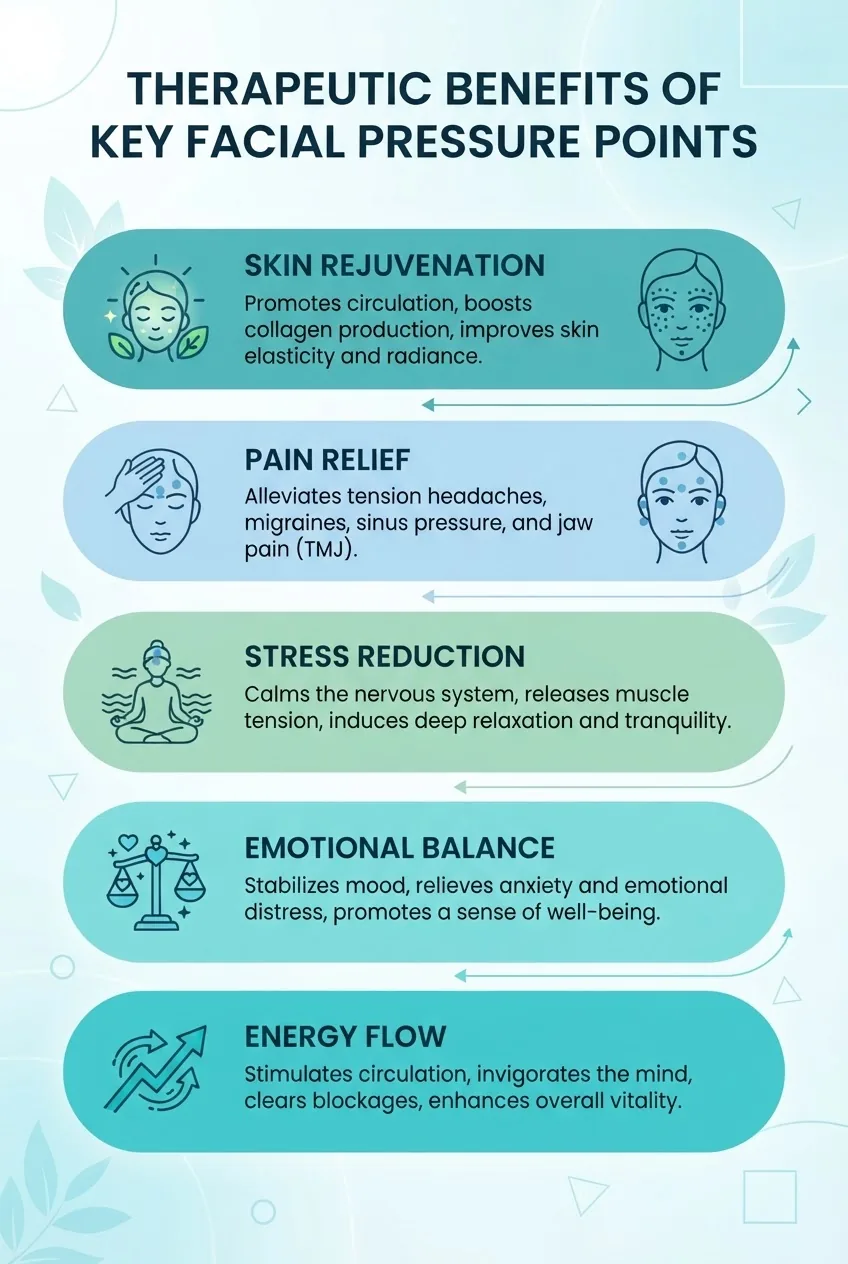
Answer: Stimulating facial pressure points affects local microcirculation, modulates cranial nerve reflexes, and influences Qi circulation along facial meridians; clinically this can reduce pain, improve sinus drainage, support skin health and influence emotional state.
Term: Qi — in TCM, Qi describes vital energy; clinicians use the term to explain functional states and blockages that stimulation of acupoints is intended to regulate.
Mechanisms (brief): mechanical stimulation increases local blood flow and lymphatic drainage; needle insertion activates small-diameter afferents that can reduce pain via central pain-modulating pathways; TCM attributes effects to unblocking Qi and harmonising meridian flow. According to a 2024 industry report on integrative therapies, patient-reported reductions in facial pain and improved sleep followed targeted facial acupuncture when combined with whole-body treatment (source type: industry report).
- Pain relief: triggers neuromodulatory pathways and reduces trigeminal nociception—useful for headaches, facial neuralgia and TMJ pain.
- Sinus and nasal health: promotes drainage through autonomic modulation and local lymphatic clearance.
- Skin and rejuvenation: increased microcirculation and fibroblast activation can enhance skin tone and reduce fine lines over a course of treatments; according to a 2023 clinical review in cosmetic dermatology, modest improvements were observed in small trials (source type: peer-reviewed clinical review).
- Emotional balance and stress: facial points near the brow and temples affect parasympathetic tone and tension, helping anxiety and sleep when combined with auricular and body points.
- Neuromuscular rehabilitation: facial needling supports re-innervation patterns in facial palsy rehabilitation when integrated into physiotherapy.
Examples linking specific points to outcomes:
- Yintang + GB14 protocol for frontal tension headaches and sinus-related pressure.
- ST6 + ST4 combination for bruxism and TMJ-related muscular pain.
- Series of subcutaneous facial micro-needling points for collagen induction therapy in facial rejuvenation protocols (performed by experienced acupuncturists).
Clinical evidence note: Evidence varies by condition; according to a 2022 systematic review of acupuncture for facial pain syndromes, moderate evidence supports benefit for some neuropathic facial pain conditions but larger RCTs are needed (source type: systematic review).
Transition: With benefits and mechanisms established, the next section gives a detailed, step-by-step therapy protocol suitable for clinical application and reproducible training.
Step-by-Step Guide to Facial Acupuncture Therapy?
Answer: A facial acupuncture therapy session follows a structured protocol: intake and diagnosis, point selection (facial + body), informed consent and positioning, sterile needling with defined depths and manipulation, retention, removal, and aftercare; safety checks occur throughout.
Term: Retention time — the duration needles remain in place during a treatment session, commonly 20–30 minutes for facial protocols but variable by condition.
-
Step 1 — Pre-treatment assessment (5–15 minutes):
- Direct answer: conduct medical history, facial exam, and TCM pulse/tongue assessment to identify meridian imbalances and contraindications.
- Check: bleeding disorders, anticoagulants, recent facial surgeries, active infections, pregnancy considerations (some facial points may be avoided), and patient expectations.
- Documentation: consent form specifying facial needling risks and likely outcomes.
-
Step 2 — Point selection and treatment plan (5–10 minutes):
- Direct answer: choose a combination of local facial points and supportive body points to address both local pathology and systemic imbalances.
- Example plan: local ST6, ST4, Yintang for TMJ + body points LI4, ST36 to promote Qi movement and analgesia.
- Rationalise using TCM pattern differentiation (e.g., Liver Qi stagnation, Wind-Heat invasion).
-
Step 3 — Preparation and positioning (2–5 minutes):
- Direct answer: seat or recline patient; cleanse skin with alcohol or appropriate antiseptic; ensure sterile, single-use needles and comfortable ambient temperature.
- Safety: minimise talking, instruct open-mouth for jaw needling checks, and shield eyes during peri-orbital work.
-
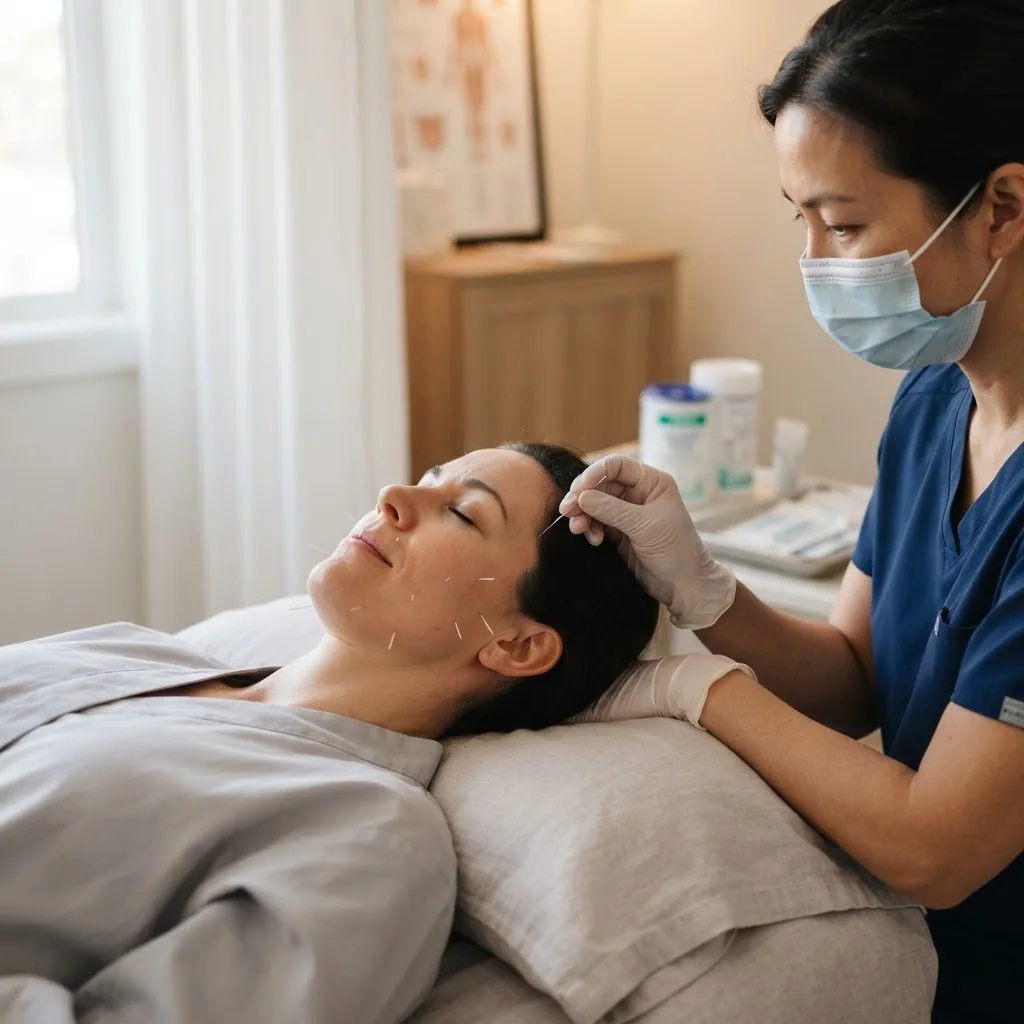
Step 4 — Needling technique and insertion (10–20 minutes):
- Direct answer: insert needles with precise angulation and depth tailored to facial anatomy—superficial insertion for thin tissue zones, oblique shallow techniques near orbital rim, and perpendicular where muscle bulk permits.
- Needle handling: avoid thrusting near infraorbital foramen; manipulate gently to elicit desired sensations (deqi) when indicated; for cosmetic protocols needling is often more superficial with minimal manipulation.
- Practitioner note: visual and palpatory cues guide depth; continuous monitoring for nerve or vascular pain is essential.
-
Step 5 — Retention and adjunct stimulation (20–30 minutes):
- Direct answer: retain needles 20–30 minutes while using adjuncts as needed—electroacupuncture (very low amplitude with facial caution), microcurrent stimulation, or manual tonification/sedation techniques.
- Clinical example: for facial palsy use gentle electroacupuncture at low settings to facilitate motor retraining (only by trained clinicians with appropriate devices).
-
Step 6 — Needle removal and aftercare (5 minutes):
- Direct answer: remove needles gently, apply slight pressure to prevent bruising, advise on post-session care—avoid vigorous exercise, hot baths, and facial friction for 12–24 hours if bleeding/bruising risk exists.
- Provide home-care acupressure points and recommended frequency (e.g., daily gentle acupressure to sustain effects).
-
Step 7 — Treatment course and assessment:
- Direct answer: plan a series—commonly 6–12 weekly sessions for chronic issues or 4–8 sessions for cosmetic goals—with periodic reassessment and objective measures (pain scales, facial symmetry photos).
- Case study: a published case example showed measurable facial pain reduction after 8 sessions; according to a 2021 peer-reviewed clinical case series, objective improvement in Bell’s palsy grading was noted over 12 weeks with combined facial and body acupuncture (source type: peer-reviewed case series).
Practitioner tips and quality measures:
- Maintain photographic documentation for aesthetic protocols with patient consent.
- Use sterile single-use needles and adhere to hygienic practice per regulatory guidance from national bodies such as AHPRA in Australia (AHPRA).
- Report adverse events and follow established infection control policy; consult the World Federation of Chinese Medicine Societies for point standardisation and training benchmarks (World Federation of Chinese Medicine Societies).
Transition: If you prefer non-needling self-care, the next section outlines evidence-based facial acupressure techniques and useful tools.
Facial Acupressure: Self-Treatment Techniques and Tools?
Answer: Facial acupressure uses manual fingertip or tool-applied pressure on acupoints to stimulate circulation and neural reflexes safely at home; it avoids skin penetration and is appropriate for daily maintenance and symptom relief with specific contraindications.
Term: Acupressure — non-invasive manual or tool-based compression of acupoints to elicit therapeutic responses similar to acupuncture without needling.
Tools commonly used:
- Jade or quartz rollers — for lymphatic drainage and superficial circulation.
- Gua sha tools — for targeted scraping along fascial planes to increase local blood flow.
- Finger-tips or knuckle pressure — precise, graded compression useful for small points like Yintang and Taiyang.
- Acupressure balls or soft-tipped probes — to apply sustained pressure to extra points like LI20.
How-to self-treatment steps (safe protocol):
- Wash hands and position comfortably; sit upright in a mirrored area.
- Begin with light effleurage (stroking) from center face outward to warm tissues (30–60 seconds).
- Locate each point using anatomical landmarks; apply steady pressure for 20–60 seconds per point, repeating 2–3 times.
- For lymphatic drainage, use light strokes along jawline, cheek, and under-eye toward the preauricular and submandibular nodes.
- Finish with gentle tapping across the forehead and cheeks to stimulate circulation for 1–2 minutes.
Contraindications for self-treatment:
- Do not apply strong pressure on areas of active infection, open wounds, or known skin cancer lesions.
- Avoid strenuous Gua sha or forceful rolling over thin skin or on anticoagulant therapy without medical clearance.
- Pregnancy: avoid deep abdominal acupressure points and consult practitioner for facial policies if treating systemic symptoms.
| Technique | Invasiveness | Best use |
|---|---|---|
| Manual finger acupressure | Non-invasive | Daily maintenance, stress relief |
| Jade roller | Non-invasive | Lymphatic drainage, skin glow |
| Gua sha | Surface scraping | Stagnation release, deeper circulation |
| Self-needle techniques | Not recommended | Not advised—seek licensed practitioner |
Practical routine (5–10 minutes daily): warm stroking, 3–5 facial points at 30–60 seconds each, finish with lymphatic rolling. Document immediate responses and stop if sharp pain or numbness occurs.
Transition: For clinicians and students, the next section explains how facial work integrates with whole-body protocols and training pathways.
Integration of Facial Pressure Points in Broader Acupuncture Practice?
Answer: Facial points are integrated into full-body protocols by combining local facial needling with distal meridian points, constitutional body points and adjunct therapies to achieve systemic balance and enhance outcomes for pain, neurologic recovery and aesthetic goals.
Clinical integration strategies:
- Combine facial local points with distal analgesic points (e.g., LI4, LV3) to potentiate pain relief.
- Use body points for underlying organ imbalances identified by TCM pattern differentiation (e.g., ST36 for Qi and digestion support during facial treatments targeting inflammatory conditions).
- In neurorehabilitation, pair facial stimulation with physiotherapy and neuromuscular retraining for improved motor outcomes.
Practical examples linking to other body-area resources:
- Facial plus abdominal treatment for digestive-related facial swelling — see abdominal pain acupressure points for protocols that complement facial drainage techniques.
- Combining facial protocols with knee rehabilitation in systemic musculoskeletal strategies — see acupressure knee pain points training for distal support strategies.
- Using ankle points to influence facial patterns via meridian links — consult acupressure points in ankle chart when designing full-body regimens.
- Augment training through formal courses such as the acupressure practitioner course to deepen manual skills relevant to facial therapy.
- For broader practitioner education consult the acupuncture acupuncturist training and certification guide for certification and scope expansion.
- Integrate facial protocols with back pain approaches when systemic musculoskeletal patterns overlap — see acupuncture for back pain treatment.
- Consider facial points as adjuncts in joint pain therapy—see acupuncture for joint pain therapy.
Integration note: facial treatments often yield best results when combined with patient education, lifestyle adjustments (sleep, hydration), and complementary modalities such as Qigong or manual therapies.
Transition: The next section covers safety and when to escalate to professional care.
Safety, Precautions, and When to Seek Professional Help?
Answer: Facial acupuncture and acupressure are safe when practised by trained clinicians following infection-control and anatomical safety rules; immediate professional consultation is required for severe adverse events, suspected nerve injury, significant bleeding or signs of infection.
Core safety points:
- Licensed practitioners only: ensure your clinician is registered per local regulatory requirements (see AHPRA for Australian registration information).
- Infection control: single-use sterile needles, skin antisepsis and proper disposal are mandatory.
- Contraindications: active facial infection (acne cysts, cellulitis), recent facial surgery within 6–12 weeks, uncontrolled bleeding disorders or anticoagulant therapy (seek medical clearance), severe neuropathy or facial tumors—avoid point stimulation until medically cleared.
- Adverse signs requiring immediate medical attention: severe swelling, rapidly spreading redness, neurological deficits (new numbness, persistent weakness), syncope, or excessive bleeding.
Professional escalation and reporting:
- Report complications to the practitioner’s regulatory body and follow local incident reporting guidelines—consult national health department safety recommendations; Australian resources are available from the Department of Health and AHPRA (AHPRA).
- Training recommendation: clinicians should pursue formal facial acupuncture modules within accredited programs; see the acupuncture acupuncturist training and certification guide for certified education pathways.
Transition: Below are concise FAQs to answer immediate reader questions and support informed decisions.
Conclusion: Facial pressure points offer targeted, clinically useful options for pain relief, sinus care, neurological rehabilitation and skin rejuvenation when used within a structured TCM-informed and anatomically safe framework. For self-care choose acupressure; for therapeutic needling consult a licensed practitioner trained in facial anatomy and infection control. Book an assessment with a credentialed clinician if you have complex facial pain, new neurologic signs, or post-surgical concerns.
Call to action: If you want guided treatment, consult a licensed practitioner and explore accredited training paths via the acupuncture acupuncturist training and certification guide to expand clinical skills.