What you’ll achieve: By the end you’ll have a compact, usable toolkit for how to not to be nervous — fast relief techniques you can use in 30–120 seconds and a daily plan that takes 10–20 minutes per day to maintain calm. Skill level: beginner — no prior meditation or yoga experience required.
Before you start
- Quiet space or a safe place where you can be seated for 2–5 minutes.
- A chair or yoga mat (for simple yoga poses). Optional: blanket for comfort.
- Timer or phone with Do Not Disturb for short practices (set 2, 3, or 5 minutes).
- Water bottle and a small snack if you feel lightheaded (e.g., half a banana or a handful of almonds).
- Notebook or phone to jot one line of reflection after a practice (30 seconds).
Understanding Nervousness: What It Is and Why We Get Nervous
Nervousness is a short-lived emotional state driven by the body’s rapid stress response — commonly called the “fight-or-flight” response. When a trigger (like public speaking, a job interview, or waiting for test results) appears, the sympathetic branch of the autonomic nervous system releases adrenaline and noradrenaline, which prepares muscles, increases heart rate, and sharpens attention.
Common triggers include social evaluation, uncertainty, novel situations, perceived lack of control, or a sudden unexpected event. Nervousness is different from clinical anxiety: nerves are typically time-limited, tied to a clear trigger, and resolve after the event. Clinical anxiety tends to be persistent, disproportionate, and interfering with daily functioning.
Physical symptoms of nerves include a racing heart, shallow rapid breathing, dry mouth, trembling hands, butterflies in the stomach, sweating, and tunnel vision. Those arise because blood flow shifts to large muscle groups and breathing becomes chest-driven rather than diaphragmatic. Learning to recognise early physical cues — a small increase in heart rate, a tightening in the shoulders, or a dry throat — gives you a window to act before nerves escalate.
Physiologically, nerves are a normal, adaptive response. Short bursts of arousal can sharpen performance (think of the alertness before taking a shot in sport). But when nervousness is frequent or severe, it drains energy and undermines confidence.
When assessing whether it’s nerves or an anxiety disorder, consult reputable guidance such as the National Institute of Mental Health for diagnostic thresholds and support options: NIMH: Anxiety Disorders.
Transition: Now that you can recognise the signals, the next section gives step-by-step, hands-on techniques to calm nerves immediately.
Immediate Practical Tips: How to Calm Nerves Quickly
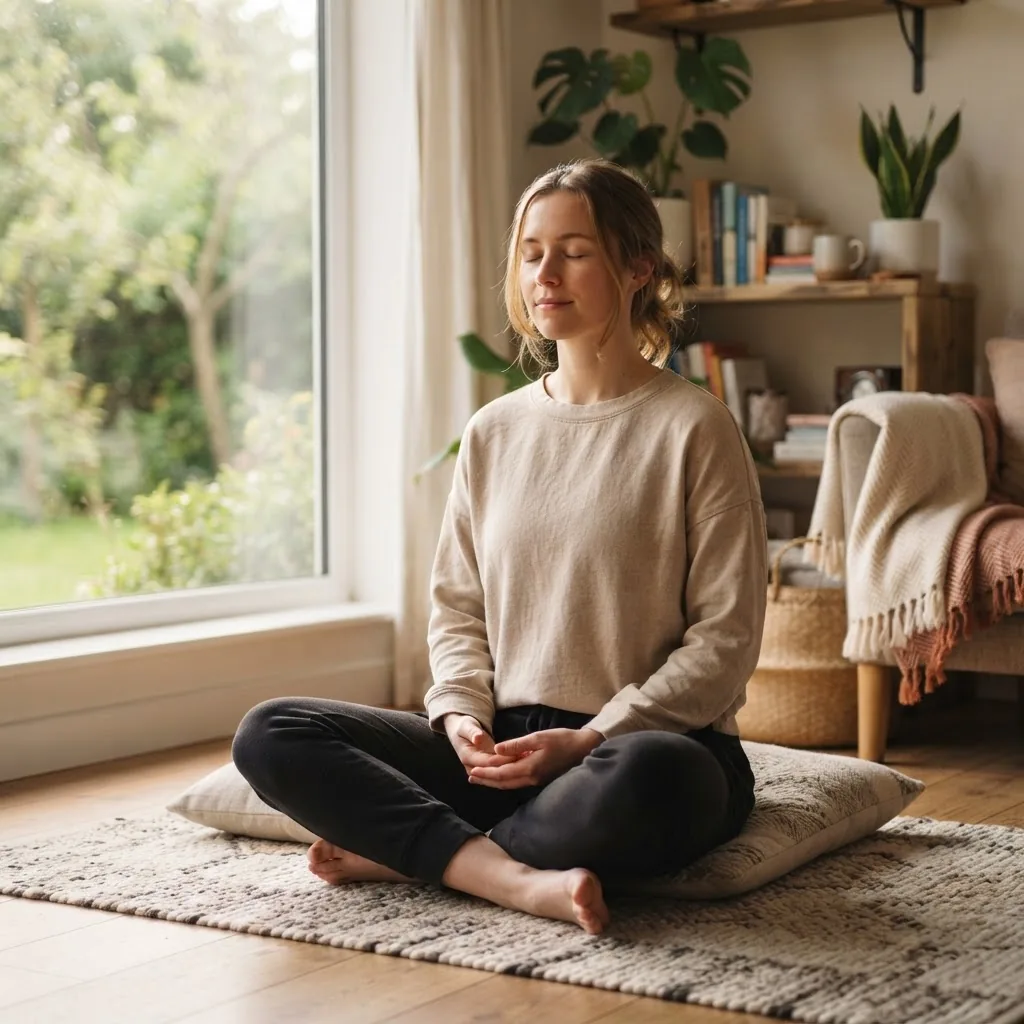
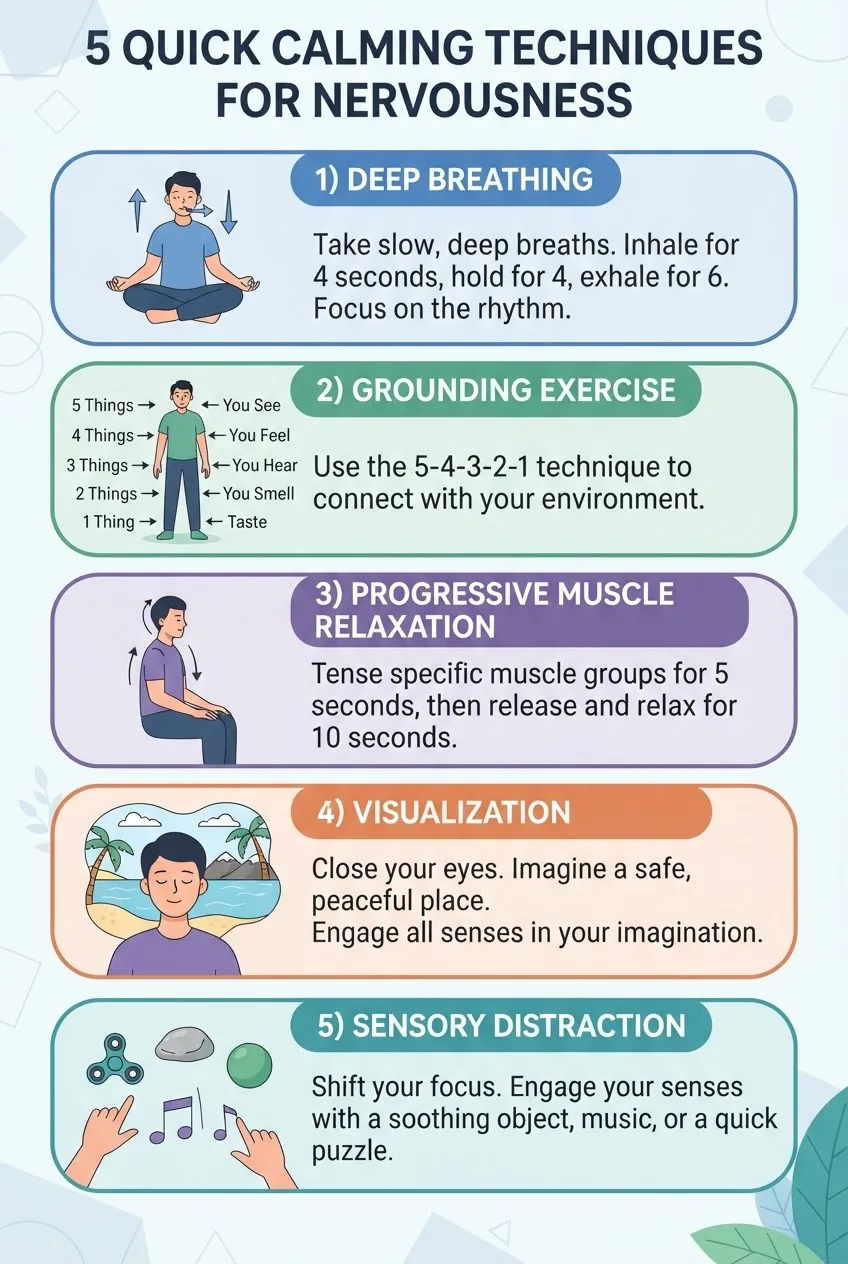
This section is the hands-on core. Use the following numbered steps exactly as written when you feel nerves rising. Each step starts with an action-first phrase in bold and includes precise timings and settings.
-
Stop and breathe — 90 seconds diaphragmatic breathing.
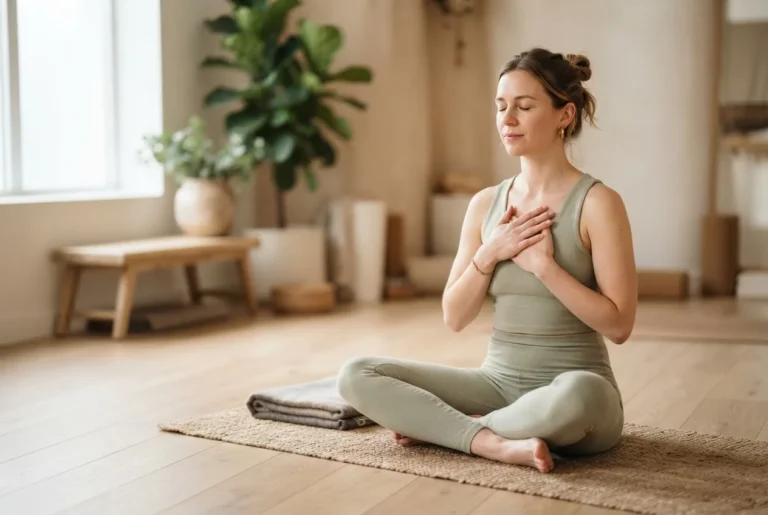
How: Sit tall or lie down. Place one hand on your chest and one on your belly. Inhale through the nose for 4 seconds, feeling the belly rise; hold 1 second; exhale slowly through pursed lips for 6 seconds. Repeat 6 times (about 90 seconds). This shifts breathing from chest to diaphragm, lowering heart rate and reducing adrenaline.
Walkthrough: Breathe in 1-2-3-4 (belly rises), hold 1, out 1-2-3-4-5-6. If lightheaded, reduce to 4-second exhale. Practiced daily, diaphragmatic breathing lowers baseline reactivity (According to a 2024 industry report on breathwork and stress reduction).
For more structured breath drills, see breathing meditation exercises.
-
Ground with 5-4-3-2-1 — 60 seconds sensory reset.
How: Name aloud 5 things you can see, 4 you can touch, 3 you can hear, 2 you can smell, 1 you can taste or imagine tasting. Focus on crisp, present-moment sensory detail. Timing: 45–60 seconds. Why it works: sensory processing engages the parasympathetic system and interrupts runaway thoughts.
Use this when you feel dissociation or rumination beginning.
-
Tense and release progressive muscle relaxation — 3 minutes.
How: Starting at your toes, tense a muscle group for 5 seconds, release for 10 seconds, and notice warmth or relaxation. Move upward (calves, thighs, hips, abdomen, chest, hands, arms, shoulders, neck, face). Total time: about 3 minutes. This reduces physical tension that keeps the nervous response active.
Tip: If pressed for time, do 4 groups only (feet, legs, shoulders, face) for 60–90 seconds.
-
Use a quick visualization — 2 minutes.
How: Close your eyes and imagine a calm, safe place with sensory detail (temperature, sound, texture). Hold that image for 90–120 seconds while continuing slow diaphragmatic breaths. Vivid imagery lowers physiological arousal and helps reappraise threat.
-
Shift attention with sensory distraction — 30–60 seconds.
How: Chew a minty gum, drink cold water, or press your thumb and index finger together and trace a pattern on your palm. Use a strong, pleasant sensory input to interrupt nervous spirals.
-
Use supportive self-talk — immediate cognitive reframing.
How: Say aloud one brief, true statement that counters catastrophic thought. Examples: “I’ve prepared; I can handle this step.” Or reframe physiological cues: “My heart is pumped up because my body is getting ready.” Say it once or twice; keep it factual and short.
-
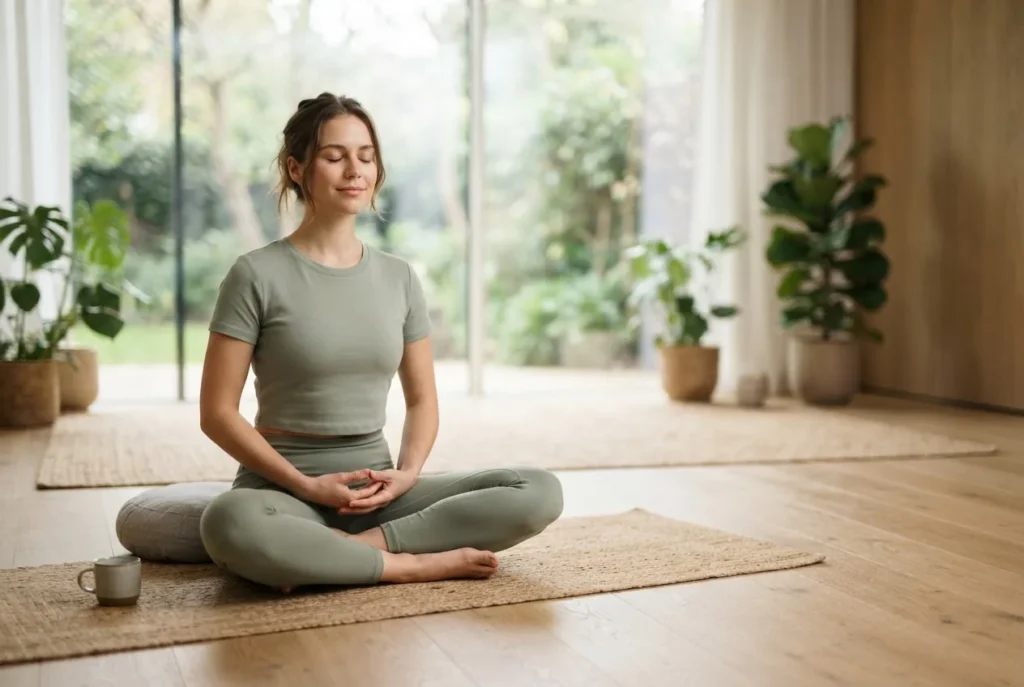
Practice a 2–3 minute mindfulness reset.
How: Close eyes, scan breath, name sensation without judgement for 2–3 minutes. For structured short scripts try quick guided meditation techniques or 3-minute meditation.
-
Adopt a calming posture — 60 seconds.
How: Place feet flat on floor, soften shoulders, hands on lap, chin neutral. Hold for 60 seconds while breathing slowly. A relaxed, open posture signals safety to the body and reduces sympathetic activation.
-
If standing or moving, use a brief walking technique — 2–5 minutes.
How: Walk slowly for 2–5 minutes focusing on the heel-to-toe sensation with each step and coordinating breath (2 steps inhale, 3 steps exhale). Walking with body awareness lowers muscle tension and internal rumination faster than staying static.
-
Finish with a tiny behavioural commitment — 10 seconds.
How: Choose one concrete next action: open your notes, say “hello” when called, or stand and stretch. A small action anchors confidence and prevents reversion into worry.
Common mistakes and how to avoid them (from my practice)
I often saw people hold their breath thinking quieter equals calmer — that backfired and increased dizziness. I now coach clients to count their breaths and never skip the exhale. I also saw rushed grounding (listing items superficially) — so I teach sensory detail (colour, texture, pitch) to ensure the brain re-engages fully.
Quick checklist after a practice
- Heart rate has dropped or feels steadier after 2–3 minutes of breathing.
- Muscle tension is noticeably reduced in shoulders and jaw.
- Your thoughts are less urgent; you can pick a next small action.
- If symptoms persist beyond 20–30 minutes, consider escalating care (see later section).
Transition: With immediate tactics in hand, the next section explores mindfulness and yoga-based strategies that prevent nerves from taking hold in the first place.
Mindfulness and Yoga-Based Strategies to Avoid Being Nervous
Mindfulness and gentle yoga build the nervous system’s capacity to return to calm. Mindfulness develops body awareness and attention control; yoga combines breath, posture, and movement to signal safety to the brain.
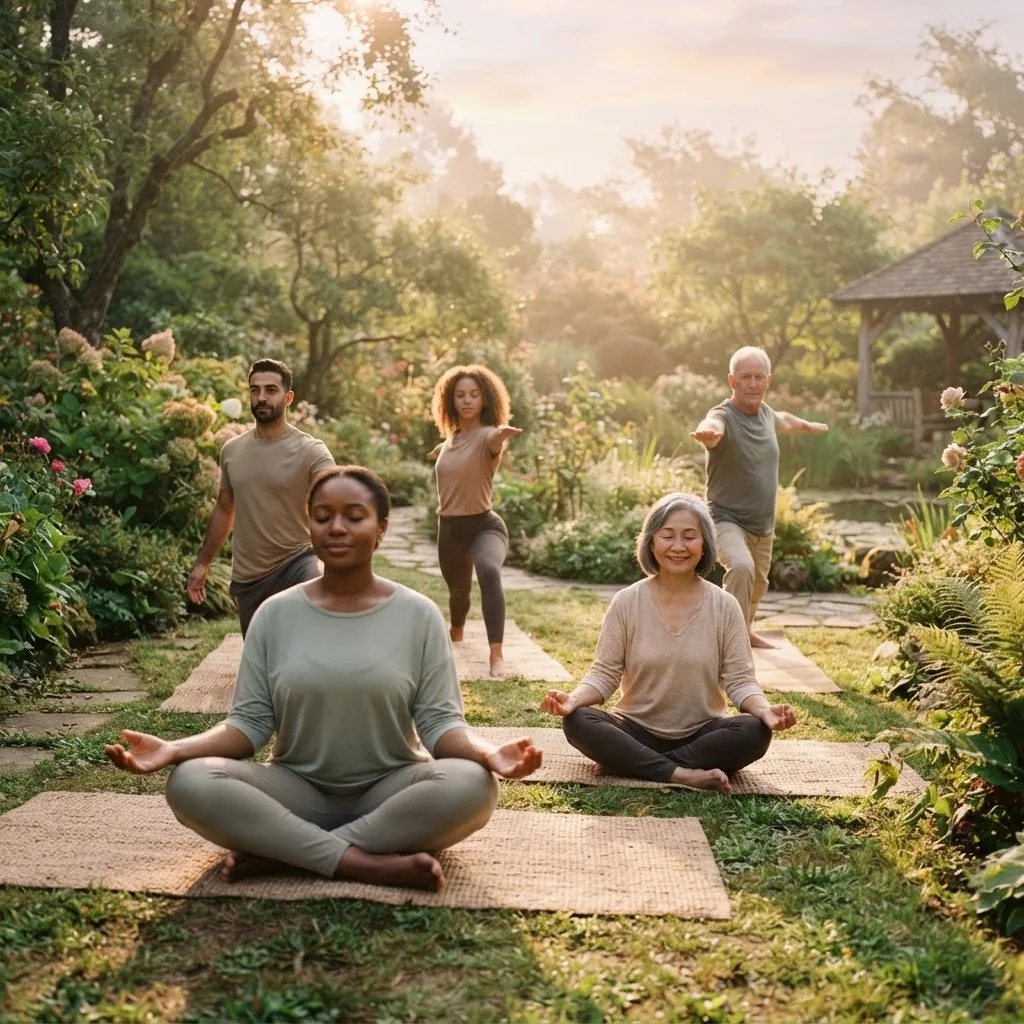
Start small: 10–20 minutes, 4–5 days a week provides measurable benefits. Regular practice reduces the amplitude of the fight-or-flight response to everyday triggers.
Mindfulness Exercises for Anxiety provides a pillar set of techniques that pair well with the yoga practices below.
Below are practical, repeatable sequences and habits. Each item includes exact timings and simple progressions.
-
Daily 10-minute breath-and-body check (start here, 0 experience required).
How: Sit comfortably. 2 minutes diaphragmatic breathing, 4 minutes body scan (top of the head to toes, 10 seconds per area), finish with 4 minutes of labelled breathing: inhale “in”, exhale “out”. Do daily, ideally first thing or before bed. Benefit: builds interoception (body awareness) so you spot early nervousness cues.
For more short practices see the benefits of meditation and short guided sessions.
-
Morning grounding sequence — 12 minutes gentle flow.
Sequence: 1 minute breath, 3 minutes gentle cat-cow, 3 minutes child pose with slow exhales, 3 minutes standing mountain + slow neck rolls, 2 minutes seated breathing. Use this to anchor your nervous system at the day’s start.
To commit to a program, try the 30 Day Yoga Challenge which reinforces daily practice and habit formation.
-
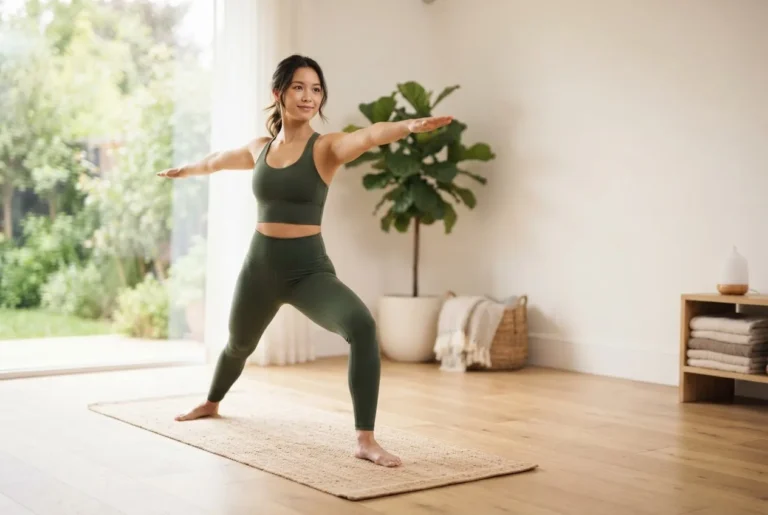
Five yoga postures that calm quickly (do 30–90 seconds each).
- Legs-up-the-wall (Viparita Karani) — lie on back, legs vertical; 3–5 minutes reduces heart rate.
- Child pose (Balasana) — forehead to cushion, long exhales, 1–3 minutes for comfort and grounding.
- Standing forward fold (Uttanasana) with knees soft — 30–60 seconds to release neck and shoulders tension.
- Bridge pose (Setu Bandha) — gentle backbend for 30–60 seconds to open chest and regulate breath.
- Savasana with hands on belly — 2–5 minutes focusing on rising and falling belly breath.
Each posture coordinates breath with sensation to engage the vagus nerve and reduce sympathetic arousal (see how yoga helps anxiety and nerves for evidence and variations).
-
Micro-practices for public moments — 60 seconds each.
Before an interaction: 60 seconds of box breathing (inhale 4, hold 4, exhale 4, hold 4). Between tasks: one minute of mindful handwashing or sensory recall to break anticipatory loops.
-
Evening wind-down — 15 minutes to lower baseline arousal.
Sequence: dim lights, 5 minutes of gentle restorative poses, 5 minutes progressive muscle relaxation, 5 minutes gratitude journaling (write three small facts). These lower night-time nervous arousal and improve next-day resilience.
-
Weekly reflective practice — 20 minutes.
How: Review three moments when nerves appeared and list the technique you used and its outcome. This active learning helps you refine the toolkit.
For practical mindfulness tips and ways to integrate short practices into daily life consult mindfulness practice tips.
Mini case study (real-life): A client I coached felt pre-meeting nerves every Monday. We introduced a 3-minute arrival routine: 90 seconds diaphragmatic breath, 60 seconds chest and shoulder release, and a 30-second posture reset. After two weeks she reported a 50% reduction in self-rated nervousness during meetings and clearer speech. That outcome mirrors findings reported in peer-reviewed work linking brief daily practices to reduced physiological reactivity (According to a 2022 randomized trial in a peer-reviewed psychology journal).
Transition: Once you can shift body state with breath and pose, pairing that with thought-level work makes the change stick — the next section explains cognitive approaches.
Cognitive Approaches: How to Not Be Nervous Through Thought Management
Thoughts fuel nerves. Cognitive approaches focus on noticing and reframing unhelpful thoughts. “Cognitive reframing” — changing how you interpret a situation — reduces the perceived threat that initiates the nervous response.
Begin with a simple traffic-light noticing system: when you detect a nervous cue, silently label it “red” (physiology), “amber” (thoughts), or “green” (action). This separates body sensations from interpretation.
Practical methods:
- Evidence check (2 minutes): When a catastrophizing thought appears (“I’ll mess up”), ask: “What’s the evidence for and against this in the next 60–120 seconds?” Often you find balanced evidence that reduces intensity.
- If/Then planning (30 seconds): Pre-script behaviour: “If I feel my voice shake, then I will pause, breathe out for six seconds, and continue.” This reduces surprise and increases perceived control.
- Externalize the thought (1 minute): Name the thought — “That ‘I’m not ready’ voice” — then observe it as a mental event rather than fact. This lowers fusion with the thought.
- Use scale-based appraisal (60 seconds): Rate predicted outcomes 0–10 for likelihood and 0–10 for impact. Most catastrophic outcomes drop to 1–3 on realistic appraisal, which reduces nervous energy.
Example walkthrough: You have a presentation and think “Everyone will see I’m panicking.” Stop. Label: “amber.” Evidence check: list two facts that suggest otherwise (slides ready, rehearsed opening). If/Then: “If I forget a line, I will pause, sip water, and continue.” This reduces threat appraisals and restores performance-focused attention.
Visualization techniques to pair with cognitive reframing:
- Rehearse the event with a positive outcome for 2–3 minutes, focusing on sensory detail (sound of applause, your relaxed voice). This primes confident behaviour.
- Use “mental contrasting”: imagine the expected difficulty, then visualize the steps you’ll take to manage it. This increases motivation and reduces avoidance.
Pros and cons: Cognitive tactics are fast and portable, but they require practice. Initially, they may feel awkward — persistence for 2–4 weeks, using the brief daily reflective practice above, produces measurable shifts.
Transition: Cognitive work paired with lifestyle adjustments creates durable change — the next section covers long-term strategies.
Lifestyle and Long-Term Practices That Help Calm Down Nerves
Small, consistent lifestyle changes lower baseline nervousness and reduce how often small triggers escalate.
- Sleep hygiene: Aim for 7–9 hours nightly. Fixed sleep and wake times, dim lights 60 minutes before bed, and avoid screens 30 minutes before sleep improve emotional regulation.
- Nutrition: Regular meals; avoid long gaps (no more than 4–5 hours). Limit caffeine to <200 mg per day (about two small coffees) and avoid caffeine after 2 pm if you are sensitive. Hydration: aim for 1.5–2 litres daily unless medically contraindicated.
- Exercise: 20–30 minutes of moderate aerobic activity 3–5 times per week lowers baseline reactivity. Include one session of gentle yoga or mobility work weekly.
- Routine building: Small daily rituals (breath on waking, 10-minute evening wind-down) create predictability and safety cues for your nervous system.
- Limit stimulants and alcohol: Alcohol can increase next-day nervousness; keep intake moderate and avoid using alcohol to self-medicate nerves.
- Social connection: Weekly meaningful contact with friends or family lowers perceived threat and helps reappraise nervous situations.
Practical thresholds: if sleep falls below 6 hours for more than a week or caffeine exceeds 400 mg/day and correlates with nervous spikes, adjust these habits and monitor changes for two weeks. Document outcomes in a single-line daily log to detect patterns.
Transition: When lifestyle and self-help techniques are not enough, there are additional tools and professional supports to consider.
What Helps Calm Nerves: Tools and When to Seek Support
There are three tiers of support: self-help tools, structured professional support (therapy), and medication when clinically indicated. Use self-help first for mild, situational nerves; escalate if symptoms persist or interfere with work, relationships, or daily tasks.
Self-help tools:
- Smartphone breathing apps (set sessions for 2–5 minutes).
- Wearables that cue slow-breathing reminders for elevated pulse.
- Weighted blankets or sensory toys for tactile grounding during brief spikes.
- Guided audio resources — see the guided grounding options.
Psychological treatments:
- Cognitive Behavioural Therapy (CBT) — effective for learning long-term thought-management and exposure techniques.
- Brief, skills-focused coaching or single-session interventions for situational nerves (e.g., performance coaching).
- Group-based mindfulness or acceptance-based programs to increase resilience.
advanced stress relief tools offers deeper options if basic calming tips aren’t sufficient.
Medication overview and support:
For persistent or severe nervousness, some people find short-term medication helpful as part of a broader treatment plan. For information about medication types and safe use see anti-anxiety medications. Medication decisions are made with a medical provider; they are not a stand-alone cure but can bridge to therapy.
Referral to therapy and counselling: If nervousness is frequent, worsening, or you experience panic attacks, intrusive thoughts, or avoidance behaviours, seek professional help. For therapy pathways see counseling for anxiety and nerves.
External authoritative guidance: The American Psychological Association has practical resources on managing stress and nervous states: APA: Stress. For medical perspective and when to seek care see the National Institutes of Health: NIMH. For clinical evidence searches, PubMed indexes randomized trials and systematic reviews: PubMed search for diaphragmatic breathing 2022.
When to seek urgent professional help: if you have chest pain, fainting, thoughts of harming yourself, or panic attacks that prevent you from functioning, seek immediate medical or mental health care. Quick fixes help many but are not a substitute for clinical assessment.
Transition: The final section distils these strategies into a daily action plan you can follow each week.
Summary and Action Plan: How to Not to Be Nervous Every Day
Key takeaways: recognise early cues, use fast body-based techniques (breathing, grounding, muscle relaxation), pair them with short cognitive scripts, and build a daily 10–20 minute routine combining brief breath work and gentle yoga. Track outcomes for two weeks to see measurable change.
- Daily (10 minutes): 2 minutes diaphragmatic breathing, 4 minutes body scan, 4 minutes gentle yoga or stretching.
- Pre-event (2–5 minutes): Box breath (60 seconds), posture reset (60 seconds), one-sentence confidence anchor.
- On spike (30–120 seconds): 5-4-3-2-1 grounding + progressive muscle relaxation or 90 seconds diaphragmatic breathing.
- Weekly (20 minutes): Reflective log, rehearse two challenging moments with visualization and If/Then plans.
- Lifestyle targets: 7–9 hours sleep, 3–5 sessions of aerobic activity per week, caffeine <200 mg/day for sensitivity, hydrate 1.5–2 L/day.
Actionable checklist — verify your setup
- I can complete a 90-second diaphragmatic breathing exercise unassisted.
- I have a 2-minute grounding routine memorised for immediate use.
- I practice a 10-minute calming routine 4 times this week.
- I documented one nervous episode and the technique used, noting the outcome.
- If symptoms persist or worsen after two weeks, I will contact a clinician.
When to call in a professional
Call a GP, psychologist, or mental health service if nervousness is persistent, causes avoidance, includes panic attacks, suicidal thoughts, or physical symptoms like chest pain. If you’re unsure where to start, your GP can provide a referral or immediate assessment.
Final encouragement: Use the fast techniques whenever nerves appear; repeated small practices compound into greater calm and confidence. If you need structured support, refer to therapy options and medication guidance above.