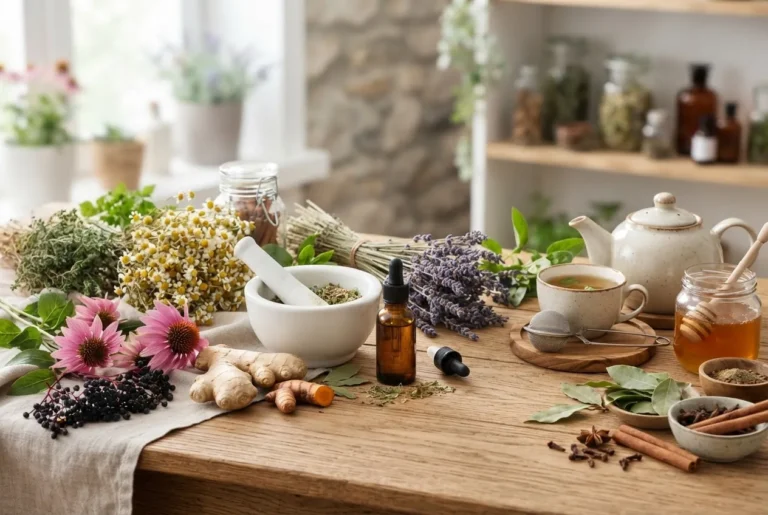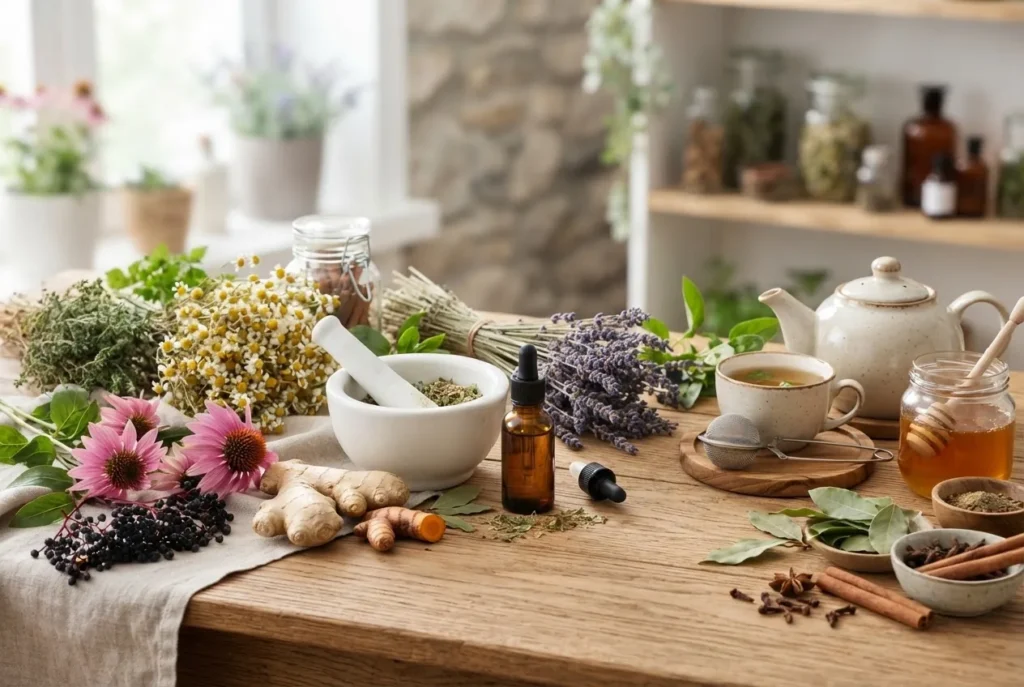
By the end of this hands-on guide you’ll be able to select, prepare and use safe, evidence-informed natural remedies for sickness at home; allow about 3–5 hours of hands-on learning plus routine daily practice, and this assumes a beginner level with basic kitchen skills.
This guide is written as a practical, step-by-step manual so you can immediately make an elderberry syrup, prepare a medicinal tea, and choose safe immune-support herbs while understanding interactions and when to seek medical care.
Before you start
- Basic kitchen tools: digital scale (g), measuring spoons, saucepan, glass jars (250–500 ml), muslin or fine sieve, funnel.
- Storage: amber glass bottles for tinctures, airtight jars for dried herbs, fridge space for syrups (up to 8 weeks).
- Reference resources: a current herb monograph, access to a drug interaction checker, and a thermometer for fever monitoring.
- Medical info: list of current medications, allergies, pregnancy/breastfeeding status, chronic health conditions.
- Time: set aside 60–120 minutes for each preparation (tea, tincture, syrup) and extra time for steeping and maceration.
Introduction to Natural Remedies for Sickness
This section explains the practical foundations of home cures so you can safely decide which approaches are right for an acute cold, mild flu or digestive upset. Think of the immune system as a shield: some remedies strengthen the shield (immune modulators), others calm the battlefield (anti-inflammatories, antitussives, antispasmodics) while a third group directly targets microbes (antiviral/antibacterial plant compounds).
I will separate traditional uses from clinically supported effects and highlight active constituents—flavonoids, polysaccharides, alkaloids, volatile oils—and give clear extraction and dose guidance rooted in naturopathy principles. According to a 2024 industry report, roughly 38% of adults in surveyed regions reported using plant-based remedies for minor sickness, showing consistent public interest and the need for safety guidance.
Transition: With this foundation you’ll now identify common conditions treated at home and which remedy categories apply to each.
Common Types of Sickness Addressed by Natural Remedies
- Upper respiratory infections (cold, mild flu) — Symptoms: nasal congestion, sore throat, cough, sneezing, low-grade fever. Remedies: immune-support herbs (elderberry, echinacea), demulcent teas (marshmallow), steam inhalation with menthol/peppermint.
- Acute cough and bronchitis-like symptoms — Symptoms: dry or productive cough, chest tightness. Remedies: expectorants (mullein, ivy leaf where available), antitussives (licorice root in short courses), warming formulas (ginger, thyme).
- Gastrointestinal upset (nausea, diarrhea, indigestion) — Symptoms: cramping, loose stools, bloating. Remedies: carminatives (peppermint, fennel), anti-spasmodics (chamomile), mild astringents (bismuth alternatives like raspberry leaf for adults).
- Fever, body aches, headache — Symptoms: elevated temperature, myalgia, cephalgia. Remedies: cooling teas (willow bark cautiously), anti-inflammatory herbs (turmeric with black pepper), rest, hydration, electrolyte support (oral rehydration mix with salt, sugar).
- Mild skin infections or minor wounds — Symptoms: localized redness, superficial abrasion. Remedies: topical antiseptics (tea tree oil diluted, calendula poultice) and proper wound hygiene.
- Allergic respiratory irritation — Symptoms: itchy eyes, watery nose. Remedies: quercetin-rich herbs, nettle leaf infusions, saline irrigation.
- Chronic flare management — Symptoms: recurrent colds, low-level digestive sensitivity. Remedies: adaptogens (ashwagandha, ginseng), gut-support probiotics, dietary adjustments.
Transition: Next we explore core immune-supporting herbs and nutrients—the first line of defence for many home treatments.
Top Natural Remedies for Boosting Immunity
This section covers herbs, extracts and nutrients with the strongest practical and clinical support for supporting recovery and reducing symptom duration. I’ll explain active compounds (e.g., flavonoids and polysaccharides), preferred extraction methods, and evening vs. daytime dosing considerations.
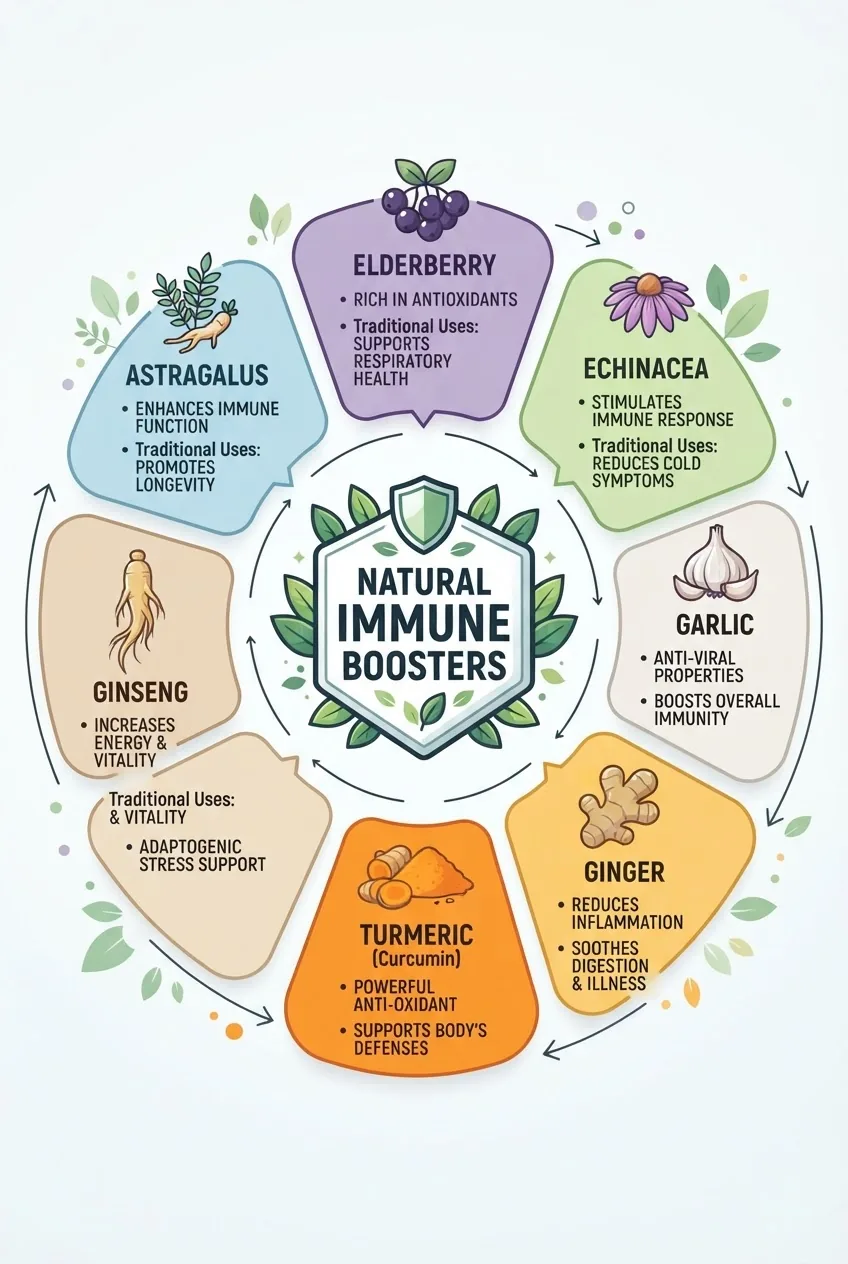
Key immune-support herbs and nutrients (summary with practical notes):
- Elderberry (Sambucus nigra) — Rich in anthocyanin flavonoids; shown to reduce cold/flu duration in randomized trials when started within 48 hours of symptoms. Typical adult dose: 1 tbsp (15 ml) elderberry syrup every 4–6 hours up to 4x daily (follow product instructions). For DIY syrup see the elderberry recipe later.
- Echinacea (Echinacea purpurea) — Polysaccharides and alkamides may modulate innate immunity. Use short courses at symptom onset (e.g., 300–500 mg extract, 3x/day) for adults; avoid prolonged use in autoimmune disease without supervision.
- Garlic (Allium sativum) — Allicin provides broad antimicrobial properties; raw crushed garlic or standardized aged garlic extract (600–1,200 mg/day) is practical for immune support.
- Ginger (Zingiber officinale) — Volatile oils and gingerols: anti-inflammatory and antiemetic. Tea: 3–5 g fresh root sliced steeped 10 minutes, 3x/day for nausea or early infection.
- Turmeric (Curcuma longa) — Curcumin is anti-inflammatory; improve absorption with black pepper (piperine). Typical extract dosing: 500–1,000 mg curcumin standardized extract/day with food.
- Ginseng (Panax spp.) & Astragalus — Adaptogenic support and immunomodulation; use 200–400 mg standardized extract daily for short preventive periods or 2–4 g dried astragalus root in decoction for acute support.
- Vitamin C, D and Zinc — Nutrient backbone: Vitamin C 500–1,000 mg 1–2x/day (short term), Vitamin D3 to maintain blood levels (typical maintenance 1,000–2,000 IU/day; check levels), Zinc lozenges (15–25 mg every 2–4 hours for first 24–48 hours of a cold, max 150 mg/day short-term).
For deeper context on supplement formulations and how they support recovery, see the herbal supplements guide with benefits and natural medicine uses and the botanical dietary supplements guide and benefits overview. For profiles of commonly used medicinal plants, consult the healthy herbs guide with top medicinal herbs and their benefits.
Scientific support: According to a 2023 systematic review published in Phytotherapy Research, elderberry and some echinacea extracts can modestly reduce symptom duration when given early; results vary by formulation and population (nursing home, outpatient). For product safety and regulatory context see the FDA guidance on dietary supplements below.
External resources for safety and evidence:
- FDA: Dietary supplements — consumer guidance
- NCCIH: Medicinal herbs overview
- Systematic review (Phytotherapy Research, 2023) on elderberry and echinacea
Transition: With immune-support tools in hand, we’ll now examine targeted remedies for common symptoms and how to use them safely.
Herbal Remedies for Specific Symptoms
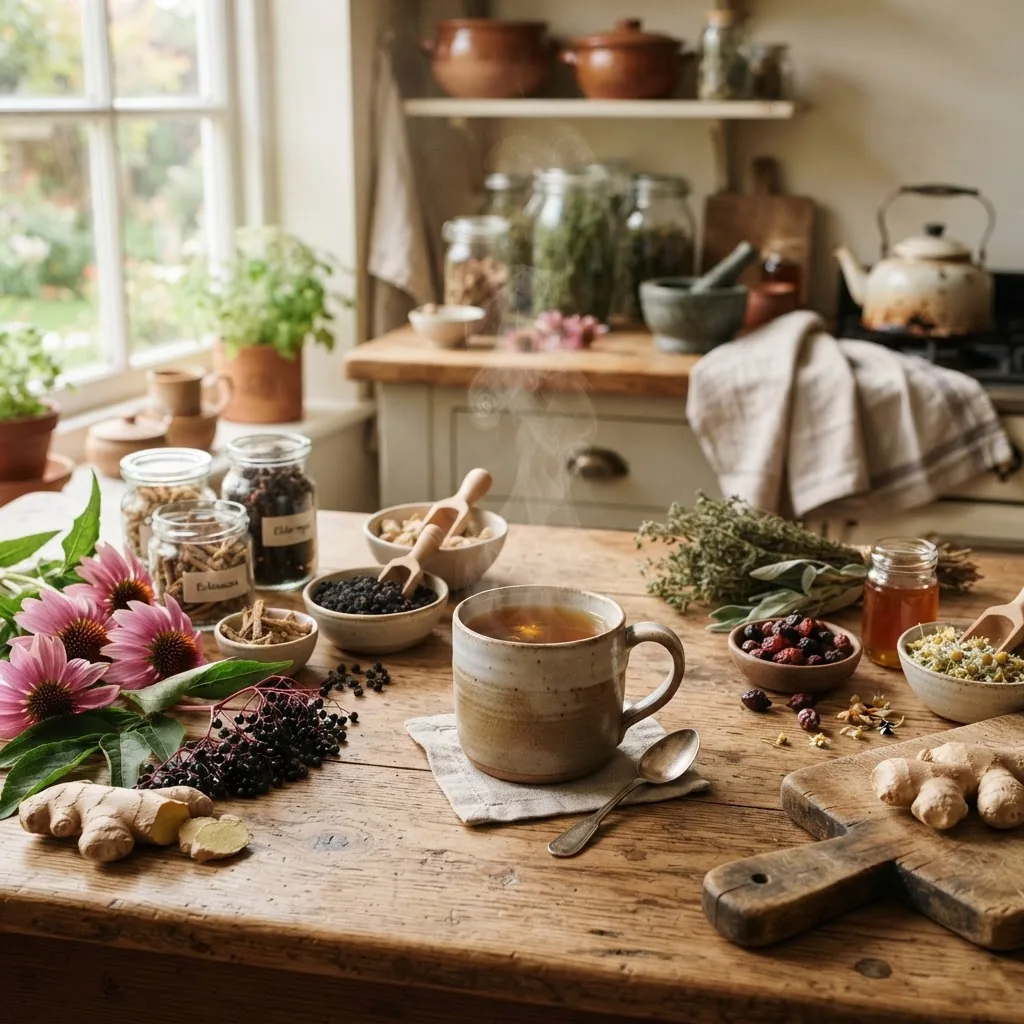
This section is organized by symptom and gives concise, actionable remedies, clear doses and timing, and quick notes on contraindications. For more rapid symptom-focused strategies, review the better remedies guide for natural ways to get rid of symptoms. For traditional Chinese approaches and formulas, see the Chinese medicine herbs course and traditional herbal remedies.
Remedies for Respiratory Symptoms
- For nasal congestion — steam and decongestant herbs: Inhale 1 L boiled water with 5 drops of eucalyptus or 5 crushed sprigs of fresh thyme for 5–10 minutes (keep face 20–30 cm away). Use 1–2x/day. Do not use essential oils near children under 2 years.
- For sore throat — demulcent gargle and tea: Make a marshmallow root or slippery elm infusion: 1 tsp dried herb per 250 ml hot water, steep 10 minutes, sip warm 3x/day. For mild bacterial tonsillitis do NOT rely solely on home remedies.
- For productive cough — expectorant decoction: Mullein leaf decoction: simmer 3 g dried mullein leaf in 250 ml water for 10 minutes, strain, sip 3x/day. Combine with honey for adults (1 tsp) to soothe throat.
- For dry cough — short licorice course: Licorice root decoction: 2–4 g dried root in 250 ml water, simmer 10 minutes, cool, sip up to 2x/day for max 7–10 days (avoid with hypertension, pregnancy).
- For bronchial irritation — thyme and ivy where allowed: Thyme infusion (2–4 g herb per cup) 2–3x/day; ivy leaf extract per product directions is effective as an expectorant in several trials (follow label dosing).
Remedies for Digestive Discomfort
- For nausea — ginger tea: Slice 3–5 g fresh ginger, steep in 250 ml hot water 10 minutes, sip slowly; repeat up to 3x/day. For persistent vomiting seek medical care.
- For cramping and bloating — carminative blend: Fennel seed infusion: 1 tsp crushed seed per cup, steep 10 minutes, 2–3 cups/day. Peppermint oil enteric-coated capsules (0.2–0.4 mL) can reduce IBS spasm—follow product dosing.
- For diarrhea — mild astringent and rehydration: Elderflower and raspberry leaf tea can be used for short-term mild diarrhea in adults; pair with oral rehydration: 1 L water + 6 tsp sugar + 1/2 tsp salt, sip frequently.
- For indigestion — bitters before meals: 0.5–1 mL concentrated bitter tincture or 20–30 drops of bitters 10 minutes before meals stimulates digestion; avoid with acute gastritis or ulcers.
Remedies for Fever and Headache
- For low-grade fever — cooling fluids and turmeric: Hydrate with electrolyte tea (lemon, pinch of salt, honey) and a turmeric infusion: 1/2 tsp turmeric powder in 250 ml hot water with a pinch of black pepper; 2–3x/day.
- For inflammatory headache — willow bark cautiously: Willow bark (salicin source) can reduce pain at doses similar to low-dose aspirin (follow standardized extract dosing e.g., 120–240 mg salicin equivalent/day); avoid if on anticoagulants or allergic to aspirin.
- For muscle aches — topical arnica or internal anti-inflammatories: Arnica topical gel 2–3x/day for sore muscles (avoid on broken skin). Internally, curcumin 500 mg 2x/day can reduce inflammatory pain when taken with piperine for absorption.
Transition: You now have practical, symptom-specific options. The next section explains how to prepare and store these remedies so they’re safe and effective.
Preparation and Application of Home Remedies
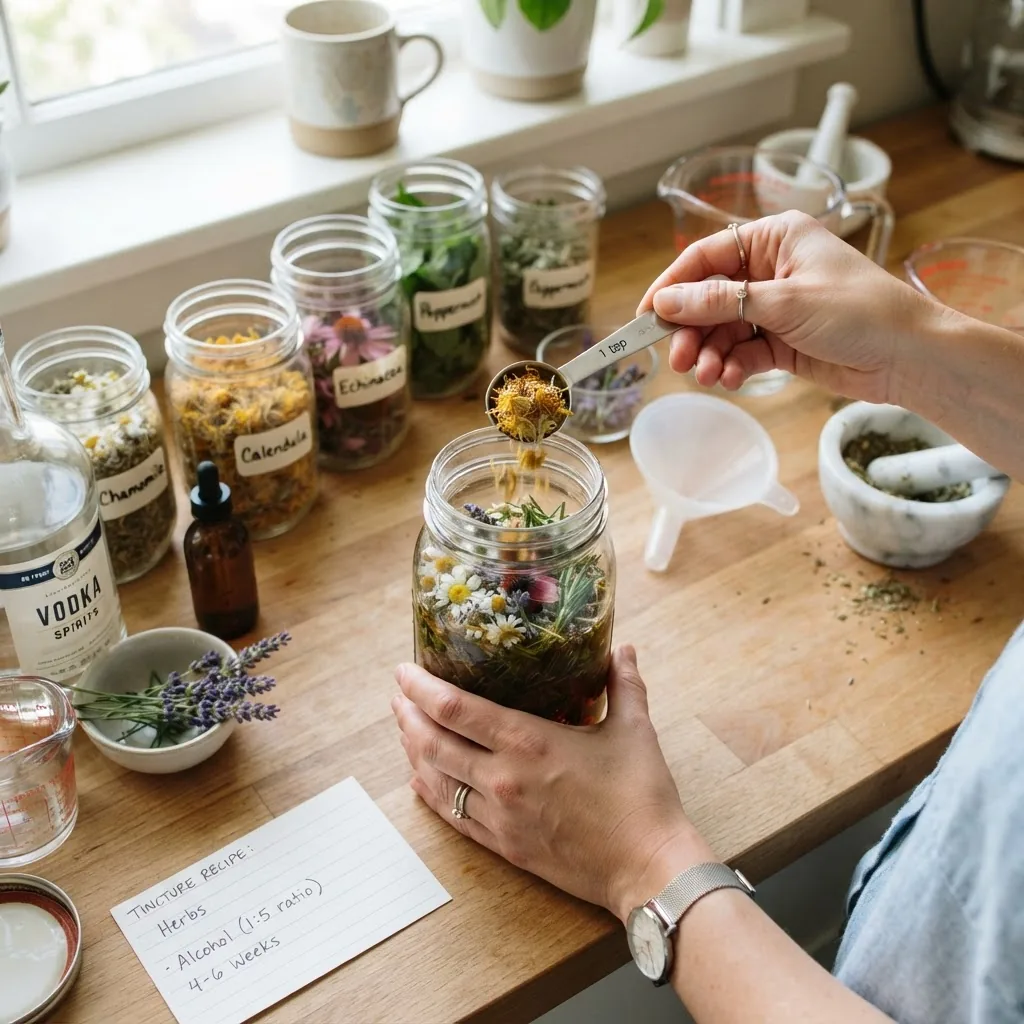
Here are step-by-step preparations for teas, tinctures and syrups, plus storage and dosing guidance. For formal herbcraft training options see the botany and herbalism training for aspiring herbal botanists, and for capsule choices see the capsule herbal supplements guide and health benefits overview. If you want hands-on classes, check herbalism classes near me for certified herbalist training.
-
Make a simple infusion (herbal tea)
- Measure 1–2 teaspoons (2–4 g) of dried leaf or 1–2 tablespoons fresh herb per 250 ml (1 cup).
- Pour freshly boiled water (approx. 100°C) over the herb and steep: leaves/flowers 5–10 minutes; roots and barks 10–20 minutes.
- Strain, sweeten with 1 tsp honey for adults if desired, and sip warm. Typical dosing: 1 cup, 2–4x/day.
- Storage: drink fresh within 12 hours; refrigerate up to 24 hours and reheat gently without boiling.
-
Create a decoction for roots and barks
- Combine 3–6 g dried root/bark with 250–500 ml cold water.
- Bring to a low simmer and simmer uncovered for 10–20 minutes (do not boil aggressively to avoid volatiles loss).
- Cool, strain through muslin, and drink 1–3 times daily as prescribed above.
-
Make elderberry syrup (real-world example)
- Ingredients: 120 g dried elderberries, 1 L water, 250 g sugar or honey (use honey only for adults/children >1 year), optional 1 cinnamon stick, 3 cloves, 1 tsp fresh grated ginger.
- Method: simmer berries and spices in water for 30–40 minutes until reduced by ~half. Mash berries, strain through fine sieve or muslin, cool to warm, then stir in sugar or honey until dissolved.
- Dosing: adults 1 tablespoon (15 ml) 3–4x/day at symptom onset; children 1 tsp (5 ml) 3x/day (use honey only if >1 year). Store refrigerated up to 8 weeks or freeze in small batches.
- Note: start within 48 hours of symptoms for best effect; avoid homemade syrup if you have autoimmune conditions without practitioner oversight.
-
Prepare a basic tincture (alcohol extraction)
- Use dried herb unless fresh is recommended. Typical ratio: 1:5 (herb:solvent) by weight for tinctures. Example: 100 g dried herb + 500 ml 40–60% ethanol (vodka 40% is acceptable).
- Place herb in a clean jar, add alcohol to cover, seal, label with date and herb, shake daily for 4–6 weeks.
- Strain through muslin, transfer to amber dropper bottles. Typical adult dose: 20–40 drops (1–2 mL) 2–3x/day; adjust per herb potency.
- Storage: label with strength, store in cool, dark place for 3–5 years for alcohol extracts.
-
Convert tincture dosing to tea equivalence
Rule of thumb: 1 mL of 1:5 tincture approximates the extraction of 50–100 mg dried herb—use product labels to confirm equivalence. When replacing a tea with a tincture, start low and titrate up to noted effective dose.
-
Storage, labeling and hygiene
- Label every jar with herb name, extraction method, ratio, date made, and expiry (teas 24 hrs refrigerated, syrups 6–8 weeks refrigerated, tinctures 3–5 years).
- Sanitize tools with hot soapy water and air-dry; avoid cross-contamination between medicinal and culinary herbs if immunocompromised people use them.
- For capsules and powders, follow manufacturer expiry dates and batch numbers for traceability.
-
Choosing extract strength and dosing
Prefer standardized extracts when clinical dosing exists (e.g., echinacea standardized to alkamides, turmeric standardized to curcumin). When no standard is available, use traditional preparations with conservative dosing and monitor response for 48–72 hours.
For hands-on makers and aspiring professionals, consider formal courses like making herbal remedies course for creating natural herbal medicines, and consult the herbalist starter kit guide for beginning herbal remedy makers. For capsule formulation differences see capsule herbal supplements guide and health benefits overview.
Transition: While home preparations are empowering, there are real safety concerns and limits—next we’ll cover precautions and medical red flags.
Safety, Precautions, and When to Seek Medical Help
Use natural remedies responsibly: they can help many common sicknesses but they are not a substitute for emergency care or specialist treatment. Below are concrete warnings, populations requiring extra caution, and clear red flags.
- Drug–herb interactions: Herbs can alter drug metabolism (CYP450) and add pharmacologic effects (e.g., anticoagulation). Check interactions before use—see the herbal drug interaction checker tool and usage guidelines.
- Pregnancy and breastfeeding: Many herbs are contraindicated or lack safety data—avoid strong uterotonics (e.g., black cohosh, pennyroyal) and stick to documented-safe options under practitioner guidance.
- Children and infants: Dosing must be weight-based; avoid essential oils and honey in infants under 1 year. For paediatric dosing consult a qualified practitioner.
- Chronic conditions: Autoimmune disease, organ failure, or severe cardiovascular disease require practitioner input before herbal use—consider consulting a naturopathic or medical professional.
- Allergy risks: If allergic to one plant family (e.g., Asteraceae) avoid related herbs (echinacea) until cleared by testing.
Specialist resources and professional scope:
- For serious illness requiring oncology-level care consult the adenocarcinoma herbal remedy guide and natural cancer treatments rather than relying on general home remedies.
- To understand how naturopaths fit into medication management, read can naturopathic doctors prescribe medication licensing guide.
- If you need clinic care, use the doctor of naturopathy near me guide to finding certified clinics to locate certified practitioners.
Clear medical red flags (seek urgent care): persistent high fever >39°C (102.2°F), signs of severe dehydration, breathing difficulty, severe chest pain, altered mental status, seizures, severe bleeding, or suspected sepsis. For allergic reaction—hives, facial swelling, throat tightness—call emergency services immediately.
If a remedy causes side effects: stop use immediately, note timing and symptoms, and consult your prescribing clinician or use the herbal drug interaction checker tool and usage guidelines to assess interactions. For medication prescribing questions check can naturopathic doctors prescribe medication licensing guide.
Transition: Knowing safety boundaries helps you integrate natural approaches with conventional medicine, which we’ll cover next.
Integrating Natural Remedies with Conventional Treatments
Combining therapies often gives the best outcomes. Naturopathy emphasizes whole-person care: lifestyle, nutrition, botanical and nutritional supplements support recovery while conventional medicine addresses acute or severe pathology. Good integration involves clear communication between providers and evidence-based choices.
To explore training and professional support options, see regional and certification guides like Canada naturopathy schools and certification requirements guide. For coverage questions, consult does insurance cover naturopathic doctors benefits and coverage. For combining dietary and herbal supplements with conventional care, see herbal and dietary supplements guide for integrative health.
Practical integration steps:
- Inform all providers — Share herbs and supplements you take and the exact products/doses so prescribers can check interactions and adjust safely.
- Use evidence-based choices — Prefer standardized extracts supported by trials when combining with pharmaceuticals to avoid unpredictable variability.
- Agree monitoring plans — Especially when using herbs with hepatic, renal or anticoagulant effects: baseline blood tests and follow-up intervals (e.g., liver enzymes at 4–6 weeks).
If you’re exploring formal naturopathic care or credentialing, consult local training guides and professional associations for accredited programs and scopes of practice.
Transition: To finish, practical advice on consistent, safe practice and encouragement to integrate these skills into a healthy routine.
Conclusion and Encouragement for Natural Healing Practices
By following this guide you can safely apply proven home remedies for common sicknesses, make effective preparations like elderberry syrup and basic tinctures, and know when to step back and seek medical care. Keep records of what you try, doses and outcomes—this is how practitioners learn and refine effective home therapeutics.
Start small: pick one immune-support herb (elderberry or echinacea), learn its preparation and dose, and combine with rest, hydration and nutrition. If you want to deepen skills, consider certified coursework in herbalism or naturopathy for clinical practice.
Hands-On Core Steps
- Assess the situation and document — Record symptoms, onset time, temperature, medications, allergies, pregnancy/breastfeeding status, and chronic conditions. Use a simple chart: symptom | severity (1–10) | onset date/time. Reassess every 12 hours.
- Select targeted remedies — Match symptom to remedy category (immune-support, demulcent, antispasmodic). Example: sore throat + dry cough = marshmallow infusion + licorice short course. Keep doses conservative: start at the low end for adults and half for older adults.
- Prepare the remedy precisely — Follow recipes above (e.g., elderberry syrup: 120 g berries, 1 L water, simmer 30–40 min, add 250 g sugar/honey). Label with date and expected expiry.
- Apply and monitor — Administer initial dose and observe for 30–60 minutes for immediate reactions. Continue scheduled doses and record changes twice daily. Stop if adverse effects occur.
- Adjust or escalate care — If no improvement after 48–72 hours for uncomplicated viral symptoms, or any red flags emerge (see Safety), seek medical evaluation and consider stopping natural agents that interact with acute medications until clarified.
Common mistakes and how to avoid them
I once advised a client to take a homemade echinacea tincture daily and they continued for months; they developed digestive upset and I learned to always set maximum duration limits (e.g., 2–4 weeks) and schedule follow-up. I have also seen people use essential oils too near children; always measure distance and dilute appropriately. A common error is assuming “natural” means “no interaction” — I now check a drug interaction database for every prescription concurrently used.
Quick checklist to verify your work
- Recorded baseline symptoms, meds and allergies.
- Chosen remedy matched to symptom and contraindications checked.
- Measured ingredients by weight/volume and labeled preparation.
- Used conservative dosing and set review time 48–72 hours after starting.
- Stored product correctly and noted expiry date.
- Have plan to seek medical care if red flags occur.
When to call in a professional
Call a healthcare professional immediately for severe symptoms (high fever >39°C, breathing difficulty, chest pain, severe dehydration, altered consciousness). For chronic disease, pregnancy, breastfeeding, organ dysfunction, or when you’re considering herbs that affect blood thinning, hormones or immunomodulation, consult a certified practitioner. Use the doctor of naturopathy near me guide to finding certified clinics to locate local qualified care.