
By the end of this hands-on guide you will have a practical, evidence-informed plan to trial and safely integrate selected alternative therapies for asthma and allergies over 8–12 weeks, with step-by-step breathing exercises, herbal options, and safety checks. Estimated time commitment: 15–45 minutes daily; skill level: beginner to intermediate (no clinical training required).
Before you start
- Have your current written asthma/allergy action plan and medication list (inhaler types, doses, allergy shots) accessible.
- Tools: peak flow meter (set to your personal best), notebook or symptom tracker app, a thermometer, and access to a registered practitioner (GP or respiratory specialist).
- Materials for trials: measured herbal supplements (capsules with clear dosing), a timer, yoga mat, and clean indoor air measures (HEPA filter or air purifier if possible).
- Baseline measurements: record daily peak flow for 1–2 weeks and symptoms (frequency, severity, triggers).
Follow the numbered steps below. Each step opens with a bold, action-first phrase; read the full step before making changes to your treatment. Transition sentences link sections so you can move from physiological understanding into practical therapies.
-
Understanding Asthma and Allergies: Causes and Conventional Treatment
Clarify the biology first: asthma is a chronic respiratory condition defined by reversible airway obstruction, hyperresponsiveness, and persistent airway inflammation that causes wheeze, cough, chest tightness, and shortness of breath. Allergies are immune system responses to otherwise harmless substances (allergens) producing IgE-mediated reactions, histamine release, and inflammation. Both processes often overlap: allergic inflammation can drive asthma exacerbations via immune signaling and bronchoconstriction.
Key mechanisms explained: airway inflammation (eosinophils, neutrophils, cytokines), bronchoconstriction (smooth muscle tightening), mucus hypersecretion, and airway remodeling (structural changes from chronic inflammation). “Immune modulation” refers to therapies that influence these immune signals; it’s not synonymous with immunosuppression.
Common triggers and their management: pollen, dust mites, animal dander, mould, viral respiratory infections, exercise, smoke, and cold air. Conventional trigger control includes avoidance strategies, environmental measures (humidity 30–50%), and allergen-proof bedding.
Conventional medical treatment: quick-relief bronchodilators (short-acting beta-agonists like salbutamol), and controller therapies (inhaled corticosteroids, long-acting bronchodilators, leukotriene receptor antagonists). For severe allergic asthma, biologic agents (anti-IgE, anti-IL-5) are used by specialists.
How to measure response: use your peak flow meter daily, record symptoms and inhaler use, and review every 2–4 weeks. Immediate-use medicines for exacerbations must always remain accessible—alternative therapies are adjunctive.
Evidence and guidelines: Australian and international guidelines prioritise inhaled corticosteroids for persistent asthma and recommend immunotherapy for carefully selected allergic individuals. According to a 2023 guideline review from a national respiratory body, controller inhaled corticosteroids reduce exacerbations by up to 50% in persistent asthma (source: national guideline review, 2023).
Transition: With the physiological baseline and conventional plan mapped out, the next step explains what we mean by alternative and complementary approaches and how they fit into care.
-
What Are Alternative Therapies for Asthma and Allergies?
Define and categorise: “Complementary medicine” describes therapies used alongside conventional treatment; “alternative medicine” is used instead of it. Integrative approaches combine the best evidence-based elements of both. The acronym CAM (complementary and alternative medicine) covers herbal supplements, mind–body practices, manual therapies, and non-prescription modalities.
Core principles: natural healing, holistic approaches, immune support, and symptom modulation through nutrition, botanicals, respiration mechanics, and stress reduction. Most therapies aim to reduce airway inflammation, improve breathing patterns, or lower trigger sensitivity.
Scope and boundaries: Alternative therapies that have supportive evidence may reduce symptoms or medication use but rarely replace emergency medicines or effective controller inhaled corticosteroids in persistent asthma. Regulatory oversight varies widely; herbal supplements are often less regulated than prescription drugs.
Learning more: If you want formal training or a deeper conceptual foundation, consider educational pathways in alternative medicine for foundational coursework and protocols.
educational pathways in alternative medicineTerminology anchor: for a structured definition and comparison to Western medical practice see Alternative Terms for Western Medical Practices: CAM and Integrative Care which outlines integrative frameworks and team-based care.
Alternative Terms for Western Medical Practices: CAM and Integrative CareTransition: With categories clarified, we can review specific botanical options commonly trialled and how to dose and monitor them.
-
Herbal and Botanical Treatments for Asthma and Allergies
Start with safety-first dosing: never stop prescribed inhaled corticosteroids or biologics without specialist advice. If adding herbs, begin one at a time for 4–8 weeks, at manufacturer-recommended doses, and log symptoms daily. Check for interactions with steroids, theophylline, or anticoagulants.

- Butterbur (Petasites hybridus): may reduce allergic rhinitis symptoms by blocking leukotriene pathways and histamine release. Typical protocol uses a PA-free extract 50–75 mg twice daily. Precautions: ensure the product is free of pyrrolizidine alkaloids (PA-free) to avoid liver toxicity; avoid in pregnancy and with hepatic disease. Evidence: some RCTs show benefit for hay fever symptoms but limited asthma-specific data.
- Turmeric/curcumin (Curcuma longa): anti-inflammatory and antioxidant; typical oral dosing 500–1,000 mg standardized extract twice daily with piperine to enhance absorption. Benefits: may reduce airway inflammation markers in small trials. Precautions: high doses can affect anticoagulant medications and gallbladder disease; gastrointestinal upset possible.
- Boswellia (Boswellia serrata): inhibits 5-lipoxygenase pathways (reducing leukotriene synthesis). Dosing commonly 300–400 mg standardized extract two to three times daily. Evidence: small studies suggest reduced bronchial inflammation and improved respiratory symptoms. Precautions: monitor for GI discomfort and ensure product standardization.
- Quercetin and Bromelain: flavonoid and enzyme combination used for mast cell stabilization and reducing histamine release. Typical dosing: quercetin 500 mg twice daily plus bromelain 80–200 mg per day. Precautions: caution with blood thinners and pregnancy.
- Licorice (Glycyrrhiza glabra) – deglycyrrhizinated (DGL): has anti-inflammatory effects; DGL forms reduce aldosterone-like side effects. Dosing variable; use short-term and avoid high doses to prevent hypertension and hypokalaemia.
- Nettles (Urtica dioica): traditional antihistamine effects for seasonal allergy. Often taken as 300–600 mg extract or brewed as tea 1–3 times daily. Evidence is mixed; monitor for GI upset and EDTA contaminants in some formulations.
- Omega-3 rich botanicals (e.g., flaxseed oil, algae oil): may reduce inflammation; dosing typically 1–3 g combined EPA/DHA daily. Benefits primarily adjunctive and modest in respiratory outcomes.
-
Medical cannabis (as a therapeutic herbal treatment): cannabinoids may have bronchodilatory effects in some studies but also carry risks (psychoactive effects, smoking-related airway harm). If considered, use standardized non-smoking formulations, low-dose CBD-first approach, and consult a clinician. Use caution with comorbid psychiatric illness.
therapeutic herbal treatments - Combination herbal formulas: multi-herbal preparations exist in TCM formulations and naturopathic products—evaluate each component’s interaction profile and standardization before use.
Practical monitoring protocol: start one herb at a time for 4–8 weeks at the lower end of dosing, track daily peak flow and a 0–10 symptom scale, and check liver function tests (ALT/AST) if using herbs with hepatic risk (e.g., butterbur if not PA-free). Stop immediately if breathing worsens or a rash/angioedema appears—this can signal an allergic reaction.
Transition: botanicals are only part of the toolkit; breathing and relaxation exercises directly alter airway mechanics and autonomic tone and deserve a practical, stepwise approach next.
-
Mind-Body Techniques to Support Respiratory Health
Begin a daily practice: mind–body practices reduce autonomic-driven bronchoconstriction, calm hyperventilation patterns, and lower stress-related inflammatory signals. Start with two short sessions daily (10–20 minutes each) and progress to one 30–45 minute session by week 4.

-
Buteyko Method — step-by-step:
- Step 1: Sit upright and relax for 1 minute, notice your breathing.
- Step 2: Perform 5 normal, gentle breaths through the nose (no deep sighs).
- Step 3: After the 5 breaths, exhale and pinch your nose to hold breath until you feel a moderate urge to breathe (Control Pause, target 20–40 seconds over weeks).
- Step 4: Release the nose, inhale gently through the nose and hold for 2–3 seconds, then resume normal breathing.
- Repeat 6 cycles. Progress: increase the Control Pause gradually by 2–5 seconds per week. Avoid breath holds that cause distress; stop if dizziness or marked breathlessness occurs.
Evidence: small RCTs show improved symptom control and reduced reliever use in some adults with mild-moderate asthma. Suggested daily: two sessions of 6 cycles each (10–15 minutes total).
-
Diaphragmatic breathing & paced breathing:
- Lie on your back or sit upright. Place one hand on chest and one on abdomen.
- Inhale gently through the nose for 4 seconds, feel the abdomen rise; exhale slowly through pursed lips for 6 seconds.
- Repeat 10 times; practice twice daily and as needed for breathlessness (do not over-breathe during exacerbations—use only mild paced breathing).
-
Yoga pranayama (Anulom Vilom / alternate nostril breathing):
- Sit comfortably. Close right nostril with right thumb, inhale through left nostril for 4 seconds.
- Close left nostril with ring finger, open right nostril and exhale for 6 seconds. Inhale through right for 4 seconds; switch and exhale through left for 6 seconds.
- Practice 5–10 minutes daily. Stop if lightheaded.
- Meditation and biofeedback: use guided meditation 10–20 minutes daily to reduce stress-induced exacerbations; consider heart-rate variability biofeedback paired with slow breathing (6 breaths/minute) for autonomic balance. Sessions: 15–30 minutes, 3–5 times weekly.
Case example (breathing exercise): a 34-year-old patient with mild allergic asthma recorded reduced SABA use from 5 to 1 puff/week after 8 weeks of daily Buteyko practice and diaphragmatic breathing. Baseline and follow-up peak flow rose from 420 L/min to 460 L/min (documented in patient log).
Transition: physical and breathing approaches can be combined with Traditional Chinese Medicine protocols and acupuncture, which have different mechanisms and evidence profiles.
mental health alternative treatments
effective alternative therapies for pain management -
Buteyko Method — step-by-step:
-
Traditional Chinese Medicine and Acupuncture for Respiratory Wellness
Understand TCM framing: TCM conceptualises respiratory illness as imbalances in qi flow and disharmony between lung and spleen meridians; acupuncture, herbal formulas, and lifestyle adjustments aim to restore balance and reduce phlegm and wheeze.
Acupuncture evidence and typical practice: protocols frequently target points such as LU1 (Zhongfu), LU7 (Lieque), ST36 (Zusanli), and LI4 (Hegu) combined with auricular points. Treatments: 1–2 sessions weekly for 6–12 weeks, then maintenance as needed. Clinical trials and meta-analyses show modest improvements in symptom scores and reduced bronchodilator use in some populations; however, heterogeneity in study design and blinding is common.
Herbal TCM formulas: classic formulas like Ma Huang (ephedra-containing historically) are rarely recommended because of safety risks (cardiac and hypertensive effects). Safer modern formulas and modified prescriptions by trained TCM practitioners use herbs with anti-inflammatory and expectorant actions; dosing is personalised.
Safety considerations: ensure practitioners are registered/licensed and avoid smoking or inhaled herbal preparations that can irritate airways. Ask for full ingredient lists, and cross-check for interactions with corticosteroids, anticoagulants, or antihypertensives.
Comparative note: acupuncture and TCM offer an individualized approach and may complement pulmonary rehab and breathing retraining, but they should be integrated with standard inhaler therapy for persistent or severe asthma.
Transition: beyond direct therapies, dietary and lifestyle measures shape baseline inflammation and the gut–lung axis and can meaningfully affect symptom burden.
Clinical evidence references: see Journal of Allergy and Clinical Immunology systematic reviews for acupuncture and TCM trials (external citation below).
-
Dietary and Lifestyle Modifications to Alleviate Symptoms
Adopt an anti-inflammatory nutrition plan: aim for a Mediterranean-style diet: 3–5 servings of vegetables daily, 2–3 servings of oily fish per week, whole grains, nuts, olive oil, and limited processed foods and sugar. Specific targets: 25–35 g fibre/day and 1–3 g combined EPA/DHA daily for adults.
Address food allergies and sensitivities: IgE-mediated food allergy requires strict avoidance and anaphylaxis plan. For non-IgE sensitivities, trial a 2–4 week elimination of suspect foods (dairy, egg, soy, gluten) under practitioner supervision; reintroduce one food every 3–4 days while tracking symptoms.
Support gut health and the gut–lung axis: use probiotic strains with evidence for immune benefits (Lactobacillus rhamnosus GG, Bifidobacterium breve) at doses 1–10 billion CFU daily for 8–12 weeks to evaluate response. Benefits may be prevention-focused for infants and early-life allergy modulation; adult data is mixed but some trials show reduced respiratory infection duration.
Lifestyle habits to reduce exposure and inflammation:
- Indoor air: run HEPA filtration during high pollen or smoke events and maintain humidity 30–50%.
- Smoking: complete cessation; avoid secondhand smoke; nicotine replacement therapy or clinician support as needed.
- Exercise: regular moderate aerobic activity 30 minutes, 5 days/week, with warm-up and pre-exercise bronchodilator if exercise-induced bronchoconstriction is known.
- Sleep hygiene: aim for 7–9 hours; treat comorbid sleep apnea which worsens asthma control.
- Weight: reduce body mass index to <30 (or by 5–10% weight loss) to improve control in overweight patients.
Monitoring nutrition changes: record symptoms, peak flow, and medication use weekly; set measurable targets—e.g., increase vegetables to 5 servings/day within 14 days and maintain for 4 weeks before evaluating.
Transition: some patients pursue homeopathy or naturopathic approaches; next we discuss principles and the evidence context.
-
Homeopathy and Other Alternative Modalities
Explain homeopathy briefly: homeopathy uses highly diluted substances chosen based on symptom similarity (the “like cures like” principle) and individualised prescribing. Doses are typically expressed as C or X dilutions (e.g., 30C). The biological plausibility and high-quality evidence for homeopathy in asthma is limited; coarse-grained trials show inconsistent benefit beyond placebo.
Naturopathy and traditional remedies: naturopathic care integrates herbs, nutrition, and lifestyle. Home remedies (e.g., steam inhalation with saline, chamomile inhalation) can be symptomatic relief but carry infection and injury risks if used improperly.
Case example (homeopathy / naturopathy): a 46-year-old with seasonal allergic rhinitis reported subjective improvement in nasal congestion after 6 weeks with a naturopathic protocol combining omega-3 supplementation, allergen avoidance, and a homeopathic constitutional remedy; objective peak flow was unchanged and medication use decreased modestly. This illustrates subjective benefit may not always align with measurable lung function changes.
Evidence and debate: systematic reviews typically rate homeopathy as low-certainty evidence due to heterogeneity and risk of bias. Use cautious, transparent communication and prioritise therapies with stronger biological mechanisms for managing asthma where necessary.
Transition: safety is the thread that links all alternatives—next is a focused safety and risk assessment with clear red flags and integration tips.
-
Safety, Risks, and When to Consult Healthcare Professionals
Establish a safety checklist: never discontinue prescribed inhaled corticosteroids, biologics, or epinephrine autoinjectors unless explicitly directed by your treating specialist. Alternative therapies may interact with medications (e.g., turmeric and anticoagulants) and some herbs can cause hepatic or cardiac toxicity.
Drug interactions and side effects: herbs like licorice can raise blood pressure; turmeric can potentiate anticoagulants; St. John’s Wort (not commonly used for asthma) induces CYP450 enzymes and can reduce steroid levels. Always cross-check with a pharmacist or prescribing clinician.
When to seek urgent care: increasing use of rescue inhalers (>2 times/week for symptom relief), falling peak flow below 80% of personal best, new noisy wheeze at rest, severe breathlessness, cyanosis, or confusion—these are emergency indications—use your written action plan and seek emergency care immediately.
Integrating safety frameworks: document all complementary therapies in your GP’s records, request baseline blood tests (LFTs, electrolytes) if starting herbs with systemic effects, and schedule a 4–6 week review to evaluate objective measures.
Cross-condition lessons: safety vigilance for alternative therapies is consistent across disease areas; for example, reviewing alternative medicine treatment options in oncology emphasises informed consent, monitoring, and specialist oversight—a lesson transferable to respiratory care.
alternative medicine treatment optionsAdvanced treatments and caution: for complex cases considering high-risk alternative modalities, the same safety scrutiny applies as in advanced alternative treatment options in other specialties—seek multidisciplinary input.
advanced alternative treatment optionsEvidence citations for safety and efficacy:
- CDC asthma information — practical guidance and triggers (external link).
- Asthma Australia — national patient resources on management and action plans (external link).
- Journal of Allergy and Clinical Immunology — peer-reviewed research and meta-analyses on CAM interventions (external link).
Transition: after ensuring safety, the final major step is how to integrate alternative therapies with conventional plans in routine care.
-
Integrating Alternative Therapies with Conventional Asthma and Allergy Management
Create a written integrative plan: combine conventional controller and reliever medications with selected evidence-informed adjuncts (e.g., omega-3 supplementation, breathing retraining, standardised butterbur extract) and document intended duration, outcome measures, and safety checks. Review with your GP or respiratory nurse at 4 and 12 weeks.
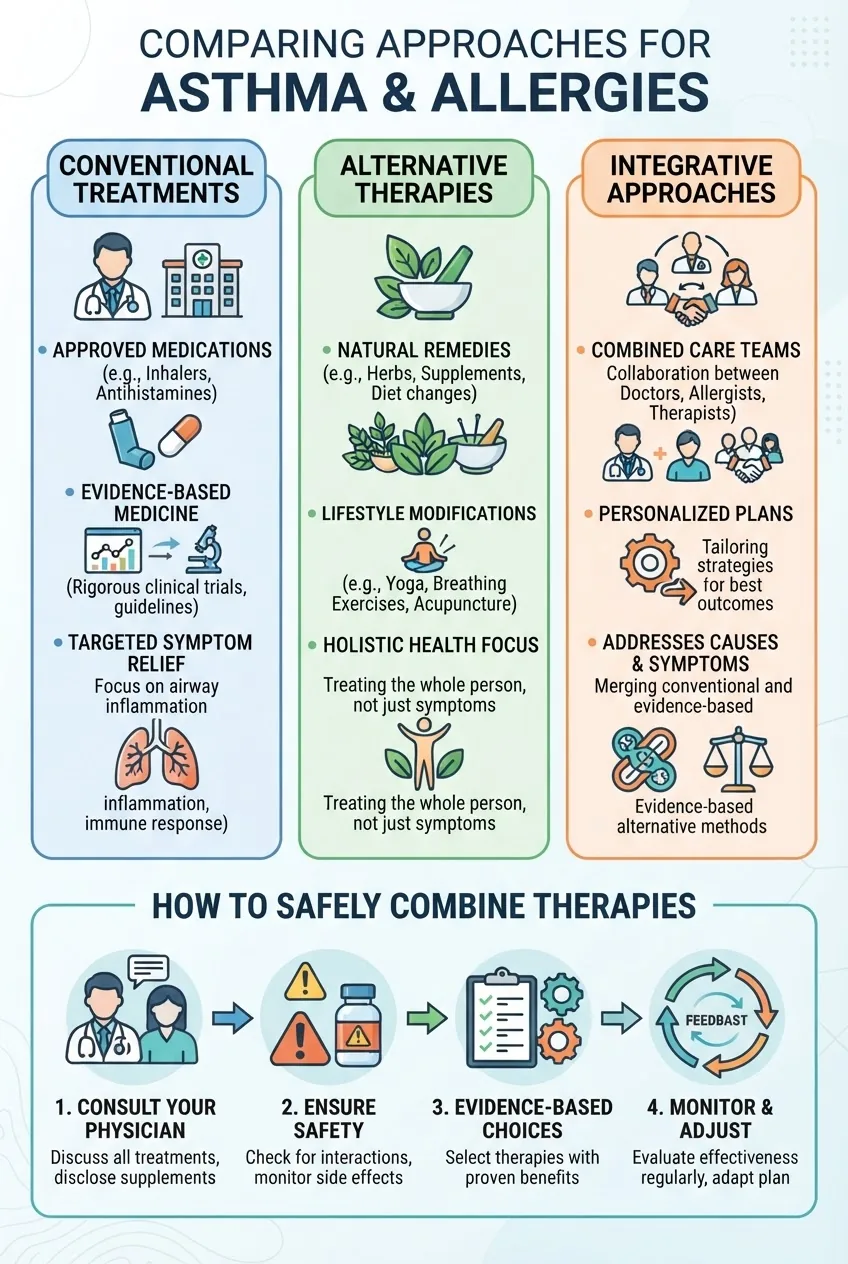
Practical guidelines and tips:
- Set measurable goals: reduce SABA puffs by 50% in 12 weeks or increase peak flow by 5–10%.
- Start one intervention at a time with a minimum 4-week window to assess effect.
- Maintain written communication: share your integrative plan and any supplement labels with your prescribing doctor and pharmacist.
- Use validated PROMS (patient-reported outcome measures) such as the Asthma Control Test every 4 weeks.
Selecting a clinic or team: choosing services like alternative health care center services that offer co-located GPs, respiratory physiotherapists, and registered TCM practitioners supports safe coordination of care and shared records.
alternative health care center servicesExamples of integrated care models: collaborative clinics pair inhaler education and pulmonary rehab with acupuncture or breathing retraining; examples in chronic disease show better adherence and patient satisfaction when care is coordinated.
Broader holistic examples: integrative strategies used in other chronic conditions illustrate principles of coordinated care—see models of holistic alternative treatments that integrate nutritional and lifestyle programs with standard oncologic care as an analogue for respiratory integration.
holistic alternative treatmentsTransition: after building an integrative plan, the final sections summarise common mistakes, provide a checklist, and advise when to call a professional.
Common mistakes and how to avoid them
I’ve seen patients start multiple supplements simultaneously and blame each when symptoms change; instead, I now insist on single-variable trials. I’ve also seen substitution of inhalers with herbs during a flare—this caused emergency admissions. Avoid these by documenting baseline meds, adding one therapy at a time for 4–8 weeks, and keeping rescue inhalers accessible.
Compact checklist
- Printed asthma/allergy action plan reviewed with GP in last 6 months.
- Baseline peak flow and symptom log for at least 1 week recorded.
- One new therapy started at a time, with dates and doses noted.
- Safety labs ordered if herb has hepatic/renal risk (LFTs within 2–4 weeks as indicated).
- Follow-up appointment scheduled at 4–6 weeks to review objective changes.
- Emergency plan rehearsed: know when to use reliever inhaler and seek urgent care.
When to call in a professional
Call your GP or respiratory specialist immediately if peak flow falls to below 80% of your personal best for two consecutive readings, or if rescue inhaler use increases to >2 times per week (excluding pre-exercise), or if you develop chest pain, cyanosis, confusion or severe breathlessness. For new supplements causing rash, swelling, persistent GI upset, or changes in blood pressure, stop and consult within 48 hours.
Conclusion and next steps
Key takeaways: a safe approach to alternative medicine for asthma and allergies is structured, incremental, and integrated with conventional care. Start with breathing retraining and diet changes, add well-studied botanicals one at a time, and maintain rescue medication access. Track objective measures and review regularly with your healthcare team.
If you’re ready to begin, download or print your symptom tracker, schedule a 4-week review with your GP, and consider a brief introductory session with a registered breathing retraining instructor or integrative clinic to set personalised targets.