
Answer: Doctors’ distrust of naturopaths commonly stems from fundamental differences in training, inconsistent regulation, and a perception that many naturopathic practices lack rigorous evidence; these concerns focus on patient safety risks such as delayed diagnosis, harmful herb–drug interactions and variable clinical standards.
Introduction to Naturopathy and Conventional Medicine Conflict
Answer: The conflict exists because naturopathy and conventional medicine use different treatment philosophies, evidence standards and regulatory frameworks, which can create disagreements about safety, efficacy and appropriate clinical roles.
Naturopathy: an umbrella term for health systems prioritising natural therapies, prevention and holistic care.
Conventional medicine: standard Western medical practice that emphasises diagnosis, evidence-based interventions and regulated pharmaceutical or procedural care.
Both systems share patient well-being as a goal, but they approach problems from different premises—think of treatment philosophies as different school subjects teaching the same topic from different angles. That philosophical gap interacts with practical concerns: inconsistent education, variable licensing, and contrasting definitions of acceptable evidence drive mistrust.
Transitioning to the next section, the following overview defines naturopathy’s principles and common modalities so readers can see where the biggest disagreements arise.
What Is Naturopathy? Overview and Key Principles
Answer: Naturopathy is a system of care emphasising natural therapies, lifestyle, nutrition and prevention, delivered through modalities such as herbal medicine, nutrition counselling, hydrotherapy and physical therapies—its guiding principles are holistic assessment and individualised care.
Term: holistic healing means assessing physical, emotional and lifestyle factors together rather than treating isolated symptoms.
Naturopathic practice varies by practitioner and jurisdiction, but key components include:
- Preventive focus: emphasising diet, exercise, sleep and stress reduction.
- Natural therapies: use of herbal remedies, nutritional supplements and manual therapies.
- Individualised care: extended consultations to tailor interventions to the person.
- Minimal invasiveness: preferring non-pharmaceutical and non-surgical approaches where possible.
The role of botanical products is central in many clinics: herbs and nutrients are used to support physiology rather than replace acute medical interventions. For a detailed review of commonly used preparations and their evidence base, consult the comprehensive Herbal Supplements Guide with Benefits and Natural Medicine Uses.
Training pathways differ: some practitioners are licensed naturopathic doctors with multi-year programs; others use shorter diplomas or traditional herbal training. For deeper reading on botanical products, see the botanical dietary supplements overview. For overlap with traditional systems, consider available traditional herbal medicine courses.
Herbal competence is often recommended, so prospective practitioners study plant pharmacology; a pathway for that is herbalism training for botanists.
Transition: with these foundations set, the next section dissects the concrete reasons many medical doctors voice distrust.
Why Do Doctors Dislike or Distrust Naturopaths?
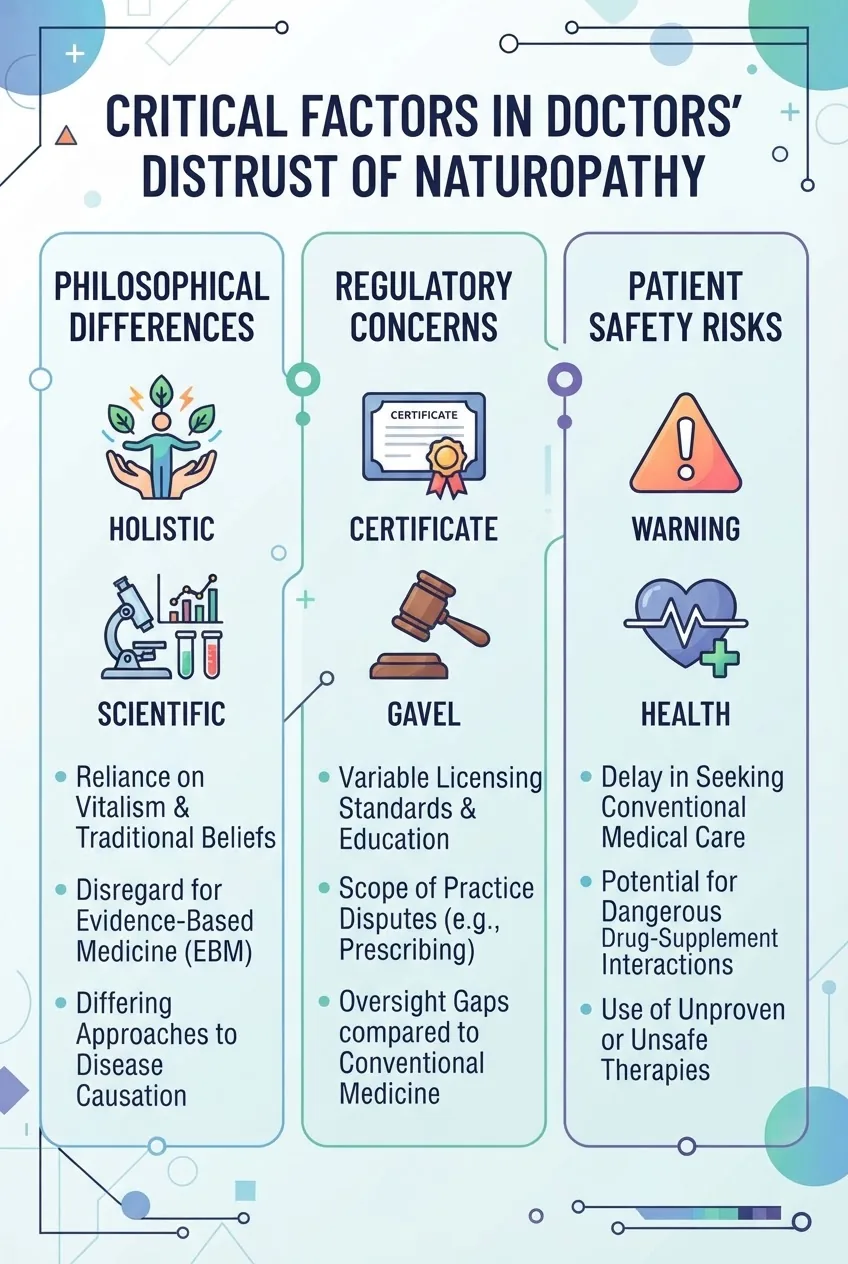
Answer: Physicians often distrust naturopaths because of perceived lack of consistent evidence-based practice, patient safety concerns from delayed or unsafe care, regulatory and educational variability, and deep philosophical differences about how to evaluate and apply treatments.
Lack of Evidence-Based Practice
Answer: Many doctors see naturopathic treatments as under-supported by high-quality randomized controlled trials (RCTs) and meta-analyses; when claims lack rigorous evidence hierarchy support, clinicians worry about effectiveness and harm estimation.
Term: evidence-based medicine is care guided by the best available clinical research, clinical expertise and patient values, with randomized controlled trials and systematic reviews at the top of the evidence hierarchy.
Medical skepticism focuses on study design: small, non-randomised studies, poor blinding, subjective outcomes and publication bias make it hard to separate real effects from placebo. Doctors are trained to weigh evidence hierarchically—case reports and uncontrolled series provide weaker inference than RCTs and meta-analyses—so recommendations without robust trials are treated cautiously.
Examples where evidence gaps create concern:
- Herbal remedies with promising observational data but inconsistent trial results for chronic conditions.
- Complex multi-component protocols that are difficult to isolate and test in RCTs.
- Use of biomarkers or unvalidated diagnostics that lack reproducibility across populations.
Authoritative sources explain these evidence standards: for systematic review methodology see the Cochrane Library (Cochrane) and for clinical trial appraisal see major journals such as JAMA. Doctors cite these standards when asking for stronger trials of naturopathic interventions.
Concerns About Patient Safety and Risks
Answer: Safety concerns include delayed diagnosis when serious disease is managed with non-conventional methods, harmful herb–drug interactions, contaminated or mislabelled supplements, and inadequate emergency recognition—these risks underpin much medical distrust.
Term: patient safety risks are hazards that can cause harm, including diagnostic delay, adverse interactions and unregulated product quality.
Clinical examples (anonymised) from literature and case reports illustrate common patterns:
- Delayed cancer diagnosis: a patient pursued alternative regimens for months before referral; later-stage disease reduced treatment options (case reports summarised in oncology literature).
- Herb–drug interaction: St John’s wort reduces levels of many prescription medications, risking treatment failure for conditions such as depression or transplant rejection (documented pharmacokinetic interactions in peer-reviewed pharmacology journals).
- Supplement contamination: analyses have found heavy metals or undeclared pharmaceuticals in imported herbal products in regulatory testing reports.
Quantifying harm is difficult because adverse events are underreported; nonetheless, regulatory agencies have issued safety advisories. For general supplement safety statements see the FDA’s dietary supplements page (FDA: Dietary Supplements).
Risk mitigation depends on transparent communication, accurate medication reconciliation and co-management with conventional providers when necessary. Below is a concise comparison to clarify roles that often cause friction.
| Role | Typical MD (Medical Doctor) | Typical Naturopath |
|---|---|---|
| Training length | 6–10 years including clinical internships | Varies: 3–6 years for ND programs; shorter diplomas also common |
| Scope | Diagnosis, prescribing, procedures | Lifestyle, supplements, botanicals; limited or variable prescribing rights |
| Evidence approach | Emphasis on RCTs, guidelines | Emphasis on tradition, mechanistic rationale, observational data |
Regulatory and Educational Gaps
Answer: Variability in licensing, inconsistent certification standards and uneven school curricula mean practitioner competence and scope of practice differ widely across regions, which alarms doctors who rely on standardised qualifications.
Term: scope of practice refers to legal authorisation for clinical tasks, e.g., prescribing, ordering tests and performing procedures.
Some jurisdictions licence naturopathic doctors (NDs) after accredited four-year programs with board exams; others have minimal regulation, allowing anyone to use the title “naturopath.” This patchwork affects predictability of care quality.
Geographic examples and resources provide context:
- Canada and several U.S. states have licensure frameworks and defined scopes; see region-specific guidance like the naturopathy schools and certification requirements for Canadian variation.
- Other jurisdictions limit or do not recognise naturopathic credentials, creating public confusion about who can prescribe or order diagnostics; check local health boards for status.
Prescription rights differ: some NDs can prescribe a restricted formulary after extra training; many cannot. For details on regional prescribing differences see the guide on prescription rights of naturopathic doctors.
Doctors emphasise uniform standards: consistent curricula, robust clinical training hours and independent licensing exams reduce variability and build trust. Where those safeguards are absent, medical professionals worry about missed diagnoses and unsafe practice.
Philosophical Differences and Medical Culture
Answer: Philosophical divergence—holistic, prevention-oriented naturopathy versus reductionist, evidence-driven medicine—creates cultural friction; conflicting priorities around diagnosis, proof and acceptable risk fuel mistrust within medical culture.
Term: medical skepticism is a cautious stance favouring well-controlled studies and reproducibility before endorsing clinical interventions.
Physicians are trained to prioritise immediate life-saving interventions and measurable outcomes, while many naturopaths prioritise long-term wellness, subtle functional changes and patient empowerment. Both philosophies offer value, but they ask different questions and value different forms of evidence.
Culture also matters: medicine features hierarchical teams and standardized pathways; naturopathy often emphasises one-to-one counselling and individualized protocols. Misunderstandings arise when each side interprets the other’s priorities as negligence or dogmatism rather than different clinical languages.
Transition: having outlined core reasons for distrust, the next section examines concrete risks and real-world examples where harm has occurred or could occur.

Risks and Dangers of Naturopathy
Answer: The primary dangers of naturopathy stem from delayed conventional treatment, unrecognised contraindications, supplement adulteration, and herb–drug interactions; these can lead to worsened outcomes, emergency events or missed opportunities for evidence-based care.
Term: herbal remedies are plant-based preparations used therapeutically; they can contain active compounds that interact with prescription drugs.
Doctors’ safety concerns are practical and evidence-informed:
- Delayed diagnosis: choosing naturopathic-only care for serious symptoms (e.g., unexplained weight loss, persistent bleeding) can postpone diagnosis and definitive treatment—numerous case series describe such delays in oncology and cardiology literature.
- Herb–drug interactions: herbs with strong cytochrome P450 effects (e.g., St John’s wort) alter drug metabolism and can lower or raise prescription drug levels unpredictably, documented in pharmacology research.
- Product quality issues: testing by regulatory authorities often detects contaminants, variable potency and mislabelling, which raises dosing and safety concerns—see government testing reports for examples.
- Unproven biologic treatments: intravenous chelation, high-dose vitamin infusions or unvalidated detox protocols sometimes used outside guidelines can produce adverse events.
Example case (anonymised synthesis): a middle-aged patient treated for chronic fatigue visited a naturopath who prescribed multiple botanical and high-dose supplement regimens without communicating with the patient’s cardiologist. The patient later presented with arrhythmia triggered by a supplement interaction; hospital treatment revealed electrolyte disturbances exacerbated by concurrent herbal diuretics. This scenario mirrors themes in pharmacovigilance reports.
Safety guidance and monitoring improvements include:
- Comprehensive medication reconciliation at first consults to list prescription drugs, OTCs and supplements.
- Clear red-flag criteria and urgent referral pathways when symptoms suggest serious disease.
- Using regulated product suppliers and preferring standardized extracts tested for contaminants—see guidance on capsule herbal supplements and their health benefits for safer supplement formats.
- Patient education about potential interactions and the importance of coordinated care.
Regulatory agencies have issued advisories; for general U.S. regulatory framing see the FDA dietary supplements page (https://www.fda.gov/food/dietary-supplements), and for broader risk-analysis methods consult clinical pharmacology literature in peer-reviewed journals.
Specific clinical areas of concern:
- Cancer care: replacing or delaying oncologic treatments with unproven natural regimens increases mortality risk; oncology societies emphasise evidence-based adjunctive care.
- Infectious disease: treating bacterial infections with herbs alone can lead to complications like sepsis if antibiotics are delayed.
- Autoimmune disorders: immunomodulating herbs or supplements may unpredictably affect disease activity or interact with immunosuppressants.
For readers exploring natural care in serious illnesses, additional resources discuss complementary options and cautions, such as natural cancer treatments and herbal remedies.

Doctors expect transparent reporting of adverse events and standardised safety monitoring; where these are weak or absent, concern grows. According to a 2024 industry report on supplement adverse-event monitoring, underreporting remains a major challenge (source type: industry report).
Transition: while risks are real, there are also common misconceptions that complicate the dialogue between conventional and naturopathic providers.
Common Misconceptions About Naturopathy in the Medical Community
Answer: Common myths include that all naturopaths are anti-medicine, that all herbal therapies are harmless, or that naturopathy never uses evidence—each is an overgeneralisation and obscures significant variation in practitioner standards and practices.
Clarifying points:
- Not all naturopaths oppose conventional treatment—many support integrative care and refer when indicated.
- Not all herbal products are benign; dose, purity and interactions matter.
- Some naturopathic interventions have reasonable evidence for symptom management (e.g., certain botanicals for mild anxiety), though their effect sizes and generalisability vary.
Doctors sometimes conflate scepticism of specific practices with wholesale dismissal of naturopathy; this polarises discourse. Constructive approaches recognise competent practitioners and address unsafe practices directly through regulation, education and collaborative care agreements.
Transition: next, explore whether a middle ground exists and how collaboration might reduce harms and improve patient-centred outcomes.
Is There a Middle Ground? Collaboration Between MDs and Naturopaths
Answer: Yes—collaborative, patient-centred integrative models where MDs and qualified naturopaths share care plans, respect scopes of practice, and use clear referral criteria can reduce risks and combine strengths of both approaches.
Term: integrative medicine combines conventional and complementary therapies informed by evidence and patient preferences, aiming for coordinated, safe care.
Practical collaboration models include:
- Shared-care protocols where naturopathic interventions complement evidence-based medical treatments, e.g., nutrition support during chemotherapy.
- Co-location or multidisciplinary clinics enabling prompt communication and fast referrals.
- Joint continuing education to improve mutual understanding of capabilities and limits.
When integrating naturopathic therapies for symptom control, prioritise safe options and evidence-based adjuncts. For practical symptom management resources see the natural remedies for symptom relief.
Patients should seek certified naturopathy clinics near you when pursuing integrative care to ensure qualifications and safety practices.
Insurance coverage and institutional policies influence integration; transparency about costs and coverage helps patients make informed choices. Transitioning to the concluding section, takeaways focus on safer patient care through balanced understanding.
Conclusion: Understanding Both Sides for Safer Patient Care
Answer: Doctors’ negative views often reflect valid concerns about evidence, safety and regulation; recognising variability among practitioners and promoting rigorous standards, clear referral pathways and honest communication offers the best route to safer, patient-centred care.
Key takeaways:
- Concerns are rooted in evidence gaps, safety incidents and inconsistent training—not necessarily hostility to holistic ideas.
- Patients should verify qualifications, disclose all medications and seek integrated plans for serious conditions.
- Regulation, standardised curricula and collaborative care reduce risk and build trust.
Practical actions for patients: ask providers about credentials, request written care plans that include red flags and emergency steps, and prioritise communication between all clinicians. For practical logistics and coverage details, review resources on insurance coverage for naturopathic services.
If you want to explore botanical or supplement options safely, begin with evidence summaries and regulated products; consider consulting both an MD and a qualified naturopath to design a coordinated, informed plan.