

vata pitta kapha refers to the three primary doshas—mind‑body principles in Ayurveda that describe physiological and psychological tendencies; together they form your prakriti (constitution) and guide personalised lifestyle choices for balance and long‑term wellbeing.
Introduction to Doshas in Ayurveda
Answer: Doshas are foundational mind‑body principles in Ayurveda that describe bodily functions, mental tendencies and constitution; knowing them clarifies your prakriti and how to support health naturally.
Term: Dosha — a dosha is one of three biological energies (Vata, Pitta, Kapha) that govern bodily and mental processes in Ayurveda.
Ayurveda (Sanskrit for “life‑knowledge”) organises health through the tridosha theory: Vata (movement), Pitta (transformation), and Kapha (structure). Classical Ayurvedic texts such as the Charaka Samhita and Sushruta Samhita describe dosha origin, function, and balance; these texts remain the primary sources for definitions and practical applications. For direct study of classical definitions see Charaka Samhita and related scripture summaries.
Dosha meaning extends beyond simple labels — each dosha is a composite of elemental qualities (earth, water, fire, air, ether) that shape physical frame, digestion (agni), tissue health (dhatus), immunity, temperament and disease susceptibility. Modern integrative reviews analyse dosha correlations with physiology and health outcomes; for research context see a peer‑reviewed overview of Ayurvedic concepts and modern evaluation methods at an open peer‑reviewed article.
Understanding these definitions prepares you to identify your own dosha body type (prakriti), observe imbalance signals, and apply lifestyle principles to restore harmony. For recommended Ayurveda introductory reading, consult the comprehensive Ayurveda books and medicine texts.
Transition: The next section breaks each dosha down into physical, mental and emotional traits, with a comparison table to help you spot patterns quickly.
The Three Doshas Explained: Vata, Pitta, and Kapha
Answer: Vata, Pitta and Kapha are the three dosha types; each combines elemental qualities and produces distinct physical, mental and emotional traits that define Ayurveda body types.
Vata Dosha Characteristics and Traits
Term: Vata is the dosha dominated by air and ether; it governs movement, nervous system function, respiration, elimination and creativity.
- Physical traits: slender or variable build, dry skin and hair, cold extremities, irregular appetite and digestion (variable agni).
- Mental traits: quick thinking, creative, easily stimulated, but prone to worry and scattered focus when imbalanced.
- Emotional tendencies: enthusiasm, spontaneity, anxiety or fear during imbalance.
- Common imbalances: insomnia, constipation, joint pain, anxiety-related digestion issues.
- Clinical observation: pulse feels light and irregular to experienced practitioners during Vata dominance; practitioners use this pulse quality in prakriti assessment.
Real-world example: A 28‑year‑old freelance designer reports irregular sleep, occasional brain fog, and cold hands; body frame is slim with fast speech. An Ayurvedic practitioner identifies Vata dominancy through intake questions, body observation and a gentle pulse check, then recommends routine, warmth and grounding practices.
Pitta Dosha Characteristics and Traits
Term: Pitta is the dosha dominated by fire and water; it governs digestion (agni), metabolism, vision, and cognitive clarity.
- Physical traits: medium build, warm body temperature, strong appetite and digestion, tendency to skin redness or inflammation.
- Mental traits: focused, analytical, decisive, with sharp memory and learning capacity.
- Emotional tendencies: ambition, competitiveness, irritability or impatience when imbalanced.
- Common imbalances: acid reflux, inflammatory skin conditions, anger or irritability.
- Clinical observation: pulse feels steady and forceful with clear rhythm in Pitta‑dominant prakriti; tongue often shows a reddish hue per classical examination.
Case scenario: A 42‑year‑old manager with a medium, muscular frame, strong appetite, and tendency to frustration reports frequent heartburn and inflamed skin. Assessment points to Pitta‑predominant prakriti; interventions prioritise cooling routines and scheduled meals.
Kapha Dosha Characteristics and Traits
Term: Kapha is the dosha dominated by earth and water; it provides structure, lubrication, stability and immunity.
- Physical traits: sturdy, heavier frame, smooth oily skin and hair, steady appetite and slow digestion.
- Mental traits: calm, steady, patient memory, but can be slow to change.
- Emotional tendencies: affectionate, grounded, may trend toward attachment or lethargy when imbalanced.
- Common imbalances: congestion, weight gain, sluggish digestion, depressive symptoms in imbalance.
- Clinical observation: pulse has a steady, full quality in Kapha types; palpation and observation of mucous and tissue density aid diagnosis.
Practical note: Many dosha signs overlap; experienced practitioners combine observation, pulse diagnosis and questioning to distinguish subtle differences in agni (digestive fire) and dhatu (tissue) states.
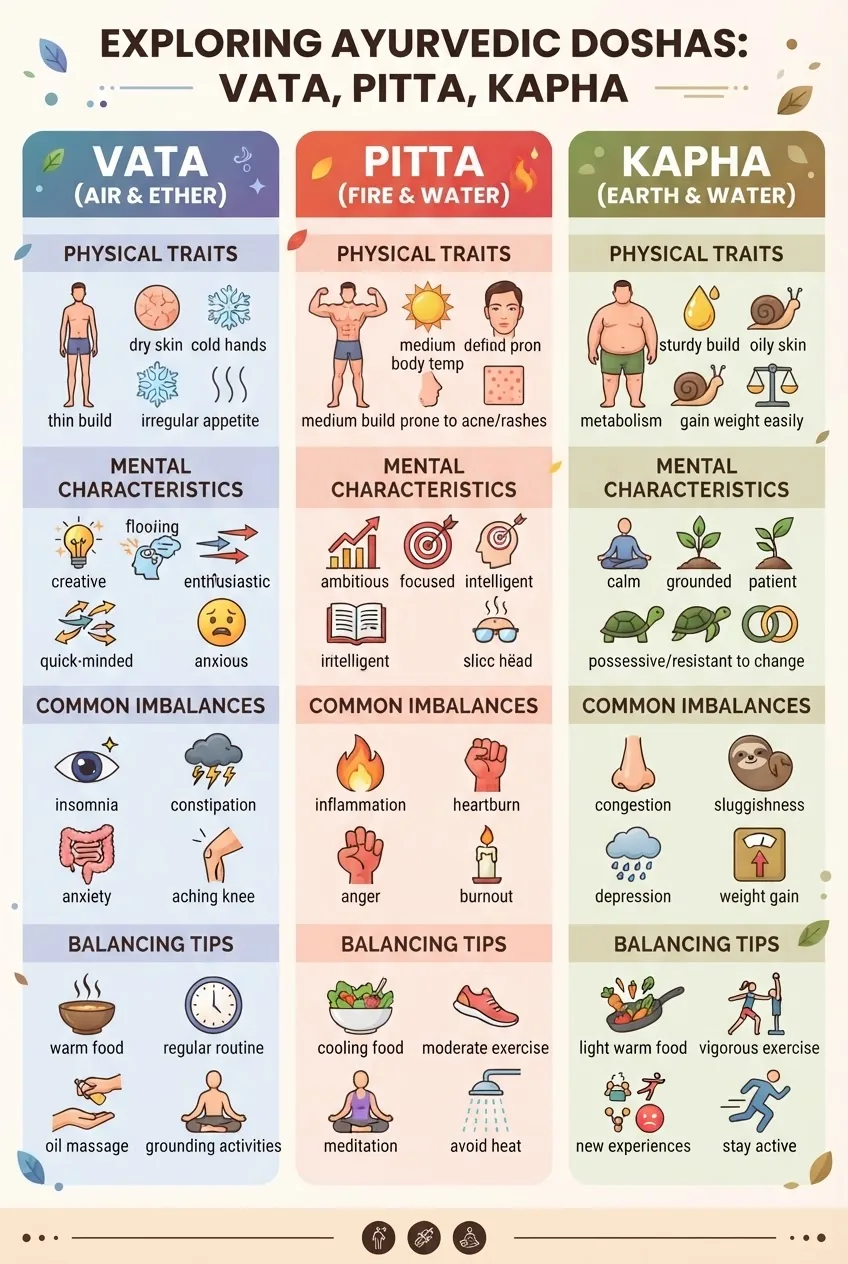
Table comparison of Vata, Pitta, Kapha doshas
| Aspect | Vata (Air + Ether) | Pitta (Fire + Water) | Kapha (Earth + Water) |
|---|---|---|---|
| Primary function | Movement, nerve signals, elimination | Digestion, metabolism, vision | Structure, lubrication, immunity |
| Body type | Slim, variable | Medium, muscular | Sturdy, heavier |
| Temperament | Creative, quick, anxious | Focused, driven, irritable | Calm, steady, attached |
| Common imbalances | Insomnia, constipation, anxiety | Acidity, inflammation, anger | Congestion, weight gain, lethargy |
| Balancing focus | Warmth, routine, grounding | Cooling, moderation, clarity | Stimulation, lightness, movement |
Transition: After the single‑dosha profiles, the next section explains combined dosha types (dual dominants) and how their merged qualities alter body type and therapy priorities.
Understanding Vata Pitta Kapha Combinations and Their Effects
Answer: Many people have two doshas that are dominant (dual prakriti): Vata‑Pitta, Pitta‑Kapha, or Vata‑Kapha; each combination blends traits and creates specific strengths and imbalance patterns requiring nuanced lifestyle adjustments.
In practice, dual dosha types (bi‑dosha) are the most common; they combine the elemental qualities of both doshas, which changes therapeutic priorities. Below are defining traits and balancing focuses for each combination.
- Vata‑Pitta (Vata‑Pitta dosha):
- Traits: Slender to medium build, quick mind (Vata) with sharp intellect and ambition (Pitta).
- Common imbalances: Stress‑related digestive upsets—irregular appetite plus occasional acidity; anxiety and impatience.
- Balancing focus: Stabilise routine and rest (for Vata) while cooling inflammation and regularising meals (for Pitta).
- Pitta‑Kapha (Pitta‑Kapha dosha):
- Traits: Medium to sturdy build, driven and deliberate, with strong endurance and appetite.
- Common imbalances: Congestive inflammation, weight gain with inflammatory conditions, irritability under stress.
- Balancing focus: Lighten diet and activity (Kapha) while cooling and reducing inflammation (Pitta).
- Vata‑Kapha (Vata‑Kapha dosha):
- Traits: Mix of mobility and steadiness—may present as slender but sturdy, or variable weight and energy levels.
- Common imbalances: Alternating constipation and congestion, irregular energy with heaviness or anxiety spikes.
- Balancing focus: Increase consistent routines and warmth (Vata) while promoting movement and lightness (Kapha).
Bullet summary of how combinations modify care:
- Vata‑Pitta: Prioritise regular habits, hydration and cooling emotional regulation techniques (pranayama, moderation).
- Pitta‑Kapha: Emphasise daily exercise, lighter meals, and anti‑inflammatory practices while maintaining structure.
- Vata‑Kapha: Use grounding morning routines, warming activities and consistent sleep to stabilise energy and metabolism.
Clinical tip: Dual dosha patterns often shift with season, age and stressors; periodic reassessment through systematic self‑tests and practitioner pulse diagnosis ensures therapy remains aligned with current imbalance. Transition: Next, learn practical steps to identify your prakriti and dosha dominance at home or with a practitioner.
How to Identify Your Dosha Body Type (Prakriti)
Answer: Identify your prakriti through a structured self‑assessment covering physical features, digestion, mental patterns and pulse observation; combine questionnaires with professional pulse diagnosis for accuracy.
Term: Prakriti — an individual’s birth constitution, the unique balance of doshas present from conception that shapes lifelong tendencies.
Step‑by‑step guide to self‑identification:
- Collect baseline data: Note lifelong tendencies (body frame, habitual digestion, sleep patterns, memory and temperament) rather than recent changes caused by illness or lifestyle.
- Ask targeted questions: Use example questions below; answer honestly and weight longstanding traits higher than temporary states.
- Perform simple physiological checks: Observe skin texture, hair oiliness, body temperature and stool/gas patterns across a two‑week window.
- Pulse and tongue checks: Learn basic pulse palpation cues (light/quick = Vata, forceful/regular = Pitta, steady/full = Kapha) and tongue coating observations as preliminary indicators.
- Consult a practitioner: For precise prakriti determination, combine self‑test results with an experienced practitioner’s pulse diagnosis and physical exam.
Example self‑assessment questions (score each as Usually / Sometimes / Rarely):
- Body frame: Are you naturally slim and find it hard to gain weight? (Vata)
- Digestion: Do you have a strong appetite and tendency to feel warm or irritable when hungry? (Pitta)
- Energy/stability: Do you feel steady, slow to anger, and prone to congestion or weight gain? (Kapha)
- Mental pace: Do you think/act quickly and change tasks often? (Vata)
- Physical warmth: Do you sweat easily and prefer cool environments? (Pitta)
- Sleep: Do you sleep deeply and longer than average? (Kapha)

Self‑assessment tips and accuracy improvements:
- Score patterns rather than single answers: cluster of Vata answers suggests Vata dominance; mixed clusters indicate dual dosha.
- Record observations across seasons: dosha expression may vary with weather and life stage; note consistent lifelong patterns for prakriti.
- Use the dosha test guide for a structured questionnaire and scoring matrix to improve reliability.
- When in doubt, seek pulse diagnosis: trained practitioners use nadi (pulse) reading and observation of agni and dhatus for definitive prakriti assessment.
Transition: Knowing your prakriti prepares you to focus lifestyle, daily routine and therapeutic practices on balancing your dosha types, which is the next topic.
The Importance of Balancing Your Dosha Types for Health and Wellness
Answer: Balancing doshas supports digestion (agni), tissue health (dhatus), immunity and mental clarity; personalised lifestyle adjustments, herbs, supplements and therapeutic treatments restore equilibrium and prevent chronic disease.
Term: Agni — digestive/metabolic fire that transforms food into tissues and energy; central to Ayurvedic health recommendations.
Balancing doshas focuses on restoring harmonious function across agni and dhatus while reducing ama (metabolic toxins). Practical non‑dietary adjustments include daily rhythm (dinacharya), sleep hygiene, appropriate exercise, breathwork and stress management tailored to dominant dosha(s).
Natural supports and clinical adjuncts:
- Herbal and supplement support can be useful when guided by a practitioner; see the pillar reference Ayurvedic supplements and herbal medicine explained guide.
- Topical treatments and massage: Abhyanga (oil massage) and dosha‑specific external therapies support circulation, relaxation and tissue nourishment—search to locate Ayurveda massage near me for local services.
- Lifestyle alignment: Consistent wake/sleep times, seasonal adjustments, and appropriate exercise maintain steady dosha levels.
- Professional therapies: When needed, consult clinical pathways like Panchakarma under supervision to remove deep ama—see complete Ayurveda detox guide and Panchakarma treatments.
Diet is important but intentionally not detailed here; for dietary strategies that support weight and dosha balance see the Ayurveda and weight loss guide and the Ayurvedic diet principles and nutrition guide.
Additional resources and formulations: For specific herbs and formulas that practitioners commonly use alongside lifestyle changes, review the guide to Ayurvedic herbs and supplements and the complete Ayurvedic medicine and herbal formulas guide.
Evidence note: According to a 2022 integrative review of Ayurvedic interventions, tradition‑based herbal and lifestyle protocols show promise for chronic metabolic and stress‑related conditions when delivered by trained practitioners.
Transition: Despite effective self‑care tools, recognizable imbalance signs require timely professional attention; the next section lists common signs and when to seek help.
Common Signs of Dosha Imbalance and When to Seek Ayurveda Treatment
Answer: Dosha imbalance shows as physical, mental or emotional shifts—digestive changes, sleep disruption, persistent inflammation, mood shifts or unexplained fatigue—and persistent or severe signs justify consultation with an Ayurvedic practitioner.
- Persistent digestive changes: ongoing constipation, severe acid reflux, or chronic loose stools indicate agni disruption and likely dosha imbalance; seek assessment if symptoms persist beyond two weeks despite basic self‑care.
- Chronic inflammation or skin conditions: frequent rashes, persistent acne, or ongoing inflammatory complaints suggest a Pitta imbalance requiring professional herbal and lifestyle plan.
- Sleep disturbances and anxiety: prolonged insomnia, panic, or escalating anxiety that interrupt daytime function point to Vata disturbance and merit clinical evaluation.
- Excessive congestion or unexplained weight gain: long‑term mucus, chronic sinusitis, or metabolic slowing indicate Kapha dominance that benefits from structured therapeutic interventions.
- Complex, multi‑system symptoms: overlapping symptoms across systems (e.g., skin plus digestion plus mood) should be assessed by a qualified practitioner to prioritise therapies such as Panchakarma or targeted herbal protocols.
If you decide to seek professional care, options include local clinics and trained practitioners; search to find Ayurveda center near me or find Ayurvedic doctor near me for verified clinics.
For advanced detoxification and structured reversal of deep imbalances, consider supervised Panchakarma under credentialed staff; explore Panchakarma retreats and Ayurvedic wellness centers and the complete Ayurveda detox guide and Panchakarma treatments.
Trust and safety: While many self‑diagnostic signs are useful, trained assessment is essential for complex or severe cases. Professional bodies such as AYUSH provide regulatory context for practice standards.
Transition: With signs and referral routes clear, the final section summarises next steps for continued learning and professional development.
Conclusion and Next Steps in Exploring Ayurveda
Answer: Understanding vata pitta kapha dosha types clarifies your prakriti and practical next steps: apply tailored lifestyle practices, use informed herbal supports, and pursue further study or professional training to deepen safe, effective application.
Key takeaways: recognise your dominant dosha(s) through sustained observation and structured testing; prioritise routine, breath and movement practices aligned with your constitution; and consult qualified practitioners for diagnosis and therapeutic planning. For readers seeking formal training or practitioner pathways, consider the best Ayurveda certification and training courses online and professional credential guidance at the Ayurvedic practitioner training and medical certification guide.
Further reading and resources include classic scriptures and modern research; classical definitions are preserved in texts like the Charaka Samhita and Sushruta Samhita, while contemporary studies explore clinical outcomes—see foundational sources such as Charaka Samhita and modern reviews on PubMed (open review).
Next step CTA: Use the self‑assessment guidelines above, consult the dosha test guide for structured evaluation, and revisit the Ayurvedic supplements and herbal medicine explained guide when considering herbal support under practitioner supervision.