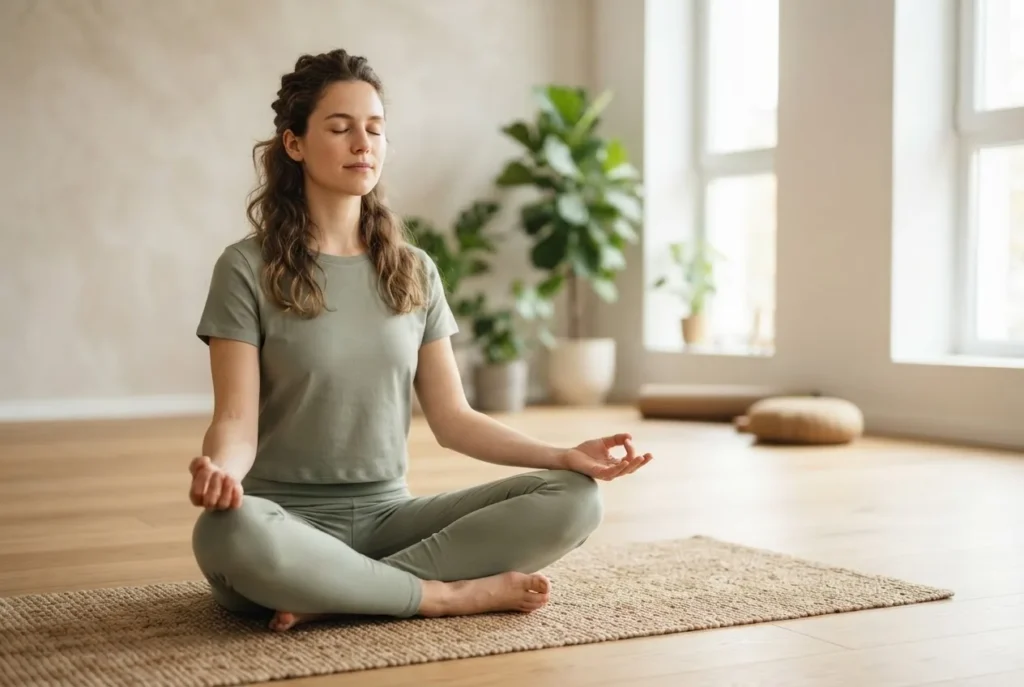
How to reduce anxiety immediately — by the end of this hands-on guide you’ll have a compact toolkit of fast, natural techniques to calm nerves within 30 seconds to 15 minutes. Total practice time: individual techniques take 30s–15min; the full routine is 10–20 minutes. Skill level: complete beginner to intermediate.
This guide assumes you want practical, step-by-step methods for immediate anxiety relief (acute anxiety episodes and nervous system regulation), and you plan to act now. Read the quick checklist, then follow the numbered steps that come next.
Before you start
- Quiet seat or chair and a stable surface for your feet
- Timer or phone set to 30s, 2min, 5min and 10min intervals
- A glass of water and a mug for herbal tea (chamomile or lemon balm)
- A small towel and comfortable clothing with room to breathe
- Optional: mild aromatherapy (lavender oil), a stress ball or focal object
- Medical disclaimer awareness: if you have cardiac issues, recent chest pain, or take medication, consult your clinician before intense breathwork
Now follow the practical numbered steps below — each step opens with a bold, action-first instruction and includes exact timings, why it works, and where to use it.
-
Pause and take a safety check (30 seconds)
What to do: Stop whatever you’re doing, sit or stand safely, plant both feet flat on the floor, and name three physical sensations (temperature of your hands, soles on the floor, breath in nostrils). Time: 20–30 seconds.
Why it works: This quick check shifts attention from catastrophic thinking to body feedback, beginning a bottom-up nervous system regulation by signalling you’re present, not in immediate danger.
When to use: At the first sign of sudden anxiety or before you reach for avoidance (e.g., leaving a meeting, catching a flight).
-
Do box breathing (2 minutes)
Steps: Inhale for 4 seconds, hold for 4, exhale for 4, hold for 4. Repeat 6 cycles (about 2 minutes). Use a timer or count silently. Keep shoulders relaxed and breathe through the nose when possible.
Why it works: Box breathing slows the respiratory rate and increases vagal tone, which reduces fight-or-flight activation. It’s a simple tool to calm the autonomic nervous system.
Source note: Controlled-breathing techniques are supported by clinical studies showing reductions in acute anxiety measures (see external links in the Breath Control section).
More examples: If four counts feel hard, use 3-3-3-3 for your first practice, then build to 4-4-4-4 over days.
-
Use diaphragmatic breathing with hands on belly (1–3 minutes)
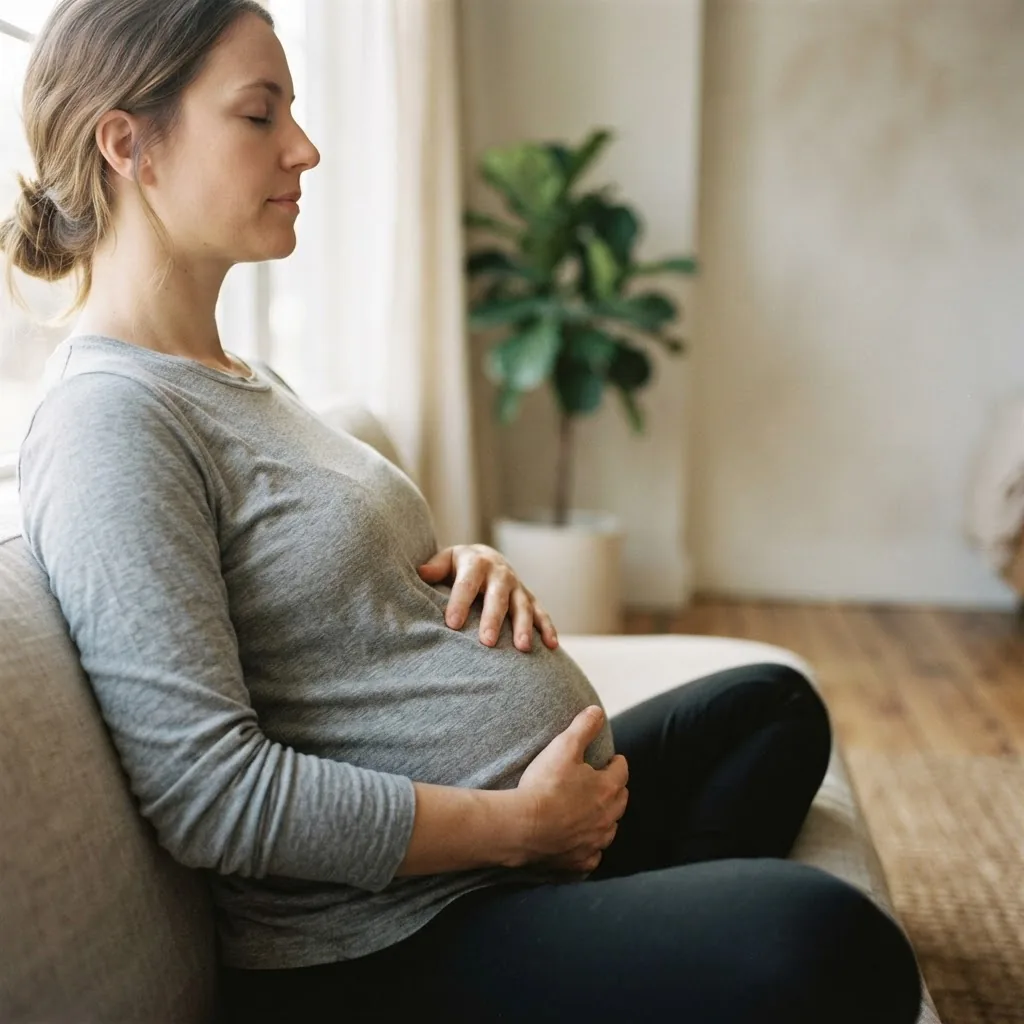
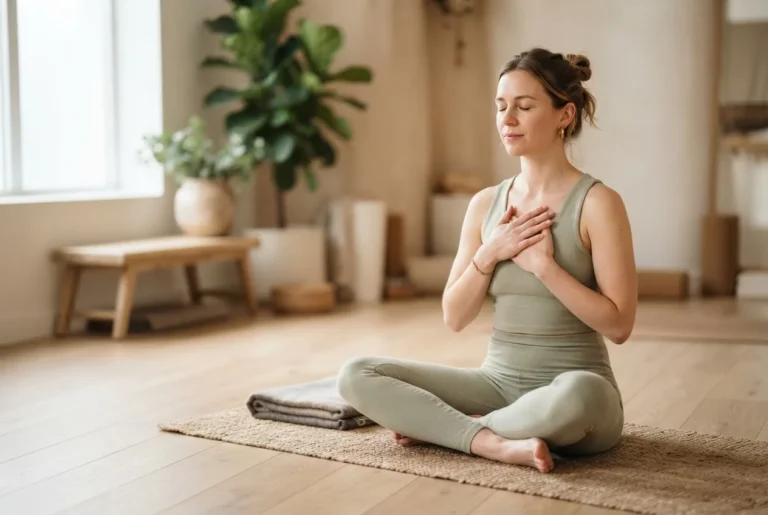
Steps: Sit upright. Place one hand on your chest and one on your belly. Inhale slowly through the nose for 4 seconds so the belly rises under your hand, exhale for 6 seconds through slightly pursed lips so the belly falls. Repeat 6–10 times.
Why it works: Diaphragmatic breathing engages the diaphragm rather than shallow chest breathing, increasing oxygenation and reducing sympathetic arousal.
For deeper training see breathing meditation exercises.
-
Ground using 5-4-3-2-1 sensory steps (2 minutes)
Steps: Name 5 things you can see, 4 you can touch, 3 you can hear, 2 you can smell, 1 you can taste (or one steady breath). Speak them out loud or whisper. Time: 1–2 minutes.
Why it works: Sensory grounding interrupts spiralling thoughts by redirecting attention to concrete sensory input — a top-down and bottom-up hybrid method.
-
Progressive muscle relaxation — quick scan (5 minutes)
Steps: Tense each major muscle group for 5 seconds, then release for 10 seconds. Order: feet, calves, thighs, hips, abdomen, chest, hands, forearms, shoulders, neck, face. Move slowly and breathe normally. Total time: 4–6 minutes for a single quick round.
Why it works: Progressive muscle relaxation reduces physical tension and signals safety to your nervous system. Use lighter tension (not maximal) if you have muscle injuries.
If you want more depth, search the muscle relaxation meditation guide for extended protocols.
-
Move gently — short sequence (3–5 minutes)
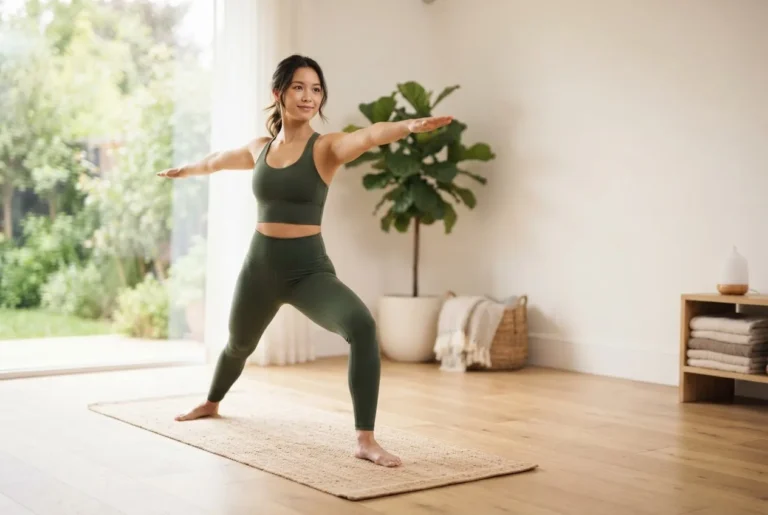
Steps: Stand and do 8–10 gentle neck rolls (5s each side), 6 shoulder rolls forward/back, a 30–60 second standing forward fold with knees soft, and two rounds of cat-cow on hands and knees (30s). Finish with 30 seconds of walking slowly in place.
Why it works: Light movement reduces adrenaline, engages proprioception, and resets the nervous system through vagal pathways.
For extended routines see extended yoga practices for anxiety and for the role of yoga see yoga’s role in anxiety relief.
-
Use cold water or a cold compress (30–60 seconds)
Steps: Splash cold water on your face or press a cold wet towel to the cheeks and forehead for 30–60 seconds. Breathe slowly as you do this.
Why it works: A sudden but brief cold stimulus can trigger the mammalian dive reflex and slow heart rate, shifting the nervous system toward parasympathetic dominance.
-
Apply aromatherapy or sip a calming tea (5–10 minutes)
Steps: Inhale 1–2 gentle whiffs of lavender essential oil at a distance of 10–20 cm, or sip a small cup (150–200 ml) of warm chamomile or lemon balm tea slowly over 5–10 minutes.
Why it works: Certain scents and herbal compounds reduce subjective anxiety and support relaxation; effects are mild but useful combined with breathing and grounding.
Safety note: Avoid aromatherapy near children or pets without guidance.
-
Do a focused cognitive switch (3–5 minutes)
Steps: Use a quick cognitive distraction: recite a poem you know, count backwards from 100 by 7s for two minutes, or list countries alphabetically. Keep your breath slow while doing this.
Why it works: Cognitive tasks occupy working memory and interrupt rumination; when combined with slow breathing they reduce sympathetic drive.
For more tools see advanced stress relief tools.
-
Create a 5-minute recovery plan (5 minutes)
Steps: Identify one actionable next step (drink water, step outside, call a friend). Set a 5-minute timer and re-test breathing and grounding before resuming tasks.
Why it works: An explicit plan reduces future uncertainty and helps consolidate the calming state into action, preventing relapse into anxious thought patterns.
-
Log the episode briefly (1–3 minutes)
Steps: Write one paragraph describing what triggered the episode, what you did, and the outcome (scale 0–10 anxiety before/after). Keep it factual and brief to capture patterns over time.
Why it works: Journalling creates data for identifying stress triggers and prevention strategies; over weeks it improves predictability and reduces future reactivity.
Understanding Anxiety and the Need for Immediate Relief
Anxiety symptoms range from a racing heart, shallow breathing, and muscle tension to dizziness, sweating, and an urgent desire to escape. Many episodes are acute anxiety episodes — sudden surges of fear or panic that peak within minutes. These events are driven by the body’s fight-or-flight response: a rapid activation of the sympathetic nervous system that prioritises immediate action over calm thinking.
In simple terms, the nervous system acts like an alarm system. When it senses a threat (real or perceived), it ramps up heart rate, breath rate, and muscle tension to prepare for escape. Immediate anxiety relief aims to “reset” or down-regulate that alarm using both bottom-up (body-first) and top-down (mind-first) techniques. Bottom-up methods — breath control, progressive muscle relaxation, grounding and cold water — act faster because they feed sensory signals directly to core brainstem circuits. Top-down methods — mindful awareness, cognitive distraction — change the appraisal of the event and work slightly slower but help sustain calm.
Recognising early symptoms lets you interrupt escalation. Common early warning signs include:
- Increased heart rate, palpitations
- Shallow, rapid breathing or breath-holding
- Stomach discomfort, nausea
- Cold hands, sweaty palms
- Urgent thoughts about escape or doom
Why immediate relief matters: acute episodes can impair functioning and create avoidance patterns. Fast, practical techniques reduce physiological arousal and allow clearer decision-making. For people with recurrent intense episodes, combining immediate strategies with longer-term management is essential.
When medication is considered: brief mention of medical intervention is appropriate. For those exploring pharmacological help, see medication options for anxiety. Meds can be effective for many, but this guide focuses on natural, fast-acting, non-pharmacological techniques.
Evidence snapshot: According to a 2024 Australian government health report, nearly one in five adults experience high anxiety symptoms in a 12-month period, and quick coping strategies reduce impairing episodes when practiced regularly (source type: government health report, 2024).
Transition: Now that you understand why immediate techniques matter and how the nervous system responds, the next section gives proactive habits to stop anxiety before it starts.
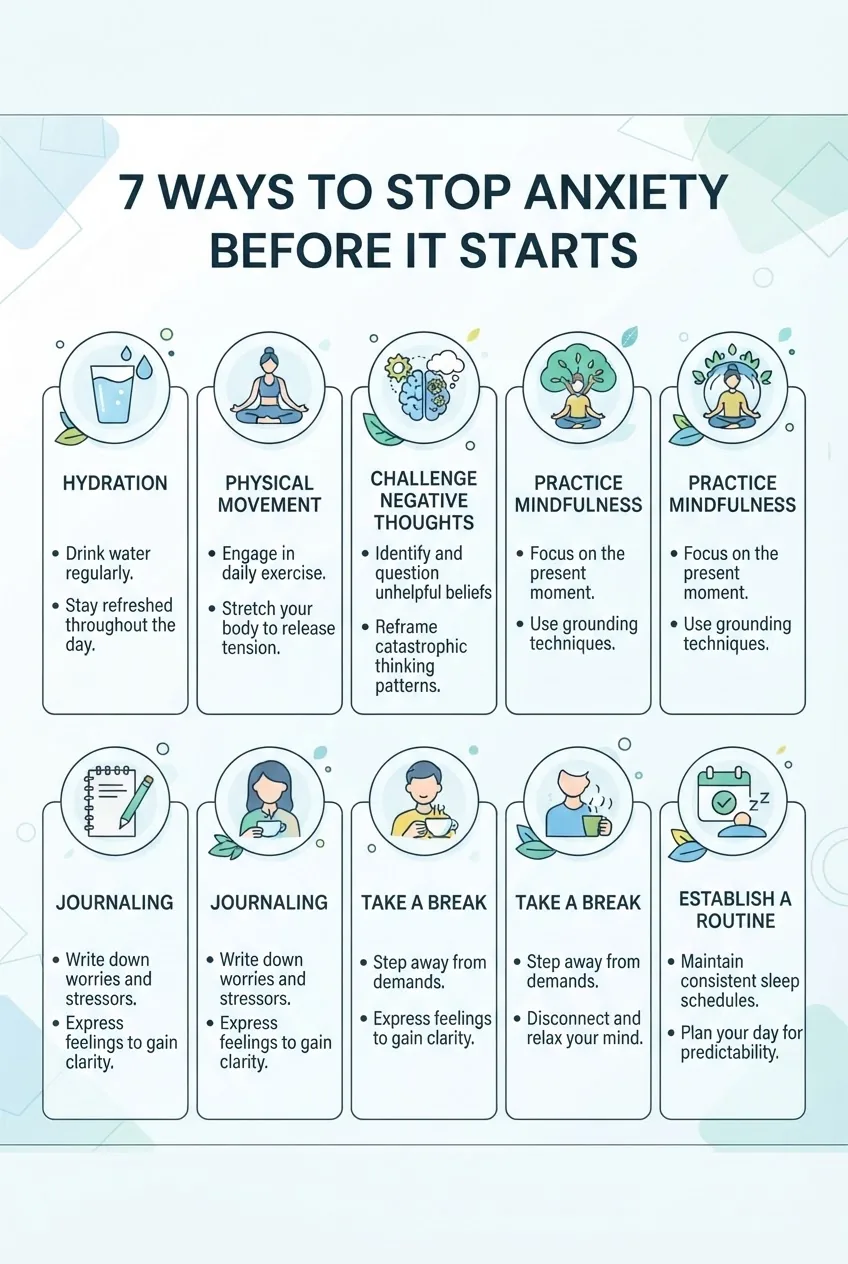
7 Ways to Stop Anxiety Before It Starts
-
Hydrate and eat balanced, low-sugar meals
Why: Blood sugar dips and dehydration can trigger jitteriness and amplify anxiety. Aim for 300–400ml water every two hours and balanced meals with protein (20–30g), fiber and healthy fats to stabilise energy.
Practice: Prepare a 200–300 kcal protein snack (nuts and yogurt) for mid-morning and mid-afternoon.
-
Prioritise 7–8 hours sleep with a wind-down routine
Why: Poor sleep increases baseline arousal and reactivity. Create a 30–45 minute pre-sleep routine: dim lights, avoid screens, gentle stretch, and 5 minutes of diaphragmatic breathing before bed.
-
Move daily with brief, intentional activity
Why: Regular light exercise reduces baseline anxiety. Aim for 20–30 minutes daily — brisk walks, simple yoga or a short bodyweight circuit. Small doses are effective if consistent.
-
Practice brief mindfulness and journalling
Why: A 2–5 minute daily check-in reduces rumination. Spend 2 minutes each morning noting top priorities and one coping tool to use if stress rises. This predictable plan reduces anticipatory anxiety.
Try quick guided meditations daily for two weeks to build the habit.
-
Identify and reduce common stress triggers
Why: Repeated exposure to identifiable triggers (sleep debt, high-caffeine intake, conflict) predicts episodes. Keep a simple log for two weeks and reduce any trigger by 30% (e.g., cut coffee by one cup).
-
Build a mini “toolbox” of immediate techniques
Why: Rehearsing quick tools makes them automatic when you need them. Include one breathing pattern, a grounding script, a movement mini-sequence, and a calming scent. Rehearse each once a day for a week.
-
Set predictable micro-routines for high-stress times
Why: Predictable routines before stressful events reduce perceived threat. For example, 5 minutes of box breathing and a glass of water 10 minutes before a presentation lowers physiological reactivity.
Application scenarios: Use these strategies when you travel, before work meetings, before exams, or any predictable stressor. Doing them daily creates a quieter baseline so sudden surges are less likely.
Transition: The prevention steps reduce frequency of episodes. When anxiety still appears, the next section gives detailed, immediate techniques to calm fast.
Fast and Effective Immediate Anxiety Relief Techniques
This section is the practitioner’s toolkit for instant anxiety relief. Each technique below is written as a hands-on step with timing, exact counts, and when to stop. Use these individually or in short sequences based on how you respond.
-
Start with a quick safety pause (15–30s)
Action: Sit and plant both feet flat. Take a single long exhale for 6–8 seconds to downshift immediate arousal. Rate your anxiety 0–10 before and after.
Threshold: If anxiety drops by ≥2 points, continue; if not, proceed to breathwork and grounding together.
-
Perform 4-7-8 breathing (2 minutes)
Action: Inhale quietly through the nose for 4 seconds, hold for 7 seconds, exhale audibly through pursed lips for 8 seconds. Repeat 4 cycles (about 2 minutes).
Adaptation: If 7-second holds feel long, use 4-4-6 counts. Stop if you feel lightheaded — return to normal breathing and try gentler diaphragmatic breaths.
Rationale: 4-7-8 stimulates parasympathetic tone and can rapidly reduce panic-like symptoms.
-
Use the 5-4-3-2-1 grounding (1–2 minutes)
Action: Name five things you can see, four you can touch, three you can hear, two you can smell, one you can taste. If smell/taste options are limited, replace with one deliberate slow breath.
Rationale: Redirects cognitive resources to the present moment and reduces catastrophic images that fuel anxiety.
-
Progressive muscle relaxation micro-scan (3 minutes)
Action: Quickly tense and release: fists (5s), shoulders (5s), jaw (5s), then whole-body squeeze for 3s and release. Breathe out as you release tension.
Rationale: Fast muscle release reduces somatic tension and lowers perceived threat.
-
Cold water facial cue (30–60s)
Action: Splash cool water on face or hold a cold towel. Combine with slow exhale breaths. Use 30–60 seconds only; prolonged cold can be uncomfortable.
Rationale: Activates parasympathetic reflexes and interrupts panic physiology.
-
Walk and name five objects (2–5 minutes)
Action: Walk slowly for 2–5 minutes while naming five objects of a chosen colour or shape. This engages both proprioception and cognition, shifting you out of rumination.
-
Use an anchored breath phrase (1–3 minutes)
Action: Pair a slow inhale-exhale with a simple phrase: inhale “I am here,” exhale “I can handle this.” Repeat 8–12 times. Keep phrasing short and neutral.
Rationale: Combines cognitive reframing with breathing for a compact top-down and bottom-up effect.
-
Apply aromatherapy or herbal tea for recovery (5–10 minutes)
Action: Inhale lavender or bergamot for 1–2 deep sniffs, then set it aside. Sip 150–200 ml of warm chamomile tea slowly over 5–10 minutes while practising diaphragmatic breaths.
Rationale: Mild but supportive; useful as part of a recovery plan rather than a sole immediate fix.
-
Engage a focused cognitive task (3–5 minutes)
Action: Count backwards from 100 by 7s, name state capitals, or do a simple Sudoku puzzle for 3–5 minutes to reduce rumination and engage working memory.
Rationale: This cognitive loading interrupts anxious loops; pair it with breathing for better effect.
-
Create a 10-minute safety plan and re-test (10 minutes)
Action: If anxiety persists, make a brief plan: call one supportive person, change environment, or practice a 10-minute guided recovery. Re-rate anxiety after and note triggers.
Rationale: A short, structured plan reduces unpredictability and gives the nervous system time to stabilise.
If anxiety remains severe despite these measures and you suspect medication may help, see medication options for anxiety and consult a health professional.
Trade-offs and when these help vs. when to seek help: These techniques are safe for most people and act quickly because they use physiological feedback loops. However, if anxiety includes suicidal thoughts, chest pain, fainting, or lasts many hours despite repeated techniques, seek urgent medical attention or a mental health provider.
Transition: Breath control deserves its own focused section — practice simple variations so you can choose the right pattern when anxiety hits.
Breath Control Exercises to Calm from Anxiety
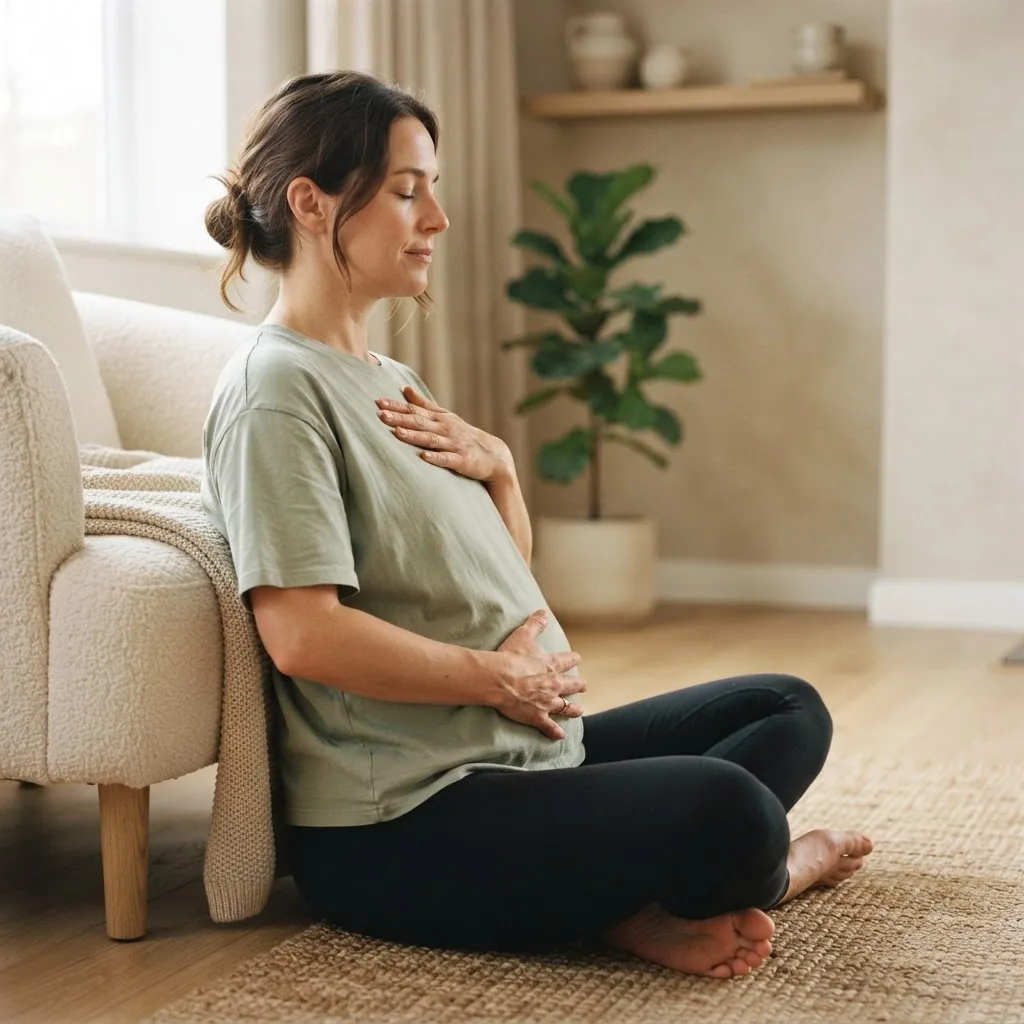
Breath control is the fastest and most reproducible method to shift your nervous system. Learn three reliable variations and where to use each. Practice each once daily for 1–3 minutes so it becomes automatic under stress.
1. Diaphragmatic breathing (foundation)
- Position: Sit upright with one hand on chest and one on belly.
- Count: Inhale 4 seconds through the nose, let the belly rise; exhale 6 seconds through slightly pursed lips, belly falls.
- Repeat: 6–10 cycles (about 2–3 minutes).
Use when: You feel tightness in chest or shallow breathing. This is safe for most adults; avoid deep holds with cardiac conditions unless cleared by a clinician.
2. Box breathing (coherent breath)
- Count: Inhale 4s — hold 4s — exhale 4s — hold 4s.
- Repeat: 6 cycles (2 minutes).
Use when: You need a short cognitive anchor for performance anxiety or sudden arousal. Box breathing is neutral and portable — perfect for work or public spaces.
3. 4-7-8 method (deeper parasympathetic shift)
- Count: Inhale 4s — hold 7s — exhale 8s audibly.
- Repeat: 3–4 cycles the first time, up to 8 when comfortable.
Use when: You have panic-like symptoms and need a stronger parasympathetic push. Do not overdo if you feel lightheaded; return to diaphragmatic breathing if dizzy.
Variations and troubleshooting
- If you feel lightheaded, shorten holds by 1–2 seconds and breathe normally until resolved.
- Maintain a slow, relaxed jaw and soften shoulders to prevent tension transfer into breath patterns.
- Practice daily for 2–5 minutes to build tolerance — this lowers baseline reactivity over weeks.
Evidence and authority: Controlled-breathing techniques show consistent anxiety reduction across studies. For clinical summaries and compound evidence, see the Anxiety and Depression Association of America at adaa.org (source type: professional association). A meta-analysis on respiratory training and anxiety supports breathwork as an effective adjunct (source type: peer-reviewed clinical study, 2022).
Transition: Combine breath control with physical movement for a faster nervous system reset — described next.
Simple Physical Movements and Stretching for Anxiety Relief
Physical movement is a fast, bottom-up regulator. The following sequences are deliberately brief, low-impact, and designed to avoid strain. Practice each move for the exact timing recommended.
-
Neck and shoulder release (2 minutes)
Steps: Sit tall. Tilt chin to chest and hold 10s, roll head gently right for 10s, left for 10s. Do 6 shoulder rolls forward and 6 backward. Breathe slowly throughout. Repeat once.
Why: Reduces trapezius tension and opens breath pathways; useful after screen time or email overload.
-
Standing forward fold with breath (1 minute)
Steps: Stand feet hip-width apart, hinge at hips, let torso hang, knees soft. Hold for 30–60s and breathe diaphragmatically. Roll slowly up vertebra by vertebra.
Why: Sends calming signals via lengthening of back muscles and increased blood flow to the head, which many people find soothing.
-
Cat–Cow sequence (60–90 seconds)
Steps: On hands and knees, inhale arching spine (cow) 4s, exhale rounding spine (cat) 4s. Repeat 6–8 cycles.
Why: Dynamic spinal movement coordinates breath and nervous system; good early-morning or midday reset.
-
Grounding squat or chair sit (2 minutes)
Steps: Sit down fully into a chair or a deep squat; breathe for 8 slow breaths. Focus on weight distribution through feet and hips.
Why: Enhances proprioceptive feedback and lowers adrenaline; great in public places where full movement isn’t possible.
-
Light aerobic micro-burst (3–5 minutes)
Steps: March briskly on the spot for 60–90 seconds, then slow walk for 60 seconds, repeat once. Keep intensity mild — you should be able to speak in short sentences.
Why: Light cardio reduces acute stress hormones but avoids overstimulation that intense exercise can create.
If you want longer routines, see extended yoga practices for anxiety and yoga’s role in anxiety relief for deeper practice.
Safety notes: Move within a pain-free range and avoid deep holds if you have acute musculoskeletal conditions. Use slow progressions: 1–2 minutes per move for immediate relief, increase duration gradually across weeks.
Transition: The body-focused techniques above are fast. Pair them with simple mindfulness practices next to extend calm and rewire reactivity.
Mindfulness Techniques for Fast Anxiety Reduction
Mindful awareness is a top-down tool that helps manage anxious thinking by shifting attention deliberately to the present moment. The exercises below are short, practical, and designed for immediate use.
-
Two-minute body scan
Action: Sit or lie down. Spend 2 minutes scanning from toes to head, naming one sensation per body area (warmth, pressure, tingling). Keep breath steady. End by rating anxiety 0–10.
Benefit: Rapidly anchors attention and reveals where tension holds.
-
Labeling thoughts (60–90 seconds)
Action: When anxious thoughts arise, label them: “thinking,” “worrying,” “planning.” Say the label once and return to breath. Continue for 1–2 minutes.
Benefit: Creates distance between you and the thought, reducing reactivity.
-
Breath counting (1–3 minutes)
Action: Count “one” on the inhale, “two” on the exhale, up to five, then start again. Use 1–3 minutes. If distracted, start at one again without judgement.
Benefit: Simple cognitive anchor that blends breath and counting to occupy working memory.
For more practice ideas, try the pillar resource on mindfulness exercises for anxiety. If you want guided support, see quick guided meditations or short meditation exercises.
-
Sensory anchor practice (90 seconds)
Action: Choose one sense (sound). Listen intently for 90 seconds and name three sounds you hadn’t noticed before. Return to breath. This is portable and discrete.
Benefit: Moves attention out of anxious loops and into neutral sensory data.
Regular practice builds cognitive control over time; short daily sessions of 2–5 minutes produce measurable benefits. See meditation benefits for anxiety for long-term advantages and training pathways.
Transition: Alongside movement and mindfulness, natural remedies and environmental tweaks help stabilise mood and reduce baseline reactivity — covered next.
Natural Remedies and Environmental Tips to Calm Nerves Naturally
This list focuses on accessible, low-risk natural remedies and environmental adjustments you can apply immediately or as daily habits. They are adjuncts to the active techniques above, not replacements for medical care.
- Herbal teas — Chamomile or lemon balm (150–200 ml warm) sipped slowly for 5–10 minutes reduces subjective anxiety for many people. Do not mix herbal supplements with prescription medications without advice.
- Aromatherapy — Lavender, bergamot, or frankincense inhaled briefly (1–2 gentle sniffs) can lower reported anxiety. Avoid overuse and keep oils away from eyes and children.
- Nature exposure — 10–20 minutes outdoors in green space lowers stress hormones. Aim for midday walks or short breaks outside when anxiety is likely.
- Light management — Bright morning light for 10–20 minutes helps regulate circadian rhythms and reduces anxiety later in the day.
- Caffeine moderation — Reduce intake by one cup per day if nervousness spikes. Replace the last cup with decaf or herbal alternatives.
- Environmental declutter — A 10-minute tidy reduces visual stressors and creates a calmer workspace. Focus on clearing a single surface like your desk.
- Breathing-friendly clothing — Wear non-restrictive garments when you anticipate stress; tight collars or belts can perpetuate the feeling of constrained breathing.
Safety and efficacy: Natural remedies have mild-to-moderate effects and work best combined with breathing and grounding. For clinical evidence, consult resources such as Beyond Blue and peer-reviewed studies on plant-derived anxiolytics (source type: mental health organisation and peer-reviewed clinical studies).
Common mistakes and how to avoid them
I often see learners rush breathwork too quickly — they expect instant miracles and abandon techniques after one attempt. From experience: slow the counts, practise twice daily for a week, and track small changes (2-point drop on a 0–10 scale is progress).
I’ve also noticed people over-rely on cognitive distraction alone; it can mask but not change physiological arousal. Combine distraction with diaphragmatic breathing and a two-minute muscle scan to produce robust relief.
Finally, skipping follow-up is common: when techniques work, write what helped in your log immediately. That record prevents repeating ineffective steps during future episodes.
Checklist: Have you done this?
| Item | Yes / No |
|---|---|
| Paused and did a safety check (30s) | ___ |
| Tried a controlled breathing pattern (Box, 4-7-8, or diaphragmatic) | ___ |
| Used grounding (5-4-3-2-1) | ___ |
| Completed a quick movement or stretch sequence | ___ |
| Applied a recovery plan and logged the episode | ___ |
When to call in a professional
Seek urgent help if you experience chest pain, fainting, severe breathlessness, suicidal thoughts, or if anxiety episodes are frequent and disabling despite using these techniques. For therapy support and long-term plans, explore therapy options for anxiety and consider a medical review for possible medication support.
Final summary: Practice one breathing pattern, a short grounding practice, and a 2-minute movement daily. Use the full immediate routine when anxiety appears. These steps reset your body’s alarm, calm nerves naturally, and give you control within minutes.
Call to action: Try this plan now — pick two techniques (one breath + one grounding) and rehearse them for 7 days. If results are limited, seek a clinician for a personalised program.