

Top natural health websites are curated portals, databases and community hubs that offer evidence-based and expert-reviewed resources on holistic wellness, herbal medicine, mind-body therapies, and integrative care; this guide lists trusted sites, explains how they vet content, and shows how to use them safely for your health research.
Introduction to Top Natural Health Websites
Answer: Top natural health websites are curated, reputable online resources that combine evidence-based information, expert oversight, community support, and clear sourcing to help people learn about holistic wellness and complementary therapies.
These sites serve different roles: some are reference databases for herbal constituents, others are magazines that synthesize research for lay readers, and a few are professional portals hosting practitioner directories and clinical reviews. Holistic wellness is a whole-person approach to health that integrates physical, mental, social and spiritual aspects; it emphasizes prevention, lifestyle, and multiple therapeutic modalities.
Term: Complementary and alternative medicine (CAM) — practices and products used alongside (complementary) or instead of (alternative) conventional medical treatments, including herbal medicine, acupuncture, and mind-body therapies.

This guide focuses on sites that balance traditional knowledge with scientific scrutiny, and it flags where content is more anecdotal or culturally based. For a broad primer on the field that complements this list, see the natural health care guide.
Transitioning from what these sites are, the next section explains the specific standards I used to select the ones listed below.
Criteria for Selecting Reliable Natural Health Websites
Answer: I selected sites using four core criteria—credibility, evidence-basis, usability, and community engagement—applied consistently to prioritize expert oversight, citation of peer-reviewed research, transparent updates, and user safety.
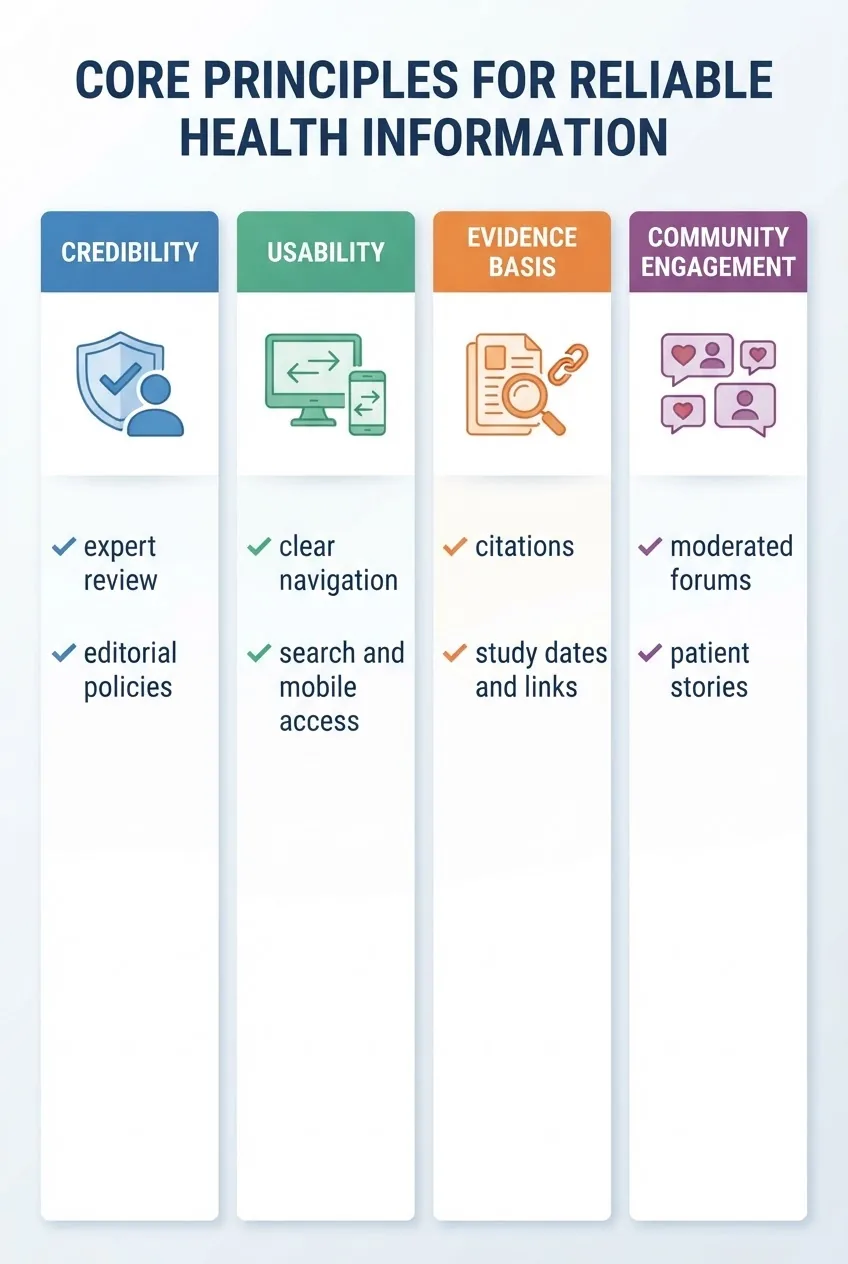
- Editorial oversight and credentials:
Priority goes to sites with named editorial boards, medical or naturopathic contributors with verifiable credentials, and clear policies about conflicts of interest. Evidence-based resources cite primary literature; for example, sites that reference peer-reviewed journals or government reports are ranked higher.
- Source transparency and citations:
Reliable pages cite original research, give publication dates, and link to external sources. Where claims reference clinical outcomes, the site should list study types (randomized trial, cohort, case series) and year—e.g., “According to a 2023 NIH report” or “a 2022 randomized trial”—so readers can verify evidence.
- Frequency of updates and versioning:
Health information ages quickly; sites that timestamp updates and display revision histories score better. An editorial cadence (weekly/monthly) plus reviewer names signals active maintenance.
- Balanced presentation of benefits and risks:
High-quality resources discuss both efficacy and possible harms, drug-herb interactions, and contraindications, rather than only success stories.
- User trust signals and usability:
Searchable content, accessible navigation, privacy policies, and user support (moderation in forums) improve a site’s practical value. Look for SSL, privacy notices, and clear data-use statements when creating accounts.
- Community moderation and testimonials:
Active, moderated communities and verified practitioner listings reduce misinformation risk. Sites that flag anecdotal content and separate it from research summaries are preferable.
- Independence from commercial bias:
Sites funded by product vendors should disclose sponsorships; independent non-profits, government agencies, and academic centers typically offer more impartial information.
- Clinical relevance and professional ties:
Portals linked to professional associations, hospitals, or recognized CAM organizations that publish practice guidelines score higher for clinicians and consumers seeking clinically relevant content. For authoritative clinical overviews, I used sources like the National Institutes of Health and WHO as benchmarks.
I applied these standards systematically across candidate sites, weighting editorial oversight and primary citations most heavily. Where sites specialized (e.g., herb databases), I added criteria specific to that niche such as phytochemical indexing and interaction checkers.
With selection criteria clarified, the next section lists leading herb- and remedy-focused websites with short critiques and usability tips.
Leading Websites Focused on Herbal and Natural Remedies
Answer: The best herbal and remedy sites combine comprehensive herbal monographs, interaction-check tools, sourcing transparency, and references to clinical studies; below are top picks with short assessments and practical tips.

Herbal databases and remedy portals are essential when researching plant-based treatments because they often include botanical names, active constituents, dosage ranges, known interactions, and contraindications. Below each entry includes specialties, trust indicators, and a short critical note.
-
HerbMed (HerbMed.org)
Specialty: Evidence-graded herb monographs and referenced studies.
HerbMed aggregates peer-reviewed research and rates evidence strength for each herb. Relevant for clinicians and informed consumers. Trust signals include literature citations and contributor lists. Use for: checking interactions and study citations before discussing with a clinician.
-
The American Botanical Council (HerbalGram)
Specialty: Industry news, monographs, and regulatory updates.
HerbalGram publishes detailed reviews and is widely cited by healthcare practitioners; it blends ethnobotanical background with regulatory coverage. Subscription content contains in-depth monographs. Use for: trends, safety alerts, and sourcing guidance.
-
PubMed and Journal Databases (as herb research sources)
Specialty: Primary literature searches on phytotherapy and clinical trials.
For evidence verification, search peer-reviewed trials and systematic reviews on PubMed. Always cross-check plant common names with botanical names to avoid confusion. PubMed is essential for clinical context.
-
Natural Medicines (Therapeutic Research Center)
Specialty: Comprehensive interaction checker and evidence ratings (subscription).
Natural Medicines provides high-quality summaries, safety profiles, and interaction tools that clinicians use. It uses an evidence-rating matrix and cites RCTs and meta-analyses. Use for: clinical decision support; limited free content means subscription may be required.
-
University and Botanical Garden Resources (e.g., Kew, USDA)
Specialty: Botanical identification, taxonomic data, and cultivation facts.
Royal Botanic Gardens, Kew and USDA plant databases help verify species identity and nomenclature, reducing the risk of misidentification. These are authoritative for taxonomy and distribution.
-
MedlinePlus (Herb and supplement summaries)
Specialty: Government-backed consumer summaries of supplements and herbs.
Produced by the U.S. National Library of Medicine, MedlinePlus summarizes benefits, side effects and interactions in lay language. Trust indicator: government source and regular updates. MedlinePlus.
-
Condition-specific natural therapy pages
Several trusted portals include condition-specific pages (e.g., cancer, pain, respiratory conditions) with evidence summaries. When researching natural options for a particular condition, always cross-reference clinical guidelines and consult your care team. Examples below show where to find condition-focused resources.
For natural approaches related to prostate cancer, see site resources linking to prostate cancer alternative treatments. For asthma and allergy-focused herbal options consult portals that cite trial data when listing alternative therapies for asthma and allergies. For cancer treatment alternatives and their evidence, refer to specialist guides like alternative to radiation therapy and condition pages such as holistic treatments for ovarian cancer.
Critical note: herbal sites vary in depth and reliability; sites that include interaction checkers and clinical citations are safer. If a remedy page promises a cure without evidence, treat it cautiously and verify against peer-reviewed sources.
Next, I cover websites that prioritize mind-body wellness, meditation, and mental health alternatives.
Websites Specializing in Mind-Body and Holistic Wellness
Answer: Leading mind-body websites offer guided programs, evidence summaries about meditation and stress management, and community support for holistic mental wellness; they should clearly distinguish between clinical therapy and self-care tools.
Mind-body health refers to therapies and practices that target the interaction between mental and physical states, such as meditation, breathwork, yoga, and biofeedback. Below are high-value sites that combine instruction with research evidence and user usability.
-
Mindfulness-Based Stress Reduction (MBSR) and Associated Portals
Specialty: Structured mindfulness courses and instructor directories.
MBSR programmes often have affiliated sites listing certified teachers and program outlines. These sites are useful for people seeking structured, evidence-backed mindfulness training. Look for instructor credentials and program evaluation data.
For alternatives to traditional therapy and self-guided options, consult resources like mental health alternative treatments.
-
Greater Good Science Center (University-backed resources)
Specialty: Research summaries on compassion, mindfulness, and well-being.
University centers that translate research into practice are valuable because they cite studies and often include practitioner toolkits. They provide accessible articles and evidence-based exercises.
-
Headspace and Calm (guided apps with education)
Specialty: Guided meditation programs, sleep and stress tools.
These commercial apps offer structured programs and have published research collaborations assessing outcomes. Evaluate claims against published pilot trials or app evaluation studies when possible.
-
The Center for Integrative Medicine (academic resources)
Specialty: Clinical programs integrating mind-body therapies with conventional care.
Academic centers often publish practice models and clinical outcome data. These are helpful when you want clinically supervised mind-body care or referrals to certified practitioners.
-
PsychCentral and Similar Mental Health Hubs
Specialty: Articles, self-assessments, and community forums for mental wellness.
PsychCentral and comparable sites provide accessible overviews and moderated forums; assess moderation levels and look for clinician-written content to gauge reliability.
User benefit summary: these sites provide practical exercises, guided tracks, and research summaries. When using app-based or self-guided programs, monitor progress and consult a licensed mental health professional if symptoms are moderate to severe.
Following mind-body resources, the next section covers integrative and complementary medicine portals that bridge natural and conventional care.
Integrative and Complementary Medicine Web Resources
Answer: Integrative portals and CAM resources provide clinical reviews, professional directories, and research updates linking natural therapies to conventional practice; prioritize those with association ties and peer-reviewed citations for clinical relevance.
Integrative medicine blends conventional medical treatments with evidence-based complementary approaches. The resources below are aimed at both clinicians and informed consumers; they include commentary on clinical relevance and professional standards.
-
National Center for Complementary and Integrative Health (NCCIH)
Specialty: U.S. government research summaries and clinical trial information.
NCCIH is a primary government authority on CAM research. It publishes evidence-based summaries, clinical trial listings, and safety advisories. Example trust signal: government research program with regularly updated fact sheets. NCCIH.
-
Academic Integrative Medicine Centers (e.g., Mayo Clinic Integrative Medicine)
Specialty: Clinical services, program descriptions and evidence summaries.
Academic centers provide clinically oriented content and have clear pathways for referrals; they often publish outcome data. Their patient-facing pages are useful for understanding how integrative treatments complement conventional care.
-
Journal of Alternative and Complementary Medicine (JACM)
Specialty: Peer-reviewed research and systematic reviews in CAM.
JACM publishes clinical research on CAM interventions. Use journal abstracts and full articles to evaluate efficacy claims; always check study design and sample size for clinical relevance. Journal of Alternative and Complementary Medicine.
-
Professional Associations and Guidelines
Associations provide standards and certification information; examples include naturopathic and integrative medicine boards. When considering practitioner directories, check for affiliation with credentialed associations.
-
Integrative medicine news aggregators and evidence portals
Sites that summarize recent CAM research, conference findings, and policy shifts help users track emerging therapies. They are useful for staying current with clinical trial outcomes and guideline changes.
-
Clinical decision support tools in integrative care
Some portals offer point-of-care tools for clinicians integrating supplements or CAM into treatment plans; these typically require subscriptions and cite evidence hierarchies.
For readers who want a deeper primer on integrative terms and frameworks, see CAM and Integrative Care.
This section also connects to educational and certification resources: if you are exploring formal education, some portals list accredited programs and continuing education. For formal training options in the field, see resources on alternative medicine degree programs.
Professional credential signals are important—look for sites that reference World Health Organization (WHO) standards or national licensing frameworks when describing practitioner scopes. For example, board-level certification pages such as board-certified integrative medicine clarify practitioner qualifications and can be cross-checked with independent registries.
If clinical symptom management is a priority, consult sites that review integrative options for pain; reputable resources often summarize randomized trials for pain management alternative therapies and provide clinical context.
Next, I cover online communities where users and practitioners connect for peer support and shared learning.
Online Communities and Forums for Holistic Health Support
Answer: Online communities provide peer support, experience-sharing, and practical tips; choose ones with active moderation, verified expert participation, and clear community guidelines for safer, more reliable engagement.
Community platforms vary from large forums to niche groups. Key engagement metrics to consider are membership size, moderation levels, frequency of posts, and the presence of clinician contributors. Below are notable community types and example platforms.
-
Large health forums:
Platforms like health-focused subforums or site-hosted discussion boards host large member bases and diverse topics. Expect thousands of members, broad topic coverage, and mixed-quality posts; prefer forums with volunteer moderators and flagged expert responses.
-
Condition-specific support groups:
These groups often focus on single conditions (e.g., cancer, chronic pain) and can be highly engaged. They are useful for lived-experience insights but should not replace clinical guidance.
-
Practitioner Q&A and directories:
Sites that enable questions to credentialed practitioners or have verified clinician forums are more likely to provide reliable answers. Look for bios, qualifications, and links to institutional affiliations.
-
Peer-reviewed community features:
Some platforms combine community boards with editorial oversight and expert commentary; these hybrid models reduce misinformation and increase educational value.
How to assess community quality quickly:
- Check moderator presence and posting rules.
- Scan for clinician engagement—are replies from credentialed professionals?
- Verify whether anecdotal posts are labeled as such and whether claims link to sources.
- Look for privacy guidance and clear data policies for members sharing health information.
Next, practical steps for evaluating natural health websites that you can apply immediately while browsing.
Tips for Navigating and Evaluating Natural Health Websites
Answer: Evaluate sites by checking editorial credentials, referencing primary research, reviewing update history, testing search/navigation, and verifying privacy policies; if you need in-person care, compare online findings with local alternative health care center services.
Below are step-by-step practical checks you can perform in under five minutes when visiting any natural health website.
- Scan the About and Editorial pages:
Look for named editors, medical or CAM credentials, conflict-of-interest disclosures, and editorial policies. Sites without these are lower trust.
- Check citations and source types:
Reliable pages cite peer-reviewed studies, government reports, or systematic reviews. If claims lack citations or only reference other blogs, treat cautiously.
- Verify update recency:
An update timestamp within the past 1–2 years is preferable for health topics; older pages may be outdated. According to a 2024 industry report, information freshness is a primary trust signal for online health queries (source type: industry report).
- Assess balance of benefits vs risks:
Quality sites discuss side effects and interactions, not only benefits. If a treatment page omits risk discussion, seek additional sources such as government health sites.
- Test site usability and search:
Good sites have internal search, filters, and topic categories. Note whether content is accessible on mobile and whether navigation yields consistent categorization.
- Check community moderation and comment policies:
If a site hosts forums, read community guidelines to see how misinformation is handled and whether personal medical advice is restricted.
- Review privacy and data practices:
Before creating accounts, confirm the site uses HTTPS and displays a privacy policy explaining how your health data is stored or shared.
- Cross-check with authoritative sources:
Always verify key safety claims with external authorities like the National Institutes of Health or peer-reviewed journals.
- If in doubt, consult a licensed clinician:
Use online research to inform questions for your healthcare provider rather than to self-prescribe, especially for chronic conditions or when medications are involved.
These steps help you rapidly triage trustworthiness and reduce risk from misinformation. If your online research suggests trying a new modality, discuss it with a clinician or an accredited practitioner first.
Below are practical recommendations for resources and platforms to monitor regularly as you build your personal library of natural health sites.
Conclusion and Encouragement for Holistic Wellness Exploration
Answer: Use this curated list to build a balanced, science-aware toolkit for your holistic health journey—prioritize sites with editorial oversight, transparent sourcing, and moderated communities, and pair online learning with professional advice.
Exploring holistic wellness is like cultivating a garden: select reliable seeds (sites), tend them with scrutiny (verify sources), and integrate diverse nourishment (mind-body, nutrition, lifestyle) while monitoring for pests (misinformation). Keep a small set of go-to portals—a government health site, a university integrative center, and an evidence-graded herb database—and rotate them as you learn.
Key takeaways:
- Prefer sources with named experts, citations and update histories.
- Separate anecdote from evidence; check primary literature for clinical claims.
- Use moderated communities and practitioner directories when seeking personal advice.
- Always discuss major treatment changes with a licensed healthcare provider.
Ready to explore? Bookmark a small set of the reliable sites listed here, use the evaluation checklist while you browse, and consult a practitioner for personalized guidance. This approach keeps your natural health exploration both expansive and safe.