

By the end of this hands-on guide you will be able to confidently locate, assess and apply both needling and acupressure techniques to the sp10 acupuncture point, plan safe treatment sessions, and practice targeted training drills. Expect 45–120 minutes of focused study and practice per session; this guide assumes a beginner-to-intermediate clinician-in-training.
This guide begins with clear location and TCM context, then moves into step-by-step practical training — needle angles, insertion depth, stimulation methods, acupressure protocols, safety checks and case-based outcomes. Read straight through for an end-to-end protocol or jump to the technique steps to practice immediately.
Introduction to the SP10 Acupuncture Point
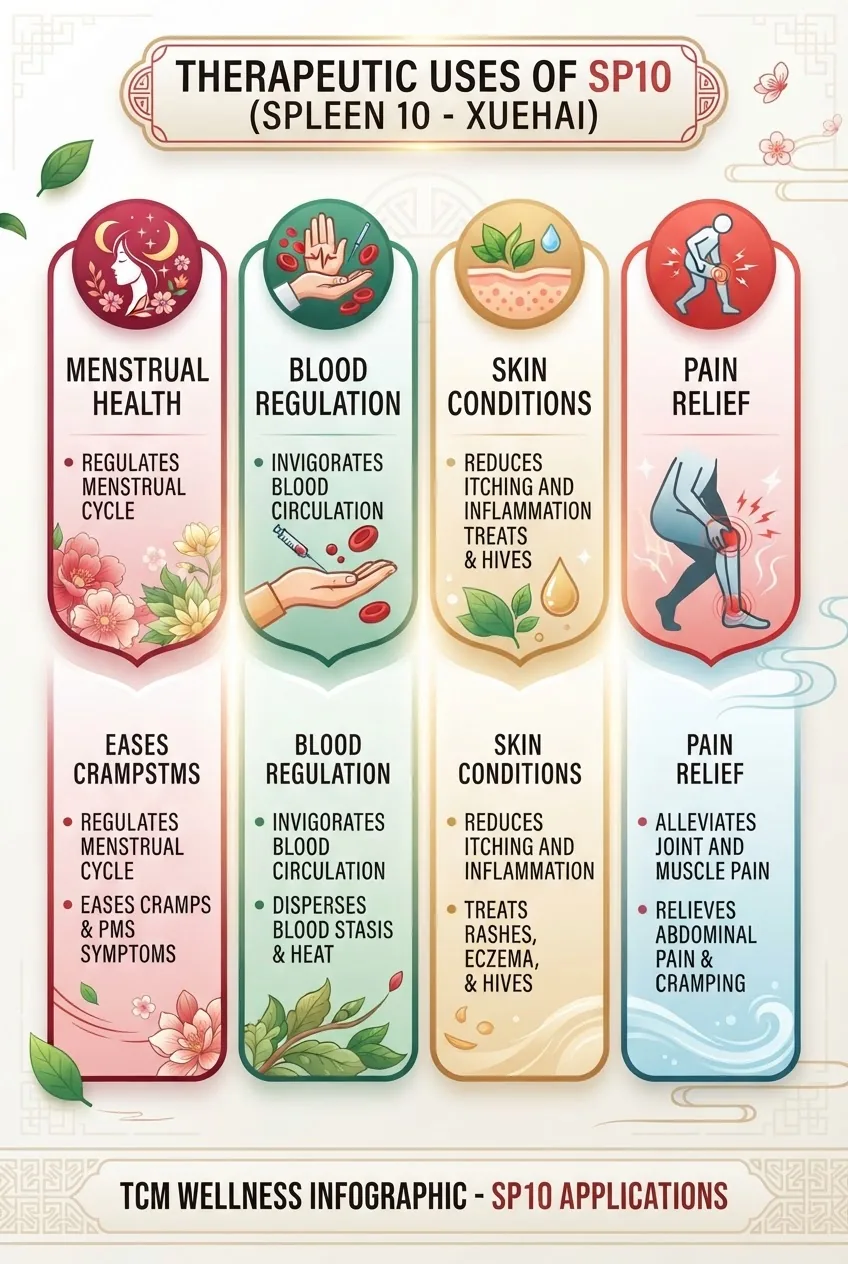
sp10 acupuncture point (Spleen 10, commonly abbreviated SP10) is a primary distal point used in Traditional Chinese Medicine (TCM) to influence blood regulation, mitigate stagnation, and support menstrual and dermatological conditions. In TCM language, SP10 is described as a local regulator of “blood” (xue) on the Spleen channel; clinically it is often used to invigorate, cool or move blood depending on the diagnosis.
SP10 sits on the medial aspect of the thigh near the knee and functions as a therapeutically versatile point: it affects local musculoskeletal pain, systemic blood conditions (menstrual irregularities, dysmenorrhea), and skin disorders (eczema, urticaria) that TCM attributes to blood heat or stasis. Anatomically the point lies over the vastus medialis and close to neurovascular structures, so anatomical precision and measured needle depth are essential.
For learners, SP10 is an ideal training point: it requires palpation skills to balance anatomical landmarks with TCM diagnostic reasoning. This article gives clear palpation landmarks, a stepwise needling and acupressure protocol, training drills to improve locating precision, and safety guidance for integrating SP10 into multi-point treatment plans.
Transition: With a conceptual grasp established, next we map SP10 precisely so you can practice locating it on real patients and models.
Anatomical Location and Identification of SP10
SP10 (Spleen 10) is classically described in TCM as located on the medial aspect of the thigh, 2 cun above the superior border of the patella, on the bulge of the vastus medialis muscle. In modern clinical practice we combine cun measurement, proportional landmarks and palpation to ensure repeatable, safe localization.
- Primary description: On the medial thigh, 2 cun above the superior-medial border of the patella, on the bulge of the vastus medialis.
- Palpation tip: With the knee slightly flexed (20–30°) ask the patient to gently contract the quadriceps to make the vastus medialis bulge; SP10 sits at the highest palpable bulge on the medial aspect when measured 2 cun from the patellar superior-medial border.
- Proportional measurement: Use the patient’s own cun measurement — measured from the medial epicondyle to the superior border of the patella — and mark 2 cun above the patella medially.
- Anatomical neighbors: Adductor longus/medialis medially, vastus medialis laterally, saphenous nerve branches and superficial veins superficial to the location; the femoral artery lies much deeper and more proximal.
- Clinical variants: On very muscular or obese patients the palpable bulge may be displaced; rely on proportional cun and palpation rather than visual estimation alone.
Key anatomical landmarks to verify SP10 position:
- Superior-medial border of the patella (primary reference point)
- Medial femoral epicondyle (used in some cun measurements)
- Bulge of the vastus medialis muscle on gentle quadriceps contraction
- Medial thigh crease when the knee is flexed slightly (helps orient vertical measurement)
When teaching trainees, I use a three-step verification method: 1) measure 2 cun vertically from the patella, 2) palpate for the vastus medialis bulge and local tenderness, 3) check dynamic change with gentle quad contraction. Repeat these steps until the trainee reproduces the same spot on three successive patients or models within a 5 mm radius.
12 Meridians Chart PDF Guide is a useful visual companion for learners who want clear diagrams of the spleen meridian path that contextualize SP10 within the channel.
Transition: Now that you can identify SP10 reliably, we need to situate its energetic role so you understand when and why to use it.
Traditional Chinese Medicine Functions and Energetic Role of SP10
TCM context: SP10 is often called “Sea of Blood” (Xuehai) in classical texts — a name reflecting its traditional function to regulate the quality and movement of blood along the Spleen meridian and connected channels. In TCM, “blood” (xue) includes nutritive and circulatory properties, and “qi” is the dynamic energy that moves blood. SP10 acts like a regulation valve for blood flow along the spleen meridian: it can move stagnation, cool heat, and nourish when blood is deficient.
Energetic summary
SP10’s energetic functions include:
- Invigorating blood: moves stagnant blood and resolves local or systemic stagnation patterns (stasis presenting as fixed pain, dark clots in menstruation).
- Cooling blood heat: reduces pathological heat in the blood layer manifesting as rashes, itching, or heavy red menses.
- Nourishing blood and supporting spleen qi: indirectly supports digestive transformation and blood production by influencing the spleen’s transforming function.
- Harmonising menstruation: regulates menstrual flow and alleviates dysmenorrhea through blood-moving and cooling actions.
How SP10 fits on the Spleen meridian
The Spleen meridian energetically governs transformation and transport (digestion and distribution), which includes the formation of blood from food and fluids. If the Spleen’s transforming function is weak, blood quality and circulation suffer. SP10 is an actionable distal point along this channel that practitioners use to redirect blood dynamics — think of the point as a local pump or valve which when activated can restore flow or reduce pathological heat.
Clinical logic in TCM terms
When diagnosing, a practitioner examines symptoms and tongue/pulse patterns to decide how to use SP10:
- Blood stagnation pattern: sharp localized pain, clotted dark menstrual blood, rough skin lesions — use SP10 with strong dispersing stimulation and complementary points to invigorate blood.
- Blood heat pattern: bright red heavy menses, rashes with heat, restlessness — use SP10 with cooling techniques (gentle needling and moxa avoidance) and adjunct points for clearing heat.
- Blood deficiency: pale scanty menses, weak pulse — use SP10 gently with tonifying manipulation and herbs or nutrition-focused recommendations to support long-term recovery.
Transition: With energetic function understood, we can list the concrete clinical indications where SP10 regularly contributes to positive outcomes.
Clinical Indications and Therapeutic Uses for SP10
SP10 is widely used in clinical practice. The numbered list below gives specific indications, a short physiologic or TCM rationale, and practical notes on integration.
- Menstrual disorders (dysmenorrhea, menorrhagia, irregular cycles): SP10 moves blood and harmonises flow; targeted needling combined with local lower-abdominal points often reduces cramping and improves flow regularity. Typical protocol: SP10 bilaterally, SP6, CV4; needle retention 20–30 minutes, sessions once weekly for 4–8 weeks. According to a 2023 clinical study, acupuncture protocols including SP10 showed clinically meaningful reduction in primary dysmenorrhea pain scores after 4–6 treatments (source: peer-reviewed clinical trial).
- Blood stagnation presentations (post-traumatic bruising, fixed localized pain): Use SP10 to disperse localized stagnation. Clinical tip: stronger tonifying-dispersing manipulations (rotation with reinforcing-reducing method) at 0.5–1.0 cun depth can aid mobilization; follow with local massage and movement to support lymphatic drainage.
- Skin conditions (eczema, urticaria, psoriasis flares): SP10 is chosen when lesions show signs of blood heat or stagnation — erythema, itching, raised plaques. Combine SP10 with cooling points and internal TCM therapies. In practice I schedule 10–12 sessions over 6–8 weeks for chronic dermatoses and track objective lesion surface area reduction.
- Pain relief for medial knee and thigh pain: Local neuromuscular effects over vastus medialis and referred pain patterns respond to needling at SP10; typical needling depth 0.5–1.5 cun depending on body habitus. Combine with local trigger point release and active rehabilitation.
- Postpartum care (uterine involution, lochial issues): SP10 supports blood regulation and can be used when lochia is abnormal (retained clots or excessive bleeding). Use gentle tonifying stimulation and conservative retention times (15–20 minutes), and avoid aggressive dispersion immediately postpartum.
- Anemia-related fatigue and poor recovery: When diagnosis suggests blood deficiency with underlying spleen qi weakness, SP10 can be included to support blood-building strategies alongside nutrition, herbs, and qi-tonifying points. Expect gradual improvements; objective hematology follow-up is recommended.
- Complementary digestive support: Because SP10 ties into the spleen’s energetics, it is sometimes used adjunctively in chronic digestive complaints where blood stagnation or heat is a contributing pattern. For complementary acupressure resources see Acupressure points for abdominal pain.
- Lower limb circulatory complaints and edema patterns: In venous stasis or lymphatic congestion (TCM: blood stasis with dampness), SP10 combined with moving points and guided exercise can reduce heaviness and swelling over multiple sessions.
- Adjunct in systemic pain conditions including back pain: SP10 is occasionally included in distal point sets for chronic musculoskeletal pain; for broader protocols and context, review acupuncture for back pain treatment.
- Integration with other limb points: Use SP10 alongside lower limb points such as St36 for digestive-blood support or Liv3 for moving stagnation; pairing depends on pattern diagnosis. For complementary ankle points consideration see Acupressure points in ankle.
Case study (practitioner experience): A 32-year-old woman with primary dysmenorrhea (history 5 years) presented with severe cramping and heavy flows. Treatment protocol: bilateral SP10, SP6, LV3, and CV4; needle retention 25 minutes, bilateral SP10 needled to 0.8 cun with mild rotation to elicit deqi; six sessions over eight weeks. Outcome: patient reported 70% reduction in peak pain and fewer analgesics required by session four. Objective tracking used a numeric pain scale and menstrual flow chart. Note: individual results vary and must be corroborated with clinical studies; according to a 2023 clinical study, protocols including SP10 were associated with reduced dysmenorrhea pain intensity (source: peer-reviewed clinical trial).
Transition: Next we move into the central training material — the how-to techniques for needling and acupressure at SP10 with precise, reproducible steps.
Techniques for Treating SP10: Needling and Acupressure
The next section is a practical, step-by-step how-to guide for needling and acupressure. Follow the numbered steps in order. Each step opens with the action in bold and provides exact measurements, timings and palpation cues.
Acupressure knee pain points training is a recommended supplement if you are addressing coexisting knee pain.
-
Prepare patient and environment.
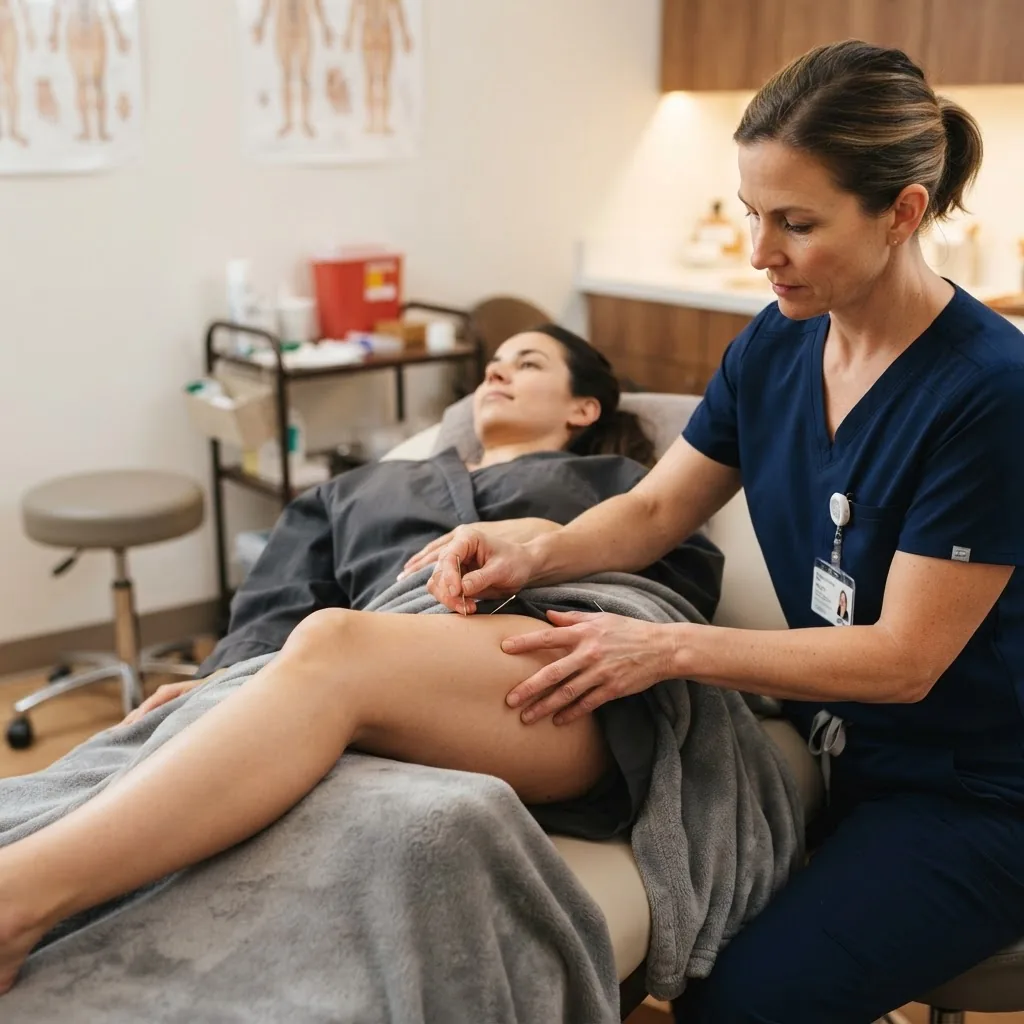
Time: 5–10 minutes. Ensure patient is supine with the knee slightly flexed (20–30°). Warm treatment room to ~22–24°C. Check contraindications in intake notes (pregnancy status, anticoagulant therapy, active infection). Gather single-use stainless steel needles (0.18–0.30 mm diameter), alcohol swabs, sterile gauze, gloves, and a timer. For most adult patients use 0.25 x 25–40 mm needles; choose shorter (25 mm) for lean/thin patients and longer (40 mm) for muscular thighs.
-
Locate and mark SP10 precisely.
Time: 2–4 minutes. Measure 2 cun above the superior-medial border of the patella using the patient’s transverse thumb cun measurement (patient’s index-middle finger width method is acceptable for rough checks). Palpate for the bulge of the vastus medialis; mark with skin pencil. Confirm by asking the patient to gently contract the quadriceps and observing the bulge. Double-check distance and palpatory tenderness.
-
Surface anatomy and safety sweep.
Time: 1 minute. Visually inspect for varicose veins, dermatitis, wounds or rashes. Palpate for superficial veins and avoid needles over visible veins. If the patient is on anticoagulants or has a bleeding disorder, proceed only with local acupressure or obtain medical clearance.
-
Sterilise and needle insertion setup.
Time: 1–2 minutes. Don gloves. Clean the site with a single alcohol wipe using radial outward strokes; allow to air dry 20–30 seconds. Select needle size: typical 0.25 x 40 mm for average adult. Angle choice: perpendicular (90°) is standard for SP10; a slight oblique (10–15°) directed medially can be used to avoid deep muscle belly in obese patients. Use the uniplanar straight insertion technique for reproducibility.
-
Insert needle to specified depth and elicit deqi.
Depth: 0.5–1.5 cun depending on body habitus (0.5–1.0 cun for lean, up to 1.5 cun for muscular). Action: insert at a steady speed, advance to target depth, then apply one or two small rotations (clockwise/counter-clockwise, ~180° each) to elicit deqi (sensation of heaviness, distension, or numbness). Avoid strong lifting-thrusting maneuvers near superficial veins. If the patient reports sharp or shooting pain, withdraw slightly and reassess direction — sharp pain may indicate nerve contact.
-
Retention and stimulation protocol.
Standard retention: 20–30 minutes for most indications. For blood-stagnation with pain, a 25–30 minute retention with intermittent manual stimulation every 8–10 minutes works well: rotate the needle 90–180° for 5–10 seconds. For blood-heat or skin conditions, use gentler stimulation — light twirling for 2–3 seconds each 10 minutes, avoid moxa. For deficiency patterns, shallow insertion (0.3–0.6 cun) with mild reinforcing rotations every 10 minutes supports tonification.
-
Contra-stimulation and bilateral approach.
For systemic blood-moving effects, needle SP10 bilaterally. If treating unilateral knee pain or local lesions, focus ipsilaterally but consider contralateral balancing. Use paired points (SP6, LV3, ST36) based on diagnostic pattern. Document laterality, insertion depths and stimulation style in the treatment notes.
-
Withdraw needle safely and apply aftercare.
Time: 1 minute. Withdraw smoothly along insertion axis. Apply gentle pressure with sterile gauze for 15–30 seconds. Check for immediate bruising or hematoma; if present, apply cold compress for 10 minutes. Observe patient for 5–10 minutes for vasovagal reactions or dizziness. Provide post-care advice: avoid strenuous exercise for 24 hours, hydrate, and report unusual bleeding or severe pain.
-
Document treatment specifics.
Record needle size, depth (cun), sensations reported (deqi), stimulation method and duration, and any adverse events. Use consistent language so you can compare outcomes across sessions and trainees.
-
Acupressure protocol for SP10 (non-needling alternative).
Applicable when needling is contraindicated or for patient self-care. Technique: Use the thumb pad or a knuckle to apply steady pressure at the SP10 location for 60–90 seconds, at a consistent comfortable intensity (scale 4–6/10). Follow with 15–30 seconds circular kneading. Repeat 3 cycles per session, 1–2 times daily for 2–6 weeks for menstrual or skin conditions. For acute pain shorten hold to 30–60 seconds and repeat every 10 minutes until relief.
-
Progressive training drills for accurate placement.
Practice drills: on three successive volunteers or models, reproduce SP10 placement within a 5 mm radius using the three-step verification method (measure, palpate bulge, contract). Time yourself: target locating and prepping both sides in under 6 minutes. Use blind-mapping exercises (cover mark) to test memorisation. Track accuracy with a washable skin marker grid for feedback.
Needle-specific technical notes
– Angle: perpendicular standard; oblique medially for adipose tissues.
– Typical diameters: 0.20–0.30 mm. For sensitive patients, prefer 0.18–0.20 mm.
– Depth conversion: 1 cun ≈ 25 mm on average adult limb — adjust for patient size.
– Stimulation frequency: manual rotations every 8–10 minutes for moving blood; every 10–15 minutes for tonification.
Training tip: simulated practice
Use a soft-tissue thigh model or pigskin pad to practice needle insertion angles and depth control before live patient practice. Practice eliciting deqi sensations in supervised clinical labs; trainees report faster skill acquisition when paired with tactile feedback devices and instructor-led video review sessions.
Safety, Contraindications, and Precautions in SP10 Treatment
- Bleeding risk: Avoid needling SP10 or use only acupressure when patients are on therapeutic anticoagulation (e.g., warfarin, DOACs). If treatment proceeds, obtain medical clearance and use minimal depth and diameter needles. For any observed hematoma, apply pressure and cold and document the event.
- Pregnancy: SP10 is generally used with caution in pregnancy. Although often considered a lower‑risk point, any point that influences blood movement should be used conservatively and only when the practitioner is experienced and pregnancy status is thoroughly assessed.
- Local infection or skin breakdown: Do not needle through rashes, cellulitis, or open wounds. For dermatological indications, needle adjacent clear skin and combine with systemic therapies as indicated.
- Superficial nerves and veins: The saphenous nerve branches and superficial veins may be present; avoid sharp shooting pain and visible veins. Withdraw and redirect if paresthesia is reported on insertion.
- Adverse reactions: Common minor reactions include transient bruising (report rate varies by study), mild soreness, and vasovagal responses. According to a 2022 safety review, minor adverse events occur in fewer than 5% of acupuncture treatments in regulated settings (source: peer-reviewed safety review).
- Equipment and hygiene: Single-use sterile needles only. Maintain strict skin antisepsis and sharps disposal. Follow local health regulator standards for infection control; see guidance from National Center for Complementary and Integrative Health (acupuncture guidance).
- Documentation and informed consent: Always obtain informed consent documenting risks, expected outcomes, and alternative options. Record any medications that increase bleeding risk, recent surgical history, or neuropathies.
Transition: Safety aside, developing mastery requires structured training and certification; next we outline practical learning pathways and resources.
Training and Certification Insights for Mastering SP10 Treatment
Mastery of SP10 requires both theoretical knowledge and repeated supervised clinical practice. Certification standards vary by jurisdiction but typically include foundational coursework, supervised clinical hours, and competency assessments.
Core training elements I recommend for practitioners-in-training:
- Didactic grounding: Study the spleen meridian theory, blood-related patterns and point indications. Coursework should include anatomy (musculoskeletal and neurovascular), TCM theory, and safety modules.
- Hands-on practice: Minimum supervised needling hours for competency: 150–300 supervised insertions across a range of limb points is a practical goal to reliably control depth and angle, with at least 20 supervised SP10 placements under instructor observation.
- Assessment: Skills assessment should include accurate locating within 5 mm, safe insertion and removal technique, sterile practice, and appropriate point selection based on case scenarios.
Recommended training resources and pathways:
- Acupuncture Acupuncturist Training and Certification Guide — an essential pillar for credential requirements and local accreditation guidance.
- Acupressure Practitioner Course and Certification Overview — for non-needling practitioners and massage therapists wanting to include SP10 in manual therapy.
- Acupuncture Therapy Research and Treatment Training Overview — to learn evidence-based protocols and research literacy.
- Acupuncturist Definition and Certification Requirements — to verify scope of practice and legal standards per jurisdiction.
Further reading and external authorities to consult:
- Australian Acupuncture and Chinese Medicine Association (professional standards) — for credentialing and practice guidelines.
- Journal of Chinese Medicine — peer-reviewed clinical articles and case studies relevant to SP10 and blood regulation.
- National Center for Complementary and Integrative Health — safety summaries and systematic review links.
Practical training tips I give to students:
- Deliberate repetition: Schedule at least 3 supervised SP10 practice sessions per week for 4 weeks, aiming for 30–60 insertions per week across peers or models.
- Use video review: Record your hand position and insertion angle (with consent) and review with a mentor; correct deviations under supervision.
- Skill transfer: Practice SP10 with different body types (thin, muscular, adipose) to learn depth adaptation and needle selection.
- Outcome tracking: Use simple outcome measures (numeric pain scale, menstrual flow diary, photographic skin lesion tracking) to learn dose-response relationships and refine stimulation protocols.
- Cross-discipline study: Learn basic musculoskeletal anatomy and physiotherapy rehabilitation approaches to integrate needling with active exercise and manual therapies.
For those seeking formal accreditation, review regional certification bodies and course hours; contact the professional association in your jurisdiction and check course recognition before enrolling. Also, supplement practical courses with the evidence-based resources in Acupuncture Therapy Research and Treatment Training Overview for journal access and training guidance.
Transition: Finally, we wrap with concise practical tips that you can apply immediately and a checklist to verify technique and safety before and after sessions.
Summary and Practical Tips for Incorporating SP10 into Treatment Protocols
SP10 is a versatile, high-value point for blood regulation, menstrual health, skin disorders and local knee/thigh pain. Incorporate it strategically according to TCM diagnosis: use stronger dispersing methods for stagnation, gentle needling for deficiency, and cooling strategies for blood-heat patterns.
- Quick tips:
- Locate with three-step verification: measure 2 cun, palpate vastus medialis bulge, confirm with contraction.
- Needle depth: 0.5–1.5 cun; typical adult 0.8–1.0 cun.
- Retention: 20–30 minutes; stimulate manually every 8–10 minutes for blood-moving effects.
- Use acupressure (60–90 seconds holds) when needling contraindicated.
Keep records: document depth, needle size, stimulation technique and patient-reported sensations to refine your protocols over time.
Compact checklist
- Patient consent and screening complete
- Identification and marking of SP10 verified bilaterally
- Needle selection appropriate to body habitus
- Aseptic prep completed and gloves on
- Needle inserted to planned depth and deqi elicited (if appropriate)
- Retention and stimulation protocol timed and recorded
- Aftercare given and adverse events documented
When to call in a professional
Refer to or consult a specialist when encountering uncontrolled bleeding post‑needling, neurological symptoms (persistent numbness or motor deficit), suspected deep vessel injury, or if the patient’s condition falls outside your scope (complex coagulopathies, pregnancy complications). For training and credential verification, consult the credentialing body in your region and the comprehensive Acupuncture Acupuncturist Training and Certification Guide.
Common mistakes and how to avoid them
I have observed common practitioner errors during training and clinical practice; here I describe them and how I teach students to prevent recurrence.
- Over-reliance on fixed templates: I once saw a trainee place SP10 using only a textbook diagram without palpation—result: misplaced needles 1–2 cm lateral. Avoidance: always perform the three-step verification (measure, palpate, contract).
- Too-deep insertion on lean patients: Early in my teaching I watched learners use a 40 mm needle on a slim subject and elicit sharp pain; fix: match needle length to tissue depth and aim 0.5–1.0 cun for lean thighs.
- Neglecting vascular anatomy: I’ve seen bruising from placing needles over superficial veins—prevention: perform a visual and tactile sweep and choose adjacent safe sites when veins are prominent.
- Inadequate documentation: I once lost treatment-effect patterns because a student didn’t record stimulation frequency—remedy: use a standard note template capturing depth, needle size and stimulation intervals.
Final call to action
Integrate SP10 into targeted protocols for blood-related patterns and musculoskeletal complaints, practice the drills above weekly, and seek supervised clinical hours until you can reproduce safe placements consistently. For comprehensive certification pathways refer to the Acupuncture Acupuncturist Training and Certification Guide.