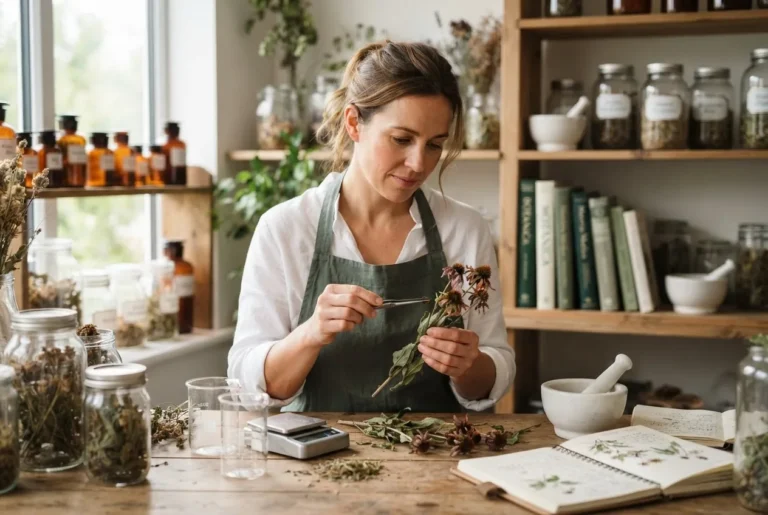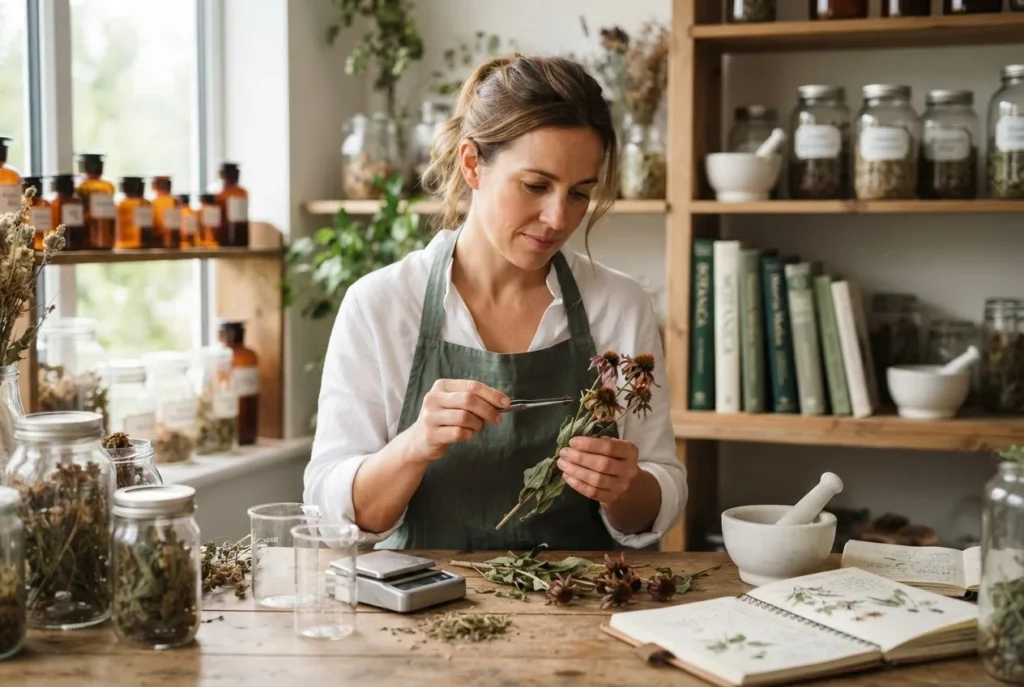
By the end of this hands-on guide you will have a clear, step-by-step roadmap to combine formal plant science and herbal medicine training, a one-year practical learning plan you can start, and a list of credentials and fieldwork milestones to reach professional competence; estimated total training time: 2–6 years depending on path (certificate to degree). Skill level assumed: motivated beginner with basic biology literacy.
Before you start
- Prerequisites: basic biology / high-school chemistry; curiosity about medicinal plants; willingness to do field and lab work.
- Tools and materials: a pocket hand lens (10–20×), field guide, GPS-enabled phone, plant press, notebook, mortar and pestle, kitchen scale (0.1 g precision), PPE (gloves, eye protection), basic lab access for phytochemical tests.
- Time commitment: plan 5–10 hours/week for self-study + periodic intensive weekends for fieldwork; full-time degree paths require standard semester schedules.
Transition: Start by grounding your learning in the disciplines you’ll be integrating, then move into concrete training steps below.
-
Step 1 — Master the foundations: Introduction to Botany and Herbalism for Herbal Botanists
botany and herbalism are complementary fields: botany provides scientific rigour in plant biology, taxonomy and ecology; herbalism focuses on the traditional and applied knowledge of medicinal plants, their preparations and therapeutic uses. Together they form the technical and contextual base an herbal botanist uses to study, identify and develop plant-based medicines.
This section gives you conceptual anchors and points you to further reading about supplements and integrative frameworks. Begin with the science: learn plant anatomy (roots, stems, leaves, reproductive structures), growth patterns, phenology (timing of life-cycle events) and ecological interactions. Parallel that with ethnobotany: how communities use plants medicinally, and the cultural protocols around collection and knowledge sharing.
Practical entry activities (first 4–8 weeks): label 20 local plants from leaf, flower and fruit; keep a dated phenology journal; practice basic tincture and infusion recipes with culinary herbs to understand extraction differences (ethanol vs water). A hands-on primer helps translate textbook concepts into sensory memory.
Contextual resource: read the site’s pillar page for how supplements fit into practice: Herbal Supplements Guide with Benefits and Natural Medicine Uses.
Transition: With foundations set, next we define the job and daily responsibilities of an herbal botanist so you can shape training to role-specific skills.
-
Step 2 — Understand the role: Understanding the Role of an Herbal Botanist
Understanding the Role of an Herbal Botanist
The core responsibilities of an herbal botanist bridge field science and applied herbal medicine. You will identify and document plants, design and run phytochemical screens, translate plant profiles into safe formulations, advise on wildcrafting ethics, and collaborate with clinicians or product developers on efficacy and safety testing. Typical projects include: field collection and voucher specimen preparation for a local medicinal flora survey; analyzing alkaloid or tannin content to guide extraction methods; developing herbarium-backed monographs for each species used in a clinic.
Example daily tasks: morning field reconnaissance for target species, midday microscopy and morphology analysis, afternoon meetings with herbalists to discuss formulation and contraindications. One case study: a community-focused project in which herbal botanists mapped 40 medicinal species across a regional reserve, prepared herbarium vouchers, and presented sustainable harvest guidelines to local foragers—this project led to a small herbal product line developed with ethical sourcing. Such projects build both applied and governance experience.
Skills emphasized: plant identification and taxonomy, documentation and herbarium practices, basic phytochemistry, applied herbal pharmacology, legal and ethical harvesting. You’ll also need communication skills to translate scientific findings into practitioner guidance and product specifications.
Transition: To achieve these responsibilities you need targeted botany coursework — the next step lays out exact topics and practical milestones to master.
-
Step 3 — Complete core botany training: Core Botany Training for Aspiring Herbal Botanists
Core Botany Training for Aspiring Herbal Botanists
Botanical expertise underpins accurate identification, ecological understanding and meaningful phytochemical interpretation. A structured botany curriculum for herbal botanists should mix classroom theory, lab techniques and repeated field practice. Aim to complete at least 6–12 university-level modules or equivalent continuing-education units covering the topics below; if pursuing a BSc in Botany or Plant Science, expect 3–4 years full-time.
Key learning outcomes: confidently use botanical keys and dichotomous keys; prepare herbarium-quality voucher specimens; interpret Latin binomials and nomenclatural changes; perform basic microscopy for trichome, stomatal and pollen analysis; understand secondary metabolite classes and their ecological roles.
Recommended course topics (numbered for modular planning):
- Plant taxonomy and systematics — theory of classification, binomial nomenclature, family-level diagnostic characters, use of dichotomous and multi-access keys.
- Plant morphology and anatomy — organ structure, vascular systems, histology, microscopic preparation techniques (sectioning, staining).
- Plant physiology — photosynthesis, respiration, transport, secondary metabolite biosynthesis pathways relevant to pharmacology (e.g., terpenes, alkaloids, polyphenols).
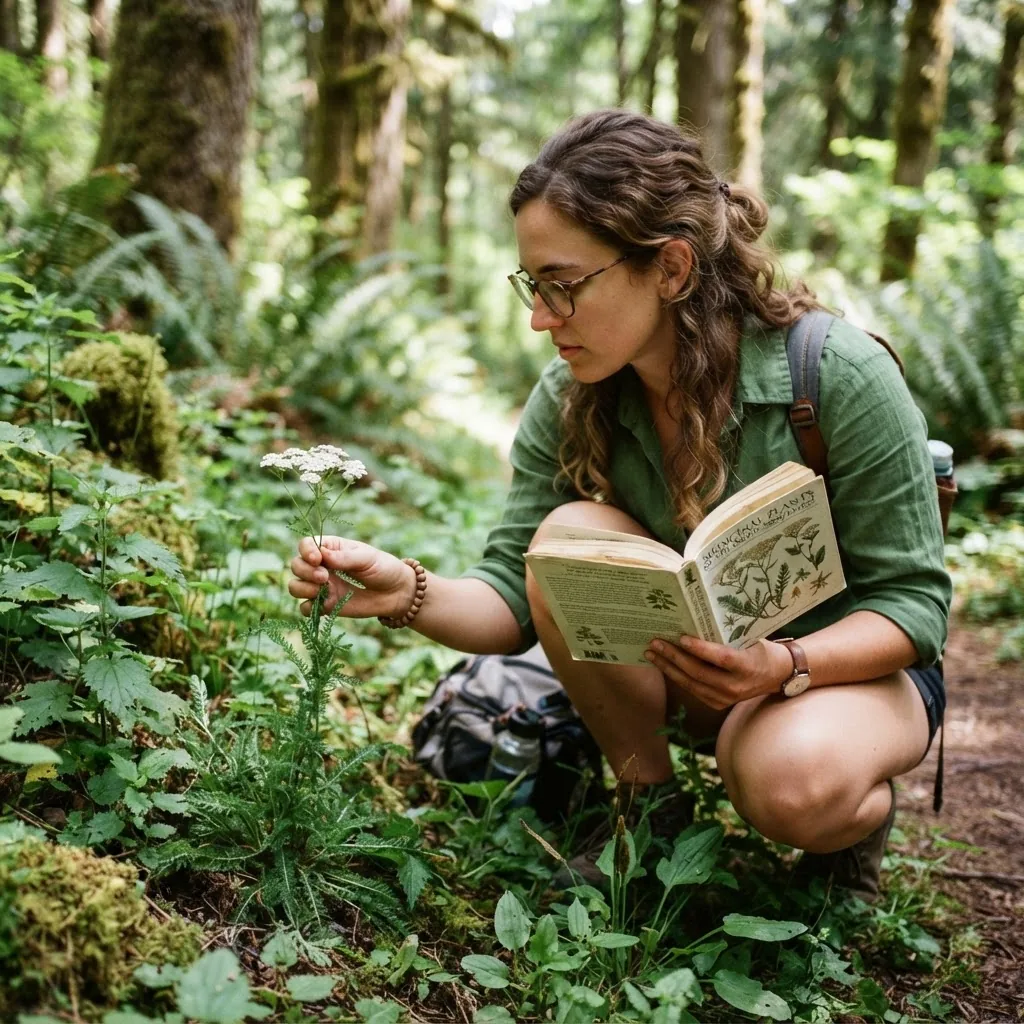
- Field botany and survey techniques — transects, quadrats, plot sampling, GPS mapping, phenology recording, ethical wildcrafting protocols.
- Herbarium practices — pressing and drying specimens, labelling standards (collector, date, GPS), digital databasing, voucher deposition and accessioning.
- Plant ecology and conservation — population dynamics, habitat assessments, threatened species assessment, sustainable harvest calculations (e.g., maximum sustainable yield formulas).
- Plant identification methods — morphological vs molecular identification (DNA barcoding basics), use of online databases and keys, voucher verification workflows.
- Phytochemistry basics — classes of secondary metabolites and their biosynthetic origins, common chemical tests (e.g., Dragendorff for alkaloids), extraction concepts.
- Data collection and research methods — experimental design, statistical basics (ANOVA, regression), sample size planning, reproducibility and documentation practices.
- Lab safety and QA — handling solvents, sterile technique, waste disposal, chain-of-custody for samples intended for analysis or product development.
Practical module recommendations: spend at least 30 field days per year on identification and phenology; prepare a herbarium of 100+ local vascular plant vouchers in two seasons; complete at least 10 microscopy sessions focusing on diagnostic characters (stomatal types, trichomes, pollen morphology). For microscopy, use 400× magnification for epidermal features and 1000× with oil-immersion for pollen wall detail.
Fieldwork checklist (concrete): press specimens within 24 hours of collection; dry at 40–45°C or air-dry with desiccant; label with GPS coordinates to ±10 m; record soil type, aspect and associated species. For herbarium-quality photos: dorsal leaf shot, inflorescence, fruit, habit shot at 1–2 m distance, scale bar included.
Transition: Once botany fundamentals are in place, you’ll layer herbalism skills — practical formulation, safety and pharmacology — to become an effective herbal botanist.
-
Step 4 — Acquire essential herbalism education: Essential Herbalism Education and Skills
Essential Herbalism Education and Skills
Herbalism training complements botany by teaching medicinal use, preparations, and clinical safety. A robust program combines traditional materia medica with scientific pharmacology, dosing, and interaction awareness. Aim for 200–600 hours of focused herbal study in addition to botany modules if you are not completing a full naturopathy degree.
Core competency areas (bulleted for clarity):
- Herbal pharmacology — learn mechanisms (e.g., astringency, anti-inflammatory pathways), therapeutic constituents (alkaloids, glycosides, terpenoids) and dose-response basics.
- Materia medica and top medicinal species — study clinical profiles, indications, contraindications, and evidence levels for each plant. Link to foundational lists: top medicinal herbs.
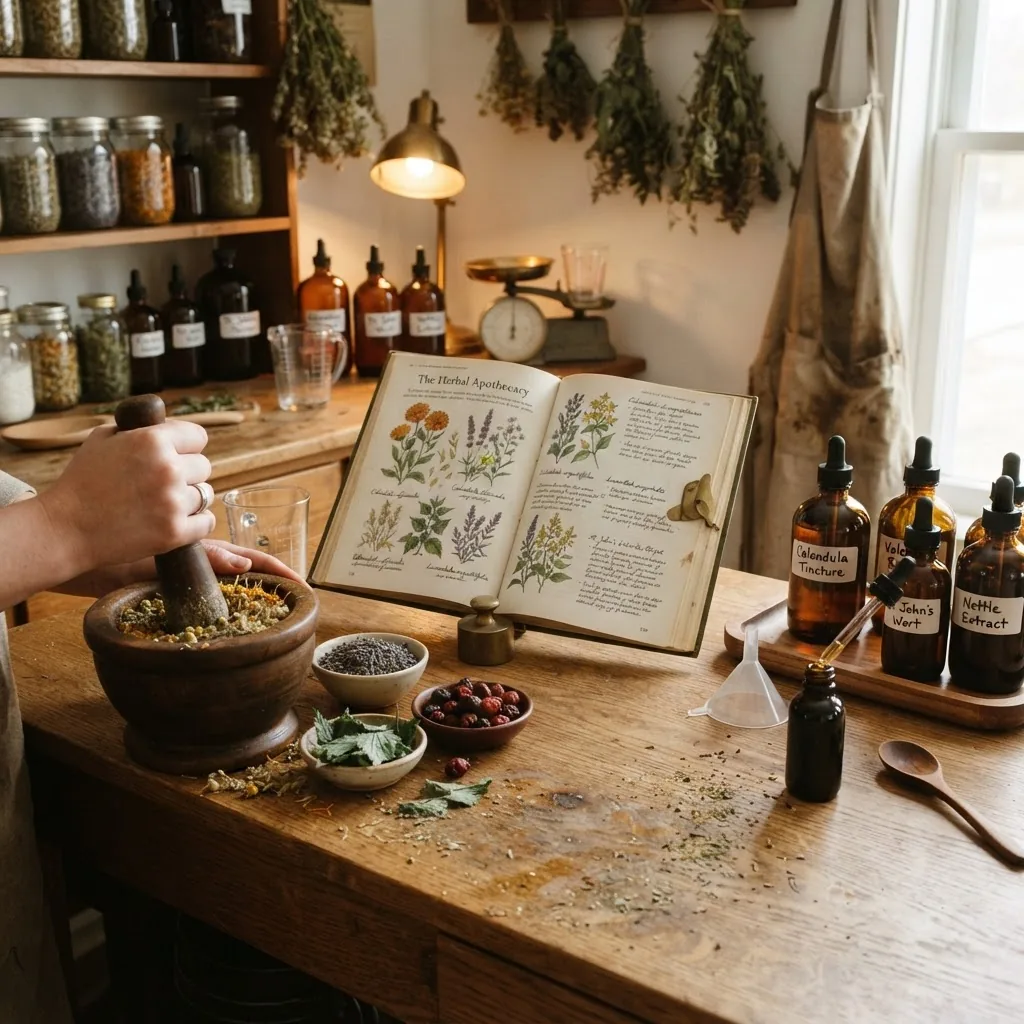
- Herbal preparation methods — tinctures (1:5 w/v common), decoctions (boil time 10–30 minutes for roots), infusions (steep 10–15 minutes for leaves/flowers), syrups (1:1 sugar:syrup base), ointments (70–90°C melt points for carriers), and standardised extract production.
- Dosage, safety and interactions — therapeutic ranges, toxic thresholds, and interaction checking; use tools like dedicated interaction databases. Link to safety tool: herbal drug interactions.
- Traditional systems overview — exposure to Western herbalism, traditional Chinese herbal medicine, Ayurveda and local indigenous approaches; read a focused course on traditional Chinese herbal medicine to appreciate system differences.
- Practical formulation and compounding — hands-on making of 50+ preparations: prepare at least 10 tinctures at 1:5 ratio, 10 infusions, 5 decoctions, 5 salves and 3 standardised extracts using gravimetric measurements.
- Clinical application basics — case-taking, contraindications, when to refer, documentation standards, and ethical practice boundaries.
- Herbal product quality and regulation — good manufacturing practice basics, contaminant testing (heavy metals, microbial limits), and labelling standards.
- Research literacy — reading RCTs, cohort studies and preclinical papers; critical appraisal of evidence quality and applicability.
- Community and cultural competence — respectful sourcing, intellectual property, and benefit-sharing practices with knowledge holders.
Hands-on training targets: produce 20 labelled tinctures using 40%–70% ethanol depending on soluble constituents; standardise 5 extracts with quantified marker compounds (e.g., rosmarinic acid, hypericin) using external lab reports; complete 50 supervised client case notes under a mentor or clinic setting.
Safety emphasis: always cross-reference client medications and conditions—start with low doses when combining herbs and pharmaceuticals, and document monitoring plan every 2 weeks initially. According to a 2024 industry report, incidents due to herb–drug interactions represent a small but significant percentage of adverse events in integrative clinics—formal training in interaction checking is therefore mandatory.
Contextual referrals: for therapeutic applications such as oncology support, see specialised material on natural cancer herbal remedies, with explicit clinical supervision protocols.
For symptom relief applications, link foundational uses to targeted symptom guides: natural symptom remedies.
Transition: With botanical and herbal skill blocks in place, formal credentials will crystallise your pathway—next we compare programmes and certifications so you can choose the right path.
-
Step 5 — Choose credentials: Recommended Certification and Degree Programs
Recommended Certification and Degree Programs
Select training based on career goals: research/academia (BSc/MSc/PhD in Botany), clinical practice (medical herbalism or naturopathy), industry (product development, quality assurance). Below is a practical comparison you can use to decide; each column maps to likely duration, outcome and career fit.
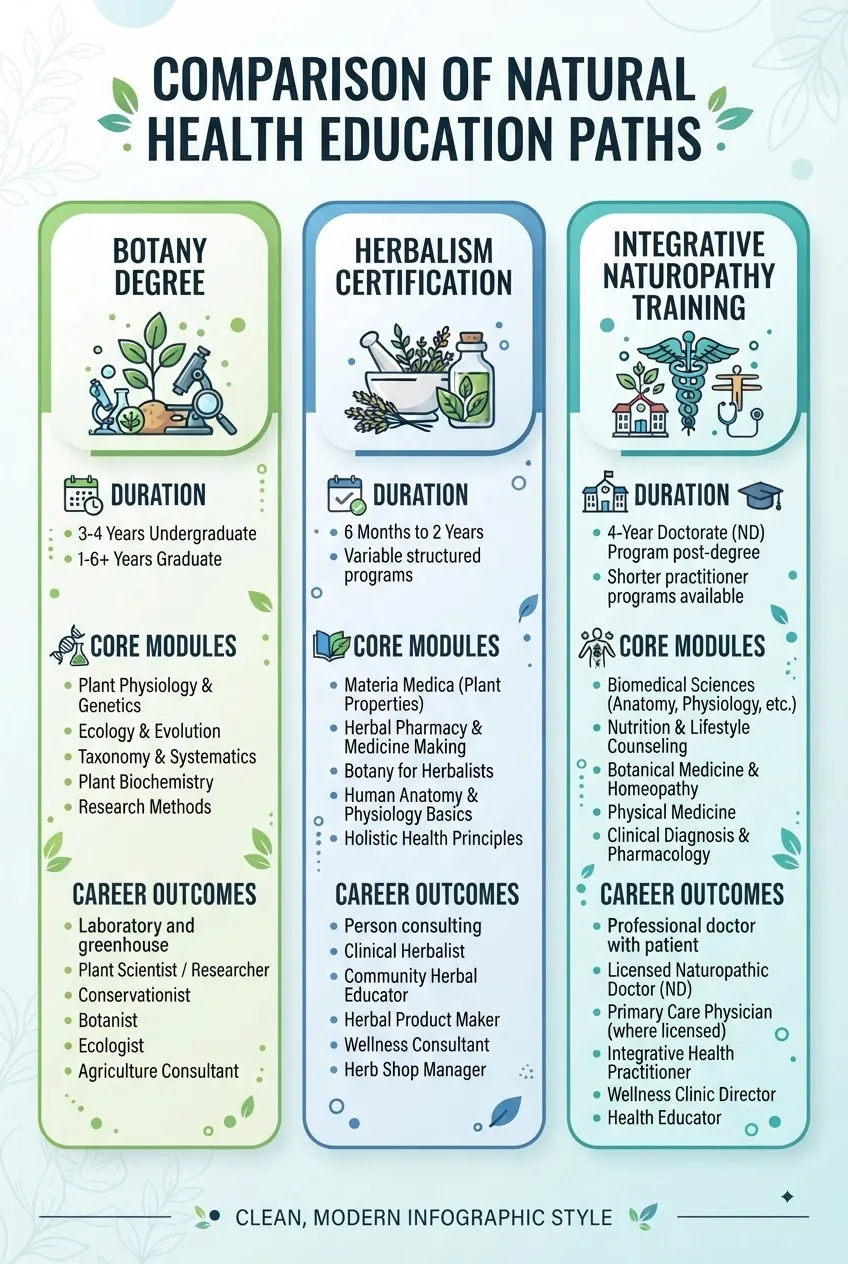
Program type Typical duration Core focus Primary outcomes Botany / Plant Science (BSc/MSc) 3–2 years full-time Taxonomy, ecology, lab research Research roles, herbarium curator, conservation scientist Medical Herbalism Certificate / Diploma 6 months–2 years part-time Clinical herbal formulations, materia medica Herbal clinic practitioner, formulation consultant Naturopathy (ND, BNatMed) 4 years full-time Integrative medicine, diagnostics, prescriptions Licensed naturopathic clinician, integrative clinics Short courses / CPD (phytochemistry, field botany) 1 day–6 months Targeted skills, lab techniques Skill upgrades, niche roles, bridging courses Concrete recommendations:
- If you want research or conservation: pursue a BSc in Botany or Plant Science, then an MSc with a thesis project on medicinal plant chemistry or ecology. Expect to publish a herbarium-backed species monograph as a capstone.
- If you want clinical practice focused on herbs: combine a medical herbalism diploma with supervised clinical hours (aim for 500+ client cases) and continuous mentorship.
- If you want integrative, prescriptive practice: consider naturopathy training to learn diagnostics and system-level care—see pathways and regional details for naturopathy schools in Canada and explore scope of practice via naturopathic doctor prescribing rights.
- If you need local, hands-on classes: search for certified herbalist classes near me for workshops and apprenticeships.
- For credential clarity: consult the program titles and required supervised clinical hours; for formal practitioner recognition see resources on herbalist doctor training and qualifications.
Trade-offs to weigh: academic degrees emphasize theory, publication and laboratory skills; diplomas and apprenticeships prioritise clinical competence and formulations. Many successful herbal botanists combine both routes: a science degree plus vocational herbalism diplomas. According to a 2024 industry report, hybrid-qualified practitioners are increasingly sought after by natural product companies for R&D roles.
Transition: After selecting credentials, the most important phase is practical integration — fieldwork, lab practice and formulation projects that synthesise both disciplines.
-
Step 6 — Do practical, supervised training: Practical Training: Combining Botany and Herbalism in the Field
Practical Training: Combining Botany and Herbalism in the Field
Field and lab integration is where theory becomes professional skill. This section gives step-by-step field and lab tasks, research project templates, and production workflows you must complete to gain competence.
Practical programme (12-month intensive example): combine 6 months fieldwork + 6 months lab and formulation. Below are explicit steps with timings and measurements.
- Plan and scope a local medicinal flora survey (Weeks 1–4)
Define a 5–10 km² study area. Schedule 12 visits across seasons (monthly or biweekly). Compile a target species list of 30–50 medicinal taxa. Get permits if collecting on public land. Document GPS to ±10 m and photograph habit, leaf, flower/fruit with scale bar.
- Collect and prepare herbarium vouchers (Weeks 2–12 ongoing)
Collect 2–3 representative specimens per taxon. Press specimens within 24 hours, dry at 40–45°C or air-dry with silica gel. Label with date, exact coordinates, habitat notes and collector initials. Deposit duplicates in a regional herbarium if possible.
- Perform morphological and microscopic ID (Weeks 4–16)
Use dichotomous keys and confirm with microscopic slides. For epidermal characters use 400× magnification; for pollen use acetolysis and 1000× oil immersion. Record diagnostic characters in a searchable spreadsheet with photos and measurements (e.g., leaf length to nearest mm).
- Run basic phytochemical screening (Weeks 8–20)
Prepare 1 g samples in 10 mL methanol for TLC screening; run standard reagents for terpenes (vanillin), phenolics (FeCl3), alkaloids (Dragendorff). Record Rf values, solvent system used, and visual markers. For quantitative work, send samples to an accredited lab for HPLC or GC-MS with marker compound targets listed.
- Develop safe extraction and formulation prototypes (Weeks 12–28)
Standardise tincture production: weigh 50 g dried herb, macerate in 250 mL ethanol 45% v/v for 14 days with daily agitation; filter and record yield. For decoctions, boil 10 g roots in 250 mL water for 20 minutes, cool and filter. Label batches with batch number, date, extraction ratio, solvent and shelf-life test (6–24 months depending on preparation).
- Design and run a small clinical pilot (Weeks 20–36)
With supervisor approval, recruit 10–20 volunteer clients for a single-blind pilot on a low-risk symptom (e.g., mild insomnia); use standardised extract at a defined dose (e.g., 300 mg standardized extract twice daily) for 4 weeks. Record baseline and weekly outcome measures and adverse events. Obtain ethics oversight if required by your institution.
- Produce documentation and monographs (Weeks 24–40)
Prepare species monographs including identification, phytochemistry summary, traditional uses, safety profile, standardised extract protocol and sustainable harvest notes. Each monograph should be 1,000–2,000 words with at least three cited references (peer-reviewed journals, herbarium records, authoritative texts).
- Quality assurance and external testing (Weeks 28–48)
Submit formulations for microbial limits, heavy metal testing and marker compound assay. Acceptable microbial limits: total aerobic count <1000 CFU/g for dried herb; absence of pathogens. Heavy metals should meet local regulatory thresholds—record lab certificates and include these in product dossiers.
- Present findings and seek peer review (Weeks 40–52)
Present your herbarium-backed monograph and pilot data to a mentor group or at a local botanical society meeting. Aim to publish a technical note or case study in a practitioner journal or community bulletin. Peer feedback refines field identification and formulation protocols.
Practical skills summary: by the end of 12 months you should have 50+ herbarium vouchers, 20 prepared formulations with QA documentation, one small clinical pilot or documented case series, and an established workflow for identification-to-formulation handoff.
For hands-on product work such as preparing capsules, see practical formulation techniques: capsule herbal supplement preparation. Follow hygienic encapsulation procedures and validate fill weight (±5% tolerance).
Transition: these practical credentials open multiple career options; next we explore specific roles and how to target them.
- Plan and scope a local medicinal flora survey (Weeks 1–4)
-
Step 7 — Map careers: Career Paths and Opportunities for Herbal Botanists
Career Paths and Opportunities for Herbal Botanists
As an herbal botanist you can operate at the intersection of science, practice and product development. Here are common pathways with specific entry requirements and sample roles.
- Botanical research and academia — roles: herbarium curator, field botanist, academic researcher. Entry: BSc + MSc/PhD. Typical projects: phytochemical surveys, conservation genetics, species monographs. Research funding often requires publication in peer-reviewed journals and collaboration with botanical gardens or universities; see external resources from authoritative botanical institutions for partnership opportunities: Royal Botanic Gardens Kew.
- Herbal product development (industry) — roles: R&D botanist, quality assurance scientist, technical formulation specialist. Entry: applied diploma + lab experience. Focus: standardisation methods, batch records, stability testing. Related industry content: develop skills in botanical dietary supplements to create evidence-backed products—see context on botanical dietary supplements.
- Clinical herbalist and integrative practitioner — roles: clinical herbalist, consultant in natural health clinics. Entry: diploma or naturopathy degree + supervised clinical hours. Collaboration locations include certified naturopathy clinics.
- Conservation and restoration — roles: conservation officer, restoration ecologist focusing on medicinal plant habitats. Entry: BSc in Botany with fieldwork and conservation experience. Projects include population recovery planning and community-based sustainable harvesting schemes.
- Education and outreach — roles: educator, workshop leader, community herbarium manager. Entry: combination of formal training and teaching experience; prepare curricula for hands-on herb walks and formulation classes.
- Regulatory and policy roles — roles: technical advisor on herbal product regulation, compliance officer. Entry: deep QA experience and knowledge of regional standards and pharmacopeia.
Additional professional context: knowledge of insurance and practice economics matters in clinical roles — explore how insurance applies to naturopathic services: insurance coverage for naturopaths. For practitioners seeking clinic work, research local clinic listings and referral networks including certified naturopathy clinics.
Concrete job-seeking tips: build a portfolio with 10 monographs, QA certificates for products you helped develop, and a Git-style lab notebook or public repository of field photos and herbarium records. According to a 2024 professional association report, employers favour candidates with demonstrable cross-discipline projects and external testing reports.
Transition: careers evolve through ongoing learning—maintain momentum with structured CPD and community engagement described next.
Links to broader career resource topics: product development ties directly to work with botanical dietary supplements and clinic networking with certified naturopathy clinics.
-
Step 8 — Keep learning: Continuing Education and Professional Development
Continuing Education and Professional Development
Professional growth is ongoing: maintain monthly case reviews, annual skill refreshers and regular attendance at botanical conferences. Join professional bodies for credibility and networking: for general herbalist standards consider the American Herbalists Guild (American Herbalists Guild) and consult national pharmacopoeia and safety guidance such as the National Center for Complementary and Integrative Health (NCCIH).
Structured CPD plan (annual):
- Attend one major botanical or herbal conference per year.
- Complete 20–40 hours of CPD including phytochemistry, QA and clinical updates.
- Publish or present at least one case study or technical note every 2–3 years.
- Maintain mentorship: monthly supervision for clinical practitioners, quarterly peer review for researchers.
Funding and grants: look for small research grants from botanical gardens and industry partnerships for herb-specific studies. According to a 2024 industry report, small grants (US$2,000–20,000) are commonly awarded for biodiversity surveys and product standardisation pilots.
Transition: final section summarises next steps and gives a compact action checklist to begin your path as an herbal botanist.
-
Step 9 — Finish strong: Conclusion and Next Steps for Aspiring Herbal Botanists
Conclusion and Next Steps for Aspiring Herbal Botanists
Summary: combine formal botanical training (taxonomy, herbarium practice, phytochemistry) with applied herbalism (materia medica, formulation, clinical safety) to become an effective herbal botanist. Start with modular goals: 6 months of fieldwork and voucher building, 6 months of formulation practice, and then choose either academic progression or clinical diplomas depending on career aims.
Concrete next steps for the next 90 days:
- Enroll in a foundational botany course or a short herb identification workshop (20–40 hours).
- Collect and press 25 local medicinal plant vouchers across two seasons.
- Make 10 standardised tinctures and track extraction yields and shelf stability.
- Join one professional association and attend a local herbal meetup or field day.
Call to action: if you’re ready, start by scheduling your first 12 field visits and registering for a short botany module; document each step and seek mentorship for clinical or research projects.
Common mistakes and how to avoid them
I once accepted poorly labelled herbarium specimens from a student field trip; it caused months of misidentification work. Always insist on GPS coordinates to ±10 m, original collector initials, and a photo of the whole plant habit. I have also seen students use excessive solvent volumes in tinctures—measure by weight (g) and solvent (mL) and document ratios (1:5 w/v), not approximate quantities.
- Misidentification: avoid by verifying with keys, microscopy and herbarium vouchers.
- Poor batch records: avoid by using template logs with batch numbers, dates, solvent %, yields and test certificates.
- Ignoring drug interactions: avoid by always running an interaction check before clinical use and documenting monitoring plans.
Checklist: Verify your training milestones
- Completed 30–50 species ID with herbarium vouchers (labels, GPS, photos).
- Prepared 20 practical herbal formulations with batch records and QA tests.
- Completed coursework in plant taxonomy, phytochemistry and herbal materia medica.
- Logged 200–500 clinical observation hours or supervised client cases (if clinical path).
- Published or presented a project, or completed a capstone monograph with references.
When to call in a professional
If you encounter suspected toxic plant compounds, unexplained adverse events in clients, or need regulatory compliance for commercial products, hire or consult with a toxicologist, licensed clinical herbalist or a regulatory affairs specialist. Call a certified lab for heavy metal or microbial concerns and seek medical oversight for any oncology-related herbal work.
Resources and authoritative references
Key external authorities for protocol, safety and collaboration:
- Royal Botanic Gardens Kew — botanical reference collections and research collaborations.
- National Center for Complementary and Integrative Health (NCCIH) — safety guidance and evidence summaries for herbal therapies.
- American Herbalists Guild — professional standards and continuing education listings.
Safety disclaimer: herbal medicine complements but does not replace conventional medical diagnosis or treatment. Always work within your legal scope and refer when clinical limits are reached. Document informed consent for clients and obtain ethics approvals for formal research projects.