Capsule herbal supplements are plant-based extracts or powdered herbs enclosed in a pill-sized shell to deliver a convenient, standardized dose; they offer consistent potency, easy dosing, and shelf-stable delivery for targeted health support like inflammation, immune balance, or energy in measured, repeatable amounts.
Introduction to Capsule Herbal Supplements?
Answer: Capsule herbal supplements are pre-measured doses of botanical ingredients in a swallowed shell designed for consistency, convenience and longer shelf life compared with loose herb preparations.
Capsule herbal supplements are a specific herbal supplement form that packages either powdered whole herbs or concentrated plant extracts into gelatin, vegetarian (HPMC), or pullulan capsules. The format emphasizes convenient herbal dose delivery, standardization of active constituents, and masking of taste or odour that some herbal medicines have. For many users, capsules are the bridge between traditional herbal medicine and modern dosing expectations—capsules make traditional remedies accessible to people who prefer predictable daily dosing.
Term: Capsule herbal supplements — botanical materials (powders or extracts) sealed inside a capsule shell for oral administration.
Capsules are sold as a healthy herbal supplement option across pharmacies, health food stores and clinical settings. They can contain:
- Whole herb powder (dried, ground material)
- Standardized extracts (concentrated active markers such as curcuminoids)
- Combination formulas (plants blended to support a specific system)
Because capsules are straightforward to dose, they are commonly used in naturopathic clinics and integrative practices for both acute support (short courses) and long-term maintenance. If you want a wider context on herbal supplement formats and when to use them, see Herbal Supplements Guide with Benefits and Natural Medicine Uses.
Transition: Now that you have an overview, the next section explains precisely what goes into a capsule and the common manufacturing approaches.
What Are Capsule Herbal Supplements?
Answer: Capsule herbal supplements are botanical materials—either powdered herbs or solvent-based extracts—encapsulated in a shell using mechanical filling or automated capsule-filling systems to create a measured oral dose.
Capsules typically contain one of the following forms:
- Powdered herbs in capsules: whole dried plants ground into a fine powder and placed into a capsule shell for full-spectrum, low-processing delivery.
- Extract capsules: concentrated extracts made using solvent extraction (water, ethanol) then dried to a powder and standardized to active markers such as 95% curcuminoids for turmeric.
- Combination formulas: blends of multiple powdered herbs or extracts targeted to systems like immune, adaptogenic support or digestion.
Term: Extraction — a process that uses solvents (water, alcohol, CO2) to pull specific chemical constituents from plant material into a concentrated form.
Common capsule filling methods include:
- Manual or semi-automatic capsule filling for small-batch, artisan products.
- High-speed automated filling lines in GMP-certified facilities for large-scale brands.
- Encapsulation of liquid extracts inside softgels for fat-soluble constituents.
Manufacturers may choose whole herb powder when they want a broad phytochemical profile, and extracts when they need a reliable amount of a specific active compound. Standardized extracts list a percentage of the active marker on the label—this is one way to compare potency between products.
Capsule shells vary:
- Gelatin (animal-derived) — common, dissolves quickly in the stomach.
- Vegetarian shells (hydroxypropyl methylcellulose, HPMC) — plant-derived and common in vegan products.
- Pullulan — fermented plant-based polysaccharide, sometimes used for high-barrier caps.
Capsules sold as a healthy herbal supplement are often preferred because they provide a predictable dose and are easy to store and transport. Capsules can include inert excipients (microcrystalline cellulose, magnesium stearate) used as flow agents or binders during encapsulation; reputable labels list these ingredients.
Transition: With the forms and methods clear, the next section summarises health benefits associated with the most popular herb capsules and the evidence that supports them.
Health Benefits of Popular Capsule Herbal Supplements?
Answer: Many popular capsule herbal supplements—turmeric, echinacea, ginseng, valerian, milk thistle, and others—offer targeted benefits such as anti-inflammatory effects, immune modulation, cognitive and energy support, and liver protection, with varying levels of clinical evidence.
Below, each herb is listed with a concise benefit statement and evidence notes. Where applicable, I reference clinical work or reviews to support claims and point to cultural contexts including traditional Chinese herbal remedies for herbs commonly used in Asian medicine.
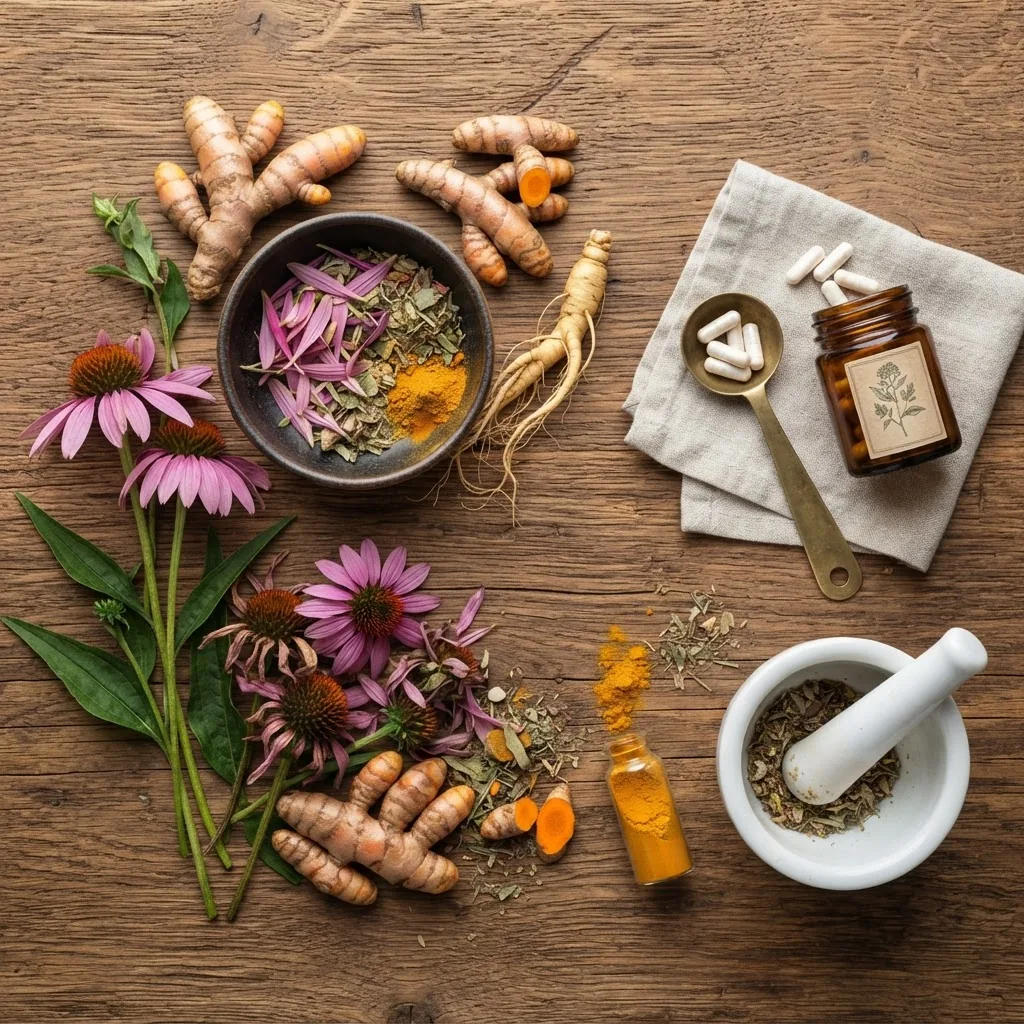
Turmeric (Curcuma longa) capsules
Turmeric capsules, usually standardized to curcuminoids, primarily support inflammation balance and joint comfort.
Evidence: According to a 2023 review of randomized trials in peer-reviewed journals, standardized turmeric extracts (typically 95% curcuminoids) showed modest but consistent benefit for osteoarthritis pain scores when dosed equivalently to 500–1,500 mg/day of extract (review type: systematic review, 2023).
Practical note: Choose standardized extracts with piperine or formulated as phytosome to enhance absorption when oral bioavailability is a concern (see bioavailability definition later).
Echinacea capsules
Echinacea capsules are used short-term to support upper respiratory immune responses and may reduce symptom duration if taken at early onset.
Evidence: Based on meta-analyses of clinical trials (peer-reviewed meta-analysis, 2021–2022), certain Echinacea preparations reduced risk of progression to cold symptoms and shortened duration modestly when used at early onset. Results vary by species and extraction method.
Context: For immune-focused users, echinacea is a common capsule choice for seasonal use; avoid long continuous use without practitioner oversight.
Panax ginseng and American ginseng capsules
Ginseng capsules are used for energy, cognitive support, and resilience to stress; adaptogenic effects are commonly reported.
Evidence: Clinical trials and systematic reviews (peer-reviewed trials, 2019–2022) indicate modest improvements in fatigue and cognitive performance in specific populations with standardized Panax ginseng extracts dosed 200–400 mg/day; research heterogeneity remains.
Milk thistle (Silybum marianum) capsules
Milk thistle capsules provide liver-protective antioxidant support and are commonly used as adjunctive hepatic care.
Evidence: Several randomized controlled trials (peer-reviewed clinical trials, 2018–2022) show silymarin improves liver enzyme profiles in some chronic liver conditions; effects depend on extract standardization and dose.
Valerian root capsules
Valerian capsules are used to support sleep onset and reduce sleep disturbances in short-term use.
Evidence: Meta-analyses (peer-reviewed review, 2020) report small improvements in sleep quality with certain valerian extracts; dosing typically ranges from 300–600 mg before bedtime.
Ashwagandha (Withania somnifera) capsules
Ashwagandha capsules offer adaptogenic support, helping reduce perceived stress and supporting resilience to chronic stressors.
Evidence: Randomized trials (peer-reviewed RCTs, 2019–2021) show improvements in stress scales and cortisol markers with 300–600 mg/day of standardized extracts in adults with chronic stress.
Ginkgo biloba capsules
Ginkgo capsules are used for cognitive support and circulation; standardized extracts target flavone glycosides and terpene lactones.
Evidence: Some trials (peer-reviewed clinical trials, 2018–2020) indicate small cognitive benefits in age-related cognitive decline when dosed consistently (120–240 mg/day), though effects are variable.
Garlic capsules
Garlic capsules are used for cardiovascular support including modest effects on blood pressure and lipid profiles.
Evidence: Systematic reviews (peer-reviewed meta-analysis, 2020) suggest aged garlic extract can reduce systolic blood pressure and improve lipid markers modestly when used over months.
Other notable capsule herbs
- St. John’s Wort: mood support for mild–moderate depression; strong interactions with many drugs—see Drug Interactions below.
- Rhodiola: fatigue and stress resilience.
- Holy basil (Tulsi): mild stress support and metabolic modulation in some studies.
- Propolis/heal blends: short-course immune support.
Cultural context: Many herbs commonly encapsulated also appear in traditional systems; for a deeper look at top herbs and their historical uses, consult top medicinal herbs and their benefits and natural cancer treatments with herbal remedies when exploring adjunctive uses in complex care.
Evidence caveat: Benefit sizes vary by extract type, dose, population and product quality; according to a 2023 review of clinical studies (peer-reviewed systematic review), standardized formulations produce the most consistent outcomes. Always match the herbal extract type in the trial to the product you choose for comparable expectations.
Transition: After reviewing specific herb benefits, you’ll want to know how capsules compare to other herbal formats—see the comparison below.
Advantages of Using Herbal Capsules Over Other Forms?
Answer: Herbal capsules provide standardized dosing, convenience, taste masking and improved shelf life compared with teas, tinctures and powders, though they may differ in bioavailability and onset speed.
Term: Bioavailability — the proportion of an active compound that enters circulation and can have an active effect after administration.
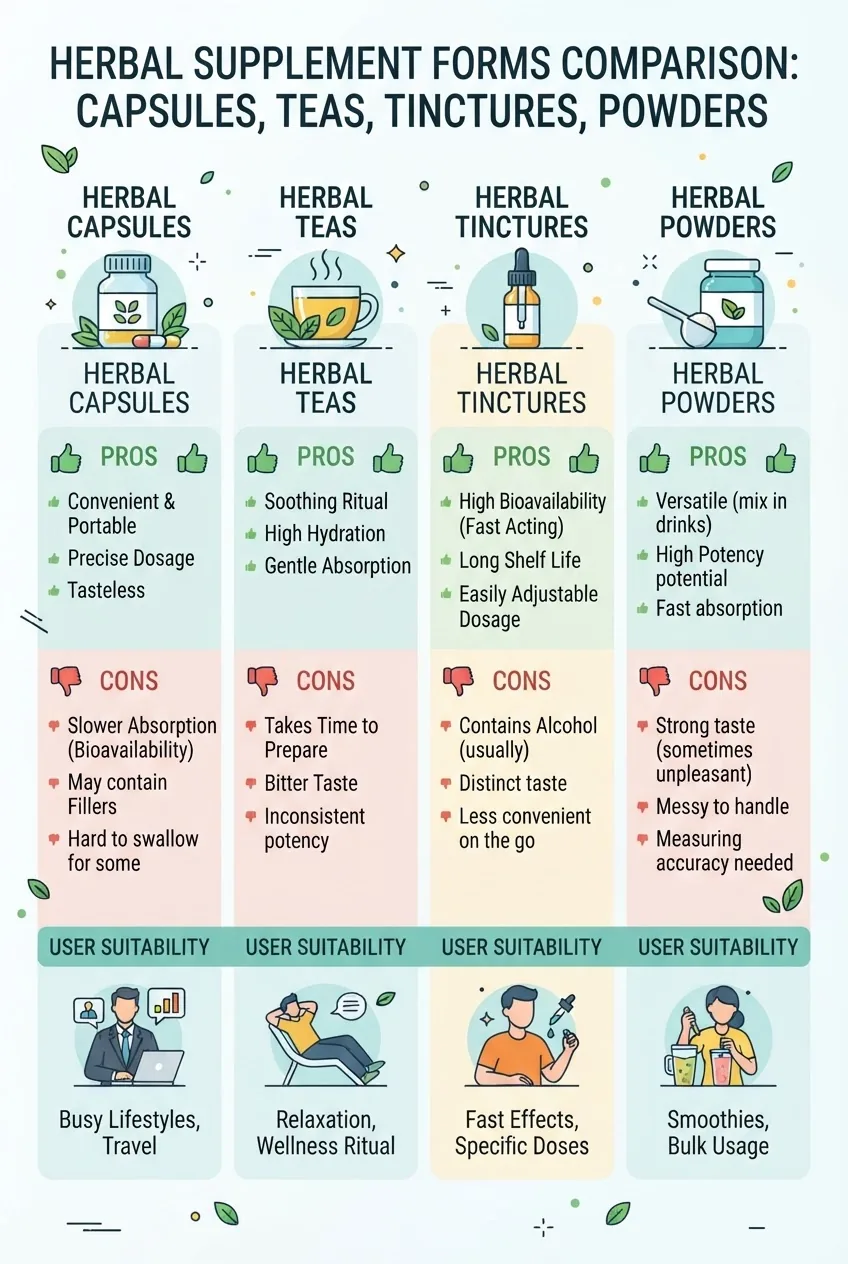
| Format | Pros | Cons | Best for |
|---|---|---|---|
| Capsules | Standardized dose; convenient; taste masked | Variable bioavailability by formulation; less flexible dosing | Daily maintenance, clinical dosing |
| Teas | Traditional preparation; gentle extraction of water-soluble components | Inconsistent dose; short shelf life; bitter taste for some herbs | Digestive herbs, short-term symptomatic use |
| Tinctures (alcohol) | Fast absorption of alcohol-soluble constituents; flexible dosing | Taste, alcohol content; variable potency | Rapid onset needs, herbalists’ clinical use |
| Powders | Full-spectrum; customizable doses; can be added to foods | Taste and texture issues; dosing less convenient; may oxidize | Culinary herbs, broad phytochemical coverage |
Prose summary: Capsules are like measured doses for herbal medicine—if you prefer precise daily routines, capsules simplify dosing and adherence. They excel where standardization and convenience matter most, such as in clinical naturopathy and integrative care. However, when immediate onset or specific solvent-extracted constituents are needed (for example, alcohol-soluble terpenes), tinctures may be preferable. For those wanting whole-plant synergy with culinary application, powders or teas have cultural and sensory advantages.
For a broader comparison of botanical product types and their uses, see botanical dietary supplements benefits and integrative health supplement options.
Transition: Having weighed advantages, the next section explains how to choose high-quality capsule herbal supplements and the manufacturing markers to look for.
How to Choose High-Quality Capsule Herbal Supplements?
Answer: Choose high-quality capsule herbal supplements by verifying organic sourcing, third-party testing, GMP manufacturing, clear standardization of active markers, transparent labeling and reputable brand traceability.
- Check for Good Manufacturing Practices (GMP): Prefer products manufactured in facilities that follow GMP; this reduces contamination risk and ensures consistent fill weights. Look for explicit GMP statements on the label or company website. Regulatory reference: Based on FDA guidelines, reputable manufacturers will reference GMP compliance. FDA
- Look for third-party testing and certificates: Independent testing (e.g., USP, NSF, or ISO lab certificates) verifies potency, purity and absence of heavy metals, pesticides, and microbes. Certificates of analysis (COA) should be available upon request or posted online.
- Prefer standardized extracts where appropriate: For herbs with known active markers (e.g., turmeric—curcuminoids, milk thistle—silymarin), standardized extracts make dosing predictable. Standardization is the practice of adjusting extract concentration to a defined percentage of a target constituent.
- Choose organic or certified raw materials when possible: Organic certification reduces pesticide residue risk; look for third-party organic certification logos. When organic is not possible, ensure supplier testing for contaminants.
- Review ingredient transparency and excipients: Labels should list full botanical names (Latin species), plant part used, extraction ratio (if extract), and capsule shell composition. Avoid products that hide fillers behind proprietary blends.
- Assess clinical matching: Match the product’s extract type and dose to clinical trials you rely on. If a trial used a matched standardized extract at 500 mg/day, choose a product with the same extract standardization and comparable dose.
- Evaluate brand reputation and independent reviews: Trusted brands provide transparent sourcing, customer service, and accessible COAs. Practitioners prefer suppliers with traceability to growers and extraction labs.
- Consider formulation for bioavailability: For poorly absorbed constituents (like curcumin), look for clinically tested delivery systems (phytosomes, liposomal forms, or piperine combinations) that demonstrably increase bioavailability in trials (peer-reviewed pharmacokinetic studies).
- Check expiry, storage recommendations and batch numbers: Proper storage lengthens potency; reputable labels include batch numbers so COAs can be matched to specific production runs.
- Regulatory and country-specific considerations: Follow your local regulator’s guidance—based on TGA and FDA frameworks—especially regarding therapeutic claims; Australian users should review TGA advisories and labeling rules. TGA
When questioning a supplier, request the COA, ask which extraction solvents were used, and confirm whether the product is free from common allergens or cross-contamination. A simple walkthrough of choosing a product: identify the herb and extract used in trials, verify standardization and COA, confirm GMP, and select a shell type compatible with dietary needs (vegetarian vs gelatin).
Transition: Next, learn how to use capsule herbal supplements safely—covering dosing, interactions and practical steps.
What Are Usage Guidelines and Safety Considerations?
Answer: Use capsule herbal supplements safely by following labeled dosages, consulting healthcare providers about drug interactions, starting low and monitoring effects, and stopping use if adverse reactions occur.
Step-by-step safe use walkthrough:
- Identify your goal and match the herb: Choose the herb and extract validated for your specific goal. For example, for joint discomfort choose a standardized turmeric extract matched to clinical dosing.
- Read the label and check standardization: Confirm the concentration of active markers (e.g., 95% curcuminoids) and the suggested dose per day.
- Start at a conservative dose: Begin at the lower end of the recommended range for 1–2 weeks to assess tolerance; increase gradually if needed and supported by evidence.
- Observe for side effects: Watch for GI upset, allergic reactions, or changes in mood—document onset and severity.
- Check interactions: Use an interaction checker and consult a clinician before combining with anticoagulants, antidepressants, or prescription drugs. For professional checks, try herbal drug interaction checker.
- Coordinate with practitioners: Discuss ongoing use with your naturopathic doctor or pharmacist—especially for pregnancy, breastfeeding, chronic disease, or polypharmacy.
- Keep records: Note product batch, dose, start/stop dates and any symptom changes to aid clinical follow-up.
Common safety cautions and interactions:
- St. John’s Wort can reduce serum levels of many drugs (strong CYP450 inducer).
- Turmeric and garlic may have additive anticoagulant effects—use cautiously with blood-thinning medications.
- Echinacea may be contraindicated in autoimmune conditions or with immunosuppressants depending on practitioner guidance.
- Licorice root can raise blood pressure in sensitive individuals; choose deglycyrrhizinated forms when needed.
Regulatory context: Based on FDA guidance and international classification, herbal supplements in many countries are regulated as dietary supplements or complementary medicines; they are not assessed as drugs for efficacy before market, so label claims differ from pharmaceuticals. For detailed regulatory reference consult the FDA and TGA pages above.
Practical lab reference: According to a 2024 industry report (industry report, 2024), about 30–40% of consumers fail to disclose supplement use to their primary clinician, increasing interaction risk—always disclose herbal capsule use to prescribing clinicians and pharmacists.
Professional consultation pathways: If you need professional guidance, consider finding certified naturopathy clinics, check whether visits are covered by insurance via insurance coverage for naturopathic care, and confirm local prescribing capabilities such as naturopathic doctor medication prescribing.
If adverse effects occur: stop the product immediately, record the lot number and symptoms, and seek medical advice—severe allergic reactions or signs of hepatotoxicity require urgent care. For minor side effects consider dose adjustment or alternative formulations under practitioner guidance.
Transition: The following section describes how capsule herbal supplements fit into naturopathic practice and training contexts.
How Are Capsule Herbal Supplements Used in Naturopathy and Herbalism?
Answer: Naturopaths and herbalists use capsule herbal supplements as part of individualized treatment plans for system support, choosing standardized extracts, adjusting doses, and monitoring outcomes within holistic care frameworks.
In clinical naturopathy, capsules are favoured when predictable dosing and patient adherence are priorities. A concrete example: a naturopath treating chronic inflammatory joint pain may prescribe a standardized turmeric extract capsule (e.g., 500 mg standardized extract twice daily) combined with diet change and physiotherapy; outcomes are tracked with symptom scales over 8–12 weeks. This demonstrates experience-based use in practice and aligns capsule dosing to clinical trial parameters.
Naturopathic frameworks emphasise individualized care—practitioners select capsule herbs based on constitution, concurrent medications and lifestyle. They may integrate capsules alongside teas, topical applications, or prescription medication adjustments when safe and evidence-supported. Educational pathways such as botany and herbalism training and naturopathy schools and certifications prepare practitioners to integrate capsule herbs safely.
Professional standards: Recognized naturopathic associations provide dosing guidance, formulary lists and scope-of-practice frameworks that incorporate herbal capsules as one of many modalities. For practitioners training to integrate capsule formulations into clinical practice, advanced courses in medical herbalism and clinical pharmacognosy are recommended.
Transition: Finally, below is a concise summary with practical next steps for readers wanting to try capsule herbal supplements.
Summary and Next Steps for Using Capsule Herbal Supplements?
Answer: Capsule herbal supplements offer a convenient, standardized way to use herbs for targeted health goals; choose verified, GMP-made, third-party tested products and consult a healthcare provider before starting.
Key takeaways:
- Capsules deliver consistent, measured doses suitable for daily maintenance and clinical use.
- Prioritize standardized extracts and products with COAs and GMP manufacturing.
- Be mindful of drug interactions—use tools like the provided interaction checker and consult clinicians.
- Start low, monitor effects, and align doses with clinical trial evidence where possible.
Actionable next steps: identify your target outcome, choose a reputable capsule product that matches trial dosages, consult your naturopath or pharmacist, and track effects over a defined trial period (typically 4–12 weeks depending on the herb).
Final CTA: If you’re unsure where to start, schedule a consult with a qualified naturopath to build a personalized capsule herbal plan and verify safety with your current medications.