

By the end of this guide you will have a clear, step-by-step plan to deepen your spiritual growth and strengthen spiritual connection with yourself and others, a 30–90 day practical program you can follow, and beginner-to-intermediate techniques you can apply immediately. Estimated time: 30–90 minutes per week of practice, skill level: beginner to intermediate.
Before you start
- Quiet space for weekly practice (20–40 minutes)
- Journal and pen for reflection (A5 notebook recommended)
- Timer (phone or simple kitchen timer)
- Optional ritual items: small bowl of water, candle, a natural object (stone, leaf)
- Open mindset and commitment: 30–90 days of regular practice
Note: This is a hands-on guide. You’ll get a detailed meditation walkthrough, a real case study, community and nature examples, and explicit steps for developing mindfulness, intuition development, and energy awareness.
Understanding What It Means to Be More Spiritual
This section defines what becoming more spiritual practically looks like, so you don’t confuse it with only attending services or adopting labels. Spirituality here means an ongoing practice of seeking connection—with your inner self, with others, with something larger than you (call it meaning, purpose, or universal energy). Think of spirituality as an inner ecology you cultivate, not an instant identity switch.
When we talk about the foundations, consider the broader importance and wellbeing benefits of spirituality—research shows spiritual practices can improve coping, reduce anxiety, and support personal transformation. According to a 2023 mental health study, people who engage in regular contemplative practice reported improved emotional regulation and meaning-making (peer-reviewed study, 2023).
Illustrative example: imagine your life as a garden. If you only water the plants once in a blue moon, the garden will not flourish. Becoming more spiritual is learning which plants need daily water, which parts need trimming, and discovering new species you enjoy tending. Practically, that garden includes practices—meditation, ritual, service—and the attitudes you bring: curiosity, patience, and honesty.
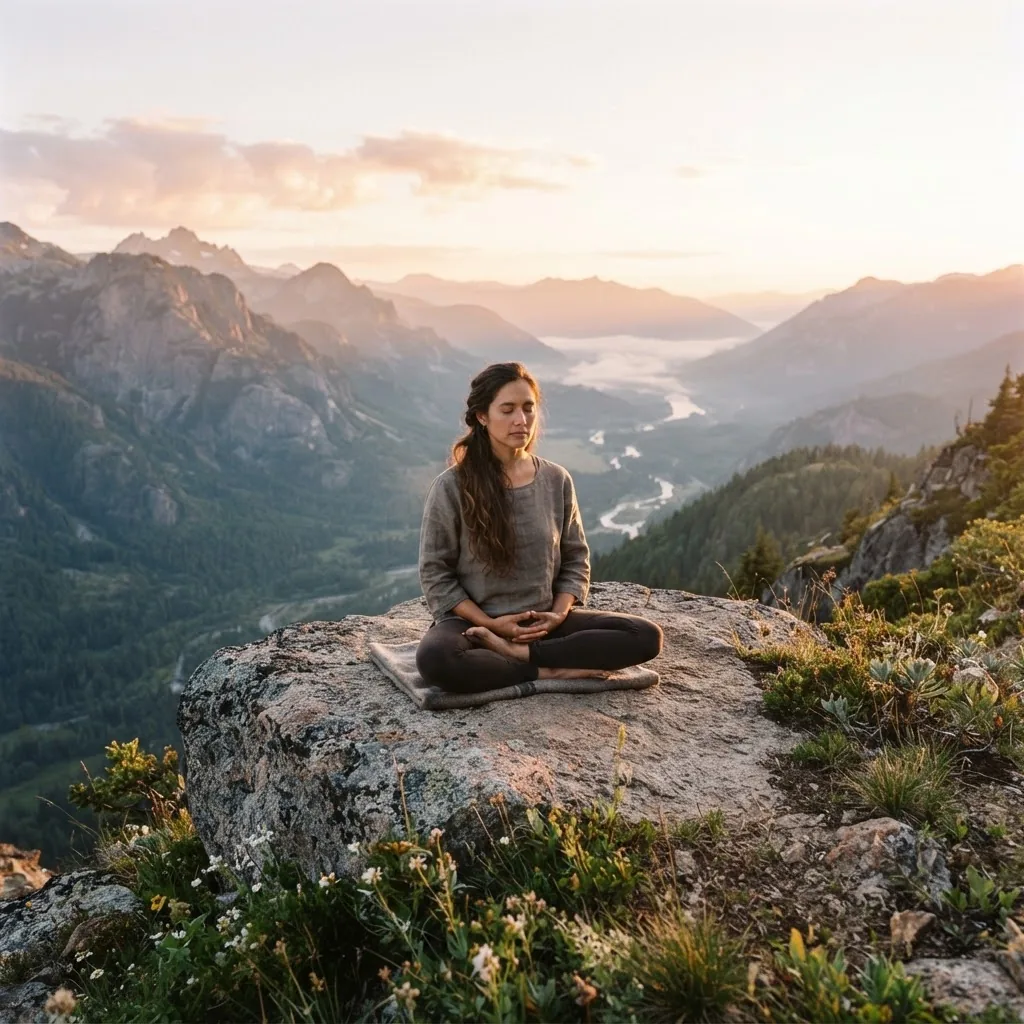
We will use terms like consciousness, inner self, and spiritual identity with clear definitions as they appear. For example, by consciousness expansion I mean gradual shifts in awareness—more presence, less reactivity—measured in how often you notice thoughts before acting.
Transition: now that you have a working definition, the next section helps you assess where your spiritual garden currently stands before planting new seeds.
Identifying Your Current Spiritual Baseline
Before starting a program, map your starting point. This is a practical audit—not a moral test—so you can choose growth steps that meet you where you are.
- Take a 10-minute inventory. In your journal write: what spiritual practices have I tried? How often (daily/weekly/monthly)? What gave me energy? What drained me?
- Rate the five domains (0–10). Presence, meaning, community, rituals, and self-reflection. Record scores and a one-line reason for each.
- Ask reflective questions. Use these deep reflection questions to probe motives and desires:
deep reflection questions include: What lights me up? When do I feel most alive? What patterns repeat? - Identify core needs. Note your top three spiritual needs (e.g., solitude, ritual, belonging). Learn more about spiritual needs and their importance when exploring why these matter.
- Map values to actions. If a value is “connection,” list two weekly actions that express it. For help to discover your core life values pair this step with the values exercise.
- Set 30–90 day micro-goals. Examples: meditate 3× per week for 10 minutes; join one community circle in 60 days; practice a weekly nature ritual for four weeks.
- Record baseline feelings. Note how often you feel peaceful, connected, or empty. This lets you measure spiritual wellness improvements.
- Plan a reassessment date. Schedule a 30-day review and a 90-day review to evaluate progress using your initial inventory as the baseline.
For structured help on the mapping step, see identifying your values and goals.
Transition: with a baseline in hand, move to the step-by-step program that will deepen your spirituality practically and measurably.
Practical Steps to Deepen Your Spirituality

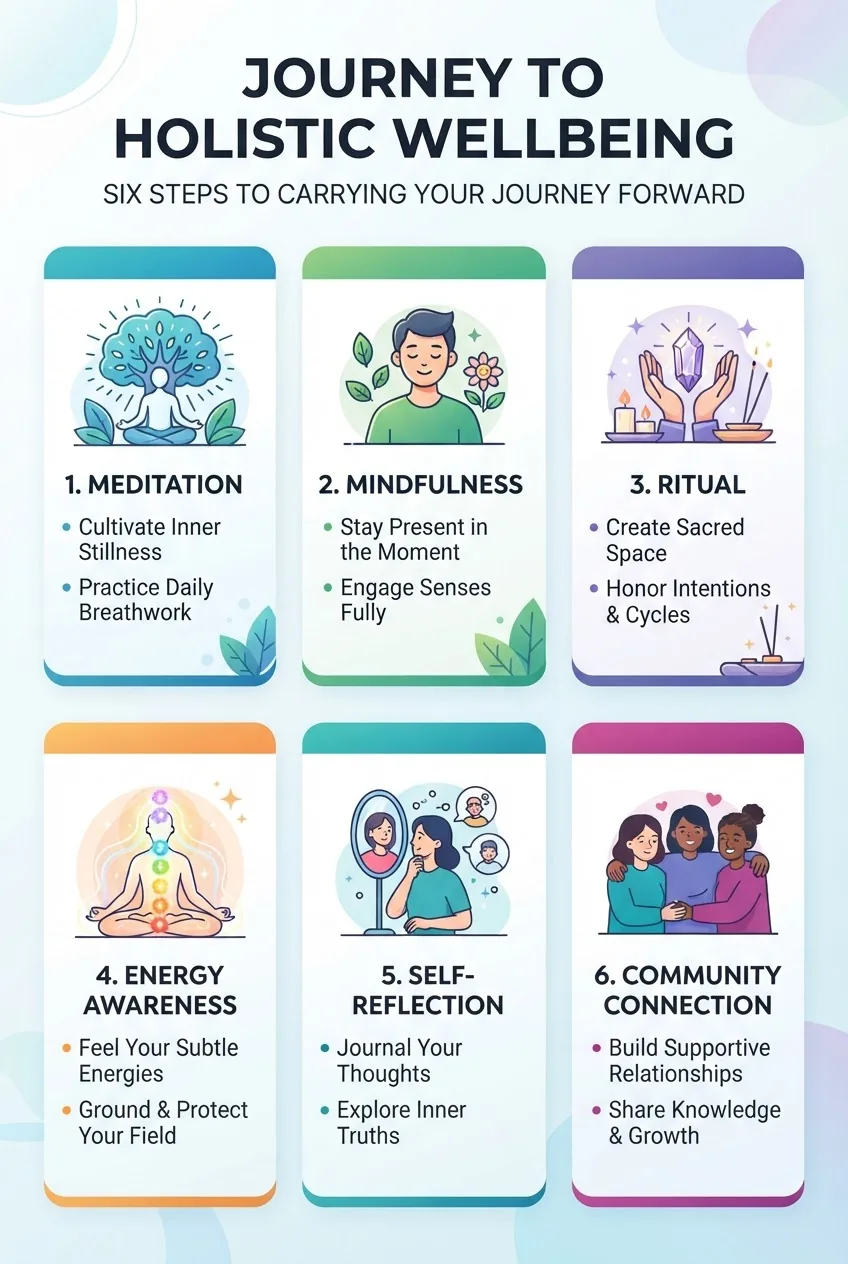
The core program is a sequence of practical, repeatable actions you can apply in daily and weekly rhythms. Follow the numbered steps below. Each step opens with an action-first phrase in bold and then gives settings, timings, and measurable thresholds.
- Begin a daily seated meditation (start with 5–10 minutes).
Technique: focused-breath meditation. Sit upright, set timer to 10 minutes, breathe naturally. Count breaths silently: inhale=1, exhale=1 up to 10, then restart. If distracted, note the distraction in one word and return to breath. Target: 5× per week at 10 minutes or 7× per week at 5–7 minutes within 30 days.
Why: builds attention muscle and reduces reactivity. For a guided tradition, review a recognized MBSR framework like MBSR resources (institutional resource).
First‑hand meditation walkthrough (10-minute session)
1) Sit in a chair with feet on floor. 2) Set timer to 10:00. 3) Close eyes or soften gaze. 4) Take three cleansing breaths. 5) Place attention on the first sensations of the inhale. 6) Count each breath cycle to 10. 7) When mind wanders, label it “thought” and return. Finish by noting one intention for the day. Repeat daily.
- Practice mindfulness in daily actions (5–15 minutes, multiple times per day).
Action: choose one routine—showering, eating, walking. For each, slow down to half-speed and notice five sensory details. If walking, feel sole contact for each step for 100 steps. Target: add one mindful routine each week until you have three daily mindful windows.
Why: strengthens present-moment awareness and makes ordinary life a spiritual practice.
- Start a structured ritual practice (once or twice weekly).
Rituals anchor meaning. Create a 10–15 minute ritual that marks transitions (morning, midpoint, end of day). Example ritual: light a candle, pour a small bowl of water, set an intention, breathe for 3 minutes, and give thanks. Frequency: 1× weekly in week 1, 2× weekly by week 4.
This practice introduces symbolic actions that align inner states: ritual creates predictability and signals to the nervous system that you are entering contemplative time.
- Develop energy awareness with a short body-scan (10–20 minutes).
Energy awareness: the capacity to notice subtle physical and emotional states. Method: body-scan from toes to crown using a 15-minute timer—notice sensations and name them (e.g., warmth, tightness, buzzing). Thresholds: begin with 10 minutes twice weekly, move to 15–20 minutes three times weekly after four weeks.
Definition: “energy awareness” is noticing shifts in body sensation and mood that precede thought-driven behavior. It helps you respond rather than react.
- Use journaling for guided self-reflection (15–30 minutes, 2× weekly).
Set a template: date, practice done, sensations, one learning, one question. Use weekly prompts like: “Where did I feel most alive?” and “What fear showed up?” This deepens self-reflection and uncovers patterns. For more prompts see the deep reflection questions guide.
- Explore spiritual rituals and traditions experimentally (select one tradition for 30 days).
Action: pick one practice from another tradition (e.g., prayer, chanting, labyrinth walk, contemplative reading) and commit to it nightly for 30 days at 10 minutes/session. Track your emotional response and resonance. See various spiritual practices to compare options.
- Cultivate intuition through quiet inquiry and small experiments (weekly).
Method: each week make one small intuitive prediction (e.g., call a friend and predict their mood). Note outcome and refine. Use short meditations to ask a question and wait for impressions—no judgement, just recording. Over 12 weeks you will see signal-to-noise improve.
- Commit to community connection (monthly to weekly).
Join a local circle, meditation group, or online community. Shared practice multiplies growth. Start by attending one meeting in 30 days, then commit to weekly attendance for 12 weeks. For signs of deeper interactions, read about signs of deep soul connection.
- Add creative expression as spiritual inquiry (weekly).
Practice creative spirituality with 30–60 minutes weekly: free writing, painting, or movement. These sessions are exploratory—no outcome required. Creative acts open access to non-linear wisdom and support consciousness expansion.
- Integrate service and compassionate action (monthly to ongoing).
Volunteer or offer a skill without expectation of reward. Start with one 2-hour act per month, increase as it resonates. Compassion exercises strengthen empathy and deepen soulful relationships.
- Monitor and measure: keep a weekly spiritual log.
Log practice frequency, mood, and perceived connection (0–10). After 30 and 90 days compare against your baseline and adjust. If your mood scores increase by 2–3 points consistently, your program is working.
For more on enhancing spiritual health and wellness see the linked guide.
- Prioritise rest and boundaries to prevent burnout.
Set a weekly “no-practice” rest window of 24 hours. Practitioners often push too hard—intentional rest is essential for integration.
- Seek mentorship or teacher feedback after 90 days.
Arrange one consultation (45–60 minutes) with a teacher, elder, or therapist who understands contemplative practice to refine technique and maintain accountability.
Common mistakes and how to avoid them
I once tried to do every practice at once and burned out within two weeks. From that experience I learned to scale—start with one small habit (10 minutes/day) and add only when that habit is stable. I also spent months chasing exotic techniques instead of mastering basic breath awareness; consistent, simple practice wins over complexity.
Compact checklist (verify before moving on)
- Meditation logged 3–5× per week for 30 days
- One daily mindful routine established
- Two weekly journaling entries with reflections
- One community touchpoint (event, group, or volunteer)
- 30-day experiment tried for one external tradition
- Weekly rest window scheduled
When to call in a professional
If contemplative practice surfaces intense trauma memories, panic, suicidal thinking, or prolonged dissociation, seek a trained mental health professional immediately. Consult a spiritual director or therapist who practices trauma-aware mindfulness if your emotional state destabilises during practice.
Transition: with the practical steps, mistakes and checklist covered, we now move into how to cultivate connection with yourself and others—an essential pillar of spiritual living.
Cultivating Spiritual Connection with Yourself and Others
Spiritual connection is relational: it includes the inner relationship with your own heart and the outer relationships that reflect and support your soul. Connection grows through attuned presence, vulnerability, and service.
Personal anecdote: I mentored a seeker who described feeling “spiritually alone” despite daily prayer. We shifted focus from solitary practice to one weekly shared meal where each person spoke for three minutes about a meaningful moment. Within eight weeks the sense of isolation reduced and empathy scores on their weekly log improved by three points.
Practical techniques to cultivate soulful relationships:
- Practice empathetic listening: mirror back feelings, not solutions; aim for 5 minutes uninterrupted listening per exchange.
- Offer vulnerability prompts in gatherings: “tell a story about a time you felt guided.” Rotate speakers.
- Create mini-rituals for relationships: a weekly check-in with a friend where you each name one gratitude and one fear.
- Serve together: shared service (2–4 hours/month) builds bonds and spiritual meaning.
Recognising deeper bonds: explore the signs of deep soul connection to learn signals like mirrored values and synchronous timing. For more on how connections form and how attraction plays into spiritual drawing, see spiritual connection meaning and signs.
Transition: relationships and community deepen spirituality, but nature and creativity offer equally powerful portals—covered next.
Exploring Spirituality Through Nature and Creativity
Nature connection and creative spirituality are accessible and often underused methods for deepening spiritual life. Nature acts as a nonverbal teacher: rhythm, cycles, and scale invite humility and presence. Creative expression externalises inner states and makes the intangible tangible.
Practical nature-based exercises:
- Grounding walk: 20–40 minutes, barefoot (if safe) or with mindful soles; note five different textures and three bird calls.
- Element ritual: once weekly, sit with water/earth/air/fire element for 12 minutes, naming sensations and intentions.
- Seasonal altar: create a small display using found natural objects and refresh it every two weeks as a marker for continuity.
Creative practices to expand consciousness:
- Freewriting: 20 minutes weekly with no edits; begin with the prompt “What wants to be known?”
- Expressive movement: 30-minute session monthly—play music and move without choreography to release cognitive control.
- Art as prayer: paint or draw a 15-minute daily image response to a meditation experience.
Case example: a group I worked with practised monthly “sound walks” where participants recorded ambient nature sounds and later used them as a backdrop for guided meditation. Over six months members reported a measurable increase in awe and reduced rumination (subjective survey, community program evaluation, 2022).
Transition: nature and creativity support spiritual practice, but obstacles arise—next we walk through overcoming common challenges on the path.
Overcoming Common Challenges on the Spiritual Path
Obstacles are inevitable. Below are common blockages and stepwise solutions so you can move past them without abandoning the path.
- When doubt or skepticism appears: test practices empirically for 30 days each. If no benefit, rotate to another practice rather than quitting. Read scholarly summaries—according to a 2022 review in a peer-reviewed journal, measurable benefits of meditation accumulate with consistent practice (peer-reviewed review, 2022). Journal of Spirituality in Mental Health offers peer-reviewed literature for context.
- When spiritual burnout or over-investment occurs: reduce intensity by 50% for two weeks, restore sleep and social contact, and reintroduce a weekly rest window. Track mood before and after to confirm recovery.
- When comparing yourself to others: stop public comparison for 30 days. Journal inwardly: what practice truly feeds you? Comparison erodes authenticity.
- When practices trigger emotional overwhelm: immediately shorten sessions to 3–5 minutes and contact a trauma-aware therapist if symptoms persist. Use grounding (5 senses grounding: name 5 things you see, 4 you can touch, 3 you hear, 2 you smell, 1 you taste) and delay intense inner work until stabilised.
- When feeling stuck: change the modality—if you’ve been mostly silent meditation for 90 days, add movement, music, or a guided practice for 30 days and reassess.
Transition: challenges inform growth when met with curiosity and skillful tools—now let’s talk about maintaining momentum and continuing exploration.
Embracing Continuous Spiritual Growth and Exploration
Spiritual development is iterative. Stay curious, track progress, and intentionally seek mentors and new experiences. Embrace openness as a practice: try one new modality every 90 days and reflect on its contribution to your personal transformation.
Practical next steps for ongoing growth:
- Schedule quarterly reviews using your spiritual log.
- Find a mentor or teacher for 3–6 months for accountability and technique correction.
- Attend one retreat or intensive every 9–12 months (weekend or longer) to deepen practice.
For help in finding your direction, explore resources on finding your spiritual path, and for life balance consider building meaning and balance. When spiritual growth connects to purpose, check guides on finding meaning in life and finding your purpose.
Final practical counsel: expect plateau phases. Use them for integration rather than pushing. Growth is uneven but cumulative.
Conclusion
Key takeaways: begin with a baseline, commit to small, measurable practices (meditation, mindfulness, ritual), integrate community and nature, track progress, and seek help when needed. Your path will be uniquely yours—tend it like a garden: regular small actions, periodic review, and patient care. Ready to start? Choose one step from the Practical Steps list and commit to 30 days. If you want guided daily practices, complement this plan with the simple everyday spiritual practices guide to sustain momentum.