
Complementary therapies are non-mainstream health practices used together with conventional medicine to support symptom relief, recovery and wellbeing; they function as adjunctive supports rather than replacements. This definition frames complementary therapies within integrative care models and the broader CAM (complementary and alternative medicine) landscape.
What Are Complementary Therapies?
Answer: Complementary therapies are health-supporting practices used alongside conventional medical care to improve symptoms, reduce side effects, and support physical and emotional wellbeing.
Complementary therapy: a non-mainstream practice used together with conventional medicine as an adjunct to support patient outcomes and wellbeing.
Complementary therapies are distinct because they are intended to complement (add to) standard treatments, not replace them. Common goals include symptom control, stress reduction, rehabilitation support and improving quality of life. Examples include acupuncture to reduce chemotherapy nausea, massage to ease musculoskeletal pain after surgery, and meditation to lower anxiety during chronic illness.
Below are practical features that characterise complementary therapies:
- Adjunctive use: administered alongside conventional treatments (e.g., surgery, medications).
- Patient-centred focus: tailored to symptoms, preferences and whole-person needs.
- Modalities vary: manual therapies, mind–body techniques, botanicals and energy-based approaches.
- Integration pathway: delivered in integrative clinics, primary care referrals, or community settings.
Clinically, complementary therapies are most effective when coordinated with the treating physician and documented in the patient record. For definitional frameworks, consult authoritative sources such as the National Center for Complementary and Integrative Health (NCCIH) and the World Health Organization (WHO) for standard terminology and categories. NCCIH provides an operational categorisation; the WHO offers global guidance on traditional and complementary medicine.
Transition: A clear contrast with alternative therapies helps avoid confusion—see the next section for a direct comparison.
Distinguishing Complementary vs Alternative Therapies
Answer: Complementary therapies are used together with conventional medicine; alternative therapies are used instead of conventional treatments.
Alternative therapy: a non-mainstream practice used in place of conventional treatment, not as an adjunct.

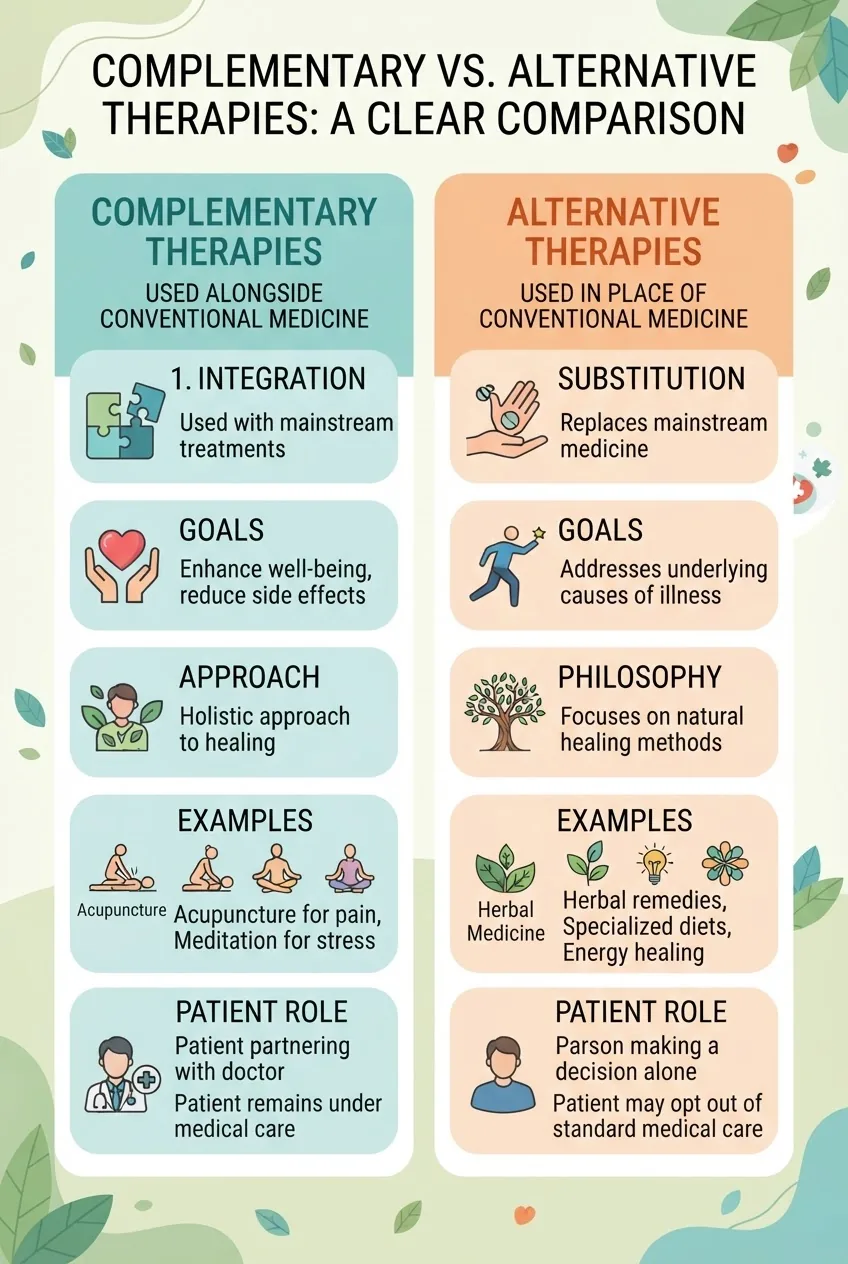
| Feature | Complementary Therapies | Alternative Therapies |
|---|---|---|
| Relationship to conventional care | Used alongside conventional medicine as adjuncts | Used in place of conventional treatments |
| Typical examples | Acupuncture, massage, meditation, aromatherapy | Replacing chemotherapy with herbal regimen (example) |
| Risk profile | Often lower when coordinated with clinicians | Higher risk if it delays or replaces proven treatments |
| Evidence approach | Evaluated as adjunct outcomes in trials and systematic reviews | Often limited or lacking robust comparative trials |
| Clinical integration | Supported within integrative care teams and referral models | Typically used outside mainstream care pathways |
In practice, the same modality (for example, herbal medicine) can be complementary or alternative depending on how it’s used: as an adjunct to chemotherapy it is complementary; as a substitute for evidence-based cancer treatment it is alternative. Using authoritative frameworks—such as NCCIH categories and WHO definitions—helps clinicians and patients classify a therapy for safe decision-making. NCCIH defines categories (natural products, mind–body practices, manipulative therapies) that map across both complementary and alternative uses.
Transition: With the difference clarified, the following section lists common complementary therapies and what they do.
What Are Common Types of Complementary Therapies?
Answer: Common complementary therapies include acupuncture, massage, meditation, herbal medicine, naturopathy, and mind–body techniques used to reduce symptoms and support recovery.
Mind–body techniques: practices that use mental, emotional, social or behavioural interventions to affect physical health (for example, meditation or guided imagery).
-
Acupuncture — Fine needles are inserted at defined points to modulate pain and neural pathways; commonly used to reduce postoperative pain, chemotherapy-induced nausea and chronic headaches. Walkthrough: assessment, point selection, sterile single-use needles, 15–30 minute sessions; practitioners follow local regulation and training standards.
-
Massage therapy — Manual manipulation of soft tissue to relieve pain, reduce muscle tension and promote relaxation; frequently used after injury or surgery and as adjunctive palliative care. For training pathways see related resources on therapy techniques.
- massage therapy techniques (clinic guides)
-
Meditation and mindfulness — Structured practices that focus attention and awareness to reduce stress, manage chronic pain and improve mood; formats include guided meditation, MBSR (Mindfulness-Based Stress Reduction) and breathwork. Clinical use: brief daily home practice plus guided sessions.
-
Herbal medicine and botanical supplements — Plant-based products used to support symptoms (e.g., ginger for nausea); quality and interactions vary, so clinical oversight is essential when patients use prescription drugs.
- Safety note: some botanicals interact with anticoagulants and chemotherapy; always disclose to prescribers.
-
Naturopathy — A system emphasising natural therapies (nutrition, botanicals, lifestyle counselling) often used as adjunctive wellness care; scope and licensing differ regionally.
alternative medicine degree programs - Energy therapies — Practices such as Reiki or therapeutic touch aimed at modulating perceived energy fields to promote relaxation and wellbeing; evidence varies and clinical use is primarily supportive.
-
Yoga and movement therapies — Therapeutic movement, posture, and breath work to improve mobility, strength and mental health; commonly integrated into rehabilitation and chronic pain management.
mental health alternative treatments - Hypnotherapy and guided imagery — Structured suggestion and imagery techniques to reduce procedural anxiety, break habits, or support pain control in conjunction with medical care.
- Music, art and expressive therapies — Nonverbal modalities used in palliative, paediatric and psychiatric settings to support coping and emotional expression.
-
Medical cannabis — Plant-derived cannabinoids prescribed or advised as adjuncts for symptom control (pain, spasticity, nausea) where legal and clinically appropriate.
medical cannabis as complementary therapy - Breathwork and biofeedback — Physiological self-regulation tools used in anxiety, PTSD and pain programs to improve autonomic balance.
-
Nutritional therapy and supplements — Targeted diet changes and micronutrient guidance used to support recovery, immune function and metabolic health; best delivered alongside conventional care by credentialed clinicians.
alternative therapies for asthma and allergies
Many of these modalities appear in educational programmes and career pathways; readers interested in formal training should explore accredited courses and professional standards. alternative medicine degree programs outline curriculum and clinical placement requirements.
Transition: After listing common types, the next section explains how these therapies are used within CAM and integrative medicine settings.
How Complementary Therapies Are Used in Alternative Medicine and CAM?
Answer: Complementary therapies within CAM are used as adjunctive components of integrative care protocols—coordinated with conventional treatments to improve symptom control, reduce side effects and support whole-person health.
CAM: an umbrella term for complementary and alternative medicine encompassing both adjunctive and substitute uses of non-mainstream therapies.
Complementary therapies are deployed in several practical ways within CAM and integrative medicine:
- Adjunctive symptom control: Acupuncture for chemotherapy-induced nausea; massage and relaxation training for postoperative pain and anxiety.
- Rehabilitation support: Therapeutic exercise, manual therapy and mindfulness to speed recovery after musculoskeletal injury.
- Palliative and supportive care: Music, massage and aromatherapy to improve comfort and quality of life in advanced illness.
- Chronic disease management: Mind–body programs for chronic pain, fatigue and mood disorders as part of multidisciplinary teams.
- Preventive and wellness services: Nutritional counselling, stress management and movement therapies for risk reduction and wellbeing.
Case study example (documented integrative care protocol): A tertiary oncology centre implemented an integrative protocol combining acupuncture, nutritional counselling and mindfulness for patients undergoing chemotherapy; the protocol reduced reported nausea scores and improved treatment adherence in a prospective cohort. According to a 2021 peer-reviewed cohort study summary, coordinated integrative protocols demonstrated measurable symptom improvement when integrated with oncology care (source type: peer-reviewed journal review).
Real-world scenario: A patient with prostate cancer receives radiotherapy and concurrently uses acupuncture for nausea and pelvic physiotherapy for urinary symptoms; the oncology team documents complementary care, adjusts medications for interactions, and schedules follow-ups. This collaborative approach exemplifies safe adjunctive use and aligns with recommended referral pathways.
Where complementary therapies are delivered:
- Hospital-based integrative medicine services and supportive care clinics
- Primary care referrals to credentialed therapists
- alternative health care center services that consolidate multiple modalities
- Community clinics, private practices and licensed complementary therapists
For cancer-specific adjunctive use, there are condition-focused resources showing examples: complementary therapies used with conventional oncology include exercise programmes, acupuncture for nausea, and mindfulness for distress. For further reading on cancer contexts, see resources such as alternative medicine for prostate cancer, holistic alternative treatment for ovarian cancer, and explorations of alternative treatments to radiation therapy.
Professional qualifications: Patients benefit when complementary therapies are delivered or supervised by credentialed practitioners. For credential-related reading see resources on board certified integrative medicine and clinic accreditation pathways.
Transition: Understanding how therapies are used raises questions about evidence, safety and regulation addressed next.
Evidence, Safety, and Regulation of Complementary Therapies?
Answer: Evidence for complementary therapies ranges from high-quality systematic reviews (for select modalities) to limited data; safety and regulation vary by modality and jurisdiction, so clinical oversight and disclosure to healthcare teams are essential.
Integrative medicine: a coordinated model that combines evidence-based complementary therapies with conventional care under clinician oversight.
Evidence frameworks: The research base for complementary therapies is mixed. Some modalities—like acupuncture for certain pain conditions or mindfulness for anxiety—have supportive meta-analyses and randomized controlled trials; others rely on smaller trials, observational data or promising pilot studies. When citing outcomes, rely on systematic reviews, Cochrane reviews and high-quality randomized controlled trials where available. For central definitions and categories consult the NCCIH and the WHO.
Safety considerations:
- Interactions: Herbal medicines and supplements can interact with prescribed drugs; always review with a clinician.
- Procedure risks: Invasive modalities (e.g., acupuncture) require trained practitioners and sterile technique to minimise infection risk.
- Delay of care: Using an unproven therapy instead of evidence-based treatment increases risk—clinicians should document discussions about risks and benefits.
Regulation and quality assurance: Regulation varies—some countries license practitioners (acupuncturists, naturopaths), others only certify. Professional bodies and accredited training programmes establish scope of practice, continuing education and codes of conduct. For evidence summaries and safety guidance, check government and WHO resources: NCCIH and WHO traditional medicine publications provide regulatory context and research priorities.
Research example and methodology note: Where systematic reviews exist, they frequently assess complementary therapies as adjuncts (e.g., acupuncture plus standard care vs standard care alone). When reading evidence, prefer results from randomized controlled trials and meta-analyses; where evidence is limited, look to pragmatic trials and well-documented cohort studies for real-world effectiveness.
Clinical recommendation: Disclosure is essential—patients should tell all treating clinicians about complementary therapies to permit interaction checks, monitoring and coordinated care plans.
Transition: Weighing evidence and safety leads naturally to the benefits and limitations of using complementary therapies in practice.
What Are the Benefits and Limitations of Complementary Therapies?
Answer: Benefits include symptom relief, improved quality of life and patient-centred support; limitations include variable evidence strength, regulatory differences and the risk of replacing effective conventional care.
Benefits:
- Symptom reduction: Reduced pain, nausea, anxiety and improved sleep are commonly reported outcomes when therapies are used adjunctively.
- Holistic health: Emphasis on lifestyle, stress management and whole-person care aligns with patient-centred goals.
- Patient engagement: Offering complementary options can increase patient satisfaction and adherence to broader care plans.
- Low-burden self-care: Mind–body practices and lifestyle changes empower patients to actively participate in wellbeing.
Limitations and challenges:
- Evidence variability: Not all modalities have strong, consistent trial data, and effect sizes can be modest.
- Regulatory and quality gaps: Practitioner credentialing and product standardisation vary across regions.
- Access and cost: Many complementary services are out-of-pocket and unevenly available.
- Integration hurdles: Effective multidisciplinary coordination requires clinician education and institutional support.
For specific clinical uses such as pain, see targeted reviews and resources on alternative therapies for pain management.
Transition: Misconceptions about CAM and complementary therapies are common; the next section addresses them directly.
What Are Common Misconceptions About Complementary Therapies and CAM?
Answer: Misconceptions include that complementary therapies are always safe, that they replace conventional care, or that all modalities lack evidence—none are uniformly true.
- Misconception: All complementary therapies are safe.
Reality: Safety depends on modality, practitioner training, and interactions; e.g., herbal medicines can interact with prescription drugs. - Misconception: Complementary therapies replace conventional treatment.
Reality: Complementary therapies are intended as adjuncts; using them as a substitute can harm outcomes. - Misconception: No complementary therapies are evidence-based.
Reality: Some have supportive RCTs and systematic reviews (for example, mindfulness for anxiety; acupuncture for some pain conditions). - Misconception: Certification is uniform.
Reality: Credentialing and regulation differ widely; verify local standards and professional registrations. - Misconception: “Natural” equals harmless.
Reality: Natural products can have potent biological effects and adverse interactions.
Clearing up these misconceptions helps patients make safer, better-informed choices and supports effective multidisciplinary care.
Conclusion: Complementary therapies are adjunct tools that, when used responsibly and in coordination with conventional care, can support symptom control, quality of life, and holistic patient-centred care. Talk with your clinicians, verify practitioner credentials, and consult authoritative resources such as NCCIH and WHO for guidance. If you want to explore local services or training pathways, consider visiting specialist guides and degree resources linked above.
Next step: If you are considering complementary therapies, discuss options with your primary clinician and seek providers with recognised credentials. Learn more about integrative models and terminology through the site’s CAM resources.