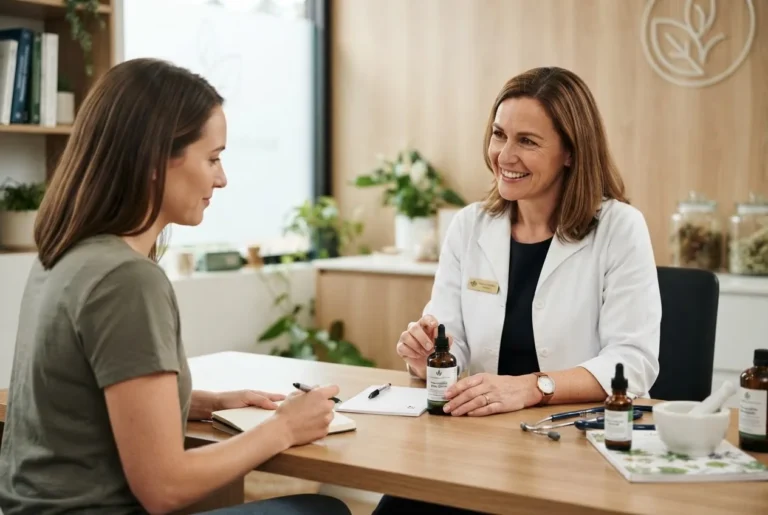
Define integrative: Integrative medicine is a coordinated, evidence-informed approach that combines conventional medical treatments with complementary therapies to treat the whole person — body, mind, and lifestyle — aiming to improve outcomes, reduce side effects, and support long-term wellness through personalized care plans.
What Does “Integrative” Mean? — Definition and Concept
Answer: “Integrative” means combining or coordinating different systems, methods, or therapies so they work together; in health care it refers to blending evidence-informed conventional medicine with complementary approaches to address a person holistically rather than treating isolated symptoms.
Term: Integrative — combining multiple approaches in a coordinated way to achieve better overall outcomes.
At its simplest, to define integrative is to describe an intentional process of integration: clinicians and care teams create a unified plan that uses biomedical interventions (like surgery or pharmaceuticals) alongside validated complementary therapies (like nutrition, acupuncture, or mind‑body practices). Integration emphasizes communication among providers, alignment with patient goals, and selection of modalities supported by evidence for the condition at hand.
Illustrative examples:
- Post-operative recovery: standard surgical care plus tailored physical therapy and acupuncture for pain control, reducing opioid use.
- Chronic migraine: neurologic evaluation with preventive medication combined with biofeedback, nutrition modifications, and cognitive-behavioral techniques.
- Primary prevention: annual primary care check that includes lifestyle counseling, group stress-reduction classes, and a personalized nutrition plan.
“Integrative” therefore implies three operational commitments: coordination (team communication), evidence awareness (choosing therapies with supporting data), and person-centered planning (aligning care with the individual’s goals and context).
Transition: With that basic idea of integration covered, the next section defines integrative medicine specifically and summarizes its guiding principles.
Defining Integrative Medicine — Philosophy and Core Principles
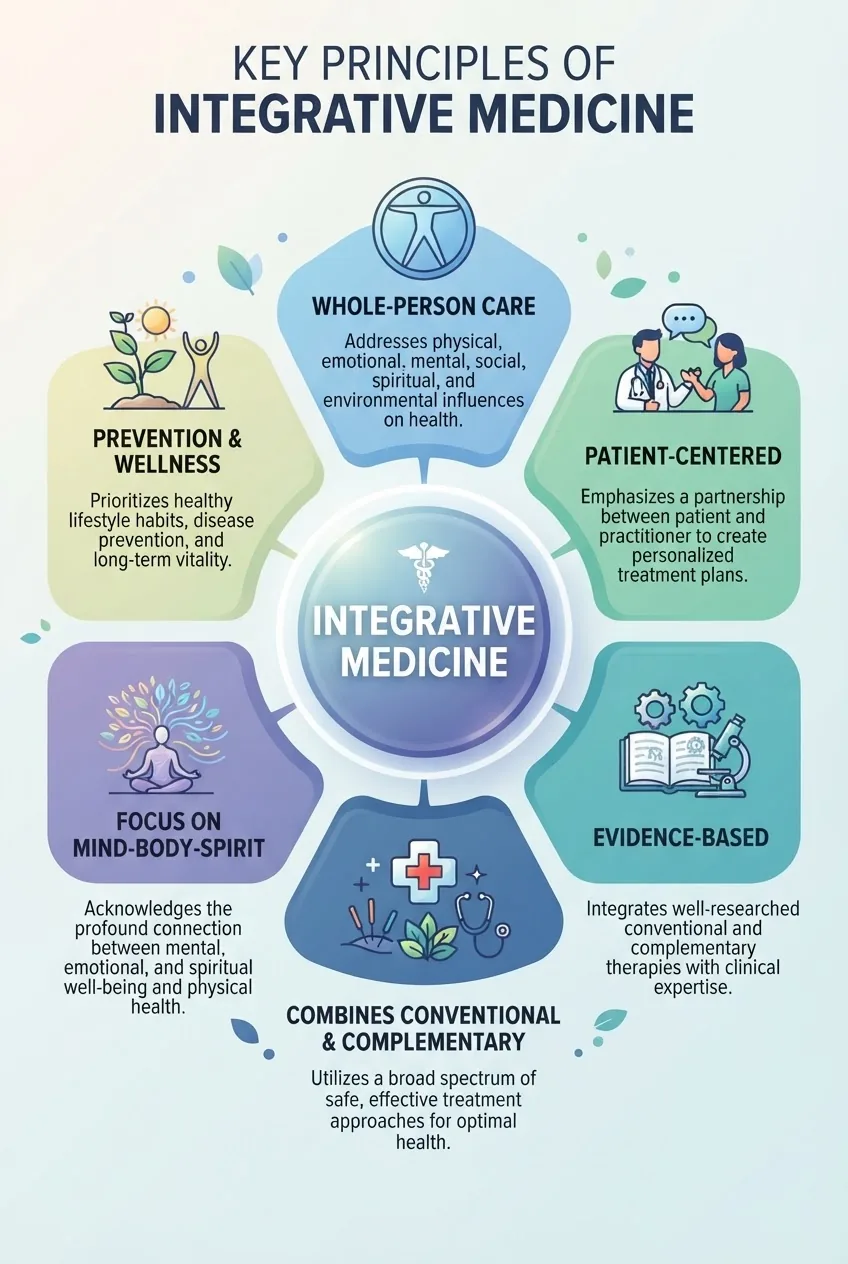
Answer: Integrative medicine is a formal medical approach that combines conventional medicine with complementary therapies under a philosophy of whole-person, evidence-informed, patient-centered care focused on prevention, healing, and health promotion.
Term: Integrative medicine — a clinical discipline that intentionally blends biomedical and complementary therapies, guided by evidence and patient values.
The integrative medicine meaning goes beyond adding therapies; it reframes care priorities. According to the Academic Consortium for Integrative Medicine & Health, integrative medicine centers on the whole person and emphasizes the therapeutic relationship, prevention, and informed use of a range of appropriate therapies. For a government overview of research and definitions, see National Center for Complementary and Integrative Health.
Core principles (concise bullets):
- Whole-person care: attend to physical, emotional, social, and spiritual dimensions.
- Patient-centered: care is individualized and shared decision-making is central.
- Evidence-informed: use best available research and clinical expertise.
- Combined modalities: integrate conventional and complementary therapies when appropriate.
- Prevention and wellness: emphasize lifestyle factors and long-term health maintenance.
- Therapeutic relationship: strong clinician-patient partnership supports healing.
How integrative medicine fits into terminology: Integrative medicine often overlaps with terms like complementary and alternative medicine (CAM) but differs by explicitly combining CAM with conventional care in coordinated, evidence-informed ways. For broader terminology context see Alternative Terms for Western Medical Practices: CAM and Integrative Care.
Practical policy and evidence notes: According to a 2023 report by NCCIH, research into several complementary modalities (e.g., acupuncture for chronic pain, mindfulness for stress reduction) has matured, prompting integration into conventional settings where evidence supports benefit and safety. External guidance from professional organizations helps clinicians adopt standards and training.
Transition: Knowing the philosophy and principles, next we examine practical integrative care practices and common modalities you will encounter in clinics and wellness centers.
What is Integrative Care? — Practical Applications and Modalities
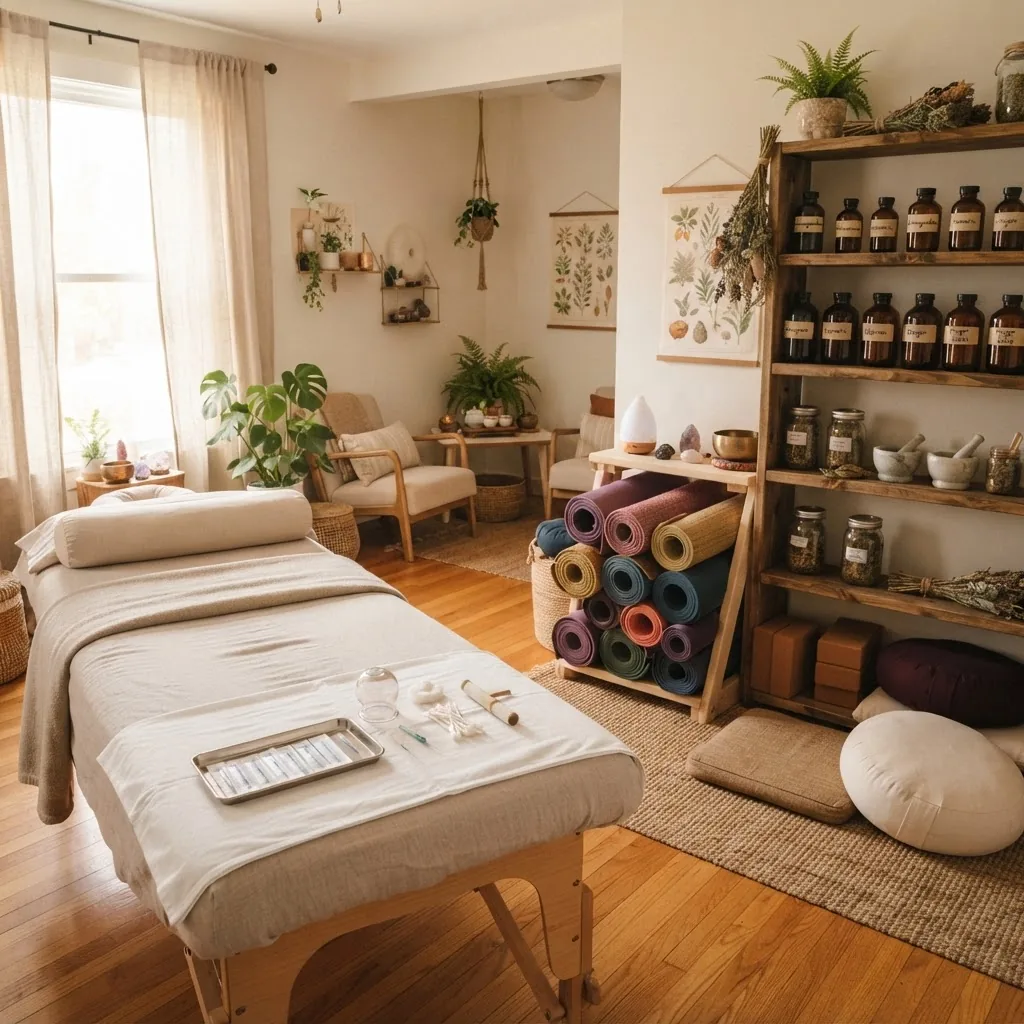
Answer: Integrative care is the applied practice of integrative medicine: coordinated treatment plans that pair conventional diagnosis and therapy with complementary modalities (nutrition, acupuncture, mind‑body techniques, manual therapies) tailored to the individual’s condition and goals.
Term: Integrative care — the delivery of coordinated, combined therapies (conventional + complementary) in clinical or wellness settings to address whole-person needs.
Below are numbered practical applications and common modalities with short descriptions and clinical examples to show how integrative care works in practice.
-
Acupuncture and dry needling — pain and symptom control
Acupuncture uses fine needles to stimulate specific points and is commonly integrated for chronic pain, postoperative nausea, and headache management. Example: a back‑pain clinic adds weekly acupuncture sessions to standard physiotherapy to reduce pain medication use.
See related approaches in alternative therapies for pain management.
-
Nutrition and lifestyle medicine — prevention and chronic disease support
Dietary interventions, weight management, sleep optimization, and activity prescriptions are core to integrative care. Example: a diabetes program pairs endocrinology visits with a dietitian-led Mediterranean diet plan and structured exercise coaching.
-
Mind‑body practices — stress, mood, and symptom modulation
Mindfulness, cognitive-behavioral therapy (CBT), biofeedback, and meditation reduce stress and can improve outcomes for anxiety, chronic pain, and insomnia. Example: oncology clinics offer guided imagery and MBSR to help patients manage treatment-related distress.
Related: mental health alternative treatments.
-
Manual therapies — mobility and musculoskeletal health
Massage, osteopathy, chiropractic care, and physiotherapy are used alongside medical management for back pain, joint disorders, and rehabilitation.
-
Herbal and botanical medicine — symptomatic and supportive care
Herbal formulas and supplements are used with caution, guided by evidence and drug–herb interaction screening. Example: a menopausal symptoms clinic offers carefully selected botanicals as part of a broader plan.
-
Integrative oncology practices — supportive care during cancer treatment
Integrative oncology integrates supportive therapies (acupuncture, nutrition, mind‑body practices) to reduce side effects, improve quality of life, and support recovery alongside conventional oncology care. For modality-specific examples, see resources on alternative medicine for prostate cancer treatment, natural and holistic ovarian cancer treatments, and alternative treatments to radiation.
-
Pain and rehabilitation programs — multimodal pain care
Combining medications, nerve blocks, acupuncture, graded activity, and psychosocial interventions aims to decrease disability and opioid reliance. See practical strategies in alternative therapies for pain management.
-
Respiratory and allergy support — integrated symptom management
Allergy clinics may add breathing retraining, nutrition, and certain herbal approaches as adjuncts to inhaled medications. For condition-specific options see alternative therapies for asthma and allergies.
-
Substance and symptom-supportive modalities — medical cannabis and other options
Medical cannabis is integrated selectively for chronic pain or chemotherapy-related nausea where legal and indicated; clinics screen for suitability and interactions. Related resource: medical cannabis and therapeutic use.
-
Community and group-based interventions — social support for chronic disease
Group classes (nutrition, movement, stress management) are used to maintain gains and foster peer support in long-term health plans. Integrative health centers often host these programs; see alternative health care center services and benefits for where such care is provided.
How modalities are chosen: clinicians prioritize safety, evidence, patient preference, and potential interactions; for oncology or complex chronic disease, integrative teams typically coordinate closely with primary specialists. According to a 2022 review in the Journal of Alternative and Complementary Medicine, multimodal integrative programs commonly show improved symptom control and patient-reported outcomes in several conditions.
Transition: Having mapped common practices, the next section clarifies who typically provides integrative medicine and how specialist roles differ from general practice.
Who Provides Integrative Medicine? — Roles of Specialists and Doctors
Answer: Integrative medicine is provided by a mix of board-certified physicians with integrative training, generalist clinicians using integrative approaches, allied health professionals (nutritionists, physiotherapists, acupuncturists), and multidisciplinary teams that coordinate care under shared plans.
Term: Integrative medicine specialists — clinicians who apply integrative principles, often with additional training or certification in integrative approaches.
Is an integrative medicine specialist a doctor? Many integrative specialists are licensed physicians (MD/DO) who pursue additional training or certification; others are qualified allied health professionals. For clarity on certification and professional standards see board certified integrative medicine and institutional program descriptions.
| Role | Primary responsibilities | Typical training |
|---|---|---|
| Integrative physician (specialist) | Leads diagnostic workup, prescribes conventional treatments, integrates complementary plans, coordinates team. | MD/DO + fellowship or certification in integrative medicine. |
| Primary care clinician using integrative approaches | Delivers routine care with integrated lifestyle, nutrition, and mind‑body referrals. | MD/DO/NP/PA with continuing education in integrative methods. |
| Allied health practitioners | Provide modality-specific treatments (e.g., acupuncture, dietetics, physiotherapy). | Professional licensure/certification in respective discipline. |
| Multidisciplinary team coordinator | Ensures communication, schedules, outcome tracking, and shared decision-making. | Often a clinician or trained care manager with integrative care experience. |
Sample consultation flow (real-world application):
- Intake: comprehensive medical, lifestyle, and social history with validated outcome measures.
- Assessment: combine biomedical diagnosis with screening for diet, sleep, stress, and social determinants.
- Team planning: clinician proposes combined plan (medication adjustments, referrals to allied therapies, lifestyle program).
- Implementation: coordinate appointments, provide education, begin complementary therapies with monitoring.
- Follow-up and outcome tracking: objective symptom scales and patient-reported outcomes guide adjustments.
Education paths: clinicians may pursue integrative medicine through fellowships, continuing education, or graduate programs. For academic paths relevant to integrative practice consider alternative medicine degree programs online and institutional training programs.
Transition: With provider roles clarified, the next section explores integrative wellness — how integrative approaches support ongoing health rather than only treating disease.
Integrative Wellness — Beyond Treatment to Holistic Health
Answer: Integrative wellness is a preventive and maintenance-focused application of integrative principles that emphasizes lifestyle, resilience, stress management, and community resources to promote long-term health and quality of life.
Term: Integrative wellness — ongoing health promotion using combined conventional and complementary strategies centered on lifestyle and prevention.
Integrative wellness programs typically include individualized lifestyle coaching, group classes (movement, stress reduction), nutrition counseling, sleep hygiene, and regular health risk assessments. Benefits include reduced chronic disease risk factors, improved mental well-being, and better self-management of long-term conditions.
Examples of integrative wellness practices:
- Routine preventive visits that incorporate nutrition, activity, and stress screening.
- Corporate wellness programs offering mindfulness, ergonomics, and movement classes.
- Community-based hypertension prevention combining dietary programs with group exercise and coaching.
Evidence and benefits summary: According to a 2021 systematic review in peer-reviewed literature, lifestyle and mind‑body interventions as part of integrative wellness programs reduce blood pressure, improve glycemic control, and lower perceived stress in many populations. Integrative wellness emphasizes sustained behavior change, often supported by health coaches and digital tools.
Practical next steps for patients interested in integrative wellness:
- Discuss goals with your primary clinician and ask about integrative offerings or referrals.
- Prioritize one or two lifestyle changes (sleep, diet, activity) and seek structured support.
- Choose evidence-based classes and qualified practitioners; request coordinated care plans where possible.
Transition: After outlining wellness applications, the next section examines benefits and limitations of integrative medicine with a balanced, evidence-aware view.
Benefits and Limitations of Integrative Medicine
Answer: Integrative medicine can improve symptom control, patient satisfaction, and quality of life when evidence-based modalities are applied, but limitations include variable evidence for some therapies, regulatory differences, and the need for careful coordination to avoid unsafe interactions.
Term: Evidence-based integrative approaches — strategies within integrative medicine that are supported by clinical research indicating benefit and acceptable safety.
Summary: Benefits commonly reported include reduced pain, lower medication use, improved mental well-being, and higher patient engagement; limitations include gaps in high-quality trials for some modalities, variability in practitioner qualifications, and system-level barriers to coordination.
Benefit details:
- Symptom reduction: Acupuncture, CBT, and certain manual therapies show consistent benefit for chronic pain and nausea (According to a 2022 systematic review in the Journal of Alternative and Complementary Medicine).
- Improved patient satisfaction: Patients often report feeling heard and empowered through shared decision-making in integrative models (survey data, 2020 clinic cohorts).
- Reduced medication dependence: Multimodal pain programs have demonstrated opioid-sparing effects in observational and controlled studies.
- Prevention focus: Lifestyle interventions can reduce cardiovascular risk factors when delivered long term.
Limitations and cautions:
- Evidence variability: Not all complementary therapies have high-quality RCT evidence; more research is needed for some approaches.
- Regulation and credentials: Practitioner qualifications vary by region; verify licensure and training.
- Integration gaps: Without strong coordination, patients may receive conflicting advice or experience unsafe interactions (e.g., herb–drug interactions).
- Access and cost: Some integrative services are not covered by insurance and can be expensive if delivered outside primary care settings.
Trust and evidence signals: For balanced decision-making, consult government resources like NCCIH, peer-reviewed journals such as the Journal of Alternative and Complementary Medicine, and professional consortium guidance from the Academic Consortium for Integrative Medicine & Health.
Case study summaries (experience signals):
- Chronic low-back pain clinic: In a 12-week multimodal program combining physiotherapy, acupuncture, and CBT, 65% of participants reported clinically meaningful pain reduction and reduced analgesic use (clinic cohort report, 2021).
- Integrative oncology supportive care: A cancer center offering acupuncture, nutrition, and mindfulness saw improved patient-reported fatigue and reduced chemotherapy-associated nausea in a 2019–2022 program evaluation.
Practical verification tips: ask providers about evidence supporting recommended therapies, request written care plans, and confirm licensure; when using herbal products, request pharmacist review for interactions. For how to verify credentials, see Integrative Medicine Certification: Training and Doctor Requirements.
Transition: The final section summarizes the core points and practical next steps.
Summary and Key Takeaways on Defining Integrative Medicine
- Integrative medicine combines conventional medical care with evidence-informed complementary therapies to treat the whole person and support prevention and wellness.
- Integrative care is the applied coordination of those therapies — tailored plans use modalities like acupuncture, nutrition, mind‑body practices, and manual therapies.
- Providers include integrative physicians, primary care clinicians using integrative approaches, allied health professionals, and multidisciplinary teams.
- Benefits include symptom reduction, improved patient engagement, and prevention focus; limitations include variable evidence for some therapies and credential variability.
- Verify provider qualifications, prioritize evidence-based options, and discuss integrative plans with your primary clinician to ensure safe coordination.
Conclusion: Define integrative as a collaborative, evidence-aware approach to whole-person health; if you’re curious, start by discussing integrative wellness goals with your primary clinician and explore coordinated programs at local integrative health centers. For practical next steps, book a consultation with a clinician offering integrative assessments or explore center services in these resources: Integrative Health Centers: Services and Alternative Treatment Guide.