

Acupuncture
Introduction to the Top 10 Benefits of Acupuncture Treatment
Answer: Acupuncture delivers a broad set of health benefits—physical, hormonal and mental—through targeted needle stimulation that influences pain pathways, stress response, sleep architecture, immune activity and energy regulation. This introduction outlines key mechanisms and what readers can expect from clinical and traditional perspectives.
Term: Traditional Chinese Medicine (TCM) is a medical system originating in China that uses concepts like Qi (vital energy) and meridians (pathways) to diagnose and treat imbalance using acupuncture, herbs and lifestyle practices.
Detailed research reviews and guideline summaries show acupuncture is widely used as a complementary therapy for pain and stress-related conditions. According to a 2024 industry report, global interest and clinical uptake of acupuncture-like therapies rose by over 10% in integrative clinics last year, reflecting growing acceptance in multidisciplinary care (source type: industry report).
This piece will define technical terms, summarize the top ten benefits, highlight women-specific effects, explain how acupuncture works, map training and certification pathways, and list safety considerations. Read on for evidence-linked explanations and practical next steps.
Next, a detailed breakdown of each benefit follows with practical notes, evidence cues and links to complementary resources.
The Top 10 Benefits of Acupuncture – Detailed Explanations
Answer: The top ten benefits of acupuncture are pain relief, stress and anxiety reduction, improved sleep, immune enhancement, hormonal and reproductive support, increased energy, clearer cognition, better digestion, fewer headaches/migraines, and enhanced emotional well‑being; each benefit arises from specific physiological and energetic effects.
-
1. Pain Management and Relief
Answer: Acupuncture reduces acute and chronic pain by modulating peripheral nerves, spinal cord processing and central pain circuits, often lowering medication needs and improving function.
Mechanisms include stimulation of A-delta and C fibers, release of endogenous opioids (endorphins), modulation of inflammatory mediators and changes in brain regions that process pain. For chronic low back pain and osteoarthritis there is moderate-quality clinical evidence supporting short- to medium-term pain reduction (source type: systematic reviews in peer-reviewed journals).
Common clinical scenarios where patients notice benefit:
- Chronic low back pain and sciatica.
- Osteoarthritis of the knee and hip.
- Post-operative or injury-related musculoskeletal pain.
Complementary resources for targeted point stimulation and training:
knee pain acupressure points training
acupuncture for back pain treatment guide -
2. Stress and Anxiety Reduction
Answer: Acupuncture reduces stress and anxiety by regulating the hypothalamic–pituitary–adrenal (HPA) axis, lowering cortisol levels and altering autonomic balance toward parasympathetic dominance.
Clinical trials show measurable reductions in anxiety scores after regular acupuncture, with physiological markers such as decreased salivary cortisol and heart rate variability changes (source type: randomized controlled trials and physiological studies). Patients commonly report calmer baseline mood, increased resilience to stressors and fewer panic-type symptoms after consistent treatment.
Typical treatment approach: weekly to fortnightly sessions initially, with maintenance sessions as needed alongside psychotherapy or medication if indicated.
-
3. Improved Sleep Quality
Answer: Acupuncture improves sleep by reducing arousal, normalising melatonin secretion patterns and easing pain or anxiety that interrupts sleep.
Studies indicate acupuncture can increase total sleep time, reduce sleep onset latency and enhance subjective sleep quality for insomnia and sleep disturbance related to pain or menopausal symptoms (source type: sleep clinical trials and meta-analyses).
Clinical tip: practitioners often combine distal points (e.g., Shenmen, HT7) with auricular and scalp points to balance sympathetic tone and promote restorative sleep.
-
4. Enhanced Immune System Function
Answer: Acupuncture supports immune function by modulating cytokine profiles, enhancing lymphocyte activity and improving mucosal immune responses.
Mechanistic studies show acupuncture can increase natural killer cell activity and shift pro-inflammatory cytokines toward a balanced response; clinically, this translates to reduced frequency or severity of respiratory infections in some cohorts (source type: immunology studies and clinical cohorts).
Practical application: seasonal immune-support protocols use local and distal points alongside lifestyle advice (sleep, nutrition, stress reduction).
-
5. Hormonal Balance and Reproductive Health
Answer: Acupuncture helps regulate menstrual cycles, improve ovulatory function and support fertility by influencing endocrine pathways and uterine blood flow.
Evidence demonstrates acupuncture may improve IVF outcomes when used adjunctively, reduce dysmenorrhea (painful periods) and improve symptoms of polycystic ovary syndrome (PCOS) by modulating insulin sensitivity and stress-related hormonal disruption (source type: fertility clinic studies and controlled trials).
This benefit directly supports women’s health outcomes (see the women’s section below for deeper coverage).
-
6. Boost in Energy and Vitality
Answer: Acupuncture increases energy and reduces fatigue by improving microcirculation, balancing autonomic function, and normalising hormonal and metabolic pathways.
Patients with chronic fatigue, post-viral fatigue or low-energy states often report progressive improvement in daily stamina after a series of treatments; mechanisms include improved mitochondrial function signaling and reduced inflammatory mediators (source type: pilot clinical studies and mechanistic research).
-
7. Mental Clarity and Reduced Fatigue
Answer: Acupuncture enhances cognitive clarity by reducing central nervous system inflammation, improving sleep and lowering anxiety, which together reduce mental fatigue and brain fog.
Small randomized trials and observational studies note improved attention, working memory and subjective clarity after regular acupuncture sessions, particularly when fatigue is secondary to chronic pain or stress (source type: randomized controlled trials and clinical observations).
-
8. Digestive Health Improvement
Answer: Acupuncture supports digestive function by regulating autonomic inputs to the gut, improving motility, and balancing digestive secretions and visceral sensitivity.
Clinical uses include irritable bowel syndrome (IBS), functional dyspepsia and constipation; trials report symptom reduction, improved stool patterns and lower visceral pain with acupuncture adjunctive care (source type: GI clinical trials and systematic reviews).
For point-based self-care and manual stimulation, consult the guide on acupressure points for abdominal pain relief.
-
9. Reduction of Headaches and Migraines
Answer: Acupuncture reduces frequency and intensity of tension-type headaches and migraines by modulating trigeminovascular pathways and central pain processing.
High-quality trials and meta-analyses indicate that regular acupuncture courses can lower monthly migraine days and reduce reliance on acute medications; effects comparable to standard prophylactic drugs in some studies with fewer side effects (source type: meta-analyses in pain journals).
Clinical practice pairs local neck and scalp points with distal limb points for sustained benefit; many patients achieve a reduction of 30–50% in monthly headache days after several weeks of treatment.
-
10. Support for Emotional Well-being
Answer: Acupuncture strengthens emotional regulation by reducing sympathetic overdrive, increasing parasympathetic tone and balancing neurotransmitter systems linked to mood.
Outcomes include improved resilience, lower depressive symptoms in mild-to-moderate cases, and fewer mood swings associated with hormonal changes; controlled trials show benefit when acupuncture is used alongside counselling and medications when necessary (source type: randomized controlled trials and systematic reviews).
Practitioners often adopt integrative approaches combining acupuncture with mindfulness, breathwork or qigong to sustain emotional gains.
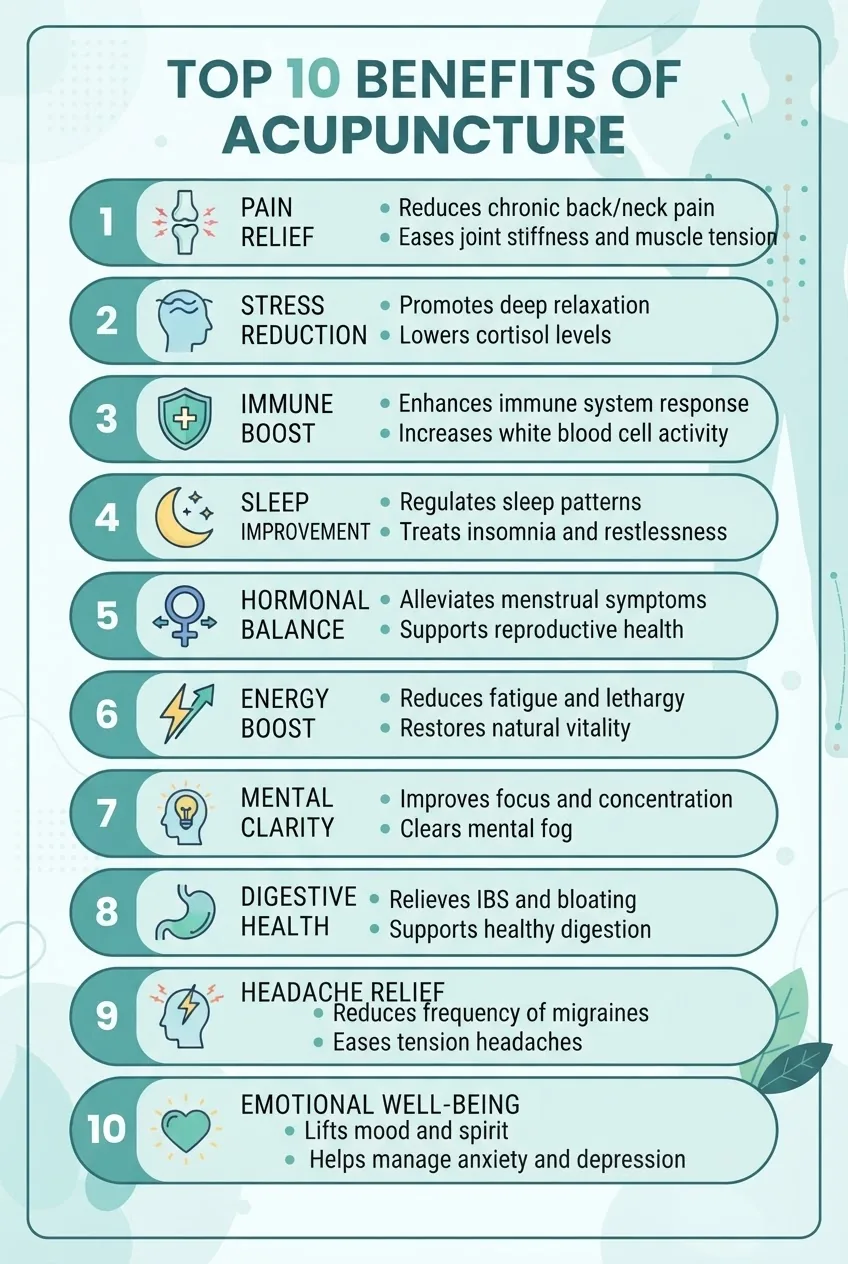
These benefits often overlap—pain relief can improve sleep, which reduces stress and boosts immunity—so a tailored acupuncture plan typically addresses multiple aims in parallel.
Next, we focus specifically on women’s health where acupuncture shows targeted advantages.
Specific Benefits of Acupuncture for Women
Answer: For women, acupuncture commonly supports menstrual regulation, fertility and pregnancy wellness, menopause symptom relief and emotional balance through endocrine and circulatory modulation and stress reduction.

Below are the primary woman-focused benefits with practical highlights and clinical context.
-
Hormonal Regulation and Menstrual Health
Acupuncture can reduce dysmenorrhea (menstrual pain), regularise irregular cycles, and improve ovulation by improving blood flow to the uterus, reducing prostaglandin-mediated pain and modulating HPA and HPO (hypothalamic–pituitary–ovarian) axes (source type: clinical trials and endocrinology studies).
Highlights:
- Reduced period pain and cramping.
- More regular cycles and improved ovulatory patterns.
- Adjunctive option for PCOS symptom management.
-
Fertility and Pregnancy Support
Acupuncture supports fertility by improving uterine blood flow, lowering stress hormones that impair conception, and aiding assisted reproductive techniques (ART) as an adjunct to IVF, where some studies show improved implantation and clinical pregnancy rates (source type: fertility clinic studies and systematic reviews).
In pregnancy, acupuncture can relieve nausea, reduce back pain and help with sleep; practitioners follow pregnancy-safe protocols and point selection.
-
Menopause Symptom Relief
Acupuncture reduces hot flashes, night sweats, mood swings and sleep disruption through thermoregulatory and autonomic effects; controlled trials show clinically meaningful reductions in vasomotor symptoms for many women (source type: randomized trials and cohort studies).
Combined with lifestyle and nutritional advice, acupuncture is often used by women seeking non-hormonal relief.
-
Emotional Balance for Women
Many women report improved mood stability, reduced anxiety and increased emotional resilience after regular acupuncture, particularly when hormonal transitions (puberty, postpartum, perimenopause) are involved; this is mediated by neuroendocrine regulation and stress reduction (source type: observational studies and patient reports).
Case examples: fertility patients often describe lower pre-transfer stress and better sleep during IVF cycles when acupuncture is included as part of care.
Transitioning from benefits to mechanism helps explain why these effects are repeatable across populations.
How Acupuncture Works – A Brief Explanation
Answer: Acupuncture works by inserting fine needles into specific acupuncture points to influence qi flow along meridians and trigger physiological changes in nervous, endocrine and immune systems.
Term: Qi (pronounced “chee”) is a TCM concept meaning vital energy that flows through meridians; in biomedical terms it maps to integrated physiological functions like circulation, nerve signaling and homeostasis.
The practice targets acupuncture points—localized areas where needling elicits measurable electrical, vascular and neurochemical responses. Modern studies show needle stimulation affects:
- Peripheral nerve signaling and gate-control mechanisms that reduce pain transmission.
- Central nervous system activity, changing activation in pain and emotion-related brain regions (fMRI evidence, source type: neuroimaging studies).
- Endocrine responses including cortisol and reproductive hormone modulation (source type: endocrinology research).
- Local microcirculation and tissue repair signalling that aids recovery.
Acupuncture point selection follows TCM theory (meridians and pattern diagnosis) and modern anatomy-based protocols; many practitioners integrate both frameworks. For readers wanting the classic meridian maps, consult the 12 Meridians Chart PDF Guide.
Simple infographic suggestions and step-by-step visuals are helpful for learners and are included in the media plan above.
Next: formal learning options and certification pathways for those who want to practise or deepen their knowledge.
Acupuncture Treatment Courses and Certification – How to Learn More
Answer: You can formalise acupuncture knowledge through diploma and degree programs, short CPD courses and specialized certification routes; accredited pathways vary by jurisdiction and typically require supervised clinical hours and board exams.
Course types and pathways (summary):
- Undergraduate degrees or diplomas in Traditional Chinese Medicine (3–4 years full-time).
- Postgraduate conversion programs for health professionals (1–2 years).
- Short continued professional development (CPD) courses in acupuncture techniques, auricular acupuncture or cosmetic acupuncture.
- Complementary acupressure and point-stimulation courses for non-needle practitioners.
Comparison table of typical course formats, duration and credentialing:
| Course Type | Duration | Outcome / Credential |
|---|---|---|
| Diploma / Degree in TCM | 3–4 years | Registered Acupuncturist / Clinical competency |
| Postgraduate Conversion | 1–2 years | Advanced practitioner credential |
| Short CPD Modules | Days–Weeks | Skill certificates (non-registrable) |
| Acupressure / Adjunct Courses | Weeks–Months | Practitioner certificate |
Pathway notes: Many regions require graduation from an accredited program plus supervised clinic hours and passing a national or regional board exam to be fully licenced. For acupressure-focused training, see the acupressure practitioner course and certification.
To formalise your acupuncture study and understand registration steps, consult the comprehensive Acupuncture Acupuncturist Training and Certification Guide.
Transitioning now to safety, effectiveness evidence and client considerations before starting treatment.
Safety, Effectiveness, and Considerations Before Starting Acupuncture
Answer: Acupuncture is generally safe when performed by a licensed practitioner using sterile, single-use needles; side effects are usually mild (bruising, transient soreness) but contraindications and practitioner competence must be checked first.
Key safety points:
- Use licensed practitioners who follow infection-control protocols; single-use sterile needles minimise infection risk.
- Report bleeding disorders, anticoagulant medications, pregnancy status and implanted devices before treatment.
- Seek integrated care for serious conditions—acupuncture complements but does not replace urgent medical treatment.
Effectiveness caveats: outcomes vary by condition, individual biology and treatment course. For chronic pain and migraine there is consistent moderate evidence; for some conditions evidence is emerging or mixed (source type: NCCIH guidance and systematic reviews).
For readers who want deeper scientific and training context, see the acupuncture therapy research and training overview and consult authority guidance such as NCCIH and WHO publications for condition-specific recommendations.
Typical mild side effects include brief soreness, minor bleeding or bruising at needle sites; serious complications are rare when standard precautions are followed (source type: safety surveillance and clinical guidelines).
Next, simple recommended next steps for readers interested in trying acupuncture or pursuing training.
Conclusion and Next Steps for Interested Readers
Answer: Acupuncture offers ten primary benefits spanning pain relief, stress reduction, sleep, immunity, hormonal and digestive support, energy, cognition, headache relief and emotional balance; explore licensed practitioners for treatment and formal courses for professional training.
Key takeaways:
- Benefits are multidimensional—physical, hormonal and mental—so treatment plans are personalised.
- Evidence supports acupuncture particularly for chronic pain, migraine, insomnia and some fertility uses (source type: clinical reviews and professional guidelines).
- Safety hinges on practitioner training; pursue accredited programs and check clinic credentials.
Suggested next steps:
- Book a consultation with a licensed acupuncturist to discuss goals and contraindications.
- For self-study or career steps, review accredited course options and the Acupuncture Acupuncturist Training and Certification Guide for requirements.
- Use the meridian chart and point guides in related resources to deepen anatomical and energetic understanding: 12 Meridians Chart PDF Guide.
If you’d like personalised guidance on courses or how acupuncture can address a specific symptom, consider contacting a registered practitioner or accredited training provider to discuss assessment, treatment plans and learning pathways.