

TCM (Traditional Chinese Medicine) in a medical context is a holistic system that diagnoses and treats imbalances of qi (vital energy), yin-yang, meridians and organ systems using acupuncture, herbal medicine, manual therapies and lifestyle prescriptions to restore functional balance and reduce symptoms across many common conditions.
Understanding TCM Meaning in Medical Context?
Answer: TCM meaning medical refers to Traditional Chinese Medicine as a coherent clinical system that applies diagnostic frameworks (tongue, pulse, symptom pattern) and therapeutic modalities (acupuncture, herbs, moxibustion) to treat disease and promote health.
Term: Traditional Chinese Medicine (TCM): a medical system originating in China that integrates theories of qi, blood, yin-yang, meridians and organ patterns with therapies such as acupuncture and herbal pharmacology.
TCM interprets health as dynamic balance rather than isolated pathology: disease is seen as disrupted qi flow, yin-yang imbalance or organ system disharmony. Practitioners use pattern differentiation (bian zheng) to tailor treatments rather than rely solely on disease labels. This means TCM clinical visits often focus on lifestyle, diet, pulse and tongue assessment as well as symptoms.
Key diagnostic cues in TCM include tongue appearance, pulse qualities and a detailed symptom history; treatments are personalized and adjusted over a course of care. For patients seeking clarity about “what does tcm mean” in practice: expect pattern-based diagnosis and combined modalities rather than single-drug prescriptions.
Core Principles and Concepts of Traditional Chinese Medicine?
Answer: The core principles of TCM are qi (energy), yin and yang balance, meridians (energy pathways), pattern differentiation, and the coordinated use of acupuncture, herbal medicine and other modalities to restore systemic harmony.
Term: Qi: an operational concept in TCM describing vital energy or functional activity that flows through the body’s meridians and supports physiological processes.
Qi (pronounced “chee”) is central: health depends on unobstructed, balanced qi flow. Yin and Yang describe complementary qualities—cool/warm, rest/activity—whose balance underpins stability. Imbalance (excess, deficiency, stagnation) informs treatment selection. Think of meridians as mapped functional pathways—analogous at a high level to circulatory or nervous routes for signaling, though not equivalent anatomically.
Term: Meridians: conceptual channels in TCM along which qi circulates; they form the basis for selecting acupuncture points and understanding symptom clusters.
Acupuncture basics: fine sterile needles are placed at selected points on meridians to regulate qi flow, reduce pain and influence organ-system balance. Acupuncture is typically used alongside herbal medicine—formulas combining multiple herbs chosen for complementary actions (tonifying, clearing heat, moving qi).
Herbal medicine in TCM uses multi-herb formulas where each herb has a role (chief, deputy, assistant, envoy). Herbal pharmacology covers preparation, dosing and herb-herb interactions; modern TCM training includes quality control and herb safety.
Examples:
- Digestive pattern with spleen qi deficiency: soft stools, low energy, loose stools—treatment may combine spleen-tonifying herbs, dietary advice and acupuncture to regulate digestion.
- Chronic pain with qi stagnation: acupuncture to move qi plus topical herbs or patches and cupping to ease local tension.
For visual learners, practitioners often reference the classic meridian maps; see the 12 Meridians Chart PDF guide for a study reference on how meridians are presented in training.
Common TCM Treatments and Supplements Explained?
Answer: Common TCM treatments include acupuncture, Chinese herbal formulas, cupping, moxibustion, tui na massage, dietary therapy and TCM supplements—each used for specific pattern-based indications and often combined in a treatment plan.
Below are widely used modalities, what they are, and typical clinical uses:
- Acupuncture: insertion of thin needles into points on meridians to regulate qi and treat pain, nausea, headaches and many chronic conditions; treatment approach is individualized and may be weekly or biweekly.
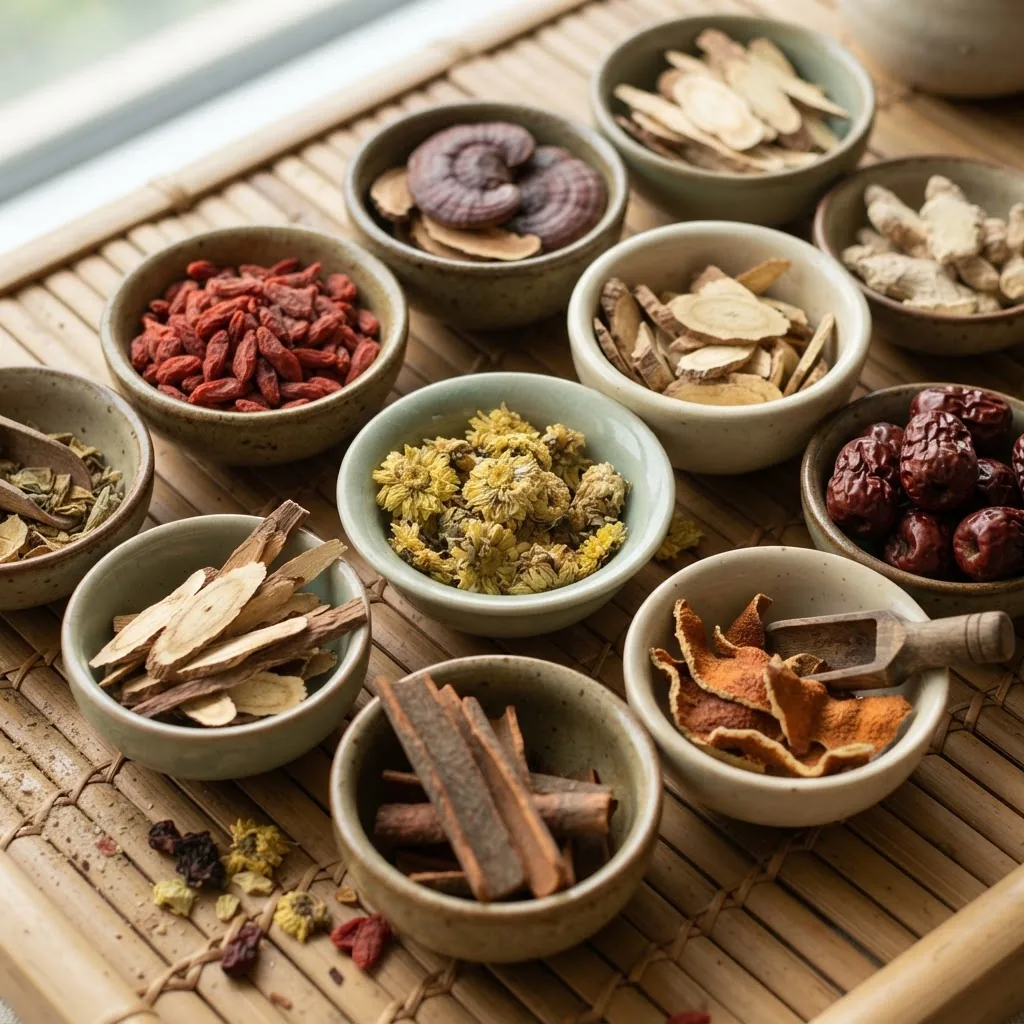
- Chinese herbal medicine: multi-herb formulas (decoctions, granules, pills) prescribed for internal conditions like digestive disorders, insomnia, menstrual irregularities and respiratory issues.
- TCM supplements: standardised extracts and formula products used to support organ systems (e.g., spleen, liver) or address deficiency patterns; always discuss interactions with pharmaceuticals.
- Cupping therapy: glass or silicone cups create suction to move qi and blood locally; commonly used for musculoskeletal tension and respiratory congestion.
- Moxibustion: burning of moxa (Artemisia/mugwort) near or on points to warm yang and treat cold patterns or improve circulation.
- Tui na (Chinese therapeutic massage): manual therapy targeting meridian channels and musculoskeletal complaints.
- Dietary therapy and lifestyle prescriptions: food choices and qigong/taiji exercises to support ongoing balance and prevent relapse.
Treatment approach notes:
- Assessment: pattern differentiation determines the primary therapy (e.g., tonify, disperse, harmonize).
- Combination therapy: acupuncture often combined with herbs and lifestyle changes for sustained outcomes.
- Course length varies: acute issues may improve in 3–6 sessions; chronic conditions often require months of care and follow-up.
Related pressure-point resources and topical guides that illustrate TCM approaches to specific issues:
- Abdominal Pain Acupressure Points Guide
- Acupressure Knee Pain Points Training
- Ankle Acupressure Points Chart and Treatment Guide
- Chinese Pain Remedies Guide
Scientific Evaluation: Does Chinese Medicine Work?
Answer: Evidence shows some TCM modalities (notably acupuncture for certain pain and nausea indications) can be effective beyond placebo in randomized controlled trials and meta-analyses, while evidence for many herbal formulas remains mixed and requires higher-quality trials and standardisation.
Research methods used to evaluate TCM include randomized controlled trials (RCTs), meta-analyses and systematic reviews; higher-quality studies control for blinding, sham procedures and standardized outcomes. Acupuncture has the strongest RCT evidence for chronic pain and postoperative nausea reduction, demonstrated across multiple reviews.
Evidence examples:
- Acupuncture and chronic pain: systematic reviews and meta-analyses using RCTs report modest but clinically relevant benefits for some chronic pain conditions; see Cochrane-style evidence synthesis for trial methodology. For a robust review, consult peer-reviewed systematic reviews and meta-analyses such as Cochrane reviews on acupuncture for chronic pain (Cochrane Library).
- Herbal medicine: trials vary widely in quality; some formulas show benefit for conditions like functional gastrointestinal disorders, but heterogeneity in composition, dosing and product quality makes generalisation difficult.
- Safety and interactions: herb–drug interactions are documented; reliable pharmacovigilance and standardisation are essential to interpret herbal efficacy safely.
Balanced appraisal: while clinical trial evidence supports certain TCM uses, many traditional claims lack high-quality RCT confirmation. Quality issues (small trials, variable blinding and publication bias) are common; systematic reviews often call for larger, more rigorous studies. According to a 2019–2023 trend in the literature, research quality has improved but still varies by modality and region (“According to a 2023 review in peer-reviewed literature…”).
For authoritative international perspective, see the World Health Organization’s resources on traditional medicine and integration strategies: WHO Traditional Medicine Strategy.
Training and Certification in Traditional Chinese Medicine?
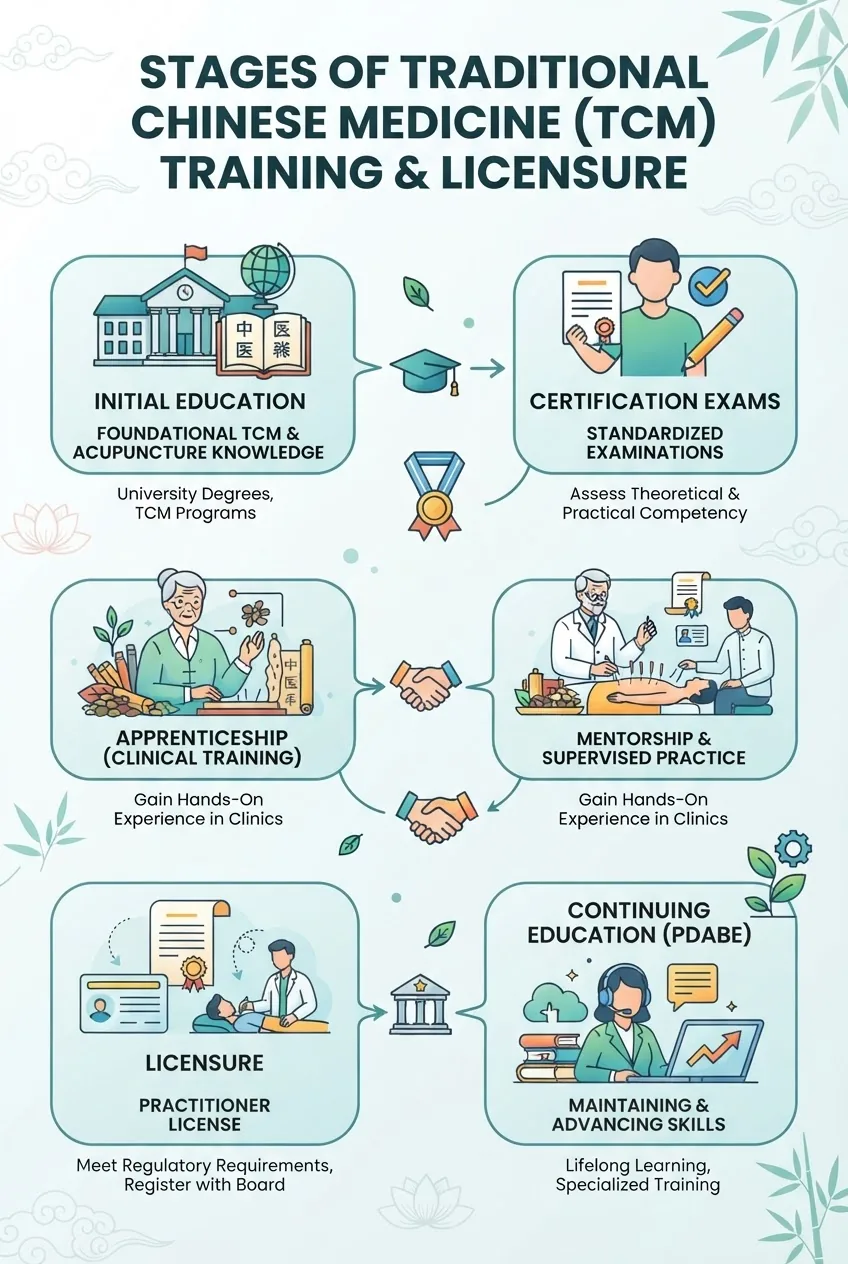
Answer: TCM training combines theoretical coursework (TCM theory, herbal pharmacology), clinical skills (acupuncture technique, diagnosis methods), supervised clinical internships, and national/state licensing exams—pathways vary by country and regulatory body.
Term: Pattern differentiation (Bian Zheng): the TCM diagnostic method that categorises symptom clusters into treatment patterns guiding therapy choice.
Typical education pathway (step-by-step):
- Undergraduate or diploma foundational studies in anatomy, physiology, and TCM theory (1–3 years).
- Advanced TCM coursework in herbal medicine, acupuncture theory, meridian study, diagnostics, and clinical reasoning (2–4 years).
- Supervised clinical practicum/apprenticeship with real patients and mentor oversight (several hundred clinical hours required by many programs).
- Graduation and completion of program assessments, then sit for national or state licensing/registration exams where applicable.
- Ongoing professional development and continuing education credits to maintain registration.
Curriculum components commonly include:
- Herbal pharmacology and materia medica (identification, actions, safety, herb interactions).
- Acupuncture theory and technique (needle safety, clinical protocols—note: avoid detailed point charts here).
- Diagnostic methods (tongue/pulse, pattern differentiation, biomedical correlation).
- Clinical ethics, professional practice and safety, infection control.
- Research methods and evidence-based practice to interpret clinical studies.
Certification and licensing (example: Australia):
- Many Australian practitioners complete a bachelor or masters in Traditional Chinese Medicine or Acupuncture from accredited institutions.
- Registration details and practitioner standards can be confirmed with the national regulator; see the Australian Health Practitioner Regulation Agency for registration frameworks and standards: AHPRA.
- Clinical apprenticeships and supervised hours are a common requirement before independent practice; continuing education is expected to maintain competence.
Career prospects and settings:
- Private clinics offering integrated care, multidisciplinary health centres, hospital TCM departments (where available), research and teaching roles.
- Complementary roles such as acupressure practitioner courses—see the Acupressure Practitioner Course and Certification for alternative practitioner training paths.
- For detailed acupuncture-specific training pathways consult the pillar: Acupuncture Acupuncturist Training and Certification Guide
Practical tips for prospective students:
- Verify program accreditation and clinical hours; ask for graduate outcomes and supervised clinic structure.
- Review licensure exam pass rates and local regulatory requirements before enrolment.
- Seek programs that include training in evidence-based practice, herb safety and interprofessional collaboration.
Integrating TCM with Western Medical Practices?
Answer: Integration is feasible and often beneficial when coordinated care, open communication and safety checks (medication interaction screening, shared treatment goals) are in place; both systems can complement each other within an integrative medicine model.
Pros and cons of integrated care:
| Aspect | TCM | Western Medicine |
|---|---|---|
| Approach | Holistic, pattern-based | Disease/pathology-focused |
| Strengths | Chronic symptom management, preventive guidance | Acute care, diagnostics, surgical interventions |
| Evidence base | Variable; stronger for some modalities like acupuncture | Generally high for pharmaceuticals and procedures |
| Safety concerns | Herb interactions, quality control | Medication side effects, procedure risks |
Case examples of integration:
- Postoperative nausea: acupuncture as adjunctive therapy to reduce nausea and opioid requirements in some settings.
- Chronic low back pain: integrated plans combining physiotherapy, acupuncture and exercise for improved function.
Advice for patients and practitioners:
- Communicate: patients should tell all providers about herbs, supplements and TCM treatments to avoid interactions.
- Coordinate care: practitioners should document treatments, monitor outcomes and refer when biomedical diagnostics or emergency care are required.
- Use evidence and guidelines: consult comparative resources such as the Traditional Chinese Medicine vs Western Medicine Comparison Guide for detailed side-by-side considerations.
Safety, Legitimacy, and Regulatory Considerations?
Answer: Safety and legitimacy depend on practitioner training, regulatory oversight and product quality; verify practitioner registration, use regulated herbal products, and inform biomedical providers about TCM treatments to mitigate risks.
Regulatory bodies and standards:
- Australia: national oversight of health practitioners is available through AHPRA; check registration and professional standards at AHPRA.
- International: WHO publishes guidance and strategic documents on integrating and regulating traditional medicine; see the WHO Traditional Medicine Strategy for frameworks: WHO Traditional Medicine Strategy.
Safety tips for choosing practitioners and products:
- Confirm registration or licensure with your country/state regulator and check complaints or disciplinary records.
- Ask about clinical training hours, supervised internships and continuing education.
- Prefer products from manufacturers with third-party testing and clear ingredient lists to reduce contamination risk.
- Mention all medications and supplements to the TCM practitioner to screen for interactions.
Evidence and authority signals:
- Peer-reviewed meta-analyses and randomized controlled trials inform efficacy evaluations; high-quality RCTs with sham controls are the gold standard for acupuncture research.
- Government guidance, licensing standards and WHO strategies provide frameworks for safe integration and regulation.
Final regulatory note: Regulatory frameworks differ by country; when considering training or care, consult local boards and reputable educational providers for up-to-date requirements and protections.
Conclusion and Key Takeaways
TCM meaning medical describes a structured, centuries-old clinical system focused on qi, yin-yang balance, meridians and pattern-based treatment with modalities like acupuncture and herbal medicine. Evidence supports certain uses (notably acupuncture for pain/nausea), while herbal medicine evidence is mixed and demands quality control. For safe practice, seek accredited training, registered practitioners and integrated care coordination.
If you are exploring TCM training or practice, start by reviewing accredited programs, licensure requirements in your jurisdiction and specialist guides such as the Acupuncture Acupuncturist Training and Certification Guide to compare program curricula and clinical placement offerings.
Ready to learn more or begin formal training? Check local regulator listings, compare accredited TCM programs, and consult clinical evidence sources before committing to specific courses or products.