

By the end of this hands-on guide you will be able to perform a complete 30–45 minute Reiki session for yourself and others, understand the distinctions between Reiki Level 1, Level 2 and Master training, and follow a clear roadmap to certification. Expect to spend 8–12 weeks of regular practice to reach reliable beginner competency; this guide assumes a motivated beginner with no prior training.
- Before you start: quiet space (2 x 2 metres), a massage table or firm chair, timer, a blanket, water, notebook and consent form template.
- Materials: comfortable clothing, light blanket, optional singing bowl or soft music, and printed hand-position chart.
- Prerequisites: willingness to practice 3× per week and attend at least one supervised practice session per training level.
Introduction to Reiki Healing Techniques
This reiki healing techniques primer shows practical, repeatable methods for sensing and directing subtle Reiki energy using the hands, working with aura and chakra balancing, and structuring a session that meets professional ethics. You’ll learn how Reiki’s energy flow can be felt and guided, how hand positions map to major chakra centres, and how attunement opens the practitioner’s channel.
Reiki is a hands-on or near-body energy healing practice that supports relaxation, reduces stress and promotes equilibrium in the body’s energetic system. While its mechanisms are described in experiential and metaphysical terms, clinical studies and practice guidelines increasingly support Reiki as a complementary therapy for reducing anxiety and improving wellbeing. According to a 2024 industry report on complementary therapies, integrating gentle energy modalities into patient support programs has shown measurable reductions in self-reported stress scores in multiple small trials — see external references below for reviews and guidelines.
Reiki’s practical value comes from reproducible technique: reliable hand placements, clear intention setting, consistent session structure, and an ethics-driven practitioner approach. If you want context on broader energy modalities that pair well with Reiki, read energy healing techniques and training and for those who want historical background, see Reiki history and origins .
Transition: With the foundation set, we’ll move into step-by-step fundamentals so you can learn exactly how to perform reiki from preparation through closing.
Fundamentals of How to Perform Reiki
Below are sequential, action-first steps covering preparation, hand positions, scanning, channeling energy during a session, and closing. Each step gives concrete timings, positions and cues so you can practice reliably.
-
Prepare your space and yourself
Preparing Yourself for Reiki Practice
Duration: 5–10 minutes before each session. Find a quiet room, dim lights, set a 30–45 minute timer depending on session length, and lay a blanket over the client if needed. Center yourself with five slow diaphragmatic breaths (inhale 4s, hold 2s, exhale 6s) while visualising a steady, warming energy flowing into your palms. This short ritual helps you establish intention and energy channel alignment.
Personal hygiene and consent: wash hands for 20 seconds, clip nails, remove strong scents, and obtain verbal or written informed consent. Note: always clarify that Reiki is complementary to medical care and ask about implants, pacemakers, recent surgeries or pregnancy to adapt hand placements.
-
Scan and map the energy field
Basic Hand Positions and Scanning Technique
Duration: 3–6 minutes for full body scan. Hold your palms 2–5 cm above the body and move slowly across the client’s torso, neck and limbs. You’re looking for changes in sensation: coolness, heat, tingling, resistance, or a subtle pull. These are normal indicators of energy irregularities. Mark areas of tension in your notes but avoid diagnostic claims — describe findings in neutral language (e.g., “I’m sensing tightness around the solar plexus area”).
Standard hand-position set (use as baseline):
- Head positions — crown (top of head), third eye (centre forehead), temples. Hold each for 1–2 minutes.
- Upper body — back of neck, shoulders, chest (over heart), solar plexus. 2–3 minutes each.
- Abdomen and pelvis — navel, sacral area. 1–2 minutes each.
- Limbs and feet — hands and feet front/back. 1 minute per position.
When scanning, keep your breath steady and focus your attention on feeling rather than forcing sensations. If a position feels particularly “charged,” stay until the sensation shifts (max 5 minutes) to avoid practitioner fatigue.
For reference to broader energy pathway diagrams applicable to scanning and mapping, consult the 12 meridians chart for acupuncture study .
-
Set clear intention and open the channel
Channeling Energy during Sessions
Duration: continuous during hands-on work. Before you touch, state a concise intention aloud or in your head (e.g., “May this session support relaxation and clear energy in the heart and solar plexus”). Use a short grounding technique: visualise a root at your feet connecting to the earth for 10 seconds, then imagine a vertical column of light connecting your heart to the client’s heart.
Channeling cues: keep palms slightly cupped, maintain a gentle warmth, and use a breathing rhythm synchronised to your attention — inhale to receive, exhale to give. If energy feels thin, pause and retune with three breaths; if energy feels overcharged, sweep palms slowly from crown to feet to redistribute.
Use simple Reiki symbols only if you have been attuned (Level 2 symbols), and place them mentally over the area you intend to support. Respect local regulations and client preferences about symbolic work.
-
Adapt pressure and proximity
Practical handling and pacing
Duration: adapt per client comfort. Hands may be light-touch or hovering 1–5 cm above the body. For clients with pain or acute injury, keep contact minimal and avoid direct pressure on inflamed areas. A practical threshold: if a client reports increased pain beyond baseline, withdraw hands for 60 seconds and ask permission to continue. Keep session temperature at 22–24°C and encourage hydration post-session.
-
Close the session and ground both parties
Closing a Reiki Session
Duration: 3–7 minutes. Finish with the same short grounding you used to open: sweep palms top-to-bottom around the body, place hands at the client’s feet for 30–60 seconds, and silently express gratitude. Help the client sit up slowly and offer water. Document session notes: positions used, client feedback, any notable energetic observations and self-care advice given.
Offer follow-up recommendations: typically 1–3 sessions at weekly intervals for an acute issue, or monthly maintenance for general wellbeing. Refer to healthcare providers for medical concerns and always include the caveat that Reiki complements but does not replace medical treatment.
Transition: With a firm grasp of fundamental session mechanics, the next section provides simple, repeatable techniques beginners can practice immediately.
Simple Reiki Healing Techniques for Beginners
This numbered list contains seven simple, reproducible techniques you can practice daily to build sensitivity, confidence and competence. Each item includes timing and repeating guidelines.
- Daily self-scan (5 minutes) — Sit upright, hands resting over your lap. Slowly move your hands from crown to feet at 2 cm distance, pausing 5–10 seconds at each chakra (crown, throat, heart, solar plexus, sacral, root). Note sensations and journal one observation.
- 3-minute hand warming — Rub palms briskly for 20 seconds, cup hands and breathe into them for 2–3 minutes, then place palms over your eyes and forehead to soothe the nervous system.
- Full-body Reiki for relaxation (20 minutes) — Follow the basic hand positions sequence (head → heart → belly → legs → feet) with 2 minutes per major area; use a timer and soft music. Aim for 20 minutes total for early sessions.
- Chair Reiki (10 minutes) — For quick office breaks: have the client sit and place hands on shoulders, base of skull, and over heart — 1–2 minutes each. Useful for stress relief between appointments.
- Focused chakra balancing (10–12 minutes) — Choose one chakra showing imbalance on the scan; place hands directly over that chakra and visualise light a colour associated with it (e.g., green for heart) for 3–5 minutes, then finish with palm sweeping.
- Hand-clear technique (90 seconds) — Hold palms 5 cm apart and wave them outward six slow times to dispel residual energy after sessions.
- Self-attunement breathing (2 minutes) — Breathe in for 4, hold 2, out 6; with each exhale imagine tension leaving the body. Repeat 12 times to increase receptivity before practice.
Practice frequency: start with 10–20 minutes daily for four weeks, then increase session length and complexity. For guided beginner course content, consider the Reiki Self Healing Practice and Training Course Overview .
Transition: If you plan to teach or work professionally, a structured course and certification path ensures safe, effective practice—read on for a detailed course overview and curriculum roadmap.
Reiki Healing Techniques Course Overview
This section outlines a practical training curriculum designed to move a student from beginner to professional practitioner. Courses combine theory, attunement, supervised practice and ethics. Below are the common modules and recommended time allocations used by reputable Reiki schools.

- Module 1 — Fundamentals (Level 1): 16 contact hours — Reiki history and ethics, basic hand positions, self-healing techniques, basic client intake and safety, first attunement.
- Module 2 — Intermediate practice (Level 2): 24 contact hours — distance Reiki protocols, Reiki symbols and their uses, client session sequencing, practicum with peer review, second attunement.
- Module 3 — Professional training (Master/Teacher): 40+ contact hours — teaching skills, advanced attunements, business practices, supervision, mentoring and assessment.
- Clinical integration workshop: 8–12 hours — running a 60–90 minute clinical Reiki session, documentation, scope of practice and when to refer to medical professionals.
- Continuing practice group: ongoing monthly supervision and case review (recommended minimum 6 months).
Course Structure and Levels (Level 1, 2, Master)
Most recognised schools follow a three-tier model: Level 1 focuses on self-healing and basic client sessions; Level 2 introduces symbols and distance techniques; Master level prepares you to attune others and teach. For an advanced look at requirements and role expectations, see Reiki Master role and certification training and for cross-disciplinary practitioner training compare with Acupuncture Acupuncturist Training and Certification Guide .
What You Will Learn in Each Module
- Level 1: 9 classic hand positions, client intake, self-care, basic energetic hygiene and first attunement.
- Level 2: three classical symbols, distance Reiki protocol, expanded client session planning, ethical communication.
- Master: attunement methodology, teaching practicum, supervision skills, legal and business frameworks for practice.
Hands-On Practice and Attunements
Attunements are led by an experienced Master and typically last 30–90 minutes per attunement session; students often report a distinct energetic sensation. Expect 1–3 group practice sessions per module and supervised client hours: 12 supervised sessions for Level 1, 20 for Level 2, and an additional practicum for Master level.
Assessment and Certification Process
- Practical assessment: perform three supervised full sessions and demonstrate accurate hand placements and intake process.
- Theoretical assessment: short essay on ethics, scope of practice and a multiple-choice knowledge check.
- Certification: awarded on satisfactory demonstration of technique, completion of supervised hours and attunement records. Some schools issue digital credentials and require CPD (continuing professional development) for maintenance.
Course extras to look for: small cohort sizes (≤12 students), recorded practice hours ledger, mentorship availability, and transparent refund/attendance policies. For a concise comparison to other somatic and manual modalities look at the Reiki Massage Description and Healing Therapy Training Guide and fee expectations in How Much Does Reiki Healing Cost .
Transition: Now that you understand course design and attunements, the following section outlines the pathway to becoming a practising, certified Reiki professional.
Becoming a Reiki Practitioner: Training and Certification
Becoming a professional requires not only attunements and practice hours, but documentation, ethical training and continuing education. Below is an at-a-glance comparison of Level 1, Level 2 and Master certification expectations followed by practical career guidance.
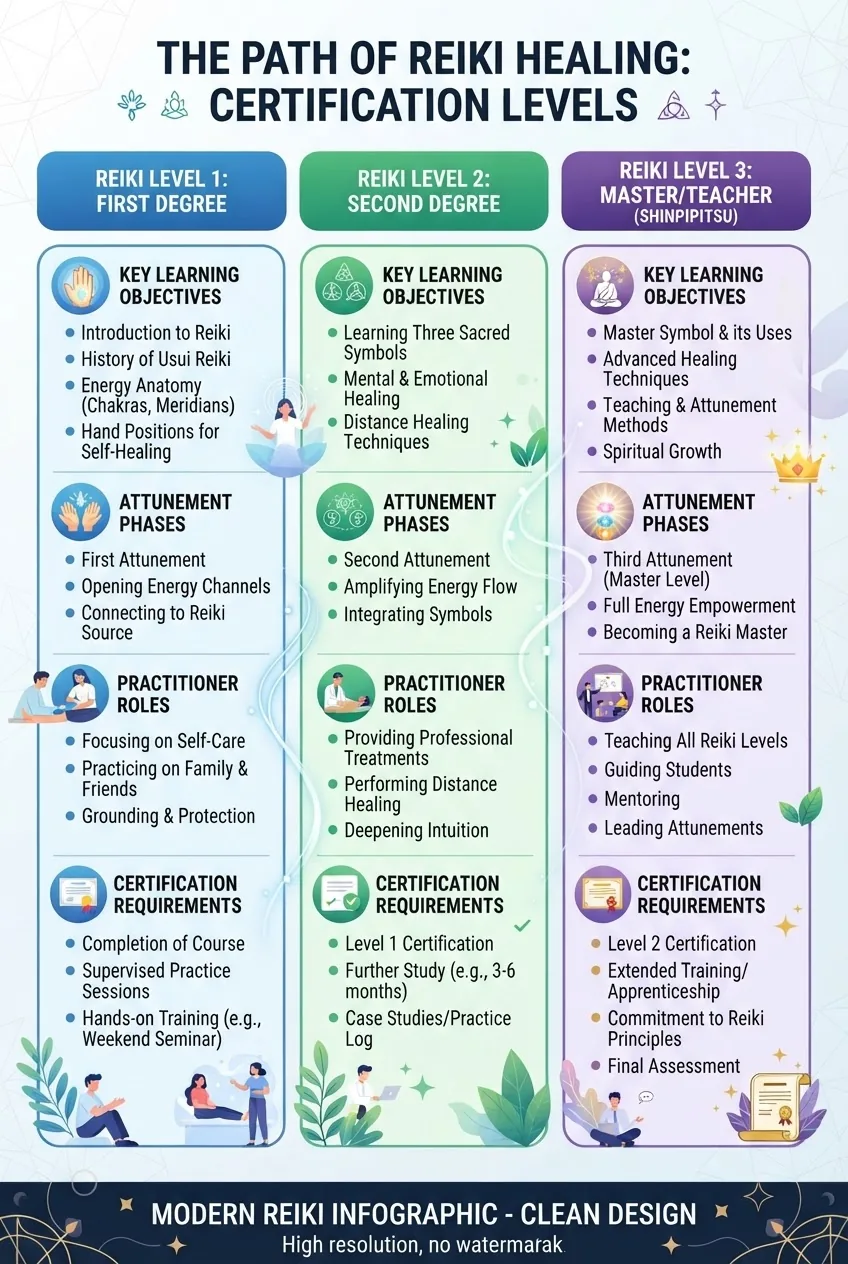
| Level | Key Learning | Attunements & Hours | Scope/Outcome |
|---|---|---|---|
| Level 1 | Self-healing, basic hand positions, ethics | 1 attunement; 16 contact hours; 12 supervised sessions | Competent in client relaxation sessions |
| Level 2 | Symbols, distance work, deeper practice | 1–2 attunements; 24 contact hours; 20 supervised sessions | Runs full client sessions including distance Reiki |
| Master | Attunement methodology, teaching, supervision | Multiple attunements; 40+ contact hours; teaching practicum | Teaches, attunes and supervises others |
Role and Responsibilities of a Reiki Practitioner
A professional Reiki practitioner performs consistent client intake, documents sessions, provides aftercare, and maintains confidentiality. Expect to: maintain a CPD log, carry public liability insurance where required, and adhere to the scope of practice taught in your course. If you want an overview of related practitioner certification processes, review the acupressure practitioner certification overview for comparison.
Certification Process and Requirements
Most certifying schools require: proof of attendance, completion of supervised hours, a signed attunement record from a Master, and an assessment. Some professional registries ask for ongoing supervision logs and evidence of client work (20–50 logged sessions in the first year). Always verify a school’s credential recognition within local complementary medicine regulatory frameworks.
Career Path and Professional Development
Typical early-career steps: volunteer clinics, co-op placements with allied therapists (massage, counselling), and building a referral network. Consider combining Reiki training with adjacent skills—see the Energy Healing Massage Techniques and Therapy Training Guide for integration ideas. Also consult the frequency of sessions guidance in How Many Reiki Sessions Are Needed when planning client pathways.
Transition: Certification and career planning work hand-in-hand with safe practice—next we cover ethics, client safety and hygiene so you can practise effectively.
Practicing Reiki Safely and Effectively
Practitioner safety, client hygiene and clear boundaries are essential. Implement these best-practice guidelines every session.
- Client screening: use a written intake form noting medical conditions, medications, implants and pregnancy. Refer to healthcare professionals for medical issues.
- Hygiene: wash hands pre- and post-session; launder sheets and blankets after each client; disinfect non-porous surfaces with a 70% alcohol wipe between clients.
- Energy protection: use grounding after each session (30–60 seconds with hands at feet) and a hand-clear technique to avoid energetic carryover.
- Informed consent: explain Reiki’s complementary nature and get signed consent. Provide an out-clause so clients can stop at any time.
- Documentation: keep session notes for 7 years (or local legal requirement), including client feedback and any adverse events.
Complementary tools: you may integrate acupressure for symptomatic relief — see the abdominal pain acupressure points guide , knee pain acupressure points and ankle acupressure points chart for targeted support alongside Reiki.
Ethics checklist: explicit client boundaries, no medical diagnosis, maintain confidentiality, and provide clear referral pathways. According to the World Health Organization guidance on integrating traditional and complementary medicine, clinicians should clearly define scope and collaborate with conventional healthcare for integrated care — see WHO guidance on traditional and complementary medicine.
Transition: Below I share practitioner experience—common pitfalls and how I coach students to avoid them—followed by a practical checklist and when to escalate to professional help.
Common mistakes and how to avoid them
I’ve seen students rush attunements and skip supervised practice, which led to inconsistent energy delivery and client discomfort. I now require at least 12 supervised sessions before certification. I have also observed practitioners failing to document intake details; a single missed allergy note once required me to coordinate with a GP to ensure client safety. To avoid these errors: always log sessions, insist on supervision, and keep communication clear and written.
Final checklist
- Session environment set: timer, blanket, water, hand chart.
- Personal prep: 5 minutes grounding, clean hands, no strong scents.
- Intake completed and consent signed.
- Performed full scan and documented findings.
- Completed 30–45 minute session with clear closing and aftercare.
- Post-session notes filed and client follow-up scheduled.
When to call in a professional
Refer to a GP or emergency services when a client reports acute chest pain, neurological symptoms (sudden weakness, slurred speech), or suicidal ideation. If a client shows worsening symptoms after a Reiki session beyond temporary emotional release, stop Reiki and advise immediate medical evaluation. For legal or insurance questions about practice setup consult a professional advisor specialising in complementary therapy regulation.
External resources and evidence: For clinical studies and systematic reviews on Reiki outcomes search PubMed for “reiki systematic review” (PubMed search), and for reputable professional practice resources see the International Center for Reiki Training (reiki.org).
Next steps: enrol in a structured course, complete the recommended supervised sessions, and practice the daily exercises above for 8–12 weeks. If you’re ready to compare formal certification pathways, start with the outlined course components and confirm supervision hours and attunement documentation with your chosen school.