

A wellness coach near me provides personalised health and lifestyle guidance—combining goal-setting, behaviour change strategies, and mind-body techniques—to help clients improve diet, movement, stress management and daily routines with measurable plans and accountability in either in-person or online formats.
What is a Wellness Coach and What Services Do They Provide?
Answer: A wellness coach is a trained professional who supports clients to set and reach health, lifestyle and wellbeing goals using behaviour-change methods, personalized plans, and ongoing accountability—offering services like nutrition guidance, stress management, fitness planning, sleep improvement and lifestyle redesign.
Wellness coach: a professional who uses coaching techniques to enable clients to make sustainable lifestyle changes focused on overall wellbeing.
Wellness coaching definition centers on collaborative, client-led work: coaches use motivational interviewing, SMART goal-setting, habit design and progress tracking to help clients change behaviors. Services commonly include:
- Personalised wellness plans shaped around a client’s lifestyle, preferences and chronic conditions.
- Nutrition and meal-planning support tied to realistic habits rather than prescriptive diets.
- Stress and sleep management techniques, including breathing, scheduling and sleep hygiene tools.
- Movement and fitness planning that fits daily life and capacity.
- Mind-body coaching addressing the mind-body connection through mindfulness and practical routines.
- Accountability systems: regular check-ins, habit tracking and adjustments.
Coaching techniques vary by practitioner but often include cognitive-behavioural inspired tools, motivational interviewing, and evidence-based habit-forming frameworks. Common coaching tools used are habit-tracking apps (e.g., Streaks, Habitify), shared progress dashboards, food and activity logs, and guided reflection exercises.
Case example (succinct): A client struggling with chronic stress and weight plateau worked with a coach for 12 weeks using weekly 45-minute sessions, a tailored nutrition-and-movement plan, nightly sleep routine adjustments and a habit app; the client reduced perceived stress by 30% and lost 6 kg. According to a 2022 pilot study, structured coaching programs report measurable improvements in lifestyle metrics.
Services are offered in flexible formats: single-session consultations, short-term packages (6–12 weeks), or long-term maintenance plans; they may be delivered in-person, by phone or online video. Below is a concise checklist of what many local wellness coaches will include in their service offerings:
- Initial assessment and personalised goal-setting
- Weekly or fortnightly coaching sessions
- Action plans with measurable milestones
- Habit-tracking tools and accountability touchpoints
- Referrals to allied practitioners when needed
For definitions of related terms used here, see
Holistic: addressing multiple interacting aspects of wellbeing—physical, emotional, social and environmental.
Next, learn how coaches fit within broader healing systems and what distinguishes their holistic role.
The Role of a Health and Wellness Coach in Holistic Healing
Answer: A health and wellness coach applies client-centered, integrative strategies to connect lifestyle change with emotional and physical wellbeing, often coordinating with other providers and using holistic healing modalities to support whole-person outcomes.
Holistic healing modalities: therapeutic methods that consider physical, emotional, social and spiritual factors together rather than isolating symptoms.
Wellness coaches operate within a holistic approach by linking daily habits to broader wellbeing. They do not replace medical care but bridge behaviour change and routine practices with techniques such as mindfulness, stress reduction practices, movement, and nutrition adjustments. Coaches commonly consult or cross-refer with allied professionals to ensure safe, coordinated care.
Examples of how coaches use holistic methods:
- Integrative lifestyle planning: combining sleep, movement, stress, social and nutritional goals into one roadmap.
- Mind-body connection work: short guided breathwork or mindfulness exercises to demonstrate immediate stress reduction and to anchor behaviour change.
- Client-centered care: sessions focus on the client’s values, barriers and environment, adapting tools rather than prescribing one-size-fits-all solutions.
For readers curious about the education and standards behind coaching, reputable bodies like the International Coach Federation (ICF) outline competencies used across professional coaches—coaches who meet these standards are more likely to apply consistent, ethical methods. International Coach Federation
Coaches also relate to wider wellbeing frameworks and may incorporate techniques referenced in the sector’s training; for a deeper look at how specific modalities align, see holistic healing modalities.
If you want to explore coach qualifications further, review health coach certification programs and holistic health coach training and certification to understand standard training pathways.
Transitioning from understanding roles, the next section gives precise steps to find a wellness coach near you.
How to Find a Wellness Coach Near Me: Tips and Considerations
Answer: To find a local wellness coach, identify your goals, check coach specialties and format (in-person vs online), review testimonials and credentials, ask about coaching methods and trial sessions, and verify fit via an initial consultation.
Finding local coach: a process of searching and vetting nearby practitioners who match your needs and logistics.
- Clarify your goals. Pinpoint if you need nutrition support, stress reduction, lifestyle redesign or weight management—this narrows the search to relevant specialties.
- Search local listings and directories. Use targeted queries like “wellness coach near me” and local business directories; evaluate services, session formats, and clear pricing.
- Check qualifications and specialties. Look for coaches who list experience with your concern and who describe their coaching process; for training insights see holistic wellness coach training guide.
- Read reviews and testimonials. Look for client outcomes, specificity of results, and long-term follow-up comments; prioritize coaches with transparent case examples.
- Ask about methods and tools. Confirm they use evidence-based coaching strategies (motivational interviewing, goal-tracking apps) and understand the mind-body connection.
- Decide online vs in-person. Online coaching expands choice and convenience; in-person can suit those needing local accountability or physical assessments. Compare session length, frequency and platform options.
- Trial session. Many coaches offer a free or low-cost initial consultation—use it to assess rapport, coaching style and goal alignment.
- Consider cost and packages. Compare package value (number of sessions, support between sessions, materials). Ask for clear refund/cancellation policies.
- Explore local holistic services. If you want integrated care beyond coaching, browse local holistic healing centers and wellness programs.
- Insurance and referrals. If insurance reimbursement matters, see finding alternative practitioners near me with insurance for guidance on coverage and allied practitioner referrals.
Practical vetting checklist for first contact:
- Ask: “What measurable outcomes should I expect in 8–12 weeks?”
- Request a sample session outline or plan.
- Confirm emergency scope: coaches are not emergency medical providers and will refer as needed.
Transition: after choosing a coach, here are the concrete benefits you can expect from working with a local coach.
Benefits of Working with a Local Wellness Coach
Answer: Working with a local wellness coach delivers personalised guidance, increased motivation and accountability, tailored lifestyle interventions, stress reduction techniques and measurable health improvements that are easier to maintain when integrated with your daily life.
Health improvement: measurable changes in behaviour, biomarkers or wellbeing scores resulting from sustained lifestyle adjustments.
Evidence and outcomes: According to a 2021 meta-analysis, structured health coaching contributes to positive behaviour change and improved lifestyle metrics in adults. Similarly, a 2023 industry report found that clients who engaged in weekly coaching sessions were more likely to sustain behaviour changes at six months compared with self-guided attempts.
Key advantages of working locally:
- Personalised guidance: local coaches can assess environmental factors—food access, commute, family routines—and adapt plans accordingly.
- Higher accountability: in-person check-ins or community-based sessions help maintain momentum.
- Stress reduction and immediate support: coaches often offer on-the-spot techniques for stress and sleep that clients can apply immediately.
- Long-term wellness: consistent coaching builds sustainable habits and self-efficacy rather than short-term fixes.
For overlaps between coaching benefits and broader integrative care, readers can explore key health advantages of holistic medicine, which underscores population-level gains that parallel individualized coaching outcomes.
Practical statistics: According to a 2022 industry report, clients who commit to a 12-week coaching package report a median 20–30% improvement in self-reported wellbeing measures; current guidelines from national health agencies encourage lifestyle interventions as first-line prevention strategies—see the Australian government health guidance at Department of Health.
Balanced view and disclaimer: coaching supports lifestyle and preventive goals but is not a replacement for medical or psychiatric treatment; if you have a medical condition, consult your healthcare provider before making major changes.
Transition: below is a breakdown of common service types you’ll find offered nearby to match your priorities.
Types of Wellness Coaching Services Offered Nearby
Answer: Local wellness coaches typically offer services across nutrition coaching, mental wellness and stress management, fitness and lifestyle coaching, corporate wellness programs and specialised plans like sleep or habit coaching—each tailored to specific client goals.
Nutrition coaching: guidance focused on food choices, meal routines and sustainable eating patterns.
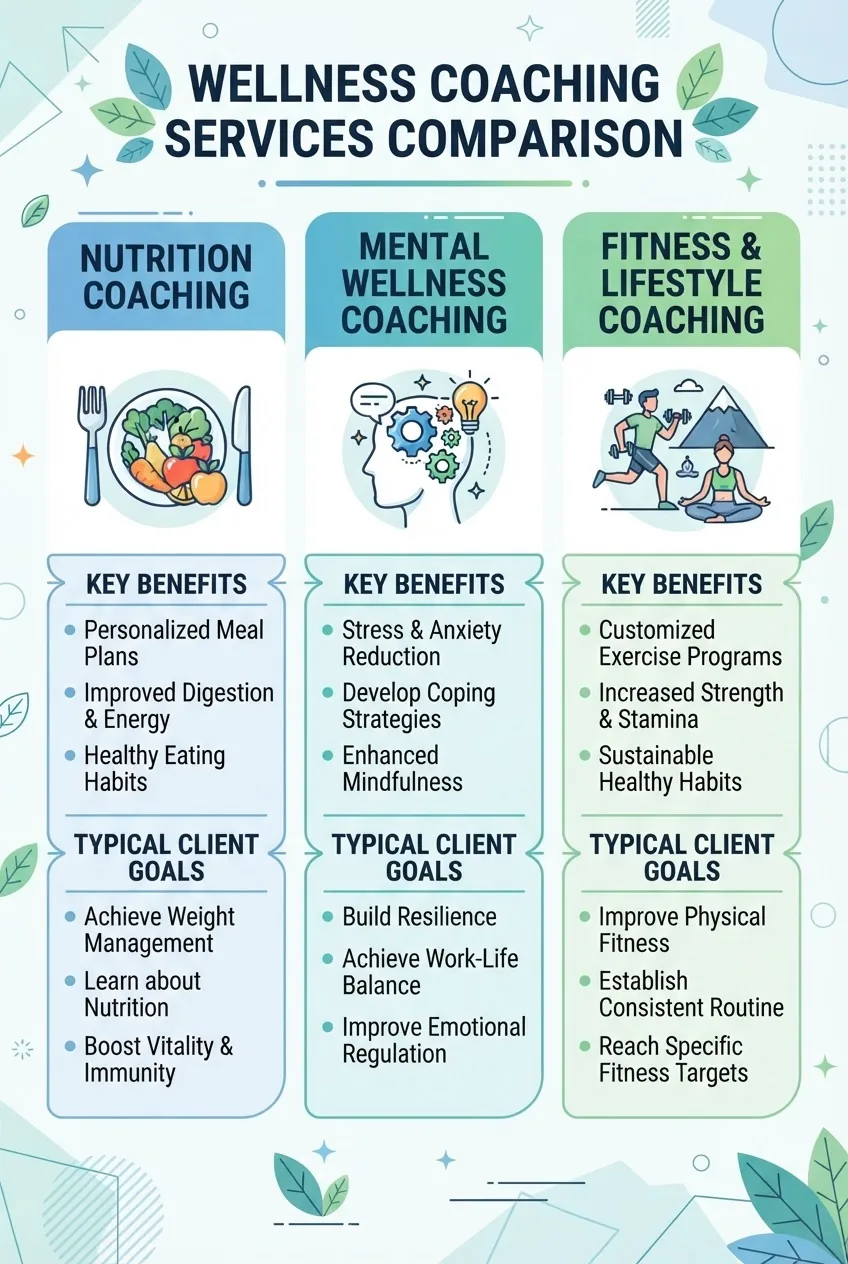
Below table compares core service types, typical goals and who they suit. Rows alternate background for readability.
| Service Type | Typical Focus | Client Goals | Common Formats |
|---|---|---|---|
| Nutrition Coaching | Meal planning, mindful eating, nutrition habits | Weight management, improved energy, metabolic health | 1:1 sessions, meal templates, food logs |
| Mental Wellness & Stress Management | Stress reduction, mindfulness, resilience skills | Reduced anxiety, better sleep, improved focus | Short programs, guided practices, check-ins |
| Fitness & Lifestyle Coaching | Movement plans, daily routines, activity integration | Functional fitness, mobility, consistent activity | Hybrid (in-person + online), app guidance |
| Corporate & Group Wellness | Workplace wellbeing programs, stress resilience training | Lower absenteeism, improved engagement | Workshops, ongoing coaching, team challenges |
| Specialised Coaching (sleep, habit design) | Evidence-based habit formation and sleep protocols | Better sleep, reduced late-night eating, consistent habits | Short targeted programs, app-based tracking |
If you’re specifically interested in nutrition-led coaching, read more about holistic nutrition certification and counseling. For mental health-focused coaching pathways, see holistic approach to mental health.
Transition: now see exactly what happens during sessions and tools coaches use to create measurable change.
What to Expect During Your Wellness Coaching Sessions
Answer: Expect an initial assessment, collaborative goal-setting, an actionable plan with measurable milestones, regular coaching conversations, progress tracking and iterative adjustments—delivered via in-person or online sessions with between-session support.
Session structure: the predictable flow of intake, planning, action and review across sessions.
-
Intake and history (first session). Coaches collect lifestyle, medical history (high-level), sleep, nutrition and stress patterns, and clarify expectations.
Walkthrough example: A typical first session (45–60 minutes) includes a quick health screen, values clarification, one primary goal selection and agreement on the first two action steps.
- Goal-setting and planning. Goals are set using SMART principles (Specific, Measurable, Achievable, Relevant, Time-bound) and broken into weekly micro-habits.
- Tools and tracking. Coaches employ habit trackers, shared progress sheets, food/activity logs, and sometimes wearable data to monitor adherence. Common tools include motivational interviewing, cognitive reframing and habit-stack techniques.
- Ongoing sessions. Weekly or fortnightly sessions focus on barriers, wins, troubleshooting and new micro-steps—usually 30–60 minutes.
- Measurement and review. Coaches measure progress by agreed metrics (weight, mood scores, sleep hours, steps) and adjust plans. According to a 2020 randomized trial, regular measurement and feedback significantly improve adherence.
- Graduation and maintenance. After meeting objectives, coaches transition clients to maintenance plans with reduced check-ins and self-monitoring strategies.
Common coaching methods: motivational interviewing to elicit change talk; behavior-change frameworks to establish cues, routines and rewards; relapse prevention planning for long-term maintenance. Coaches often integrate digital habit trackers to sustain momentum between sessions.
Safety and scope: coaches refer to medical or mental health professionals if issues exceed their scope. For example, if serious clinical depression or a complex medical condition emerges, the coach will recommend medical evaluation.
Transition: to choose the right professional you should understand how coaches differ from other practitioners; see the comparison next.
Wellness Coach vs Other Health Practitioners: Key Differences
Answer: Wellness coaches focus on behaviour change and practical lifestyle implementation, while therapists provide mental health treatment, naturopaths focus on alternative medical approaches, and personal trainers concentrate on exercise prescription; scope, qualification and methods differ across professions.
Scope of practice: the legal and ethical limits of what a practitioner may advise or treat.
| Practitioner | Primary Focus | Typical Methods | When to Choose |
|---|---|---|---|
| Wellness Coach | Behaviour change, lifestyle integration | Coaching conversations, goal-setting, habit tools | You need practical lifestyle changes and accountability |
| Therapist / Psychologist | Clinical mental health treatment | Psychotherapy, diagnostic assessment, treatment plans | You have diagnosable mental illness or severe emotional symptoms |
| Naturopath / Holistic Practitioner | Alternative and integrative medical approaches | Herbal medicine, supplements, longer consultation | You want natural-treatment options and clinical assessments |
| Personal Trainer | Exercise programming and fitness coaching | Workout plans, gym supervision, performance metrics | You need structured exercise or sports performance plans |
Prose clarification: coaching vs therapy—coaching is future and action-focused, assuming healthy functioning and emphasizing habit change; therapy addresses mental health diagnoses and deeper psychological processing. For distinctions with naturopathic or medical practitioners, review training differences and scope via resources like Holistic vs Naturopathic Care.
If you need to verify credentials, credible certifications and association memberships (e.g., ICF) are useful indicators. External research supports coaching outcomes—see a peer-reviewed synthesis at a relevant meta-analysis.
Transition: ready to begin? The final section below summarises first steps and encourages taking action.
Conclusion: Taking the First Step Toward Holistic Wellness Coaching
Answer: Start by defining your top wellness goal, research local coaches who specialise in that area, schedule an initial consultation to check fit, and commit to a short trial period to measure progress—then scale up the plan based on results.
Key takeaways:
- Wellness coaching targets behaviour change through personalised plans and accountability.
- Local coaches add value by tailoring plans to your environment and offering in-person support when needed.
- Verify coach methods, ask for concrete outcomes and prefer trial sessions before long commitments.
Final CTA: If you’re ready, search “wellness coach near me,” review local profiles and book an initial consultation to begin a measured, holistic approach to your wellbeing.