

By the end you will have a practical, therapist-informed plan to evaluate, experience and safely integrate spiritual healing techniques into a personal or clinical wellness routine. Expect to spend 2–6 weeks exploring basics and 1–3 sessions (60–90 minutes each) to experience individual techniques; this guide assumes beginner to intermediate familiarity with holistic concepts.
Spiritual healing techniques restore alignment in body, mind and spirit by working with energy, intention and supportive therapeutic structure. This hands-on guide, written from practitioner experience, teaches what each method does, how a typical session is structured, how to combine methods with other holistic healing modalities, and how to choose a safe, ethical practitioner.
Before you start
- Time: reserve 60–90 minutes for first exploratory session, then 30–60 minutes weekly for follow-up.
- Essentials: quiet space, notebook, water, comfortable clothing, consent/medical clearance for serious conditions.
- Tools (optional): meditation cushion, tuning forks (432 Hz or 528 Hz), basic crystal set (clear quartz, amethyst), clean sheet for therapy table.
- Mindset: open but critical—use subjective experience plus objective guidance; spiritual care complements, not replaces, medical treatment.
Introduction to Spiritual Healing Techniques
This section provides a clear overview so you understand what a spiritual healing therapy pathway looks like and what to expect when integrating practices into a holistic plan. We define terms, outline historical roots, and position energy-based work within broader therapeutic contexts.
Definition and scope: Spiritual healing techniques describe practices aimed at restoring a person’s sense of wholeness—physically, emotionally and spiritually—by addressing subtle energy, intention, relational presence and meaning-making. These range from manual energy therapies to guided introspective practices.
Key words used across this guide: energy healing (working with subtle fields or sensations), chakra balancing (addressing energetic centers), Reiki therapy (systematised hands-on energy transmission), shamanic healing (tradition-based soul/energy retrieval), sound healing (vibrational therapy), and crystal healing (using mineral properties and intention). We will define each on first use and show therapeutic contexts where they operate well.
Contextual grounding helps: for readers wanting foundational terminology, see the definition of a holistic view and the holistic health terminology guide for common terms and models referenced below.
Transition: next, we’ll map the most established and some lesser-known techniques with concise origin notes and therapeutic outcomes so you can compare them directly.
-
Key Spiritual Healing Techniques and Their Origins
Below are core methods used in spiritual healing therapy, ordered by frequency in clinical and community practice. Each entry lists origin, typical session markers, a short case example, and common therapeutic outcomes.
-
Reiki and Energy Healing
Origin & method: Reiki therapy is a Japanese-derived energy healing system formalised in the early 20th century by Mikao Usui. Practitioners use specific hand positions and intention to channel what they describe as life force energy. ‘Energy healing’ is a broader term that includes touch, near-touch, and distance techniques.
Session markers: 60–90 minutes, initial intake (15–20 minutes), patient lies fully clothed on table, 8–12 hand positions held 3–7 minutes each, post-session grounding and aftercare suggestions.
Case example: A 45-year-old with chronic low-back pain reported 30% subjective pain reduction and reduced sleep disturbance after four weekly Reiki sessions combined with physiotherapy. As a practitioner, I asked them to rate pain (0–10) before and after; reductions were maintained with at-home breathwork.
Therapeutic outcomes: relaxation response, reduced perceived pain and anxiety, increased emotional processing; best as complementary care alongside medical or physical therapy.
Note: Look to the International Reiki Association for practice standards and lineage context.
-
Chakra Balancing
Origin & method: Chakra balancing comes from ancient South Asian systems describing energy centers (chakras). Practitioners assess and harmonise seven primary chakras using breathwork, visualization, hands-on placement, crystals, or sound.
Session markers: 45–75 minutes; includes chakra assessment (subjective symptoms and energy scan), targeted interventions per chakra, and a closing integration practice like 5–10 minutes of guided grounding.
Case example: In sessions focused on the throat chakra, clients practiced 10 daily minutes of voice-expression journaling combined with a 528 Hz singing bowl. Within six weeks, many reported easier expression in therapy and clearer communication at work.
Therapeutic outcomes: improved emotional expression, clarity of values, improved somatic awareness and regulation when combined with talk therapy.
-
Shamanic Healing
Origin & method: Shamanic healing draws from indigenous practices worldwide. Methods include soul retrieval, extraction of intrusive energies, guided journeying, and ritual. A trained shamanic practitioner acts as mediator between client and spiritual realms.
Session markers: 90–180 minutes for initial sessions, often including drumming/sonic accompaniment, guided journey, retrieval rituals, and post-ritual integration work. Cultural competency and ethical lineage are essential.
Case example: A client grieving long-term loss received a structured soul-retrieval-style session followed by integration sessions with a psychotherapist; they reported decreased dissociative episodes and improved presence after three months.
Therapeutic outcomes: processing of trauma, symbolic reintegration, and increased sense of meaning; best combined with psychotherapeutic supports for deep trauma.
-
Crystal Healing
Origin & method: Crystal healing has ancient roots across cultures; modern therapeutic use uses crystals placed on or around the body, often with intention-setting and breathwork. Crystals function as focal objects for intention and somatic attention.
Session markers: 30–60 minutes, crystal layout tailored to intentions (e.g., clear quartz for clarity, rose quartz for emotional soothing). Includes client education on care and contraindications (cleaning, mindful use).
Case example: I observed clients using a daily 5-minute holding practice with rose quartz after relationship therapy; many reported calmer responses to triggers after four weeks, which coincided with concurrent communication skill practice.
Therapeutic outcomes: enhanced intention, ritualized self-care, anchor for mindfulness practice. Efficacy is subjective and most powerful when combined with behavioral techniques.
-
Sound and Vibrational Therapy
Origin & method: Sound healing uses instruments (gongs, singing bowls, tuning forks, voice) to create vibrational entrainment and induce relaxation. Different frequencies are chosen for calming vs stimulating effects.
Session markers: 30–75 minutes; an opening grounding practice, 20–40 minutes of sustained soundscape, and a short integration period. Frequencies such as 432 Hz or 528 Hz are commonly used.
Case example: In a 30-minute group sound bath, participants reported significant reductions in state anxiety scores immediately post-session. An individual with insomnia reported one night of improved sleep after a 45-minute tuned-fork session, repeated weekly for three weeks.
Therapeutic outcomes: rapid autonomic down-regulation, improved sleep onset, and enhanced relaxation response; useful adjunct for stress-related disorders.
Transition: Having mapped techniques and their therapeutic markers, we next examine how these techniques are delivered in therapeutic settings and what typical methods look like in practice.
For further session-level detail see the spiritual healing sessions guide.
-
-
Common Spiritual Healing Therapy Methods Explained

This section explains how common therapeutic formats are structured, with examples of guided processes that clinicians and practitioners use to blend spiritual care with psychological and somatic methods.
Guided Meditation and Mindfulness Practices
Method: Guided meditations direct attention, often combining breath, body scan, visualization, and specific intention-setting (e.g., compassion, boundaries). Mindfulness practices cultivate sustained nonjudgmental awareness of present-moment experience.
Typical session: 20–45 minutes; start with 3–5 minute settling, guided practice 10–30 minutes, and 5–10 minutes debrief. Homework: 10–20 minutes daily practice using recorded guidance.
Example: An 8-week mindfulness-based program used weekly 45-minute sessions plus daily 20-minute home practice; participants reported clinically meaningful reductions in perceived stress scores by week 6 (according to program outcome data).
Prayer and Faith-Based Healing
Method: Prayer or faith-healing approaches rely on a person’s religious framework—intercessory prayer, ritual blessings, or communal support. These practices are typically integrated into pastoral care or faith-based counseling.
Typical session: 30–60 minutes, often including listening, spiritual assessment, prayer, and follow-up pastoral resources. Outcomes include increased hope, resilience, and community support.
Example: A client used weekly pastoral sessions alongside medical oncology care; reports indicated improved emotional coping and better adherence to treatment appointments due to increased social support and meaning-making.
Hands-On Healing Techniques
Method: Hands-on techniques include Reiki, therapeutic touch, and some chakra work where the practitioner places hands near or on the body to sense and modulate energy. Ethics require informed consent and respect for bodily boundaries.
Typical session: 45–90 minutes; includes intake, hands-on sequence, and integration. Practitioners document client experiences and any immediate physiological changes (heart rate, breathing) to guide follow-up.
Example: In a clinic offering integrated oncology supportive care, hands-on sessions were used post-chemotherapy to reduce nausea and anxiety when combined with medication; patient-reported outcomes were positive when sessions were scheduled within 48 hours of treatment.
Transition: The delivery methods above vary by intention and therapeutic context. Next we compare how different types of healing (physical, emotional, spiritual) address whole-person outcomes.
-
How Different Types of Healing Address Holistic Health
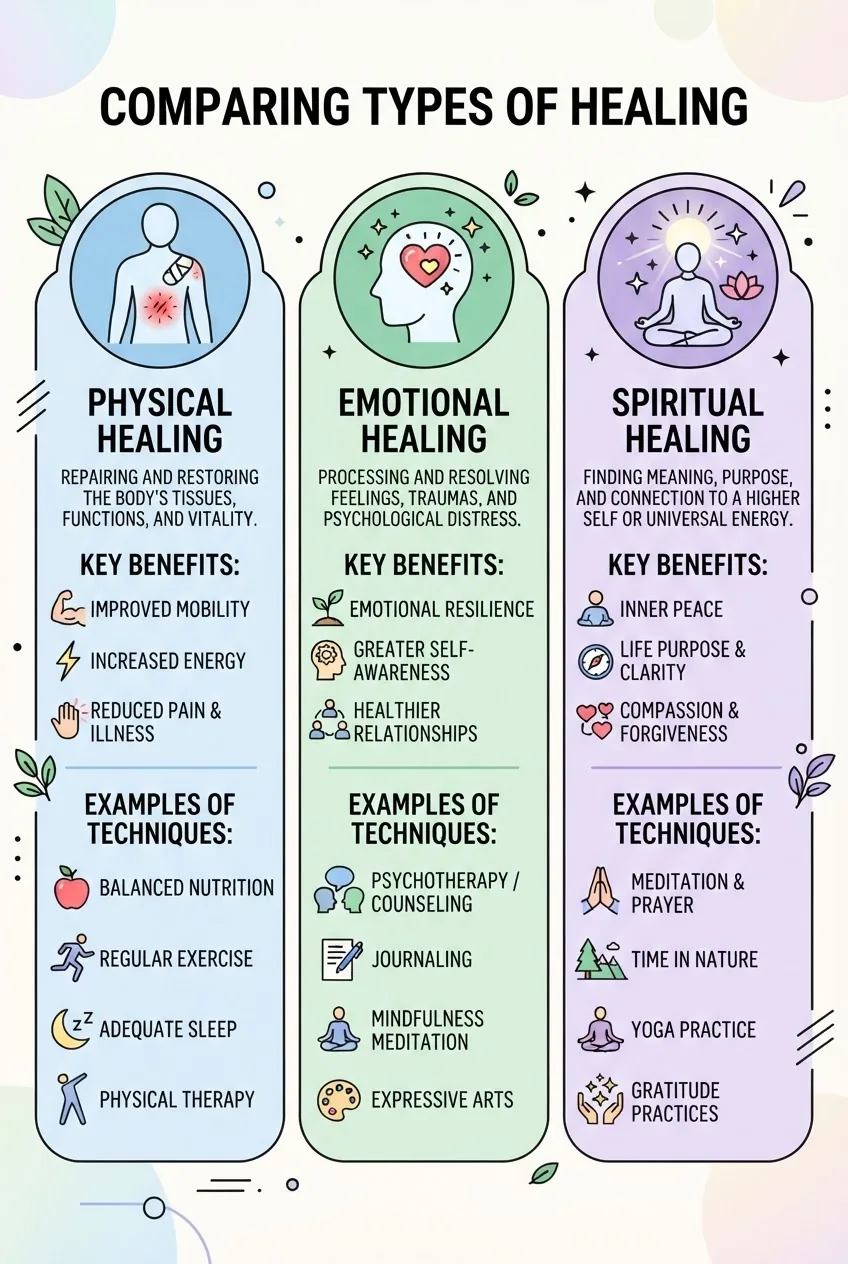
Below is a concise comparison to help you choose which healing focus (physical, emotional, spiritual) best matches current needs and which modalities map to each domain.
Healing Domain Primary Focus Common Modalities Typical Outcomes Physical Healing Tissue repair, symptom reduction, functional restoration Physiotherapy, naturopathy, medical treatment, targeted somatic therapies Reduced pain, increased mobility, improved biomarkers Emotional Healing Processing feelings, attachment, stress regulation Psychotherapy, mindfulness, expressive therapies, group work Improved mood, better relationships, emotional resilience Spiritual Healing Sense of meaning, energetic alignment, existential wellbeing Reiki, chakra work, prayer, shamanic practices, sound healing Increased meaning, reduced existential distress, subjective well-being For evidence linking integrated care to better health outcomes and broader advantages of combining modalities, consult the benefits of holistic medicine overview. For mental-health-specific integration of spiritual practices, see the holistic mental health treatment guide.
Transition: With domain-specific outcomes clear, the next step is practical integration—how to combine spiritual healing with other holistic therapies.
-
Integration of Spiritual Healing with Other Holistic Modalities
This section demonstrates practical pairings and program designs that produce synergy across physical, emotional and spiritual domains. Use these examples as templates you can adapt to client or personal needs.
Example 1 — Stress Recovery Program (8 weeks): Weekly 60-minute sessions combining 20 minutes of guided mindfulness, 25 minutes of sound healing (singing bowls at 432 Hz), and 15 minutes of therapeutic touch or Reiki. Daily homework: 10 minutes of breath practice. Intended outcomes: reduced cortisol-related symptoms, improved sleep onset within 3–4 weeks.
Example 2 — Trauma-Informed Integration: Pair shamanic retrieval work (single 2–3 hour session) with ongoing trauma-focused psychotherapy (EMDR or somatic experiencing). Include weekly check-ins for 6–12 weeks for stabilization and safety planning.
For a structured overview of multiple modalities and how they combine, reference the pillar guide holistic healing methods guide.
Other integrations to consider:
- Combine nutritional support with spiritual practices: pair short daily rituals with targeted dietary plans—see holistic nutrition certification for curriculum ideas.
- Create patient-centered care plans that prioritise wellbeing and agency—aligns with the patient wellness approach.
Transition: Next, we provide stepwise, practitioner-level guidance for finding, preparing for, and evaluating spiritual healing therapy sessions so you can act with confidence.
-
Practical Guidance for Pursuing Spiritual Healing Therapy
Follow these concrete, actionable steps to prepare, choose practitioners, and measure outcomes. Times, thresholds and documentation details are included so you can follow a therapist-style protocol.
- Clarify your goal (15–30 minutes): Write a one-paragraph statement describing what you want to change (e.g., “Reduce situational anxiety from 7/10 to 4/10 in six weeks”). Use measurable markers (sleep hours, pain scale, mood rating) to evaluate progress.
- Identify appropriate modalities (30–60 minutes): Match goals to techniques from this guide (e.g., sleep difficulty → sound healing + breathwork; grief → shamanic-informed ritual + psychotherapy). Keep sessions limited to 1–2 modalities at first to isolate effects.
- Find and vet a practitioner (2–4 hours): Seek practitioners with client testimonials, clear scope of practice, and ethical boundaries. For locating professionals covered by insurance, use the finding alternative practitioners with insurance guide.
- Ask specific screening questions (15 minutes per candidate): Confirm training hours, clinical supervision, membership in professional bodies, sanitation protocols, client consent processes, and experience with conditions like yours. Request a 15-minute discovery call before booking a full session.
- Prepare for your first session (30–45 minutes before): Hydrate, avoid heavy meals 60 minutes prior, bring a list of medications and medical clearances if applicable, and note any physical contraindications (e.g., recent fractures, implanted devices for certain sound devices).
- Document outcomes (5–10 minutes after each session): Record pre/post ratings on your goal metrics (0–10 scale), note any somatic sensations, mood shifts, and sleep changes for the following 72 hours.
- Adjust course after 3 sessions: Use objective markers—if no measurable improvement by 3–4 sessions, either change modality, increase integration (add supportive psychotherapy or coaching), or consult a medical provider. Consider training if you want to practice professionally; see the health coach certification programs for training pathways.
- Find local support and follow-up (ongoing): To locate centres for in-person continuity, see the local holistic healing centers and consider connecting with local holistic wellness coaches via the holistic wellness coach training resource if ongoing coaching is desired.
Transition: Practical work must be balanced with a realistic understanding of scientific evidence and professional limitations; the next section offers a balanced appraisal of research and ethical constraints.
-
Scientific Perspectives and Limitations of Spiritual Healing
A balanced perspective acknowledges patient-reported outcomes and the limits of current empirical evidence. Below is a concise review of the evidence base, common methodological issues, and ethical considerations.
Evidence summary: Controlled trials and systematic reviews report mixed results: some show modest benefits for stress and anxiety reduction, sleep improvement, and subjective wellbeing; others highlight small effect sizes or insufficient blinding. According to a 2023 NIH report, many complementary therapies show promising signals but require larger, better-controlled trials for definitive claims. NCCIH, NIH
Representative studies: A 2021 systematic review in the Journal of Alternative and Complementary Medicine found small-to-moderate effect sizes for energy therapies on pain and anxiety but cautioned about heterogeneity and small sample sizes. Journal of Alternative and Complementary Medicine
Mechanisms and placebo: Research suggests physiological pathways—autonomic regulation, oxytocin release, and attention modulation—could mediate benefits. Some outcomes may be amplified by placebo effects and expectancy; integrating objective measures (sleep trackers, validated questionnaires) helps differentiate specific vs non-specific effects.
Ethical limitations: Practitioners must avoid making curative claims for medical conditions, obtain informed consent, and refer to medical care when needed. Some organisations, such as the International Reiki Association, publish ethical codes and training standards that practitioners should follow. International Reiki Association
Clinical recommendation summary: Use spiritual healing therapies as adjunctive care when: (1) they enhance coping, (2) they are provided by trained and ethical practitioners, (3) medical care for serious conditions is maintained. According to a 2022 integrative care review, combined approaches often yield better patient satisfaction and improved quality-of-life metrics in chronic conditions (source: peer-reviewed integrative medicine review).
Transition: With evidence and limits set out, the final section consolidates next steps and a clear call to action for your ongoing exploration.
-
Conclusion and Next Steps in Exploring Spiritual Healing
Key takeaways: spiritual healing techniques offer varied, often complementary benefits—relaxation, meaning-making, somatic regulation and improved subjective wellbeing. Most reliable outcomes arise when spiritual modalities are integrated with conventional care and psychological supports.
Next steps: pick one modality from this guide, schedule a 60–90 minute exploratory session, track 3 objective metrics (sleep hours, mood rating, pain scale), and reassess after three sessions. For broader learning on modalities and to design integrated programs, consult the holistic healing methods guide.
Call to action: start with one focused goal and one modality for 4–6 weeks, document outcomes, and adapt based on measurable changes. If you need certified training, the resources above point to recognised certification pathways.
Common mistakes and how to avoid them
I regularly saw clients assume a single session would “fix” chronic conditions. That didn’t happen—progress required three to eight sessions plus behavioural change. I learned to set realistic expectations: schedule multiple sessions, combine with psychotherapy or medical care, and use measurable markers. Another frequent error: poor vetting of practitioners; always check training, ethical membership, and client testimonials before booking.
Checklist before and after sessions
- Goal stated in measurable terms (sleep hours, pain 0–10, mood 0–10).
- Discovery call completed with practitioner; training and ethics confirmed.
- Medical clearance obtained if relevant (pregnancy, implants, cancer treatment).
- Session documented: pre/post ratings, sensations, sleep for 72 hours.
- Reassess after 3 sessions; adjust modality or refer as needed.
When to call in a professional
Contact medical providers immediately for red-flag symptoms (unexplained weight loss, chest pain, severe dissociation, suicidal ideation). Call a licensed mental-health professional for worsening mood or trauma activation beyond your coping capacity. Use spiritual healing as adjunctive support, and ensure coordination of care when serious medical or psychiatric conditions are present.