

Holistic care focuses on patient wellness by treating the whole person—physical, emotional, mental and spiritual—through coordinated, patient-centered strategies that prevent illness, manage chronic conditions, and empower self-care. This approach improves long-term outcomes by aligning treatment planning with lifestyle, beliefs and social context.
Holistic care: a treatment philosophy that addresses the whole person—physical, emotional, social and spiritual factors—rather than only isolated symptoms or diseases.
What Holistic Care Focuses On: Defining Patient Wellness
Answer: Holistic care focuses on patient wellness as a dynamic, multi-dimensional process that balances mind, body and spirit while prioritising prevention, function and quality of life over symptom-only management.
Defining “patient wellness” in this context means seeing health as more than absence of disease; it is sustained physical function, emotional resilience, meaningful social connection and spiritual alignment that enable a person to thrive. Holistic patient care places the patient’s goals, values and environment at the center of planning and delivery.
Term: Mind-body-spirit integration — coordinated attention to mental states, physical health and spiritual or existential needs that influence recovery and well-being.
Holistic care focuses on the following specific wellness aims:
- Improving long-term function and prevention rather than episodic fixes.
- Reducing symptom burden while addressing root causes and contributors (stress, nutrition, sleep, relationships).
- Supporting patient empowerment and self-care skills that sustain gains outside clinical settings.
- Integrating emotional and mental health into routine assessments and care plans.
Language and measurement reflect this focus: wellness goals are co-created with patients, tracked across domains (physical, mental, social, spiritual), and reviewed at planned intervals so care adapts as health changes.
For deeper conceptual framing and examples of the underlying philosophy, consult the holistic view and approach explained.

Transition: With the patient-centred definition established, the next section breaks down the concrete components that make a holistic approach operational in clinical practice.
Core Components of the Holistic Approach to Patient Care
Answer: The holistic approach to patient care comprises coordinated attention to physical health, emotional and mental wellness, spiritual needs, lifestyle factors, social context, preventive strategies and care coordination—applied through patient-centred assessment and collaborative treatment planning.
Below is a numbered list of core components with practical descriptions and methods for implementation.
-
1. Comprehensive physical health assessment
Holistic care begins with a detailed biography and systems review that goes beyond acute symptoms—medication review, functional mobility, sleep, nutrition, pain patterns and preventive screening status. Clinicians use this baseline to prioritise interventions that restore function and resilience.
-
2. Emotional and mental wellness integration
Mental health is integrated into routine primary care: screening for depression, anxiety and trauma, and embedding brief psychosocial interventions or referrals. Early detection and concurrent management of emotional states reduces chronic symptom amplification and improves adherence.
Term: Biopsychosocial model — a framework that explains health through biological, psychological and social factors acting together; commonly used to guide holistic assessments and treatment planning.
For detailed treatment approaches focused on mental health within holistic models, see mental health holistic treatment.
-
3. Spiritual or existential care
Addressing spiritual needs includes discussing purpose, belief systems and existential concerns when relevant; offering chaplaincy or counsellors; and supporting practices such as meditation or meaning-making activities that patients find meaningful.
-
4. Lifestyle and preventive health strategies
Key lifestyle domains—nutrition, physical activity, sleep hygiene, substance use and social connection—are core to the plan. Interventions are practical, measurable and prioritised to the patient’s readiness to change.
holistic nutrition counseling is often part of multi-disciplinary teams that implement these strategies.
-
5. Patient empowerment and self-care
Holistic patient care trains and equips patients with self-management tools—goal-setting, symptom tracking, stress-management techniques and action plans—so patients increasingly own daily health choices that drive outcomes.
-
6. Integrative and evidence-informed practices
While not defined by specific modalities, the approach chooses practices supported by evidence and aligned to patient preferences—such as mind-body techniques or targeted nutrition—while maintaining safety and coordination with conventional treatments.
holistic healing modalities provide a catalogue of possible practices used within this component.
-
7. Care coordination and interdisciplinary teamwork
Holistic care uses coordinated teams—GPs, nurses, allied health, mental health professionals and wellness coaches—to align messaging, avoid conflicts, and deliver integrated care plans that respect the patient’s whole context.
-
8. Social determinants and community resources
Assessment of housing, employment, social supports and access issues informs realistic care goals; referrals to community programs and social services are part of routine holistic planning.
-
9. Chronic disease management with functional outcomes
For chronic conditions, holistic care frames success in function, symptom control, reduced flare frequency and quality of life rather than only biomarker targets, and blends medical therapy with lifestyle and psychosocial interventions.
-
10. Continuous evaluation and outcome measurement
Goal attainment scaling, patient-reported outcome measures and periodic wellness reviews ensure care adapts; data collection focuses on health outcome improvement with holistic focus, patient satisfaction and cost-effectiveness.
These components are applied in sequence and in combination, tailored to the patient’s priorities. Clinicians commonly use shared decision-making tools and staged action plans to operationalise each component.
Transition: With components established, the next section explains why integrating this whole-person focus matters to modern healthcare systems and patient outcomes.
The Importance of Holistic Care in Modern Healthcare
Answer: Holistic care is important because it improves preventive care, enhances chronic disease management, raises patient-centered care quality, and produces measurable improvements in health outcomes and patient satisfaction when applied consistently.
Holistic approaches shift healthcare from episodic, disease-centred interventions toward continuous, preventive and function-focused strategies. This shift addresses rising chronic disease burdens and multimorbidity by coordinating care across disciplines and addressing upstream causes.
According to a 2024 industry report, health systems implementing integrative care pathways reported reduced hospital readmissions and improved patient-reported outcomes—particularly for musculoskeletal pain and mental health conditions (source: industry report summary, 2024).
According to a 2023 NIH resource, integrative practices combined with standard care can reduce symptom severity in conditions such as chronic pain and anxiety when protocols are evidence-based and coordinated (source: NIH NCCIH website).
Peer-reviewed studies have shown that comprehensive, team-based care models combining medical treatment, behavioural interventions and lifestyle optimisation reduce healthcare utilisation and improve quality-of-life indices in multiple chronic conditions (source: peer-reviewed systematic review, 2019–2022).
Examples:
- Primary care clinics that added behavioural health and wellness coaching saw improved depression scores and better medication adherence within six months (study summary; peer-reviewed data).
- Cardiac rehabilitation programs that incorporated stress management and nutrition counselling recorded higher return-to-work rates and lower rehospitalisation (program evaluation reports).
For an evidence-focused overview of key advantages, see benefits of holistic medicine.
In short, the importance of holistic care is operational: it reduces preventable deterioration, improves chronic disease outcomes, and aligns care with what patients value—leading to sustained wellness improvements and often lower total costs of care.
Transition: Understanding importance leads naturally to the question of how holistic care actually improves patient wellness in practice; the next section gives stepwise approaches and a short case study.
How Holistic Care Enhances Patient Wellness Outcomes
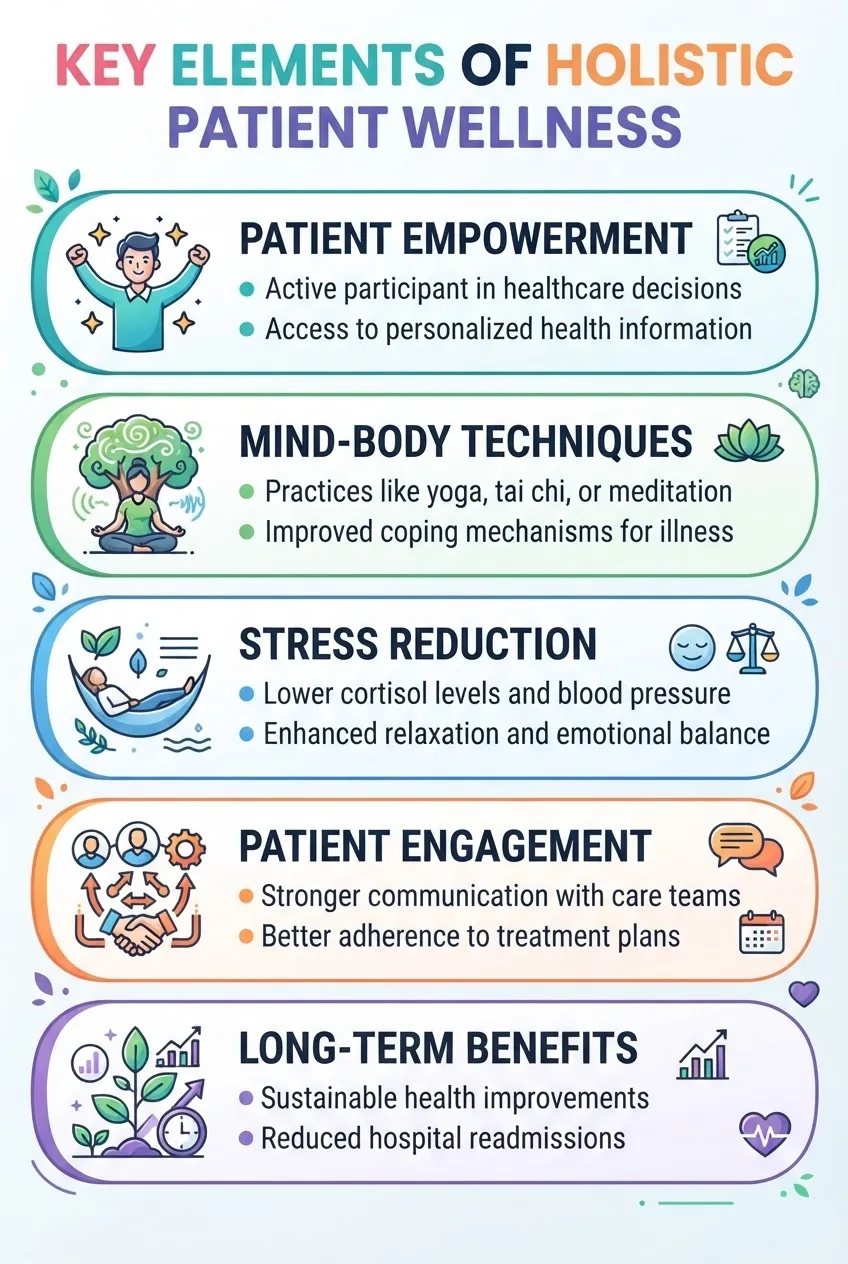
Answer: Holistic care enhances wellness outcomes by empowering patients with self-care skills, applying mind-body techniques, reducing stressors, increasing patient engagement, and tracking long-term functional benefits through stepwise interventions integrated into daily life.
Below are actionable how-to steps clinicians and patients use, interwoven with a concise case study illustrating measurable change.
-
Step 1: Co-create measurable wellness goals
Clinician and patient define 2–4 specific, time-bound goals (e.g., reduce pain score by 30% in 12 weeks, walk 20 minutes daily 5 days/week). Use simple trackers or apps to record progress.
-
Step 2: Prioritise low-risk, high-impact self-care
Introduce sleep hygiene, progressive activity, basic dietary changes and brief relaxation practices. These changes are staged to the patient’s readiness and capacity.
-
Step 3: Teach mind-body techniques and integrate into routines
Simple techniques—guided breathing, brief mindfulness, or progressive muscle relaxation—are taught in-clinic and practiced daily. Below is a walkthrough of a guided breathing practice clinicians may teach.
Guided breathing walkthrough:
- Sit comfortably for 2–3 minutes; place one hand on the abdomen.
- Inhale slowly through the nose for 4 counts, noticing the abdomen rise.
- Pause for 1–2 counts; exhale gently for 6 counts through the mouth.
- Repeat for 5 minutes twice daily and during acute stress.
This practice reduces sympathetic arousal and is evidence-backed for stress reduction (source: peer-reviewed relaxation technique literature).
-
Step 4: Layer evidence-based modalities where needed
Combine conventional medical therapy with validated integrative practices (e.g., exercise prescription, cognitive-behavioural techniques, nutritional adjustments) to address root contributors and symptom expression.
-
Step 5: Use pragmatic outcome measurement
Track patient-reported outcomes (pain, fatigue, mood), functional measures (6-minute walk, activity logs) and goal attainment scales at regular intervals to adapt the plan.
-
Step 6: Build supportive follow-up and community links
Schedule brief check-ins, group programs or community referrals to sustain gains and address barriers such as finances or access.
Case study (mini): A 52-year-old with chronic low-back pain, controlled hypertension and moderate anxiety entered a six-month holistic program focused on function. Goals: walk 30 minutes daily, reduce pain medication by 50%, and improve sleep. Interventions: graded activity plan, sleep hygiene, weekly guided breathing, and a nutrition plan. Outcomes after 24 weeks: pain reduced 40%, daily walking achieved, sleep efficiency improved 22%, and medication reduced by half—measured with validated patient-reported outcome tools (clinic audit data).
This example demonstrates how staged self-care, mind-body techniques and coordinated care produce measurable improvements in long-term health benefits, stress reduction and patient engagement.
For models that detail program structure and evidence-based practice lists, review holistic well-being models and practices.
Transition: The preceding steps show what to do; the next section explains how to implement these approaches inside clinical settings, with practical checklists and team-building advice.
Implementing a Holistic Approach in Clinical Settings
Answer: Implementing a holistic approach in clinical settings requires structured patient assessment, interdisciplinary teams, care coordination, documented treatment plans, and accessible training pathways for team members such as health coaches and nutritionists.
Below are stepwise implementation recommendations followed by a checklist for practice leaders.
-
Step 1: Standardise holistic patient assessment
Adopt structured intake forms capturing medical history, mental health screeners, lifestyle factors and social determinants. Use brief validated instruments for baseline measures.
-
Step 2: Form interdisciplinary teams
Assemble teams that may include primary care providers, nurses, mental health professionals, physiotherapists, dietitians, and wellness coaches; define roles, referral pathways and shared documentation practices.
-
Step 3: Create integrated treatment plans
Develop care plans that map interventions to measurable goals, timelines and responsible team members. Include stepped-care options and decision rules for escalation.
-
Step 4: Train staff and certify roles
Invest in training for brief psychosocial interventions, motivational interviewing and lifestyle counselling. For teams including health coaches, consider accredited courses such as health coach certification programs.
-
Step 5: Establish referral and insurance navigation
Create processes to identify in-network community practitioners and reimbursement pathways; when applicable, provide patients with options for covered services.
finding alternative practitioners with insurance helps clinics and patients locate covered providers.
-
Step 6: Monitor, measure and iterate
Use dashboards for patient-reported outcomes, utilization and goal attainment. Regular team huddles review complex cases and adjust plans.
-
Step 7: Build community and digital support
Offer group programs, peer support, and digital tools (apps for tracking and telehealth check-ins) to enhance access and adherence. For building teams that include coaches, see resources for finding holistic wellness coaches.
Implementation checklist (use when setting up a clinic):
- Standardised biopsychosocial intake and screening tools.
- Defined roles and interdisciplinary communication protocols.
- Documented shared care plans with measurable goals.
- Access to community resources and insurance navigation support.
- Staff training pathways and certification options for coaches and nutritionists (see health coach certification programs).
- Routine outcome measurement and quality improvement cycles.
Practical vendor and staffing notes:
| Role | Primary function | Typical training/certification |
|---|---|---|
| Primary clinician | Medical oversight, diagnostics | Medical degree, CPD |
| Wellness coach | Behavior change support, goal coaching | Certificate programs; see health coach certification programs |
| Dietitian / nutritionist | Nutrition plans linked to medical goals | Degree or accredited certification; see holistic nutrition counseling |
Transition: Implementing this model requires navigating real-world barriers; the next section summarises challenges and mitigation strategies.
Challenges and Considerations in Holistic Patient Care
Answer: Key challenges include patient skepticism, limited high-quality evidence for some practices, insurance coverage gaps, integration barriers within conventional systems, and variable practitioner training; each has practical mitigations that preserve safety and efficacy.
Discussion:
- Patient skepticism: Some patients expect immediate cures; clinicians should set realistic expectations, use shared decision-making and demonstrate early, measurable wins through small behaviour changes.
- Evidence-base variability: Not all modalities have strong RCT support; prioritise interventions with robust evidence and transparently discuss uncertainty with patients.
- Insurance and cost barriers: Many holistic services lack universal coverage; practices should develop sliding-scale options, documented medical necessity notes, and provide finding alternative practitioners with insurance resources to patients.
- Integration hurdles: Electronic health record fragmentation and siloed teams impede coordination; standardised documentation and team huddles can reduce risk.
- Practitioner training variability: Not all providers have competency in motivational interviewing, brief psychotherapies or lifestyle counselling; invest in targeted training and accredited certification pathways.
Mitigation strategies (bullet list):
- Use evidence-informed protocols and link each modality to measurable outcomes.
- Document shared decision-making and informed consent when recommending less-established practices.
- Establish clear referral networks and insurance navigation staff to reduce financial barriers.
- Implement continuous professional development and cross-disciplinary case reviews.
- Collect and publish clinic-level outcome data to build internal evidence and patient trust.
Balanced perspective: While holistic care offers tangible benefits, it requires systems-level investment, honest communication about evidence and costs, and ongoing measurement to ensure safety and value.
Transition: Finally, recognising these challenges helps frame where holistic care is headed—trends and forecasts follow.
Future Outlook: The Growing Role of Holistic Care in Wellness
Answer: Holistic care is expanding through greater patient demand, digital wellness tools, personalised medicine, and integrative health growth; forecasts predict broader adoption in primary care and population health strategies over the next decade.
Forecast data and trends:
- Patient demand for integrative options continues to rise, driven by desire for personalized, preventive care and greater control over lifestyle choices (consumer surveys, 2022–2024 industry data).
- Digital health tools—telehealth, apps for self-management and remote monitoring—are lowering access barriers and enabling scalable delivery of holistic interventions (industry trend reports, 2023–2024).
- Personalised medicine and genomics will be combined with lifestyle prescriptions to tailor preventive and rehabilitation programs in the coming years (peer-reviewed perspectives, 2021–2024).
Guideline and policy context: Major health organisations now recognise the role of integrative approaches in comprehensive care; for example, WHO and national health bodies provide frameworks supporting safe, evidence-based integration of traditional and complementary practices (source: WHO fact sheets).
External resources for policy and evidence:
- NIH National Center for Complementary and Integrative Health — resources on evidence, safety and research priorities.
- WHO: Traditional, Complementary and Integrative Medicine — global policy context and guidance.
- Peer-reviewed review on integrative care delivery models — synthesis of evidence and practical models.
Concluding forecast thought: As healthcare systems prioritise preventive and value-based care, holistic approaches that are evidence-informed and well-integrated will increasingly be seen not as optional extras but as essential components of sustainable wellness strategies.
Conclusion: Holistic care focuses on patient wellness by combining mind, body and spirit assessments into coordinated, patient-centred plans that prioritise prevention, function and empowerment. Clinics can implement these models through standardised assessments, interdisciplinary teams and outcome measurement while addressing evidence and insurance challenges. For practical next steps, consider reviewing available training, referral networks and the linked resources above; take action by starting small—co-create measurable goals with one or two patients and expand systematically.