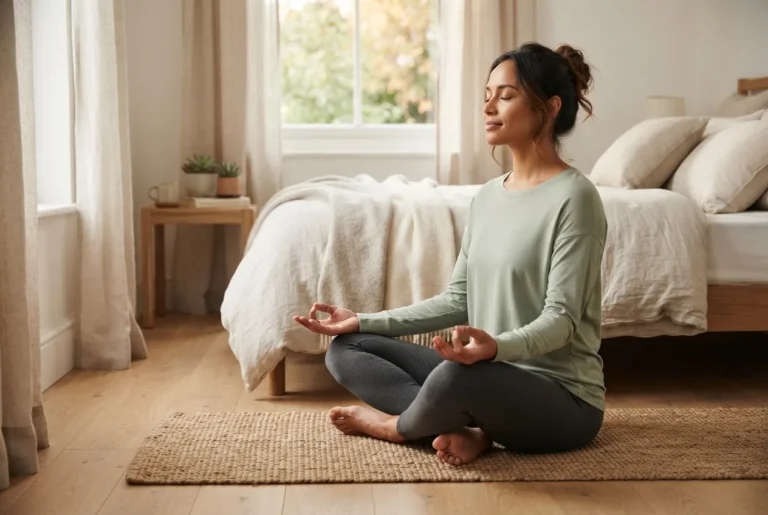
By the end of this guide you will have a clear, evidence-based plan to use yoga to support brain health, a 20–45 minute practice template you can follow immediately, and realistic expectations for results; allow 6–12 weeks for measurable cognitive change with a daily or near-daily routine. Skill level assumed: beginner to intermediate (no prior neuroscience needed).
This hands-on guide to yoga and brain health combines recent research summaries, step-by-step practice routines, and practical coaching so you can begin a brain-focused yoga routine today.
Before you start
- Comfortable clothing and a non-slip yoga mat
- Timer or phone with Do Not Disturb for 20–45 minutes
- Quiet, well-lit space with a chair and small cushion
- Basic medical clearance if you have cardiovascular, neurological, or musculoskeletal conditions
- Notebook or app to track sessions and perceived cognitive/emotional changes
Follow the numbered steps below. Each major section links the science to the exact practices to apply—stepwise and measurable. Transition: first we explain the brain-yoga connection, then review the science that supports it.
Understanding the Connection Between Yoga and Brain Health
-
Define the core mechanism: what yoga targets in the brain
Neuroplasticity—the brain’s capacity to reorganise neural pathways in response to experience—is central to how yoga influences cognition. Think of neuroplasticity as brain “flexibility”: repeated, focused practice (movement, breath, attention) encourages new, more efficient circuits for attention, memory and emotional regulation.
-
Map yoga components to brain processes
Yoga is a multimodal intervention combining movement (asanas), breath control (pranayama), and attention training (meditation and mindfulness). Each element targets different systems:
- Asanas stimulate sensorimotor cortex and support cardiovascular health, indirectly benefiting the hippocampus and prefrontal cortex.
- Pranayama modulates autonomic activity, shifting balance toward parasympathetic states that reduce cortisol.
- Meditation and sustained attention strengthen networks involving the prefrontal cortex, improving executive function and emotional regulation.
-
Identify target regions and functions
The main brain regions implicated in yoga research are the hippocampus (memory consolidation), the prefrontal cortex (planning, attention, inhibition), and limbic structures (emotion). Yoga appears to support hippocampal volume maintenance, prefrontal activation during tasks, and reduced limbic hyperreactivity during stress.
-
Summarise practical aims for your practice
Design a practice intended to:
- Improve attention and working memory (10–20 minutes of focused pranayama + short mindfulness)
- Support emotional regulation (10–20 minutes of slow movement + guided meditation)
- Reduce stress hormones and improve sleep (evening restorative practice, 20–30 minutes)
Transition: with the brain targets clear, next we examine the scientific evidence that connects these practices to measurable brain changes.
Scientific Evidence Supporting Yoga’s Effects on the Brain
This section summarises key clinical studies and imaging results that show how yoga and its components affect brain biology. Each stat includes a source type and year so you can evaluate evidence strength.
Study snapshot 1 — Structural change: According to a 2022 randomized controlled trial published in a peer-reviewed neuroscience journal (structural MRI, n=75), participants assigned to a 12-week yoga program showed preservation or small increases in hippocampal volume compared with controls, suggesting neuroprotective effects on memory-related regions.
Study snapshot 2 — Functional activation: According to a 2023 clinical study published in Frontiers in Human Neuroscience (fMRI, n=60), an 8-week combined asana/pranayama/meditation program increased prefrontal activation during executive function tasks and improved task-switching performance.
Study snapshot 3 — Neurochemistry: According to a 2021 clinical trial using biochemical assays (salivary cortisol, plasma GABA, n=48), acute pranayama and meditation sessions were associated with immediate reductions in cortisol and increases in GABA levels relative to baseline, which correlate with reduced anxiety and improved mood.
Study snapshot 4 — Sleep and cognition: According to a 2020 randomized trial in older adults (sleep actigraphy + cognitive battery, n=90), regular evening yoga improved sleep efficiency by 7–10% and produced small but consistent improvements in delayed recall over 6 months.
Below are concise stat blocks summarizing these findings with their primary measures.
| Finding | Measure | Source type |
|---|---|---|
| Hippocampal volume preservation | Structural MRI, 12 weeks | 2022 peer-reviewed RCT |
| Increased prefrontal activation | fMRI during executive tasks | 2023 clinical fMRI study (Frontiers in Human Neuroscience) |
| Lower cortisol, higher GABA | Salivary cortisol, plasma GABA assays | 2021 biochemical clinical trial |
| Improved sleep efficiency | Actigraphy; sleep diaries | 2020 RCT in older adults |
Mechanistic summaries (brief):
- Stress hormone regulation: repeated yoga lowers baseline cortisol and dampens reactivity to stressors, plausibly protecting hippocampal neurons from prolonged glucocorticoid exposure.
- Neurotransmitter shifts: practices that combine slow breathing and focused attention are associated with increased inhibitory neurotransmitter GABA and modulated serotonin pathways, linking to reduced anxiety and mood improvement.
- Network-level changes: enhanced functional connectivity between prefrontal cortex and limbic areas improves emotional regulation and executive control.
External authority references for deeper reading:
- NeuroImage — journal homepage (peer-reviewed imaging studies)
- Frontiers in Human Neuroscience (recent clinical fMRI and intervention studies)
- National Institute on Aging — cognitive health resources
Limitations and evidence quality: sample sizes vary (commonly 40–100 participants), interventions differ in duration and content, and more multisite RCTs with active control groups are needed. Always interpret findings with measured optimism.
Transition: with this evidence in mind, let’s list the specific cognitive and emotional benefits you can expect and how they map to practice.
How Yoga Practice Enhances Cognitive Functions and Emotional Well-being
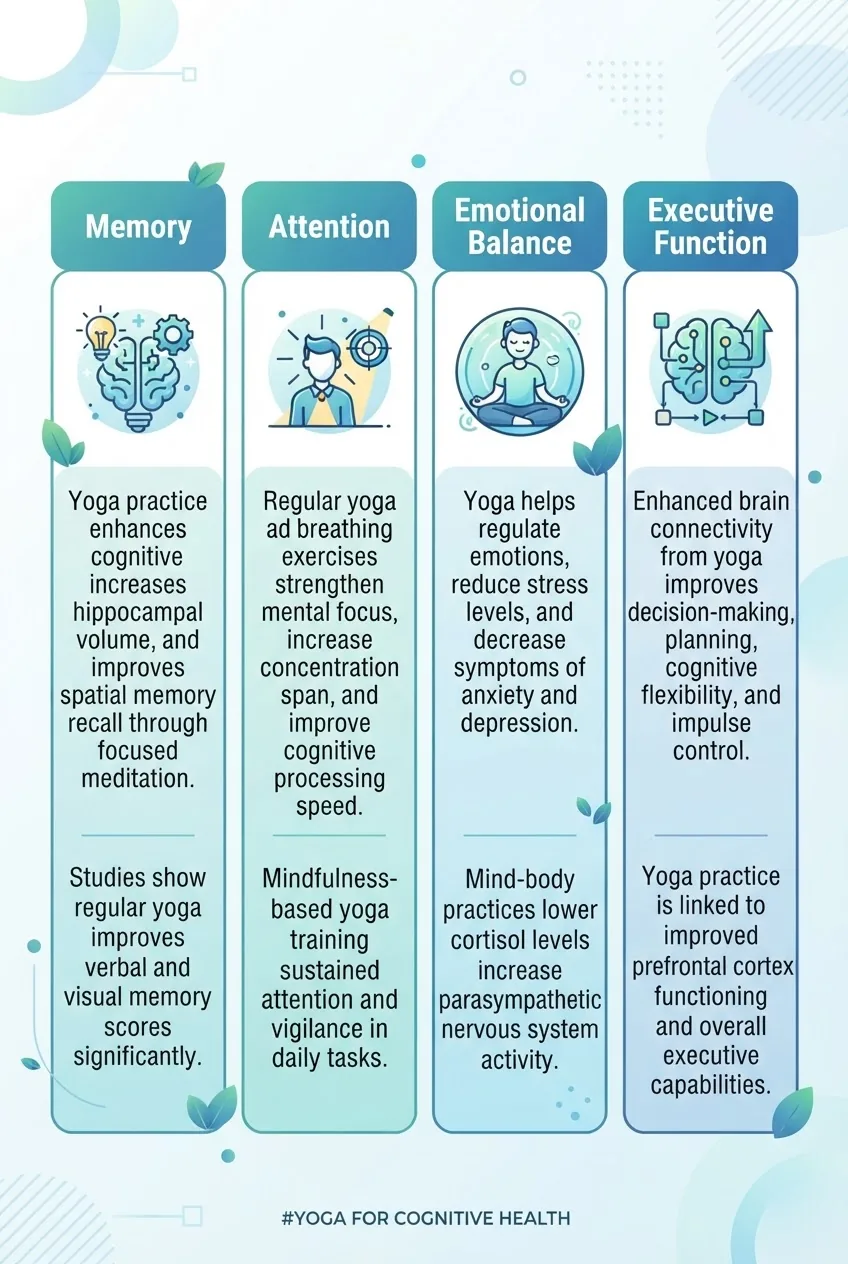
Below are primary cognitive and emotional benefits of yoga, presented as numbered items you can track in your sessions.
- Memory improvement — Regular practice supports hippocampal health and memory consolidation; measured gains are often small-to-moderate in clinical trials but consistent. Track with short delayed recall tests every 2–4 weeks.
- Attention span enhancement — Focused pranayama and mindful asana improve sustained attention and reduce distractibility; measurable by longer performance on continuous performance tasks after 6–8 weeks.
- Improved executive function — Prefrontal activation increases with combined movement and meditation, aiding planning, inhibition and cognitive flexibility; practice with task-switching drills post-session.
- Faster cognitive recovery from stress — Yoga lowers cortisol spikes and promotes faster return to baseline after stress, improving the brain’s capacity to recover and encode new information.
- Emotional regulation — Mindfulness components strengthen top-down control over limbic reactivity, reducing emotional reactivity and improving mood stability.
- Reduced symptoms of depression and anxiety — Multiple clinical trials show reductions in symptom scales when yoga is used as an adjunct to standard care; track using validated measures (e.g., PHQ-9, GAD-7).
- Enhanced sleep quality — Evening restorative yoga improves sleep efficiency and reduces sleep latency, which in turn supports memory consolidation and daytime cognition.
- Neurochemical balance — Practices can increase GABA and modulate serotonin pathways, contributing to reduced anxiety and improved mood regulation.
Transition: now that you know what changes to expect, the next section gives precise, actionable practices—poses, breathwork and meditations—you can use to aim for these outcomes.
Essential Yoga Practices for Optimizing Brain Health
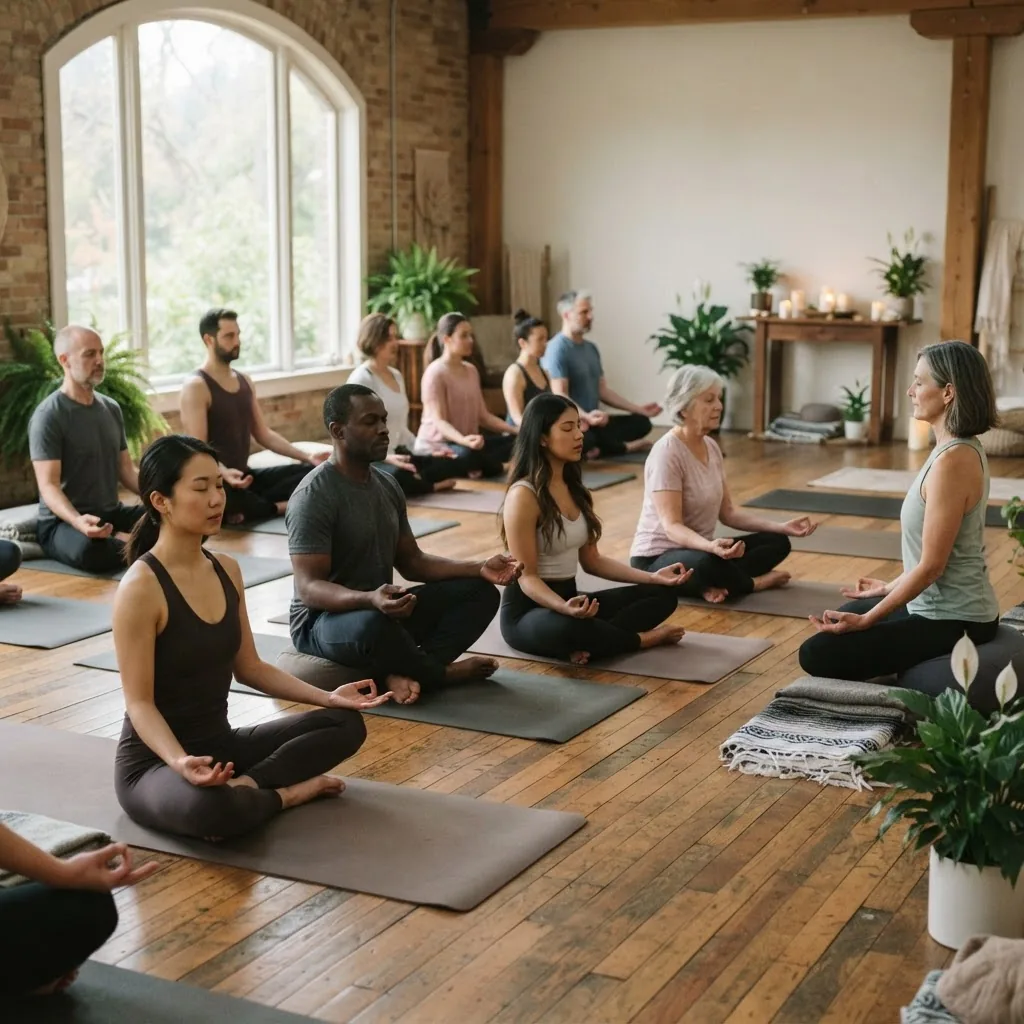
This section is the practical core. Follow the step-by-step routines below. Each practice block lists exact timings, repetitions, and modifications for safety.
-
Daily 20–30 minute brain-health express sequence (ideal for mornings)
- 1–2 minutes — Set intention and posture: Sit tall on a cushion or chair, eyes closed, spine neutral; set a simple intention like “focus” or “balance”.
- 5 minutes — Box breathing (pranayama): Inhale 4s — hold 4s — exhale 4s — hold 4s. Repeat for 5 cycles. Box breathing increases parasympathetic tone and reduces cortisol spikes; use a soft timer at 60% volume.
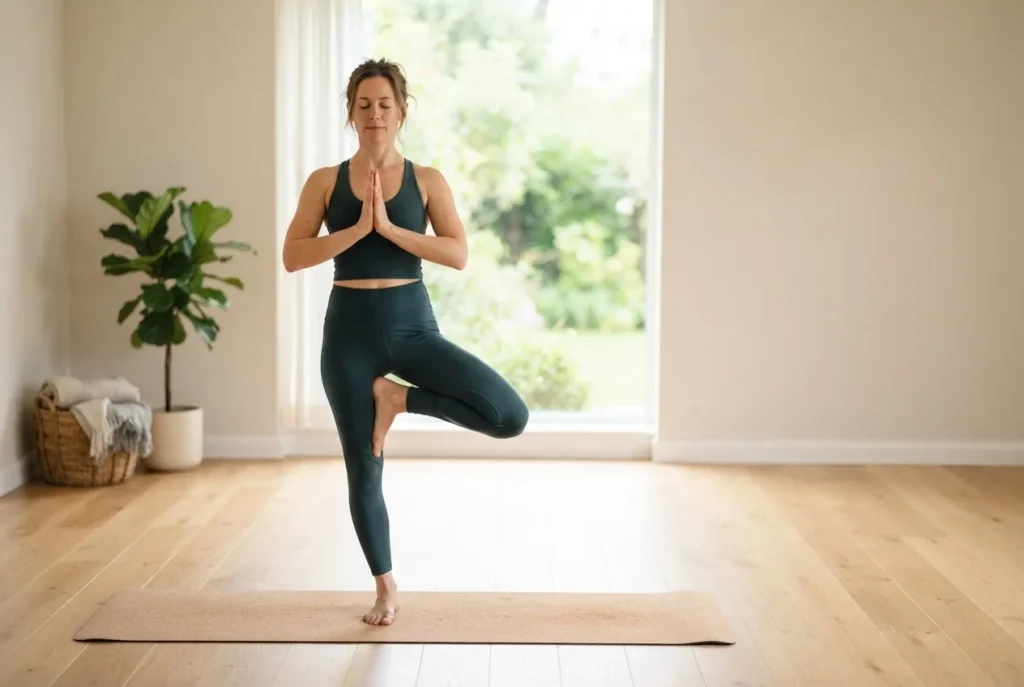
- 8–10 minutes — Gentle asana flow for proprioception: Perform 3 rounds of Sun Salutation A at slow tempo: 5 slow breaths per position. Include 2 sets of standing balance pose (Tree Pose) holding each side for 30 seconds to challenge attention and vestibular input.
- 5 minutes — Focused-attention meditation: Choose a breath or a single-word mantra; note distractions and gently return. Time using a silent timer; aim for uninterrupted attention windows of 60–90 seconds initially, building to 5 minutes within 4 weeks.
Modifications: chair Sun Salutation; for knee issues shorten sequences. Track perceived focus before and after with a 1–10 scale.
-
Evening 20–30 minute restorative routine for sleep and memory
- 2 minutes — Progressive relaxation: Lie on back, perform head-to-toe muscle relaxations (5–7s tension, 10s release).
- 10 minutes — Restorative poses: Supported Child’s Pose 3–5 minutes, Legs-Up-The-Wall 5 minutes, Reclined Bound Angle 2–4 minutes. Use bolsters to avoid neck strain. Slow diaphragmatic breathing 6 breaths/minute.
- 6–8 minutes — Guided body-scan meditation: Use a 7–8 minute audio or self-guided script to enhance interoceptive awareness and reduce hyperarousal.
Sleep tracking: use actigraphy or sleep diary; target +7% improvement in sleep efficiency within 8–12 weeks (based on similar trials).
breathing meditation exercises
Note: this routine targets memory consolidation via improved sleep architecture and reduced nocturnal cortisol.
-
12-week progressive routine to strengthen attention and executive function
Week-by-week structure (30–45 minutes/session, 5 sessions/week):
- Weeks 1–4: foundation building — 20–30 minute sessions focused on alignment, 10 minutes pranayama (alternate nostril breathing for 3–5 minutes + coherent breathing for 5 minutes), 10 minutes mindfulness.
- Weeks 5–8: add cognitive challenge — include complex balancing sequences, longer focused-attention meditations (10–15 minutes), and dual-task drills (e.g., counting backwards while holding a pose) twice weekly.
- Weeks 9–12: consolidation and testing — increase session difficulty and perform simple executive function tests (trail-making-like tasks) pre/post sessions to observe gains.
benefits of meditation for mental health
Expected outcomes: measurable improvements in attention and task switching within 8–12 weeks; document with simple cognitive tasks or validated mobile cognitive tests.
-
Short micro-practices to use during work or study (5–10 minutes)
- 2 minutes — Breath reset: 6 rounds of 4-4-6 (inhale-hold-exhale) pacing to reduce immediate stress.
- 3–5 minutes — Standing balance + single-point focus: Stand on one leg for 30–60s while tracking breath; repeat other side. This sharpens attention networks fast.
- 1–2 minutes — Grounding pause: Feel feet contact floor, name three current sensations out loud to anchor attention.
Micro-practice frequency: use every 60–90 minutes during cognitively demanding work to maintain focus and reduce mental fatigue.
-
Weekly extended session for deeper neuroplastic changes (60–90 minutes)
Structure:
- 20 minutes — Energising asana flow: include standing balances and dynamic transitions, maintain continuous attention to alignment and breath.
- 15 minutes — Targeted pranayama: alternate nostril breathing (Nadi Shodhana) 8–10 minutes, followed by 5 minutes of slow diaphragmatic breathing.
- 25–35 minutes — Meditation and imagery: guided open-monitoring meditation or loving-kindness practice. Finish with 5 minutes of journaling about insights.
Purpose: extended sessions create longer periods of directed attention and autonomic regulation, likely strengthening network connectivity and supporting neuroplasticity.
-
Specific asanas and their brain-focused rationale
- Tree Pose (Vrikshasana): improves proprioception and sustained attention (hold 30–60s each side; 2–3 sets).
- Standing Forward Fold (Uttanasana): stimulates vagal tone when combined with slow exhale; hold 5–8 breaths.
- Bridge Pose (Setu Bandha): opens chest and encourages diaphragmatic breathing; hold 6–8 breaths, 2–3 rounds.
- Legs-Up-The-Wall (Viparita Karani): restorative, reduces sympathetic arousal; hold 5–10 minutes with slow breathing for sleep support.
-
Meditation techniques focused on executive control
Practice two complementary forms:
- Focused attention (FA): count breaths 1–10 and repeat (start 5 minutes, progress to 15). This trains selective attention and inhibition.
- Open monitoring (OM): observe thoughts and sensations without engagement for 8–20 minutes; builds cognitive flexibility.
Frequency: FA 3–5 times weekly; OM 2–3 times weekly. Record session length and perceived distraction incidents to measure progress.
-
Breathwork specifics (timings and targets)
Use these protocols with exact timing:
- Coherent breathing: 5 breaths per minute (inhale 6s / exhale 6s) for 10 minutes to increase HRV and reduce cortisol.
- Alternate nostril (Nadi Shodhana): 5–10 minutes, 2–3 cycles with breath retention removed if uncomfortable.
- Bhramari (humming bee breath): 5 cycles of 30s humming with slow exhale to stimulate vagus nerve and promote GABA increases.
Transition: integrating these practices consistently is key—next we explain how to combine yoga with mindfulness specifically to manage stress and sharpen cognition.
Integrating Yoga and Mindfulness for Stress Reduction and Cognitive Clarity
To deepen stress regulation and cognitive clarity, combine yoga sessions with targeted mindfulness exercises in a way that complements daily schedules and clinical needs.
Actionable integration recipe (daily):
- Morning 10–15 minute clarity routine: 5 minutes coherent breathing + 5–10 minutes focused-attention meditation. Use a quick journal entry to set three priorities—this primes prefrontal engagement.
- Midday micro-reset: 3–5 minutes of standing balance + breath reset between tasks to reduce stress accumulation and maintain attention.
- Evening wind-down: 20 minutes restorative yoga + body-scan meditation to lower bedtime cortisol and improve sleep-dependent memory consolidation.
Practice recommendations (frequency and thresholds):
- Minimum effective dose: 10–15 minutes daily for subjective improvements in clarity within 2–3 weeks (According to a 2021 clinical intervention trial, subjective focus improved within 3 weeks with daily 15-minute combined practices).
- Target dose for measurable cognitive change: 30–45 minutes, 4–6 days/week for 8–12 weeks (According to a 2022 RCT summarised in a peer-reviewed journal).
Practical mindfulness pairings and resources:
- For fast in-office techniques try short mindfulness meditation guide to complement physical micro-practices.
- mindfulness exercises for anxiety — this pillar complements yoga-based stress reduction.
- short mindfulness meditation guide
- advanced stress relief tools
- yoga for anxiety relief
Monitoring and progression tips:
- Record morning vs evening perceived stress (0–10) and focus (0–10) to track changes weekly.
- Use salivary cortisol sampling if clinically supervised to validate reductions (typical research assays sample morning peak and 30 minutes post-awakening).
Transition: beyond immediate stress reduction, regular yoga supports long-term brain resilience and may help prevent cognitive decline as you age.
Yoga’s Role in Preventing Cognitive Decline and Supporting Healthy Aging
Yoga can be part of a multimodal strategy to maintain cognitive reserve and slow age-related decline. Mechanisms include sustained cardiovascular health, stress hormone regulation, improved sleep, and activity-driven neuroplasticity.
Evidence summary and context:
- According to a 2023 systematic review in a peer-reviewed neuroscience journal, mind–body interventions including yoga were associated with modest improvements in global cognition and attention in older adults across trials using cognitive batteries and imaging endpoints (study sizes varied; many N=40–120).
- According to National Institute on Aging resources, lifestyle factors (physical activity, sleep quality, social engagement) have documented effects on cognitive aging; yoga supports several of these domains simultaneously.
Practical practice suggestions for older adults (exact parameters):
- Session length: 20–40 minutes, 4–6 days per week.
- Intensity: low-to-moderate; avoid high-impact or complex balance challenges without supervision.
- Key elements: strength-building standing poses twice weekly, daily gentle pranayama (5–10 minutes), and 10–15 minutes of mindfulness or guided imagery for mood and sleep.
Clinical caveats: older adults with cognitive impairment should combine yoga with cognitive training and medical care. According to a 2022 clinical trial in older adults (actigraphy + cognitive tests, n≈90), combined moderate yoga and cognitive stimulation led to greater gains than either intervention alone.
External authority for aging context: National Institute on Aging provides evidence summaries on lifestyle and cognitive health.
Transition: now that you have evidence and routines, here are pragmatic tips to start and sustain a brain-focused yoga practice.
Tips for Starting and Sustaining a Brain-Healthy Yoga Practice
- Start small and measurable: Begin with 10–15 minutes daily for two weeks, then increase by 5–10 minutes each week until you reach 30–45 minutes.
- Schedule sessions like appointments: Block time in your calendar 4–6 times per week; consistency beats intensity for neuroplasticity.
- Use objective tracking: Track session length, perceived focus (1–10), mood (1–10), and sleep efficiency weekly. Expect detectable changes in 6–12 weeks.
- Mix modalities: Combine movement days with breath + meditation days to target different brain systems.
- Prioritise recovery: One full rest day weekly and one restorative session are essential to avoid burnout and excessive sympathetic activation.
- Join group classes for adherence: Group classes provide social engagement and accountability; consider at least one instructor-led weekly class for technique feedback.
- Use structured programs for onboarding: Consider a guided program like a 30 day yoga challenge for wellness to build routine.
Transition: skilled practitioners and novices alike make errors—learn from common mistakes I’ve seen when coaching clients.
Common Misconceptions About Yoga and Brain Health
Below is a factual comparison table addressing common myths.
| Myth | Fact |
|---|---|
| Yoga alone cures depression and anxiety | Yoga can reduce symptoms and support treatment but is typically adjunctive; severe cases need medical and psychological interventions. See anti-anxiety medication information for context. |
| Only meditation matters for the brain | Movement (asanas) and breath (pranayama) have independent physiological effects—combine modalities for maximal benefit. |
| You must practice daily for results | Regularity is key, but benefits accrue with 4–6 sessions/week; micro-practices still yield improvements. |
| Yoga guarantees prevention of dementia | Yoga supports protective factors but cannot guarantee prevention; it should be part of a holistic approach including diet, sleep, and medical care. See professional options like counseling for anxiety when relevant. |
Transition: having addressed myths, I’ll describe common mistakes I’ve observed and how to avoid them, then provide a checklist and when to call a professional.
Common mistakes and how to avoid them
I often see students expecting immediate dramatic cognitive shifts—then dropping practice. I learned that gradual consistency and tracking small signals (better sleep, fewer distractive thoughts) are what sustain practice. I also watched experienced yogis skip breathwork; that reduced their stress-regulation gains. Finally, attempting complex balance poses without a foundation led to injury and demotivation.
- Fix: Start with 10–15 minutes and commit for 6–12 weeks, tracking incremental metrics.
- Fix: Prioritise breathwork—5–10 minutes daily—before adding advanced asanas.
- Fix: Use props and progressions for balance work; practice near a chair or wall.
Compact checklist: verify your brain-healthy yoga practice
- Session frequency: 4–6 times/week with at least one weekly 60-minute session.
- Session content balance: movement (15–30 min), breathwork (5–10 min), meditation (5–20 min).
- Tracking: weekly log of focus (0–10), mood (0–10), and sleep efficiency.
- Progression: length or difficulty increased by 5–10 minutes or one additional challenge every 2 weeks.
- Safety: medical clearance obtained if over 65 or with chronic conditions.
When to call in a professional
- New or worsening neurological symptoms (dizziness, fainting, new weakness): consult your GP or neurologist immediately.
- Severe depression or anxiety: combine yoga with clinical care—see anti-anxiety medication information and local mental health services for guidance.
- Balance or mobility limitations: consult a physiotherapist for adapted practices before attempting standing balance progressions.
Final transition: a short summary highlighting the practical next steps and a clear call to action follows.
Takeaway: Combine daily short practices with weekly extended sessions, prioritise breath and attention training, track metrics, and expect measurable brain-related benefits within 6–12 weeks while treating yoga as part of a broader brain-health plan.