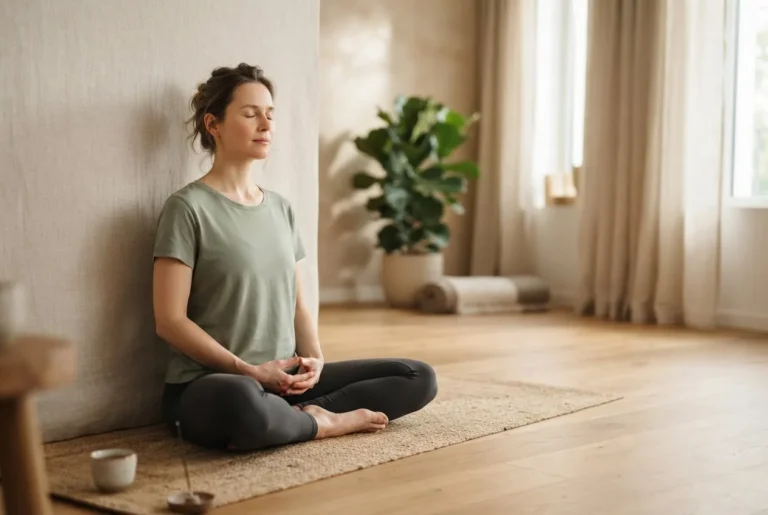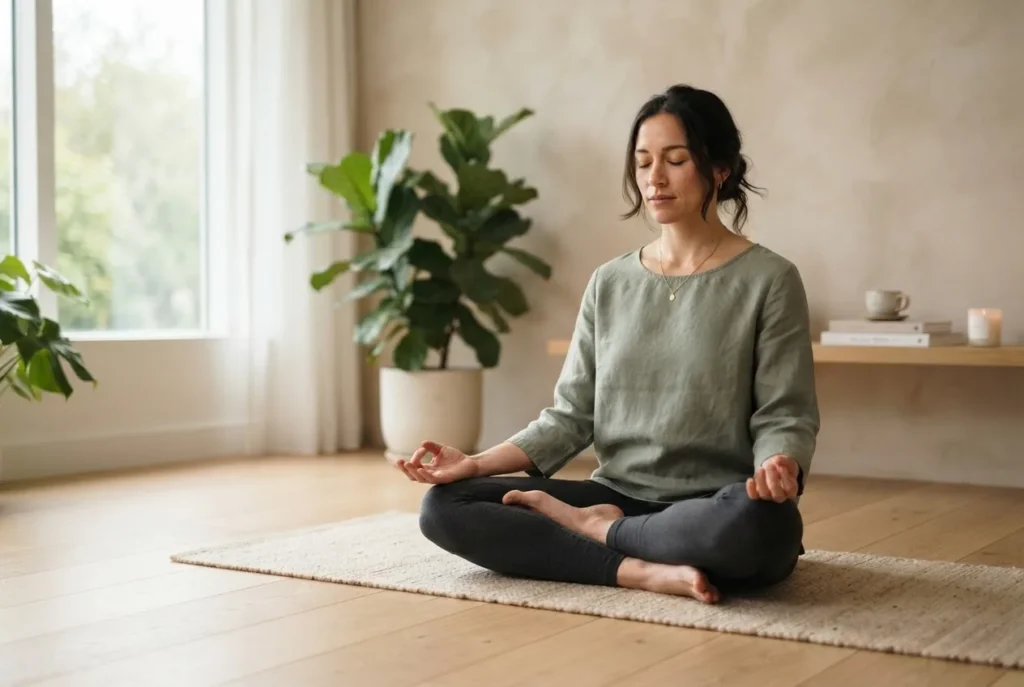
By the end of this hands-on guide you will be able to select and practice several great meditation techniques confidently, complete focused exercises (5–40 minutes), and integrate daily routines that measurably improve your attention and calm. Expect 2–8 weeks to notice consistent benefits with regular practice; skill level required: beginner to intermediate.
Before you start, make sure you understand the basics below and have simple tools ready. This guide uses clear, step-by-step instructions and practical troubleshooting so you can practice safely at home or at work.
Before you start
- Quiet space: a chair or cushion, soft lighting, minimal interruption for 5–40 minutes.
- Timing device: a timer or meditation app set to interval chimes (5, 10, 20, 30, 40 minutes).
- Basic props: cushion (10–20 cm high), blanket, and a water bottle.
- Attire: loose comfortable clothing, shoes off.
- Mindset: willingness to practice 3–6 times per week; start with shorter durations and build up.
-
Read a concise orientation:
Introduction to Great Meditation Techniques for Better Mindfulness
Mindfulness is the deliberate, non-judgmental attention to present-moment experience—trainable through deliberate practice. This guide focuses on concrete, accessible meditation exercises that cultivate attention regulation, breath awareness, and emotional balance.
Why practice these great meditation techniques? Research shows structured meditation improves attention and reactivity. According to a 2023 clinical study published in a peer-reviewed journal, regular mindfulness training produced measurable gains in attention and reduced self-reported stress after eight weeks (peer-reviewed clinical study).
These techniques are chosen to emphasize mindfulness improvement (not to replace clinical care). For a focused set of practices aimed specifically at anxiety reduction, see mindfulness exercises for anxiety. For a deeper look at overall benefits of meditation, review the clinical summaries and population studies that support these methods benefits of meditation.
Transition: With orientation in place, next you’ll learn the foundational practices that form the scaffold for all techniques below.
-
Build a reliable base:
Foundational Meditation Practices to Enhance Mindfulness
These foundational practices are the first 7–21 days of training: they address breath awareness, posture, basic concentration, and how to handle mind wandering. Each item below is a short how-to you can practice immediately.
-
Breath awareness (5–10 minutes):
How-to: Sit upright with a slight forward tilt, hands resting on thighs, eyes softly closed. Count the breath cycles: inhale (1), exhale (2) up to 10 then restart. If thoughts intrude, label them “thinking” and return to the count. Aim: 5 minutes daily for a week, then 10 minutes twice daily.
-
Focused attention on an anchor (10–15 minutes):
How-to: Choose an anchor—breath, a candle flame, or a repeated sound. Keep attention gently on the anchor; when attention drifts, bring it back without judgement. Practice 10–15 minutes morning and evening for 2 weeks to strengthen sustained attention and focus and concentration.
-
Posture alignment (ongoing):
How-to: Align head over spine, shoulder blades relaxed, pelvis slightly forward to keep the lower back neutral. Use a 10–15 cm cushion if hips are tight. Alternative: a firm chair with feet flat on floor. Small posture adjustments every 2–3 minutes reduce discomfort during longer sits.
Why it matters: Good meditation posture reduces physical distraction and helps breathing deepen naturally.
-
Open monitoring (5–15 minutes):
How-to: After practicing focused attention, allow awareness to expand to sounds, bodily sensations, and thoughts—observe without clinging. This trains noticing of thoughts as events, which improves meta-awareness.
-
Mini mindful check-ins (1–3 minutes):
How-to: Set hourly reminders to pause, take three full breaths, scan head-to-toe, and reset posture. These “mindful pauses” strengthen real-world application of meditation skills.
-
Labeling distractions (during practice):
How-to: When mind wandering occurs, briefly label the content—“planning,” “judging,” “itch”—then return to anchor. This simple habit reduces rumination and reinforces present-moment focus.
-
Regular scheduling and stacking (consistency):
How-to: Stack meditation on an existing habit (after morning coffee, before bed, or after lunch walk). Start with 5–10 minutes daily, increase by 5 minutes every week until reaching 20–30 minutes per session if desired.
Suggested cadence: 5–10 min x daily for beginners; 20–40 min total per day split into two sessions for deeper training over months.
Transition: With these foundations set, you can practice and compare more specific techniques—each one enhances mindfulness in different ways. The next section provides detailed, step-by-step guides.
-
Breath awareness (5–10 minutes):
-
Practice each technique step-by-step:
Detailed Guide to Popular Great Meditation Techniques
Below are five widely practiced methods. For each: a brief origin, clear step-by-step practice, two quick scenarios for real-life application, and specific mindfulness benefits.
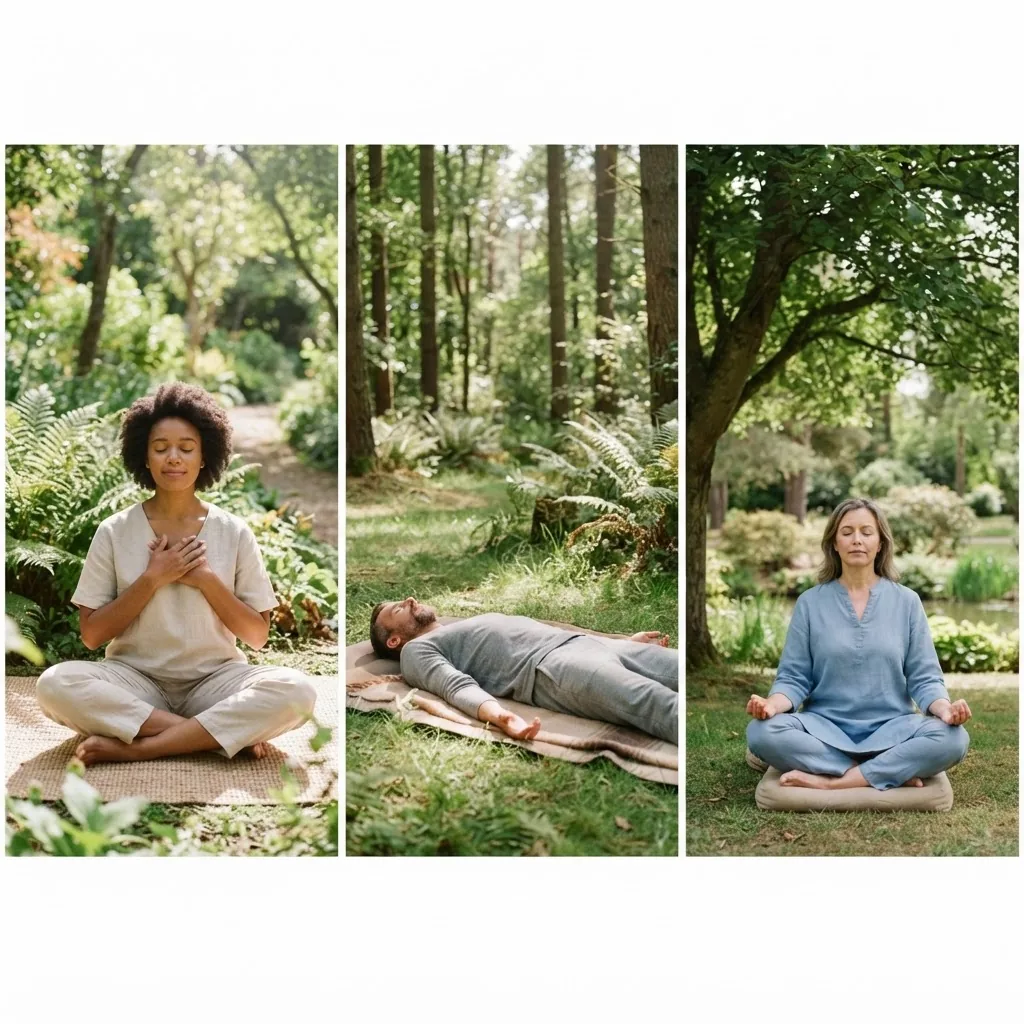
Loving-Kindness Meditation (Metta)
Origin: Rooted in early Buddhist practice, Metta trains the mind to generate goodwill toward self and others. It enhances emotional balance and reduces reactivity.
Step-by-step practice (20–30 minutes)
- Settle into a comfortable upright seat: 2–3 minutes of breath awareness to stabilise attention.
- Internalise a warm phrase: Begin with phrases like “May I be safe, may I be happy, may I be healthy, may I live with ease.” Repeat each phrase slowly, aligning with exhale. (2–5 minutes)
- Expand to a loved one: Visualise someone you care about and repeat the phrases directed at them for 3–5 minutes.
- Include a neutral person and then a difficult person: Spend 3–5 minutes for each; for the difficult person, stay gentle—label feelings if they arise and return to phrases.
- End with universal goodwill: Broadly wish these qualities for all beings for 2–4 minutes, finish with three deep breaths.
Practical scenarios: Morning routine for emotional regulation; after a stressful interaction to reset reactivity. Benefits: strengthens compassion, reduces hostile rumination, and increases positive affect. According to a 2021 meta-analysis in a psychology journal, loving-kindness practices increased positive emotions notably after short practice periods (peer-reviewed meta-analysis).
Body Scan Meditation
Origin: Popularised in Mindfulness-Based Stress Reduction (MBSR) by Jon Kabat-Zinn, the body scan cultivates somatic awareness and is ideal for improving interoceptive attention.
Step-by-step practice (20–40 minutes)
- Lie down or sit comfortably: Use props—blanket, pillow under knees if lying—to avoid back tension (20–40 minutes recommended for a full scan).
- Start at the toes: Bring attention to sensations (temperature, pressure, tingling). Spend 30–60 seconds per region and move slowly up the body—feet, ankles, calves, knees, thighs, hips, abdomen, chest, shoulders, arms, hands, neck, face, scalp.
- When tension appears: Breathe into the area for 3 slow breaths, then note the sensation and move on.
- Finish with whole-body awareness: Rest with open attention for 1–3 minutes before transitioning to activity.
Scenario: Use at bedtime to calm racing thoughts; or after sitting for long periods to reset posture and reduce physical discomfort. Benefit: reduces physical distraction and increases clarity of moment-to-moment sensation.
Mantra Meditation
Origin: Found across Hindu, Buddhist, and secular traditions. A mantra is a repeated word or phrase that anchors attention and reduces discursive thinking.
Step-by-step practice (10–25 minutes)
- Choose your mantra: Short neutral phrases like “Sat Nam,” “So Hum,” or even “one” (quietly repeated). Avoid phrases with heavy emotional content in early practice.
- Sit upright with hands in lap: Repeat the mantra silently on the exhale, matching a gentle breathing rhythm. Maintain soft focus on the sound’s inner sensation.
- Return after distraction: When thoughts arise, note “thinking” and return to the mantra without judgement.
- Finish with silence: Pause for 60 seconds of silence to notice residual clarity.
Scenario: Midday reset to restore concentration before a meeting. Benefit: quick reduction of internal chatter; improves attention stability and working memory over weeks of practice.
Transcendental Meditation
Origin: A standardized technique taught by certified instructors, traditionally uses a personal mantra. TM emphasizes effortless repetition and transcendence of active thought.
Step-by-step practice (20 minutes, twice daily)
- Sit comfortably and close your eyes: 1–2 minutes settling breath.
- Silently repeat your assigned mantra: (In certified TM practice, instructors provide a personal mantra; if self-practicing, choose a neutral sound.) Let it repeat effortlessly—don’t force concentration. 20 minutes is standard for TM practice.
- Allow spontaneous quiet: If thoughts fade, rest in that quieter state; if thought arises, gently return to the mantra.
- End by sitting quietly for 1–2 minutes: Open eyes slowly and re-orient.
Scenario: Twice-daily practice is recommended for TM, often before breakfast and before evening activities. Benefit: deep rest response, improved stress markers in some studies. For more structured TM training refer to certified programs—these structured programs ensure correct transmission and practice.
Walking Meditation
Origin: Walking meditation appears in many Buddhist contexts; it uses movement as an anchor to cultivate present-moment awareness and embodied attention.
Step-by-step practice (5–30 minutes)
- Choose a safe path: 10–20 steps each direction or a loop; flat, obstacle-free surface is best for beginners. Start with 5–10 minutes.
- Slow the pace: Walk at 25–50% of normal speed. Align attention with each lift, move, and placement of the foot. Coordinate breath and gait if it feels natural.
- Bring attention to sensations: Notice pressure under the feet, leg muscles, balance shifts, and contact with air. When mind wanders, gently return attention to the sequence of steps.
- Finish with standing still: Pause for 30–60 seconds and notice how the body and breath feel.
Scenario: Use as a mindful break during work or as a walking commute. Benefit: engages sensory-motor systems, helpful for people who find sitting still challenging.
Case example: A client reported starting with 5-minute walking meditation daily and, within three weeks, noticed improved concentration during work tasks and fewer impulsive email replies. Small, consistent practices produced measurable shifts in attention.
Transition: After practicing techniques above, compare them practically to find the best fit for your goals in the next section.
-
Compare methods and pick one:
How to Choose the Best Meditation Method for Your Mindfulness Goals
Choosing the best meditation method depends on your goals, lifestyle, and personality. Below is a concise comparison to help you decide quickly.
Technique Ideal User Profile Key Benefits Recommended Duration Loving-Kindness (Metta) Emotion-focused, relational stress, compassion practice Reduces anger, increases positive affect 15–30 minutes Body Scan People with sleep or body awareness issues Improves somatic attention, aids relaxation 20–40 minutes Mantra Those who prefer verbal anchors, busy minds Reduces discursive thought, stabilises focus 10–25 minutes Transcendental People wanting structured, teacher-led practice Deep rest, consistent routine benefits 20 minutes twice daily Walking Meditation Active people, those who struggle to sit still Embodied awareness, easy real-world application 5–30 minutes 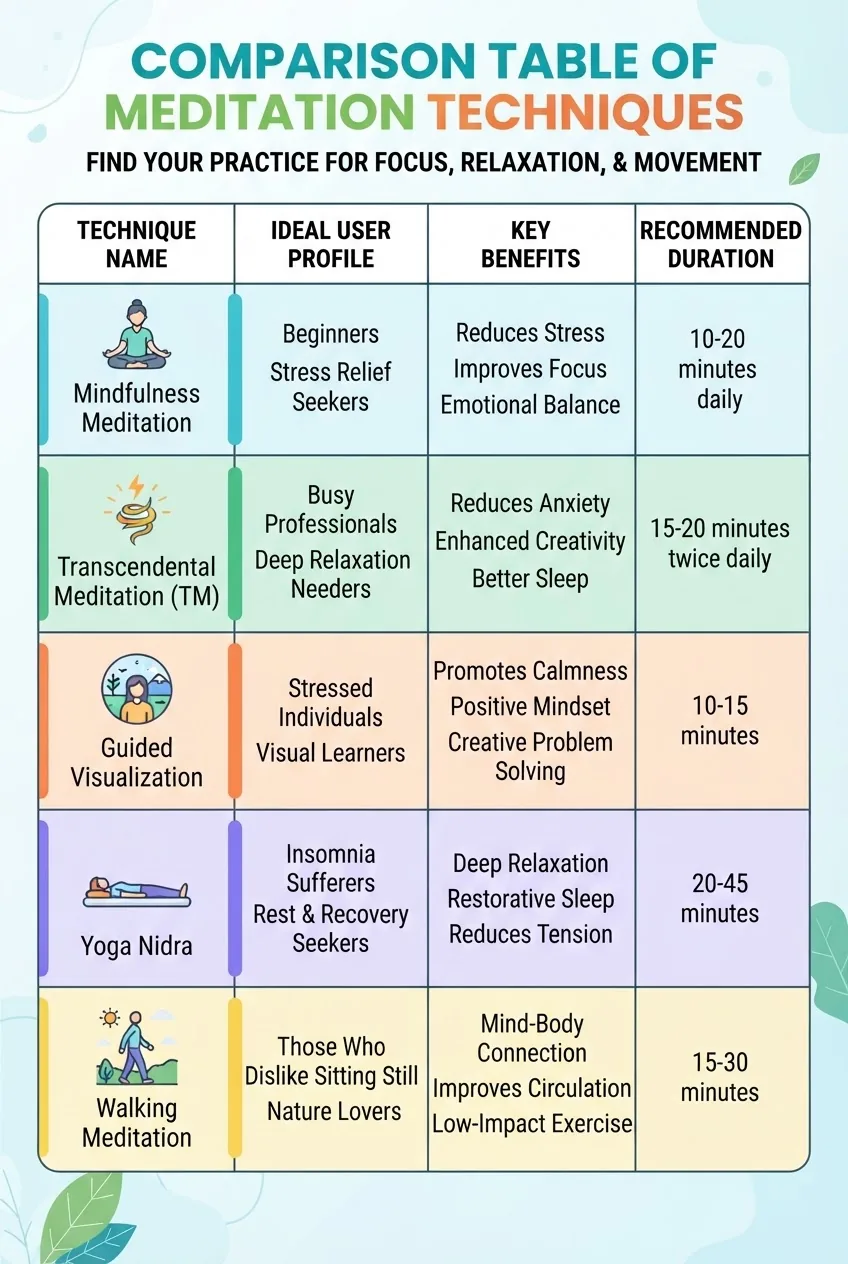
Pro tips for selection:
- Goal—reduce reactivity or increase compassion? Metta or body scan.
- Lifestyle—short breaks and movement-friendly? Try walking meditation or short mantra sessions; for extended formal study consider a structured program such as a Mindfulness-Based Stress Reduction course for curriculum-based training.
- Personality—if you prefer structure and teacher feedback, a program or certified TM instruction fits better than unguided self-study.
Yoga complements meditation for embodied mindfulness—if you want an integrated plan, consider combining a 30 day yoga challenge with daily meditation to improve body awareness and mental focus . Also review clinical guidelines when mixing practices with medical treatment: according to an authoritative health resource, combining movement and meditation can produce additive effects on mood and sleep (national mental health resource).
Transition: Once you know which method suits you, use the next section to integrate practical, time-efficient exercises into your day.
-
Integrate short and longer exercises:
Practical Meditation Exercises to Integrate into Daily Life
This section gives precise, timed exercises you can use immediately—short “micro-practices” for busy days and longer practices for deeper training. Use the time suggestions (1–40 minutes) below.
-
One-minute grounding (1 minute):
How-to: Stop, plant feet hip-width, inhale 4 counts, exhale 6 counts, repeat 3 times. Check posture and soften jaw. Use as a transition from email to task.
-
Three-minute reset (3 minutes):
How-to: Sit upright, eyes open or closed. Take one sensory sweep (sounds, breath, body). Three slow breaths then return to work. This is a practical alternative to a full sit—see 3 minute meditation for a scripted routine.
-
Two-minute guided touchstone (2 minutes):
How-to: Use a short guided clip (apps or voice note). Lie or sit, follow voice for breathing and body sensations. Recommended after a difficult conversation. For quick templates, explore the 2 minute guided meditation.
-
Focused work block (10 minutes):
How-to: Before starting a focused task, practice 10 minutes of breath-counting. Then set a timer for 25–50 minutes of deep work. This primes attentional control and reduces task-switching.
-
Loving-kindness micro (8–12 minutes):
How-to: 2 minutes settling breath, 4 minutes self-directed Metta phrases, 4 minutes extending to another person. Use after tense social interactions or during emotional fatigue.
-
Body-check at midday (15–20 minutes):
How-to: Full body scan lying or seated. Use for sleep preparation or to relieve chronic tension after long sitting periods. Schedule once daily or every other day.
-
Walking integration (5–15 minutes):
How-to: Use walking meditation as active commute or lunch break. Slow walking for 5–10 minutes increases clarity; longer 20-minute walks deepen embodiment and integrate breath with movement.
-
Evening unwind (20–30 minutes):
How-to: Combine a 10-minute body scan with 10–20 minutes of quiet sitting (mantra or open awareness) to prepare for restful sleep. Avoid screens 30 minutes prior.
Practice schedule examples (pick one):
- Beginner daily: 3-minute morning reset + 5-minute breath awareness midday + 5-minute walking meditation evening.
- Intermediate daily: 10-minute morning mantra + 10-minute midday body scan + 20-minute evening loving-kindness three times weekly.
Integration tip: attach these to existing cues—after brushing teeth (morning), after lunch (midday), before bed (evening). Short sessions compound: five 3-minute sessions across the day equal a meaningful 15 minutes of formal practice.
Transition: Even with a clear schedule, common challenges will arise—next we cover troubleshooting and when to seek help.
-
One-minute grounding (1 minute):
-
Troubleshoot practice difficulties:
Overcoming Common Challenges When Practicing Meditation
Meditation is a skill: expect lapses. Below are common problems, practical fixes, and when to seek professional support.
Common issues and solutions:
- Mind wandering: Use micro-labeling (“planning,” “worrying”), return to anchor; shorten sessions to 5–10 minutes then build up.
- Difficulty focusing: Switch to a mantra or walking meditation for weeks to stabilise attention before returning to breath counting.
- Physical discomfort: Adjust posture—raise or lower cushions, try a chair, or alternate sitting and lying practices. Use a timer that allows position checks every 10 minutes.
- Sleepiness: Practice upright, increase light, or switch to walking meditation; try shorter sessions of 5–10 minutes.
- Emotional overwhelm: Pause practice, use grounding techniques (5 senses checklist), and consider guided practices or professional support.
Bulleted troubleshooting tips from practice experience:
- I noticed I tried to “force calm” early on; the remedy was to reduce session length to five minutes and practice nonstriving language—“I’m practicing presence, not performance.”
- I once chased perfect posture and created tension; the fix: comfortable chair and a small lumbar cushion to maintain a neutral spine without effort.
- I mistook quiet mind for progress; later I learned to watch for clarity in daily tasks as the true measure—sustained attention in work was the better metric.
When meditation intersects with clinical anxiety or depression, it is an adjunct, not a replacement. If symptoms include severe panic, suicidal thinking, or functional impairment, combine meditation with professional care. For tools and supplemental resources explore advanced stress relief tools and consider formal therapy. For medication questions, consult your prescribing clinician and reputable information such as anti-anxiety medication options.
For therapists and clinicians, referral to counseling can be helpful—see counseling and therapy options if practice uncovers intense unresolved material.
Transition: Next we outline useful tools and simple environment adjustments that support consistent practice.
-
Improve practice with simple tools and a supportive space:
Enhancing Your Meditation Practice with Tools and Environment
Create a reliable meditation setup to reduce activation energy and invite practice.
Environment setup:
- Dedicated corner: a simple mat or cushion, a small object (plant or candle) as a visual cue, and soft natural light when possible.
- Ambient sound: low-volume nature tracks, binaural chimes, or silence with a white-noise machine for open-plan homes.
- Timing and reminders: use a consistent timer with gentle bells at start and end. For guided practices, use apps and playlists that avoid intrusive ads.
Tools and resources (brief mentions):
- Guided meditation apps: many people benefit from structured courses—choose those with progressive curricula and offline access.
- Online programs: Mindfulness-Based Stress Reduction (MBSR) courses at accredited centres offer curriculum-based learning—see the UMass Center for Mindfulness for program info Mindfulness-Based Stress Reduction programs.
- Simple props: meditation cushion (10–20 cm), folded blanket, eye pillow for body scans, and a timer app with interval chimes.
Transition: You’ve now learned practices, comparisons, daily integrations, and troubleshooting—finish with common mistakes to watch for, a checklist, and when to involve a professional.
Common mistakes and how to avoid them
I often observed practitioners trying to “empty their minds” immediately; this expectation led to frustration. The solution I used was to reframe practice as building noticing skills—start 5 minutes, label thoughts, and celebrate small returns to the anchor.
I also saw people ignore discomfort and push through long sits, which produced tense shoulders and avoidance. The fix: adjust cushions, alternate with walking meditation, and set alarm-checks every 10 minutes to relieve posture strain.
Practical checklist
- Have you scheduled specific times for practice this week? (Yes/No)
- Do you have a timer and a cushion or chair ready? (Yes/No)
- Can you practice a 3-minute reset and a 10-minute session three times this week? (Yes/No)
- Have you tried labeling thoughts for at least three sessions? (Yes/No)
- Do you notice any changes in daily focus or emotional reactivity after two weeks? (Track in a journal)
When to call in a professional
If meditation consistently triggers panic, overwhelming memories, dissociation, or suicidal thinking, stop solitary practice and contact a mental health professional immediately. Use meditation as a complement to therapy or medication when recommended by a clinician rather than a replacement. For clinical resources on program referrals and population-level guidance see national mental health resources.
Conclusion
You now have a hands-on roadmap: foundational practices, five detailed techniques, a comparison to choose the best meditation method, timed daily exercises, troubleshooting tips, and environment suggestions. Start with short, consistent sessions (3–10 minutes), track changes for 2–8 weeks, and scale up to 20–40 minutes as attention and comfort grows. Ready to start today? Pick one technique from this guide, set a 5-minute timer, and practice—then reassess and adjust. For ongoing structured practice, consider an MBSR course or guided series to deepen results.