By the end of this hands-on guide you will have a practical, personalised meditation for anxiety practice you can use daily to reduce acute symptoms and lower baseline anxiety; plan for 2–30 minutes per session, with visible changes often emerging in 3–8 weeks. Skill level: beginner to intermediate; no prior meditation required.
Before you start
- Quiet space or corner (2 m²) and a cushion or chair.
- Timer or phone app set to Do Not Disturb (use 5, 10, or 20-minute presets).
- Journal or notes app for tracking sessions (2–3 bullets per session).
- Comfortable clothing, water, and access to guided audio if needed.
- If you have a diagnosed anxiety disorder, check with your clinician before changing medication or therapy plan.
Understanding Anxiety and Meditation
This section explains core concepts so you can apply meditation specifically to anxiety, not just general stress reduction. First, definitions: anxiety disorders are a group of conditions marked by excessive worry, panic attacks, or persistent fear that affects daily functioning. Typical anxiety symptoms include racing heart, shortness of breath, rumination, muscle tension and avoidance.
Meditation—in simple terms—is a set of practices that train attention and emotion regulation through focused awareness, open monitoring, or compassion cultivation. The mind-body connection is central: repeated practice reshapes habitual responses to perceived threat, interrupting the stress response at its early stages.
When we talk about using meditation to treat anxiety we mean targeted practices that reduce hypervigilance, interrupt rumination and downregulate physiological arousal. These are different from general relaxation techniques because the goal includes changing how you relate to anxious thoughts—not just calming the body.
A brief user case: a 34-year-old teacher with generalized anxiety reported moving from daily panic sensations to two panic-free weeks after consistently using 10–15 minutes of breath-focused meditations twice per day for six weeks, alongside weekly therapy. This illustrates how meditation often performs best as a consistent, complementary practice.
mindfulness exercises for anxiety
Author note: I am a meditation coach with clinical supervision experience working with anxiety clients for over eight years; the methods below are drawn from clinical protocols and classroom practice.
Next, we’ll examine the physiological and neural mechanisms that explain why meditation can reduce anxiety.
How Meditation Works to Reduce Anxiety
Understanding the mechanisms helps you choose practices with the best chance of relief. Meditation affects brain function, stress hormones, and autonomic balance—key levers in anxiety management.
- Neural regulation: Regular practice increases prefrontal cortex activity (better top-down control) and reduces hyperactivity in the amygdala (threat response).
- Stress hormone reduction: Meditation can lower cortisol spikes associated with acute stress and reduce baseline cortisol after weeks of practice.
- Autonomic shift: Practices that emphasize slow, diaphragmatic breathing increase parasympathetic nervous system tone, lowering heart rate and reducing panic symptoms.
- Attention training: Repeated focusing reduces habitual rumination and worry by breaking the loop that fuels anxious thought patterns.
- According to a 2014 meta-analysis (peer-reviewed journal), mindfulness meditation showed small-to-moderate improvements for anxiety compared with no treatment — effects comparable to other non-pharmacologic interventions. JAMA Intern Med (2014)
- According to an academic program summary (institutional source), Mindfulness-Based Stress Reduction (MBSR) protocols produce measurable decreases in self-reported anxiety and improved coping across multiple RCTs. UMass Center for Mindfulness
- According to a national health organization (advocacy/education source), anxiety conditions affect tens of millions of adults, underscoring the need for accessible, low-risk interventions like guided meditation. Anxiety & Depression Association of America
Physiologically, when you slow breathing to 4–6 breaths per minute and extend exhalation, vagal tone improves and sympathetic drive reduces—this is a reproducible route to immediate anxiety relief. Over weeks, repeated practice supports neuroplastic changes that reduce reactivity to stressors.
Next we’ll map concrete meditation types and the anxiety profiles where each tends to help most.
Types of Meditation for Anxiety
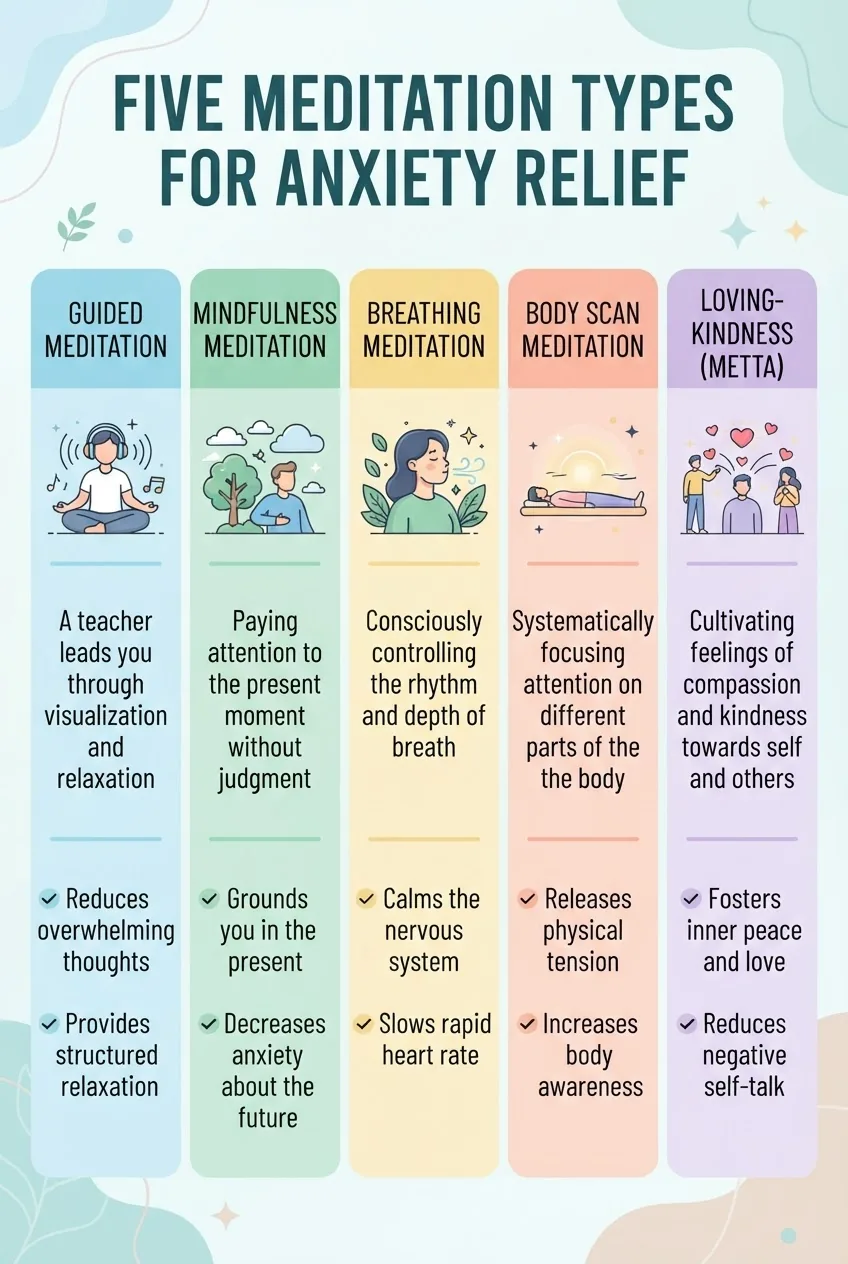
- Guided meditation for anxiety — Short audio-led sessions that direct attention and offer calming cues; best for acute anxiety and beginners. Benefits: reduces rumination quickly; supports practice adherence.
- Mindfulness meditation for anxiety disorders — Open-monitoring practice that trains non-reactive awareness of thoughts and sensations. Benefits: lowers worry cycles; improves emotion regulation over weeks.
- Breathing meditation — Focused breathwork (e.g., box breathing, 4-6 BPM breathing) to change autonomic balance. Benefits: rapid reduction in heart rate and panic symptoms; portable technique. breathing meditation techniques
- Body scan / progressive relaxation — Sequential attention to body regions to release tension and anchor attention in sensations. Benefits: decreases muscle tension and somatic anxiety; useful before sleep.
- Loving-kindness (metta) meditation — Cultivates compassion toward self and others, reducing shame and social anxiety. Benefits: increases positive affect; reduces self-criticism and social avoidance.
Each method targets a different anxiety mechanism: guided and breathing meditations act rapidly on physiology and attention, while mindfulness and metta affect cognitive patterns and self-perception over time.
Next: detailed, step-by-step instructions you can practice today, with exact timings and cues.
Step-by-Step Meditation Techniques Specifically for Anxiety
Below are 5 evidence-informed techniques with exact steps, timings, and troubleshooting tips. Follow them in order as a progressive skillset: immediate distress tools first, then longer training practices.
-
Use a 4-4-8 calming breath (3–5 minutes)
Purpose: immediate down-regulation of acute anxiety or panic onset.
- Sit upright or lie down. Set a timer for 3–5 minutes.
- Inhale quietly through the nose for 4 seconds (count silently).
- Hold the breath gently for 4 seconds.
- Exhale slowly through the mouth for 8 seconds, lips slightly pursed.
- Repeat 6–10 cycles, focusing on the exhale’s length. Expected heart rate drop: 5–12 bpm for many people within 2 minutes.
- Troubleshoot: if you feel lightheaded, shorten hold to 2 seconds and inhale for 4, exhale 6.
-
Practice a 5-minute guided grounding meditation (acute relief)
Purpose: stop spiraling thoughts and return attention to present safety cues.
- Sit with feet on floor. Set a 5-minute timer.
- Scan for 5 physical anchors: feel feet, notice chair, feel breath, name one object in the room, press fingertips together.
- Use a short phrase on each anchor: “I am safe right now.” Repeat 1–2 times.
- Finish by taking three slow full breaths and opening eyes. Use during panic onset or before a stressful event.
- Tip: carry an audio file for consistency; if you need a quick 2-minute guided meditation, try the linked template below. quick 2-minute guided meditation
-
Do a 10–20 minute mindfulness of breath session (skill building)
Purpose: reduce habitual worry through attentional training; ideal 4–6 times per week.
- Timer: 10 minutes (beginner) to 20 minutes (intermediate). Sit upright, hands relaxed.
- Focus on the sensation of breath at the nostrils or the rise/fall of the abdomen.
- When the mind wanders, note the distraction briefly (e.g., “thinking”) and return to breath—no force, gentle redirection.
- Do 3 sets of 10 minutes per day or one 20-minute session. Track progress in your journal: record session length and a single-word mood before/after.
- Common pitfall: trying to suppress thoughts—instead practice noticing and returning. For advanced readers, consult effective meditation techniques for variety.
-
Do a 20–30 minute body-scan (tension release)
Purpose: release chronic muscle tension and reduce somatic anxiety cues; effective before sleep.
- Lie down, set a 20–30 minute timer. Close eyes.
- Begin at the toes: tense for 3 seconds, release for 10 seconds, then notice sensations for 15–30 seconds.
- Move slowly upward—feet, calves, thighs, hips, abdomen, chest, hands, arms, neck, face. Spend 1–2 minutes per region for a 20–30 minute session.
- Finish with 2 minutes of slow breathing and a mental affirmation: “My body relaxes.”
- Tip: if you experience dissociation or severe depersonalisation, shorten to 10 minutes and remain seated; consult clinician if sensations worsen.
-
Practice loving-kindness (metta) for 10–15 minutes (self-compassion)
Purpose: counteract self-critical thought loops that fuel social and generalized anxiety.
- Sit comfortably. Set a 10–15 minute timer.
- Repeat silently: “May I be safe. May I be peaceful. May I be free from suffering.” Repeat for 3–5 minutes focused on self.
- Extend to loved ones for 3–5 minutes, then neutral persons, then difficult persons if comfortable—2–3 phrases each.
- Expected effect: reduced negative self-evaluation and increased social approach behaviour over weeks.
Practical dosages and timeline: start with 2–3 short daily sessions totaling 10–20 minutes. For measurable reductions in trait anxiety, expect 4–8 weeks of consistent practice; acute relief can occur in 1–10 minutes depending on the technique.
Next we’ll look at how to make these techniques part of your daily life.
Common mistakes and how to avoid them
I often saw clients try to “empty the mind” and then feel like they’d failed; that caused more anxiety. I now coach people to expect distraction, label it, and return compassionately to the breath. I also saw people do breathwork too aggressively—this produced lightheadedness; the fix was to shorten holds to 2–3 seconds and focus on gentle, comfortable breath lengths.
Another mistake: doing only 1 session a week. Real change requires dosage—ideally 10–30 minutes total daily or 4–5 sessions per week. I recommend tracking sessions and mood to maintain momentum.
Checklist
- Have you practiced breathing exercises for at least 3 days this week?
- Do you have a 5–10 minute guided file for acute anxiety?
- Are you journaling brief before/after mood notes for each session?
- Have you scheduled one 20-minute mindfulness session per week for skill-building?
- Do you know when to contact your clinician if symptoms worsen?
When to call in a professional
If meditation increases panic, causes suicidal thoughts, pronounced dissociation, or if daily functioning declines, contact a mental health professional immediately. Meditation is complementary; it should not replace evidence-based clinical care for severe anxiety or complex trauma.
Transitioning: with foundational skills set, you can integrate meditation into daily routines and access curated guided resources below.
Incorporating Meditation into Daily Life for Anxiety Management
Building a sustainable routine requires realistic scheduling, environmental supports, and contingency plans for high-anxiety days.
- Start small: commit to 2 x 5-minute sessions (morning and evening) for the first 2 weeks.
- Anchor to existing habits: meditate after brushing teeth or before your morning coffee to increase adherence.
- Use micro-practices: 1–3 minute breathing checks during breaks to reset physiology.
- Plan for setbacks: if you miss sessions, resume the next day—avoid all-or-nothing thinking.
- Combine with movement: pairing meditation with gentle yoga or walking can reinforce mind-body benefits—see the 30-day yoga challenge for stress reduction for structured options.
- Consider complementary practices: for many people, yoga as a complementary anxiety practice amplifies the benefits of meditation.
A routine example (beginner): Week 1–2: 2 x 5-minute breath sessions daily; Week 3–4: one 10-minute mindfulness session + daily micro-practices; Weeks 5–8: 20-minute sessions 4x/week plus 5-minute acute relief practice as needed.
Next: curated guided meditations and how to pick free vs paid options.
Guided Meditation Resources for Anxiety Relief
Curated resources help you apply techniques immediately. Below are free and structured options, with usage tips for anxiety-specific needs.
- Short acute guides: For moments of high anxiety use brief, directive audios (2–5 minutes). If you need a quick 2-minute guided meditation or a 3-minute meditation for mindfulness, keep them on the home screen of your phone.
- MBSR-style 8-week structured programs: look for courses offered by accredited centres; they provide progressive exposure to longer sits and group support. Use the MBSR protocol if you want a clinical-grade intervention.
- Free app-guided libraries: many apps offer anxiety tracks—choose ones that allow offline downloads and have short “panic” modules.
- Podcasts and talk-guides: select guided meditation podcasts with clear, slow instruction; use headphones and pause if you feel overwhelmed. For longer practice libraries see the site’s meditation podcasts guide.
- Online classes and community: weekly live classes increase accountability—search for trauma-informed teachers if you have complex trauma history. See our guide to guided meditation classes online for vetted options.
Usage tips: for acute panic prefer short, directive breathing and grounding guides; for chronic anxiety use daily mindfulness or metta practices; for sleep-related anxiety use body scans in the evening. If you prefer short templates, check the linked short guides above for scripts and downloads.
Next we’ll compare benefits and limitations so you know when meditation alone is enough and when to combine treatments.
Benefits and Limitations of Meditation for Anxiety Disorders
This comparison helps set realistic expectations: meditation has clear benefits but also limits—knowing both prevents disappointment and guides integration with other treatments.
| Aspect | Benefits | Limitations |
|---|---|---|
| Acute symptom relief | Breathing and grounding can reduce panic symptoms within minutes. | Not all techniques work for everyone; some may initially increase awareness of distress. |
| Long-term anxiety reduction | Mindfulness and MBSR show moderate improvements in trait anxiety over 4–8 weeks. | Effect sizes vary; not a guaranteed standalone cure for severe disorders. |
| Safety and cost | Low cost, low side-effect profile; many free resources available. | Requires time and consistency; for some, structured therapy or medication is still required. |
If you need additional support beyond meditation, consider advanced stress relief tools or consult our anti-anxiety medication options as part of a combined plan.
When medication or therapy may be better: severe panic disorder, ongoing suicidal ideation, severe functional impairment, or when meditation increases panic or dissociation. In those cases, consider professional anxiety counseling.
Next: concise answers to common questions about meditation for anxiety.