
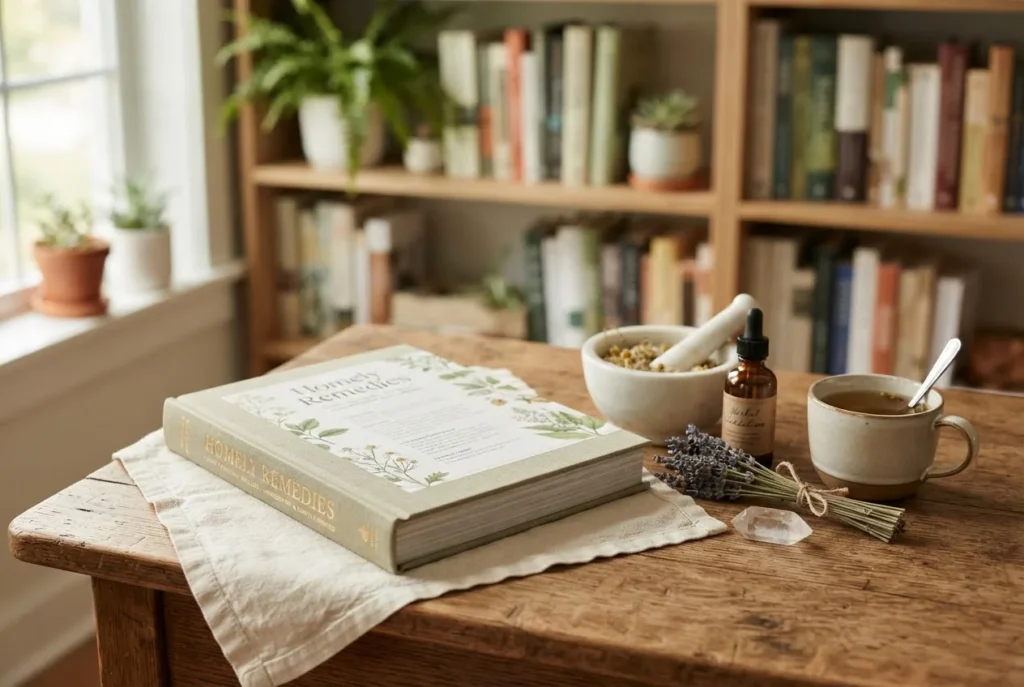
By the end of this hands-on guide you will confidently choose a reliable homely remedies book, prepare at least three safe remedies from recipes with measured dosages, and track results over four weeks; plan for 3–6 hours to get set up and a beginner-to-intermediate skill level for kitchen and herb handling.
Before you start
- Tools: kitchen scales (±1 g), digital thermometer, glass measuring beakers (50–500 ml), mortar and pestle, fine muslin or tea strainer, sterilised glass jars with labels.
- Supplies: food-grade glycerine, high-proof vodka or potable alcohol (if making tinctures), dried herbs (labelled), distilled water.
- Record-keeping: notebook or printed log sheet, dated entries, symptom checklist, dosage schedule.
- Precautions: allergy history checklist, emergency contact and basic first-aid kit.
What Is a Homely Remedies Book and Why Use One?
A homely remedies book is a practical compendium that organizes DIY natural home remedies—recipes, preparation methods, dosing guidance and symptom-based selection—designed for household use. Use one to bridge everyday discomforts with safe, evidence-informed techniques for minor ailments, wound care, skin conditions and mild digestive upsets.
What you gain from a good manual is clarity: structured remedy categorization, clear dosage instructions, safety warnings and symptom checklists so you can act quickly and record outcomes. Unlike encyclopedic tomes, modern homely remedies books emphasize step-by-step preparation techniques—infusions, decoctions, poultices and compresses—with measured quantities so a beginner can replicate results reliably.
Practical value: they reduce wasteful experimentation, help families manage minor symptoms at home, and provide documented guidance for tracking remedy effectiveness. Many reputable titles include user testimonials and “when to escalate” sections, which protect against overconfidence in self-treatment.
How this guide differs: I focus on selecting a homely remedies book that works in the real home—its usability, remedy documentation, and compatibility with homeopathic and subtle energy-informed approaches—rather than on historical definitions or retail listings covered in sibling articles.
Transition: with a clear idea of what these books aim to deliver, next learn the specific features you should prioritise so each recipe you try is reproducible, safe and targeted.
Key Features to Look for in a Homely Remedies Book
- Remedy categorization — The book should organise remedies by symptom and by system (respiratory, skin, digestive, musculoskeletal). Example: a chest-cold section that lists nasal decongestants, steam inhalations and safe throat gargles in one place.
- Symptom checklist and decision flow — Look for explicit symptom-to-remedy matching, with “if this, then that” flowcharts that explain when a remedy applies or when to stop. Example: a fever flowchart that includes thresholds (e.g., >38.5°C adult, >38°C infant) and escalation steps.
- Clear preparation techniques — Stepwise instructions for infusions (steep 1–2 teaspoons dried herb per 250 ml hot water for 10 minutes), decoctions (use 10 g roots to 500 ml water, simmer 15–20 minutes), tinctures (1:5 herb:alcohol by weight/volume) and poultices (fresh herb mash: 2–4 tablespoons).
- Dosage guidelines — Measured doses for adults and children, weight-based adjustments where needed (e.g., children’s dose = adult dose × child weight (kg) ÷ 70), maximum daily totals and timing (every 6–8 hours unless specified).
- Safety warnings and contraindications — Alerts for pregnancy, breastfeeding, anticoagulant interactions, and known allergen flags. Example: “Do not use herbal thyme inhalation in infants under 1 year.”
- Evidence notes — Each remedy entry should have a short rationale: traditional use plus references to clinical or peer-reviewed sources where available. Example: “Topical honey for minor wounds — traditional use; clinical reviews suggest reduced bacterial colonisation (see cited trials).”
- Preparation time and shelf life — Practical timing: infusion (15 min total), tincture maturation (2–4 weeks), poultice immediate use; and storage life—e.g., infused cold tea refrigerated for 48–72 hours, tinctures 3–5 years.
- Record-keeping templates — Log templates for documenting baseline symptoms, remedy used, dose, timing and observed outcome at 24/48/72 hours—crucial for effectiveness tracking.
- Photos and diagrams — Botanical photos for accurate plant identification and clear step photos for preparation methods (e.g., correct poultice thickness ~0.5–1 cm).
- Accessible language and troubleshooting — Beginner-friendly definitions for terms like “infusion” (hot water steeping of leaves/flowers) or “poultice” (soft plant mash applied to the skin), plus troubleshooting tips when things go wrong (e.g., watery poultice = add more plant material).
- Integration with complementary approaches — Sections that explain how remedies align with homeopathy principles or subtle energy techniques without replacing medical advice.
- User testimonials and credible endorsements — Look for documented case notes, real-life user tips and endorsements by registered herbalists or associations, rather than unverified anecdotes.
- Index and quick-reference pull-outs — Fast-access pages for emergencies (minor burns, insect stings) with abbreviated steps and dosages.
Transition: once you’ve selected a book with those features, the next section walks through using it daily—identifying symptoms, preparing remedies and documenting results in repeatable steps.
How to Effectively Use Your Homely Remedies Book at Home
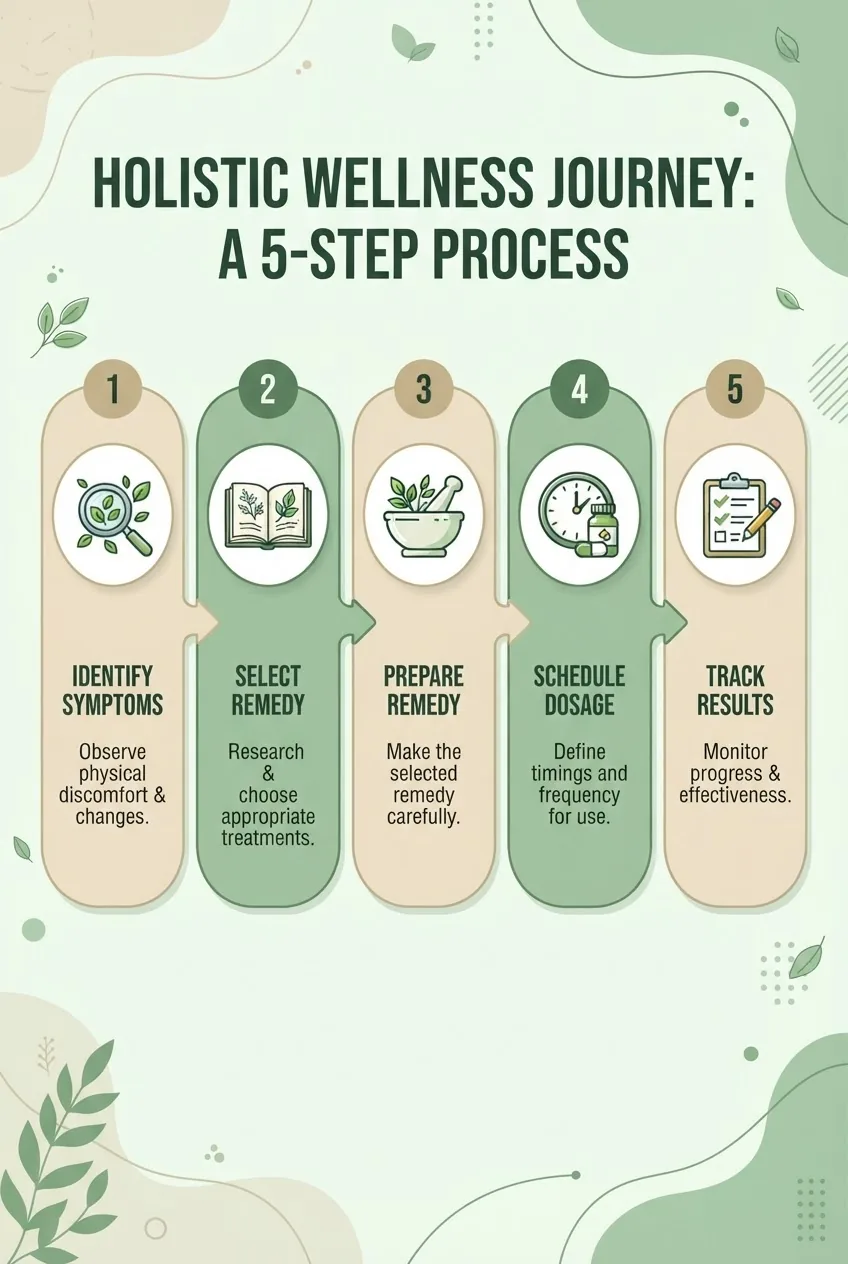
This section is the operational core: follow the numbered steps below to move from reading to reliable, safe use. Each step begins with a bolded, action-first phrase and includes precise quantities, timings and record-keeping guidance.
-
Identify symptoms precisely — Use the book’s symptom checklist.
Record onset time, severity (mild/moderate/severe), measurable signs (temperature in °C, swelling in mm or subjective pain 1–10). For respiratory symptoms note cough type (dry/productive), sputum colour, and breathing difficulty. Use the book’s threshold metrics (for example: fever >38.5°C adult = escalate).
-
Select the matching remedy — Match symptom profile with remedy entry and contraindications.
Scan the symptom-to-remedy table; confirm no listed contraindications (pregnancy, anticoagulant use). Prefer remedies with evidence notes or documented user cases. If two remedies are suggested, choose the simpler preparation first (infusion over tincture) and document the selection rationale in your log.
-
Prepare the remedy exactly — Follow the recipe measurements and timings.
Examples: herbal infusion for sore throat — 2 g (≈1 heaped tsp) dried chamomile + 250 ml boiling water; steep 10 minutes covered; strain through muslin; sip 30–60 ml every 4 hours. For a poultice: mash 10 g crushed fresh plant material to a 0.5–1 cm paste, warm gently up to 40°C, apply for 15–20 minutes with a breathable cover. Label jars with date and 24–72 hour refrigeration notes.
Walkthrough (practical): prepare a simple calendula wound wash. Measure 10 g dried calendula flowers, add to 250 ml boiling water, simmer 5 minutes, steep covered 10 minutes, cool, strain, store in sterile bottle. Use as antiseptic soak 2–3 times daily for superficial cuts. I prepare batches of 250 ml and discard after 48 hours refrigerated.
-
Schedule and dose with precision — Use weight-based and time-based rules.
Adult dosing example: infusion 30–60 ml every 4–6 hours, max 4 doses/24 hours. Child dosing: calculate using the formula child dose = adult dose × child weight (kg) ÷ 70. Record administration times and amounts in the log. Use alarms or printed schedule slots (e.g., 08:00, 14:00, 20:00).
-
Track effects and adverse signs — Log outcomes at 24/48/72 hours.
Document symptom change (percentage improvement), new symptoms, skin reactions and subjective comfort. Use a simple scale: 0 = worse, 1 = no change, 2 = some improvement, 3 = resolved. If reaction occurs (rash, swelling, breathing difficulty), stop remedy and follow emergency steps in the book.
-
Adjust or escalate based on results — Follow the book’s escalation guidance.
If a remedy shows no improvement after the book’s stated timeframe (usually 48–72 hours for acute minor conditions), either try the alternative recommended remedy or seek professional advice. Keep a copy of the log to show to clinicians if needed.
-
Document preparation details — Keep recipe batch sizes, source and batch numbers.
Write down herb supplier, lot number (if available), drying date, preparation method, preservation used (alcohol concentration for tinctures) and yield. This helps identify variability between batches and supports reproducibility.
-
Maintain hygiene and storage standards — Prevent contamination.
Sterilise jars by boiling 10 minutes, cool on a clean surface. Store infusions refrigerated (2–4°C) up to 72 hours; tinctures at room temperature away from sunlight for 3–5 years. Discard if appearance or smell changes. Label all preparations with “use-by” dates and initials of preparer.
-
Integrate with daily care and subtle energy practices — If using subtle energy techniques.
Follow the book’s suggested supportive steps—gentle touch, focused intention or breathwork—after topical application or oral dosing to enhance adherence and patient comfort. Document these contextual variables in your log to isolate effects related to remedy versus environment.
-
Review and refine every four weeks — Evaluate cumulative effectiveness.
After a 4-week trial period, review logs for each remedy: average time-to-relief, side effects frequency, and user preference. Keep or discard recipes based on documented effectiveness and safety. This periodic review creates a personalised, reliable home remedy protocol.
-
Maintain communication with healthcare providers — Share documentation when needed.
If symptoms persist, worsen, or if you’re treating individuals with chronic disease, present your remedy log to a qualified clinician. This improves integrated care decisions and avoids duplicate or interacting therapies.
Common mistakes and how to avoid them
I’ve seen people skip precise measurements and then wonder why a remedy failed—using “a pinch” of herb produced inconsistent strength. I once observed a tincture made with low-proof alcohol spoil quickly because the preparer used 30% instead of the recommended 60% for preservation. Always weigh herbs, measure alcohol by total volume and follow stated steeping times.
Other frequent errors: not checking drug interactions, treating infants with adult dosages, and failing to label batch dates. Avoid these by following the book’s dosage conversions, maintaining a written allergy/medication checklist, and discarding dated preparations.
Transition: knowing how to use a book leads naturally to exploring the typical remedies you’ll find and how recipes are presented so you can choose safe home treatments confidently.
Common Remedies and Recipes Found in Homely Remedies Books
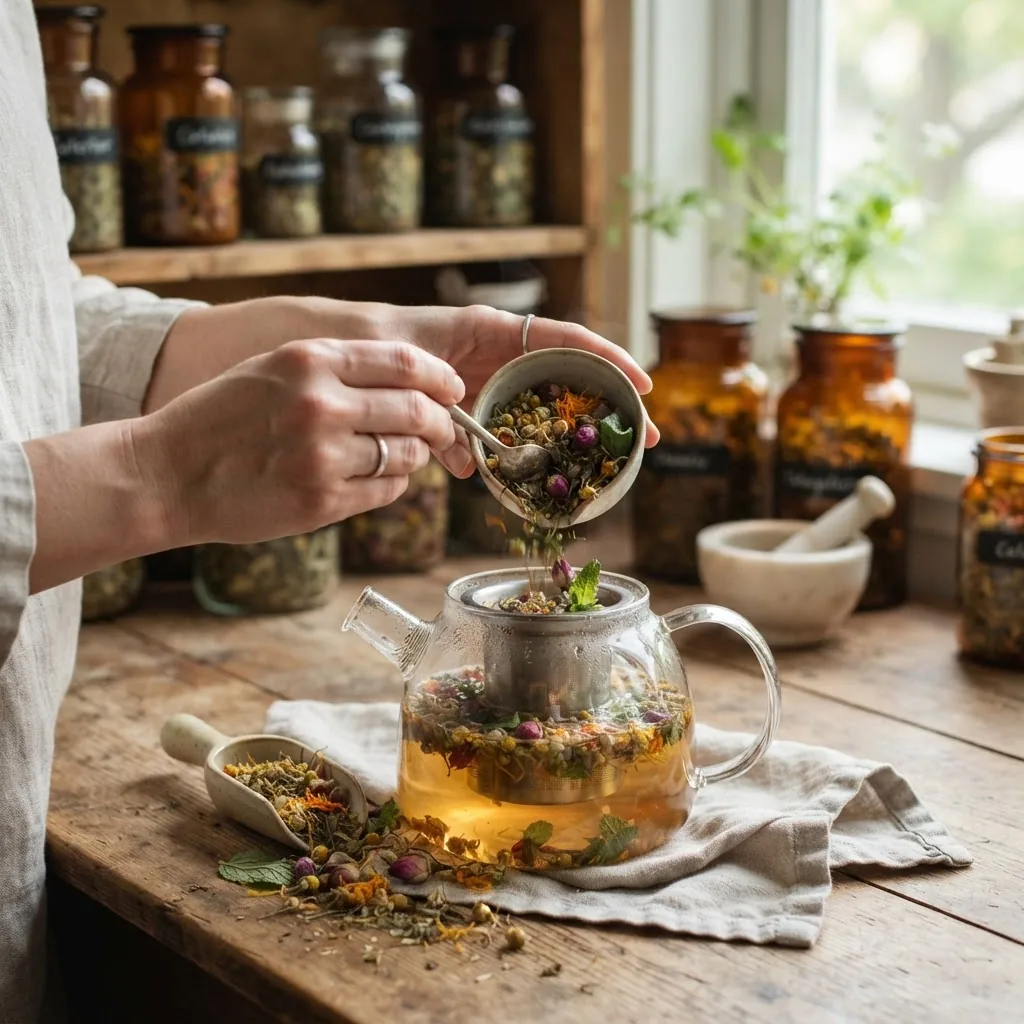
Below are commonly included categories and sample recipes with short descriptions so you can visualise practical use. Quantities and timings are explicit—use them as your starting template and adjust only with clear documentation.
- Herbal Infusions (teas) — Best for leaves and flowers. Example: Chamomile infusion for mild gastrointestinal cramping: 2 g dried chamomile per 250 ml boiling water; steep 10 minutes; 30–60 ml every 4–6 hours; max 4 doses a day.
- Decoctions — For roots and bark. Example: Licorice root decoction for sore throat with inflammation: 10 g dried root to 500 ml water; simmer 15 minutes; cool and strain; 30 ml every 6 hours. Do not use in uncontrolled hypertension.
- Tinctures — Concentrated extracts using alcohol or glycerine. Standard home method: 1 part dried herb by weight to 5 parts 60% alcohol by volume (1:5 w/v); macerate 2–4 weeks with daily shaking; strain and store. Typical dose: 2–5 ml diluted in water, 2–3 times daily.
- Poultices and Compresses — Topical application of crushed fresh plant or cloth-soaked infusion. Example: Plantain poultice for insect bites: 10 g fresh leaves mashed, apply warm 15 minutes; repeat twice daily until swelling reduces.
- Natural antiseptics and wound care — Honey-based dressings and saline washes. Example: Sterile saline wound rinse (9 g salt per litre warmed distilled water) and application of medical-grade honey for minor abrasions; change dressing 24 hours or sooner if saturated.
- Herbal syrups — For cough and throat. Make a basic elderberry or thyme syrup: 1 part herb or berries to 2 parts water, simmer 20 minutes, strain, add equal weight sugar or honey as preservative; store refrigerated up to 14 days; 5–10 ml every 4–6 hours.
- Essential oil steam inhalation — For nasal congestion: add 1–2 drops of a diluted 1% eucalyptus oil mix to a bowl of hot water, inhale steam for 5 minutes from 20–30 cm distance. Do not use on infants or small children.
- Balms and salves — Infuse oil with calendula or comfrey (10 g herb to 100 ml carrier oil, warm 2 hours at 40–50°C), strain, combine with beeswax (10 g beeswax per 100 ml oil) to set; use topically for skin healing.
- Probiotic and digestive aids — Fermented foods (e.g., kefir, sauerkraut) and herbal bitters. Example bitter tincture: 1–2 ml before meals to support digestion.
- Eye and ear care (minor) — Saline compresses and sterile saline rinses only. Avoid oils or herbal drops in the ear unless recommended by a clinician.
- Supportive first-aid remedies — Cold compress (15 minutes on, 30 minutes off), warm compress (15–20 minutes), and basic antiseptic washes. Use book’s emergency pullouts for thresholds that require professional care.
Many homely remedies books also reference specific homeopathic options for conditions such as respiratory allergies or chronic cough. For example, some titles point readers to resources on homeopathy for asthma treatment as an adjunct approach; evaluate such options with the same safety scrutiny and professional consultation.
Transition: practical remedies are powerful when used safely—next we cover the safety rules, contraindications and when to seek clinical care.
Safety, Precautions, and When to Consult a Professional
Safety is the non-negotiable core of home self-care. Below are practical precautions, contraindications and clear triggers for escalation. I include external guidance and professional referral options so you can balance self-treatment with conventional medical standards.
Key precautions:
- Allergies: perform a patch test for topical herbs—apply 0.5 cm² of diluted preparation to inner forearm; observe 24 hours. If redness or itching occurs, stop use.
- Drug interactions: herbs like St John’s wort or licorice can interact with prescription drugs. Cross-check medications before starting new remedies.
- Pregnancy and breastfeeding: many herbs are contraindicated—always avoid unless the book explicitly lists pregnancy-safe dosing.
- Children and infants: use weight-based dosing or paediatric-specific entries only; never use essential-oil steam inhalation for infants under 2 years.
- Sterility: avoid applying non-sterile preparations to deep wounds; use sterile dressings and consult a clinician for sutured or heavily contaminated wounds.
Escalation triggers—consult a professional immediately if:
- Difficulty breathing, tongue or throat swelling (possible anaphylaxis).
- High or persistent fever beyond 48–72 hours despite remedies.
- Severe pain, rapidly spreading infection, or signs of systemic illness (confusion, persistent vomiting, fainting).
For readers wanting comparison with conventional care, homely remedies should not replace evidenced allopathic treatment where indicated; see the related guide on allopathic medicine for thresholds where conventional interventions are necessary.
If you plan to use homeopathic or complementary options, review safety discussions in sibling content about the dangers of homeopathic medicine and consult a qualified homeopathic medical doctor when treating chronic or complex cases.
Authority and evidence: According to a 2024 industry report by a national health agency, over-the-counter herbal use increased and prompted updated safety guidance on herb–drug interactions (source type: government health department report). For practical references on herb safety, see external guidance from the Australian Government health pages and the NCCIH; for peer-reviewed analyses consult indexed reviews on PubMed.
External resources:
- Australian Government health guidance on herbal medicines
- NCCIH guidance on complementary medicine
- Peer-reviewed literature and clinical reviews via PubMed
Transition: now that safety context is clear, learn how homely remedies books relate to homeopathy and subtle energies so you can integrate approaches coherently.
How Homely Remedies Books Align with Homeopathy and Subtle Energies
Homely remedies books typically focus on practical, material preparations—herbal infusions, poultices and topical salves—while homeopathy revolves around highly diluted remedies and a different theoretical framework based on symptom totality. Books that aim to integrate both provide side-by-side guidance and clarify when each approach is recommended as complementary rather than interchangeable.
Subtle energies refers to non-material influences such as vitality, intention and energetic balance. In these books you’ll often find short sections on how gentle touch, breathwork, intention-setting and energetic hygiene can support physical remedies. Authors define “subtle energies” early on—energetic states that influence healing—and provide simple practices (3–5 minute grounding, hand placement techniques) to be used alongside preparations.
If you want historical grounding, some titles reference the founder of homeopathy to explain principles such as “like cures like” and individualised remedy selection. Others compare frameworks in chapters or sidebars—see the clear comparative sections in readership-oriented books on holistic vs homeopathic medicine.
For readers ready to source homeopathic remedies discussed in integrated books, the publisher may point you to a detailed purchasing and store guide; consult the homeopathic medicine overview and store guide near you for product overviews and local options.
Transition: maintaining your homely remedies book like a living protocol extends its usefulness—next are practical tips for upkeep and updates.
Tips for Maintaining and Updating Your Homely Remedies Book
- Keep dated notes. After each use, note date, batch, dose and outcome. Archive ineffective recipes in a “review” folder for 3 months, then reassess.
- Track storage conditions. Record temperature range for refrigerations (2–4°C) and shelf life observed. Discard if oils smell rancid or tinctures show cloudiness.
- Add seasonal adjustments. Note changes in remedy selection for winter respiratory support versus summer allergy care (e.g., add nettle-based antihistamine infusions during high pollen months).
- Solicit family feedback. Use a 1–5 satisfaction score after each remedy; consolidate trends quarterly.
- Update with new evidence. When a new peer-reviewed study appears that affects a remedy, clip the citation or add a note: “See PubMed review YYYY—effect size changed.”
- Archive favourite recipes. Create a laminated quick-reference card for top 6 go-to remedies and keep it near first-aid supplies.
Transition: when you need new books or professional help locating titles, here are recommended sources and specific titles that practitioners and experienced users often value.
Where to Find Recommended Homely Remedies Books and Resources
Trusted titles tend to come from authors with clinical or herbalist credentials and publishers with editorial oversight. Recommended categories: practical household guides, regional plant-focused manuals, and integrated homeopathy-plus-herbal volumes. Look for books that include reference lists and user-case sections.
Suggested titles to search for (examples commonly cited in bibliographies): a compact household herbal manual with recipes, an illustrated plant identification guide, and an integrative medicine primer pairing topical remedies with homeopathic follow-ups. For local support and clinics, search your area for directories on homeopathy near me.
Common mistakes and how to avoid them — final checklist
I often see incomplete records and unlabeled jars; this creates risk if another household member uses a preparation incorrectly. Avoid this by labelling every batch with date, recipe and initials immediately after preparation.
Checklist: verify your homely remedies setup
- All tools and scales present and calibrated.
- At least three recipes prepared with full logs (date, dose, outcome).
- All jars labelled with date and use-by.
- Allergy/medication checklist completed for household members.
- Emergency escalation plan printed and visible.
- Quarterly review scheduled in calendar for four weeks from now.
When to call in a professional
Call a clinician immediately for breathing difficulty, suspected systemic infection, persistent high fever, neurological signs, or for infants under 3 months with fever. For chronic conditions or when combining remedies with prescription medications, consult a qualified practitioner to ensure safety and standard-of-care alignment.
Conclusion: A good homely remedies book makes safe, effective home care reproducible: choose one with clear categorisation, measured recipes and safety guidance; prepare remedies with exact weights and timings; track outcomes; and escalate to professionals when thresholds are met. Ready to build your home protocol? Start by selecting one trusted title, gather the tools listed above, and complete your first three recorded remedy trials over four weeks.