

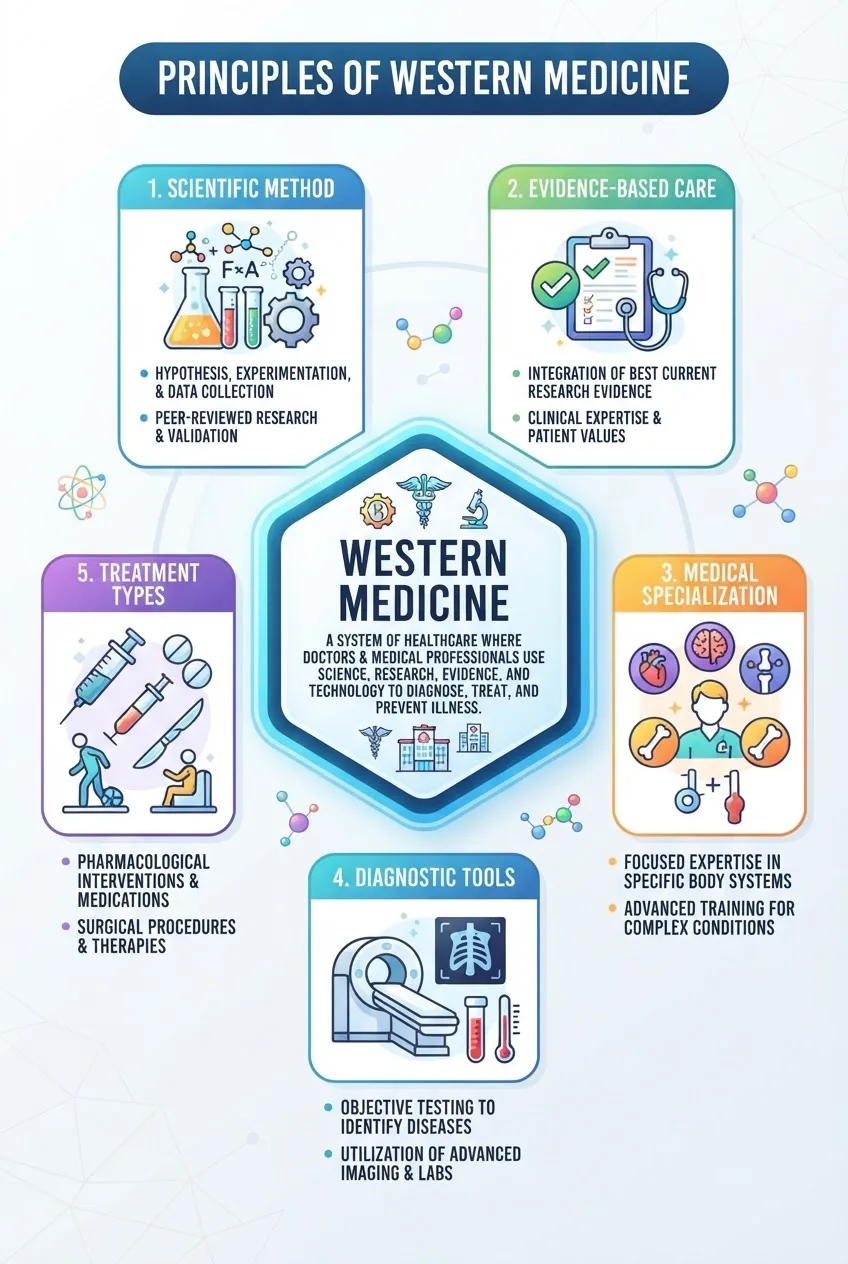
Western medicine is the biomedical system based on the scientific method, evidence-based diagnosis, and standardized treatments such as pharmaceuticals, surgery and public-health interventions; it evolved from classical Greek practice through germ theory and modern medical science to focus on measurable outcomes and population health management.
Term: Western medicine — a biomedical approach to diagnosing and treating disease using scientific methods, standardized interventions, and clinical research.
What Is Western Medicine? Definition and Core Principles
Answer: Western medicine is a science-driven healthcare system that applies the scientific method and evidence-based practice to diagnose, treat and prevent illness using pharmaceuticals, procedures, diagnostics and organized public-health measures.
Western medicine, also called modern medicine, relies on the scientific approach: observation, hypothesis, controlled testing and replication to evaluate therapies and guide practice. Its core principles include the biomedical model (focusing on biological causes), evidence-based practice (using clinical trials and systematic reviews), standardization of care, and specialization of clinicians.
Term: Scientific method — a systematic process of observation, hypothesis formulation, experimentation and revision used to produce reliable medical knowledge.
- Evidence-based practice: medical decisions guided by the best available research, clinician expertise, and patient values.
- Biomedical model: focuses on biological mechanisms (cells, organs, pathogens) as primary causes of disease.
- Specialization: clinicians concentrate on organ systems or disease types (e.g., cardiology, oncology) to increase expertise.
Examples: treating bacterial pneumonia with targeted antibiotics after culture and sensitivity testing; using coronary angioplasty for acute myocardial infarction (heart attack) based on randomized-controlled-trial evidence.
According to a 2023 WHO report, countries that implement evidence-based primary care and vaccination programs see measurable reductions in mortality and morbidity, illustrating western medicine’s population-level impact. World Health Organization (WHO)
Transition: Understanding what western medicine is leads naturally to a look at the historical developments that produced today’s diagnostic tools and treatments.
The History of Western Medicine: Key Milestones and Evolution
Answer: Western medicine developed from ancient Greek clinical observation through medieval preservation and Renaissance anatomical study, then advanced rapidly with 19th–20th century germ theory, anesthesia, antisepsis, pharmaceuticals and modern diagnostic imaging into contemporary high-tech medicine.
Term: Germ theory — the scientific theory that microorganisms cause many diseases, established in the 19th century and foundational to infection control.
Ancient and Classical Foundations
From roughly 500 BCE, physicians like Hippocrates systematized clinical observation and emphasized prognosis and natural causes of disease rather than supernatural explanations. Galen (2nd century CE) consolidated anatomical and physiological ideas that guided practice for a millennium.
Case example: the Hippocratic Corpus advanced bedside observation and the concept of humoral imbalance, influencing diagnostic reasoning for centuries. According to historical timelines compiled by the National Institutes of Health, these classical works provided continuity to later empirical inquiry. National Institutes of Health (NIH)
Medieval to Renaissance Developments
Medieval medicine preserved classical texts; scholastic universities formalized medical instruction. During the Renaissance, direct human dissection and anatomical study by figures like Andreas Vesalius corrected centuries of anatomical error and returned medicine to observation-driven study.
Milestone: Vesalius’s 1543 De humani corporis fabrica replaced dogmatic anatomy with visual evidence from dissections, accelerating surgical technique improvements.
The Birth of Modern Medicine (19th–20th Century)
The 19th century established the scientific basis for modern practice: Louis Pasteur and Robert Koch developed germ theory and microbiology, Joseph Lister introduced antisepsis, and the advent of anesthesia enabled complex surgery.
- Germ theory and microbiology: Pasteur and Koch identified pathogens and developed sterilization principles.
- Antisepsis and anesthesia: Lister’s antiseptic surgery and ether/chloroform anesthesia made major operations survivable.
- Pharmaceutical development: Alexander Fleming’s accidental discovery of penicillin (1928) launched the antibiotic era; mass production followed during and after World War II.
Historical case: The introduction of penicillin transformed bacterial infection outcomes—according to peer-reviewed studies archived in major medical journals, mortality from previously fatal infections fell sharply after antibiotics were introduced (studies summarized in medical literature databases).
Contemporary Advances and Medical Technology
20th–21st centuries saw rapid advances: computed tomography (CT), magnetic resonance imaging (MRI), molecular diagnostics, minimally invasive surgery (laparoscopy), targeted biologic drugs, and genomic medicine.
Term: Diagnostic tools — instruments and tests (imaging, laboratory assays, molecular diagnostics) used to detect and monitor disease.
Example diagnostic walkthrough: a patient with suspected appendicitis may undergo a focused clinical exam, blood tests (complete blood count assessing white blood cells for infection), and a CT scan of the abdomen; labs are drawn via peripheral venipuncture, sent to a clinical laboratory, and processed with rapid-turnaround analyzers—results guide surgical decisions.

According to a 2024 review in major medical journals, diagnostic imaging and minimally invasive procedures are primary drivers of improved outcomes and shorter hospital stays.
Transition: These historical milestones directly shaped the treatment modalities used in western medicine today—medications, surgery, diagnostics and preventive public-health measures.
Overview of Western Medicine Treatments and Practices
Answer: Western medicine treats illness using four broad approaches: pharmacology (medications), surgery and procedures, diagnostics to guide care, and preventive/public-health interventions such as vaccination and screening.
Term: Pharmacology — the study of drugs, their mechanisms, therapeutic uses, side effects and interactions.
Medication and Pharmacology
Answer: Medications treat or prevent disease by targeting physiological or microbial processes; classes include antibiotics, antivirals, analgesics, antihypertensives, chemotherapeutics and biologics.
Medications are developed through basic research, preclinical testing and phased clinical trials (Phase I–III) before regulatory approval. According to a 2022 industry analysis, randomized controlled trials remain the gold standard for demonstrating drug efficacy.
- Antibiotics: target bacterial infections (e.g., penicillins, cephalosporins); case study: penicillin’s use in severe pneumococcal infections reduces mortality—documented in clinical literature.
- Analgesics and anti-inflammatories: NSAIDs and opioids manage pain; clinicians weigh efficacy against side effects and addiction risk.
- Antihypertensives: ACE inhibitors, ARBs, beta-blockers reduce cardiovascular risk by controlling blood pressure.
- Biologics and targeted therapies: monoclonal antibodies and small molecules for cancer and autoimmune disease, guided by biomarkers and clinical trials.
Safety: medications undergo pharmacovigilance after approval; adverse events are reported to regulatory bodies and published in journals like JAMA and The Lancet.
| Treatment Type | Primary Use | Typical Risks |
|---|---|---|
| Medications | Infection control, chronic disease management | Side effects, interactions, resistance |
| Surgery | Structural repair, tumor removal, emergency care | Bleeding, infection, anesthesia risks |
| Diagnostics | Disease detection and monitoring | Radiation exposure (imaging), false positives/negatives |
| Preventive care | Vaccination, screening, health promotion | Vaccine reactions (rare), screening overdiagnosis |
Surgery and Medical Procedures
Answer: Surgery corrects structural problems, removes diseased tissue, or supports life-saving interventions, ranging from minor outpatient procedures to major open operations and modern minimally invasive techniques.
Categories include:
- Minimally invasive surgery: laparoscopy and endoscopy reduce recovery time and infection risk.
- Open surgery: complex reconstructions or trauma care when direct access is required.
- Interventional procedures: catheter-based cardiology (angioplasty), image-guided biopsies and ablations.
Case study: Percutaneous coronary intervention (PCI) for acute myocardial infarction improves survival when performed promptly; outcomes are documented in randomized controlled trials and registry data.
Diagnostics and Imaging
Answer: Diagnostics identify disease using laboratory tests (blood, urine), imaging (X-ray, CT, MRI, ultrasound), histopathology and molecular assays, guiding treatment and monitoring response.
Walkthrough example: For suspected cancer, clinicians combine blood tests, imaging (CT/MRI), and tissue biopsy; biopsy specimens undergo histopathology with immunohistochemistry and, increasingly, genomic sequencing to identify actionable mutations.
Term: Evidence-based medicine — clinical decisions grounded in systematic research evidence, clinician expertise and patient values.
Diagnostics also underpin screening programs (e.g., mammography for breast cancer) that aim to detect disease early and improve outcomes; each screening program is evaluated for net benefit through population studies.
Preventive and Public Health Measures
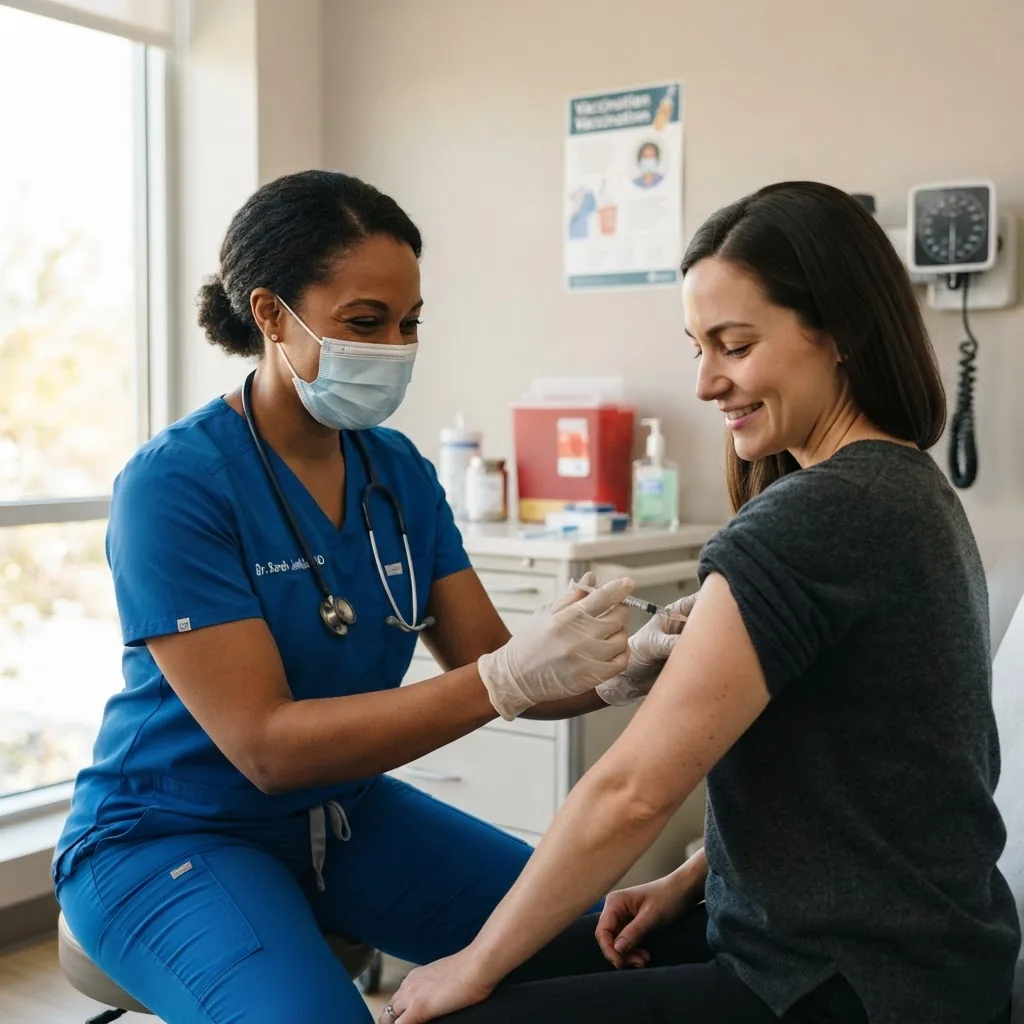
Answer: Prevention in western medicine uses vaccines, screening programs, lifestyle interventions and epidemiology-driven policies to reduce disease incidence and protect populations.
- Vaccination: immunization programs have eradicated or reduced diseases (smallpox eradication, polio decline) with clear population health benefits; WHO reports track coverage and impact.
- Screening: targeted screening for cervical, breast and colorectal cancer aims to detect treatable early disease stages.
- Public health: epidemiology, surveillance, sanitation and outbreak control (contact tracing, quarantine) manage infectious threats.
For readers exploring non-mainstream options, western treatments are often combined with complementary approaches; see links below for specific conditions.
alternatives to radiation therapy,
alternative medicine for prostate cancer,
alternative therapies for asthma and allergies,
medical cannabis as treatment
Transition: Mastery of treatments and diagnostics depends on rigorous clinician training and structured specialization paths, which we explain next.
Medical Education and Specialization in Western Medicine
Answer: Becoming a physician in western medicine typically requires a medical degree, supervised postgraduate residency training, licensing examinations, and optional fellowship specialization; allied health professionals follow parallel accredited pathways.
Term: Medical school — postgraduate or graduate-level programs that provide foundational biomedical education, clinical clerkships and degrees such as MD or MBBS.
Typical pathway (example using common models):
- Undergraduate degree (where required) in sciences or related field.
- Medical school (4–6 years depending on country) combining classroom science and clinical rotations.
- Residency (3–7+ years) in a specialty such as internal medicine, surgery or pediatrics.
- Fellowship (1–3+ years) for subspecialties (e.g., interventional cardiology, pediatric oncology).
- Licensure and board certification through national medical boards and ongoing continuing medical education (CME).
Alternative education pathways: Those curious about non-biomedical careers may explore alternative medicine degree programs for different training emphases and certification frameworks.
Clinical competence is assessed via in-training evaluations, standardized patient exams, licensing tests and maintenance of certification; specialties are organized by professional societies (e.g., cardiology, oncology), which set guidelines and credentialing requirements.
Transition: Knowing how practitioners are trained helps evaluate western medicine’s strengths and where critiques arise.
Strengths and Limitations of Western Medicine
Answer: Western medicine is strong at acute, infectious, and surgical care and at producing measurable population health gains, but it faces limitations in chronic disease management, individualized care preferences, side effects and gaps in addressing social determinants of health.
Strengths:
- Rapid, measurable improvements in acute care (trauma, stroke, infections) through standardized protocols and high-quality clinical trials.
- Strong preventive tools (vaccines, screening) with documented population benefits—according to a 2024 industry report, vaccination programs prevent millions of deaths annually worldwide.
- Robust regulatory and research infrastructure (clinical trials, peer-reviewed literature) supporting continual improvement.
Limitations and critiques:
- Chronic disease management: Long-term conditions (diabetes, chronic pain) often require behavioral, social and multi-disciplinary approaches that biomedical models may under-emphasize.
- Side effects and iatrogenic harm: Pharmaceuticals and procedures carry risks; clinicians must balance benefits and harms per patient context.
- Overmedicalization and focus on technology: Critics note potential overtreatment or overreliance on tests that can produce false positives and unnecessary interventions.
- Equity and access: Social determinants (income, education, geography) influence outcomes beyond clinical care and require public policy solutions.
According to a 2023 WHO report, health system performance depends as much on access and primary care integration as on specialist technology.
Clinical nuance: for many conditions, combining biomedical treatments with lifestyle, social support and validated complementary therapies can improve patient-centered outcomes—however, rigorous evidence should guide integration, and clinicians should monitor interactions and safety.
Transition: That pragmatic combination leads to consideration of how western medicine interacts with complementary and alternative medicine in practice.
Western Medicine in Relation to Complementary and Alternative Medicine
Answer: Western medicine can be combined with complementary and alternative medicine (CAM) in integrative care models when evidence and safety allow; integration emphasizes patient preferences while maintaining standards of evidence and coordination.
Complementary and alternative approaches cover a wide range of therapies; some (e.g., acupuncture for certain pain conditions) have supportive evidence and are used adjunctively, while others lack strong proof and should be approached cautiously.
For context on terminology and integrated practice models, see Alternative Terms for Western Medical Practices: CAM and Integrative Care.
Examples of practical links between western and alternative services:
- alternative health care center services
- alternatives to traditional therapy
- alternative pain management therapies
- holistic ovarian cancer treatments
- board-certified integrative medicine
Safety guidance: always inform your primary clinician about any complementary therapies to avoid interactions (e.g., herb–drug interactions with chemotherapy). Studies published in peer-reviewed journals advise coordinated care and shared decision-making.
Transition: The following conclusion summarizes the core takeaways and next steps for readers seeking care or further learning.
Conclusion: Western medicine is a science-based, evidence-focused system that has delivered dramatic gains against infections, trauma and many chronic conditions through antibiotics, surgery, diagnostics and public-health measures. Its strengths include measurable outcomes and standardized care; its limitations include side effects, challenges in chronic-care personalization, and access disparities. For safe integrative approaches, communicate openly with licensed clinicians and consult evidence sources such as the WHO and peer-reviewed medical literature. If you want a concise primer on how western and alternative care relate, review the pillar page on Alternative Terms for Western Medical Practices: CAM and Integrative Care.