Therapeutic touch therapy is classified as a biofield-based complementary and alternative medicine (CAM) modality — an energy healing practice within biofield therapies used as a complementary technique in integrative medicine settings to support holistic care, not as a substitute for conventional medical treatment.
What Is Therapeutic Touch Therapy?
Answer: Therapeutic touch therapy is an energy-based, non-invasive biofield therapy in which a trained practitioner uses hand movements and focused intention to assess and modulate the patient’s subtle energy field to promote relaxation, reduce pain or anxiety, and support self-healing mechanisms.
Term: Therapeutic touch — a biofield therapy developed in the 1970s that aims to balance a person’s subtle energy to support healing.
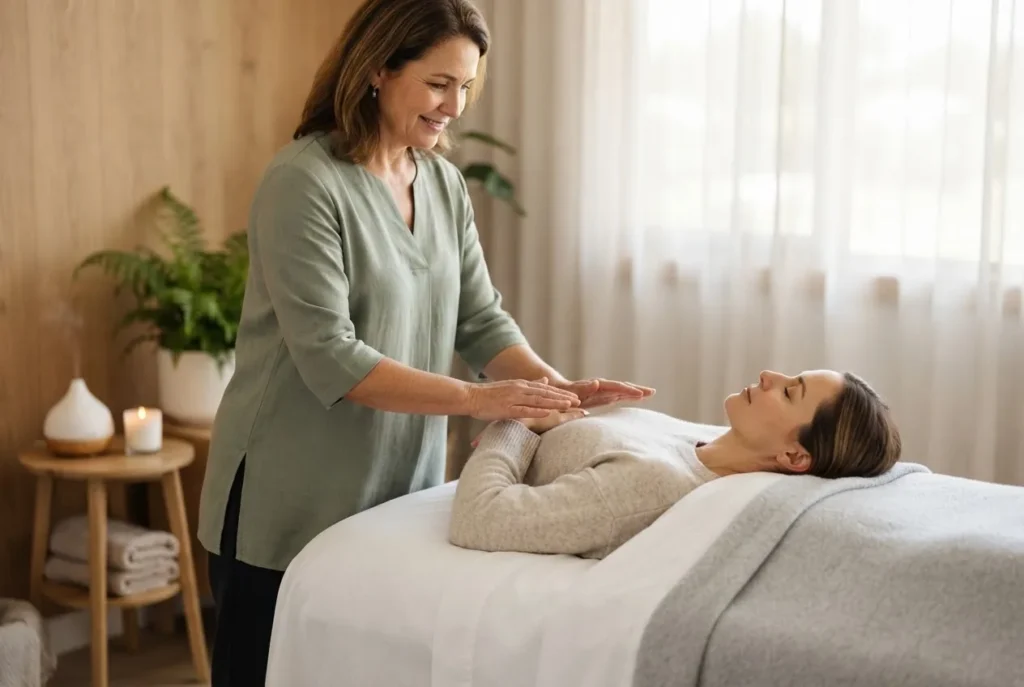
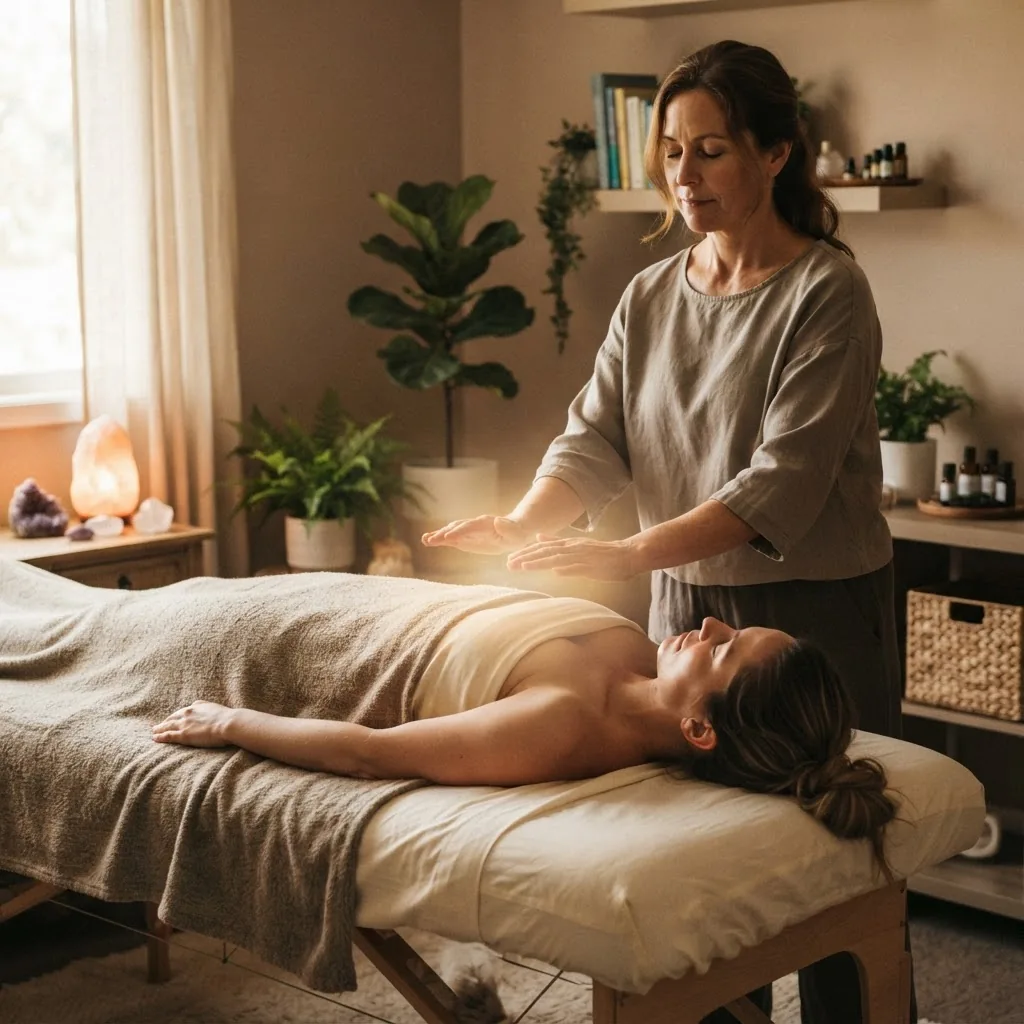
Therapeutic touch therapy is rooted in the idea of a human biofield — a hypothesised electromagnetic or energetic field surrounding and interpenetrating the body. Practitioners do not intentionally make skin contact; instead they hover hands above the body and use sweeping, centring, and balancing movements described as assessing and modulating the patient’s energy. As an energy healing and mind-body therapy, it emphasizes whole-person care: physical, emotional, mental and spiritual aspects.
Practitioners typically report outcomes such as increased relaxation, reduced perceived pain, lowered anxiety and improved wellbeing in observational reports and small trials; researchers propose mechanisms including psychophysiological relaxation responses and placebo-mediated expectation effects, alongside the contested hypothesis of measurable biofields.
Terminology to know:
- Biofield: a proposed field of energy that surrounds and interpenetrates the body, used to explain biofield therapies.
- Energy healing: umbrella term for practices that aim to manipulate subtle energy to support health.
- Mind-body therapy: practices that leverage the interaction between mental states and physical health.
Transitioning to classification helps place therapeutic touch within the broader medical taxonomy and clarifies how clinicians and regulators view it.
Classification of Therapeutic Touch Therapy
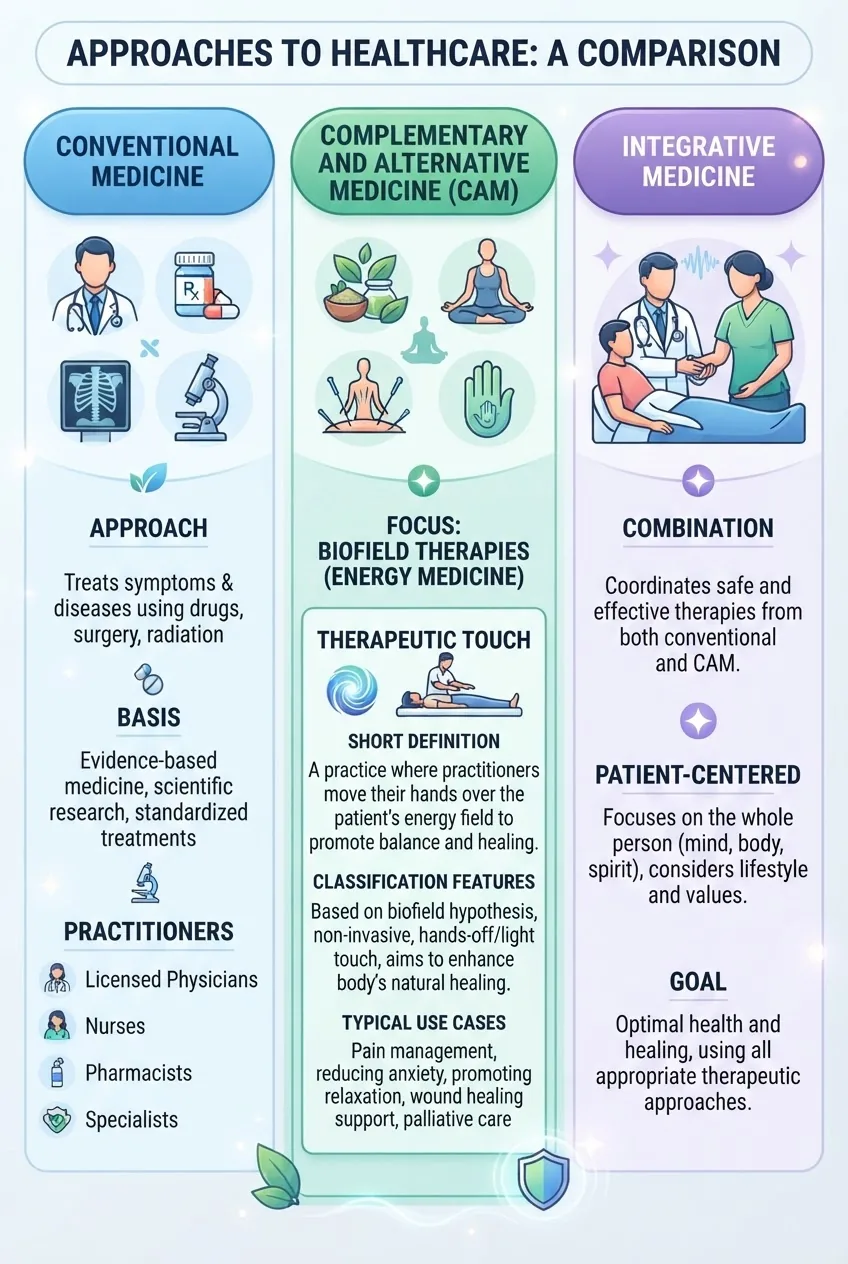
Answer: Therapeutic touch therapy is classified as a biofield therapy within Complementary and Alternative Medicine (CAM); it sits under the CAM umbrella as a complementary therapy and is sometimes incorporated into integrative medicine programs but remains distinct from conventional biomedical treatments.
Term: Complementary and alternative medicine (CAM) — a group of diverse medical and healthcare systems, practices, and products that are not generally considered part of conventional medicine.
Classification requires distinguishing three common systems used by clinicians and health policy:
| System | How it classifies therapeutic touch | Typical use cases |
|---|---|---|
| Conventional Medicine | Generally does not classify therapeutic touch as mainstream treatment due to limited reproducible mechanism evidence. | Acute, life-threatening conditions, diagnostics, surgery, pharmacotherapy. |
| Complementary & Alternative Medicine (CAM) | Places therapeutic touch under biofield therapies and energy healing modalities used complementarily. | Supportive symptom relief, wellbeing, palliative care adjuncts. |
| Integrative Medicine | Classifies therapeutic touch as a complementary option within multidisciplinary care when evidence and patient preference support use. | Combined plans with conventional care for chronic pain, anxiety, cancer supportive care. |
Common classification labels applied by researchers and health bodies:
- Biofield therapy: explicitly groups therapeutic touch with practices like Healing Touch and Reiki based on the concept of energy fields.
- Complementary therapy: often used alongside conventional treatments to manage symptoms.
- Integrative care modality: in centres that formally combine conventional and complementary approaches, therapeutic touch may be offered as part of multimodal supportive care.
When discussing classification in more depth, consult broader CAM and integrative terminology resources:
Alternative Terms for Western Medical Practices: CAM and Integrative Care
For context on related therapies and where they sit in classification taxonomies:
Regulatory and acceptance status varies by jurisdiction: many national health services classify therapeutic touch as unproven and permit it as an adjunctive service when offered by credentialed practitioners; accreditation tends to focus on practitioner training and appropriate patient informed consent rather than on clinical efficacy proof.
Transitioning now to the historical development and the people who popularised the holistic perspective that underpins therapeutic touch.
Historical Background and Key Promoters of Holistic Healing
Answer: Therapeutic touch emerged in the early 1970s and was promoted by nurses and theorists such as Dolores Krieger and influenced by Martha E. Rogers’ nursing theory; both helped frame therapeutic touch within a broader holistic medicine movement that emphasises whole-person care.
Term: Holistic healing — medical philosophy treating the whole person (body, mind, spirit, environment) rather than isolated symptoms.
Key figures and milestones:
- Dolores Krieger (1921–2013): A U.S. nurse and researcher who developed therapeutic touch in the early 1970s to formalise a nursing intervention focused on laying-on or passing-of-hands techniques and created training frameworks for nurses. Krieger authored seminal texts and clinical guides that spread the practice through nursing programs and hospitals.
- Martha E. Rogers (1914–1994): A nursing theorist whose 1970s “Science of Unitary Human Beings” emphasised energy fields and holistic human-environment interaction; Rogers’ theoretical framework influenced nurses and holistic clinicians, providing philosophical legitimacy for biofield-oriented practices.
- Clinical diffusion: Throughout the 1970s–1990s, therapeutic touch spread via nursing curricula, hospital pilot programs and published case series; enthusiastic practitioner reports led to broader patient interest in holistic care.
Practitioner training historically came through nursing schools, hospital workshops, and continuing education; for readers curious about formal training paths:
alternative medicine education
Scholarly attention increased after an influential 1998 undergraduate psychology classroom experiment (reported in peer-reviewed outlets) raised methodological debate about the measurability of healing energy. Since then, clinical researchers have published mixed results: some small randomized trials report symptom reduction while systematic reviews highlight heterogeneity and potential bias.
Historical texts and professional associations in nursing and integrative medicine document these developments; for regulatory history, health agencies typically reference the same sources when defining scope of practice for biofield therapies.
Next we detail the holistic healing philosophy that underpins therapeutic touch and how it conceptualises health and healing.
Holistic Healing Approach in Therapeutic Touch Therapy
Answer: Therapeutic touch uses a holistic healing approach that treats the whole person—body, mind, emotions and spirit—by restoring balance to a person’s energy field, leveraging mind-body connections and supporting self-healing mechanisms rather than targeting isolated symptoms only.
Term: Mind-body connection — the bidirectional relationship where mental states influence physical health and vice versa.
Core holistic medicine principles reflected in therapeutic touch:
- Whole-person care: physical symptoms are viewed within emotional, social and spiritual contexts.
- Balance and homeostasis: health is framed as energetic and physiological equilibrium; disease equals imbalance.
- Self-healing: the therapist’s role is to support innate healing processes rather than to cure directly.
- Individualised care: assessment and interventions are tailored to each patient’s unique energetic presentation and needs.
Analogy for lay readers: think of the body’s biofield like an instrument’s tuning — therapeutic touch is like a gentle re-tuning to improve harmonics so the body’s systems function more smoothly. This analogy emphasises subtlety rather than force.
Practical implications of the holistic approach:
- Sessions often begin with a full intake discussing emotional, social and lifestyle factors alongside physical symptoms.
- Interventions are non-invasive and aim to reduce stress — and stress reduction itself triggers measurable physiological changes (lower heart rate, reduced cortisol), which may explain some benefits.
- Therapeutic touch is frequently positioned as an adjunct to conventional treatments for chronic conditions, palliative care, postoperative recovery and mental health symptom management.
Critics argue the holistic language can obscure lack of mechanistic evidence; proponents counter that patient-centred, whole-person outcomes (quality of life, perceived wellbeing) are valid endpoints even if a precise physical mechanism remains contested.
difference between holistic and traditional therapy
With theory and philosophy explained, the next section gives a step-by-step practical walkthrough of how therapeutic touch is performed in session.
How Therapeutic Touch Is Practiced and Its Techniques
Answer: A typical therapeutic touch session follows a structured sequence: preparation, assessment of the energy field, centring the practitioner, balancing techniques using hand movements over specific body regions, and closing; sessions emphasise patient comfort, consent and relaxation.
Term: Energy field assessment — practitioner observation or felt sense of the biofield used to guide intervention choices.
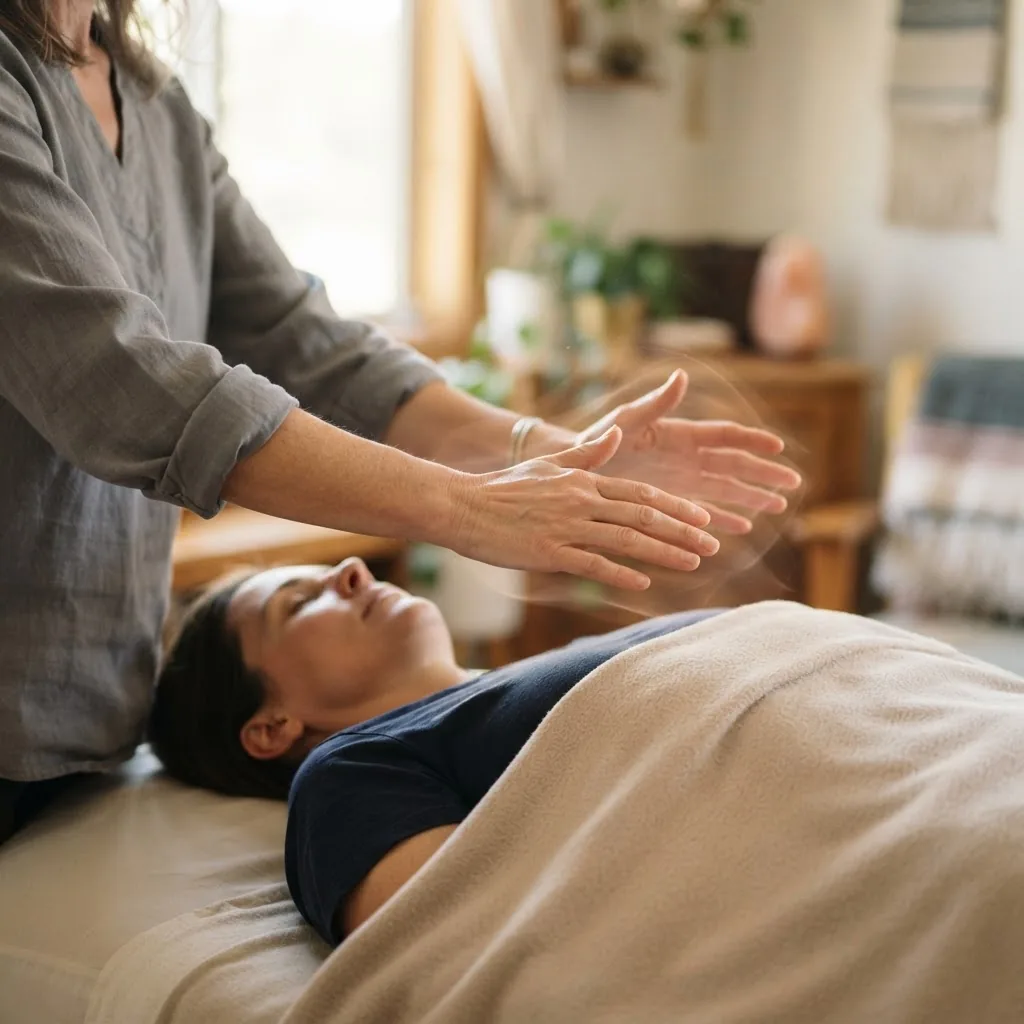
- Intake and consent (Step 1): Practitioner reviews health history, current symptoms, medications, and obtains informed consent explaining that therapeutic touch is complementary, non-invasive and not a replacement for medical treatment.
- Environment preparation (Step 2): Create a quiet, comfortable space with a reclined or supine patient, soft lighting and minimal interruptions to facilitate relaxation.
- Practitioner centring (Step 3): The practitioner performs breathing or grounding exercises to centre intention and minimise distracting thoughts; this stabilises attention before assessment.
- Energy field assessment (Step 4): Using hands slightly above the body, the practitioner scans for perceived variations (temperature, subtle sensations, resistance) to form an energetic map; documented impressions guide technique selection.
- Balancing techniques (Step 5): Common movements include broad sweeping motions along the torso, localised hovering over specific areas, and “smoothing” to redistribute perceived energy; sessions may use a sequence (head-to-toe or organ-system focus).
- Therapeutic intention and dialogue (Step 6): Practitioners may combine gentle verbal guidance, calming cues, or breathwork to align the patient’s focus with the intervention and encourage mind-body synergy.
- Closing and re-assessment (Step 7): The practitioner slowly withdraws hands, conducts a final assessment of the energy field, discusses patient sensations, and provides post-session self-care advice (hydration, rest, journaling).
- Documentation (Step 8): Record observed changes, subjective patient reports, and any referrals or recommended follow-up to maintain clinical continuity.
Typical session lengths range from 20 to 60 minutes depending on goal and setting; frequency varies from single sessions for acute stress relief to weekly visits in chronic care plans. Techniques are adapted to patient comfort — some clinicians may offer light touch for those who prefer contact.
Practitioner qualifications: training programmes vary—from short workshops to certificate courses—so credential transparency and clear scope-of-practice are critical for patient safety.
The following section summarises the scientific evidence, safety profile and main criticisms surrounding therapeutic touch.
Scientific Evidence, Safety, and Criticism
Answer: Clinical studies of therapeutic touch have produced mixed results; some small trials report reductions in pain and anxiety, but systematic reviews identify methodological weaknesses and potential placebo effects; safety risks are low when used adjunctively, but it should not replace conventional care.
Evidence summary:
- Randomised controlled trials (RCTs): several small RCTs report modest symptom improvements (pain, anxiety) but many suffer from small samples and blinded-control challenges.
- Systematic reviews: reviews typically conclude evidence is limited and heterogeneous, calling for larger, well-designed trials with objective endpoints.
- Mechanism research: direct measurement of a biofield remains unconfirmed in mainstream physics and physiology; alternative explanations include physiological relaxation responses and expectation/placebo pathways.
Quick research stat block:
| Item | Summary |
|---|---|
| Systematic review consensus | Clinical trials show mixed results; reviews cite limited quality and recommend further rigorous studies (source type: systematic review literature). |
| Placebo effect role | Placebo and expectation are plausible contributors to observed benefits in symptom relief (source type: clinical psychology and CAM methodology analysis). |
| Safety profile | Low direct physical risk when practised responsibly; primary risk is delay or avoidance of necessary medical treatment (source type: professional guidelines). |
Notable authority perspectives:
- According to an overview published by the National Center for Complementary and Integrative Health, biofield therapies are understudied and evidence is inconclusive; they should be considered complementary when integrated with standard care. National Center for Complementary and Integrative Health (NCCIH)
- Peer-reviewed journals often publish small trials and critical methodology papers; for searchable trial reports see indexed abstracts on PubMed. PubMed therapeutic touch results
- Professional integrative medicine associations emphasise disclosure, informed consent and adjunctive use. Academy of Integrative Health & Medicine
Safety and ethical recommendations:
- Always disclose therapeutic touch to your primary clinician and continue prescribed medical treatments.
- Use credentialled practitioners and confirm scope, training and liability coverage.
- Avoid therapeutic touch as a sole treatment for serious or progressive medical conditions.
The final content section explains how therapeutic touch fits into contemporary integrative healthcare environments.
Integrative and Complementary Use of Therapeutic Touch in Modern Healthcare
Answer: Therapeutic touch is used in integrative healthcare models as a complementary therapy to support symptom management, stress reduction and quality of life; it is often offered in multidisciplinary settings alongside conventional treatments for holistic, patient-centered care.
Term: Integrative medicine — a coordinated approach that combines conventional medical care with evidence-informed complementary therapies centred on the patient’s needs.
How therapeutic touch is integrated:
- Hospitals and palliative care units may offer therapeutic touch within a supportive services menu to help with anxiety, pain and end-of-life comfort.
- Integrative clinics include therapeutic touch as one option among massage, acupuncture, mindfulness and nutritional counselling to address whole-person needs.
- Practitioners collaborate with physicians, nurses and allied health staff to ensure safe adjunctive care and clear referral pathways.
For readers seeking centres where therapeutic touch is available alongside other modalities:
alternative health care centers
Integrative practice models emphasise:
- Shared decision-making with patients about complementary options.
- Documentation of outcomes and adverse events for quality assurance.
- Research partnerships to generate evidence within clinical settings.
Regulatory and payer landscapes vary: some insurers and health systems reimburse specific evidence-backed complementary services; therapeutic touch reimbursement is limited and typically covered only within bundled supportive care or hospital wellness programs.
Transitioning to final synthesis and practical guidance.
Conclusion
Therapeutic touch therapy is classified primarily as a biofield-based complementary medicine modality within CAM and is sometimes incorporated into integrative medicine programmes to support whole-person care. Evidence shows mixed clinical effects with important caveats about study quality and placebo mechanisms; safety is generally favourable when used adjunctively and with informed consent. If you’re considering therapeutic touch, discuss it with your medical team, choose credentialled practitioners, and use it as part of a coordinated care plan to support wellbeing rather than as a replacement for necessary medical treatment.
Ready to explore therapeutic touch as an adjunct to your care? Speak with your primary clinician about referrals to credentialled integrative practitioners or look for accredited integrative health services at local wellness centres.