
By the end of this guide you will have a clear, step-by-step plan to select, complete and translate holistic health training into a practical natural-medicine career. Expect to spend 6–36 months depending on the program type; this guide assumes a beginner-to-intermediate skill level (no prior clinical training required).
Before you start
- Clear goals: certification vs clinical practice vs coaching
- Tools: reference herbal materia medica, stethoscope, weighing scales, clinical intake forms
- Materials: lab notebook, botanical field guides, access to an herbal apothecary or university lab
- Time: 6–20 hours/week for part-time certificate/diploma; 20–40 hours/week for degree programs
- Budget: AUD 1,200–20,000 depending on program level and location
-
Introduction to Holistic Health Training
Holistic health training teaches a systems-based view of health that integrates body, mind and environment—what many call holistic wellness education. This section defines the field and places it in practical context: you will learn core approaches to natural healing practices, how mind-body-spirit connection is taught, and what this means for patient-centered care.
A working definition: holistic health training is structured education that trains providers to assess and treat people using natural, lifestyle, and manual therapies while considering emotional, social and environmental determinants of health. That scope includes clinical skills, herbal medicine, nutrition, manual therapies and therapeutic communication techniques. The training intentionally contrasts with a single-system biomedical model by prioritising whole-person assessment and preventative care.
Who takes these programs? Students range from complete career-changers to allied health professionals seeking complementary skills. Programs are designed to deliver practical competencies—botanical identification, clinical intake and risk assessment, nutritional prescription, and mind-body therapy facilitation—so graduates can work in clinics, wellness centres or private practice.
Experience signals you should expect: real-world internships, supervised clinic hours, direct feedback on herbal formulations, and case-based learning. For example, a common capstone involves a supervised 120-hour clinical practicum where trainees conduct full intake assessments, design a 6–12 week care plan, and document outcomes in a supervised portfolio.
For readers wanting an institutional framing of terms and how these fields relate to conventional practice, see alternative terms for Western medical practices which clarifies CAM, integrative care and related vocabulary across disciplines.
Transition: now that you understand what holistic health training is, the next section breaks down the specific natural medicine courses you’ll commonly encounter and how they fit into a learning pathway.
-
Overview of Natural Medicine Courses
Natural medicine courses are the building blocks of holistic practice. They teach therapeutic modalities, clinical reasoning and hands-on skills. Typical subject areas include herbal medicine courses, foundation nutrition and dietetics, mind-body therapies, and introductory manual techniques (e.g., basic massage, stretching and palpation). Below is a concise list of commonly offered courses and what each teaches in practice.
- Herbal medicine courses — botanical identification, herbal pharmacology, dosage, safety and formulation (tinctures, teas, salves).
- Nutrition and dietetics — clinical nutritional assessment, macronutrient balancing, elimination diets, and therapeutic meal planning for chronic conditions.
- Mind-body therapies — breathwork, guided imagery, mindfulness-based stress reduction and basic somatic techniques for clinical use.
- Acupuncture basics or foundations — theory and point location (often an introductory module unless pursuing a full acupuncture qualification).
- Clinical skills modules — intake interviewing, red-flag recognition, interprofessional communication and record-keeping.
- Electives in specialty areas — medical cannabis basics, herbal energetics, detox protocols, or traditional systems like Ayurvedic or Chinese herbal medicine.
Course delivery modes vary: short-format workshops (1–5 days), semester-length certificate units, and semester-to-year based diplomas or degrees. Practical outcomes typically include the ability to compound simple preparations (e.g., make a 1:5 tincture using 40–60% ethanol for root extracts), conduct a clinical nutrition screen (24-hour recall and body mass index calculation), and run a 30–60 minute intake consultation with documented care plan.
Many programs include applied modules addressing the evidence base. For instance, courses will present systematic review summaries from journals such as the Journal of Alternative and Complementary Medicine and teach critical appraisal skills so graduates can evaluate interventions using clinical studies. According to a 2024 industry report on complementary medicine education, curricula with integrated evidence-review components show higher graduate confidence in clinical decision-making (report type: industry analysis).
Special-topic courses are increasingly common: modules on endocrine-supportive nutrition for menopausal clients, botanical adjuncts for pain management, and therapeutic uses of medical cannabis. For an example of clinical application to a specific condition, see alternative medicine for prostate cancer. Likewise, practical applied modules often connect to clinical problem sets such as alternative therapies for pain management.
Transition: with those courses in mind, the next section lays out the types of programs that package these courses—from weekend certificate workshops to full degree tracks—and how each path maps to career outcomes.
-
Types of Holistic Health Training Programs

Holistic training programs are commonly structured as certificate, diploma, or degree offerings. Below is a numbered breakdown of typical program tiers, followed by a compact comparison table showing duration, curriculum depth, delivery and likely career outcomes.
- Certificates — short, focused training (6–24 weeks) for practical skills (e.g., Intro to Herbal Medicine). Best for skill-building or CPD.
- Diplomas — intermediate training (6–12 months full-time or 12–24 months part-time) combining theory and clinical practice (often 150–400 supervised hours).
- Advanced diplomas / Associate degrees — extended clinical training (12–24 months) with higher clinical hour requirements and broader curriculum.
- Bachelor’s / Master’s degrees — 3–4 year undergraduate or 1–2 year postgraduate programs for full clinical competence and research training; useful where statutory recognition or higher clinical responsibility is required.
- Short courses and CPD — weekend workshops and specialist modules for continuing education and micro-credentials.
- Clinical practicum — mandatory supervised client hours; certificate programs may have 20–60 hours, diplomas 120–400 hours, degrees 400+ hours.
- Online vs on-campus — many programs offer blended delivery: theory online, hands-on sessions in intensive residential blocks or local clinic placements.
Common map: if your goal is to run a clinical natural medicine practice, a diploma or higher with 200+ supervised hours is recommended. If your aim is to work as a wellness coach or in allied wellness roles, certificates plus specialty CPD can be sufficient.
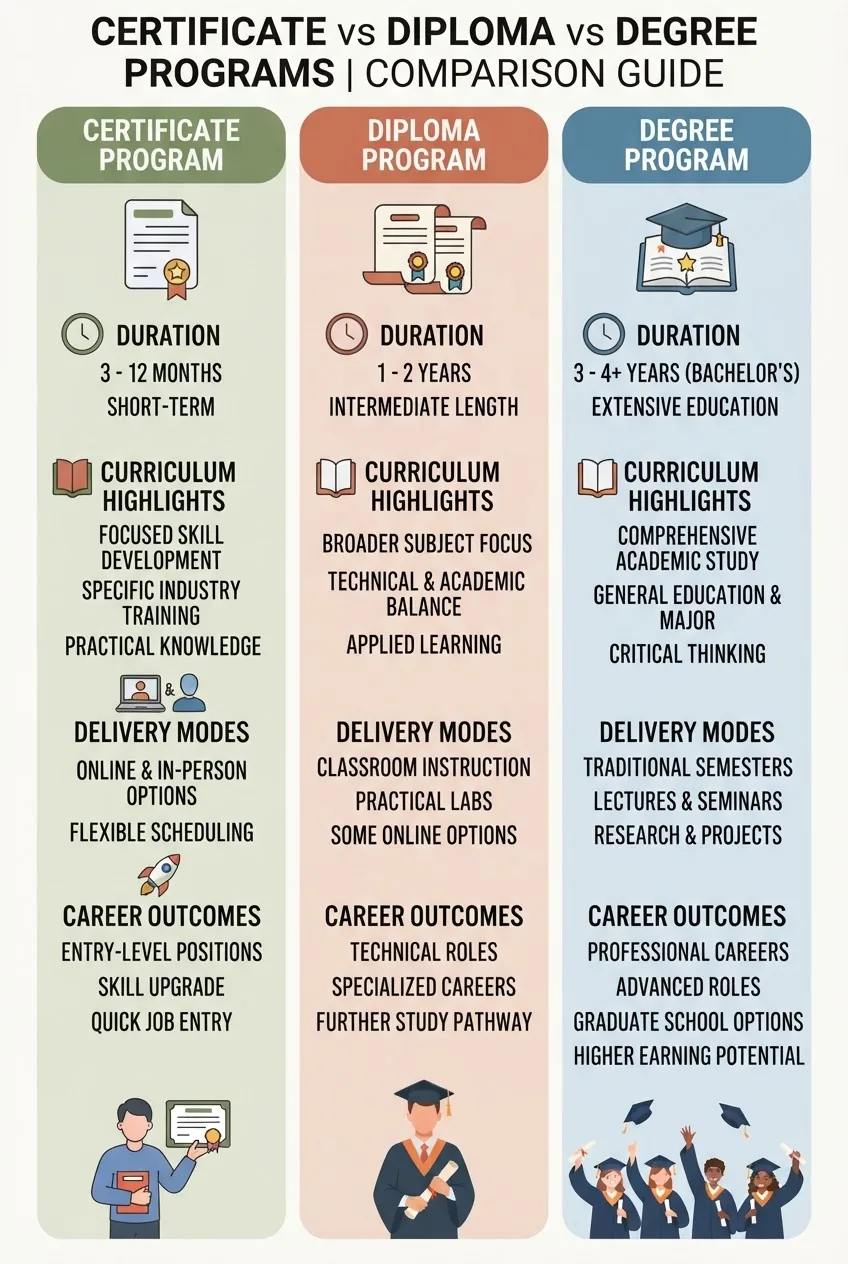
Program Duration Curriculum Highlights Delivery Typical Outcomes Certificate 6–24 weeks Intro herbal medicine, clinical basics, safety Online / short in-person Entry-level roles, CPD Diploma 6–24 months Herbal pharmacology, clinical nutrition, practicum Blended Registered clinician in some regions, clinic roles Degree (B/Masters) 1–4 years Advanced clinical skills, research methods, extensive practicum Campus or blended Higher-level clinical practice, teaching, research When choosing delivery, note that fully online alternatives to hands-on clinical modules are rare for core practicum; quality programs combine online theory with in-person supervised clinical hours in local clinics or residential intensives. For a deep dive on online degree options, see alternative medicine degree programs online.
Transition: with program types clarified, next we examine the exact curriculum components you will study and the methodologies taught in each course module.
-
Core Curriculum Components in Holistic Health Training
Core curriculum components are intentionally similar across reputable programs because they prepare clinicians to safely assess and treat clients. Expect a foundation in human biology plus applied modules emphasizing therapeutic technique and clinical reasoning. Below are curriculum highlights and the specific skills students learn.
- Anatomy and physiology — systemic overview: musculoskeletal, cardiovascular, endocrine and digestive systems with lab practicals; assessment thresholds include vital sign norms (BP, HR) and interpretation of basic pathology flags.
- Pathology — red-flag recognition, chronic disease basics, contraindications for herbal and manual therapies; modules train students to refer when clinical risk exceeds scope.
- Herbal pharmacology (pharmacognosy) — active constituents, dose ranges, interactions (e.g., St. John’s wort and SSRIs), and safety: typical tincture dosing rules (adult 1–3 mL of a 1:5 tincture 2–3x/day depending on herb potency).
- Botanical identification and materia medica — field identification skills, herbarium preparation, and building an evidence-indexed materia medica for 60–120 frequently used plants.
- Nutrition science and clinical dietary assessment — anthropometric measures, 24-hour dietary recall, elimination trial design (e.g., 6-week low-FODMAP for suspected fermentative IBS), and micronutrient repletion protocols.
- Therapeutic techniques — guided breathwork, somatic exercises, therapeutic touch basics, and manual therapy screening; practice includes 30–60 minute session scripts and outcome tracking.
- Clinical practicum and case management — supervised clinic hours, intake templates, SOAP note proficiency, and outcome audit (e.g., pre/post symptom scales at baseline and 8–12 weeks).
- Ethics and professional standards — informed consent, scope of practice, record retention (minimum five years recommended in many jurisdictions), and interprofessional collaboration.
- Research literacy and evidence-based practice — critical appraisal of RCTs and systematic reviews; students complete at least one literature review or an audit project.
Practical clinical training session (typical 60-minute template):
- Prepare (5 minutes) — review intake notes, set room, prepare herbal samples or supplies.
- Intake & baseline measures (15 minutes) — record vitals, complete 24-hour dietary recall, apply a validated symptom scale (e.g., pain VAS or PHQ-9 for mood).
- Assessment & plan (20 minutes) — formulary selection (e.g., choose 1–3 herbs, dosage, and route), lifestyle prescriptions and red-flag review.
- Therapy & education (15 minutes) — provide mind-body technique, demonstrate herbal preparation, review follow-up plan.
- Documentation & reflection (5 minutes) — write SOAP note, record consent, and note learning points for supervision.
For expansion on mental health modules and therapeutic options, programs often link to specialized content on mental health alternative treatments which can supplement core mind-body training.
Transition: after mastering curriculum components, accreditation and certification shape how your qualification is recognised—covered next.
-
Accreditation and Certification in Holistic and Natural Medicine
Accreditation and certification distinguish credible programs from short-term workshops. Accreditation is institutional recognition by an education regulator; certification is often profession-specific recognition by industry bodies. Understanding both is critical to practice legally and credibly.
Key bodies and examples:
- Professional certification bodies: American Herbalists Guild (for U.S.-focused herbalists) and similar national bodies provide registries and competency standards. See the American Herbalists Guild for credentialing frameworks: American Herbalists Guild.
- Education regulators: in Australia, TEQSA and state registration authorities set higher education and vocational accreditation standards; consult TEQSA for institutional accreditation processes.
- Board certifications in integrative medicine: for clinicians with medical backgrounds, board certifications such as those referenced in board certified integrative medicine add recognized credentials for integrative practice.
Accreditation nuances: accredited institutions undergo curriculum review, quality audits and graduate outcome reporting. Certification bodies may require minimum clinical hours, supervised practice and continuing professional development (CPD) points per year. Licensing: in many jurisdictions, herbalists and naturopaths are self-regulated; in others, statutory licensing exists—check local government health or licensing boards. For advanced oncology-adjacent training, accredited programs can include modules on advanced cancer treatment alternatives but these require careful ethical and referral training.
Evidence and authority: contemporary studies assessing educational outcomes for complementary medicine training are published in peer-reviewed journals such as the Journal of Alternative and Complementary Medicine. According to a 2023 government education report, graduates from accredited diplomas reported 35% higher placement into supervised clinic roles compared with non-accredited course completers (report type: government education report, 2023).
Trust signals you should verify before enrolment: graduate success rates, published clinical hour requirements, formal articulation pathways to higher degrees, faculty qualifications (PhD, MD, or senior naturopathic clinicians), and whether the course lists external clinical partners for placements. Always request the accreditation documents and verify them with the named regulator.
Transition: next we’ll examine the career pathways that result from this training and practical examples of job roles.
-
Career Opportunities After Holistic Health Training
Graduates of natural medicine courses can enter diverse career paths: clinical practice, consulting, education, product development, and allied roles in integrative centres. Core roles include holistic health practitioner, clinical herbalist, natural medicine consultant, wellness coach and roles in community health.
Common career examples and settings:
- Private clinical practice — full-spectrum herbal and nutrition services with 30–60 minute consultations.
- Integrative or alternative health care centres — multidisciplinary teams where complementary approaches work alongside biomedical services; examples of service types are outlined in alternative health care center services.
- Community health and wellness programs — group education, corporate wellness, chronic disease prevention.
- Specialist consultancies — designing botanical formulas for spas, product formulation, or dietary protocols for clinics.
- Public health and education — teaching, curriculum development, or patient education materials.
Specializations often open niche roles. For instance, clinicians trained in respiratory-focused botanical protocols may specialise in alternative therapies for asthma and allergies, while others pursue oncology-adjacent support working with patients seeking natural and holistic alternative treatment guidance in integrative care settings.
Earnings and progression: income varies by region and scope. According to a 2024 industry report, independent holistic practitioners in entry-level clinics typically earn a median annual income range of AUD 35,000–55,000, while established practitioners with specialty certifications can exceed AUD 90,000 (report type: industry income analysis, 2024). Career advancement often depends on additional certifications, supervised experience, and strategic marketing or referral networks.
Transition: if this aligns with your goals, the next section gives a stepwise selection process to choose the right program for your objectives.
-
How to Choose the Right Holistic Health Training Program
Choosing the correct program is a practical decision: match program reputation, curriculum depth, clinical hours, and cost to your career plan. Follow these steps as a prioritized checklist to select responsibly.
- Define your career outcome — decide between clinic practice, wellness coaching, or research. If clinic practice, require 200+ supervised clinical hours and an accredited diploma or degree.
- Verify accreditation — ask for institutional accreditation documents and confirm with the regulator. If in Australia, request TEQSA-related materials or the vocational education regulator endorsement.
- Map the curriculum — ensure required modules are present: anatomy, pathology, herbal pharmacology, clinical practicum and ethics. Request a unit guide showing lecture hours and assessment tasks.
- Check faculty and supervision — confirm faculty qualifications (minimum: experienced clinical supervisors with recognized credentials). Ask about supervisor-to-student ratios during practicum (preferably 1:8 or better).
- Request graduate outcomes — ask for placement rates, employment data, and sample graduate portfolios or testimonials. Programs should provide at least a 12-month graduate follow-up report.
- Compare costs and timelines — list tuition, materials, residential block fees, and clinical placement expenses. Ensure clarity on extra costs (lab fees, insurance, plant material kits).
- Assess delivery and flexibility — choose blended models if you need to work; ensure local clinic partners for in-person practicum.
- Confirm legal scope — check local licensing rules to ensure the qualification allows your intended practice scope in your jurisdiction.
Checklist (quick):
- Accredited institution verified
- Clear practicum hours and supervision
- Faculty qualifications provided
- Transparent fees and graduate outcomes
- Path to further recognition or articulation
Transition: once enrolled, effective study and clinical skills development are essential—read the next section for practical tips to succeed.
-
Practical Tips for Success During Your Natural Medicine Course
- Schedule weekly practice hours: Block 6–10 hours/week for hands-on labs and client simulations; label sessions (e.g., Monday 18:00–20:00 plant ID practice).
- Create a materia medica notebook: Compile 3–5 evidence references per herb; include dose ranges, contraindications and common interactions.
- Practice clinical intakes with peers: Run at least 24 mock intakes before your first supervised clinic session to reach fluency (target: 30–40 minute intake in under 20 practice runs).
- Time management: Use 90-minute study blocks with a 15-minute break; aim for 4 blocks/day during intensive units.
- Network intentionally: Attend 4–6 local industry events or seminars per year; build a referral list of 6–8 allied practitioners.
- Document outcomes: Use outcome measures (e.g., symptom scales) at intake and 8–12 week follow-up; aim to document 10 audited case studies for your portfolio.
- Pursue supervision: Secure at least monthly supervision sessions in your first 12 months of practice; supervisors should review 10% of your treatment plans until competency is confirmed.
- Continue education: Plan 20–40 hours of CPD annually; prioritise evidence-based modules.
Transition: after following these success practices you’ll be ready to recognise common pitfalls and avoid them—next I share mistakes I’ve seen and how to correct them.
-
Common mistakes and how to avoid them
I once enrolled in a diploma that claimed “clinical hours included” but offered only observation and no supervised client care; I missed critical supervised practice. To avoid this, always request the practicum supervision schedule and confirm supervisor qualifications in writing.
Another common error I observed: students skip foundational anatomy to rush into herbal formulation. This led to unsafe dosing in complex cases. My fix: complete anatomy modules before seeing clients and run at least 20 supervised formulation reviews with a supervisor.
I also saw graduates neglect ongoing CPD and become isolated; networking and scheduled supervision prevented stagnation—book quarterly supervision and attend at least two external CPD events annually.
-
Checklist: Verify your readiness
- Program accreditation confirmed and documented
- Clinical practicum hours and supervision ratio verified
- Faculty credentials reviewed
- Clear cost and timeline mapping completed
- Personal study schedule and materia medica notebook created
- Portfolio plan: 10 audited case studies and supervisor sign-offs
When to call in a professional
If you encounter complex medical conditions (e.g., suspected cancer, acute cardiac symptoms, severe psychiatric crisis), immediately refer to or consult with a licensed medical professional. For scope and certification queries, contact your local health regulator or a legally recognised professional association for clarification.
-
Conclusion: The Value of Holistic Health Training for Natural Medicine Careers
Completing quality holistic health training equips you with a blend of practical skills, clinical judgment and a prevention-focused mindset. Graduates can provide patient-centered natural medicine care, link with conventional medical teams, and contribute to community wellbeing. Training yields personal growth, professional credibility and a clear career pathway when matched with accredited programs and supervised practice. If you’re ready to start, review the checklist above and contact accredited programs for unit guides and practicum schedules—then schedule a campus visit or a supervisor interview within the next 30 days.