Answer: Yes—multiple controlled studies and systematic reviews show yoga reduces anxiety symptoms for many people by lowering physiological arousal, improving breath regulation, and enhancing emotional regulation; however, it is best used as a complementary therapy alongside professional care when anxiety is moderate to severe.
Understanding Anxiety and Its Effects?
Answer: Anxiety is a biological and psychological response to perceived threat that produces cognitive, emotional, and physiological symptoms; understanding those effects clarifies how yoga targets anxiety through body and brain pathways.
Term: Anxiety is a set of worry-focused emotions and bodily responses ranging from transient nervousness to chronic anxiety disorders involving persistent excessive fear or worry.
Anxiety disorders include generalized anxiety disorder (GAD), panic disorder, social anxiety disorder and specific phobias; common anxiety symptoms are excessive worry, restlessness, muscle tension, sleep disturbance, gastrointestinal upset, difficulty concentrating, and avoidance behaviour. Physiological effects usually reflect sympathetic nervous system activation—faster heart rate, shallow breathing, and elevated cortisol.
Short-term anxiety can sharpen attention and mobilise coping; chronic anxiety increases allostatic load (wear on body systems) and raises risk for cardiovascular and metabolic problems. According to a 2022 systematic review on chronic stress effects on physical health published in a peer-reviewed journal, prolonged autonomic arousal predicts poorer sleep and immune dysregulation (peer-reviewed journal).
Key neural and hormonal pathways involved in anxiety include:
- HPA axis: releases cortisol during stress, sustaining arousal.
- Autonomic nervous system: sympathetic (fight-or-flight) vs. parasympathetic (rest-and-digest) balance influences heart rate and digestion.
- Neurotransmitters: and inhibitory systems like GABA (gamma-aminobutyric acid) and serotonergic pathways modulate anxiety levels.
Physiological symptoms interact with cognitive patterns (rumination, catastrophizing) to maintain anxiety. Interventions that reduce autonomic arousal, increase vagal tone and improve inhibitory neurotransmission show the strongest direct effects on symptom reduction.
What Is Yoga and How Does It Relate to Mental Health?
Answer: Yoga is a mind-body practice combining movement, breath regulation, and ethical and attentional training; its integrated practices influence mental health through stress reduction, increased body awareness, and improved emotional regulation.
Term: Yoga here refers to a set of practices including physical postures (asanas), breath practices (pranayama), and mindful attention that originate from classical and modern traditions.
Yoga’s philosophy emphasizes the mind-body connection, using movement, breathing and attentional focus to recalibrate physiological stress responses and change habitual mental patterns. Clinical and therapeutic adaptations—commonly called yoga therapy—apply evidence-based sequences to treat specific conditions, supervised by trained professionals.
Yoga relates to mental health through several overlapping mechanisms:
- Breath regulation (pranayama): deliberate breathing patterns alter autonomic tone and reduce sympathetic over-activation.
- Interoception and body awareness: training attention to internal signals improves recognition and modulation of emotional states.
- Mindfulness and cognitive change: present-moment focus reduces repetitive negative thinking and increases cognitive flexibility.
- Social and behavioural effects: group classes and regular practice support routine, social connection and physical activity—each protective for mental health.
Evidence-based yoga therapy frameworks provided by recognised bodies (for example, clinical guidelines referenced by professional yoga therapy associations) recommend assessing client needs, contraindications and integrating yoga with other treatments when required. For the overlapping benefits of meditation and yoga, see the benefits of meditation for more detail.
Yoga can be adapted to different populations (older adults, trauma survivors), with trauma-informed approaches emphasising safety, choice and pacing to reduce the risk of reactivation of distress.
Can Yoga Help with Anxiety? Scientific Evidence and Mechanisms?
Answer: Clinical trials and meta-analyses indicate yoga reduces anxiety symptoms with small-to-moderate effect sizes, likely via parasympathetic activation, lowered cortisol, improved GABAergic activity and reductions in rumination; quality of evidence varies and more large RCTs are needed.
Term: Parasympathetic nervous system is the branch of the autonomic nervous system that promotes rest, digestion and recovery, often assessed via heart-rate variability (HRV).
Short meditation techniques complement yoga; see mindfulness exercises for anxiety for related practices.
Key peer-reviewed findings (stat block):
- Systematic reviews/meta-analyses: Several meta-analyses report yoga produces small-to-moderate reductions in anxiety symptoms compared with waitlist or no treatment, though heterogeneity and small study sizes limit certainty (peer-reviewed meta-analyses).
- Randomised controlled trials (RCTs): RCTs comparing yoga to usual care or relaxation often show symptom improvements; effect sizes vary by study quality and control condition (peer-reviewed journals).
- Physiological measures: Studies report increases in HRV (marker of parasympathetic activity), reductions in salivary cortisol and increased GABA levels after regular yoga practice in small cohorts (peer-reviewed experimental studies).
- Mechanistic trials: Neuroimaging studies suggest changes in amygdala reactivity and prefrontal regulation after yoga interventions (peer-reviewed journals).
Examples and sources: a 2017 randomized pilot study found increased GABA following a single yoga session (peer-reviewed journal); a 2020 systematic review found yoga reduced anxiety symptoms across diverse clinical and non-clinical populations (peer-reviewed review). For broader mental health positioning, see the World Health Organization’s mental health resources: WHO: Mental health.
Mechanisms explained in practical terms:
- Vagal stimulation / parasympathetic activation: Slow, diaphragmatic breathing and certain postures increase vagal tone, shifting balance from sympathetic to parasympathetic dominance—this reduces heart rate and subjective anxiety.
- Neurochemical modulation: Research links yoga practice to increased levels of GABA (an inhibitory neurotransmitter that calms neural circuits) and altered serotonin signaling; these changes are plausible mediators of reduced anxiety.
- HPA axis downregulation: Repeated practice reduces basal cortisol levels and blunts stress responses, lowering chronic physiological arousal.
- Top-down cognitive regulation: Mindful attention cultivated in yoga strengthens prefrontal control over limbic reactivity, reducing rumination and catastrophic thinking.
- Behavioural activation and sleep improvement: Regular practice increases physical activity, social contact and routine, all of which support emotional resilience and sleep quality.
Critical appraisal of evidence:
- Many RCTs feature small sample sizes, heterogeneous interventions and active controls of varying rigor; risk of bias is moderate in several trials.
- Meta-analyses often report publication bias and variation in outcome measures; despite consistent directionality toward benefit, precision of effect estimates can be limited (peer-reviewed meta-analyses).
- Mechanistic studies are encouraging but often exploratory; causality between observed neurotransmitter changes and sustained clinical improvement requires larger, controlled longitudinal research.
Short practical synergy: brief short meditation practices can augment neurocognitive benefits of yoga by training attentional control between sessions.
The Benefits of Yoga for Anxiety: Physical, Mental, and Emotional?
Answer: Yoga delivers multiple interlinked benefits—reducing physical tension and arousal, improving mood, strengthening emotion regulation and increasing resilience—each supported by varying levels of evidence and explained below.
- Reduced physiological arousal and stress markers
Yoga lowers heart rate, blood pressure and cortisol in many studies, producing a measurable relaxation response; reduced physiological arousal often translates to fewer panic-like sensations and calmer baseline states (peer-reviewed experimental studies).
- Improved breath control and respiratory patterns
Pranayama retrains people from shallow, chest-based breathing to diaphragmatic breathing, increasing CO2 tolerance and reducing hyperventilation-linked anxiety symptoms; breath control is a direct route to parasympathetic activation.
- Enhanced GABAergic and neurotransmitter function
Sessions of yoga have been associated with acute increases in GABA and longer-term changes in neurotransmitter balance linked to mood regulation; these biochemical effects support reduced anxiety reactivity (peer-reviewed lab studies).
- Improved mood and reduced depressive symptoms
Many interventions report concomitant decreases in depression scores, improving overall emotional baseline and reducing the likelihood of anxiety-depressogenic cycles (peer-reviewed clinical trials).
- Better emotional regulation and cognitive flexibility
Mindful elements of yoga strengthen attentional control and reduce rumination, increasing an individual’s ability to modulate negative emotions when they arise.
- Physical relaxation and muscle tension release
Slow, sustained postures and relaxation phases reduce muscle stiffness and perceived tension often associated with chronic anxiety.
- Improved sleep quality
By lowering arousal and improving relaxation, regular yoga practice frequently improves sleep onset and sleep continuity, which in turn reduces daytime anxiety.
- Social connection and routine
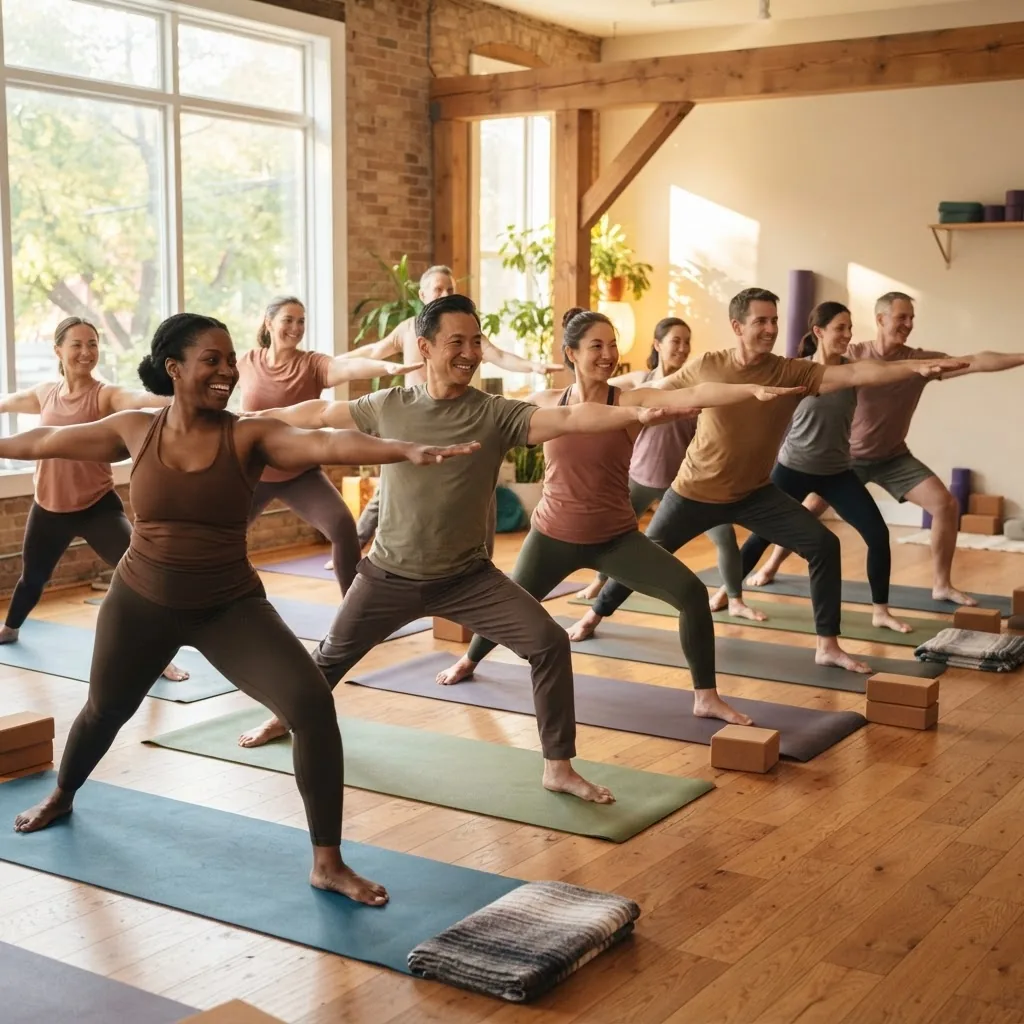
Group classes and scheduled practice create supportive routines that reduce isolation, increase accountability and provide social buffering against stress.
- Accessible coping toolkit
Yoga offers on-the-spot tools—breathwork and grounding movement—that people can apply during acute anxiety episodes to reduce intensity quickly.
- Physical benefits that support mental health
See physical benefits of yoga for how increased strength and mobility contribute to wellbeing and confidence.
Types of Yoga Most Effective for Anxiety Relief?
Answer: Gentle, restorative, Hatha and certain Kundalini-based practices emphasising breath work and slow movement show the most consistent anxiety benefits; intensity and style should match a person’s physical and psychological needs.
Below is a concise comparison of common styles and how they target anxiety:
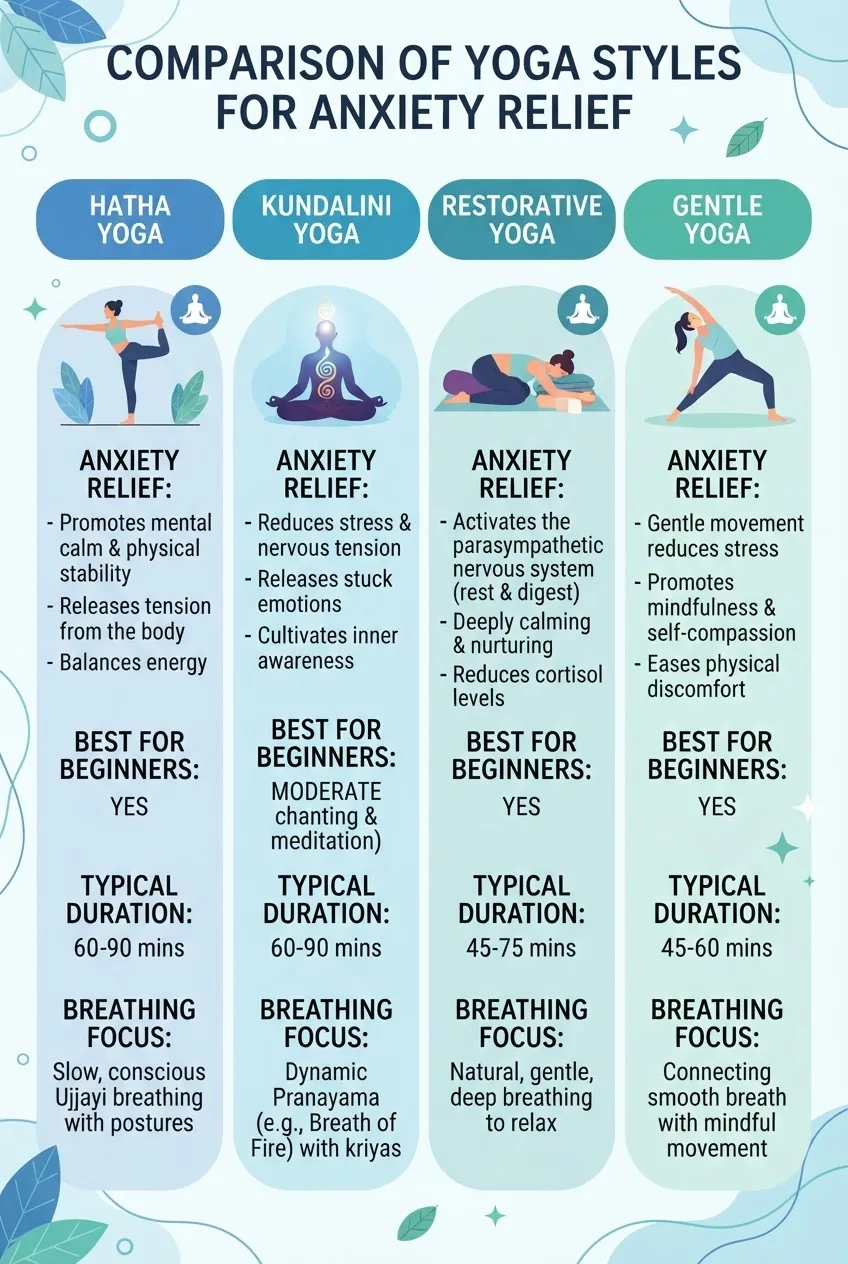
| Style | Primary features | Why it helps anxiety |
|---|---|---|
| Hatha | Moderate-paced postures, basic pranayama, accessible | Balances movement and breath; teaches foundational relaxation and interoception |
| Restorative | Long-held supported poses, emphasis on relaxation | Direct parasympathetic activation and tension release; ideal for high anxiety |
| Kundalini (gentle forms) | Breath-focused movements, chanting, energetic techniques | Strong breathwork components that rapidly shift autonomic tone when taught safely |
| Gentle/Yin | Slow stretches, long holds, meditative focus | Supports introspection and gradual exposure to uncomfortable sensations; increases tolerance and calm |
Choose a style based on physical capacity, symptom severity and personal preference; trauma-sensitive or therapeutic yoga training for instructors is recommended for clients with complex histories. Professional yoga therapy associations provide certification standards to look for (professional organisation information: International Association of Yoga Therapists).
How to Incorporate Yoga into Your Anxiety Management Routine?
Answer: Integrate yoga 3–5 times weekly with sessions of 15–60 minutes, prioritising breathwork, restorative practices and short daily micro-practices; pair with brief mindfulness and breathing meditations for greatest effect.
Term: Pranayama denotes specific yogic breathing techniques used to regulate breath, autonomic state and attention.
Practical steps and frequency guidance:
- Start small and consistent: Aim for 15–20 minutes daily or 30–45 minutes three times per week to build habit; sustained practice over 8–12 weeks typically shows clearer symptom reductions in studies.
- Prioritise breath-first sessions: Begin classes or home sessions with 5–10 minutes of diaphragmatic breathing or a calming pranayama (see stepwise technique below).
- Use restorative or gentle sessions when anxious: On high-anxiety days, choose restorative or gentle flows rather than vigorous practices.
- Schedule short micro-practices: Place 2–5 minute breathing or grounding breaks during the day to prevent escalation of anxiety.
- Combine with short mindfulness meditations: Insert brief meditation between movement sets; recommended resource: quick mindfulness meditations and breathing meditation exercises.
- Progress and reflect: Track symptoms weekly and adjust session length and intensity; consider a structured programme such as a 30-day yoga challenge to establish consistency.
Stepwise breathing technique (evidence-backed, safe):
- Find a comfortable seated or supported reclined position with an open chest.
- Place one hand on the belly and one on the chest to feel movement.
- Inhale slowly through the nose for a 4-count, feeling the abdomen expand (diaphragmatic breathing).
- Pause for a 1–2 count at the top of the inhale.
- Exhale gently through the nose for a 6-count, allowing the abdomen to fall; repeat for 5–10 cycles.
This simple paced-breath technique activates the parasympathetic nervous system and is widely used in clinical yoga interventions (peer-reviewed experimental studies). For adjunct short meditations to use with yoga, see the short meditation practices.
Case example (hypothetical):
A 32-year-old office worker with generalized anxiety begins five 20-minute home sessions per week—three Hatha classes and two 10-minute breath/restore practices—tracking anxiety scores weekly. After eight weeks she reports reduced panic symptoms, improved sleep and greater tolerance for stress; she uses breathwork during acute episodes to lower heart rate.
Yoga Vs. Other Anxiety Treatments: Complementary or Alternative?
Answer: Yoga is best viewed as a complementary treatment that enhances psychotherapy and medication effects for many people; it can reduce symptoms but should not routinely replace evidence-based medical or psychological care when disorders are moderate-to-severe.
Comparison of pros and cons:
- Yoga (pros): Low-cost, low-risk when adapted, improves physiological regulation and offers immediate tools for symptom reduction.
- Yoga (cons): Effect sizes vary; less standardisation across instructors; not sufficient alone for severe clinical anxiety in many cases.
- Medication (pros): Rapid symptom relief for many, well-studied dosing and risks; suitable for acute and severe presentations.
- Medication (cons): Side effects, withdrawal risks, and medications typically treat symptoms rather than underlying cognitive patterns.
- Psychotherapy (pros): Evidence-based therapies like CBT address cognitive and behavioural drivers of anxiety and show durable results.
- Psychotherapy (cons): Resource and time intensive; access barriers exist.
Integration guidance:
- Consider yoga as an adjunct to increase resilience and support therapy homework and exposure tasks.
- For medication decisions, consult a prescribing clinician; yoga may allow lower doses for some individuals but should never be used to self-manage medication changes—see guidance on anti-anxiety medications.
- For complex cases, combine yoga with formal psychotherapy and explore additional supports such as specialised interventions listed in the advanced stress relief tools.
- When considering clinical counselling, see resources on anxiety counseling options.
External authoritative positions: major mental health organisations generally endorse physical activity and mind-body approaches as useful adjuncts to standard care. For example, the Anxiety and Depression Association of America provides resources on integrative approaches: Anxiety and Depression Association of America.
Limitations and Precautions When Using Yoga for Anxiety?
Answer: Yoga is not risk-free or universally effective; key precautions include recognising contraindications, matching intensity to capacity, seeking trauma-informed instructors, and maintaining realistic expectations about symptom change timelines.
Important considerations and cautions:
- Do not stop prescribed medications or therapy without consulting a clinician; yoga should complement professional care for moderate-to-severe anxiety.
- People with panic disorder may find certain breath techniques initially intensifying; start with brief, guided pranayama under supervision.
- History of trauma: use trauma-informed teachers to avoid re-traumatisation; avoid practices that force intense inward focus too quickly.
- Physical injuries or medical conditions: adapt postures and consult healthcare professionals or certified yoga therapists when necessary.
- Expect variability: individual responses range from rapid benefit to limited change; allow 6–12 weeks of consistent practice to evaluate effects.
Warning and disclaimer: Yoga is not a replacement for professional diagnosis and treatment of anxiety disorders. If you experience severe symptoms—suicidal thoughts, incapacitating panic, or functional impairment—seek urgent medical or mental health care.
Conclusion: Is Yoga a Viable Tool for Managing Anxiety?
Answer: Yoga is a viable, evidence-supported tool for many people to reduce anxiety symptoms, improve regulation and enhance wellbeing when used regularly and incorporated into a broader treatment plan as needed.
Summary takeaways:
- Research supports small-to-moderate anxiety reductions from yoga; mechanisms include parasympathetic activation, neurotransmitter changes and cognitive regulation.
- Best results occur with regular practice (several times weekly), emphasis on breathwork and therapist-informed adaptations for clinical cases.
- Use yoga as a complementary strategy alongside therapy and medication when indicated; consult qualified professionals for severe anxiety.
If you’re ready to begin, start with brief daily breathwork and gentle Hatha or restorative sessions and consider a supported programme—your next step could be a structured plan like the 30-day yoga challenge or guided breathing practices. Explore trustworthy resources and qualified instructors, and speak with your healthcare provider to build a safe, personalised anxiety management toolkit.