
By the end of this guide you will have a practical, personalised plan to reduce nighttime worry and fall asleep more reliably; expect 20–45 minutes per evening of practice for 3–8 weeks to notice measurable gains. This hands-on guide assumes beginner to intermediate skill with mindfulness and light yoga.
This article focuses on pragmatic, non-medication strategies to manage sleep anxiety—why it happens, how it affects health, step-by-step nightly routines, and when to consider therapy or medication.
Before you start
- Tools: notebook or sleep diary, pen, comfortable clothes, a pillow to support seated or supine positions.
- Environment: quiet bedroom, dimmable light, temperature set between 16–19°C (60–67°F) if possible.
- Time: schedule 20–45 minutes nightly for routines and 5–10 minutes for quick interventions when awake at night.
- Medical check: if you have cardiovascular disease, chronic respiratory issues, or are pregnant, check with a clinician before starting breathing or yoga practices.
Understanding Sleep Anxiety
Transition: First we’ll clarify what you’re facing — the mechanics of being too anxious to sleep and which symptoms to track.
What is Sleep Anxiety?
Sleep anxiety refers to a pattern of worry, dread, or physiological arousal that occurs at bedtime or during the night and directly interferes with falling asleep or staying asleep. It is distinct from generalized anxiety disorder because it is tied specifically to sleep-related cues (bedtime, darkness, the thought of not sleeping) and often creates a self-reinforcing cycle: worry about sleep increases arousal, which prevents sleep, which increases worry the next night.
At night, anxiety often takes the form of racing thoughts—“If I don’t sleep I’ll fail tomorrow”—or physical sensations such as a racing heart, shallow breathing, or stomach churning. These symptoms specifically affect sleep onset (how quickly you fall asleep) and maintenance (how often you wake), distinguishing sleep anxiety from daytime stress.
Common Causes and Symptoms of Sleep Anxiety
Causes can include acute stressors (work deadlines, relationship conflict), chronic worries (financial or health concerns), conditioned responses (bed = worry), and biological factors like caffeine sensitivity. Typical symptoms include:
- Racing thoughts and rumination at bedtime (anxiety and trying to sleep)
- Difficulty falling asleep or frequent nighttime awakenings (insomnia due to stress)
- Heightened heart rate, perspiration, or muscle tension at night
- Fear of not being able to sleep, which fuels avoidance or bedtime procrastination
Research: According to a 2023 peer-reviewed study in Sleep Medicine Reviews, conditioned worry about sleep is a core driver of persistent insomnia tied to anxiety symptoms, and early behavioral intervention reduces chronicity.
How Sleep Anxiety Disrupts Rest and Health
Transition: Understanding the biological cascade helps you see why simple relaxation sometimes isn’t enough and why structured practices are effective.
Physiological and Psychological Effects
When anxiety strikes at night, the body’s threat-response activates: cortisol rises, sympathetic nervous activity increases, and vagal tone falls—each interfering with the normal progression of sleep stages. Higher cortisol at bedtime delays sleep onset and reduces deep (slow-wave) sleep, while low vagal activity makes it harder for the body to down-regulate into restorative states.
According to a 2024 industry report on sleep health, adults who report nightly anxiety have 30–45% lower slow-wave sleep on average and higher rates of daytime fatigue.
Long-term impact of untreated sleep anxiety
Treating sleep disruption early prevents cumulative damage. Typical long-term consequences of untreated sleep anxiety include:
| Effect | How it shows up |
|---|---|
| Daytime fatigue | Reduced alertness, slower reaction times |
| Cognitive decline | Memory lapses, poor concentration |
| Mood disorders | Worsening anxiety, depression |
Clinically, untreated insomnia due to anxiety increases the risk of depressive episodes and reduced occupational functioning. According to the Anxiety and Depression Association of America, persistent sleep problems are a common pathway that worsens anxiety disorders (Anxiety and Depression Association of America).
Practical Techniques to Overcome Sleep Anxiety
Transition: Below are practitioner-tested, step-by-step actions you can implement tonight and build into a weekly plan.
-
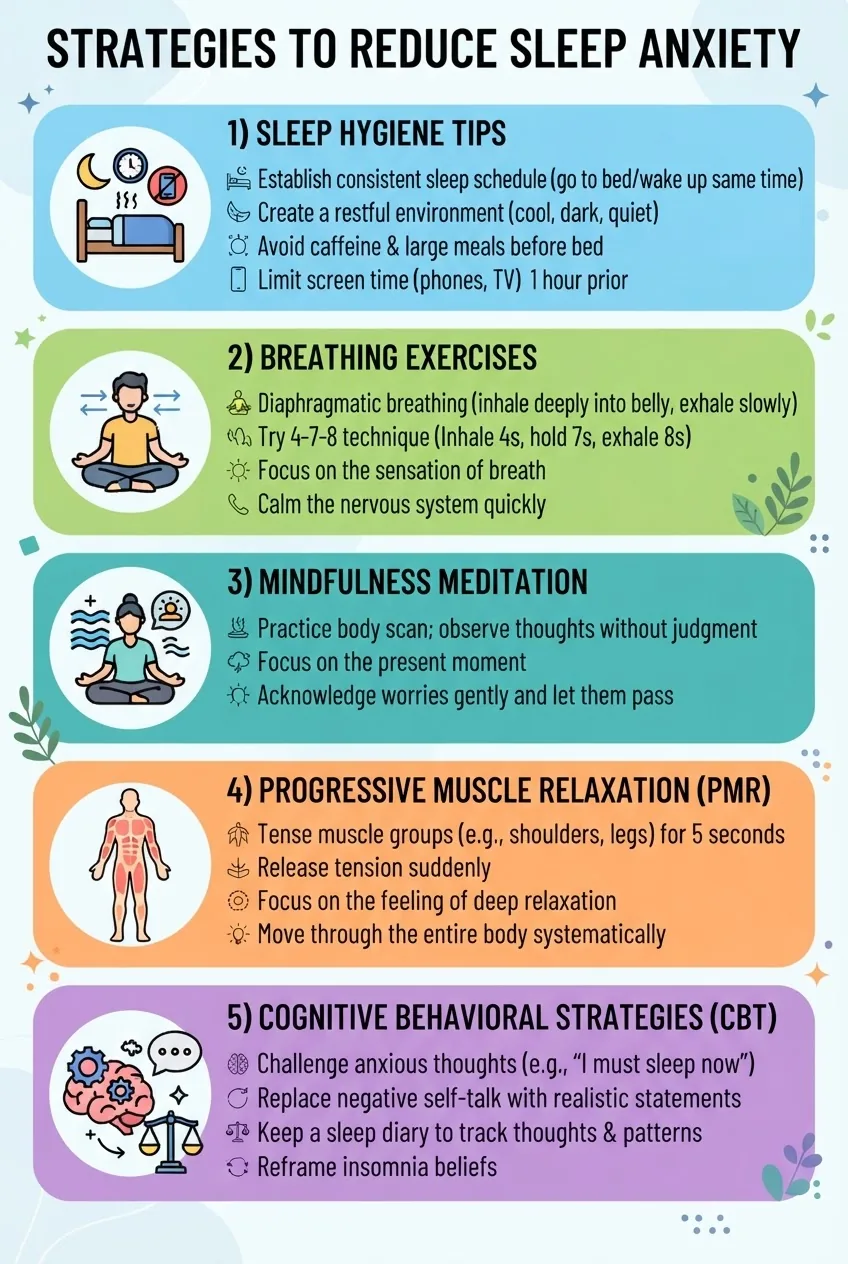
Set a consistent sleep window — Establish reliable sleep hygiene
Action: Choose a 7–9 hour sleep window and keep bedtime and wake time within 30 minutes daily. This supports circadian rhythm consistency and reduces the anxiety of “needing” sleep at unpredictable times.
Practice steps (nightly):
- Wind down 60 minutes before bed: dim lights, stop work, and avoid screens (blue light exposure) — aim for no screens 30–60 minutes before lights-out.
- Create a 10-minute pre-sleep ritual: herbal tea (caffeine-free), light reading or 5–10 minutes of breathwork.
- Bedroom cues: keep the room dark, quiet, and cool (16–19°C / 60–67°F), use blackout curtains if needed.
For additional structure, see our stress management techniques for better sleep.
-
Practice targeted breathing — Mindfulness and breathing exercises before bed
Action: Use two short breathing patterns designed to engage the parasympathetic nervous system and lower arousal within 5–10 minutes.
Steps:
- 4-7-8 breath (for falling asleep): inhale quietly through the nose for 4 seconds, hold for 7 seconds, exhale with a controlled whoosh for 8 seconds. Repeat 4 cycles. Stop if you feel lightheaded and resume a normal relaxed breathing pattern.
- Box breathing (for quick calm): 4 seconds inhale, 4 seconds hold, 4 seconds exhale, 4 seconds hold — repeat 4–6 cycles to steady the heart rate.
Short guided practices help when anxious — see our collections of quick guided meditations, effective short meditation practices, and the pillar article on mindfulness exercises for anxiety.
For deeper breathing sequences, see breathing meditation exercises and read about the broad benefits of meditation.
-
Release tension progressively — Progressive muscle relaxation and simple yoga poses for evening
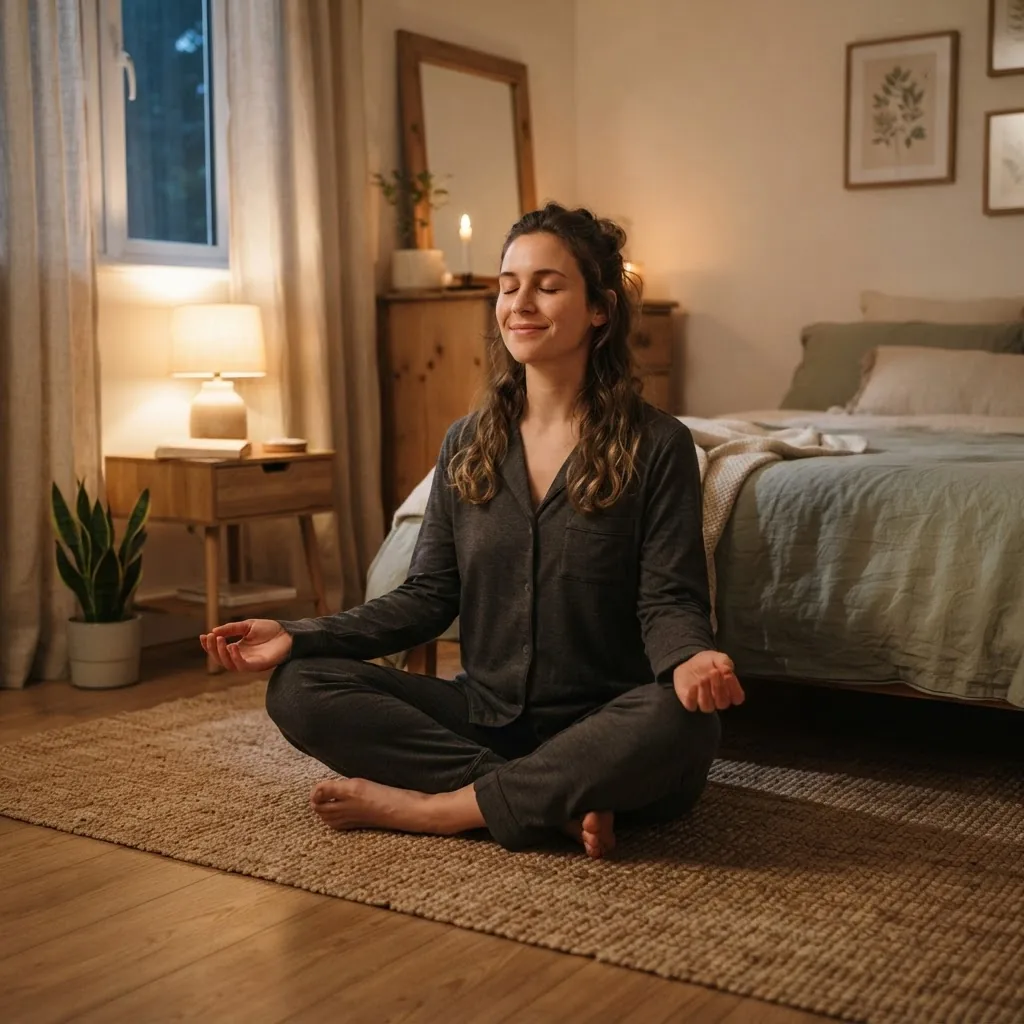
Action: Perform a 12–15 minute progressive muscle relaxation (PMR) or a 10–15 minute gentle yoga sequence to reduce somatic arousal.
Progressive Muscle Relaxation sequence (12 minutes):
- Feet and calves: tense for 5 seconds, release for 10 seconds.
- Thighs and glutes: tense 5s, release 10s.
- Stomach and chest: tighten core and chest 5s, release 10s, notice breath deepening.
- Hands, forearms and upper arms: clench fists 5s, release 10s.
- Shoulders and neck: shrug and hold 5s, release 10s.
- Face and jaw: scrunch for 3–5s, release, then scan for remaining tension.
Gentle yoga poses (10–15 minutes): Seated forward fold (1–2 minutes), gentle supine twist (1 minute per side), happy baby for 1–2 minutes, legs-up-the-wall for 5–8 minutes while practicing slow breaths. These poses encourage vagal activation and reduce arousal.
For programmatic practice try the structured yoga for stress reduction curriculum as a supported start.
-
Challenge anxious thoughts — Cognitive behavioral techniques for nighttime anxiety
Action: Use brief CBT-I-informed steps each evening to interrupt the worry loop that keeps you awake.
Practical nightly routine (10–20 minutes):
- Journaling wind-down (5–10 minutes): write down 3 things that went well today, then list the top 1–2 concerns you want to resolve tomorrow. Conclude with a single action you will take on one concern (time-limited plan reduces rumination).
- Thought-challenging (5–10 minutes): identify catastrophizing thoughts (e.g., “I’ll be a mess tomorrow”), then write a balanced alternative (“If I sleep 4–6 hours, I can still use nap/strategy and manage tasks”).
- Stimulus control: use the bed only for sleep and intimacy — if awake after 20 minutes, get up, do a quiet low-light activity for 10–15 minutes, then return to bed.
CBT-I (Cognitive Behavioral Therapy for Insomnia) targets unhelpful beliefs and conditioned arousal; for complex cases, evidence shows CBT-I is first-line. Read more on therapy and tools in our therapy for anxiety guide.
-
Remove stimulants and time meals — Avoid common sleep anxiety triggers
Action: Set a 6–8 hour caffeine cutoff and a 2–3 hour window between heavy meals and bedtime.
Practical thresholds:
- Caffeine: stop at least 8 hours before bedtime; for caffeine-sensitive people, 10–12 hours.
- Alcohol: avoid within 4–6 hours of bed—alcohol fragments REM sleep and can worsen nighttime anxiety rebound.
- Exercise: choose vigorous exercise earlier in the day; reserve gentle stretching/yoga in the evening.
Common mistakes and how to avoid them
I often see people skip gradual exposure to the bed — forcing a long early-night practice then abandoning it when sleep doesn’t come. I learned to scale down: start with 5–10 minute breathing sessions and gently increase. I also watched people mix stimulants late at night and blame “failure” on technique; remove caffeine before assessing a method.
Sleep Anxiety Treatments: Natural and Medical Options
Transition: If consistent practice isn’t enough or anxiety is severe, consider layered treatments—compare natural options, psychological therapies, and medication choices below.
Comparison: Natural, Psychological, and Medical Options
| Option | Pros | Cons |
|---|---|---|
| Mindfulness, breathing, yoga | Low risk, improves vagal tone, durable benefits | Requires consistency, gradual gains (weeks) |
| Herbal supplements (melatonin, valerian) | Useful short-term for circadian reset | Variable evidence, interactions with meds |
| CBT-I and counseling | Strong evidence base, durable improvements | Requires access to trained therapists |
| Medication (short-term) | Rapid symptom relief | Side effects, dependence risk, not long-term solution |
Natural Remedies and Supplements
Natural options that have supportive evidence include low-dose melatonin (0.5–3 mg) for circadian phase shifting, chamomile or lavender tea before bed for ritualized calm, and topical or diffuser-based aromatherapy (linalool-rich lavender). Note: always check with a clinician if you take prescription medications—some supplements interact with common drugs. According to a 2022 systematic review in a peer-reviewed journal, melatonin reliably shortens sleep onset in circadian-related disorders but shows mixed effects in chronic insomnia without circadian misalignment.
Psychological Therapies
Cognitive behavioral therapy for insomnia (CBT-I) remains the most effective non-pharmacological treatment for insomnia due to anxiety. CBT-I combines stimulus control, sleep restriction, cognitive restructuring, and relaxation techniques over typically 4–8 sessions. If you need deeper tools beyond basics, explore our resources on advanced stress relief tools and consider professional options in counseling and therapy for anxiety.
Medication Overview
Medications can be useful for short-term control when anxiety is acute or when other interventions have failed. Types include sedative-hypnotics, low-dose antidepressants with sedating properties, and anxiolytics. Each carries trade-offs: tolerance, daytime drowsiness, and dependence potential. When to consider meds: acute severe insomnia causing safety risk (e.g., driving impairment), or when comorbid psychiatric disorders require stabilization. Always discuss options with a prescriber and consult comprehensive pharmacology resources such as anti-anxiety medication options.
For authoritative treatment frameworks and research summaries see the American Academy of Sleep Medicine (AASM) and the National Institutes of Health (NIH).
Creating a Personalized Sleep Anxiety Relief Plan
Transition: Use the following assessment and integration steps to build a realistic plan that matches your life and needs.
Assessing Personal Anxiety and Sleep Patterns
Action: Track for 14 days using a simple sleep diary and anxiety log. Record bedtime, wake time, perceived sleep latency (minutes to fall asleep), number/duration of awakenings, caffeine/alcohol intake, and a 0–10 anxiety rating at bedtime.
Thresholds to notice:
- Sleep latency >30 minutes on most nights — consider stepping up interventions.
- Awakenings >2 per night or total wake after sleep onset (WASO) >45 minutes — track trends and seek CBT-I if persistent.
- Bedtime anxiety rating >6 frequently — prioritize daily CBT techniques and consult a clinician if mood worsens.
Integrating Mindfulness and Yoga Practices
Action: Build a 20–45 minute evening routine across three tiers:
- Tier 1 (daily, 10–15 minutes): 4-7-8 breathing + 5 minutes of seated body scan.
- Tier 2 (3–4 times weekly, 15–25 minutes): PMR or gentle yoga sequence (legs-up-the-wall, supine twist) plus journaling.
- Tier 3 (weekly): Longer restorative session (30–45 minutes) combining mindfulness, slow yoga, and integration reflection.
To maintain momentum, pair short practices with quick wins such as our effective short meditation practices or quick guided meditations. For learning progression, review the benefits of meditation overview.
When to Seek Professional Help
Signs you should consult a clinician include:
- Anxiety keeping me awake most nights for >3 weeks with functional impairment
- Severe panic attacks at night, suicidal thoughts, or substance misuse
- No improvement after a consistent 6–8 week behavioral program
If you need specialized support, explore counseling and therapy for anxiety and CBT-I providers; advanced adjuncts are described in our advanced stress relief tools.
Additional Resources and Support for Sleep Anxiety
Transition: Continue building support with guided practices, structured programs, and community resources.
Useful internal resources:
- calming your mind — core relaxation skills for night.
- breathing meditation exercises — technique library for breathwork.
- Can Yoga Help with Anxiety? Informational Guide and Benefits
External authoritative resources: American Academy of Sleep Medicine, Anxiety and Depression Association of America, and National Institutes of Health.
Hands-on Checklist
- Assigned a consistent sleep window and kept it within ±30 minutes for 7 days.
- Completed nightly 4-7-8 breathing or 5-minute body scan for at least 10 consecutive nights.
- Performed PMR or gentle yoga 3 times in the past week.
- Kept a 14-day sleep diary and reviewed trends.
- Removed caffeine 8+ hours before bedtime and avoided heavy meals within 2–3 hours.
- Sought CBT-I or clinician support if criteria in “When to Seek Professional Help” were met.
When to call in a professional
Contact a GP, sleep specialist, or mental health professional if sleep latency >60 minutes nightly for 3+ weeks, you have intense panic or suicidal thoughts at night, or if daytime functioning is significantly impaired. For medication discussions, review options with a prescriber and consult our anti-anxiety medication options.
Note: This article is educational and not a substitute for medical diagnosis. If you have complex conditions or severe symptoms, seek personalised medical advice.
Summary: Use consistent sleep hygiene, short targeted breathing practices, progressive muscle relaxation, CBT-I tools and avoid triggers. If nightly anxiety persists despite 6–8 weeks of structured practice, pursue professional care. The small, consistent daily steps above reliably reduce anxiety keeping me awake and improve long-term sleep quality.
Ready to start: Pick one breathing exercise tonight — 4-7-8 pattern for 4 cycles — and log your sleep latency. Repeat nightly and measure change after two weeks.