

Stress medication reduces excessive stress and anxiety symptoms by altering brain chemistry or body responses so you can function and engage in therapy or self-care; choices range from short-acting sedatives to longer-term antidepressants, each with different onset times, risks, and roles within a holistic plan.
What Is Stress Medication and When Is It Used?
Answer: Stress medication is prescribed or recommended medication intended to reduce stress-related symptoms—such as persistent worry, panic, or physiological hyperarousal—when symptoms are severe, impair daily functioning, or when non-pharmacological strategies alone are insufficient.
Stress medication: drugs used to relieve symptoms of stress and anxiety by influencing brain chemistry, nervous system activity, or peripheral physiological responses.
Clinicians use stress medication for a range of presentations: acute panic attacks, generalized anxiety disorder (GAD), social anxiety, situational anxiety (for example, performance anxiety), severe insomnia driven by hyperarousal, and to allow patients to participate effectively in psychotherapy. Medication is typically considered when:
- Symptoms are persistent and disabling (interfering with work, relationships, or daily tasks).
- There is high risk of harm or severe panic that requires immediate symptom control.
- Non-pharmacological approaches (mindfulness, CBT, yoga) are not providing sufficient relief alone.
- Medication is needed as a short-term bridge while other treatments take effect (for example, SSRIs can take weeks to work).
Short-term and long-term goals differ: some medications are designed for rapid relief (minutes–hours), others for sustained symptom reduction over weeks to months. The decision to use medication considers symptom severity, history of response, comorbid conditions (depression, substance use, medical illnesses), and patient preference.
Transition: Having defined when medication is used, the next section breaks down the main medication types, what they do chemically, and which situations they best match.
Types of Stress Medications and How They Work
Answer: The main classes for stress relief are benzodiazepines, SSRIs, SNRIs, beta-blockers, and buspirone—each works on different neurotransmitters or body systems, producing varied onset times, benefits, and risks.
Benzodiazepines: sedative drugs that enhance the effect of the inhibitory neurotransmitter GABA, producing rapid calming and muscle relaxation.
The table below compares the core types of stress medication, with mechanisms, typical uses, onset time, common side effects, and important prescribing considerations. Read the brief notes following the table for clinical nuances and first-use guidance.
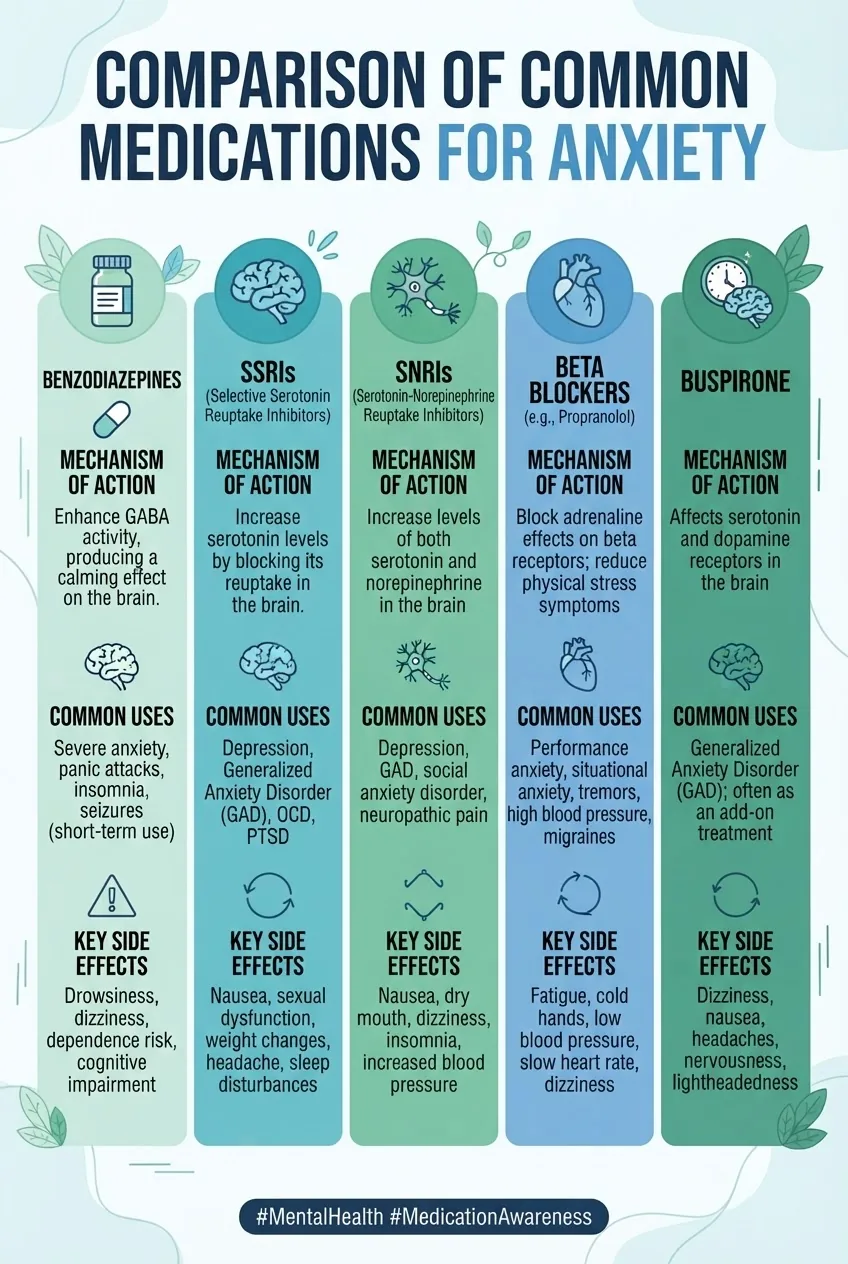
| Class | Mechanism | Common Uses | Typical Onset | Key Side Effects / Considerations |
|---|---|---|---|---|
| Benzodiazepines | Enhance GABA-A receptor activity → rapid inhibitory calming in the brain. | Acute panic, severe anxiety episodes, procedural anxiety, short-term insomnia. | Minutes–hours (rapid). | Sedation, memory impairment, dependency risk with prolonged use; avoid with heavy alcohol or opioid use. |
| SSRIs | Block serotonin reuptake → increased serotonin availability at synapses over weeks. | GAD, panic disorder, OCD, social anxiety; first-line for chronic anxiety. | 2–6 weeks for meaningful benefit; full effect often 8–12 weeks. | Sexual side effects, GI upset, initial activation; generally low dependency risk; monitor for suicidal ideation in young people. |
| SNRIs | Inhibit reuptake of serotonin and norepinephrine → modulation of mood and arousal circuits. | GAD, panic disorder, some cases with coexisting chronic pain or fatigue. | 2–6 weeks for meaningful benefit; similar timeline to SSRIs. | Increased blood pressure in some patients, nausea, sleep disturbance; taper slowly to avoid withdrawal. |
| Beta-blockers | Block peripheral beta-adrenergic receptors → reduce heart rate, tremor, and physical anxiety signs. | Performance or situational anxiety (public speaking), palpitations; not typically for chronic GAD. | Within an hour (short-term relief for episodes). | Fatigue, low blood pressure, contraindicated in asthma; no central dependency but not ideal for generalized anxiety alone. |
| Buspirone | Partial agonist at 5-HT1A receptors and dopaminergic modulation → anxiolytic without heavy sedation. | Chronic GAD, for patients seeking non-sedating long-term options or avoiding benzodiazepines. | 2–4 weeks; up to 6 weeks for full benefit. | Dizziness, nausea, less risk of dependency than benzodiazepines; variable individual response. |
Notes:
- Matching drug to need: Use benzodiazepines for rapid control when immediate calming is required, but prefer SSRIs/SNRIs or buspirone for ongoing management because they treat underlying anxiety circuits and pair well with psychotherapy.
- Onset and overlap: Antidepressant classes (SSRIs/SNRIs) take weeks; clinicians sometimes prescribe short-term benzodiazepines during initial SSRI/SNRI titration to manage early symptoms.
- Titration and tapering: SNRIs and benzodiazepines can cause withdrawal if stopped abruptly; careful tapering is standard practice.
Term: neurotransmitters — chemical messengers (like serotonin, norepinephrine, GABA) that carry signals between neurons and influence mood, arousal, and stress reactions.
Clinical nuance: choice depends on symptom profile (predominant panic vs chronic worry), comorbidities (depression, cardiovascular disease), medication history, substance use risk, and patient goals (rapid relief vs long-term control).

anti-anxiety meds types and prescription info
Transition: With mechanisms and practical roles outlined, the next section examines whether anti-anxiety drugs actually work for stress, and how strong the evidence is.
Effectiveness of Anti-Anxiety Drugs for Stress Relief
Answer: Anti-anxiety drugs are effective for many people: antidepressants (SSRIs/SNRIs) have strong evidence for long-term reduction of generalized and panic symptoms, benzodiazepines are effective short-term but carry dependency risks, and beta-blockers reliably reduce physical symptoms in situational anxiety.
Evidence summary:
- SSRIs and SNRIs: Multiple randomized controlled trials and meta-analyses show SSRIs and SNRIs reduce anxiety symptom severity versus placebo for GAD, panic disorder, and social anxiety. According to a 2016 Cochrane meta-analysis, SSRIs had statistically significant benefits for panic disorder symptoms (source: peer-reviewed systematic review).
- Benzodiazepines: RCTs demonstrate rapid symptom reduction within hours to days; however, long-term trials highlight tolerance and dependence risks (source: regulatory and clinical pharmacology reviews).
- Buspirone: Controlled trials show benefit for GAD, though effect sizes are generally smaller and onset slower than SSRIs (source: peer-reviewed trials summarized in clinical guidelines).
- Beta-blockers: Evidence supports efficacy for reducing physiological performance anxiety symptoms (heart rate, tremor) in situational contexts (source: small RCTs and systematic reviews).
Quantitative perspective: For SSRIs/SNRIs, response rates (≥50% symptom reduction) in clinical trials range broadly—roughly 50–70% depending on disorder and drug—while placebo response rates are commonly 30–40% (According to a 2020 systematic review in a peer-reviewed journal). These rates mean many patients see meaningful symptom reduction, but not everyone responds fully.
Case example (experience signal):
A 34-year-old teacher with chronic worry (GAD) began an SSRI and weekly CBT. Within four weeks she noticed fewer intrusive worries; by week 10 she reported a 60% symptom reduction and resumed evening activities. A short course of lorazepam was used for one month during SSRI initiation to control acute insomnia, then tapered under supervision.
Comparative effectiveness: Antidepressants address underlying anxiety circuitry and improve long-term outcomes, while benzodiazepines excel at immediate control but are less suitable as monotherapy long-term because of tolerance and dependence concerns.
Real-world outcomes and adherence: According to a 2022 industry report on treatment adherence, discontinuation rates within the first year for anxiety medications vary widely (higher for benzodiazepines and drugs with intolerable side effects) and emphasize the need for shared decision-making between clinician and patient.
External guidance: For clinically significant anxiety, leading authorities recommend SSRIs/SNRIs as first-line pharmacotherapy combined with psychotherapy where possible; see the National Institute of Mental Health for disorder-specific guidance.
National Institute of Mental Health guidance on anxiety
Limitations of evidence: Trials often enroll carefully selected participants and may not reflect complex real-world comorbidity; individual response is variable and predicting which drug will work best often requires trial and monitoring.
Transition: Understanding effectiveness must be balanced with knowledge of common side effects and risks, which the next section lays out clearly.
Common Side Effects and Risks of Stress Medication
Answer: Stress medications can cause a range of side effects—sedation, sexual dysfunction, gastrointestinal upset, blood pressure changes, and dependency/withdrawal—so risk–benefit evaluation and monitoring are essential.
-
Sedation and cognitive slowing: Common with benzodiazepines and some antidepressants; increases fall risk and impairs driving or complex tasks.
Practical tip: Avoid alcohol and review dose timing (bedtime dosing can reduce daytime sedation).
-
Dependency and withdrawal: Benzodiazepines can cause physiological dependence; abrupt cessation may produce rebound anxiety, insomnia, or seizures in severe cases (According to safety advisories from regulatory bodies).
Management: Gradual tapering under medical supervision reduces withdrawal risk.
-
Sexual dysfunction: SSRIs/SNRIs frequently cause decreased libido, delayed orgasm, or erectile dysfunction; may affect adherence.
Workaround: Discuss alternative dosing, switching drugs, or adjunctive options with your clinician.
- Gastrointestinal symptoms: Nausea, diarrhea, or constipation are common when starting SSRIs/SNRIs; symptoms often improve after 1–2 weeks.
-
Cardiovascular effects: Beta-blockers can lower heart rate and blood pressure; SNRIs may raise blood pressure in some patients.
Safety check: Monitor vital signs and discuss existing heart or respiratory conditions with your prescriber.
-
Initial activation or increased anxiety: Some patients report heightened anxiety or restlessness when starting an antidepressant for the first 1–2 weeks.
Management: Dose adjustments or temporary supportive measures (e.g., short-term sedative) can be considered.
-
Serotonin syndrome (rare but serious): Excess serotonergic activity (confusion, rapid heart rate, fever) can occur when combining serotonergic agents.
Prevention: Avoid dangerous combinations and seek emergency care if symptoms arise; see regulatory advisories for signs (According to a 2021 drug safety bulletin from a national regulator).
-
Long-term cognitive effects (uncertain): Chronic benzodiazepine use has been associated in observational studies with cognitive impairment in older adults, though causality is debated (According to peer-reviewed observational studies).
Clinical approach: Use lowest effective dose, shortest effective duration, and consider alternative long-term therapies.
-
Medication interactions and medical comorbidity risks: All medications interact variably with other prescriptions, supplements, or medical conditions.
Action: Provide your full medication and medical history to prescribers and pharmacists.
External safety resources: For up-to-date safety advisories and dependency information consult regulatory bodies such as the U.S. Food and Drug Administration and the World Health Organization.
World Health Organization on mental health
U.S. FDA drug safety information
Transition: Side effects and safety context lead naturally to how medication can be blended with non-drug approaches like mindfulness and yoga for more sustainable stress reduction.
How Stress Medication Fits into a Holistic Stress Reduction Plan
Answer: Medication often acts as one pillar of a multi-modal plan—used to reduce symptom intensity so patients can actively engage in psychotherapy, mindfulness, yoga, lifestyle change, and other tools that address coping, resilience and underlying causes.
Practical integration:
- Use medication to reduce acute or severe symptoms that block participation in therapy or self-care.
- Combine pharmacotherapy with evidence-based psychotherapy (CBT, exposure therapies) to achieve durable gains and skill-building.
- Adopt lifestyle supports—regular exercise, sleep hygiene, balanced diet—to amplify medication benefits and lower required doses when possible.

Mindfulness and yoga complement medication by training attention regulation, interoceptive awareness, and stress response modulation; combining these approaches often improves functioning and reduces relapse risk more than medication alone (According to peer-reviewed randomized controlled trials on meditation and anxiety).
mindfulness exercises for anxiety
Additional practical tools to use alongside medication include breathing exercises, progressive muscle relaxation, structured yoga sequences, sleep optimization, and digital supports (apps, guided sessions). These reduce sympathetic overdrive, lower cortisol spikes, and help rewire behavioral patterns sustaining anxiety.
breathing meditation exercises
mindfulness exercises for anxiety
Evidence and sequencing:
- Start with symptom control (if needed) to enable participation in psychotherapy and skills training.
- Introduce mindfulness and yoga as early adjunctive strategies; they often lead to reduced medication needs over months when sustained (According to a 2019 randomized trial in a peer-reviewed journal).
- Review progress regularly—if symptoms remit and skills are consolidated, consider gradual medication tapering under supervision.
Practical regimen example (experience signal): a patient with chronic GAD began an SSRI and a twice-weekly yoga program, learned breathing meditation for acute episodes, and after 9 months reduced medication dose with clinician approval while maintaining symptom control and improved sleep.
Transition: If you are considering medication, the next section presents how to decide and how to discuss options with your provider.
When to Consider Medication and How to Talk to Your Healthcare Provider
Answer: Consider medication when symptoms significantly impair function, do not respond adequately to self-help and therapy, or pose immediate safety concerns; prepare a focused discussion with your provider that covers diagnosis, goals, risks, alternatives, and monitoring.
How-to steps and tips:
- Prepare your symptom history: Describe symptom onset, triggers, severity, daily impact, sleep, appetite, and substance use. Bring a one-week symptom diary if possible.
- Clarify goals: State whether you want short-term symptom relief, long-term change, or both; ask about timelines, expected benefits, and measures of response.
- Ask about mechanisms and alternatives: Request a plain-language explanation of how the proposed medication works, common side effects, dependency risks, and non-pharmacological options (CBT, mindfulness, yoga).
- Discuss safety checks: Ask about contraindications with current medications or medical conditions, monitoring plans (blood pressure, labs), and what to do for side effects.
- Plan for follow-up and tapering: Agree on a follow-up schedule (2–4 weeks initially for antidepressants, sooner for sedatives) and a clear plan for dose adjustments and eventual tapering if appropriate.
- Shared decision-making: If you prefer to avoid certain risks (e.g., dependency), say so—your clinician can tailor choices (e.g., buspirone or beta-blocker vs benzodiazepine).
Conversation script (practical): “I’ve had daily worry for X months, it’s affecting my sleep and work. I’m willing to try medication to reduce symptoms so I can commit to therapy and yoga. Can we discuss options, their timelines, and a plan for monitoring and tapering?”
effective anxiety management strategies
When to seek urgent care: severe panic with chest pain, suicidal ideation, or signs of serotonin syndrome require immediate medical attention.
Transition: The final section presents concise answers to common patient questions to clarify practical points quickly.
Frequently Asked Questions About Stress Medication
Answer: Below are direct, evidence-focused answers to common questions about stress medication, side effects, timelines, and how meds compare with non-drug approaches.