Answer: To find a certified doctor of naturopathy near me, search licensed clinic registries and local directories, verify the practitioner’s board certification and NPLEX records on government or association sites, read patient reviews, confirm insurance acceptance, and book an initial consultation to evaluate clinic quality and treatment specialties.
What is the role of a doctor of naturopathy and how do they practice?
Answer: A doctor of naturopathy (ND/Dr of naturopathy) is a licensed clinician trained in natural, evidence-informed therapies who provides assessment, diagnosis, and individualized treatment plans combining nutrition, herbal medicine, lifestyle counseling, and other modalities, often working collaboratively with conventional providers.
Term: Doctor of Naturopathy — a primary-care health professional educated in accredited naturopathic medical programs and, where required, licensed by a state or provincial board.
A licensed naturopathic doctor integrates holistic health principles with evidence-based natural medicine to manage chronic conditions, support preventive care, and coordinate referrals. Their scope can include ordering labs, prescribing certain medications (varies by jurisdiction), and advising on herb and supplement consultation. According to a 2023 practice survey by a naturopathic association, certified NDs report routine collaboration with medical specialists in chronic disease management (source type: 2023 professional association survey).

Understanding what a licensed naturopathic doctor does helps you set expectations when searching for “doctor of naturopathy near me”: look for clinicians who document assessments, use objective testing when appropriate, and provide clear follow-up plans.
Transition: Now that you know the role of an ND, learn why certification and licensed naturopathic clinics matter for safety and quality.
Why should I prioritize a certified naturopathic clinic near me?
Answer: Prioritizing certified naturopathic clinics protects patient safety, ensures clinicians meet board requirements, and signals clinic quality standards—reducing risk from uncertified providers and improving treatment reliability.
Term: Certified naturopathic clinic — a practice where practitioners hold recognized licenses or board certifications and the facility follows applicable professional and regulatory standards.
Certification and licensing boards set minimum education, clinical training, and exam standards. Choosing a licensed naturopathic clinic reduces variability in practitioner competence and helps ensure that treatments reflect evidence-based natural medicine where available.
- Patient safety: Licensed practitioners are subject to professional discipline and complaint processes overseen by government or board registries.
- Quality standards: Clinics often document clinical protocols, maintain patient records, and require continuing education.
- Insurance and billing: Certified clinics are more likely to accept private health insurance or provide receipts compatible with HSA/FSA claims.
- Transparency: Certified clinics typically list credentials, treatment specialties, and staff profiles on their websites.
- Referral networks: Licensed NDs can coordinate with medical specialists and provide referrals for diagnostic testing.
According to a 2022 governmental health oversight review, regulated complementary medicine clinics reported fewer formal complaints per 1,000 patient encounters than unregulated practices (source type: 2022 government oversight review).
Transition: With the importance of certification established, the next section gives a step-by-step local search strategy to find certified naturopathic doctors near you.
How do I search for a doctor of naturopathy near me effectively?
Answer: Use a step-by-step local search: start with official licensing registries, cross-check with professional association directories, scan Google Maps and local directories, filter by certifications and specialties, read patient reviews, and finally contact clinics to confirm credentials and insurance policies.
- Search government licensing boards first. Visit your state/provincial health department or licensing board registry to confirm a practitioner’s active license. For Australian readers, check the Department of Health or relevant state health regulator; international readers should use their local health department website. For national credentialing info, consult Association of Accredited Naturopathic Medical Colleges (AANMC) and public board registries (source type: national association registry).
- Use professional directories. Search association directories (e.g., American Association of Naturopathic Physicians) and accredited college listings to find certified clinicians and their practice addresses. External resources: American Association of Naturopathic Physicians (source type: professional association).
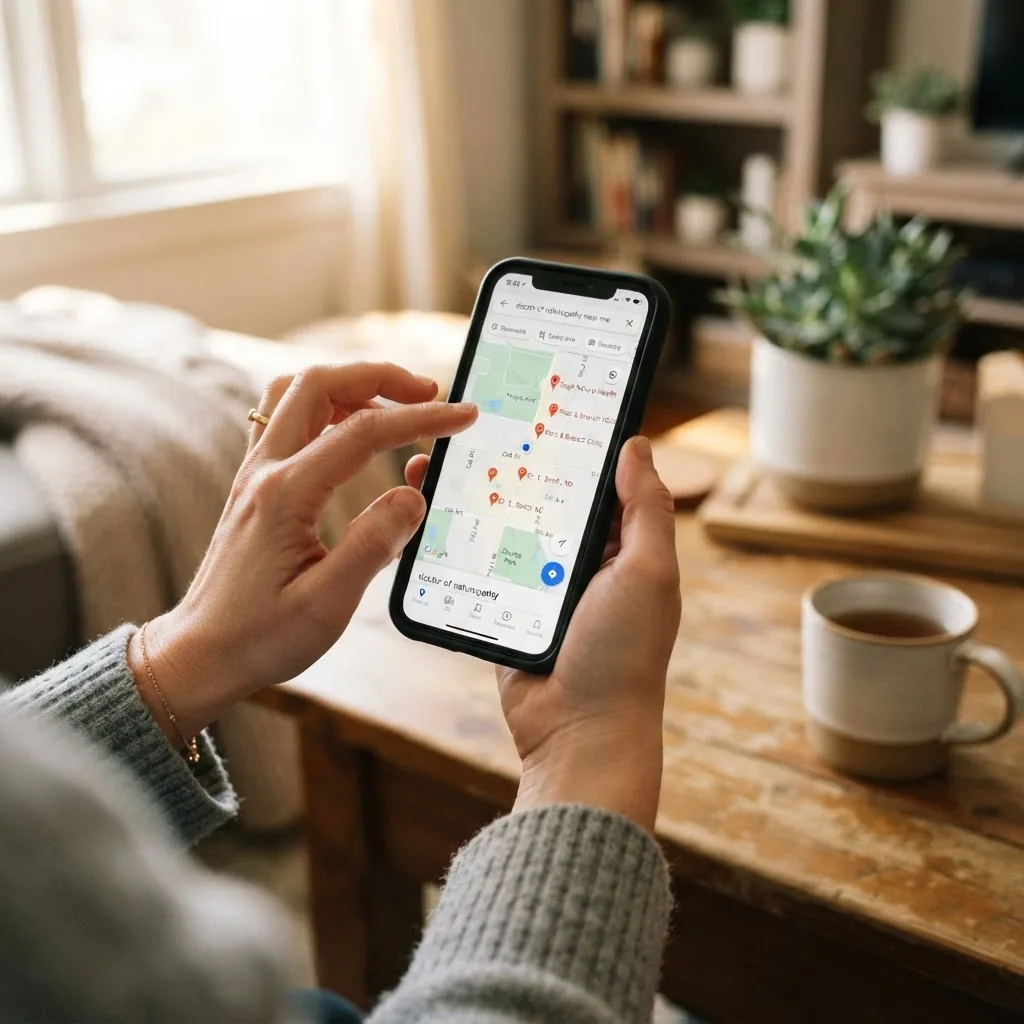
- Search Google Maps and local directory keywords. Query “doctor of naturopathy near me”, “naturopathic clinic”, or “dr of naturopathy near me”, then filter results by ratings, verified profiles, and photos. Read Clinic descriptions for board credentials and NPLEX mentions.
- Verify certifications online. Once you have names, use licensing board lookup tools to confirm license numbers, expiration dates, specialty certifications, and any formal complaints.
- Check clinic websites for transparency. Look for clear staff bios showing accredited naturopathic medical school, NPLEX or licensing exam, and continuing education commitments. Clinics that publish protocols, specimen handling, and referral pathways are higher quality.
- Read patient reviews critically. Filter reviews for mentions of diagnostic thoroughness, follow-up care, evidence-based recommendations, and transparency about costs. Patient testimonials are supporting evidence—not proof of certification.
- Confirm insurance and billing options. Ask clinics whether they accept your plan, provide itemised receipts (for HSA/FSA), or offer payment plans. Use the clinic verification process described later to record answers.
- Book an initial consultation. Use a short phone or telehealth consult to ask credential questions (see the Questions to Ask section). A professional clinic will welcome verification and provide documentation easily.
- Use local community resources. Ask integrative medicine clinics, primary care doctors, or holistic health centres for recommendations for best naturopathic doctor nearby—local referral networks often point to certified practitioners.
- Document findings before deciding. Record license numbers, board verification screenshots (text descriptions if screenshots aren’t allowed), and written confirmation of insurance/billing practices for your records.
Practical verification example: locate the ND’s name on Google Maps, open the clinic site to find a license number, then paste that license number into your state licensing registry search bar and note the license status, expiry, and any disciplinary history (real-world walkthrough: enter practitioner’s name at a government board search, click the result, and copy the details into your notes).
Transition: After finding candidates, you’ll need to judge credentials—next section compares certifications and their implications for care.
What qualifications and credentials should a certified naturopathic doctor have?
Answer: A certified naturopathic doctor should graduate from an accredited naturopathic medical school, pass national licensing exams (e.g., Naturopathic Physician Licensing Examination/NPLEX where applicable), complete clinical training, and hold current board licensure plus ongoing continuing education.
Term: Naturopathic Physician Licensing Examination (NPLEX) — the standard licensing exam used in many jurisdictions to assess competency for naturopathic medical practice.
Degrees and exams vary by country and state: accredited naturopathy schools provide a Doctor of Naturopathy (ND) or Doctor of Naturopathic Medicine (NMD) degree; board certifications and state licenses define scope of practice, such as prescribing rights. For Canada and the U.S., NPLEX or equivalent board exams are common; other countries have different exams or registration pathways.
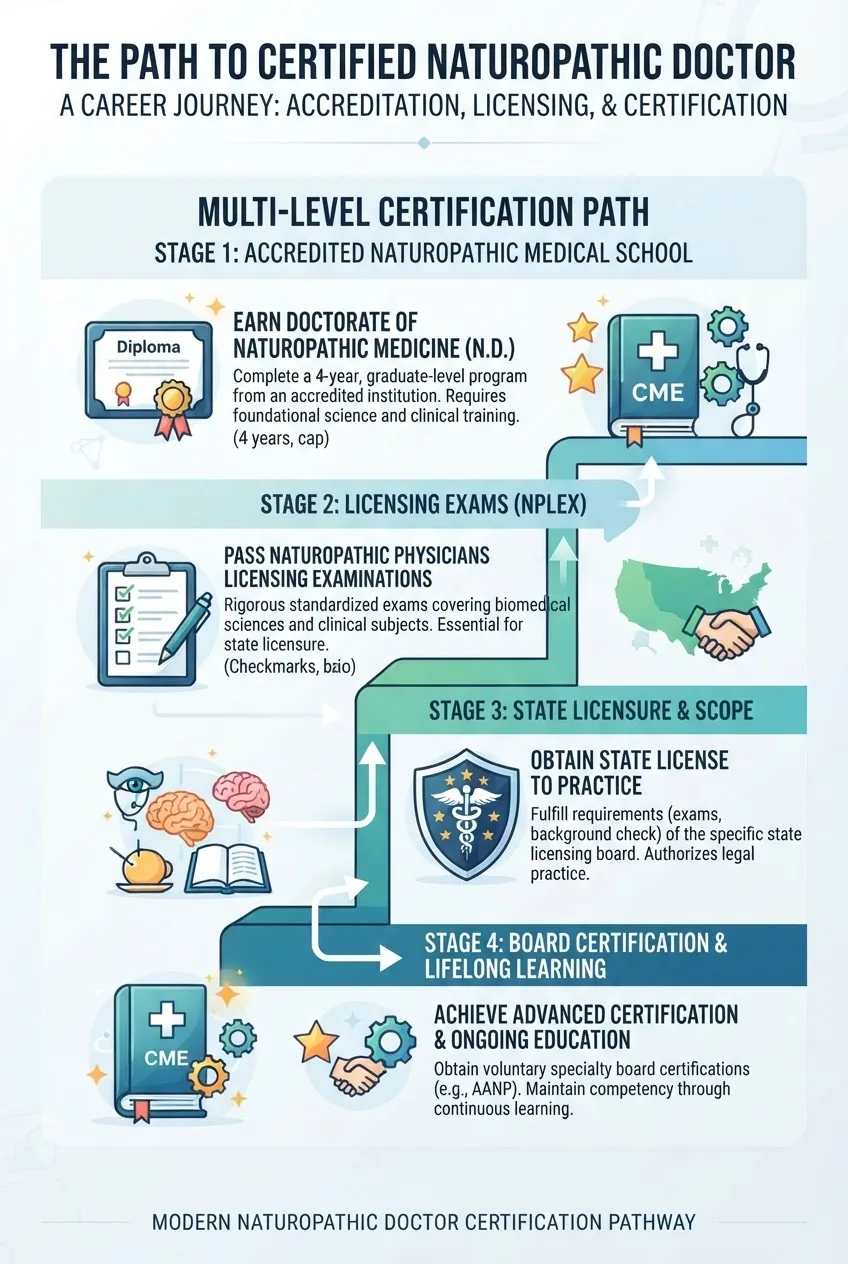
| Credential | What it means | Why it matters for patients |
|---|---|---|
| Accredited naturopathic medical degree (ND/NMD) | Graduation from an ACNEM/recognized naturopathic college involving classroom and supervised clinical hours. | Ensures foundational medical knowledge and supervised clinical experience. |
| NPLEX or national licensing exam | Standardised exam assessing competency in naturopathic diagnosis and treatment. | Validates clinical decision-making and safety knowledge. |
| State/provincial license | Official registration permitting practice within jurisdiction with defined scope. | Enables legal practice and access to complaints/discipline records. |
| Board certification / specialty training | Postgraduate credentials in areas like endocrinology, oncology support, or botanical medicine. | Signals advanced training relevant to complex conditions. |
| Continuing education (CE) | Ongoing courses to stay current with evidence and safety standards. | Maintains up-to-date practice and reduces outdated interventions. |
Comparison comments: An ND with an accredited degree and active license provides baseline assurance; additional board certifications or postgraduate specialty training indicate deeper expertise in particular treatment specialties in naturopathy. Recognise that “general naturopath” may refer to practitioners without an ND degree or state license—doctor of naturopathy vs general naturopath matters for legal scope and oversight.
For readers interested in complementary fields, botany and herbalism training can complement ND education by deepening botanical expertise.
Transition: With credential types defined, learn how to evaluate whole clinics to find the best naturopathic doctor near you.
How do I evaluate naturopathic clinics and find the best clinics near me?
Answer: Evaluate clinics by confirming staff credentials, checking clinic verification process steps (licenses, policies, referrals), reading patient testimonials, assessing service range, and ensuring clear communication about evidence-based natural medicine and safety protocols.
Follow these how-to steps and a quick checklist to decide which clinic is best for your needs.
- Confirm practitioner licensure and clinic registration. Use licensing board websites and clinic business registrations to ensure legitimacy.
- Review practitioner bios for clinical training and specialties. Look for years of clinical experience and treatment specialties in naturopathy relevant to your condition.
- Check for evidence-based practice statements. Clinics that describe how they integrate evidence and reference peer-reviewed sources show stronger clinical governance.
- Assess administrative transparency. Clear pricing, cancellation policies, written consent forms, and written treatment plans are signs of a professional clinic.
- Scan patient reviews and testimonials. Prioritise reviews describing diagnostic thoroughness, follow-up care, and safety discussions.
- Look for multidisciplinary services. Clinics offering nutrition counseling, lab testing, and coordinated referrals are often better equipped for complex cases.
- Confirm telehealth and in-person options. Telehealth availability expands access; confirm which services are remote vs. in-person.
- Ask about herb and supplement sourcing and interaction checks. Clinics that document sourcing standards and run herbal-drug interaction checks indicate attention to safety.
- Evaluate clinic culture with a brief meet-and-greet. Professionalism, punctuality, and respectful communication predict a better ongoing relationship.
Clinic checklist:
- Active license and exam verification
- Published staff bios and specialties
- Transparent pricing and billing practices
- Evidence-based statement and referrals policy
- Patient testimonials that reference clinical outcomes
- Lab testing and documentation capabilities
- Clear policy on herb-drug interaction screening
- Telehealth availability and secure records
If you want alternative perspectives on symptom relief methods offered by clinics, look for services that link to trusted resources and professional guidelines, and consider clinics that reference better natural remedies for symptoms in their patient education materials.
Transition: Next, a practical list of common services you’ll find at certified naturopathic clinics.
What common services do doctors of naturopathy offer at local clinics?
Answer: Certified naturopathic doctors commonly provide comprehensive assessments, individualized treatment plans, nutrition counseling, herbal medicine, lifestyle modification programs, laboratory testing, and integrative coordination with other medical providers.
Services vary by clinic but generally include both consultative and ongoing care options. Many clinics offer in-person and telehealth consultation types to increase access.
- Comprehensive initial consultations and physical assessments
- Nutrition and lifestyle counseling, including naturopathic nutrition guides
- Herbal medicine and supervised herb and supplement plans — see our Herbal Supplements Guide with Benefits and Natural Medicine Uses for more detail.
- Botanical dietary supplements recommendations and formulation—see botanical dietary supplements for context.
- Traditional herbal remedies, sometimes including Chinese herbs—see traditional herbal remedies including Chinese herbs.
- Capsule herbal supplements when precise dosing is needed — see capsule herbal supplements and their benefits.
- Supportive care for serious conditions using evidence-based adjunctive approaches; practitioners may reference natural cancer treatments and herbal remedies as part of integrative support plans.
- Monitoring for herb-drug interactions and patient education (see related interaction tools and resources).
Many clinics emphasize evidence-based natural medicine, combining peer-reviewed research with clinical experience. For recommended herbs and evidence summaries, consult our resource on healthy medicinal herbs and benefits.
Transition: Before your first visit, prepare a focused set of questions to evaluate the clinic and practitioner directly.
What should I ask when visiting a naturopathic clinic for the first time?
Answer: Ask directly about the practitioner’s credentials, licensing and board exam status, treatment plans, consultation fees, expected follow-up care, evidence supporting proposed treatments, and how the clinic manages herb-drug interactions and referrals.
- What is your full name, degree, licensing body, and license number?
- Which naturopathic medical school did you attend and when did you graduate?
- Have you passed the NPLEX or equivalent licensing examination?
- Do you hold any board certifications or specialty credentials related to my condition?
- What will an initial treatment plan look like and what are anticipated timelines for follow-up?
- How much does the initial consultation cost, and what are typical ongoing visit fees?
- Does the clinic accept my insurance or provide receipts suitable for HSA/FSA claims?
- How do you check for herb–drug interactions and coordinate with my other healthcare providers?
- What outcomes do you expect, and how will success be measured?
- If I am not improving, what is your referral process to conventional specialists?
These direct questions help you quickly assess transparency and clinical rigor. A trustworthy clinic will provide clear answers and documentation when requested.
Transition: If you need to verify credentials online, follow the step-by-step process below for reliable checks.
How can I verify a doctor of naturopathy’s certification and clinic legitimacy online?
Answer: Verify certification by checking official licensing board websites for license status and disciplinary history, cross-reference association directories, inspect clinic registration records, and review complaint registries or public protection agency notices.
Step-by-step verification walk-through (textual screenshot method):
- Collect identifying details: practitioner full name, clinic name, and any listed license number.
- Open the relevant licensing board website. For Australia use your state health regulator pages or the Department of Health; for educational accreditation consult AANMC (source type: accreditation body).
- Use the board’s search function: enter name or license number; confirm active status, expiry date, and any disciplinary actions. Example action: “Enter ‘Jane Doe’ into the board lookup, click the record, and note ‘Active — Expires: 2026’.” This textual walkthrough serves as a reproducible verification log.
- Cross-check with professional associations: find the clinician in national directories or the association member list to confirm membership and stated credentials.
- Search complaint registers and tribunal decisions: use government consumer protection sites to search for closed or open complaints related to the clinician or clinic.
- Confirm clinic business registration: search your state business registry for clinic name to confirm legal operation and registered address.
- Request documentation from the clinic: ask for a copy of the license, CE records, and written treatment consent forms; record the date of your request and the response.
- Document and save results: keep the URLs, search result text, and dates as part of your personal verification file.
External resources to start verification: your regional health department website and professional association directories; for evidence summaries consult peer-reviewed articles via PubMed (source type: peer-reviewed database).
Transition: Alongside verification, know the common insurance and payment options naturopathic clinics offer.
Are naturopathic doctors covered by insurance and what payment options exist near me?
Answer: Insurance coverage for naturopathic care varies by country and plan; many private health insurers cover visits to licensed NDs, while some require specific credentialing—clinics may accept private insurance, HSA/FSA payments, or offer sliding-scale and payment plans.
- Check your insurer’s provider directory for licensed naturopathic doctor listings and any required referral rules.
- Ask clinics whether they bill insurance directly or provide itemised receipts for reimbursement.
- HSA/FSA eligiblity often requires a licensed practitioner and an itemised receipt; verify with your plan administrator.
- Common payment options: direct pay, instalment plans, package pricing for programs, and telehealth fee variations.
- For patients in jurisdictions without regulated naturopathy, insurers may deny claims for unlicensed practitioners.
If you need detailed insurance guidance specific to naturopathy, consult our sibling article insurance benefits coverage for naturopathy.
Transition: Once you start care, use these tips to maintain effective ongoing naturopathic treatment.
How can I maintain ongoing care with my naturopathic doctor for the best outcomes?
Answer: Maintain ongoing care by scheduling regular follow-ups, tracking symptoms and progress, adhering to treatment plans, communicating medication changes, using telehealth when needed, and ensuring clear documentation of natural supplementation and lab results.
Practical tips:
- Keep a concise health log of symptoms, supplements, and medications to share at each visit.
- Schedule follow-ups based on the clinician’s plan and condition severity—commonly 4–12 weeks after initial interventions.
- Request written treatment plans and measurable goals to objectively track progress.
- Use telehealth for routine check-ins and lab review; reserve in-person visits for physical assessments or procedures.
- Notify your ND and pharmacists of all supplements to avoid interactions; ask the clinic for evidence-based rationale for each recommended herb or supplement.
According to a 2021 patient-care coordination study, clear communication and scheduled follow-ups correlated with higher adherence to naturopathic treatment plans (source type: 2021 peer-reviewed study).
Transition: Below are concise, authoritative FAQs to answer common final questions about finding a certified naturopathic doctor near you.