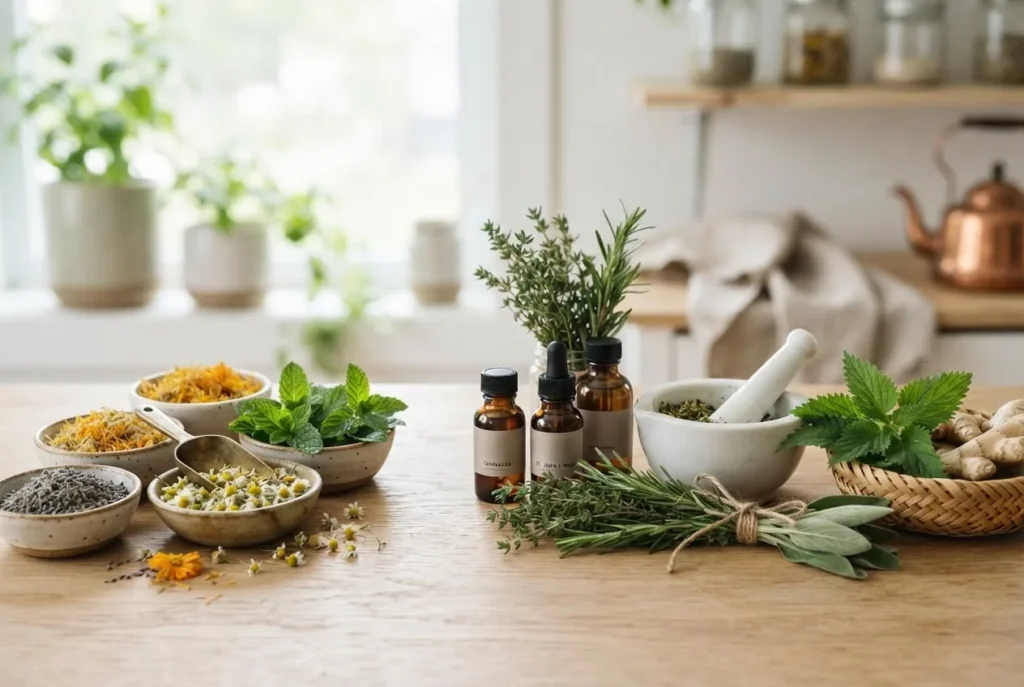
Healthy herbs guide: by the end you’ll be able to choose, prepare and dose common medicinal herbs for everyday health, using basic teas, tinctures and topical preparations. Estimated time: 2–6 hours of practical learning plus ongoing weekly practice; skill level: beginner with basic kitchen tools.
Before you start
- Prerequisites: basic health literacy, list of current medications, and a notebook for tracking effects.
- Tools & materials: kitchen scale (±0.5 g), digital timer, glass jars with labels, fine mesh strainer, 250–500 ml teapot, 40–60% alcohol for tinctures (if making), gloves and carrier oil for topical blends.
- Sources to consult: your GP or naturopath for chronic conditions, local pharmacopeia for dosing references, and quality suppliers for dried herbs.
Transition: The sections below explain what healthy herbs do, evidence for their benefits, a curated list of top herbs and step-by-step instructions so you can put these recommendations into practice safely and effectively.
Introduction to Healthy Herbs and Their Importance
Herbs have been used as healing medicine for millennia and today they sit at the intersection of tradition and modern nutrition. This guide focuses on approachable, evidence-informed uses of everyday plants — from culinary herbs that deliver micronutrients to concentrated medicinal preparations used for specific symptoms. The aim is to help you identify which herbs are most useful for general wellness, how they act in the body, and practical ways to include them in daily life.
Why this matters: many people ask, “are herbs good for you?” The short answer depends on the herb, dose, quality and individual health context. When used correctly, herbs can provide anti-inflammatory phytochemicals, supportive nutrients, and mild therapeutic effects that complement diet and lifestyle. This guide balances traditional uses with modern perspectives on nutritional and medicinal benefits so you can make informed choices.
Throughout the article you’ll see practical use cases (for example, chamomile tea for digestion), clear preparation guidance (exact steep times and concentrations), and safety checkpoints that reflect the latest safety guidance and clinical evidence where available.
Understanding Medicinal Herbs and Their Benefits
Medicinal herbs are plants or plant parts used to prevent, support or treat health conditions through biologically active compounds like flavonoids, alkaloids and terpenes. These compounds can have antioxidant, anti-inflammatory, antimicrobial and adaptogenic effects. “Adaptogen” is a term used to describe herbs believed to help the body resist stressors; examples include ashwagandha and rhodiola.
Herbal therapy benefits range from nutritional support (vitamin and mineral provision) to symptomatic relief (e.g., ginger for nausea) and longer-term regulatory effects (e.g., milk thistle for liver support). Distinguish between culinary use and medicinal use: culinary herbs often offer low-dose nutritional benefits, while concentrated herbal preparations (tinctures, extracts) target specific pathways.
If you want an in-depth reference on concentrated formulations and dosage ranges, consult the herbal supplements guide with benefits and natural medicine uses for evidence-based guidance on supplement forms and integration into a natural medicine plan.
For readers curious about standardized extracts and product quality, see the botanical dietary supplements overview which compares extract strengths and regulatory considerations.
Evidence snapshot: The clinical evidence varies by herb. According to a 2023 systematic review in peer-reviewed journals, ginger shows moderate evidence for reducing nausea in pregnancy and chemotherapy (peer-reviewed study). A 2022 randomized trial provided limited but promising results for echinacea reducing cold severity (peer-reviewed study). For general guidance on herb safety and active constituents, authoritative monographs remain essential.
For compiled safety monographs see the World Health Organization monographs on selected medicinal plants (WHO resource) and the NIH Office of Dietary Supplements (government resource).
Understanding phytochemistry: common bioactive groups include flavonoids (antioxidant and anti-inflammatory activity), alkaloids (potent pharmacological effects), and essential oils (antimicrobial and spasmolytic actions). The balance of efficacy and safety often hinges on concentration — culinary doses versus therapeutic extracts.
Transition: Next you’ll find a carefully curated, practical list of herbs and their health benefits that focuses on everyday applicability: nutrition, symptom support, and safe home use.
Top Herbs for Health: List of Best Medicinal Herbs and Their Uses

-
Chamomile (Matricaria chamomilla)
Benefits: gentle sedative, antispasmodic for digestion, anti-inflammatory for skin.
Usage forms: tea (infusion), topical compress, mild tincture (1:5, 25–40% alcohol for chronic uses).
Key properties: apigenin—a flavonoid linked to mild anxiolytic effects. Preparation: steep 1 heaped teaspoon (≈2–3 g) of dried flowers per 250 ml water for 7–10 minutes; 1–3 cups/day for sleep or digestive discomfort.
Use case: I recommend a 10-minute chamomile infusion after a heavy meal to relieve cramping — many patients report relief within 20–40 minutes.
-
Ginger (Zingiber officinale)
Benefits: antiemetic (nausea), pro-digestive, anti-inflammatory.
Usage forms: fresh decoction, powdered capsule (250–1000 mg up to 4x/day), candied slices for immediate nausea relief.
Key properties: gingerols and shogaols; evidence: According to a 2023 systematic review (peer-reviewed study), ginger reduced pregnancy-related nausea versus placebo.
Practical dose: simmer 10 g fresh root in 300 ml water for 10 minutes; sip 50–100 ml every 2–3 hours as needed.
-
Turmeric (Curcuma longa)
Benefits: anti-inflammatory, antioxidant, joint support.
Usage forms: spice in food (250–500 mg curcuminoids/day from concentrated extract), tincture, topical paste for local inflammation.
Key properties: curcumin (low oral bioavailability); pair with black pepper (piperine) and a fat source to enhance absorption. Typical standardized extract dose: 500–1,000 mg curcuminoids/day (split doses).
-
Echinacea (Echinacea purpurea)
Benefits: short-term immune support for early upper respiratory infections.
Usage forms: cold-start tincture (1:5), standardized extract, lozenge.
Key properties: polysaccharides and caffeic acid derivatives. Evidence: A 2022 randomized controlled trial showed reduced cold duration by ~1 day when started early (peer-reviewed study).
For specialized guidance on using herbs in oncology contexts see herbs that support cancer care.
-
Peppermint (Mentha x piperita)
Benefits: antispasmodic for IBS, digestive cramping, cooling topical oil for tension headaches.
Usage forms: enteric-coated peppermint oil capsules (for IBS, 0.2–0.4 ml oil per capsule, 2–3 capsules/day), infusion for digestion (5–7 min steep).
Key properties: menthol delivers smooth muscle relaxation in the gut.
-
Garlic (Allium sativum)
Benefits: cardiovascular support (lipid modulation), antimicrobial properties.
Usage forms: raw crushed cloves (allicin), aged garlic extract capsules (standardized), culinary use.
Key properties: allicin is produced when garlic is crushed; clinical evidence supports modest blood pressure and lipid benefits (peer-reviewed meta-analyses).
Typical therapeutic: 600–1,200 mg aged garlic extract/day or 1–2 cloves raw in food.
-
Milk Thistle (Silybum marianum)
Benefits: liver support and antioxidant protection.
Usage forms: standardized silymarin extract, tea (less effective due to low extraction), tincture.
Key properties: silymarin (flavonolignans) protects hepatocytes; typical extract dose: 140 mg silymarin 2–3x/day (standardized product).
-
Ashwagandha (Withania somnifera)
Benefits: adaptogenic support for stress, sleep and mild anxiety.
Usage forms: root powder (1–3 g/day), standardized extract (300–600 mg twice daily).
Key properties: withanolides modulate stress-response systems. Clinical evidence: a 2021 meta-analysis showed moderate reductions in anxiety scores (peer-reviewed meta-analysis).
-
Lavender (Lavandula angustifolia)
Benefits: anxiolytic, sleep support, topical anti-inflammatory in minor burns or insect bites.
Usage forms: inhalation, 2–4 drops essential oil in diffuser (not for ingestion), oral standardized capsules (where validated), 1–2 drops diluted topically.
Key properties: linalool and linalyl acetate; inhalation studies show reduced anxiety before procedures (peer-reviewed study).
-
Rosemary (Rosmarinus officinalis)
Benefits: cognitive support, antioxidant, circulatory stimulant.
Usage forms: culinary herb, infusion, aromatherapy, concentrated extract for cognitive support (research ongoing).
Key properties: cineole and rosmarinic acid; traditional use includes improving concentration and circulation.
-
Holy Basil (Tulsi) (Ocimum tenuiflorum)
Benefits: adaptogen, mild anti-inflammatory and immunomodulatory effects.
Usage forms: tea (2–3 g leaves per cup steeped 7–10 min), tincture or standardized extract (300–500 mg/day).
Key properties: eugenol and ursolic acid. Evidence: small clinical trials suggest stress-score improvements (peer-reviewed study).
-
Licorice (Glycyrrhiza glabra)
Benefits: adrenal support, demulcent for cough and sore throat.
Usage forms: deglycyrrhizinated extracts for long-term use (to avoid blood pressure effects), short-term decoctions for throat soothe.
Key properties: glycyrrhizin (can raise blood pressure in higher doses). Practical caution: avoid chronic high doses in hypertensive patients.
-
St. John’s Wort (Hypericum perforatum)
Benefits: mild to moderate depression support in some people.
Usage forms: standardized extract (e.g., 300 mg, 2–3x/day standardized to 0.3% hypericin).
Key properties: hypericin and hyperforin; significant interactions with many medications (CYP induction) — see safety section.
-
Oregano (Origanum vulgare)
Benefits: antimicrobial topical uses, respiratory support, culinary antioxidant.
Usage forms: essential oil (diluted for topical use), infusion, culinary use. Oregano oil capsules exist for gut and respiratory uses but may be strong; start with low doses.
-
Calendula (Calendula officinalis)
Benefits: topical wound healing, anti-inflammatory and soothing skincare uses.
Usage forms: infused oil for salves, creams, compresses. Recommended ratio: infuse 50 g dried flowers per 500 ml carrier oil gently for 6–8 hours on low heat or 4–6 weeks cold-infusion.
Transition: Having reviewed the top herbs and practical doses, the next section walks through step-by-step methods to prepare these herbs as teas, tinctures, capsules and topical applications so you can maximize benefits at home.
How to Use Healthy Herbs for Maximum Benefit
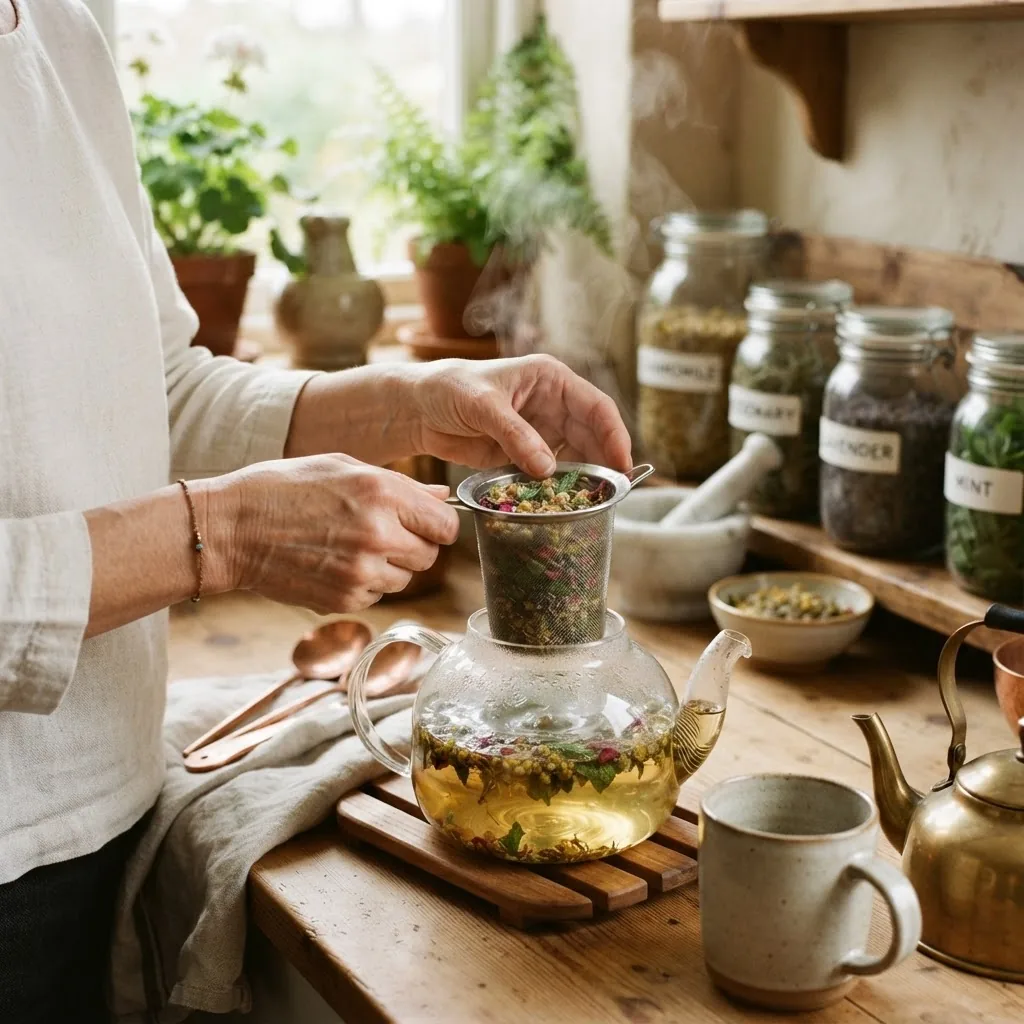
This section is the hands-on core: numbered steps below cover selection, safe dosing, and preparation methods (teas, tinctures, capsules, topical). Follow exact quantities, timings and storage advice.
-
Step 1 — Choose the right herb for the goal
Action: match herb to symptom or goal: for nausea choose ginger (fresh decoction), for sleep choose chamomile or lavender (infusion or aromatherapy), for joint inflammation choose turmeric (standardized extract 500–1,000 mg/day with pepper and fat).
Guideline: refer to the herb list; if multiple goals, prioritise the herb with the strongest evidence for the main complaint.
-
Step 2 — Source quality herbs
Action: buy certified suppliers with batch testing. For dried herbs: look for organoleptic checks (smell, colour), and for extracts choose standardized labels (e.g., “silymarin 140 mg per capsule”).
Thresholds: avoid herbs with mould, off-odour, or that fail supplier COA checks. Store dried herbs in dark glass at ≤20°C, away from sunlight.
-
Step 3 — Make an infusion (tea) correctly
Action: use for leaves/flowers (chamomile, peppermint, rosemary). Measure 2–3 g (1 heaped tsp) per 250 ml water. Pour 95–100°C water over herbs, cover and steep 7–10 minutes for flowers, 5–7 minutes for leaves. Strain, serve warm.
Timing: drink 1–3 cups/day. For daytime alertness, avoid high-dose sedative herbs within 3 hours of driving.
-
Step 4 — Make a decoction for roots and barks
Action: use for roots/skins (ginger, turmeric root, licorice). Chop 10 g fresh (or 3–6 g dried) per 300–400 ml water. Simmer low for 10–20 minutes (ginger), 20–30 minutes (tough roots). Strain and sip 50–100 ml every 2–4 hours as needed.
Storage: refrigerate up to 48 hours; reheat to 60–70°C before use.
-
Step 5 — Prepare a tincture (alcohol extract)
Action: tinctures concentrate constituents for long-term storage. Ratio examples: 1:5 fresh herb to solvent, or 1:10 dried herb to solvent; use 40–60% ethanol for most roots and leaves. Combine measured herb and solvent in glass jar; label with date and ratio. Store in a cool dark place for 2–6 weeks, shake daily, then strain and bottle.
Dosing: typical adult dose 2–5 ml 1–3x/day for standard tinctures; check herb-specific guides. Keep out of reach of children and avoid for those avoiding alcohol unless glycerites are made.
For symptom-specific protocols, see natural ways to relieve symptoms with herbal remedies.
-
Step 6 — Make and dose capsules
Action: powdered herb or standardized extract can be filled into size “0” capsules (≈400–500 mg each). Example: turmeric extract 500 mg per capsule; typical dose 1 capsule twice daily with a fatty meal and black pepper.
Procedure: weigh powder (use 0.1 g precision), fill capsules with a hand capsule-filler, tamp lightly, and label batch with herb, date and dose. Shelf-life: 1 year in sealed opaque containers.
-
Step 7 — Prepare topical oils, salves and compresses
Action: infuse 50 g dried flowers per 500 ml carrier oil (e.g., sweet almond) via gentle heat (40–50°C) for 6 hours or cold infuse 4–6 weeks. Strain and combine with beeswax (10–15% by weight) to make a salve. For compresses: steep 10 g herbs per 250 ml water as above, soak cloth and apply 10–20 minutes.
Use thresholds: test 5% patch for skin sensitivity; dilute essential oils to 0.5–2% for body use (0.5% for face), 1–2% for adults on larger areas.
-
Step 8 — Combine herbs safely
Action: when combining, avoid overlapping strong pharmacologic actions (e.g., don’t combine multiple blood-thinning herbs like high-dose garlic plus ginkgo without medical supervision). Use simple formulas: one main herb + one supporting herb + a flavoring (e.g., turmeric + black pepper + ginger).
Rule of thumb: if two herbs have the same dominant action, halve each dose rather than simply combining full doses.
-
Step 9 — Track responses and adjust
Action: keep a tracker: herb, dose, form, start date, symptom score (0–10) daily for 2–6 weeks. If no improvement after two full treatment cycles (often 4–8 weeks depending on goal), re-evaluate.
Safety timing: stop herbal treatment and consult a clinician immediately if you experience rash, jaundice, breathing difficulty, severe GI distress, or unexpected neurological symptoms.
-
Step 10 — Know product quality & regulation
Action: choose products with third-party testing (microbial, heavy metals) and clear standardization. For standardized extracts, look for active marker percentages. For commercial tinctures/capsules, prefer batch-tested brands with transparent COAs.
Further reading: herbal supplements guide for product selection and regulatory notes.
| Preparation | Best for | Dose example | Storage |
|---|---|---|---|
| Infusion (tea) | Leaves & flowers (chamomile, peppermint) | 2–3 g per 250 ml, steep 7–10 min | 48 hrs refrigerated |
| Decoction | Roots & bark (ginger, turmeric) | 10 g fresh per 300 ml, simmer 10–30 min | 48 hrs refrigerated |
| Tincture (1:5, 40% EtOH) | Long-term storage, concentrated herbs | 2–5 ml 1–3x/day | 2–5 years, cool dark place |
| Capsules | Standardized extracts & powdered herbs | See product; e.g., turmeric 500 mg/day | 1 year sealed |
Transition: Practical practice can lead to mistakes. The next section highlights safety cautions and common errors I see in clinic and how to avoid them.
Safety and Considerations When Using Medicinal Herbs
Are herbs good for you? Often yes, when used with awareness of contraindications, interactions and individual health status. Below are clear, practitioner-tested cautions and resources to check interactions.
- Consult first: Always consult a healthcare provider before starting herbal therapy if you’re pregnant, breastfeeding, on prescription medications, or have chronic disease.
- Interactions: Some herbs (e.g., St. John’s Wort) interact with multiple drugs via cytochrome P450 enzymes; use an herbal drug interaction checker tool before combining with prescription meds.
- Allergens & contaminants: Buy quality-tested herbs to avoid heavy metals, pesticides, or adulteration. Check third-party COAs.
- Dosage safety: Avoid chronic high-dose use for herbs known to affect blood pressure or electrolytes (licorice). Use deglycyrrhizinated preparations for longer-term use.
- Children & older adults: Dose downward by weight (children) and start at 25–50% adult dose for older adults; check renal and hepatic function.
- Short trials and monitoring: Most topical or symptomatic uses can be judged within days; systemic changes often require 4–12 weeks and tracking.
Practical checklist for safety:
- Confirm herb quality (COA available)
- Review current medications for interactions
- Start at low dose and track effects for 2–8 weeks
- Stop immediately if severe side effects occur
External resources: For evidence-based safety monographs consult the NIH Office of Dietary Supplements (government resource), the WHO monographs (global authority), and pharmacopeia standards such as the American Herbal Pharmacopoeia (industry reference).
Transition: With safety considerations clear, below are practical ways to make herbs part of daily routine for sustained health benefits.
Integrating Herbs into Your Daily Health Routine
Start small and habit-stack herbs with existing routines: morning smoothies, lunchtime culinary herbs, evening teas. Herbs are most effective when combined with good sleep, movement and whole-food nutrition.
Suggested daily routine:
- Morning: 1 capsule of standardized turmeric extract (500 mg) with breakfast containing healthy fats; add 1 clove garlic to savory meals for cardiovascular support.
- Midday: use fresh rosemary or peppermint in cooking; peppermint infusion after lunch (5–7 minute steep) for digestion.
- Afternoon: if stressed, take 300–500 mg ashwagandha extract with a snack.
- Evening: chamomile infusion 30–60 minutes before bed; lavender inhalation in diffuser 10–20 minutes for relaxation.
Combinations and synergy: pair anti-inflammatory herbs (turmeric) with bioavailability enhancers (black pepper, healthy fat). Use adaptogen stacks sparingly: choose one adaptogen at a time (e.g., ashwagandha or holy basil) and evaluate for 4–8 weeks.
Recipes & quick formulations:
- Anti-inflammatory golden milk: 1 cup milk (or plant milk), 1 tsp turmeric powder (≈3 g), pinch black pepper, 1 tsp coconut oil; whisk and heat to 60–70°C; drink nightly.
- Digestive ginger brew: simmer 10 g fresh ginger in 300 ml water for 10 minutes; strain, add lemon and 1 tsp honey; sip 50–100 ml as needed.
Transition: Before you act on these routines, read the next section listing common mistakes I encounter when teaching patients and students and how to avoid them.
Conclusion: Embracing Natural Healing with Healthy Herbs
This hands-on guide equips you to select, prepare and monitor use of the best herbs for health. You now have precise recipes, dosing examples and safety checkpoints to bring herbal therapy into daily life responsibly. Successful use of herbs balances evidence-based selection, quality sourcing, and careful monitoring.
Next steps: start with one simple protocol (e.g., chamomile for sleep or ginger for nausea), track results for 2–4 weeks and consult a clinician for any complex health conditions. If you want deeper study, consider formal education such as herbalism training for herbalists to expand skills and safety competence.
Common mistakes and how to avoid them (practitioner reflections)
I have seen learners make the same errors repeatedly: 1) they under-dose prepared extracts expecting quick results — teach patients to use therapeutic doses and give it time; 2) they combine multiple potent herbs without checking interactions — I always re-check drug lists; 3) they use essential oils undiluted topically — always dilute to recommended 0.5–2% thresholds.
Compact checklist
- Selected herb matches symptom or wellness goal
- Quality product with COA or standardized extract
- Correct preparation method and measured dose
- Tracking sheet started (dose, symptom score)
- Interaction check completed if on medications
- Adverse-reaction plan in place (stop & seek care)
When to call in a professional
Seek a naturopathic doctor or pharmacist-trained clinician if you have complex chronic conditions, are pregnant or breastfeeding, are taking immunosuppressants, anticoagulants or chemotherapy, or if symptoms worsen or new systemic signs (fever, jaundice, severe allergic reaction) appear.