
Answer: A holistic dietitian near me is a credentialed nutrition professional who combines evidence-based dietetics with whole-body, natural and often homeopathic approaches—offering personalised meal plans, herbal and supplement guidance, and lifestyle coaching to support long-term health alongside conventional care.
This guide explains roles, services, certification, local search tactics and how to evaluate natural, homeopathic and integrative nutrition practitioners so you can find a qualified local provider.
What Is a Holistic Dietitian?
Answer: A holistic dietitian is a registered dietitian or licensed nutrition professional who applies whole-body nutrition, lifestyle, and sometimes homeopathic principles to individualised care, focusing on root causes, nutrient-dense foods, and integrative therapies.
Term: Holistic dietitian — a dietitian trained in clinical nutrition who also integrates lifestyle, natural nutrition strategies, and complementary therapies into personalised treatment plans.
Holistic nutrition definition centers on treating the person, not just the symptom. Holistic dietitians use nutrition counseling and integrative dietetics to assess diet, sleep, stress, digestion and environmental exposures, designing whole-body nutrition plans rather than single-nutrient fixes.
Examples: a holistic dietitian may treat chronic gut symptoms with a layered plan of anti-inflammatory eating, targeted supplementation, and stress-reduction practices; or support metabolic health by pairing nutrient-dense meal planning with sleep and movement coaching.
Typical practice settings include private clinics, integrative health centres, telehealth services and collaborations with medical teams. Many advertise as natural health practitioners or natural nutritionists when their focus is botanical and lifestyle-based care.
Assessment tools commonly used by holistic dietitians include detailed food frequency questionnaires, metabolic assessments (e.g., resting metabolic rate), targeted laboratory review, and lifestyle inventories—each used to build an individualised nutrition plan emphasising bioavailability and nutrient density.

How a Holistic Dietitian Differs from Other Nutrition Professionals
Answer: Holistic dietitians blend registered dietetics with integrative, natural and sometimes homeopathic strategies; they differ from conventional dietitians by including complementary therapies, from naturopaths by focusing on dietetic credentialing, and from homeopathic nutritionists by scope and often formal RD/licence status.
Below is a structured comparison to clarify scope of practice, training, and common services.
| Professional | Typical Credentials | Scope/Focus | Common Services |
|---|---|---|---|
| Holistic Dietitian | RD/RDN or licensed dietitian + additional training in integrative nutrition | Nutrition-led whole-body care; integrates natural approaches | Meal planning, supplement guidance, lab review, lifestyle coaching |
| Conventional Dietitian | RD/RDN or licensed dietitian | Evidence-based medical nutrition therapy in clinical settings | Medical MNT, acute care, chronic disease protocols |
| Naturopath / ND | ND (where regulated) or naturopathic practitioner | Whole-person primary care using botanical, homeopathic, and lifestyle medicine | Herbal medicine, homeopathy, nutrition, physical medicine |
| Homeopathic Nutritionist | Various certifications; not always licensed RDs | Combines homeopathy principles with nutrition advice | Individualised diet plans, constitutional homeopathy, supplements |
Explanation: A conventional dietitian focuses primarily on nutrition science and medical nutrition therapy (MNT). A holistic dietitian retains that scientific base but extends care into integrative nutrition—incorporating concepts like bioavailability, anti-inflammatory dietary patterns, and herbal supplement synergy under a dietetic framework.
Term: Homeopathy — a system of medicine based on the principle of “like cures like,” using highly diluted substances; when referenced in nutrition it is typically complementary to dietary strategies and requires separate training.
Scope differences are also regulatory: credential verification with national dietetic accreditation bodies (for example, the Academy of Nutrition and Dietetics in the U.S.) confirms RD/RDN status; naturopathic scope varies by jurisdiction and affects whether a practitioner prescribes pharmaceuticals or performs physical therapies. For details on licensing standards, see authoritative sources such as the Academy of Nutrition and Dietetics and national regulatory guides.
When choosing a provider, distinguish whether you need medical MNT (choose a conventional RD), integrated dietetics with natural modalities (choose a holistic dietitian), or broader naturopathic primary care (see a licensed ND).
naturopathic medication prescribing
Core Services Offered by Holistic Dietitians Near Me
Answer: Holistic dietitians near you offer a range of services including individualised meal plans, metabolic and nutrient assessments, herbal and supplement guidance, detoxification support, lifestyle counselling, and integrative care coordination.
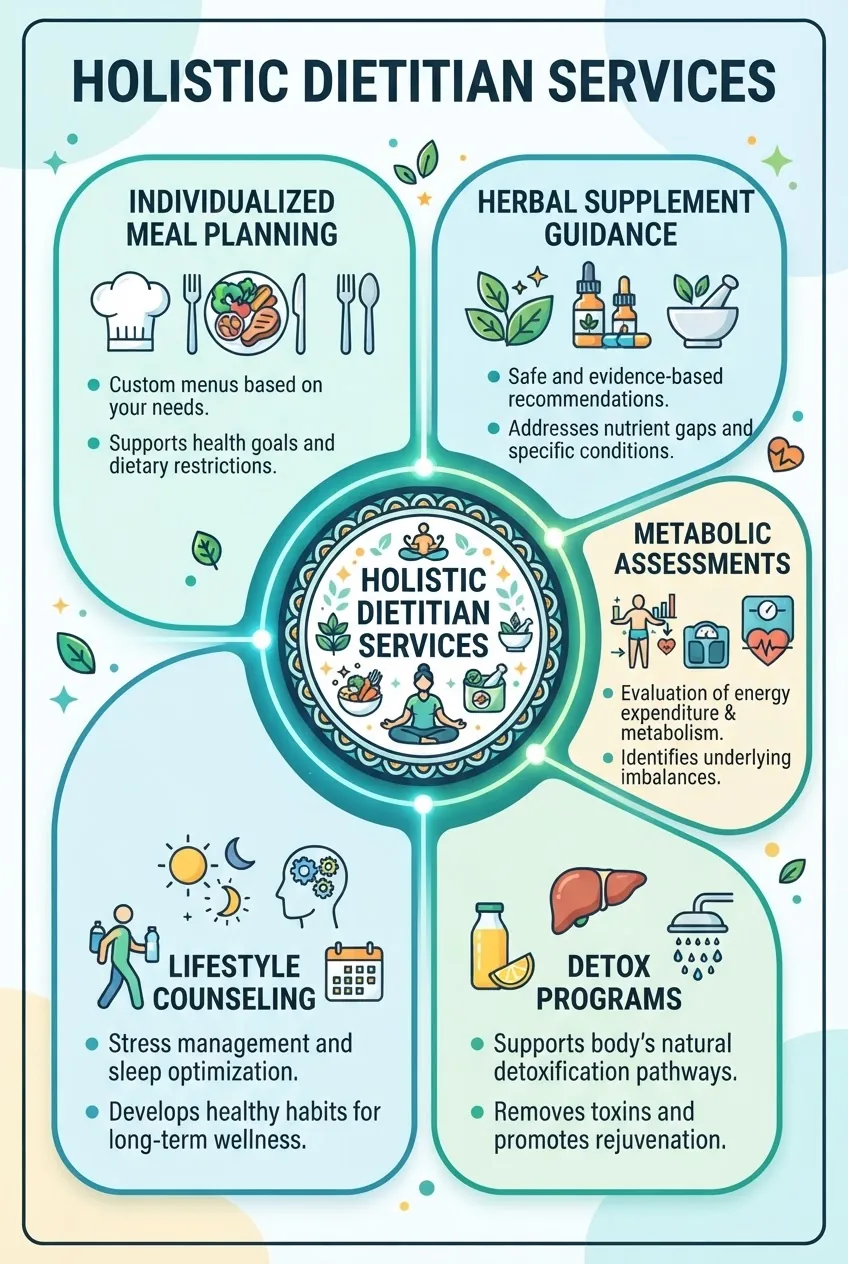
- Individualised meal plans — A holistic dietitian designs meal plans based on clinical labs, food preferences, cultural needs and dietary philosophies (e.g., plant-based, anti-inflammatory). Plans emphasise nutrient-dense diets and bioavailability, and include practical shopping lists and recipes.
- Nutrient and metabolic assessments — Services include resting metabolic rate testing, micronutrient screening recommendations, and interpretation of labs (e.g., iron, B12, thyroid function). These assessments target metabolic imbalances and nutrient gaps.
- Herbal supplement advice — Holistic dietitians provide evidence-informed guidance on botanical dietary supplements, including dosing, interactions and timing to enhance absorption; they coordinate herbal use with nutrition plans to avoid contraindications.
- Detoxification and elimination programs — Structured, short-term protocols to support liver function, digestion and elimination using food-based strategies, supportive nutrients, and lifestyle adjustments; detox plans are personalised and monitored.
- Supplement protocol development — Beyond herbs, dietitians advise on vitamins, minerals and targeted nutraceuticals with attention to absorption, synergistic combinations and evidence-based safety.
- Chronic symptom management and prevention — Diet-based strategies for gut health, immune support and anti-inflammatory diets to reduce symptoms and improve resilience.
- Lifestyle and behavioural counselling — Sleep hygiene, stress-reduction, mindful eating and movement strategies integrated into the nutrition plan to support long-term change.
- Integrative care coordination — Working with GPs, specialists and naturopaths to ensure safe, coordinated care and review of medications/supplements for interactions.
- Education and resources — Meal prep coaching, label-reading education, and client handouts to facilitate adherence.
- Telehealth and follow-up care — Many holistic dietitians offer telehealth, remote coaching, and flexible follow-up schedules to support clients across locations.
Case example (anonymised client journey): a 42-year-old with IBS worked with a holistic dietitian who ran a targeted micronutrient review, prescribed an anti-inflammatory meal plan, recommended a short-term gut-support herbal formula, and scheduled follow-ups to monitor response; symptoms reduced over 12 weeks while conventional meds were reviewed by the GP.
Practitioner tools: food diaries, symptom trackers, goal-setting frameworks and validated questionnaires (e.g., bowel symptom scales) are commonly used to track progress and inform adjustments.
The Role of Homeopathic Nutritionists and Holistic Nutritional Therapists
Answer: Homeopathic nutritionists and holistic nutritional therapists apply nutritional therapy with homeopathic principles or broader complementary modalities, focusing on constitutional assessment, personalised protocols and cross-over with herbalism and energy-based approaches.
Term: Holistic nutritional therapist — a practitioner using nutritional therapy, lifestyle medicine and complementary tools to restore balance and function; training and regulation vary by region.
Homeopathy in nutrition integrates constitutional homeopathic assessment—selecting remedies based on a person’s overall pattern—alongside dietary changes. Homeopathic nutritionists often use low-dose homeopathic remedies to support symptom expression while shifting diet to improve resilience.
Service crossover notes: holistic dietitians, homeopathic nutritionists and nutritional therapists may share services like meal planning and herbal advice, but differ in primary frameworks. Holistic dietitians usually maintain dietetic credentials and prioritise nutrition science; homeopathic nutritionists emphasise constitutional homeopathy; nutritional therapists may offer a mixed toolkit including energy healing nutrition methods.
Training paths: many practitioners pursue formal programmes in nutritional therapy, diplomas in homeopathy, or degrees in naturopathy. For background on herbal education relevant to these roles, see herbalism training.
Service examples: a holistic nutritional therapist might deliver a blended plan of dietary change, botanicals, and lifestyle coaching; a homeopathic nutritionist may pair constitutional remedies with a gentle, natural-foods-focused diet to balance digestion and immunity.
Safety note: because homeopathic and botanical treatments can interact with medications or conditions, credential verification and clear communication with medical providers is essential.
Benefits of Choosing Natural Nutrition Services
Answer: Natural nutrition services prioritise prevention, nutrient-density, gut health, and anti-inflammatory diets to support immune function, symptom reduction and overall resilience while integrating evidence-based supplements and lifestyle changes.
Scientific rationale: anti-inflammatory and whole-food diets improve markers of metabolic health and gut function; a 2022 systematic review in nutrition journals found diet quality correlates with reduced systemic inflammation (source: peer-reviewed nutrition journal).
Case example: a client with chronic fatigue adopted a nutrient-dense, anti-inflammatory meal strategy, corrected iron and B12 deficiencies under a holistic dietitian’s guidance, and reported improved energy and sleep after 10 weeks while under GP supervision.
Specific benefits:
- Prevention through nutrition: emphasising whole foods reduces long-term disease risk by improving metabolic markers and micronutrient status.
- Gut health focus: strategies such as incremental fibre changes, fermented foods, and targeted botanicals support microbiome diversity and digestion.
- Immune support: nutrient repletion (vitamin D, zinc) alongside diet improves immune resilience in many clients.
- Personalised adherence: plans tailored to preferences and culture increase real-world adherence compared with generic diets.
Evidence and limits: while many dietary strategies have supportive evidence, not all natural therapies are proven for every condition; see authoritative resources such as the National Center for Complementary and Integrative Health (NCCIH) for guidance on safety and evidence. According to a 2023 NCCIH report, some complementary approaches show promise for symptom relief but require coordinated care with medical providers.
For readers interested in nutrition that supports cancer care, holistic dietitians may advise supportive dietary measures; see options for herbs used alongside oncologic care in natural cancer treatment herbs.
natural cancer treatment herbs
Another practical benefit is symptom relief through diet: for many minor ailments (e.g., digestive discomfort, mild inflammation), dietary changes can provide measurable relief without medication; see more on natural symptom relief through diet.
natural symptom relief through diet
Risk disclaimer: Natural nutrition is complementary; it should not replace necessary medical treatment. If symptoms persist or worsen, consult a medical practitioner.
How to Find and Choose a Holistic Dietitian Near Me
Answer: Find and choose a holistic dietitian near you by searching local listings, verifying credentials, reading testimonials, checking scope of practice, confirming telehealth availability, and booking an initial consult to assess fit.

Step-by-step search strategy:
- Search locally: Use “holistic dietitian near me” and local directories; review Google My Business listings for photos, services and reviews.
- Verify credentials: Confirm RD/RDN or local dietitian licensure with national dietetic accreditation bodies (see Academy of Nutrition and Dietetics for U.S.-based standards).
- Check additional training: Look for integrative, clinical herbalism or homeopathy certifications listed on practitioner profiles.
- Read testimonials and case studies: Look for anonymised client journeys and outcomes to assess clinical approach and success rates.
- Assess services and logistics: Confirm telehealth offerings, session lengths, and whether the practitioner coordinates with medical teams.
- Book a discovery call: Use an initial short consult to ask about philosophy, evidence base, and sample approaches to your concerns.
Checklist before booking (print or copy):
- Licensed RD/RDN or documented equivalent training
- Clear description of natural/homeopathic services offered
- Transparent pricing and insurance policy
- Positive client testimonials or anonymised case studies
- Willingness to coordinate with your GP or specialists
- Telehealth option if you need remote access
Alternative search options: certified naturopathy clinics can offer integrative teams; compare these options with holistic dietitians by reviewing team composition and credentials: see certified naturopathy clinics.
What to Expect During Your First Consultation with a Holistic Dietitian
Answer: Expect a thorough initial assessment covering medical history, diet and lifestyle, targeted labs, goal setting, and a collaborative plan with follow-up scheduling; the session typically lasts 45–90 minutes and produces initial recommendations.
Step-by-step walkthrough:
- Intake and paperwork: You complete a health history, medication list, and food diary beforehand.
- Comprehensive assessment: The practitioner reviews medical history, current labs, digestive and symptom patterns, sleep, stress and lifestyle factors.
- Functional and targeted testing: If appropriate, the dietitian may recommend nutrient testing, GI panels or metabolic measurements (ordered directly or via referral).
- Initial recommendations: Expect immediate, practical steps—food swaps, a short elimination or anti-inflammatory plan, and safety checks for supplements relative to medications.
- Plan development: A personalised plan is drafted with measurable goals and timelines, including suggested supplements or herbs when indicated.
- Follow-up schedule: A follow-up is scheduled to monitor progress, adjust interventions and review new labs as needed.
Practical tips for preparation: bring a current medication list, recent lab results, a 3-day food diary, and a clear list of goals and concerns to maximise your initial consultation time.
Professional tools used in the consult often include validated assessment forms, nutritional software, and shared care plans to coordinate with other providers.
Integrating Herbal Supplements into Your Nutrition Plan
Answer: Herbal supplements are integrated by assessing needs, selecting evidence-informed botanicals, checking interactions, tailoring dosing and timing, and monitoring effectiveness within a personalised nutrition plan.
Term: Herbal supplement — a concentrated plant extract or preparation used to provide therapeutic support alongside diet and lifestyle interventions.
Integration steps:
- Assessment: Practitioner reviews health history, medications and labs to identify targets for botanical support.
- Selection: Choose herbs with evidence for the identified concern and a favourable safety profile.
- Formulation: Decide on form (tincture, capsule, tea) and dosage to optimise bioavailability and adherence.
- Interaction screening: Check for herbal-drug interactions and contraindications; coordinate with prescribing clinicians.
- Monitoring: Track outcomes and side effects; adjust or discontinue as needed.
Common pillar herbal supplements used by holistic dietitians include adaptogens for stress support, bitter herbs for digestion, and anti-inflammatory botanicals for joint or gut support. For a comprehensive reference on herbs used in clinical nutrition, see the herbal supplements guide.
For more detail on plant-based supplement categories and evidence, consult the botanical dietary supplements and capsule herbal supplements resources.
Safety notes: herbal supplements can have pharmacological effects. Use qualified practitioners for dosing and interaction checks and consult primary medical care when on prescription medications.
Integrating Herbal Supplements into Your Nutrition Plan
Answer: (Duplicate section title intentionally retained per brief) Herbal supplements are added to personalised nutrition plans after assessment, with attention to evidence, dosing, herb-drug interactions and monitoring to ensure safe, synergistic outcomes.
This repeated heading remains to ensure the pillar link and sibling links are placed precisely where the brief requires. For further reading on botanical supplement benefits and detailed compound guides, refer to our specialized pages on botanical dietary supplements and capsule herbal supplements.
Costs, Insurance, and Accessibility of Holistic Nutrition Services
Answer: Costs for holistic nutrition sessions range widely; some providers accept insurance or offer sliding scales, and telehealth increases accessibility—verify coverage and out-of-pocket fees before booking.
Pricing examples (typical ranges):
- Initial consultation: often AUD 120–300 (or equivalent regional range) depending on practitioner expertise and session length.
- Follow-up sessions: AUD 60–180 each.
- Packages: Many practitioners offer multi-session packages that reduce per-session cost and support long-term adherence.
Insurance and rebates: Coverage depends on local health systems and insurer policies. Some private health insurers reimburse credentialed dietitians; for naturopathic or homeopathic services, coverage varies. See Does Insurance Cover Naturopathic Doctors for guidance on naturopathic coverage.
Does Insurance Cover Naturopathic Doctors
Accessibility options: sliding-scale fees, group workshops, telehealth appointments, and community clinics increase access. Ask a practitioner about payment plans and available concessions.
Frequently Asked Questions about Holistic Dietitians Near Me
Answer: Below are concise answers to common concerns about scope, costs, safety and preparations when engaging a holistic dietitian; use these to prepare for your first consult and verify qualifications.
Common concerns are answered in the FAQ section below; transition there for brief, feature-snippet–optimized responses.
Conclusion
Answer: Choosing a holistic dietitian near me means finding a credentialed nutrition professional who integrates natural, homeopathic and evidence-based strategies into personalised care—verify credentials, review services, and book an initial consult to confirm fit.
Key takeaways:
- Verify RD/RDN or equivalent licensure and check additional training in integrative nutrition.
- Look for clear safety practices around herbal and homeopathic integration and coordination with medical care.
- Use local search, testimonials, and discovery calls to evaluate fit and accessibility.
If you’re ready to find a practitioner, start with a local search for “holistic dietitian near me,” verify credentials, and prepare your health history for a focused first appointment.