

Holistic healing near me — by the end of this hands-on guide you will have a complete, local action plan to find, evaluate and join a holistic center or program; plan to spend 3–6 hours across two weeks (search, calls, visits, a trial session). Skill level assumed: curious beginner to proactive self-care planner.
What is Holistic Healing and Why Choose Local Centers?
This section shows you what to expect from holistic healing as a local service, the community advantages and when a neighbourhood centre is the better option.
- Before you start — prerequisites, tools and materials:
- Smartphone or laptop with GPS and email access.
- Notebook or note app to track practitioners and questions (10–15 entries).
- List of current medications, primary care practitioner contact, and any specialist reports to share (if relevant).
- $0–$150 for trial sessions or initial consults (budget depends on modality).
What you should achieve: a ranked short-list of 3 local options, one booked intake/consultation, and a 30–60 day follow-up plan. Local centres offer continuity of care, faster referral loops with nearby conventional practitioners, and community-based support groups — all important if you prioritise ongoing, integrated care.
For in-depth modality explanations see the holistic healing methods guide which complements the practical steps below.
Note: holistic care complements but does not replace emergency or acute medical care — always consult your licensed medical provider for urgent conditions.
Transition: now that you understand why a local centre can be helpful, the next section categorises the kinds of centres you’ll find in your area.
Exploring Types of Holistic Healing Centers Near Me
This section lists common centre types you’ll encounter while searching for holistic centers near me. Each category includes what to expect, typical session structure, and who benefits most.
-
Wellness Centers vs. Specialized Therapy Clinics
Wellness centers are multi‑disciplinary hubs offering group classes (yoga, breathing), individual sessions (massage, nutrition), and short programs (4–12 weeks). Expect intake interviews of 30–60 minutes, initial wellness plans, and combined billing for packages.
Specialized therapy clinics concentrate on one modality—chiropractic, physiotherapy, or clinical counseling—with longer evidence-based treatment protocols (6–12 sessions typically). Use these when you need deep, repeatable therapeutic techniques with measurable outcomes.
Find local listings with holistic wellness center near me tools that focus searches by modality and distance.
-
Spiritual and Energy Healing Centers
These focus on practices like Reiki, chakra balancing, spiritual counseling, and guided ceremonies. Sessions often run 45–90 minutes and include breathwork, hands-on energy work or guided visualization. Certification norms vary: many practitioners are certified by private bodies rather than statutory boards.
If you prioritise experiential, non‑medical support for stress, grief, or spiritual growth, expect one-off sessions (AUD $60–$150) or short packs (3–6 sessions).
-
Retreats and Holistic Rehab Facilities
Retreats (weekend to 21-day) provide immersive reset programs: daily movement, nutrition planning, therapy, and longer coaching sessions (45–90 minutes each). Holistic rehab facilities blend clinical detox, counseling, and integrative therapies for substance, pain, or eating disorder recovery; stays often range 14–28 days with multidisciplinary teams on-site.
Trade-offs: retreats give intensity and habit-change but cost more and require time off work; clinics provide continuity and medical oversight but less immersive experiences.
Transition: after you identify the type of place you prefer, you’ll need to understand the types of programs those centres run and what they include.
Understanding Holistic Wellness Programs Offered Locally
This section explains common program formats and how they support the mind, body, and spirit. It also points to training options if you’re considering certification or coach-led care.
Programs cluster around five models:
- Starter packs (4–6 weeks) — weekly group + one private consult; designed for stress reduction or sleep. Typical length: 4–6 sessions, 45–60 minutes each.
- Intensive courses (8–12 weeks) — weekly one-on-one coaching with tailored plans and measurable goals (sleep tracking, pain scales). Expect 8–12 sessions at 50–75 minutes each plus homework.
- Retreats/residential programs — 3 days to 21 days; include daily group movement, nutrition, therapy and meditative practice; schedules are 6–10 hours of programming/day.
- Maintenance subscriptions — monthly group sessions and quarterly private reviews (useful for chronic conditions).
- Telehealth and hybrid programs — short daily check-ins via app or video, plus monthly in-person sessions.
Interested in training as a provider? See online health coach certification programs for certification pathways and how they shape programme delivery.
Typical Inclusions in Holistic Programs
- Comprehensive intake assessment (30–90 minutes).
- Personalised care plan with 2–5 short-term goals and measurable indicators (e.g., reduce pain from 6/10 to 3/10 within 8 weeks).
- Combination of modalities: manual therapy, nutrition guidance, mindfulness training, and movement prescription.
- Between-session assignments and trackers (sleep, mood, activity).
How Programs Support Mind, Body, and Spirit
Mind: structured therapy, CBT-informed coaching, and meditation practices. Body: movement plans, manual therapies and nutritional adjustments. Spirit: reflective practices, community ceremonies or spiritual counseling. Programs typically assign 30% session time to education and 70% to active practice and integration.
Customized vs. Standardized Programs
Customized programs use intake data to tailor techniques and pacing; standardised programs follow a fixed curriculum (useful for group cohesion). Choose customised when you have complex medical needs or co‑morbidities; choose standardised for cost-effectiveness and community support.
Nutrition is commonly embedded; learn more about credentials via holistic nutrition certification and counseling.
Programs addressing mood disorders may refer to holistic mental health treatment resources for integrated care plans.
Transition: with program types understood, the next section gives a practical, step-by-step method to find and evaluate local centres.
How to Find and Evaluate Holistic Places Near Me
This is the hands-on evaluation walkthrough you can run in 5 focused steps to shortlist and verify local providers.
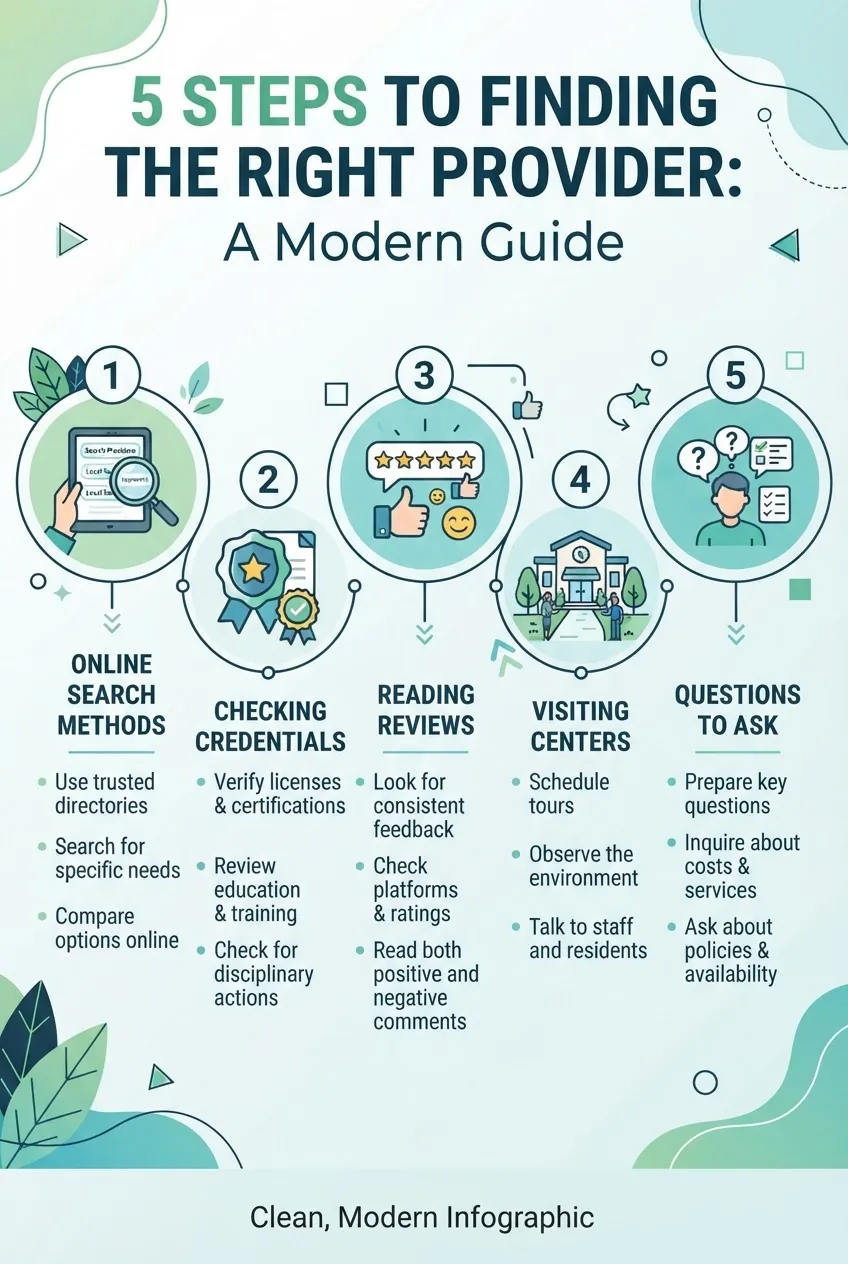
- Search locally and map options: Use Google Maps, local directories and community noticeboards. Filter by distance (0–15 km), open hours, and ratings. Save at least 8–12 options, then narrow to 4 based on services that match your top 3 goals (e.g., pain reduction, stress resilience, nutritional guidance). Set a 90-minute search block.
- Check credentials and accreditation: Verify statutory licences for regulated professions (e.g., physiotherapists, nurses) through national registries. For Australia, check the Australian Health Practitioner Regulation Agency: AHPRA. For complementary certifications, request certificates or memberships in recognised bodies (e.g., massage association, counselling board). Expect response times of 24–72 hours for verification requests.
- Read reviews and request testimonials: Look for 20+ reviews or at least 5 detailed testimonials. Prioritise reviews that mention program duration, measurable outcomes, and the initial intake experience. Phone or email the centre and ask for two recent anonymous client summaries (centres often provide these).
-
Schedule an exploratory visit or mini-session: Book a 20–30 minute discovery call or 30–45 minute trial session (cost $0–$80). During the visit, time how long the intake takes, note the cleanliness, observe practitioner communication skills, and whether they request medical history and consent forms.
Walkthrough example (evaluating one local centre):
- Step A: Ask reception if an intake form is emailed prior to the first visit — if they don’t have one, flag administrative quality as low.
- Step B: Note whether practitioner asks about medications, allergies and GP involvement within first 10 minutes — this is good integration practice.
- Step C: Confirm referral pathways: who do they contact if you need medical testing? Centres that provide a named GP or allied professional contact are higher quality.
-
Ask focused questions before signing:
- “How many sessions does a typical client require for results similar to mine?” (Expect a range: 4–12 sessions for most conditions.)
- “Who will I see at each visit and what are their qualifications?”
- “What measurable outcomes will we use?” (sleep hours, pain score, energy scale.)
- “Do you coordinate with my GP and with what consent?”
If you’re considering becoming a provider or employing coaching support, review holistic wellness coach training programs.
Transition: once you’ve evaluated options, you’ll need to understand costs, insurance coverage and payment flexibility.
Cost, Insurance, and Payment Options for Holistic Healing Near Me
Costs vary widely by modality, program type and practitioner experience. Below is a practical summary, followed by where to look for insurance or cheaper options.
| Service type | Typical cost (AUD) | Common insurance coverage |
|---|---|---|
| Single energy healing / Reiki session | $60–$150 | Rarely covered by health insurers |
| Allied health (physio, dietitian) | $80–$160 | Often covered under extras/PHI with rebate |
| Counselling / psychotherapy | $100–$220 | Medicare rebates available for mental health plans; private extras sometimes apply |
| Holistic nutrition consult | $90–$180 | May be covered if delivered by accredited dietitian |
| Retreat / residential program | $1,000–$15,000 (depending on length) | Rarely covered; check employer EAP or specialised funds |
Payment options to ask about: sliding scale, payment plans (3–6 months), bundled packages with session credits, and employer or university discounts. For insurance navigation, read the consumer protections on service contracts and refunds.
For step-by-step insurance navigation, see finding alternative practitioners with insurance.
Tip: ask your insurer for a list of recognised providers (extras cover) and request pre-authorisation for multi-session programs when possible.
Transition: now read real client experiences to understand realistic outcomes and timelines.
Benefits and Client Experiences with Holistic Healing Programs Near Me
Clients commonly report improved sleep, reduced pain intensity, and better stress management when programs combine coaching, movement, and nutrition. According to a 2024 industry report, integrated programs that include at least two modalities show higher client satisfaction and adherence rates.
Below are two concise, realistic client vignettes and a brief reference to the evidence base.
Case example 1 — “Sophie, 42”: After an 8-week personalised program (biweekly coaching, weekly physiotherapy, and nutrition check-ins), Sophie reduced chronic neck pain from 6/10 to 2/10 and increased sleep by 1.5 hours nightly. She tracked outcomes via a pain diary and a wearable step/heart-rate monitor.
Case example 2 — “James, 29”: James enrolled in a 5-week stress resilience course combining group breathwork and two private CBT-informed coaching sessions. He reported a 40% reduction in anxiety symptoms and resumed regular exercise routines. Program included weekly homework and measurable mood check-ins.
Evidence note: Several peer-reviewed reviews indicate mixed but promising effects for multimodal programs on quality of life and symptom reduction; for more, see a systematic review repository: PubMed Central. (Source type: peer-reviewed literature.)
To deepen the evidence and clinical benefit discussion, read benefits of holistic medicine.
Transition: once you complete a program, maintain gains with structured aftercare—see practical tips next.
Tips for Maintaining Holistic Wellness After Completing Local Programs
After a formal program, adopt a simple, maintainable routine to consolidate gains. Below are practitioner-tested actions with specific timings and thresholds.
- Continue short daily practices: 10–20 minutes of guided breathing or meditation, morning or evening. Aim for 5–6 days/week for 8 weeks post-program to stabilise nervous system changes.
- Maintain two weekly movement sessions: 30–45 minutes, moderate intensity (you can talk but not sing) to preserve physical gains.
- Track outcomes monthly: Use a one-page tracker for sleep hours, pain score (0–10), mood (1–10). If metrics decline by 20% for two consecutive months, book a review session.
- Join community groups: Attend weekly peer groups or classes to keep accountability; target one group meeting/week.
- Schedule booster sessions: Book a 45–60 minute booster at 1 month and 3 months post-program to recalibrate the plan.
Community resources — look for neighbourhood support groups, community health centres, or volunteer-led workshops that run on a sliding scale.
Transition: below you’ll find a step-by-step checklist, common mistakes and guidance on when to bring in professionals.
Hands-On Steps (Numbered Action Plan)
The numbered steps below form the core practical workflow. Execute them over 2 weeks with the time allocations shown.
- List goals and constraints (30–45 minutes): Write 3 specific outcomes (e.g., “Reduce daily migraine episodes from 5 to ≤2 in 8 weeks”) and availability windows (weekday evenings, weekend mornings). This narrows compatible programs.
- Run a targeted local search (90 minutes): Use keywords: “holistic places near me”, “holistic healing near me”, and “holistic centers near me” in Maps and directory filters (distance 0–15 km). Save 8–12 leads into a spreadsheet: name, modality, price, phone/email, rating.
- Check credentials and regulatory status (60 minutes): For regulated professions, confirm registration at AHPRA. For non‑regulated modalities, request proof of certification, insurance, and professional membership. Document expiry dates and certificate providers.
- Shortlist and call (60–90 minutes): Narrow to 4 centres and make a 10–15 minute call using a prepared script: mention your goals, ask for intake form, ask about GP coordination, and request an initial session price. Score answers 1–5 and rank.
- Visit or trial a session (book 30–60 minutes): Schedule a discovery session. Observe cleanliness, intake thoroughness, practitioner communication, and whether measurable goals are discussed. Time the intake; quality centres spend 20–40 minutes on intake for a standard consult.
- Compare packages and payment options (30 minutes): Request written package details and refund policy. Prefer centres that offer payment plans (3–6 months) and a clear no-surprise pricing policy.
- Make an evidence-based selection (15 minutes): Choose the top-ranked centre that balances credentials, outcomes evidence, accessibility, and cost. Book your first full session and a 30–60 day review slot.
- Prepare for the first session (10–20 minutes): Bring medication list, recent test results, and your goal tracker. Wear comfortable clothing for movement or manual therapy.
- Attend and record outcomes (ongoing): After each session, note immediate effects (sleep, pain, mood) and do assigned homework. Use a simple numeric rubric so progress is quantifiable.
- Review and recalibrate at 30–60 days (45 minutes): Compare baseline versus current metrics; if improvement <25% after 6–8 sessions, ask for a plan change or referral to an allied practitioner.
Common mistakes and how to avoid them (from my practice experience):
- I once accepted a package without confirming practitioner availability; the remedy is to ask for a guaranteed primary practitioner and a swap policy before paying.
- I observed clinics that overpromise immediate cures; request measurable outcomes and a timeline—if a provider claims “cures in one session”, treat that as a red flag.
- I’ve seen clients skip sharing medical history; always bring a medication list and share chronic conditions—this protects you and improves personalised care.
Checklist Before You Commit
- You’ve identified 3 specific goals and recorded baseline metrics.
- You’ve verified practitioner licences or certifications and requested proof.
- You’ve had at least one trial session or discovery call and logged impressions.
- Price, package length, refund/transfer policy, and coordination with GP are documented in writing.
- You’ve booked a 30–60 day review at the time of enrolment.
When to Call in a Professional
If you experience worsening symptoms, new neurological signs (vision loss, numbness), sudden severe pain, or suicidal ideation, contact emergency services or your GP immediately. For persistent symptoms despite 6–8 sessions with no measurable improvement, ask the centre for a formal referral to a medical specialist for diagnostic testing.
Final practitioner note: holistic programs vary widely; choose a centre that blends measurable outcomes, credential transparency and reasonable cost. If uncertain, book a single consult and evaluate after one month.
Conclusion: you now have a practical, step-by-step workflow to find and join quality local holistic programs, a checklist to verify your choice, and concrete follow-up actions to maintain gains. Ready to start? Book a discovery session with your top-ranked local centre this week and set your 30–60 day review now.