

Functional medicine London offers personalised, systems-based care that looks for root causes of chronic symptoms and coordinates nutrition, lifestyle, targeted testing and supplements with conventional care to improve long‑term outcomes. This guide explains practitioner types, typical diagnostic workflows and how to access services across London and the UK.
What Is Functional Medicine?
Answer: Functional medicine is a patient-centred, systems biology approach that treats chronic illness by identifying upstream causes—metabolic, environmental and lifestyle drivers—and creating personalised treatment plans combining nutrition, targeted testing and behavioural change with conventional care.
Term: Functional medicine — an approach that applies systems biology and root cause analysis to treat disease by focusing on interactions among genes, environment and lifestyle.
Functional medicine reframes chronic illness from symptom management to detective work across body systems: digestion, immunity, endocrine, nervous system and detoxification. Clinicians gather a detailed medical, lifestyle and exposure history then use targeted laboratory biomarkers (blood chemistry, hormonal panels, stool pathogen and microbiome tests, nutrient assays and sometimes genetic or metabolomic screens) to map dysfunction patterns and prioritise interventions.
Unlike brief consult models, functional medicine appointments are longer to allow comprehensive assessment, shared decision-making and measurable goals. Practitioners use an iterative model: assess → treat → reassess. This produces personalised treatment plans that combine dietary interventions, supplement protocols and lifestyle coaching alongside conventional diagnostics and medications when needed.
According to the Institute for Functional Medicine’s clinical frameworks, care emphasises systems biology, patient-centred history taking and prioritising reversible contributors such as nutrient deficiencies, gut dysbiosis, chronic inflammation and stress physiology (Institute for Functional Medicine).
Overview of Functional Medicine Practice in London and the UK
Answer: Functional medicine in London operates mostly in private clinics and multidisciplinary centres, with some practitioners offering NHS-facing collaborations; regulation is variable, so practitioner credentials, scope of practice and testing options differ across the UK.
Term: Regulatory environment — the set of laws, professional standards and guidance that govern who can practise, what tests may be ordered, and how treatments are described in the UK.
London hosts the largest concentration of functional medicine clinics in the UK, spanning boutique private practices, integrative hospitals and multidisciplinary primary care partnerships. Most services are delivered privately, although some GPs with interest in functional approaches may adopt system-focused assessments within NHS appointments or refer out to private specialists.
Key features of practice in the UK context:
- Predominantly private-pay model with variable insurance reimbursement;
- Mixture of clinicians: medically trained doctors, nurse practitioners, registered dietitians and non-medical therapists;
- Emphasis on advanced and private laboratory testing that is not routinely available on the NHS;
- Increasing use of telehealth to reach patients across the UK;
- Growing focus on integration with conventional care and shared management plans with GPs.
UK regulatory specifics shape what a London patient experiences:
- Professional titles and scope: only registrants of bodies such as the General Medical Council (GMC) or Nursing and Midwifery Council (NMC) may diagnose and prescribe; non-statutory titles (e.g., naturopath) are less regulated;
- NHS interface: the NHS provides guidance on complementary and alternative medicine and generally states that many complementary therapies are available privately rather than through standard NHS pathways (NHS overview on complementary medicine);
- Testing availability: some advanced panels (genetic or specialised microbiome analyses) are usually ordered by private clinicians; the NHS may offer core blood and imaging tests as part of conventional diagnostic pathways;
- Advertising and claims: UK Advertising Standards and professional codes prevent misleading claims about cures for serious disease—practitioners must be clear about complementary status and evidence limits.
Common locations and clinic setups in London:
- Multidisciplinary clinics in central London offering coordinated care with private consultants;
- Smaller private practices or solo practitioners across boroughs;
- Wellness centres combining nutrition, physiotherapy, psychological support and functional testing;
- Telehealth providers that prescribe or support local GP collaboration for prescriptions and referrals.
Patients should expect a range of fees and appointment lengths; a first functional consultation in London often runs from 45–120 minutes depending on the clinician’s background and service model.
Types of Functional Medicine Practitioners in London
Answer: London practitioners include medically qualified functional doctors, registered dietitians, nurse practitioners, naturopaths and clinical nutritionists—each brings different legal scope, training pathways and collaboration models.

-
Medical doctors with functional medicine training — Often GMC-registered GPs or consultants who have completed additional functional medicine programmes (e.g., IFM modules) and can prescribe, refer for imaging and coordinate with NHS care. They combine conventional diagnostics with systems-based management (90–120 words).
Typical responsibilities: diagnosis, prescribing, ordering NHS-standard investigations, and integrating functional protocols with ongoing medical therapy.
-
Functional medicine nurse practitioners — NMC-registered nurses with additional functional training who provide assessments, medication reviews, lifestyle coaching and follow-up. They often work in multidisciplinary clinics and liaise with doctors for prescribing or complex decisions (70–90 words).
Nurse practitioners expand access to longer consults and practical care planning while remaining within regulated prescribing frameworks when qualified.
-
Registered dietitians and clinical nutritionists — Dietitians are HCPC-registered and can provide evidence-based nutritional therapy within NHS and private settings; clinical nutritionists often offer intensive dietary and supplement protocols privately (60–80 words).
Dietitian care is the main regulated nutrition route in the UK; some practitioners augment this with advanced metabolic testing ordered by collaborating clinicians.
-
Naturopaths and functional nutrition practitioners — Non-statutory titles with training from private schools; scope varies and typically focuses on herbal, nutritional and lifestyle interventions without prescribing pharmaceuticals (60–80 words).
Check training details and professional membership; many London naturopaths work in integrative teams rather than as isolated clinicians.
-
Allied health and complementary practitioners — Psychologists, physiotherapists and integrative therapists who apply functional principles to mental health, movement and chronic pain; they usually operate within defined professional frameworks (50–70 words).
These practitioners provide specialised therapies that are often essential parts of a comprehensive functional plan.
Education and training pathways in London often include postgraduate short-courses, clinical mentorships and recognised online degrees. Prospective practitioners sometimes pursue alternative medicine degree programs to build foundational skills before clinical placement and accreditation.
Patient-facing bios in London clinics usually highlight professional registration, additional functional training, and the clinic’s typical testing and collaboration processes—these are useful credibility signals when choosing a practitioner.
What Are Common Functional Medicine Treatments and Techniques?
Answer: Functional medicine treatments in London commonly include personalised dietary interventions, supplement protocols, targeted detoxification strategies, lifestyle coaching, and advanced lab-guided therapies, delivered in staged, measurable programmes tailored to the individual.

Treatment in functional medicine follows a stepwise model: prioritise reversible contributors, apply targeted interventions, measure response, and adapt. Below are core modalities with clinical intent and typical application.
- Dietary interventions — Therapeutic diets (anti-inflammatory, elimination, low-FODMAP, Mediterranean-style, ketogenic when indicated) tailored to metabolic goals, gut health and comorbidities; nutrition is central to reducing inflammation and improving metabolic markers.
- Supplement protocols — Evidence-informed use of vitamins, minerals, omega‑3s, probiotics and botanical adjuncts to correct documented deficiencies, support digestion, hormonal balance or reduce oxidative stress; dosing is guided by labs.
- Lifestyle and behavioural coaching — Sleep optimisation, graded exercise plans, stress reduction (CBT-informed techniques, mindfulness) and circadian alignment; clinicians set measurable behavioural targets.
- Targeted detoxification support — Short-term interventions to support hepatic phase pathways, bile flow and elimination where toxin burden is suspected, combined with diet and micronutrients; used cautiously with clinical monitoring.
- Microbiome and gut-directed care — Prebiotic/probiotic strategies, antimicrobial or anti‑inflammatory protocols for confirmed dysbiosis, and gut-healing diets to restore barrier function and immune signalling.
- Hormonal and metabolic optimisation — Treat patterns such as insulin resistance, thyroid imbalance or sex hormone dysregulation using combined diet, targeted supplements and liaising with prescribing clinicians for medication when required.
- Precision testing–guided therapy — Use of stool analysis, hormone panels, nutrient assays and sometimes pharmacogenomic or metabolomic data to tailor interventions and monitor biochemical response.
- Adjunctive therapies — Physiotherapy, acupuncture, counselling and sleep therapy to support recovery and functional gains in movement, pain and mental health.
- Chronic disease management and supportive oncology care — Functional approaches aim to reduce treatment side effects, support immunity and nutrition, and improve quality of life alongside conventional treatments; see discussion of cancer-specific approaches and references to alternative medicine for prostate cancer and supportive oncology resources.
-
Condition-specific overlaps — Many protocols overlap with alternative therapies for asthma and allergies (e.g., anti-inflammatory diets, micronutrient correction) and with oncology supportive guides like alternative to radiation therapy when used as complementary care rather than replacement of standard treatments.
Clinicians set objective biomarker targets (e.g., HbA1c, lipid ratios, inflammatory markers) and standardised patient-reported outcome measures to track progress over months. Treatment durations vary: lifestyle and dietary changes can show early biochemical shifts in weeks, but full protocol cycles for chronic conditions often run 3–12 months or longer, depending on complexity and goals.
Typical Diagnostic Tools Used
Answer: Diagnostic tools include standard blood panels and expanded biomarkers, stool analysis, hormonal panels, nutrient assays and selective genetic tests to map function and guide personalised interventions.
Term: Biomarkers — measurable biological indicators (blood tests, metabolites) used to assess physiological states or responses to treatment.
- Standard blood tests: FBC, CRP/ESR, liver and renal function, fasting glucose, HbA1c, lipids — used to screen and monitor systemic status.
- Comprehensive metabolic panels: expanded insulin, fasting insulin, advanced lipid tests and inflammatory cytokines for metabolic and cardiovascular risk mapping.
- Hormone panels: thyroid function tests (TSH, free T4, free T3), sex hormones, cortisol rhythm (salivary or serum) for endocrine assessment.
- Stool analysis and GI panels: pathogen screens, microbiome composition, inflammation markers (calprotectin) and digestive function tests.
- Nutrient assays: vitamin D, B12, folate, iron studies, magnesium and trace element testing to identify deficiencies.
- Genetic and pharmacogenomic tests: selective SNP panels to guide nutrient metabolism, drug responsiveness or predisposition patterns.
- Specialised tests: organic acids, food intolerance panels and metabolomic screens when clinically indicated.
Many UK clinicians blend NHS-available tests with private diagnostics when needed; test selection is driven by the problem list and cost-effectiveness. Clinicians interpret results in clinical context rather than treating numbers alone, emphasising repeated measures to show trend and response.
What Are the Benefits of Choosing Functional Medicine in London?
Answer: Benefits include highly personalised care, longer consultations, coordinated chronic disease management, and measurable lifestyle-focused improvements that complement conventional care and empower patient self-management.
Functional medicine’s strength is integrating multiple domains—nutrition, lifestyle, environment and conventional medicine—into a coherent plan tailored to the individual’s physiology and goals. This can deliver clinically meaningful improvements for many chronic conditions when combined with standard treatments.
- Personalised care: extended assessments and bespoke plans that address multi-system contributors rather than isolated symptoms.
- Comprehensive treatment coordination: multidisciplinary teams that align nutrition, exercise, mental health and medical management.
- Improved chronic disease outcomes: evidence suggests lifestyle-based and systems approaches can improve markers in metabolic syndrome, IBS and fatigue-related conditions (see external evidence below).
- Patient empowerment: education-focused consultations increase adherence and self-management capacity.
- Integrative support for mental health: functional approaches to sleep, inflammation and nutrition complement psychological therapies and fall under broader mental health alternative treatments strategies.
- Pain and symptom control: non-pharmacologic strategies and multidisciplinary rehab reduce reliance on opioids and improve function—overlap with alternative therapies for pain management.
Case snapshot (anonymised, London clinic example): a patient with longstanding IBS, fatigue and anxiety underwent a structured functional assessment including stool PCR, nutrient panel and cortisol rhythm; over six months, targeted dietary change, probiotics and micronutrient repletion reduced symptom severity scores by 60% and lowered inflammatory markers. Clinical notes and monitoring formed the basis for shared care with the patient’s GP.
External reviews and frameworks support targeted systems approaches for chronic disease risk modification; clinicians should present realistic outcome expectations and align with evidence-based practices (IFM frameworks; see also research summaries on clinical outcomes via literature databases).
How Do I Find and Choose a Functional Medicine Practitioner in London?
Answer: Search for regulated professionals with documented functional training, review patient feedback, confirm testing and prescribing arrangements, check costs and ask about collaboration with your GP; use a step-by-step vetting and consultation process described below.
Step-by-step selection guide:
- Clarify your goal: symptom relief, chronic disease risk reduction, supportive oncology care or diagnostic clarification will shape the right practitioner type.
- Check professional registration: prefer clinicians registered with GMC, NMC, HCPC or BDA for regulated scopes (prescribing, diagnosis). Non-statutory titles should list memberships and training details.
- Confirm functional training and experience: ask for evidence of postgraduate courses, clinical mentorship and case experience in relevant conditions; relevant programmes include IFM courses and recognised MSc tracks.
- Ask about testing and interpretation: which tests are included vs paid separately, who interprets them, and whether results are shared with your GP.
- Understand fees and timelines: ask for a sample care pathway, number of follow-ups included and estimated total duration and cost for a typical case.
- Review patient feedback and outcomes: look for outcome measures or anonymised case summaries showing measurable improvements.
- Assess communication style: a brief initial call or paid introductory consult can reveal whether the practitioner emphasises evidence, shared decision-making and measurable goals.
- Confirm integration with NHS or insurance: ask how they coordinate care with GPs and whether any parts may be claimable on private medical insurance.
- Consider the clinic type: functional medicine in London works across independent practices, integrative centres and telehealth providers; for bundled services and multidisciplinary teams, explore alternative health care center services to understand how clinics structure packages and collaborations.
Red flags to avoid: practitioners who guarantee cures for serious disease, refuse to communicate with your GP, demand large upfront supplements without testing, or lack clear documentation of training and professional registration.
Booking and logistics in London: many clinics offer an initial 20–30 minute triage (paid or free) followed by a comprehensive first appointment; expect a staged programme with regular follow-ups and re-testing. Telehealth can reduce cost and increase convenience, but in-person options remain important for some tests and physical exams.
How Does Functional Medicine Compare with Conventional Medicine in the UK Context?
Answer: Functional medicine focuses on personalised, systems-level root-cause work and longer consults, while conventional (NHS) care prioritises population-level protocols, rapid access to acute care and evidence-based pathways; both have strengths and are often complementary.
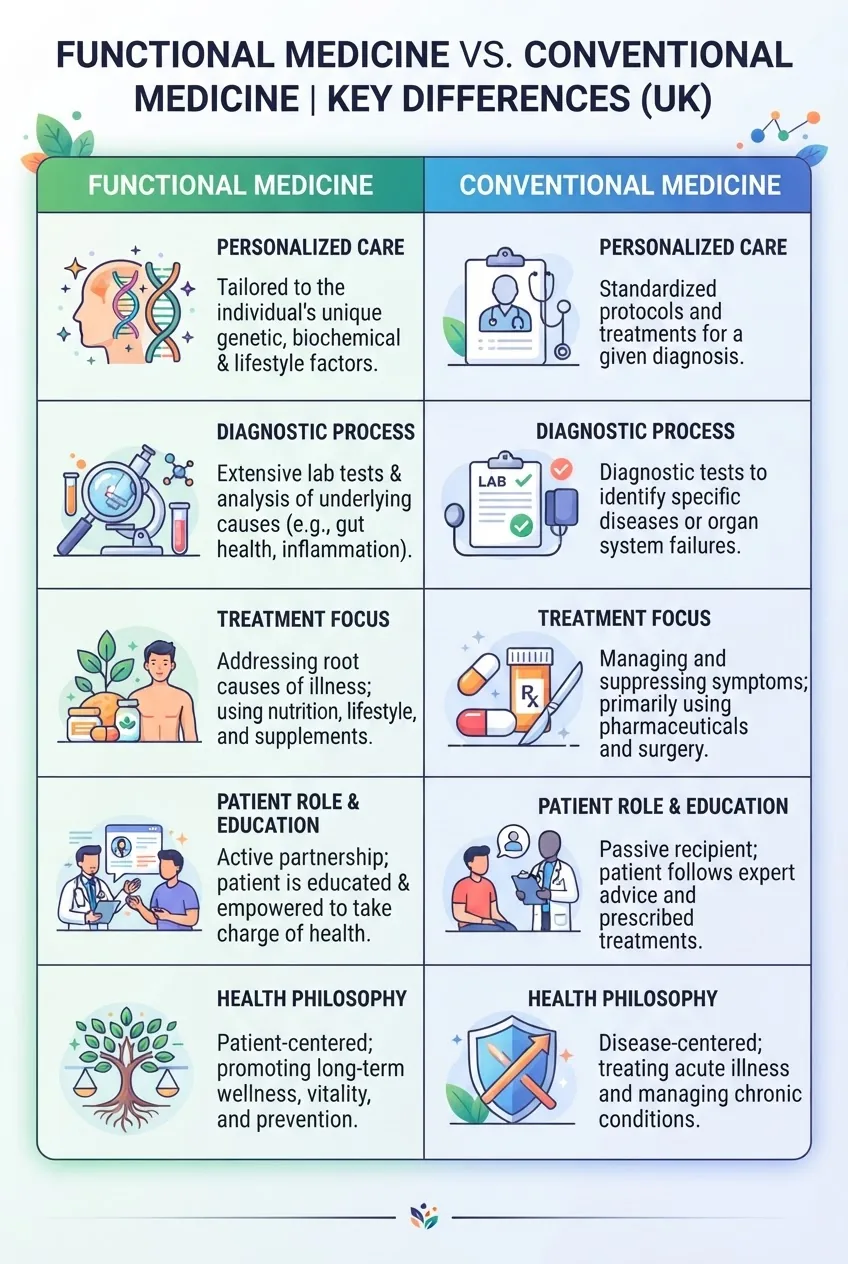
| Functional Medicine | Conventional Medicine (UK) |
|---|---|
| Personalised care plans focused on root causes and systems biology | Standardised, guideline-driven care focused on diagnosis and disease-specific treatment |
| Longer initial consultations and iterative follow-up | Shorter consults with rapid access to acute diagnostics and referrals |
| Extensive use of private advanced testing (microbiome, metabolomics) | NHS-funded core labs and imaging according to referral pathways |
| Integrates nutrition, supplements and lifestyle as primary interventions | Pharmacologic and procedural interventions guided by clinical evidence and cost-effectiveness |
| Often delivered privately with variable insurance support | Delivered widely via NHS with regulated governance and public funding |
For patients seeking both approaches, coordinated care is ideal: functional assessments can identify modifiable drivers while the NHS provides access to evidence-based diagnostics, specialist referrals and acute treatment. See wider terminology and integrative frameworks on alternative terms for Western medical practices for how these models relate.
What Challenges and Considerations Should I Know When Using Functional Medicine in London?
Answer: Challenges include cost, regulatory variability, limited NHS access to advanced private tests, mixed evidence for some interventions, and potential for over-testing—patients should weigh benefits against expense and verify practitioner credentials.
Cost considerations: many interventions and tests are private-pay and fees vary across London clinics; expect a higher upfront cost for comprehensive testing and extended consults. Transparency about fees and phased treatment budgets is essential.
Regulatory limitations and scope: while doctors and nurses operate under statutory regulation, many complementary practitioners do not—check registrations, memberships and whether a clinician will communicate with your GP.
Scientific critique and evidence base: some functional approaches are supported by high-quality evidence (for example, dietary modification in metabolic syndrome), while other areas rely on emerging or lower-level evidence. A balanced clinician clearly differentiates established treatments from experimental or low-evidence options and avoids overstated claims.
Treatment duration and expectations: meaningful change in chronic conditions takes months; short-term improvements may occur, but sustained outcomes usually require ongoing lifestyle change, monitoring and clinician support.
Risk of over-testing and supplement interactions: targeted testing is useful, but indiscriminate panels can generate incidental findings leading to unnecessary costs and anxiety. Supplements can interact with prescribed medicines—clinicians must review full medication lists and coordinate care with prescribers.
Trust-building steps: request references or outcome summaries, verify professional registration, ask for a written care plan with milestones and safety checks, and insist on communication with your GP when medical supervision or prescribing is involved.
What Are Future Trends and Developments in Functional Medicine in the UK?
Answer: Future trends include stronger integration with NHS pathways, expanded telehealth, standardised training and accreditation, more research on outcomes, and data-driven personalised care using genomics and metabolomics.
Research advances and evidence generation: there is growing momentum to evaluate functional approaches with pragmatic trials and real-world outcome registries; expect more UK-based studies and cross-institution collaborations over the next five years (academic and clinical networks are increasingly interested in lifestyle and systems interventions).
Regulation and standardisation: professional bodies and training programmes are moving toward clearer competency frameworks and recognised post-graduate certifications, improving transparency for patients and commissioners.
Integration with NHS: pilot programmes and GP interest in personalised lifestyle medicine may create referral pathways and shared-care models, particularly for chronic disease prevention and long-term conditions management.
Digital health and telemedicine: remote monitoring, app-based behaviour change supports and teleconsultations will broaden access across the UK while enabling longitudinal data collection to track outcomes.
Workforce development: more structured degree and CPD programmes in functional, integrative and lifestyle medicine are emerging, improving clinician competence and patient safety over time.
Conclusion: Functional medicine London offers a systems-based, personalised option for patients seeking root‑cause evaluation and lifestyle-centred interventions alongside conventional care. Evaluate practitioner credentials, testing plans and collaborative arrangements with your GP, and prioritise measurable goals. If you want personalised assessment or a second opinion, book an initial consultation with a regulated clinician and request a clear, phased care plan.