By the end of this hands-on guide you will be able to run a 10–30 minute meditation session confidently, choose the right technique for stress reduction, and fix the five most common beginner mistakes. Expect to spend 10–20 minutes daily for two weeks to form a basic habit; this guide assumes no prior experience beyond willingness to practice.
Introduction to Meditation Techniques
meditation techniques are structured practices that train attention and awareness to achieve mental clarity, emotional calm and stress reduction. This guide focuses on accessible, evidence-informed methods suitable for beginners while giving pathways to deeper practice. You’ll learn practical steps, posture, mindset coaching and how to choose techniques for different goals (stress, focus, rest).
According to a 2023 meta-analysis published in a peer-reviewed medical journal, regular mindfulness and meditation practices show measurable reductions in perceived stress and symptoms of depression and anxiety when practiced consistently for at least eight weeks — though individual results vary. For program frameworks and training, see the established Mindfulness-Based Stress Reduction (MBSR) model developed by Jon Kabat-Zinn and taught at recognised centres such as the Centre for Mindfulness at UMass.
Use meditation as a complementary tool: it can improve wellbeing but is not a replacement for medical or psychological treatment. For information on medical options you might combine with meditation, see understanding anxiety treatments and explore the detailed benefits in benefits of meditation.
Practical note: this guide emphasises mindfulness meditation for stress reduction but covers multiple methods so you can select the best fit for your schedule and temperament.
Transition: Next we prepare the practical environment and mindset so your first sessions aren’t undermined by avoidable setup mistakes.
Preparing for Your Meditation Practice
- Choose a consistent time: 10–30 minutes in the morning or evening. Short windows after waking or before bed are easiest to preserve. Aim for at least 5 sessions a week for two weeks to assess changes.
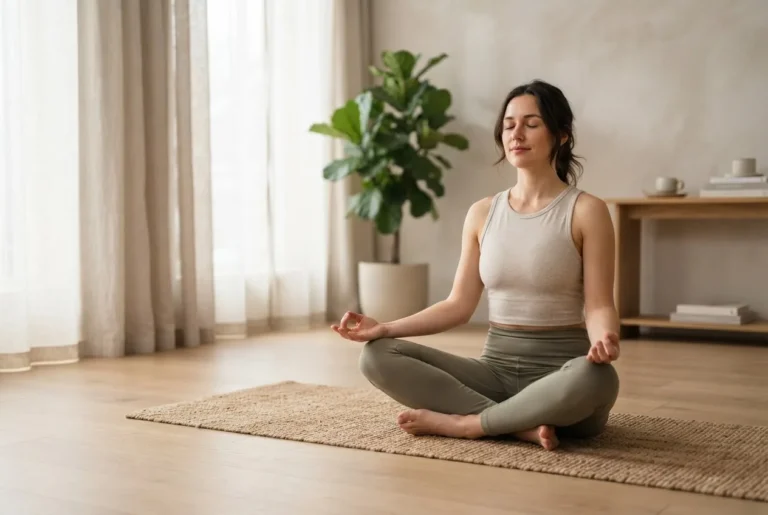
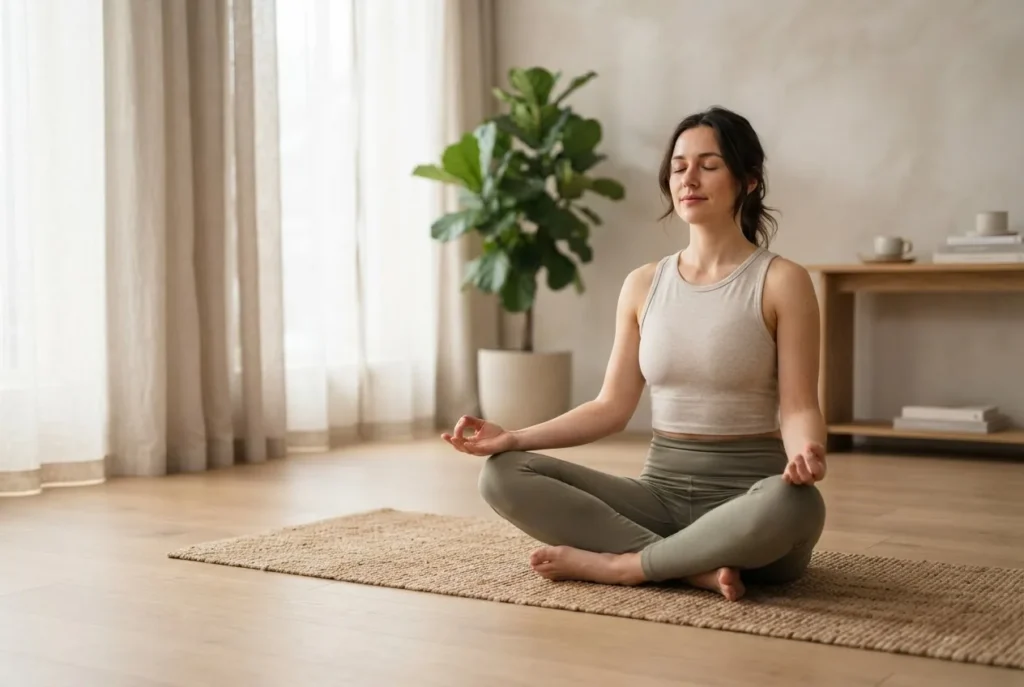
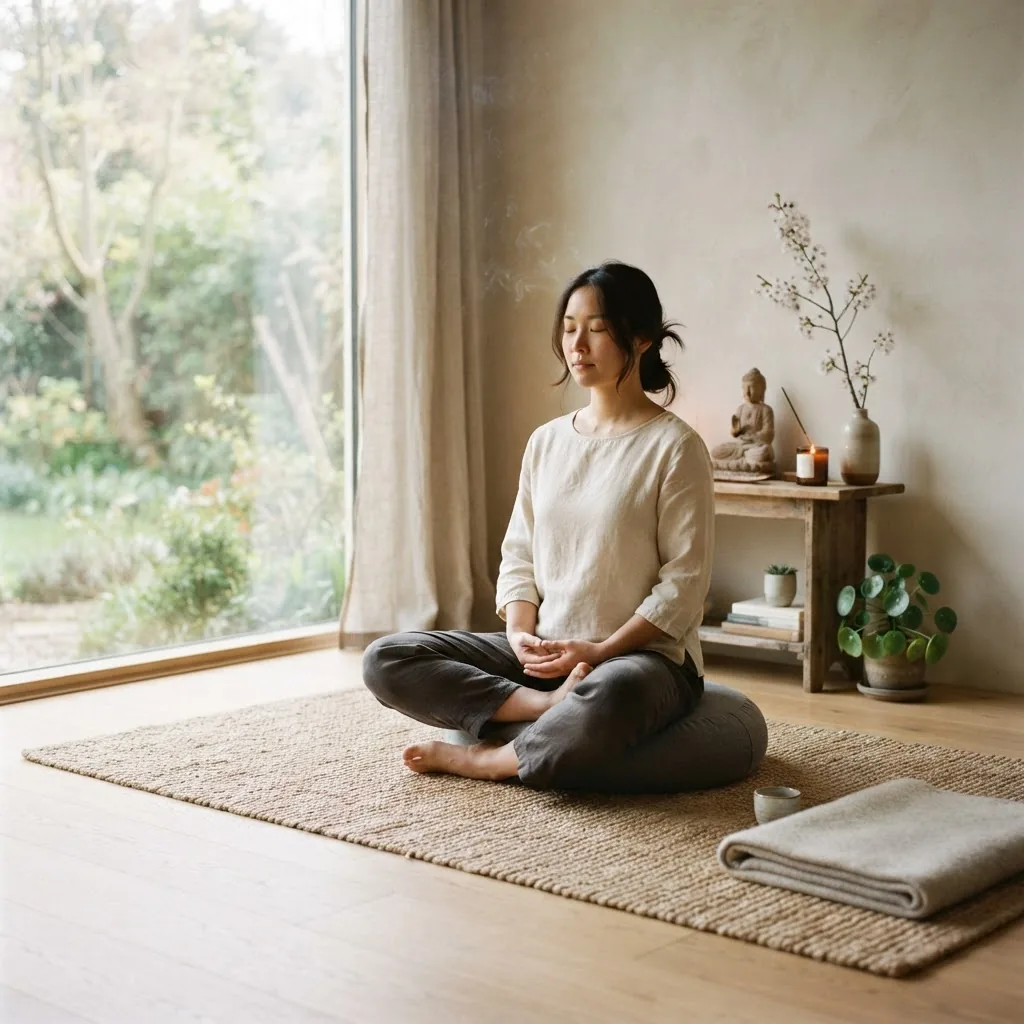
- Select your space and posture: quiet corner, low clutter, soft light. Use a cushion or straight-backed chair — feet flat on floor if seated in a chair. Maintain an upright spine but relaxed shoulders.
- Minimise distractions: set phone to Do Not Disturb, mute notifications, ask housemates for privacy for the session length +2 minutes. If noise is unavoidable, use low-volume ambient sound or a guided audio.
- Gather simple tools: cushion (zafu) or chair, timer (smartphone or simple kitchen timer), optional blanket, and a note journal to record sessions (duration, technique, sensations).
- Set an intention: a short phrase like “I will notice breath” or “I will return to present” clarifies purpose and reduces wandering. Keep it brief; intentions are anchors, not judgments.
- Dress and temperature: wear comfortable, non-restrictive clothing; 20–22°C is a broad comfort range. Thinner layers are best so you can adjust without leaving posture.
- Plan session length and progression: beginners: start with 5–10 minutes for week 1, increase 5 minutes every 4–7 days toward 20–30 minutes if desired. Record progress in a journal.
- Know the checklist for interruptions: if interrupted, pause, note interruption silently, and restart from breath focus or body scan. Give yourself permission to restart the timer once.
Transition: With the space and mindset ready, we’ll move into step-by-step how-to instructions for basic techniques you can practice immediately.
Basic Meditation Techniques Everyone Can Start With
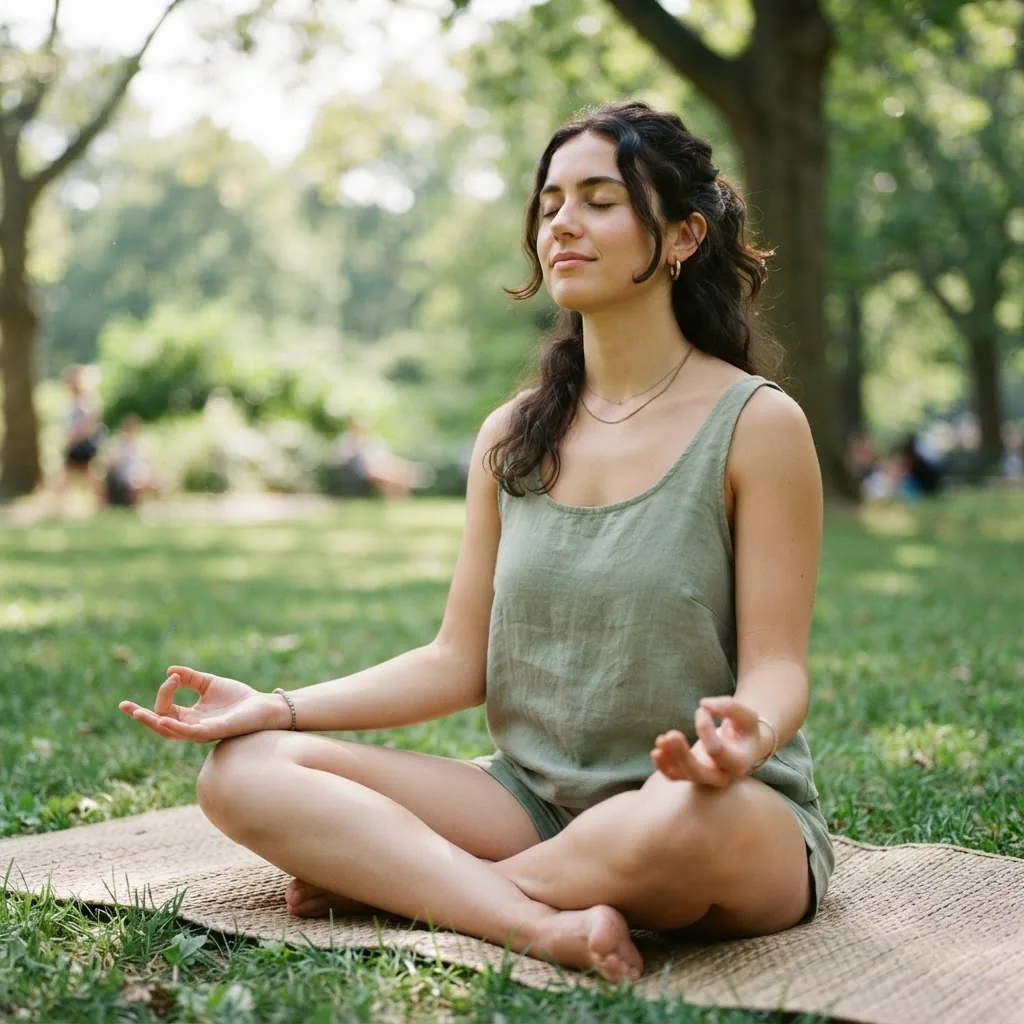
This section teaches four primary, beginner-friendly methods: breathing techniques, body scan meditation, mantra meditation, and simple mindful sitting. Each technique includes a clear, numbered how-to and practical trade-offs so you can choose what fits your aim and temperament.
-
Breathing Meditation — 10-minute practical routine
- Set a 10-minute timer. Sit upright (cushion or chair), hands resting, spine long.
- Anchor to the breath. Notice the inhale and exhale at the nostrils or chest. Count silently: inhale 1, exhale 2, up to 5 then restart.
- Return when distracted. Each time the mind wanders (it will), note “thinking” and gently return to breath. Do this without judgment.
- Close with 3 full breaths. After the timer, take three deeper inhales/exhales, open your eyes slowly, note any shift.
Why it works: breathing control engages the parasympathetic nervous system and reduces heart rate variability; paced attention trains attentional stability. Method trade-off: excellent for acute stress and focus building, but may feel dry for those who prefer imagery or guidance. For extended breathing practice see breathing meditation exercises.
-
Body Scan Meditation — 15–25 minute relaxation routine
- Lie down or sit comfortably. Timer 15–25 minutes depending on available time.
- Begin at the toes. Direct attention to each body area for 20–45 seconds: toes → feet → calves → knees → thighs → pelvis → abdomen → chest → hands → arms → shoulders → neck → face → top of head.
- Notice sensations. Name sensations silently (warmth, tension, tingling) and breathe into tight areas for 3 breaths before moving on.
- Finish with whole-body awareness. Spend 30 seconds sensing the whole body and ending slowly.
MBSR tip: this is a core MBSR practice because it trains interoception and reduces somatic stress. Trade-off: best when time allows; short versions (5–8 minutes) can target tight areas only.
-
Mantra Meditation — 10–20 minute focused repetition
- Choose a short mantra. Neutral phrases like “so-hum”, “I am calm”, or a culturally neutral syllable work well. Set timer 10–20 minutes.
- Repeat the mantra silently. Align repetition with breath: mantra on inhale, continue on exhale, or repeat continuously at a slow pace.
- Return from distraction. When thoughts arise, note them and gently return to mantra without scolding.
- End mindfully. After the timer, sit for 1–2 minutes noticing any residual calm.
Why choose it: mantra repetition increases cognitive anchoring, reduces rumination and is simple for people who prefer verbal focus. Trade-off: some may find repetition monotonous or culturally loaded—choose a neutral phrase that feels right.
-
Simple Mindful Sitting — 5–15 minute daily reset
- Sit in natural posture. Timer 5–15 minutes depending on time.
- Open awareness. Rather than narrowing to breath or mantra, gently notice sounds, sensations, and thoughts as passing events.
- Label and let go. Use one-word labels like “sound”, “feeling”, “thinking” and allow them to pass like clouds.
- Finish by setting an intention. Note one small action to take from the session (e.g., breathe before the next meeting).
Use when you need flexible practice that matches busy days. Trade-off: requires more skill to avoid drifting into runaway thinking; start short and build duration.
Experience example: A beginner named Maya started with breathing meditation for 7 minutes daily. Week 1 she struggled with wandering mind; week 2 she increased to 12 minutes and reported 30% lower perceived stress on self-rating scales. Small, consistent increments produced measurable change.
Transition: If you prefer a teacher’s voice, guided sessions help maintain structure and motivation — next we explain how to use them effectively.
Guided Meditation for Beginners: How to Follow and Use Them Effectively
guided meditation uses recorded or live instruction to lead you through breathing, imagery or body awareness. It’s especially useful for beginners who need structure and external cues to stay focused. Guided tracks can be 2 minutes to 60+ minutes; choose length based on context and energy levels.
Practical how-to:
- Select a guided track: Start with 5–15 minute recordings labelled “beginner” or “basic.”
- Set up audio and environment: low-volume headphones or speakers, quiet room, timer to end the session if needed in addition to the track.
- Follow instructions but adapt: if the guide says to lie down but you fall asleep, switch to seated posture. The guide’s structure is a scaffold, not a rule.
- Journal the experience: note length, how many times you were redirected, and one observable shift (breath ease, muscle relaxation).
Guided meditations are great for beginners because external prompts reduce self-criticism and provide cues for posture, breath and closing. For very short guided sessions try 2-minute guided meditation scripts or 3-minute meditation techniques when you need a quick reset.
Walkthrough (step-by-step):
- Play the track while seated: maintain posture; close eyes if comfortable.
- Follow the guide’s anchor: match breath cues and wording; if the guide instructs a body scan, move attention methodically through body parts as described.
- Note interruptions: when you drift, acknowledge and return to the anchor phrase used by the guide.
- Finish actively: after the guide ends, sit for 30 seconds and perform three mindful breaths before resuming activity.
Case study: Alex used guided meditations each morning for 21 days, combining a 10-minute guided breathing track with a 5-minute body scan. He found early morning practice reduced daytime reactivity. This mirrors findings that guided formats increase adherence among beginners (according to a 2023 implementation review in a psychology journal).
Transition: For those ready to go beyond basics, the next section compares advanced and alternative practices and explains when to try them.
Advanced and Alternative Meditation Techniques for Deeper Practice
This section describes practices to deepen focus, compassion, and imagery: visualization meditation, loving-kindness (metta), extended mindfulness meditation sit practices, and hybrid methods. Each entry explains what it trains, brief instructions, and practical trade-offs.
| Technique | What it trains | Brief instruction | Trade-offs |
|---|---|---|---|
| Visualization meditation | Imagination, relaxation response | Create a calming scene; explore details for 10–20 minutes | Powerful for stress but may trigger memories in some people |
| Loving-kindness (Metta) | Compassion and positive affect | Repeat phrases wishing wellbeing to self and others for 10–25 minutes | Builds empathy but can be emotionally challenging early on |
| Extended mindfulness sit | Deep attention & open awareness | Sit 30–45 minutes, anchor to breath, expand to open awareness | Highly beneficial but requires stable posture and guidance |
| Hybrid practices | Combines breath, movement, and awareness | Combine gentle movement (yoga) with mindful attention for 20–40 minutes | Accessible but requires coordination of movement and attention |
Tech note: visualization activates similar brain networks to actual perception; loving-kindness increases positive affect networks. If exploring advanced methods, consider periodic guidance from an experienced teacher or a structured program like MBSR for safe progression. For program resources, see the Centre for Mindfulness at UMass.
Transition: Having learned techniques, the next section explains how to practice effectively, handle obstacles and deepen habit formation.
How to Practice Meditation Effectively: Tips, Mindset, and Troubleshooting
- Commit to a schedule: practice at the same time daily; start with 10 minutes and increase by 5 minutes every week until you reach 20–30 minutes. Consistency beats duration for beginners.
- Use a simple timer: silent bell or gentle chime; set 10/15/20 minutes. When possible, avoid checking the phone mid-session.
- Adopt the beginner’s mindset: treat sessions as experiments. Expect mind wandering; count diversions initially to track reduction over time.
- Focus on process goals: aim to show up rather than hitting a target emotional state. Track sessions in a simple log (date, duration, technique, distraction count).
- Use scaffolding: guided meditations or group classes help adherence; alternate solo and guided days.
- Manage discomfort: if pain arises, shift posture or stand for 1–2 minutes before returning. For persistent pain, consult a healthcare professional.
- Scale intensity: for high stress days, shorten session to 3–5 minutes of focused breathing rather than skipping entirely.
- Measure progress: note changes in sleep, reactivity or concentration weekly. Small changes over 4–8 weeks are common.
Troubleshooting common challenges (prose): Many beginners ask, “how do i meditate properly?” Start by accepting that there is no single ‘proper’ internal state. If you fall asleep, shorten sessions or sit upright; if your mind races, use a counting breath or mantra for stronger anchoring. If persistent emotional surges arise, pause practice and consult a trained teacher or mental health professional.
For readers who want to deepen stress management beyond meditation, explore advanced stress relief tools or seek integrated care with licensed professionals. For authoritative mental health resources, see the Australian Government health pages: health.gov.au.
Transition: Next, a clear step-by-step plan to structure a complete meditation session from start to finish.
Structuring a Meditation Session: From Start to Finish
Below is a practical, repeatable session structure you can use for 10, 20 or 30-minute sittings. Follow these steps exactly and adjust timings by the total session length.
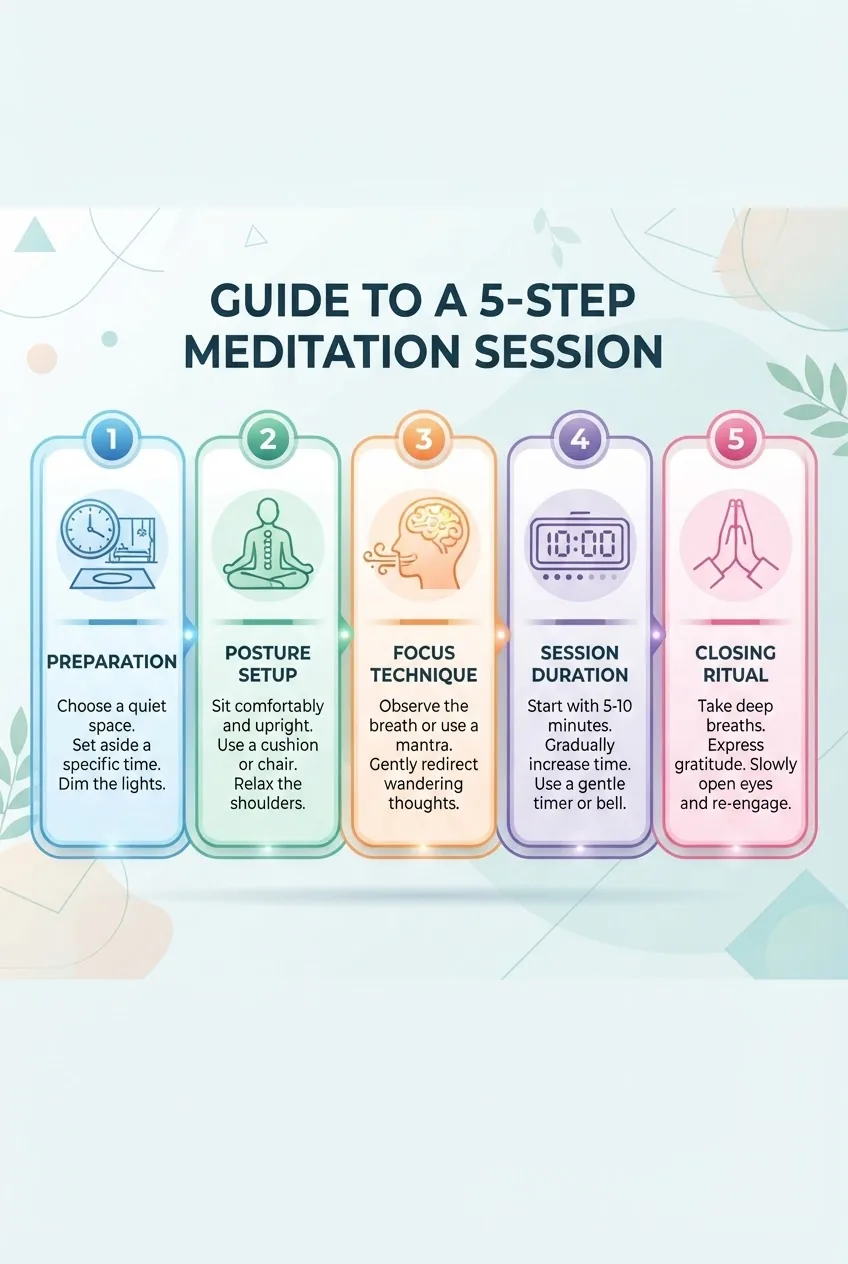
- Preparation — 2 minutes: arrange your space, set timer for total session +30 seconds, mute devices, take one drink of water if needed.
- Posture Setup — 1–2 minutes: sit on a cushion or chair, feet grounded, spine vertical. Hands rest in lap or knees. Check shoulders, jaw and tongue for release.
- Focus Technique — main time block: choose your anchor (breath, mantra, body scan, open awareness). For a 20-minute session, allocate 15 minutes to anchor and 3 minutes for gentle re-anchoring if distracted.
- Session Duration management: for 10-minute sessions: 1 min prep, 8 min main practice, 1 min closing. For 20-minute sessions: 2 min prep, 16 min main, 2 min closing. For 30 minutes: 3 / 24 / 3 minutes respectively.
- Closing Ritual — 1–3 minutes: slowly widen attention, perform 3 grounding breaths, set a one-line intention for the next 30 minutes (e.g., “I will pause and breathe before responding”), then open eyes and stand mindfully.
Session tip: if you use music or bells, use the same closing bell consistently to create a conditioned cue for transition. A short closing ritual enhances transfer of calm into daily life.
Transition: Below are practitioner-observed mistakes and how I fix them with students.
Common mistakes and how to avoid them
I often see beginners expect immediate calm; I tell them to treat meditation like training a muscle — you’ll notice increased endurance over weeks, not instant perfection. I also see people forcing silence; instead, I coach noticing and returning. When students sit too long and develop back pain, I instruct upright chair practice and 10–minute increments to build tolerance.
Other mistakes I observe: attempting complex visualisations before mastering breath anchors (fix: return to breath for two weeks), and skipping journaling which reduces behaviour change (fix: record one sentence after each session).
Checklist: Verify your meditation session
- Space set, phone on Do Not Disturb
- Timer configured for total session length +30s
- Posture stable: spine vertical, feet or cushion support
- Anchor chosen (breath/mantra/body scan/open awareness)
- Recorded session notes: duration, distractions count, one takeaway
- Closing ritual executed: 3 breaths + intention
When to call in a professional
Seek a mental health professional if meditation triggers severe or worsening anxiety, panic attacks, dissociation or traumatic memories. If persistent physical pain prevents posture adjustments, consult physiotherapy or medical advice. If you want structured progression, consider a certified MBSR teacher or psychotherapy that integrates mindfulness.
Transition: Finish with encouragement and options to combine practices for sustained wellbeing.
Conclusion and Encouragement for Consistent Practice
By practicing the techniques and session structure above you’ll build attention, lower everyday stress and develop a practical toolkit for emotional regulation. Start with short, consistent sessions and track progress for 2–8 weeks; improvements in focus and calm commonly appear within this window. To complement meditation, consider a movement practice — try the 30-day yoga challenge for stress reduction or explore yoga for anxiety relief to create a resilient routine.
Final encouragement: aim for consistency over intensity. If you need short resets during the day, use guided micro-sessions; see the quick resources linked earlier for 2- and 3-minute practices.
Action now: pick one technique above and schedule three 10-minute sessions this week. Track them in a single notebook and review after seven days.
Transition: The FAQ below answers common how-to questions and practical concerns in concise, actionable language.