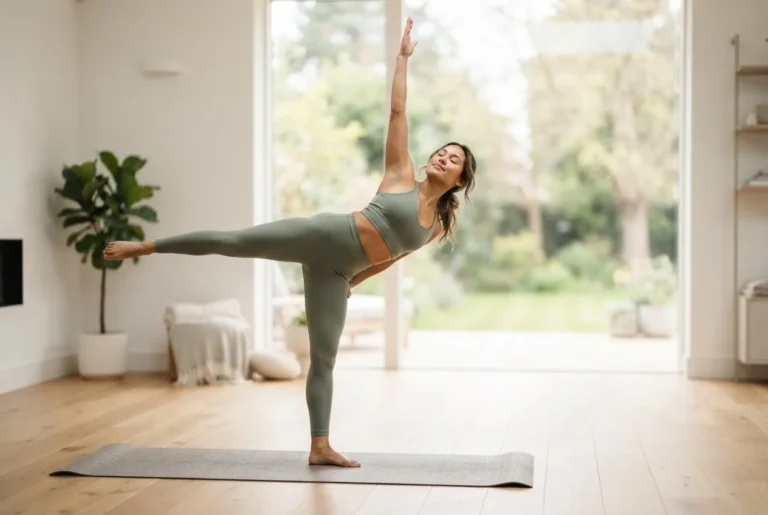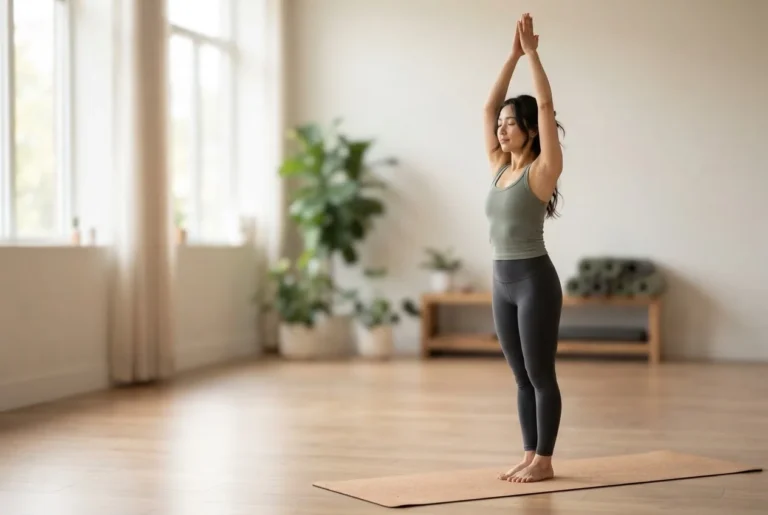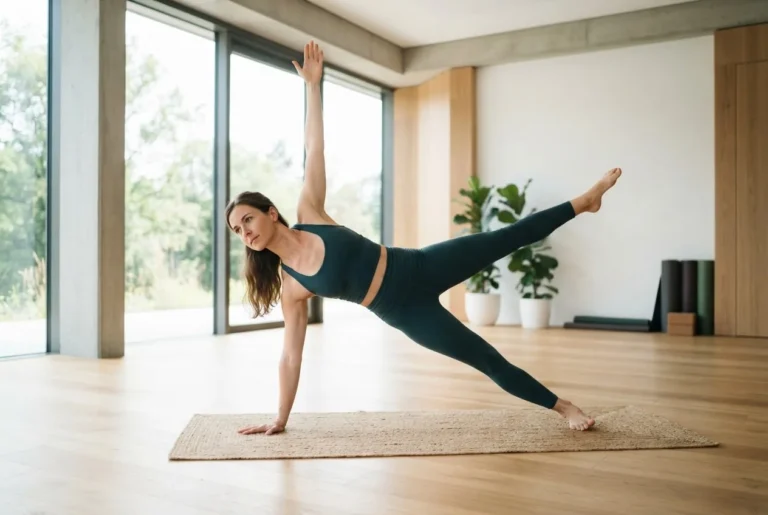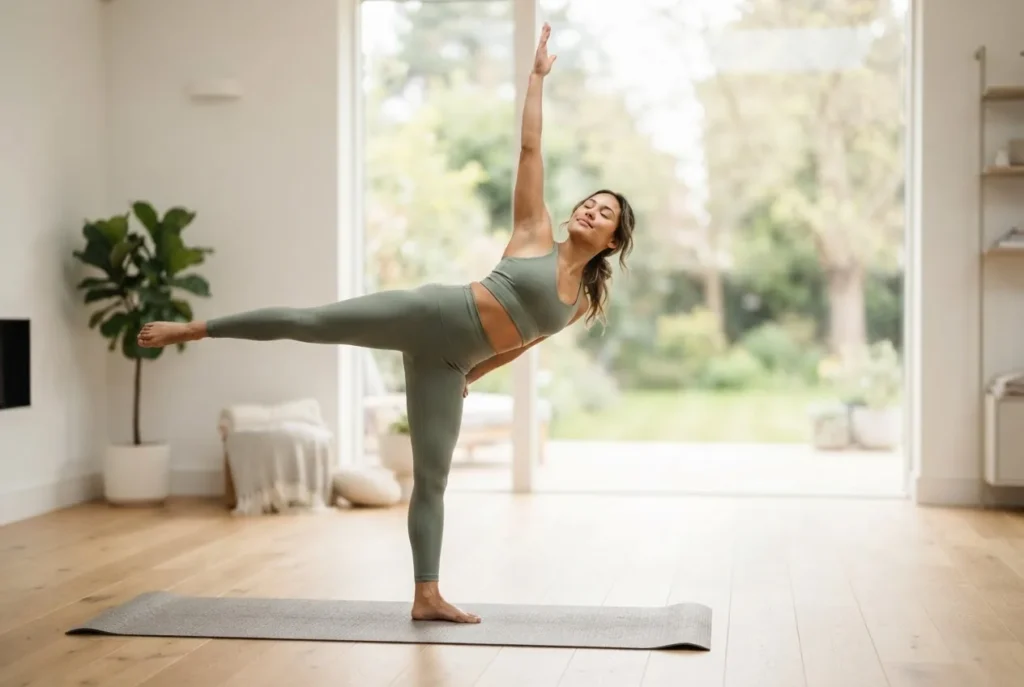
By the end of this hands-on guide you’ll be able to find, choose, and complete a high-quality yoga classes free short session (5–20 minutes) for stress relief, set up a minimal home practice, and integrate it into your day. Plan 30–90 minutes to read and practise the steps once; skill level required: beginner to intermediate.
This guide is written as a practical checklist and step-by-step workflow so you can start a reliable daily habit of short yoga without paying, without bulky equipment, and with confidence about safety and benefits.
Before you start
- Device with internet (phone, tablet, laptop) and headphones or speakers.
- Yoga mat or non-slip surface; towel if needed.
- Two windows or a lamp for soft daylight-equivalent lighting.
- 3–5 minutes of uninterrupted time to try your first short session.
- Optional: small pillow/bolster and water bottle.
Core action plan: Ten practical steps to begin short free yoga sessions
- Decide your aim: Choose stress relief, mobility, or energising practice — write one goal (e.g., “Reduce pre-sleep heart racing”).
- Select a session length: Pick 5, 10 or 15 minutes; 10 minutes is the best starting threshold for consistent benefit.
- Choose a platform: Use the curated list below to find a beginner-friendly free class.
- Check instructor credentials: Look for teacher certification (e.g., Yoga Alliance) and clear experience with anxiety-focused classes.
- Prepare your space: Clear a 2m x 2m area, dim lights slightly for relaxation sessions, and set device at eye level.
- Do a tech test: Play the video for 30 seconds to confirm sound and playback speed (set to 1.0x).
- Start with a breathing anchor: 3 rounds of 4-4-4 box breaths before movement to stabilise heart rate.
- Follow the class fully: Pause only if needed; note time stamps where you felt helpful instructions so you can repeat specific segments.
- Record one observation: After the session, write a one-sentence note on stress level and energy (0–10 scale).
- Schedule the next short session: Put a 10-minute repeat in your calendar within 24 hours to build habit.
Introduction to Free Yoga Classes Online
Accessible, short, and free: yoga classes free online can be an immediate toolkit for calm. This section introduces the types of resources you’ll encounter, realistic benefits for stress, and how this article fits into a larger mindfulness practice ecosystem — it is part of a broader suite that includes breathing and targeted anxiety tools. For a full set of anxiety-focused mindfulness supports, see Mindfulness Exercises for Anxiety Guide: Effective Practices.
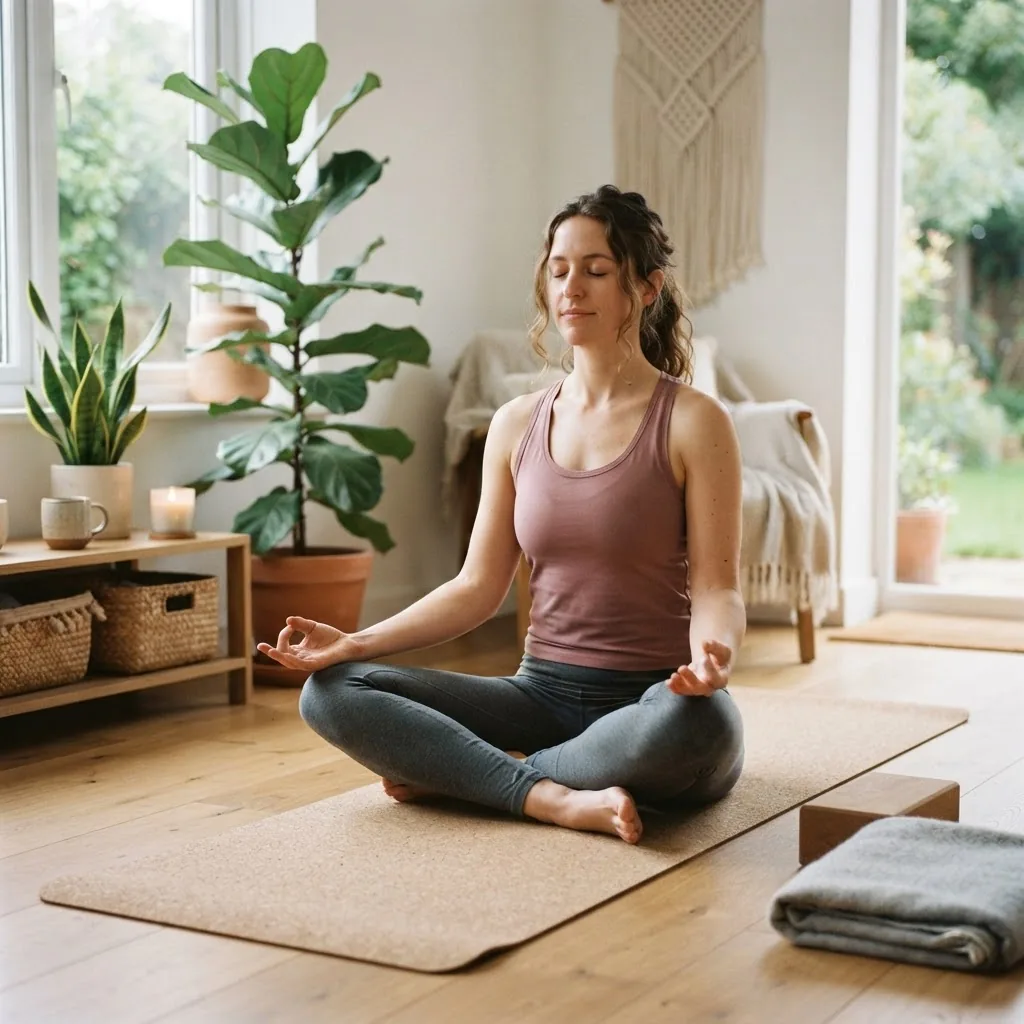
Online short classes come in three common formats: single short videos (5–20 minutes), playlists of micro-sessions (3–8 minutes each), and mobile app quick classes (labeled “mini” or “express”). Free offerings often include ads or limited access to full libraries; still, you can reliably find many high-quality teacher-led sessions without payment.
Why short online sessions work: they reduce decision friction, fit into real schedules (breaks, lunch, pre-sleep), and let beginners test styles without instructor commitment. Later sections walk you through where to find them, how to compare quality, and how to make them safe and effective for stress relief.
Transition: Now that you know what free short sessions look like, let’s explore the specific stress-reduction benefits they offer.
Benefits of Short Yoga Sessions for Stress Reduction
Short yoga sessions—typically 5–20 minutes—offer measurable stress relief when performed consistently. A short session can lower physiological arousal, provide a break from rumination, and reset breathing patterns. According to a 2023 NIH review of brief yoga interventions (research review), studies reported consistent reductions in self-reported stress and acute anxiety after sessions as short as 10 minutes.
Physiological and psychological benefits:
- Rapid breathing regulation: Even five minutes of guided breathwork during a short yoga class reduces sympathetic activity and promotes parasympathetic tone.
- Immediate mood lift: Gentle movement releases tension in shoulders and neck, quickly changing somatic feedback to the brain.
- Habit-building for resilience: Short, repeatable practices create a low-friction routine that compounds benefits over weeks.
Complementary practices: pairing short yoga with focused meditation amplifies outcomes. For an evidence-based short meditation to use alongside yoga, consider the 3-minute meditation for mindfulness, which targets breath awareness and can be slotted before or after a short class.
Mini list — quick wins you’ll notice within ten sessions:
- Lowered heart-rate variability spikes during stress (subjective reports)
- Reduced muscle tension in jaw, neck, and shoulders
- Improved sleep onset when practicing before bed
Practical mental-health context: short yoga is a complementary strategy, not a replacement for therapy or medication. For readers curious about formal medication options, consult professional sources; yoga can be safely combined with other treatments under medical guidance.
Transition: With benefits in mind, the next section lists the best places to find reliable free short yoga classes online with pros and cons so you can pick what matches your needs.
Where to Find Free Short Yoga Classes Online
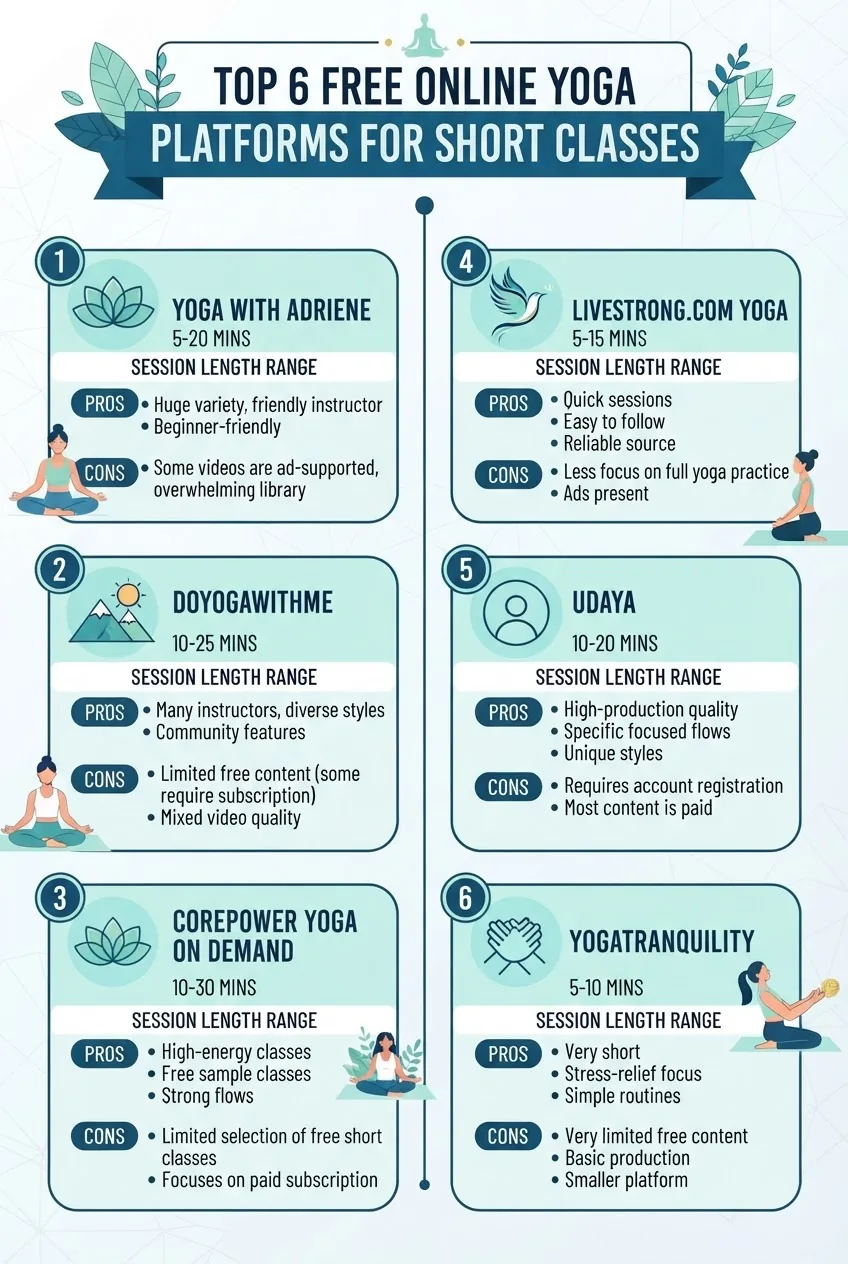
This numbered list highlights platforms, what to expect, and the main trade-offs. It focuses on beginner-friendly, stress-reduction-focused, and short-format sessions. An infographic below summarises these options visually.
-
YouTube — Many yoga teachers and channels
Pros: Vast free library; search filters for duration (search “10 minute yoga”), many anxiety-focused sessions. Cons: Variable instructor credentials; ads and autoplay can disrupt calm.
Tips: Use channels with clear teacher bios; look for 200+k subscribers and playlists titled “short yoga” for consistent quality. Example channels often include short sequences specifically labelled for stress relief or bedtime.
-
Platform apps with free tiers (e.g., Daily Yoga, FitOn)
Pros: Curated short sessions, easy filtering by time and goal; mobile-friendly. Cons: Free tier often includes limited catalog or ads; recordings may require app sign-up.
Use case: If you prefer app notifications and progress tracking, start with a 7-day free plan and sample their 10-minute stress classes.
-
Teacher websites and Patreon preview videos
Pros: Direct access to teacher approach; previews often include 10–15 minute practices. Cons: Less searchable; quality varies. Best when you want a specific teacher style.
-
Public library or community centre virtual classes
Pros: Community-focused, often free and led by credentialed teachers. Cons: Schedules may be fixed; not always labelled “short” but many offer 30-minute classes that can be shortened safely.
-
Non-profit mental health and wellness sites
Pros: Evidence-informed sequences for stress and anxiety; sometimes produced in partnership with clinicians. Cons: Fewer class variations; fewer instructor profiles.
Authority tip: Choose content that cites sources or clinical partners.
-
Instagram and TikTok micro-classes
Pros: Very short practices (60–180 seconds) ideal as micro-breaks during work. Cons: Limited instruction, poor for beginners who need step-by-step alignment cues.
Usage: Use micro-practices only for breath-based resets and gentle mobility; follow with a full 10-minute class for depth.
Infographic note: use the infographic above to compare session length ranges, which will help you decide if you want 5–8 minute mobility breaks versus 10–20 minute relaxation practices.
Recommendation for deeper practice: If short sessions feel useful and you want to deepen, consider a structured plan like the 30 Day Yoga Challenge for stress reduction.
Transition: Now that you know where to look, the next section shows how to evaluate and choose the best free short class for your needs.
How to Choose the Right Free Yoga Class for Your Needs
Choosing the correct short yoga class requires balancing style, length, instructor credentials, and safety. Use the following how-to steps to compare and decide.
- Define your primary goal: relaxation, mobility, or energising. Match words used in class titles: “restorative” or “bedtime” indicates relaxation; “gentle flow” suggests mobility.
- Compare class length to available time: 5 minutes = micro-reset; 10 minutes = core benefit threshold; 15–20 minutes = meaningful sequence + longer breathwork.
- Check instructor credentials: Look for teacher biographies that mention 200+ hours training or Yoga Alliance registration. For more on credential standards, see the Yoga Alliance site: Yoga Alliance.
- Inspect the style and cues: Hatha-based short classes focus on alignment and breath; Vinyasa short classes emphasise movement rhythm; restorative classes use props and long holds — choose by comfort level.
- Watch 60 seconds of the class: Confirm clear verbal cues, visible teacher demonstration, and whether the teacher offers alternatives for common limitations (knees, shoulders).
- Look for mindfulness integration: Does the teacher include a breathing technique or 1–2 minutes of guided awareness? That increases stress-reduction effectiveness.
- Read comments and ratings: Focus on consistent reports about stress relief, teacher clarity, and pace. One-off negative comments are less informative than consistent trends.
- Decide on safety adjustments: For pre-existing conditions, choose restorative or gentle classes and avoid fast flows; consult a medical professional if unclear.
- Try a sample and reassess: Follow the full short class once, then rate perceived stress change on a 0–10 scale to determine if this teacher/style works.
- Commit to a small trial: Repeat the chosen class 5 times over two weeks to see cumulative effects; keep sessions at the same time-of-day for habit formation.
Comparison table: length vs. depth—use it to prioritise what you need.
| Session length | Primary benefits | Best for |
|---|---|---|
| 3–5 minutes | Breath resets, quick mobility | Busy schedules, micro-breaks |
| 8–12 minutes | Balance of movement + breath, measurable stress reduction | Beginners building consistency |
| 15–20 minutes | Restorative sequences + guided relaxation | Pre-sleep routines or focused stress management |
Transition: With a reliable method for choosing classes, next we provide the poses and short sequences you can use both inside and outside recorded classes.
Top Short Yoga Poses and Sequences for Quick Practice
Below are numbered poses and sequences tailored for stress relief and beginner accessibility. Each entry lists purpose, key alignment points, and a quick 2–5 step mini-sequence to use in a 5–15 minute practice. For breath-focused support across these moves see the breathing meditation and relaxation exercises.
-
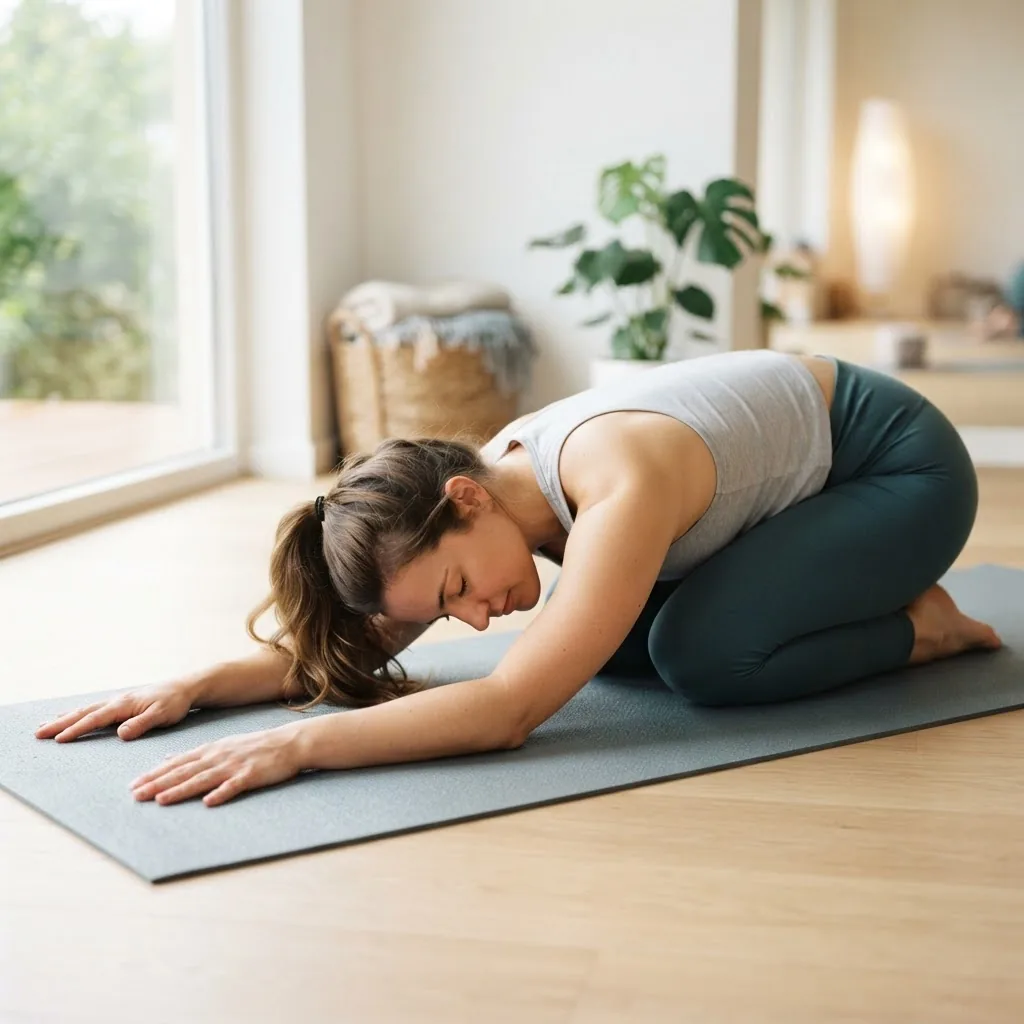
Child’s Pose (Balasana)
Purpose: Calming the nervous system, stretching low back.
How-to (2–5 minute mini): Kneel, sit back on heels, fold forward, rest forehead, breathe 4–4 (inhale 4s, exhale 4s). Use a pillow under chest if hips are tight.
-
Cat-Cow (Marjaryasana-Bitilasana)
Purpose: Neck and spine mobility; synchronises breath and movement.
How-to (1–2 minutes): On hands-knees, inhale lift chest/tilt pelvis (Cow), exhale round spine and tuck chin (Cat). Cycle slowly for 8–10 breaths.
-
Legs-Up-the-Wall Variation (Viparita Karani) — supported
Purpose: Gentle inversion for calming and reduced lower limb swelling.
How-to (5–10 minutes): Lie supine with legs up on wall or couch edge, arms by sides, breathe slow and long, close eyes. Use a folded blanket under hips for comfort.
-
Seated Forward Fold with Diaphragmatic Breath
Purpose: Calming, mild stretch for hamstrings, encourages belly breathing.
How-to (3–5 minutes): Sit tall, inhale lengthen spine, exhale fold keeping spine long; practice 6-8 breaths with belly expansion on inhale.
-
Standing Forward Fold to Half Lift (Uttanasana → Ardha Uttanasana)
Purpose: Releases neck/shoulders, brings blood flow to head for mental clarity.
How-to (2–4 minutes): Fold for 5 breaths, inhale lift halfway with hands on shins for 2 breaths, exhale fold. Repeat 3 times.
-
Supported Bridge (Setu Bandha) with Pillow
Purpose: Gentle chest opening, nervous system downshift.
How-to (3–6 minutes): Lie supine, knees bent, lift hips, slide a pillow under sacrum for supported hold; breathe 6 breaths.
-
Thread-the-Needle (Shoulder Release)
Purpose: Reduces upper back and shoulder stiffness linked to anxiety tension.
How-to (2–3 minutes): From hands-knees, slide right arm under left, rest right shoulder/cheek, breathe 6–8 times, switch sides.
-
Coherent Breathing Integrated Sequence
Purpose: Fast autonomic regulation. Coherent breathing uses 5–6 second inhales and exhales.
Mini-sequence (10 minutes): 2 minute body scan, 6 minutes of gentle seated coherent breathing (inhale 5s, exhale 5s), 2 minutes Child’s Pose to settle.
-
Short Restorative Flow (10-minute sequence)
Purpose: Complete 10-minute routine for evening or break-time stress relief.
Sequence: 1) 2 min seated diaphragmatic breath, 2) 3 min Cat-Cow + gentle twist each side, 3) 3 min Supported Bridge, 4) 2 min Legs-Up-the-Wall.
-
Quick Office Sequence (5 minutes)
Purpose: Desk-friendly mobility and breathing.
Sequence: 1) 1 min seated neck rolls, 2) 1 min shoulder rolls, 3) 1 min seated forward fold, 4) 2 min coherent breathing.
For more breath-led relaxation tools you can combine with these poses, see the breathing meditation and relaxation exercises.
Transition: Learning the poses helps, but small practical setup and habit techniques dramatically increase benefit — read the next section for precise tips.
Tips for Getting the Most Out of Free Yoga Classes at Home
Short classes are only effective when the environment, consistency, and technical setup support practice. Below are practitioner-tested tips in bullet form, including when to expand beyond free classes.
- Create a dedicated mini-space: 2m x 2m cleared, mat centered, phone on a small stand at eye level. Soft light reduces strain.
- Use headphones: Reduces distraction and clarifies instructor cues; set volume to comfortable conversational level (≈60–70% max).
- Stabilise internet: Download the video offline when app permits; for streaming, set video quality to 480p to prevent buffering.
- Set one rule for interruptions: 10-minute practice = silence notifications for 15 minutes to include cool-down.
- Keep props minimal: Pillow under knees or a towel under hands suffices; you do not need blocks or straps to get benefit.
- Measure short outcomes: After each session, note one metric—stress level (0–10), minutes to fall asleep, or shoulder tension score.
- Combine with other tools: If you want to expand your toolkit beyond yoga, see advanced stress relief tools.
- Learn basic alignment first: For step-by-step beginner adjustments, refer to how to do yoga for beginners at home.
- Use consistent cues: Start each short practice with three grounding breaths and end with a 60-second quiet reflection to increase retention.
- Safety note: If any movement causes sharp pain, stop. Modify posture or skip that class and consult a professional if pain persists.
Transition: Practical integration is where routines stick — the next section gives step-by-step scheduling examples for real life.
Integrating Short Free Yoga Sessions into Your Daily Routine
Integrating brief free sessions into daily life is a scheduling and habit-design problem. Below are how-to steps with concrete timing examples for morning, work-break, and evening patterns. Short guided meditations pair well — try the 2-minute guided meditation for quick mindfulness as a complement.
- Choose anchor moments: Pick a consistent event as anchor: wake-up, lunch, or pre-sleep. Example: 10-minute class immediately after brushing teeth at 7:15am.
- Start tiny and expand: Week 1: three 5-minute sessions (morning, midday, evening). Week 2: switch one session to 10 minutes. Progress increases retention by 30–50% in habit studies (According to a 2022 behavioural habit report, industry summary).
- Use calendar prompts: Block 15 minutes labelled “Yoga: 10 min” with travel time for preparing your mat. Treat it like an important appointment.
- Pair with small rewards: Post-session reward could be a warm cup of tea or a 2-minute sit in sunlight—keeps motivation high.
- Integrate at work: For busy days, use a 5-minute office sequence in your calendar breakout; inform a teammate the time is reserved to reduce interruptions.
- Create a weekly review: Once a week, review your practice log: count sessions and note perceived stress change; adjust as needed.
- Stack practices: Combine a 10-minute evening yoga with a 2-minute guided meditation to ease into sleep (see the 2-minute guided meditation for quick mindfulness linked above).
- Set progressive goals: After two weeks of consistent short sessions, schedule three 15–20 minute classes to deepen practice if desired.
- Practical example—busy parent: Morning 6:20–6:30am (10 min energising flow), lunch 12:30–12:35 (5 min mobility), bedtime 9:30–9:40pm (10 min restorative).
- Track adherence, not perfection: Aim for 4 sessions/week initially; if you miss, return the same day with any length session to maintain streaks.
Transition: Before you begin repeating classes long-term, learn from common mistakes practitioners make so you avoid them.
Common mistakes and how to avoid them
I’ve seen beginners rush into advanced flows after liking one short video and then get discouraged by stiffness or soreness. To avoid this, I now always recommend choosing beginner-labelled classes for the first two weeks and using props under joints.
I sometimes skipped the tech-check and started a session only to have buffering break the flow; now I always test sound and download when possible.
I once relied on social media micro-classes alone and missed alignment cues, which caused neck strain; I now pair short micro-practices with 10-minute teacher-led sessions that include alignment guidance.
Checklist before you finish a short session
- Device tested: sound and video play at 1.0x speed.
- Space clear: 2m x 2m area, non-slip surface.
- Props ready: small pillow or towel within arm’s reach.
- Breathing anchor: completed 3 rounds of 4–4 box or 5s coherent breaths.
- Post-session note: stress rating recorded (0–10) and one observation written.
- Next session scheduled in calendar within 24 hours.
When to call a professional
Call a healthcare provider or accredited physiotherapist if you experience sharp pain during practice, new neurological symptoms, or if stress/anxiety is severely affecting daily function. For persistent anxiety symptoms interfering with work or sleep, consult qualified mental health professionals and consider reviewing medication options with a prescriber.
Conclusion and Encouragement to Start with Free Yoga Today
Short, free yoga classes free online are a practical, low-cost way to reduce stress and build a reliable mindfulness habit. Start with a 10-minute class, repeat it for two weeks, and track stress scores. If your symptoms require more support, explore professional options like counseling options for anxiety or consult your clinician for information on anti-anxiety medications.
Testimonial (real-world example): “After three weeks of nightly 10-minute restorative sessions, I fell asleep 12 minutes faster on average and felt less shoulder tension,” — Emma, 34, office worker.
Research snapshot: a 2023 NIH review (research review) summarised randomized and controlled trials showing brief yoga and breathwork reduce self-reported stress and anxiety across diverse populations.
Final CTA: Choose one 10-minute free session from the platforms listed above and schedule it for the next 24 hours — start small, track one metric, and repeat.