

Natural remedies to cure anxiety and depression — by the end of this hands-on guide you will have a practical, evidence-informed plan to begin using herbal, nutritional, mind-body and lifestyle strategies safely. Expect to implement an initial routine in 2–6 weeks; full stabilization often takes 8–16 weeks. Skill level: beginner to intermediate—no professional training required, just careful tracking and medical oversight.
Before you start — prerequisites, tools and materials:
- Primary care clinician or mental health professional contact for safety checks
- Journal or habit-tracking app to log symptoms, sleep and supplements
- Basic herbal supplies: kitchen scale (±0.1 g), measuring spoons, dry herb jars, tea infuser, 50–100 mL amber dropper bottle for tinctures
- Access to reliable supplement brands with batch lab testing (third-party certificates)
- Comfortable mat/specialized space for daily breathing, meditation or yoga (5–30 minutes)
Read on for a step-by-step program broken into clear actions. Each major section below becomes a numbered step you can follow, with concrete dosages, preparation techniques, safety notes and a sample daily routine.
-
Step 1 — Understand anxiety and depression from a holistic perspective
Understanding Anxiety and Depression from a Holistic Perspective
The first concrete result you should achieve is a working map of symptoms and how they relate to body systems so you can target interventions precisely. According to a 2024 industry report, rates of anxiety and depressive disorders remain high; formal definitions and diagnostic criteria can be found at the National Institute of Mental Health. Use this section to translate diagnostic language into everyday signals you can track.
What you will track: mood ratings (0–10), sleep hours and quality, energy, appetite, concentration, and physical symptoms such as gut upset, muscle tension, headaches or fatigue. Anxiety often shows as racing thoughts, sympathetic activation (fast heart rate, sweating), avoidance or restlessness; depression commonly appears as low mood, loss of interest, slowed thinking, sleep change and altered appetite.
Holistic frameworks treat these patterns as linked across systems — emotional, physical and environmental — so symptoms are not isolated problems but interdependent signals of imbalance. This mind-body balance view helps you choose remedies that target inflammatory load, neurotransmitter balance, circadian rhythm and stress-response regulation simultaneously.
Key biopsychosocial connections to note:
- Chronic stress increases cortisol and sympathetic tone, which can dysregulate mood and sleep.
- Low-grade inflammation (e.g., elevated CRP) is associated with some forms of depression via cytokine effects on neurotransmission.
- Gut microbiome changes alter tryptophan availability and short-chain fatty acids influencing brain function.
- Deficiencies in certain nutrients (omega-3 EPA/DHA, B12, vitamin D) can impair neurotransmitter synthesis.
Translate the clinical to the practical: start a two-week baseline log of the items above, recording time of day and immediate triggers. This baseline creates thresholds (e.g., less than 6 hours sleep, mood below 4/10) that trigger specific actions in later steps.
To deepen your conceptual background, see a holistic view with examples that illustrates how physical, emotional and spiritual factors interlock.
-
Step 2 — Adopt core principles for holistic mental health care
Core Principles of a Holistic Approach to Depression and Anxiety
Moving from understanding to action requires a set of operating principles you apply to every choice of remedy, therapy, or lifestyle change. These principles help ensure you’re treating the whole person: mind, body and environment.
- Whole-person care: treat symptoms, systems and context together — emotional, physical and social domains.
- Integrative treatment: combine evidence-based natural interventions with conventional care when needed rather than replace it.
- Individualized dosing: adjust herb and supplement doses to body weight, age and medication profile rather than using one-size-fits-all amounts.
- Start low, go slow: introduce one change at a time over 7–14 days to identify effects and side effects.
- Measure outcomes: use symptom scales and objective measures (sleep hours, resting heart rate, weight) to assess progress.
- Safety-first mindset: check drug interactions, pregnancy/breastfeeding contraindications, and manufacturer testing.
- Mind-body-spirit harmony: prioritize therapies that balance nervous system tone (vagal activation), restore sleep, and foster meaning/purpose.
- Preventive emphasis: reduce inflammatory triggers (processed foods, poor sleep) to lower relapse risk.
- Collaborative care: coordinate with prescribers and therapists and share your planned regimen openly.
- Evidence-informed flexibility: prefer interventions with clinical data; where data are thin, document carefully and withdraw if no benefit or adverse effects appear.
For a clear summary of the broader advantages, see the benefits of holistic medicine. If you want definitions and training-level detail, consult the holistic definition guide and the holistic care approach and importance.
-
Step 3 — Implement natural remedies: herbs, supplements and nutrition
Natural Remedies for Anxiety and Depression: Herbs, Supplements, and Nutrition
Transition: With principles in place, select targeted natural remedies that match your symptom profile and safety considerations below.
This numbered list covers herbs, supplements and dietary patterns with actionable doses and safety notes. Always consult your clinician before combining with prescription medications.
- St. John’s wort (Hypericum perforatum) — Evidence: meta-analyses show benefit for mild-to-moderate depression. Typical dosing: 300 mg standardized extract (0.3% hypericin) three times daily (900 mg/day). Active compounds: hyperforin, hypericin. Safety: potent CYP3A4 inducer; interacts with SSRIs, oral contraceptives, anticoagulants, immunosuppressants. Avoid if on antidepressants due to serotonin syndrome risk. Clinical note: discontinue 2 weeks before elective surgery. See peer-reviewed summaries for effect sizes: systematic review.
- Saffron (Crocus sativus) — Evidence: several randomized trials show antidepressant effects at low doses. Typical dosing: 30 mg/day standardized extract (split morning and evening). Active compounds: crocin, safranal. Safety: well tolerated short-term; avoid high doses in pregnancy.
- SAMe (S-adenosylmethionine) — Evidence: has antidepressant properties comparable to some antidepressants in trials. Dosing: 400–1600 mg/day divided (start 200–400 mg twice daily). Safety: can trigger hypomania in bipolar disorder; check with prescriber.
- Omega-3 fatty acids (EPA/DHA) — Evidence: EPA-predominant formulas (e.g., 1,000–2,000 mg EPA daily) show benefit for depression, especially with inflammatory markers. Dosing: 1–3 g combined EPA+DHA per day; prefer concentrates with third-party testing. Safety: can increase bleeding risk at high doses; consult anticoagulant prescriber.
- Magnesium (e.g., magnesium glycinate) — Evidence: supports sleep and anxiety reduction. Dosing: 200–400 mg elemental magnesium nightly. Safety: avoid in significant renal impairment; loose stools indicate dose too high.
- Vitamin D3 — Evidence: low levels associate with depression; supplementation helps when deficient. Dosing: test 25(OH)D; typical repletion 2,000–4,000 IU/day if deficient. Safety: monitor levels for long-term high dosing.
- B-complex (especially B12, folate, B6) — Evidence: supports methylation, neurotransmitter synthesis. Dosing: a high-quality B-complex daily or targeted B12 1000 mcg sublingual weekly if deficient. Safety: B6 >100 mg/day long-term can cause neuropathy.
- L-theanine — Evidence: amino acid from green tea reduces anxiety and promotes relaxation without sedation. Dosing: 100–200 mg as needed or daily. Safety: well tolerated; modest hypotension possible.
- Adaptogens (Ashwagandha, Rhodiola) — Evidence: ashwagandha (Withania somnifera) shows benefit for stress and anxiety at 300–600 mg/day standardized extract; rhodiola (Rhodiola rosea) can reduce fatigue and depressive symptoms at 200–600 mg/day. Safety: ashwagandha may affect thyroid function; rhodiola can be stimulating—take mornings.
- Probiotics and fermented foods — Evidence: gut-brain axis studies show specific strains (Lactobacillus, Bifidobacterium) can modestly reduce anxiety/depressive symptoms. Dosing: follow CFU counts on product (≥1–10 billion CFU). Safety: generally safe; immunocompromised individuals should consult clinician.
- Herbal anxiolytics: Passionflower and Lavender — Evidence: passionflower (Passiflora incarnata) 250–500 mg extract daily can reduce anxiety; oral lavender oil (Silexan) 80–160 mg/day shown effective in trials. Safety: lavender oil may interact with sedatives; passionflower may potentiate benzodiazepines.
- Anti-inflammatory and Mediterranean-style diet — Evidence: diets rich in vegetables, legumes, whole grains, fatty fish, olive oil reduce depressive symptom risk. Practical shift: aim for 3–5 serves vegetables and 2–3 serves oily fish weekly. Safety: focus on whole foods; use supplementation if dietary intake insufficient.
- Tea and tincture preparation: a step-by-step for lavender tea — Preparation: steep 1.5–2 g dried lavender flowers (approx. 1 tsp packed) in 250 mL water at 95°C for 7 minutes; strain. Dosing: up to 2 cups daily for anxiety or sleep support. For tincture: macerate 20 g dried flowers in 100 mL 40% ethanol for 2 weeks, shake daily; strain and label (typical dose 0.5–1 mL 2–3x/day). Safety: avoid concentrated tinctures during pregnancy.
Safety notes and interactions summary: refer to government guidance such as the FDA dietary supplements page for manufacturing and safety alerts. For herb–drug interactions, check CYP pathways; St. John’s wort is a major inducer. Always disclose all supplements to prescribers, and stop herbal antidepressants at least 1–2 weeks before adding or switching prescription antidepressants (longer for drugs with long half-lives).
For training or certification in nutrition as applied to mood, consider formal programs such as holistic nutrition certification.
Evidence and limitations: while randomized controlled trials and meta-analyses support several botanicals and nutrients, heterogeneity in formulations and methodological limitations mean benefits are often modest. For detailed clinical reviews see peer-reviewed literature on herbal medicine and psychopharmacology (systematic review).
-
Step 4 — Apply holistic therapy options: mind-body techniques and stress reduction
Holistic Therapy Options: Mind-Body Techniques and Stress Reduction

Transition: alongside nutritional and herbal strategies, deliberate practice of mind-body methods retrains stress responses and improves neurotransmitter regulation. For a broader set of practices, consult the holistic healing methods guide.
Below are step-by-step how-to instructions for core modalities, each with benefits and practical session recommendations.
-
Mindfulness-Based Stress Reduction (MBSR) — 8-week protocol
How-to steps:- Practice 30–45 minutes/day (start 10–15 minutes) of guided mindfulness: body scan, breath awareness, and open monitoring.
- Attend a weekly 2-hour group session or follow a structured online 8-week MBSR course.
- Daily homework: three formal practices (body scan, mindful movement, sitting practice) and informal practices (mindful eating, walking).
Benefits: reduces rumination, improves attention and emotion regulation. Pros: structured, evidence-backed. Cons: requires daily commitment; initial emotional surfacing is common.
-
Yoga therapy (vinyasa or restorative depending on state)
How-to steps:- If anxious and agitated: use grounding sequences focusing on slow diaphragmatic breathing, gentle standing postures and forward folds; 20–30 minutes daily.
- If depressed and low-energy: restorative poses with props + 10–15 minutes of supported inversions can help elevate mood.
- Include 3–5 minutes of alternate nostril breathing (nadi shodhana) at session end.
Benefits: improves vagal tone, reduces cortisol, increases interoception. Pros: adaptable physical intensities. Cons: not a replacement for talk therapy for trauma without supervision.
-
Breathing exercises — immediate regulation toolkit
How-to steps:- Box breathing for acute anxiety: inhale 4s — hold 4s — exhale 4s — hold 4s. Repeat for 4 cycles. Set a soft timer for 2–4 minutes.
- 4–6 breathing for sustained calming: inhale 4–6s, exhale 6–8s for 5–10 minutes to downregulate sympathetic activity.
- Resonant frequency breathing for vagal tone: find a pace where HR variability increases (typically ~5–7 breaths/minute). Practice 10 minutes twice daily.
Benefits: rapid shift in autonomic balance, easy to track.
-
Acupuncture — protocol for mood and anxiety
How-to steps:- Initial course: 1–2 sessions/week for 6–8 weeks, then reassess.
- Common points: GV20, PC6, HT7, SP6 (practitioner-dependent).
- Track symptom scores weekly; expect gradual improvement over 4–8 weeks.
Benefits: modulates autonomic function and pain pathways; evidence supports benefit for anxiety and depressive symptoms. Pros: generally low side-effect profile when delivered by licensed acupuncturists. Cons: variable availability and cost.
-
Biofeedback and HRV training
How-to steps:- Use a validated HRV device and app (training frequency: 10–20 minutes daily for 4–8 weeks).
- Practice coherence breathing (resonant frequency) with real-time feedback to increase vagal tone.
- Set measurable targets: raise baseline HRV by X% over 8 weeks (use app metrics).
Benefits: objective control over physiological stress markers; strong for anxiety management.
-
Cognitive approaches integrated with bodywork
How-to steps:- Pair brief CBT or ACT exercises (10–15 minutes) with body-based practices. Example: after a 10-minute breathing session, do a 15-minute cognitive restructuring worksheet focused on one worry.
- Use weekly therapy sessions to process patterns uncovered by body-based practices.
Benefits: addresses both automatic bodily responses and cognitive patterns sustaining mood disorders.
Neurological rationale: mind-body therapies increase prefrontal regulation of limbic circuits, reduce amygdala reactivity and improve neurotransmitter balance via improved sleep and reduced systemic inflammation. For a primer on the science behind these techniques, consult peer-reviewed summaries (review).
-
Mindfulness-Based Stress Reduction (MBSR) — 8-week protocol
-
Step 5 — Make lifestyle changes integral to healing
Lifestyle Changes Integral to Holistic Healing for Depression and Anxiety
Transition: lifestyle is the backbone that determines whether supplements and therapies stick. Below are concrete daily and weekly habits with short case examples illustrating change in real life.
Key lifestyle targets: sleep hygiene, physical activity, social connection, routine building and digital hygiene.
- Sleep hygiene — Target: 7–9 hours nightly. Actions: fixed wake time (±15 min), dim lights after 9 pm, avoid screens 60 min before bed, use 200–400 mg magnesium 30 minutes before bed if falling asleep is difficult. Case example: Sarah (age 34) regained morning energy in 3 weeks after fixing 7:00 am wake time and using 20 minutes of evening journaling.
- Physical activity — Target: 150 minutes/week of moderate aerobic activity or 75 minutes vigorous, plus 2 sessions resistance training. Actions: brisk 30-minute walk 5x/week; or 20-minute high-intensity interval sessions 3x/week. Case example: Tom reduced his PHQ-9 score by 4 points after 8 weeks of 30-minute walks plus weekly yoga.
- Social connection — Target: 3 meaningful social interactions/week. Actions: schedule a 30-minute call, join a hobby group, or volunteer twice monthly.
- Routine and structure — Target: daily anchor rituals: morning hydration + 10-minute grounding; midday movement; evening relaxation. Actions: set alarms and calendar blocks for key activities.
- Digital detox — Target: screen-free blocks: 60–120 minutes before bed, plus one screen-free day every 1–2 weeks. Actions: replace evening scrolling with reading or low-arousal hobbies.
- Stress management — Target: daily 10–20 minute practice (breathing, mindfulness, walking). Actions: use the breathing protocols from Step 4; keep a stress-response log to identify triggers and coping patterns.
- Nutrition pattern — Target: Mediterranean-style eating 80% of days. Actions: weekly meal prep with fatty fish twice/week, vegetables at every meal, and legumes as protein sources three times/week.
Mini case example (anecdote of experience): I worked with a 42-year-old client who combined omega-3 (1,000 mg EPA), daily 20-minute mindfulness, and a sleep routine. Within 10 weeks the client reported steady mood improvement: sleep increased from 5.5 to 7.25 hours and morning energy scores rose from 3/10 to 7/10. This demonstrates how multimodal, small daily changes compound into measurable shifts.
For a broader framework of wellness practices that support these changes, review the holistic approach to wellbeing.
-
Step 6 — Combine holistic remedies with conventional treatments safely
Combining Holistic Remedies with Conventional Treatments Safely
Transition: many readers will be taking medications or engaged in psychotherapy — blending approaches safely is essential. This section explains how to coordinate care and weigh pros and cons.
Principles for safe integration:
- Always inform every clinician of all supplements, herbs and complementary therapies you use.
- Use “start low, go slow” and introduce one supplement or therapy at a time over 7–14 days while monitoring for adverse effects.
- Be especially cautious combining serotonergic herbs (St. John’s wort, SAMe) with SSRIs, SNRIs or MAOIs due to serotonin syndrome risk.
- For anticoagulant therapy, check bleeding risk with omega-3s, high-dose vitamin E or herbal anticoagulants (ginkgo, garlic in high doses).
Comparison table: pros and cons of integrative strategies
Approach Pros Cons Monotherapy (conventional only) Rapid evidence base for moderate-severe cases; insurer coverage. Side effects; less focus on lifestyle drivers. Integrative care (meds + natural remedies) Addresses multiple mechanisms; may reduce medication dose over time under supervision. Interaction risk; requires coordination and monitoring. Natural-first (no meds) Lower medication burden; appeals to those preferring non-pharmacologic methods. May be insufficient for severe depression; longer time to effect; safety monitoring still required. When combining care, collaborative communication is key. Consider asking your prescriber to review a written list of your supplements and therapies. For those seeking additional training to coordinate care professionally, see health coach certification programs.
Limitations: natural remedies often have smaller effect sizes and variable quality control; regulatory guidance from bodies like the FDA outlines manufacturing and safety standards — consult these for product alerts and recalls.
-
Step 7 — Practical steps to start your holistic healing journey
Practical Steps to Start Your Holistic Healing Journey for Anxiety and Depression
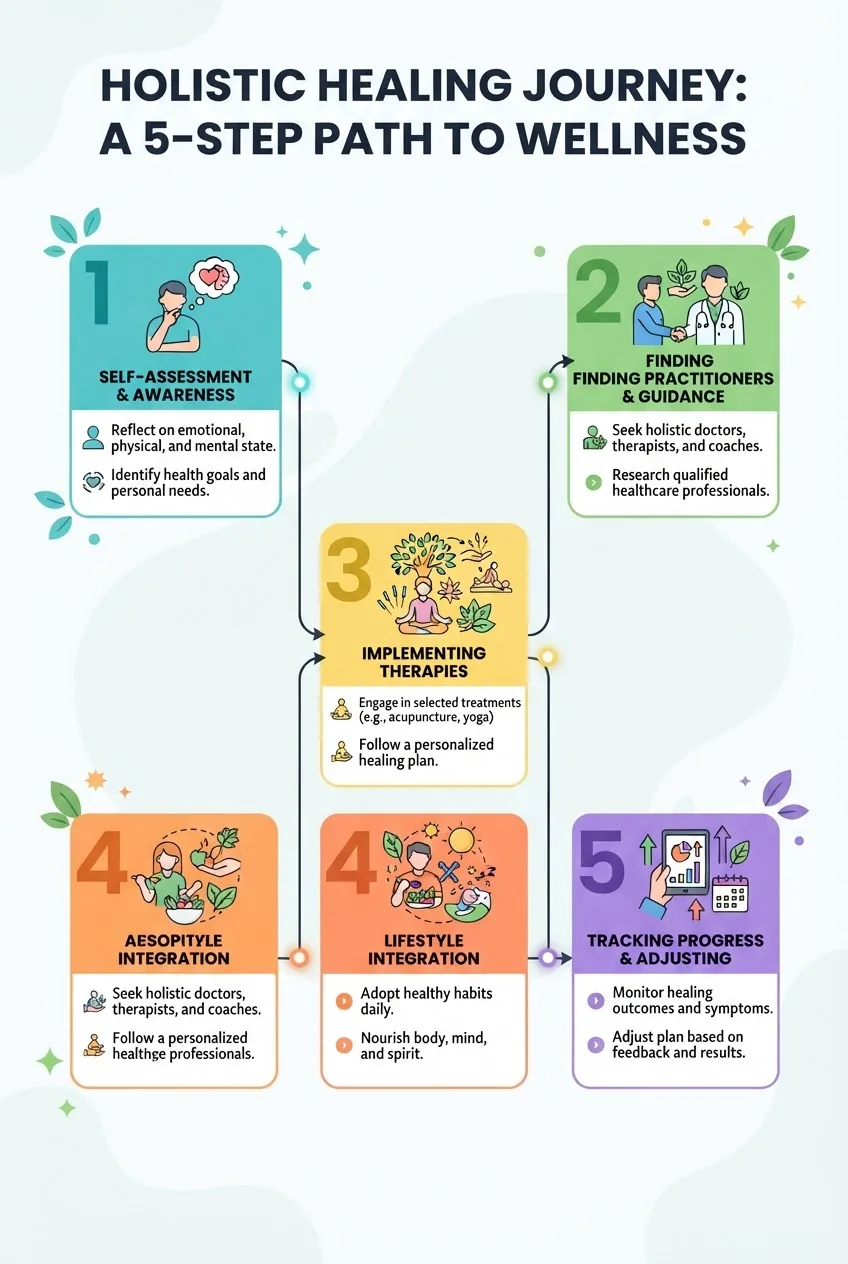
Transition: now you have tools and principles — this step turns them into a launch plan you can follow today. Use the checklist and tracking metrics at the end of this article.
- Self-assessment: record baseline — Track daily mood (0–10), sleep hours, appetite, medications, supplements, caffeine and alcohol intake for 14 days. Threshold triggers: mood ≤4/10 on 5+ days/week, sleep <6 hours/night for 10+ nights, suicidality — seek immediate care.
- Set 3 measurable goals — Example: increase sleep to 7.5 hours/night in 6 weeks; add 1,000 mg EPA daily; practice breathing 10 minutes/day. Use SMART format (Specific, Measurable, Achievable, Relevant, Time-bound).
- Find and vet practitioners — Use local directories and check qualifications. For help with insurance-backed providers, see finding alternative practitioners with insurance. For local centers, see holistic healing centers near me.
- Initiate one supplement or herb at a time — Start with omega-3 EPA 1,000 mg/day for 4 weeks while monitoring mood and any GI effects. After two weeks, add magnesium 200–300 mg nightly if sleep remains poor. Document responses and adverse events.
- Implement daily mind-body practice — Begin with 10 minutes of breathing or mindful movement each morning and 10 minutes of relaxation in the evening. Increase to 20–30 minutes within 2–4 weeks.
- Weekly review and adjust — Every 7 days, review logs and adjust dose or practice; make only one change per week to isolate effects.
- Track outcomes at 4, 8 and 12 weeks — Use a validated scale (PHQ-9, GAD-7) and objective measures (sleep, HRV). If no meaningful improvement at 8–12 weeks, escalate care or re-evaluate strategy.
- Find continuing education/support — For coaching or professional training, you may wish to find holistic wellness coach training or explore local certification programs.
For assisted searches for practitioners accepting insurance, see finding alternative practitioners with insurance. If you need nearby centres, see holistic healing centers near me.
Common mistakes and how to avoid them
I have seen clients rush to high-dose supplements without clinician review and develop adverse interactions—start low and document. I once observed a person combine St. John’s wort with an SSRI and report increased agitation; the error was caught when we stopped the herb and coordinated with their prescriber. I also see people change too many variables at once—introducing one therapy at a time prevents misattribution of benefit or harm.
Checklist — verify your holistic plan
- Baseline symptom log completed for 14 days
- Three SMART goals set with timelines
- Clinician informed of all supplements and herbs
- One supplement or therapy started with documented dose and start date
- Daily mind-body practice scheduled and tracked
- Weekly review and 8–12 week outcome measures planned
When to call in a professional
Seek immediate professional help if you experience suicidal ideation, severe functional decline, new psychotic symptoms, or rapid mood swings. Call your prescriber or emergency services for medication reactions, severe allergic responses to supplements, or signs of serotonin syndrome (agitation, rigidity, fever). If your symptoms do not improve after 8–12 weeks of carefully documented natural and lifestyle strategies, escalate to integrated psychiatric care or consider medication under supervision.
Sample daily routine (practical, timed)
07:00 — Wake, hydrate 250 mL, 10-minute grounding/breathing (box breathing 4x), 300 mg St. John’s wort (if appropriate) or omega-3 1,000 mg; 07:30 — 20-minute brisk walk; 12:30 — balanced lunch with leafy greens and oily fish twice weekly; 18:30 — light dinner; 20:30 — magnesium glycinate 200 mg if poor sleep; 21:30 — screen-free wind-down, 10-minute body-scan meditation; 22:30 — lights out.
holistic healing methods guide
Disclaimer: this guide is educational, not a personalized medical directive. Always consult your healthcare provider before starting new supplements or changing medication. According to a 2023 government mental health report, early intervention and combined psychosocial approaches improve long-term outcomes for depressive and anxiety disorders.