
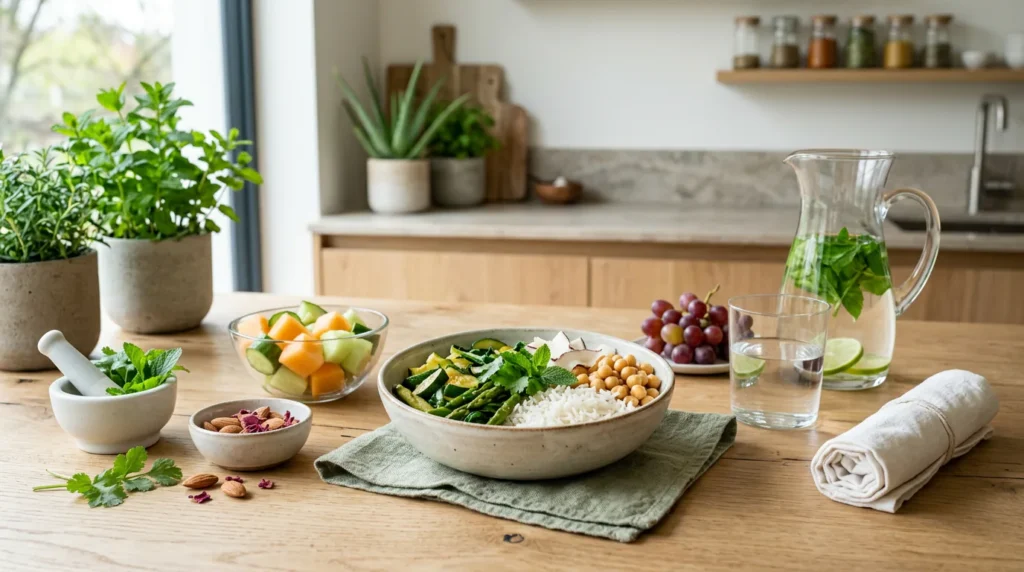
Pitta Ayurveda means managing the body’s inner fire so digestion, metabolism and emotional clarity run smoothly. This guide dives deep into what Pitta is, the foods that calm it, foods that aggravate it, and practical Australian-focused meal plans and seasonal tips to pacify Pitta naturally.
Introduction to Pitta Ayurveda
Pitta dosha is one of the three primary biological energies in classical Ayurveda. Originating in texts such as the Charaka Samhita (classical source), Pitta is the principle of heat, transformation and digestion. Where Vata moves and Kapha holds, Pitta transforms—governing appetite, digestion, body temperature and many enzymatic and metabolic processes.
Pitta typically combines the elements of fire and water. Physically, people with a dominant Pitta constitution often have a medium, muscular frame, warm skin, sharp digestion and a tendency to perspire easily. Mentally and emotionally, Pitta types are driven, focused, decisive, and can lean toward irritability, impatience or perfectionism when overstimulated.
Before tailoring a Pitta-focused regimen, many readers benefit from assessing their overall constitution. If you want a deeper review of the three primary constitutions and a formal self-assessment, see Ayurvedic body types.
This article concentrates solely on diet and lifestyle strategies to pacify Pitta—not an introduction to Ayurveda as a whole—so you gain a detailed, actionable toolkit focused on cooling, stabilising and supporting Pitta in daily life, with Australian seasonal and ingredient notes.
Transition: Next we’ll examine Pitta’s defining qualities and the common signs that your inner fire is out of balance.
Understanding the Pitta Dosha: Qualities, Traits, and Imbalances
Pitta dosha basics and balance are grounded in how heat and transformation operate in the body. In Ayurvedic theory, Pitta governs Agni (digestive fire), enzymes, metabolism and the intellect; when balanced, it yields clear digestion, good energy, sharp cognition and warm resilience. When out of balance, Pitta shows as excess heat, inflammation, irritability and digestive problems.
Below are Pitta characteristics and common signs of imbalance. These help you recognise when dietary adjustments are needed.
- Physical traits of balanced Pitta
- Warm body temperature, steady appetite, medium build
- Sharp digestion—regular hunger, strong elimination
- Clear, often reddish or warm-toned skin
- Good stamina for work and exercise
- Mental and emotional traits
- Focused, decisive, goal-oriented
- Strong memory and analytical capacity
- Tendency to be competitive, and when imbalanced—irritable or angry
- Signs of Pitta imbalance
- Acid reflux, heartburn, diarrhoea or loose stools
- Inflammatory skin conditions (rashes, acne), redness
- Excessive body heat, night sweats
- Mood shifts—irritability, impatience, critical thoughts
- Excessive hunger or loss of appetite during stress
Ayurveda frames digestion and metabolism under the concept of Agni—the metabolic fire. Pitta is the primary regulator of Agni; appropriate food, timing and qualities preserve it. If Agni is too strong (hypermetabolic), Pitta symptoms—burning sensations, loose stools—can appear; if too weak, undigested food accumulates producing toxins (ama) that further unbalance Pitta.
Classical texts such as Charaka and Sushruta describe Pitta’s influence on tissues and mind: the same inner heat that powers digestion also affects temperament and inflammation. Modern practitioners interpret this as a relationship between metabolic rate, inflammatory tone and stress reactivity (see external reviews linking Ayurvedic concepts to inflammation: relevant review).
Transition: With these traits and imbalance signals in mind, the following section sets out the core dietary principles for pacifying Pitta.
Core Principles of the Pitta Diet in Ayurveda
Balancing Pitta with diet relies on predictable, repeatable rules derived from classical Ayurveda and modern practitioner experience. Below are the principal guidelines—each includes context, rationale and pragmatic Australian adaptations.
- Prioritise cooling food qualities. Pitta is heat; cooling tastes and textures lower internal temperature and soothe Agni. Favour sweet, bitter and astringent tastes; minimise pungent, sour and salty tastes. Cooling is relative—in cooler months you may gently warm foods while preserving overall cooling qualities.
- Use temperature mindfully. In summer and warm climates favour room-temperature or cool foods and beverages (herbal iced teas, chilled fruits). In cooler months moderate warmth (warming but not fiery spices) helps digestion without stoking Pitta. Avoid extremes: very hot, spicy meals raise Pitta quickly; very cold, icy foods can blunt Agni.
- Balance Agni rather than extinguish it. The aim is steady digestion: avoid overeating, and time meals to maintain a predictable metabolic rhythm—breakfast and lunch as main meals, lighter dinner. Include easily digestible proteins and whole grains; avoid heavy, greasy meals that create sluggishness and then reactive heat.
- Choose tastes strategically. Ayurvedic taste theory (rasa) informs dosha balance: sweet, bitter and astringent tastes pacify Pitta; sour, salty and pungent tastes aggravate it. Practical application: choose mild dairy, sweet fruits, leafy greens, and cooling herbs rather than spicy condiments.
- Prefer fresh, seasonal and minimally processed foods. Pitta benefits from food with life-force (sattva): freshly prepared vegetables, seasonal fruits and whole grains. In Australia, use cool-season produce like pears, apples, lettuce, silverbeet (chard), green beans and cucumbers in warmer months; in cooler months, steamed greens with cooling spices work well.
- Hydrate with cooling, alkaline fluids. Sip water, coconut water, or mild herbal teas (mint, coriander, fennel). Avoid excessive caffeinated beverages and alcoholic drinks which increase internal heat and inflammation.
- Use spices judiciously. Mild spices like coriander, cilantro, fennel, turmeric and cardamom support digestion without overheating. Chili, black pepper, garlic and excessive mustard should be limited or used sparingly depending on season and symptoms.
- Prefer plant-forward proteins with light cooking methods. Legumes, mung dal, tofu and small amounts of fish or chicken (if non-vegetarian) cooked simply pacify Pitta better than heavy red meats or deep-fried options.
- Apply individualized moderation. Ayurveda emphasises personalized care—if you have mixed dosha patterns (e.g., Pitta-Vata), modify these rules. Compare Pitta guidelines with Vata recommendations (for contrasts) in the Vata dosha diet guide and review broad nutrition principles in the Ayurvedic diet guide.
To make cooling vs heating ideas concrete, the table below contrasts these food energies and their typical Pitta effects.
| Food Energy | Typical Examples | Effect on Pitta |
|---|---|---|
| Cooling | Cucumber, cilantro, coconut, sweet fruits, milk, mung dal | Soothes heat, stabilises digestion |
| Neutral | Rice, oats, root vegetables, light dairy | Supports balanced Agni when cooked simply |
| Heating | Chili, alcohol, fermented foods, excess garlic, fried foods | Increases internal heat, inflammation, irritability |
Transition: Next we’ll list specific Pitta-pacifying foods by category so you can build meals from practical, local ingredients.
Recommended Foods for Pitta Dosha: Pitta Pacifying Foods
Here’s a detailed, category-by-category list of Pitta-pacifying foods, with explanations and Australian ingredient notes. Use these to construct balanced meals that cool Agni, reduce inflammation, and support steady energy.
Fruits
- Sweet, juicy fruits: pears, apples, ripe mango, melons (watermelon, rockmelon), grapes. These cool internal heat—choose ripe, not sour varieties.
- Citrus in moderation: lime or mild orange can be cooling in small amounts but avoid excessive sourness, which can aggravate Pitta.
- Berries: blueberries and strawberries in moderation—slightly astringent and cooling, helpful as breakfast or snacks.
- Avocado: creamy, cooling fat source that pacifies Pitta when eaten in moderation.
Vegetables
- Leafy greens: spinach, kale, silverbeet (chard), lettuce—prefer steamed or lightly sautéed.
- Cooling vegetables: cucumber, zucchini, celery, broccoli, cauliflower, asparagus—best raw or lightly cooked.
- Root vegetables: sweet potato, carrots, beetroot—these are grounding and can be cooked with cooling spices in cooler months.
- Onions and garlic: use sparingly—both can be heating; cook gently if used.
Grains and starches
- Basmati rice and plain white rice: light and easy to digest—excellent for cooling Pitta.
- Oats and barley: moderate, soothing options for breakfast; avoid heavily spiced porridges.
- Millet and quinoa: good choices in moderation; quinoa has warming tendencies so mix with cooling herbs.
- Breads: light wholegrain or sourdough in moderation; avoid heavy fried flatbreads.
Dairy
- Milk: cooling when taken warm or room temperature; recommended in the evening for Pitta in moderation (prefer organic and digestible).
- Ghee: clarified butter in small amounts is cooling for Pitta when used moderately and not overheated.
- Yoghurt and kefir: use chilled yoghurt sparingly—some Pitta types tolerate plain yoghurt with cooling spices like cardamom and coriander; avoid sour or fermented yoghurts and excess quantities.
- Cottage cheese (paneer): mild and cooling when fresh, suitable as a protein source.
Proteins (plant & animal)
- Mung dal (split mung beans): a canonical Ayurvedic choice—easy to digest and cooling.
- Tofu and tempeh: gentle on digestion when not overly spiced.
- White fish and small portions of chicken: prefer steamed or poached rather than fried or heavily spiced.
- Legumes: lentils in moderation; larger legumes (chickpeas, kidney beans) may be heavier—soak and cook thoroughly.
Fats & oils
- Coconut oil: cooling and supportive for Pitta (excellent for sautéing at low heat).
- Olive oil: moderate use is fine—choose extra virgin cold-pressed oils for salads.
- Ghee: used sparsely for its cooling and digestive-balancing properties.
Herbs & spices (Pitta-pacifying)
- Mild, cooling spices: coriander, cilantro (fresh leaves), fennel, cardamom, turmeric (in moderate amounts for anti-inflammatory effect).
- Mint and basil: cooling herbs for teas, chutneys and salads.
- Avoid high doses of heating spices like black pepper and cayenne when Pitta is elevated.
Beverages
- Coconut water and plain mineral water: hydrating and cooling—sip throughout the day.
- Mild herbal teas: fennel, mint, licorice (use lightly), chamomile—avoid strong black tea and espresso.
- Fresh vegetable juices (cucumber, celery): cooling and refreshing in small amounts.
Snack and condiment ideas
- Cucumber and mint raita (yoghurt dip) with mild spices.
- Fresh fruit salads with a sprinkle of toasted coconut and cardamom.
- Mung dal patties lightly pan-fried in coconut oil.
Australian sourcing notes: choose seasonal local produce—watermelon and mango in summer, apples and pears in temperate months, and leafy greens year-round from farmers’ markets. For dairy, pick responsibly sourced milk and yoghurt to reduce inflammatory additives.
Experience example: A Sydney-based practitioner shared that a woman with inflammatory acne and midday heartburn reduced redness and heat by swapping morning coffee for iced fennel-coriander tea, adding daily mung dal kichari for lunch, and favouring cooling fruits—symptoms improved in six weeks (practitioner case summary, anonymised).
Transition: While these are supportive foods, avoiding certain items is equally important—next we’ll outline foods to limit or exclude.
Foods to Avoid or Limit for Pitta Ayurveda Balance
Pitta increases with heat, sharpness, sourness and oiliness. The list below explains foods and ingredients that tend to aggravate Pitta, with brief rationale and practical Australian alternatives.
- Spicy and hot foods — chilli, hot curries, excessive black pepper. These add flame to Pitta and can trigger acidity and inflammation. Substitute with coriander, fennel and mild spices.
- Sour and fermented items — vinegar-heavy condiments, pickles, sour fruits in excess, fermented cheeses. These increase acidity and heat. Prefer fresh lemons in small amounts rather than heavy pickles.
- Excess salt — salty snacks, salted nuts, processed foods. High salt draws heat and increases blood pressure; use minimal unrefined salt and herbs for flavour.
- Alcohol and caffeine — wine, spirits, beer, espresso. Alcohol and caffeine are heating, dehydrating and inflammatory for many Pitta types. In Australia, national guidelines advise moderation: see Australian dietary guidance for recommended limits.
- Deep-fried, greasy foods — fried snacks, takeaway fried meats. These cause digestive sluggishness followed by reactive heat and inflammation; choose baked or lightly pan-fried alternatives using coconut or olive oil.
- Fermented dairy and aged cheeses — cheddar, blue cheese, heavily fermented yoghurts—opt for fresh paneer or lightly cultured yoghurt if tolerated.
- Highly processed and refined sugars — confectionery, sugary drinks, too much refined sugar. These can disturb blood sugar stability and fuel inflammatory processes, worsening Pitta signs like skin inflammation and mood swings.
- Excess red meat — heavy, dense proteins (especially fatty cuts) can burden digestion and produce heat; if eaten, choose lean cuts occasionally and prepare with cooling herbs.
Practical swap examples:
- Swap chilli sauce for fresh coriander-lime dressing.
- Replace afternoon espresso with iced mint-fennel tea.
- Choose steamed fish with cucumber salad instead of a hot fried meal.
Transition: Now we move from lists to how-to implementation—meal timing, preparation and a sample day plan to operationalise Pitta-pacifying eating.
Practical Pitta Ayurveda Diet Tips and Meal Planning
Turning principles into practice requires consistent routines, simple recipes and portion awareness. Below are step-by-step tips, a one-day Pitta pacifying menu, and seasonal adaptations for Australia. These suggestions also align with mainstream nutrition safety—refer to national guidelines for portion sizes and food safety (Eat For Health).
How-to steps for daily Pitta-friendly eating
- Set a predictable meal rhythm. Aim for three regular meals: breakfast (within 60–90 minutes of waking), substantial lunch (main meal when Agni is strongest), and a lighter dinner at least 2–3 hours before bedtime. This supports steady metabolism and prevents reactive acidity.
- Portion control and plate composition. At each meal: half the plate non-starchy vegetables (cooling greens and colourful vegetables), one-quarter whole grains or rice, one-quarter protein (mung dal, tofu, fish). Add a small fat portion (1–2 tsp ghee or coconut oil) and finishing herbs like cilantro.
- Hydration strategy. Sip room-temperature water between meals; avoid large amounts during meals which can dilute digestive juices. Coconut water or herbal teas (mint, fennel) are excellent in warm weather.
- Cooking methods for Pitta. Prefer steaming, boiling, poaching, light sautéing or gentle roasting. Avoid high-heat searing or long deep-frying. Use mild fats like coconut oil and olive oil, and add cooling herbs at the end of cooking.
- Snack smart. Choose cooling snacks: fresh fruit, soaked almonds (peeled), coconut flakes, or a small mung dal soup. Avoid spicy chips, salted nuts and sugary pastries.
- Use spices seasonally. In summer, reduce heating spices and favour mint, coriander, fennel and cardamom. In winter, add a touch of warming spice (cumin or ginger) but in moderation to protect Pitta balance.
- Mindful eating. Eat in a calm setting, chew well and pause between bites. This helps maintain balanced Agni and reduces overeating due to emotional triggers.
- Monitor and adjust. Keep a simple symptom diary for two to four weeks—note digestion, mood and skin changes after food adjustments and iterate accordingly.
One-day sample Pitta-pacifying meal plan (Australian-friendly)
Below is a practical day’s plan used in practitioner casework and patient examples; it balances cooling foods, gentle proteins and soothing herbs.
- Breakfast (8:00–9:00): Oat porridge made with water and a small splash of milk, topped with cooled stewed apple, fresh blueberries, a sprinkle of cardamom and 1 tsp of ghee. Herbal tea: iced fennel-coriander.
- Mid-morning snack (10:30): Fresh pear and a handful of blanched almonds (peeled).
- Lunch (12:30–1:30): Mung dal kichari (mung dal + basmati rice) with steamed silverbeet, cucumber-mint raita and coriander-cilantro chutney. Coconut water as beverage.
- Afternoon snack (3:30): Sliced cucumber with a light yoghurt dip (cardamom, coriander).
- Dinner (6:00–7:00): Poached white fish with lemon-coriander dressing, quinoa (small portion), steamed asparagus and carrot ribbons. Finish with warm milk with a pinch of turmeric and a little honey (if desired).
- Before bed: Small cup of warm milk or chamomile tea if needed for sleep.
Experience signal: A Melbourne case study (anonymised) where a man with midday acidity adopted a similar plan, removed daily espresso and replaced with iced herbal tea; within four weeks heartburn episodes reduced by over 70% and sleep quality improved (practitioner follow-up notes).
Meal-prep and shopping tips
- Plan two main meals to rotate across the week (e.g., mung dal kichari and steamed fish bowls).
- Buy seasonal fruit in bulk and portion for snacks to reduce impulse choices.
- Cook grains and legumes in batches; store refrigerated for quick assembly.
- When eating out in Australia, choose grilled or steamed dishes, request sauces on the side and avoid chilli-heavy dressings.
Adapting meal plans for mixed doshas and weight goals
If you’re managing weight while balancing Pitta, integrate portion control, whole-food substitutions and include light exercise. For integrated guidance on weight management combining Ayurvedic habits, see the Ayurveda and weight loss guide.
Transition: Diet is essential, but Pitta is influenced by daily routines and lifestyle—next we’ll outline pacifying measures beyond food.
Lifestyle and Pacifying Measures Beyond Diet for Pitta Balance
Balancing Pitta requires lifestyle alignment: cooling routines, calm practices, appropriate exercise and judicious use of herbal supports. Use supplements and herbal medicines as adjuncts, not primary solutions—refer to professional guides and practitioners for dosing and safety.
- Daily routine for cooling
- Wake with the sun or gently before it; avoid rushing—start with slow breathing or a light walk.
- Use cool or tepid showers; finish with a splash of cool water on the face to calm heat.
- Apply cooling oils (sandalwood-scented or coconut oil) for body massage once or twice weekly to soothe skin and nerves.
- Stress and emotion management
- Regular pranayama: Sheetali (cooling breath) and alternate nostril breathing calm excess Pitta heat and sharpen mental steadiness.
- Meditation and mindfulness practices reduce reactivity; aim for short daily sessions (10–20 minutes).
- Journalling to release critical thoughts and perfectionist tendencies helps Pitta’s mental balance.
- Exercise
- Prefer moderate, non-excessive exercise: swimming, brisk walking, yoga, tai chi. Avoid high-intensity prolonged workouts during peak heat or when Pitta is elevated; schedule vigorous exercise early morning or late afternoon when cooler.
- Sleep hygiene
- Keep a regular sleep schedule, ensure a cool sleeping environment and avoid late-night heavy meals or stimulating screens.
- Seasonal adjustments in Australia
- Summer (Dec–Feb): emphasise cooling raw fruits, salads, coconut water, and avoid midday outdoor intensity. Use cooling herbs and stay hydrated.
- Autumn/Winter: introduce grounding sweet root vegetables, warm but lightly spiced broths; moderate warming spices like cumin or ginger can support digestion without overheating Pitta.
- Spring: watch for rising heat—pre-emptively reduce spicy and fried foods.
- Herbal supports and supplements
- Mild herbal supports often used by Ayurvedic practitioners include Brahmi (for cooling the mind), Shatavari (for cooling and grounding in women), and licorice or Guduchi for immune and cooling benefits—use under professional guidance.
- For a comprehensive review on supplement benefits, sourcing and safety, see Ayurvedic supplements guide.
- For clinical decision-making and when to seek assistance, consult an Ayurvedic doctor near me to tailor herbs and doses to your constitution.
- Cross-reference common formulations with the common Ayurvedic herbs and formulations guide for complementary options.
Trust and safety signals: Always inform your primary healthcare provider before starting herbal supplements, especially if you are pregnant, breastfeeding, have autoimmune conditions, or take prescription medications. For evidence context, contemporary research linking dietary patterns and inflammation supports many Ayurvedic food choices as anti-inflammatory (see peer-reviewed review), while national guidance supports safe eating habits in Australia (Eat For Health).
Transition: Below is a concise set of everyday practices to integrate these lifestyle measures.
- Keep cool—physical and emotional: wear breathable clothing, practise calming breathwork daily.
- Limit evening screen time and spicy or heavy late-night meals to prevent nocturnal Pitta rise.
- Use topical cooling supports for skin inflammation (aloe vera gel, sandalwood coolers) as short-term aids.
- Engage a qualified practitioner for persistent imbalance—searching for a professional is key; try the Ayurvedic doctor near me resource for services and referrals.
Transition: The next section wraps up the guide, summarising practical steps and inviting ongoing integration.
Summary and Conclusion: Achieving Optimal Health with the Pitta Ayurveda Diet
Balancing Pitta is about cooling the inner fire without extinguishing digestion. The practical strategy is a two-track approach: choose Pitta-pacifying foods (sweet, bitter, astringent), avoid overheating items (spicy, sour, salty, alcohol), and adopt calming lifestyle routines (cooling breathwork, moderate exercise, consistent meal timing).
Remember these core takeaways:
- Use food temperature, taste and cooking methods to stabilise Agni.
- Prioritise fresh, seasonal produce and simple meal rhythms.
- Hydrate with cool, alkaline fluids and limit alcohol/caffeine.
- Integrate calming routines—breath, sleep hygiene, moderate movement—and consult qualified practitioners when needed.
Personalisation matters: whether you are purely Pitta or a mixed type, adjust spices, meal size and timing. Practitioners often combine these dietary changes with targeted herbal supports and lifestyle coaching to speed recovery and maintain balance. For more on supplements and sourcing, refer to the Ayurvedic supplements guide.
We’ve provided a comprehensive foundation to plan meals, shop seasonally in Australia and adopt calming routines. Start by implementing one or two changes—such as switching to cooling herbal tea, adding mung dal to lunch, or avoiding late-night spicy meals—and observe improvements over two to six weeks.
CTA: Ready to personalise your plan? Consider a consult with a trained practitioner and begin small, sustainable shifts today to calm your inner fire and restore balance.
Frequently Asked Questions
What is Pitta in Ayurveda?
Pitta is the Ayurvedic energy of heat and transformation governing digestion, metabolism and intellect. It combines fire and water qualities; balanced Pitta yields clear digestion and sharp cognition, while excess shows as heat, acidity, inflammation, irritability and skin issues.
How does the Pitta diet differ from Vata or Kapha diets?
The Pitta diet emphasises cooling, sweet, bitter and astringent foods and limits spicy, sour and salty items. Vata diets favour warming, grounding foods and oils; Kapha diets favour light, stimulating foods—each targets differing elemental balances and digestion types.
What are the best foods to pacify Pitta dosha?
Choose cooling fruits (melon, pear), leafy greens, basmati rice, mung dal, fresh dairy in moderation, coconut, cilantro, fennel and mild spices like cardamom and turmeric. Prioritise fresh, seasonal, lightly cooked meals to soothe internal heat.
Can I follow the Pitta Ayurveda diet if I have a mixed dosha?
Yes—modify Pitta guidelines to accommodate other dosha needs (e.g., add grounding Vata-friendly oils or limit Kapha’s heavy foods). Work with a practitioner for tailored adjustments based on your dominant and secondary doshas.
How long does it take to see results from a Pitta pacifying diet?
Many people notice digestion and mood improvements within two to six weeks; skin and chronic inflammation may take longer. Results depend on adherence, severity of imbalance and concurrent lifestyle changes.
What should I do if the Pitta diet isn’t helping my symptoms?
If symptoms persist after several weeks, seek evaluation from a qualified Ayurvedic practitioner or healthcare provider—adjust herbs, check for mixed dosha patterns, food intolerances or underlying medical conditions requiring conventional care.
Are Ayurvedic supplements safe to use alongside the Pitta diet?
Some Ayurvedic herbs can support Pitta but must be used under professional guidance—interactions with medications and individual health conditions matter. For safety and sourcing advice consult the Ayurvedic supplements guide.
How can I adapt the Pitta diet for seasonal changes in Australia?
In hot Australian summers favour cooling raw fruits, salads and coconut water; in cooler months include warm, mildly spiced stews and root vegetables while keeping spices moderate. Adjust meal temperatures and exercise timing to match seasonal heat.