
Acupressure practitioner training teaches non-invasive pressure-point therapy, meridian basics and clinical skills required for certification and practice; graduates gain hands-on assessment ability, ethics, and business readiness to work in complementary health settings or alongside acupuncture health services within local regulatory limits.
Introduction to Acupressure Practitioner Training?
Answer: Acupressure practitioner training is a structured program that teaches pressure-point therapy, energy balancing, meridian awareness and manual therapy skills for non-invasive clinical or wellness practice.
Acupressure: a manual therapy using finger pressure on defined points to stimulate circulation, relieve tension and support energy flow along meridians.
This training typically blends theoretical study with hands-on practice and supervised clinical hours so learners can assess clients, select safe point sequences and integrate acupressure into holistic treatment plans. Programs vary from short certificate courses (weekend intensives) to comprehensive practitioner diplomas with 100–300+ contact hours, practical assessments and case log requirements.
Students learn foundational concepts such as meridian theory (pathways for energy movement), energy flow (commonly called qi or chi), indications and contraindications, basic anatomy for safe practice, communication and client intake, and professional ethics. Training outcomes focus on therapeutic relaxation and symptom support, not medical diagnosis or invasive procedures.
Because regulation differs by region, accredited programs emphasise documented hours, practical assessments and continuing professional development (CPD) pathways to support safe, credentialled practice within local scopes.
What Is an Acupressure Practitioner?
Answer: An acupressure practitioner is a trained, certified professional who applies targeted pressure techniques and energy-balancing principles to relieve tension, promote relaxation and support clients’ wellbeing without needles.
Practitioner role: the responsibilities include client assessment, treatment planning, manual pressure application, hygiene and safety, record-keeping and appropriate referral to other health providers.
- Non-invasive therapy: uses fingers, palms, elbows or tools rather than needles or injections.
- Scope: typically covers stress reduction, musculoskeletal comfort, nausea relief, sleep support and complementary care for chronic conditions when appropriate.
- Settings: wellness clinics, integrated acupuncture health services, community health, corporate wellbeing programs or private practice.
- Collaboration: works with acupuncturists, massage therapists, GPs or allied health professionals for integrated care.
Typical day-to-day skills include focused palpation, point location, sequencing treatments for relaxation or therapeutic relief, managing client intake and boundaries, and educating clients about self-care. Training also covers contraindications (e.g., certain conditions in pregnancy, open wounds, deep vein thrombosis risk) and when to refer to an acupuncture medical doctor or other licensed clinician.
Example: a practitioner might design a 30–45 minute session combining calming points on the hands and feet with meridian stretches to reduce anxiety and neck tension—this illustrates the practical translation of theory into client-centred care.
Case study (anecdote): a graduate completed a 200-hour diploma, logged 60 supervised clinic hours and then integrated acupressure into an existing massage business; within 12 months they reported a 30% increase in repeat bookings for relaxation-focused visits and ongoing referrals from a local physiotherapist, demonstrating career viability through integrated services.
Overview of Acupressure Practitioner Course Content?
Answer: Courses combine meridian theory, pressure-point techniques, anatomy, assessment methods, clinical practice and professional business skills in a phased curriculum that builds from fundamentals to supervised application.
Meridian theory: meridians are traditional pathways described in Chinese medicine that map energetic relationships; training teaches simplified meridian charts and palpation skills to apply acupressure safely and effectively.
-
Foundations and theory (typically 10–30% of course hours)
Core principles: history of acupressure, differences between acupressure and acupuncture, introduction to qi/energy flow, ethics and scope. Students learn basic TCM terms and how to translate them into client-centred language.
Resources often reference meridian maps and the relationship between organ systems and symptoms; for study, courses recommend materials such as a 12 Meridians Chart PDF guide.
-
Anatomy and safety (15–25% of hours)
Basic musculoskeletal and neuroanatomy, vascular considerations, infection control and client screening. Students learn when pressure is contraindicated and how to adapt techniques for age, pregnancy, chronic disease or recent surgery.
-
Point location and practical techniques (30–40% of hours)
Hands-on modules on pressure application, point combinations, sequence design and manual modalities (thumb pressure, knuckle pressure, palm pressure). Practical labs include working on hands, feet, back and torso with attention to palpation, depth and timing.
Relevant training snippets include focused modules such as abdominal acupressure points for stomach relief, acupressure knee pain points training and ankle acupressure points and treatment guide to apply techniques to common client presentations.
-
Meridian-based assessment and treatment planning (10–15% of hours)
Teaching how to select point sets based on meridian imbalances and symptoms, adapting classical sequences for relaxation versus symptom relief, and documenting case notes.
-
Clinical practice and supervised hours (variable, often 20–50% of hours)
Practicums with peer practice, role-play and supervised client sessions. Typical requirements include a minimum number of supervised clinic hours and a case log demonstrating varied treatments and client outcomes; these hours are integral to passing practical assessments.
-
Professional practice and business skills (5–10% of hours)
Record keeping, consent, client communication, referral protocols, basic marketing and setting up a treatment space. Courses often include modules on interdisciplinary collaboration with acupuncture health services and allied health.
-
Electives and special topics
Optional workshops on pregnancy-safe acupressure, paediatric acupressure, acupressure for nausea, or combining acupressure with techniques like qi gong and guided relaxation; courses may link to additional resources such as foot or hand charts for advanced point work (hand pressure points chart, foot acupuncture points chart PDF).
Sample module breakdown (example):
- Module 1: Foundations and safety — 20 hours
- Module 2: Anatomy for acupressure — 30 hours
- Module 3: Point location & techniques — 80 hours
- Module 4: Clinical practicum — 60 supervised hours
- Module 5: Professional practice & CPD planning — 10 hours
Practical skills taught in a typical acupressure practitioner course module include palpation refinement, constructing a 30–45 minute session template, adapting pressure depth and duration, and delivering relaxation-focused sequences that are reproducible across client populations.
Certification Requirements and Process for Acupressure Practitioners?
Answer: Certification requires completing an accredited course with specified contact hours, passing theoretical and practical assessments, logging supervised clinic hours, and meeting registration or association membership standards where applicable.
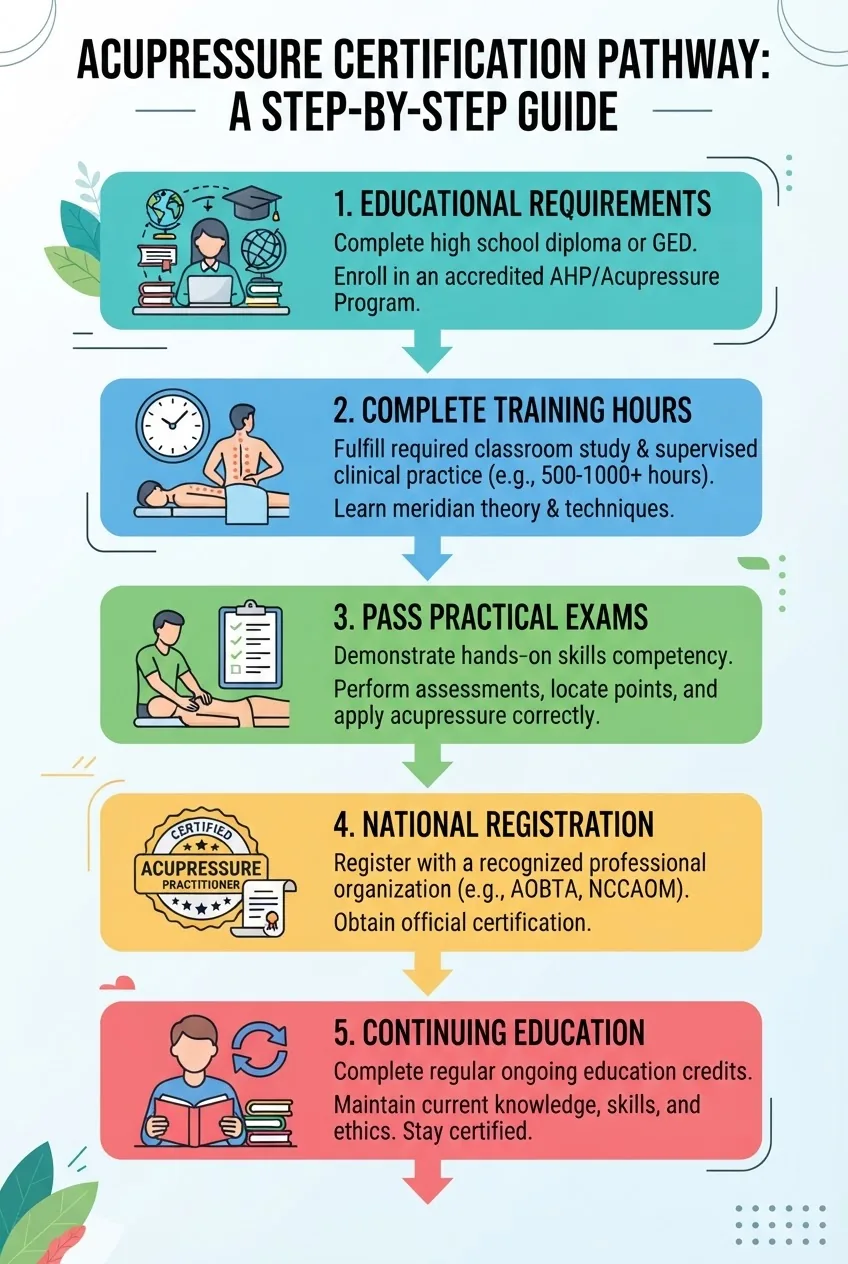
Certification standards: vary by country and state; many regions require documented training hours, a pass in practical exams and ongoing CPD to maintain membership in professional bodies.
Typical steps in the certification process:
- Enroll in an accredited or recognised acupressure practitioner program that specifies curriculum, assessment criteria and supervised clinic components.
- Complete required contact hours (often 100–300 hours depending on course depth and local expectations).
- Pass theoretical assessments covering meridian basics, contraindications, anatomy and professional practice.
- Pass practical assessments and log supervised clinic hours demonstrating competence in treatment design, point location and client safety.
- Apply for registration or join a recognised professional association that issues a certificate or membership evidencing adherence to codes of conduct.
- Maintain certification through CPD—courses, workshops and supervised practice hours as required by the association.
Checklist for prospective students and employers:
- Verify course accreditation and clear assessment criteria.
- Confirm the number of supervised clinical hours required and whether those hours are externally assessed.
- Check if the program provides a formal certificate accepted by local professional associations or insurance providers.
- Understand CPD requirements for ongoing registration or membership renewal.
- Confirm liability insurance options and scope-of-practice limitations in your jurisdiction.
Walkthrough: after completing a 200-hour diploma with 60 supervised clinic hours, a candidate typically submits a case log, passes a practical exam observed by an assessor, and applies to a national association for membership; membership often requires proof of training, first-aid certification and an agreed code of ethics. According to a 2024 industry report, recognised associations increasingly require CPD proof every 12–24 months.
Regional regulatory examples and further reading: see guidance from national bodies such as Australian Health Practitioner Regulation Agency for overlap with registered professions, the professional association Acupuncture Australia for membership standards and the US National Center for Complementary and Integrative Health at NCCIH for evidence summaries and safety notes.
Certification recordkeeping and assessments typically include:
- Written exams covering meridian theory, contraindications and client screening;
- Practical assessments using real or simulated clients to demonstrate session flow and safety;
- Case logs with a minimum number of varied client presentations and outcomes;
- Supervisor sign-off on competency and professional conduct.
Note: certification terminology differs—some organisations issue a “Certificate IV/Diploma in Acupressure” or “Certified Acupressure Practitioner” credential; always check local regulatory language and whether the credential allows integration within acupuncture health services or requires further qualification to work alongside licensed acupuncture medical doctors.
Acupuncture Acupuncturist Training and Certification Guide is a recommended resource for readers who want to compare acupressure pathways with formal acupuncture certifications and medical qualification requirements.
Comparing Acupressure Practitioner and Acupuncture Specialist Roles?
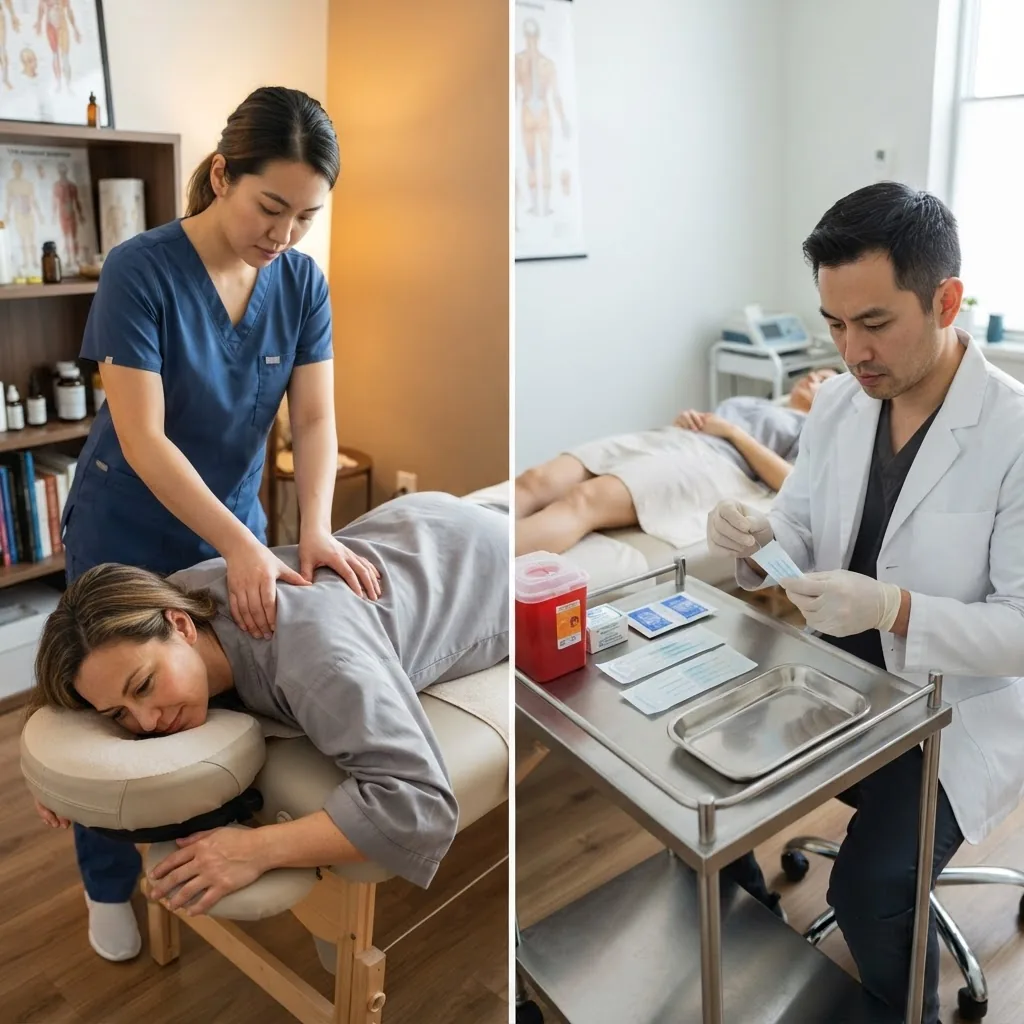
Answer: Acupressure practitioners use non-needle manual pressure focusing on relaxation and symptomatic support; acupuncture specialists (including licensed acupuncturists or acupuncture medical doctors) use sterile needles and often have broader diagnostic and medical integration privileges.
| Aspect | Acupressure Practitioner | Acupuncture Specialist / Acupuncturist |
|---|---|---|
| Primary technique | Manual pressure (fingers, palms, tools) | Sterile needle insertion; adjunct therapies possible |
| Training length | Shorter certificates to diplomas (100–300 hours) | Longer professional degrees or extended diplomas (often 3+ years for clinical accreditation) |
| Scope of practice | Symptom support, relaxation, referral to other clinicians | Clinical diagnosis and treatment plans; may integrate with medical care |
| Regulation | Often regulated by associations; variable government oversight | Subject to stricter registration/licensing in many jurisdictions |
| Safety considerations | Lower invasive risk; contraindications still apply | Needle safety protocols and infection control mandatory |
Explanatory notes: an acupuncture specialist often refers to someone with advanced training in needle-based therapies and may be a registered acupuncturist or an acupuncture medical doctor—a physician trained in both Western medicine and acupuncture—who can combine diagnostic medical skills with needle therapy. For more on formal acupuncturist pathways and licensure, see the definition and certification requirements for acupuncturists.
Practical implication: acupressure practitioners are ideal for relaxation therapies, workplace wellbeing programs and supportive care, while acupuncture specialists handle invasive procedures, complex pain management protocols and integrated medical referrals requiring needle therapy.
Integration of Acupressure in Acupuncture Health Services?
Answer: Acupressure integrates into acupuncture health services as a complementary, non-invasive modality for relaxation, preparatory care or adjunctive therapy alongside acupuncture treatments, particularly for patients seeking needle-free options.
Acupuncture health services: multidisciplinary clinics that offer acupuncture, acupressure, herbal medicine and related therapies to provide patient-centred care plans.
Examples of integration:
- Pre-treatment relaxation: acupressure used to calm nervous clients before an acupuncture session;
- Adjunct care: acupressure sessions scheduled between acupuncture treatments to maintain symptom relief;
- Complementary management: acupressure offered as an option for clients who decline needles or during initial triage visits;
- Education: acupressure self-care taught by practitioners to support home management of symptoms like nausea or mild pain.
Clinical evidence and guidelines: peer-reviewed studies show acupressure can reduce postoperative nausea and help with symptom relief in specific contexts; for an overview of complementary therapy evidence and guidance, consult government and research sources such as the US NCCIH and national clinical guidelines. According to a 2022 literature review in complementary medicine journals, acupressure demonstrated moderate benefit for nausea relief and subjective anxiety reduction in several controlled trials (source: peer-reviewed systematic review).
Case example: a community acupuncture clinic integrated a certified acupressure practitioner to manage high-volume relaxation sessions and reduce appointment waitlists; the clinic reported improved client throughput, greater patient satisfaction scores and better continuity of care when acupressure was used as follow-up to needle sessions.
Practical notes for integration:
- Clear referral protocols between acupressure practitioners and acupuncturists or acupuncture medical doctors improve patient safety;
- Documented treatment goals and progress notes facilitate coordinated care;
- Insurers and clinic managers should verify practitioner credentials and role descriptions to approve complementary care within multidisciplinary settings.
For examples of complementary acupuncture treatment protocols relevant to back and joint pain where acupressure can support recovery, see resources such as acupuncture treatment for back pain and other condition-specific guides offered by professional training programs.
Career Outlook and Professional Benefits of Certification?
Answer: Certified acupressure practitioners can find roles in private practice, wellness centres, integrated health clinics and community programs; certification improves credibility, client trust and earning potential while unlocking CPD and referral networks.
Job opportunities and settings:
- Private clinics and mobile wellness services;
- Integrated acupuncture health services and multidisciplinary clinics;
- Community health centres, aged care and palliative support programs;
- Corporate wellbeing programs and spas offering therapeutic massage and relaxation packages;
- Hospital outpatient complementary medicine programs in regions that support integrative care.
Earnings and growth: practitioner income varies widely by region and business model; according to a 2023 professional association report, certified complementary therapy practitioners working in private practice reported median annual incomes ranging widely depending on hours and client base, with many combining acupressure with massage or wellness coaching to diversify revenue streams.
Professional benefits of certification:
- Improved credibility with clients and healthcare referrers;
- Access to professional insurance and association membership;
- Eligibility to work in regulated clinics and alongside acupuncture medical doctor teams;
- Structured CPD pathways to maintain and expand clinical skills;
- Business support and networking through associations and alumni groups.
Soft benefits include greater client retention due to perceived professionalism, stronger interdisciplinary referrals when working within acupuncture health services, and clearer career progression if practitioners choose to pursue additional training towards acupuncture specialisation or allied health qualifications.
Continuing Education and Advanced Training Opportunities?
Answer: Ongoing professional development for acupressure practitioners includes short courses, specialty workshops, advanced diplomas and supervised practice to extend clinical scope, maintain CPD and pursue niche areas like paediatrics or oncology-support acupressure.
CPD: continuing professional development refers to approved training hours required by associations to renew membership and demonstrate currency of skills.
- Short workshops: weekend intensives on pregnancy-safe acupressure, paediatric methods, or anxiety-focused protocols.
- Advanced certifications: diplomas bridging acupressure to acupuncture theory, meridian specialisation or clinical supervision skills.
- Clinical supervision: mentorship programs to strengthen complex case management and documentation.
- Interdisciplinary courses: combining acupressure with qi gong, breathwork or therapeutic massage techniques.
- Research and evidence training: courses on clinical audit, outcome measurement and basic research literacy for integrating evidence-based practice.
Many professional bodies list approved CPD activities and recognised providers; regular engagement with workshops and supervised practice strengthens practitioner competence and supports progression to roles in integrated or regulated clinical settings.
Conclusion – Becoming a Certified Acupressure Practitioner?
Answer: Becoming a certified acupressure practitioner means completing accredited training, logging supervised clinical experience, passing assessments and maintaining CPD—this pathway builds practical skills for safe, client-centred, non-invasive therapy roles within wellness and integrated health settings.
Key takeaways:
- Choose accredited programs with clear assessment and clinical hour requirements;
- Understand regional regulation and verify association membership requirements;
- Master core skills: point location, palpation, session sequencing and client screening;
- Plan CPD and networking to expand career options, including working alongside acupuncture specialists or within acupuncture health services.
Next steps: research accredited courses in your region, review the Acupuncture Acupuncturist Training and Certification Guide for broader acupuncture pathways, and contact professional associations to confirm current certification and insurance requirements before enrolling. Gain clinical hours, document case outcomes and pursue CPD to establish a reputable, sustainable acupressure practice.
CTA: If you’re ready to explore accredited training options, request course brochures, compare practicum provisions and check association recognition to begin a confident path toward certification and client-centred practice.